Guangzhou Architecture Guide: From Lingnan Heritage to Zaha Hadid
Guangzhou's built environment spans two thousand years of history, from climate-adapted Lingnan courtyards to some of the boldest contemporary structures in Asia. This guide walks you through the key styles, the best places to see them, and how to plan a serious architectural itinerary across the city.
Plan and book this trip
Tools from our partner Travelpayouts help you compare flights and hotels. If you book through them, we may earn a commission at no extra cost to you.
Flights
Hotels map
TL;DR
- Lingnan architecture is defined by practical climate logic: shaded arcades, wok-ear gable roofs, and open courtyards designed for Guangzhou's heat and humidity.
- The best surviving Lingnan streetscapes are in Liwan District, particularly around Shangxiajiu and Yongqingfang.
- The Guangzhou Opera House by Zaha Hadid Architects is the city's most celebrated contemporary building and worth a visit even if you skip the performance.
- Architecture tourism works best October through March, when cooler temperatures make street-level exploration comfortable.
- For a structured itinerary combining heritage and modern landmarks, see the 3-day Guangzhou itinerary.
What Makes Guangzhou Architecture Distinct
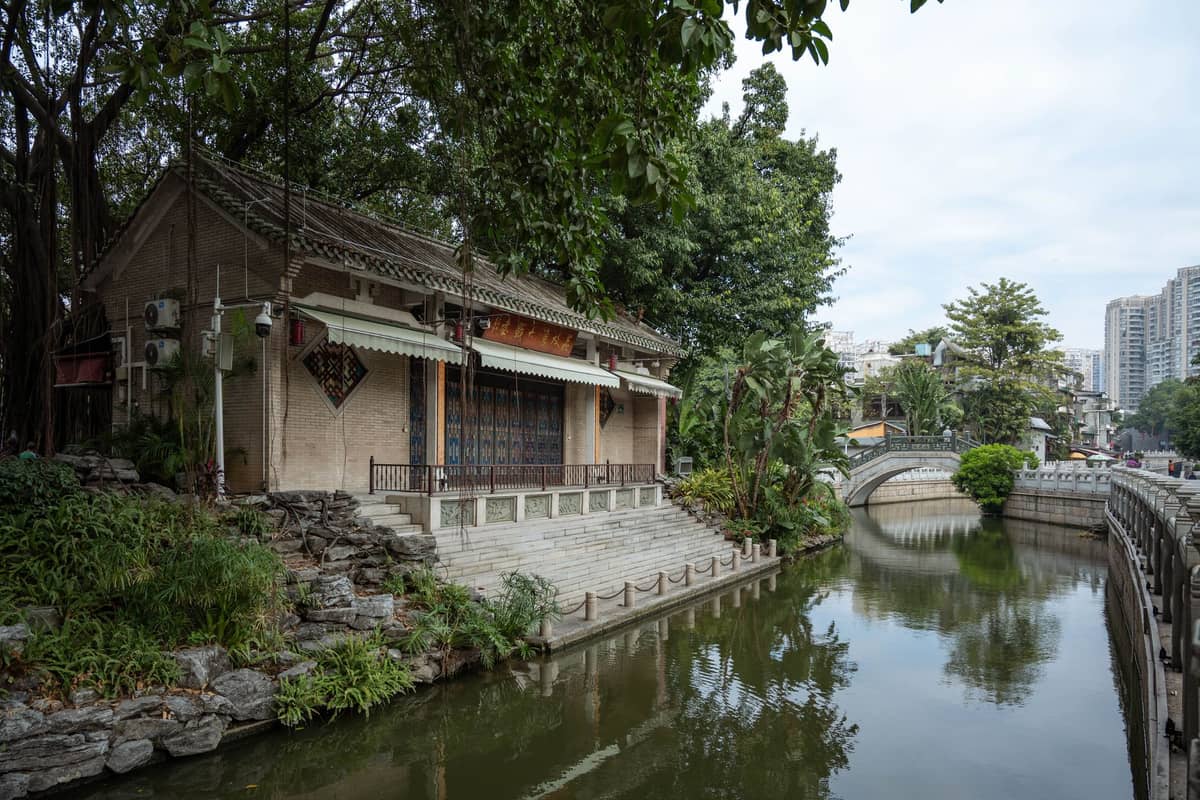
Guangzhou sits at 23°N in a humid subtropical climate, and its traditional building culture evolved directly in response to those conditions. The result is Lingnan architecture, a regional style found across the Pearl River Delta that prioritizes shade, airflow, and moisture resistance over symmetry or grandeur. This is not merely decorative heritage — it is engineering adapted to a specific environment over centuries.
The core vocabulary of Lingnan buildings includes grey brick walls that absorb and release heat gradually, wok-ear roofs (curved firewall gables named for their resemblance to a wok handle), covered verandas, interior courtyards that create natural convection, and Manchurian-style lattice windows designed to allow airflow while blocking direct sun. Decoratively, the tradition follows what is sometimes described as 'three carvings, two mouldings, and one painting' — stone carving, brick carving, wood carving, gray plaster moulding, lime moulding, and mural painting working together on a single facade.
A common misconception is that Lingnan architecture refers exclusively to elaborate ancestral halls and wealthy merchant houses. In reality, it encompasses the full spectrum of urban building: from grand clan halls to the humble qilou arcade-house, from courtyard residences to later Chinese-Western hybrid structures built during Guangzhou's colonial-era trade period. Understanding this range makes walking the city far more rewarding.
ℹ️ Good to know
Canton is the older English name for Guangzhou, not a separate place. Many architectural terms you will encounter — Cantonese vernacular, Cantonese shophouses, Canton-style carving — all refer to Guangzhou and its surrounding Pearl River Delta region.
Lingnan Heritage: Where to See It in the City
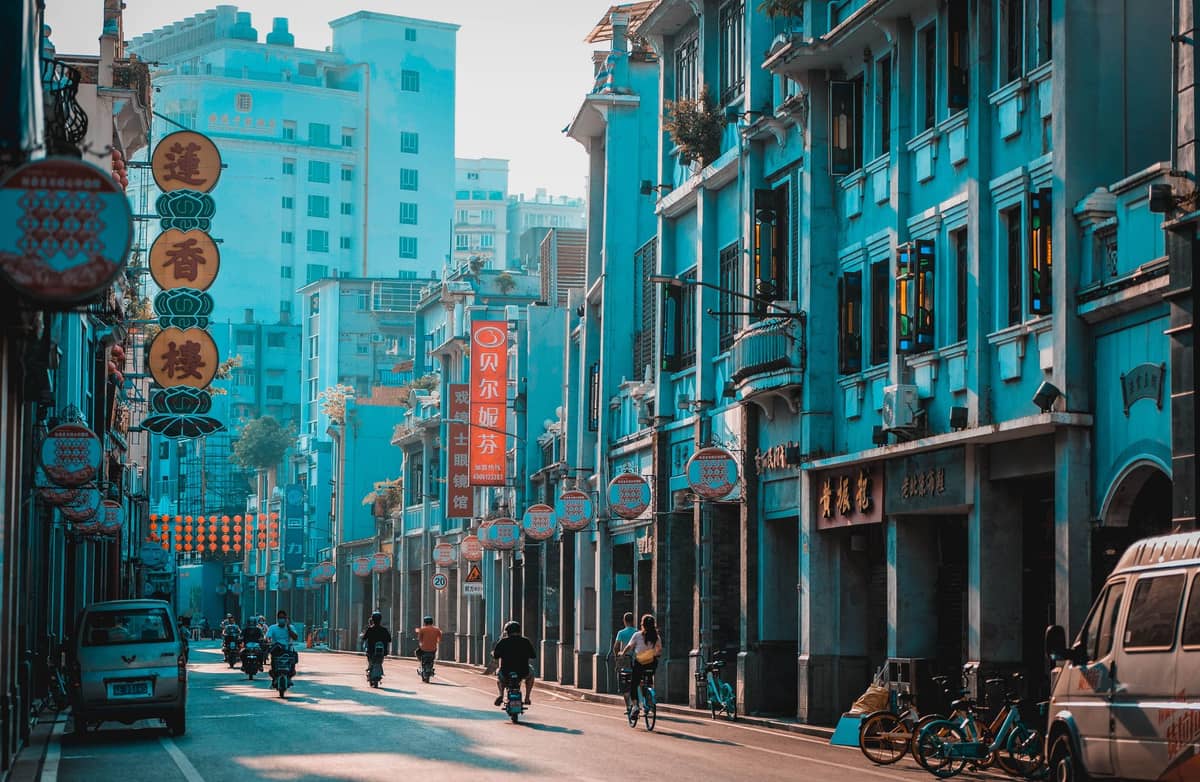
The densest concentration of surviving Lingnan urban fabric is in Liwan District, the oldest commercial district in Guangzhou. The Shangxiajiu Pedestrian Street is the most accessible entry point: a preserved qilou corridor where the ground floors of buildings extend out over the pavement to form a continuous covered walkway. These arcade-houses were practical shelters against both tropical rain and direct sun, and the best examples here date from the early 20th century.
A short walk from Shangxiajiu is Yongqingfang, a renovated Xiguan neighbourhood that shows how Lingnan residential architecture looked in a dense urban block. Xiguan houses are a specific Guangzhou house type: narrow frontages, deep interior plans, and a series of interior courtyards and 'sky wells' (tianjing) that pull air upward through the building. The renovation at Yongqingfang has introduced cafes and shops, which helps with access but reduces the authenticity somewhat. Visit on a weekday morning to see it before the crowds arrive.
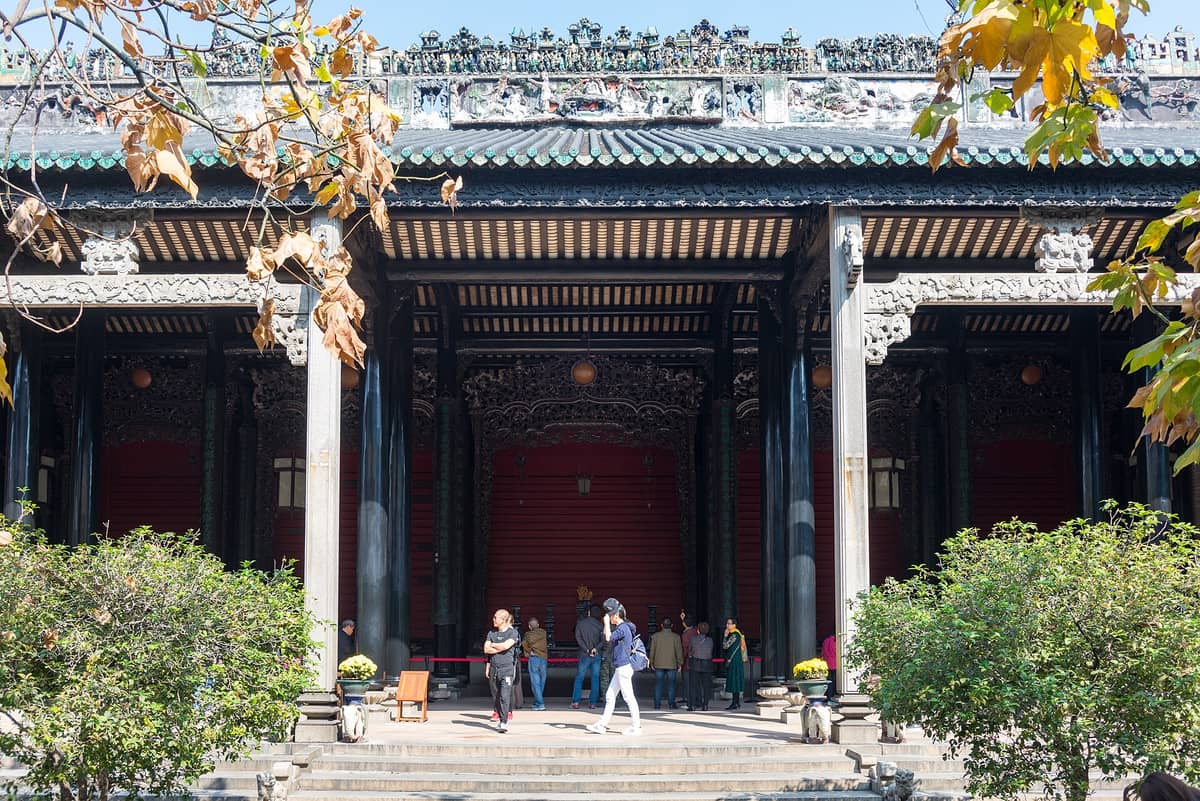
For the most complete example of Lingnan ornamental architecture in the city, the Chen Clan Ancestral Hall in Liwan is the benchmark. Built between 1888 and 1894 by the combined Chen clans of Guangdong Province, it compresses the full decorative vocabulary of Lingnan craftsmanship into 19 interconnected buildings. The roof ridges carry full ceramic sculptural programs depicting historical scenes. The stone and brick carving on the external walls runs to a level of detail that takes a full hour just to examine. Admission is charged; verify current hours and pricing on arrival or through the official Guangzhou tourism portal.
- Chen Clan Ancestral Hall The definitive example of Lingnan ornamental architecture. Allow 60-90 minutes. Located in Liwan District near Chenjiaci Metro Station (Line 8).
- Shangxiajiu Pedestrian Street Best surviving urban qilou corridor. Most atmospheric in the morning before midday crowds. Free to walk.
- Yongqingfang Renovated Xiguan residential block. Good for understanding the domestic scale of Lingnan housing. Busiest on weekends.
- Shamian Island A 0.3 km² island in Liwan with European concession-era buildings from the 19th and early 20th centuries — a distinct layer of history that contrasts with Lingnan vernacular nearby.
- Shawan Ancient Town A 30-minute drive south into Panyu District, this Song Dynasty settlement has retained more intact Lingnan streetscapes than most of the city core.
💡 Local tip
Lingnan streets and qilou arcades were specifically designed to handle sudden tropical downpours. If rain catches you while exploring Liwan, stay under the arcade colonnades — they were built precisely for this. You can cover most of Shangxiajiu dry even in a heavy shower.
The Colonial Layer: Shamian Island and Hybrid Styles
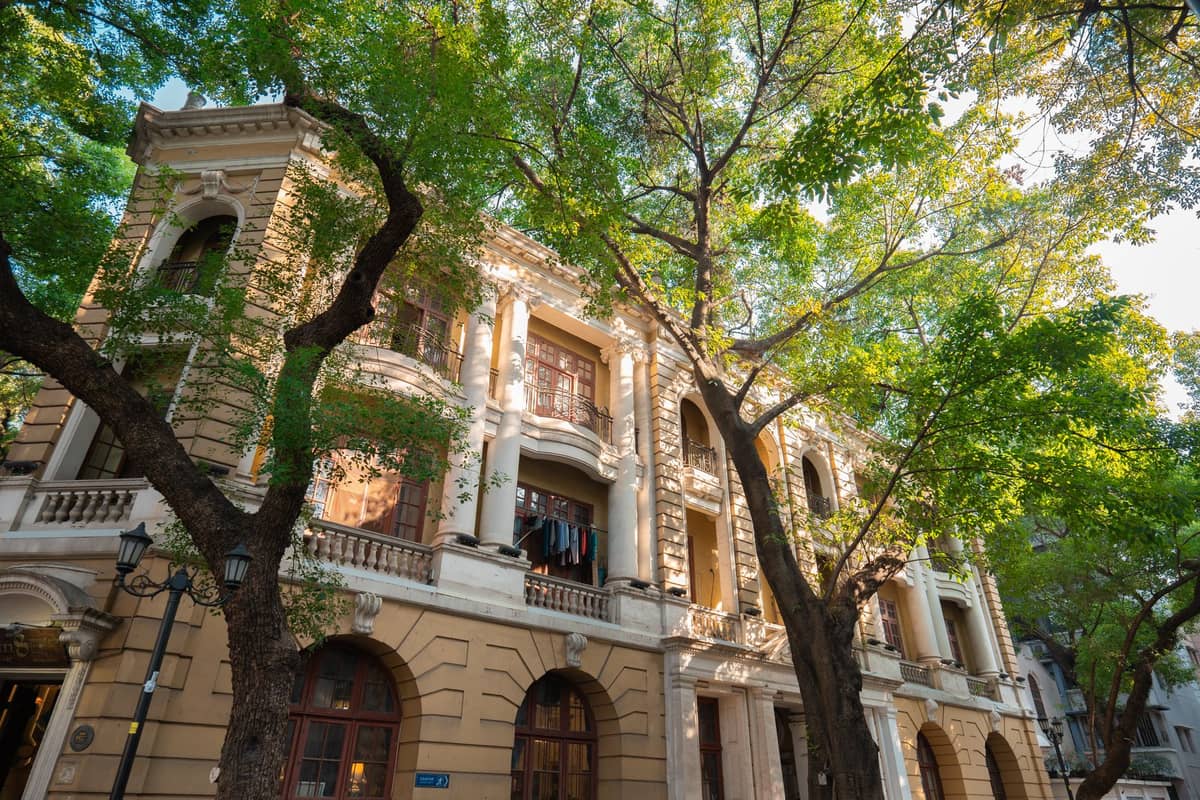
Shamian Island sits just off the Liwan riverbank and represents a completely different architectural chapter. From the mid-19th century onward, it served as a foreign concession zone, and the buildings that remain — neoclassical banks, French colonial villas, a Catholic chapel, and a Protestant church — form one of the most intact concession-era streetscapes in southern China. The Our Lady of Lourdes Chapel and the Shamian Christian Church are both worth examining for how European ecclesiastical forms were transplanted into a subtropical climate with minimal adaptation.
The more interesting story for architecture tourists is what happened when Lingnan builders absorbed European forms and synthesized them with local techniques. The result is sometimes called Chinese-Western hybrid architecture: buildings where classical columns sit above Lingnan carved panels, or where European symmetry governs a facade decorated with traditional Guangdong ceramic tile. You see this most clearly in the larger merchant houses of Liwan and in civic buildings from the Republican period (1912-1949) in Yuexiu District.
Contemporary Icons: Zaha Hadid, Coop Himmelblau, and the Pearl River Skyline
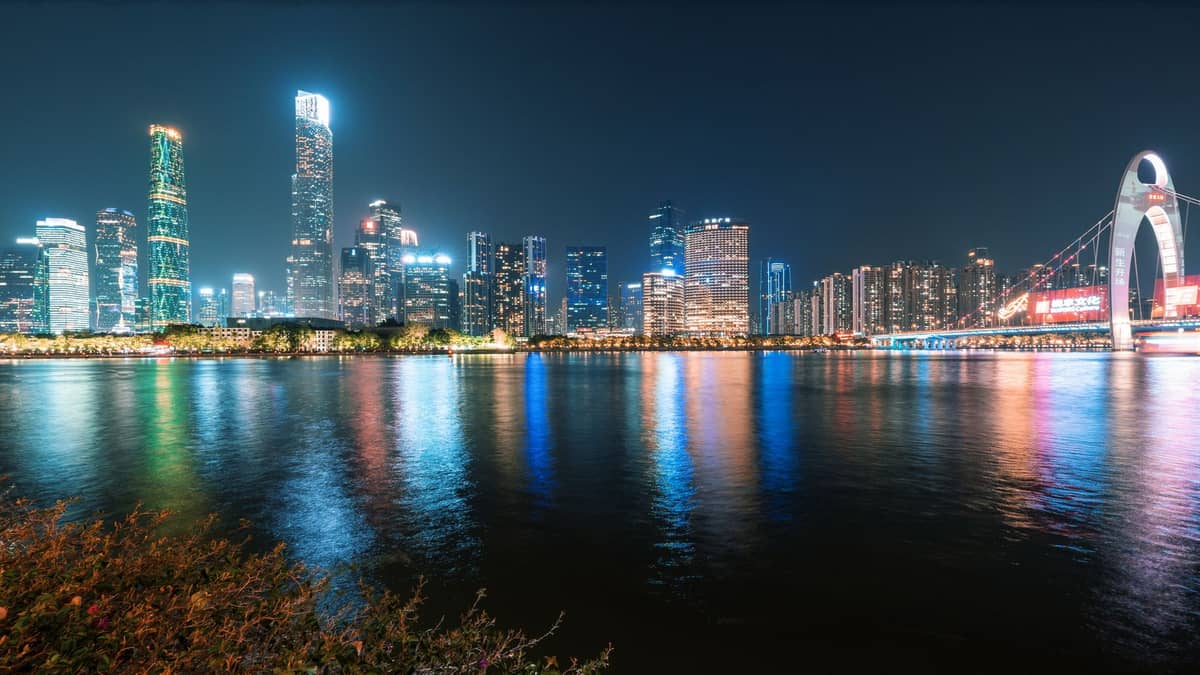
Guangzhou's investment in signature contemporary architecture over the past two decades has produced a cluster of internationally significant buildings around the Pearl River New Town area in Tianhe District and the adjacent Zhujiang New Town. These are not incidental landmarks — they were commissioned as deliberate statements about Guangzhou's place in global urbanism.
The Guangzhou Opera House (2010) by Zaha Hadid Architects is the building that put Guangzhou on the international architecture map. The design uses two 'pebble' forms in dark granite and glass that sit on the riverfront as though deposited by the Pearl River itself. The interior is as significant as the exterior: the main auditorium achieves a geological cave-like geometry through folded surfaces without a single right angle. Even if opera is not your interest, the public foyer is accessible and the scale of the structural ambition is clear from inside. It sits directly adjacent to the Guangdong Museum, creating a small civic campus worth half a day.
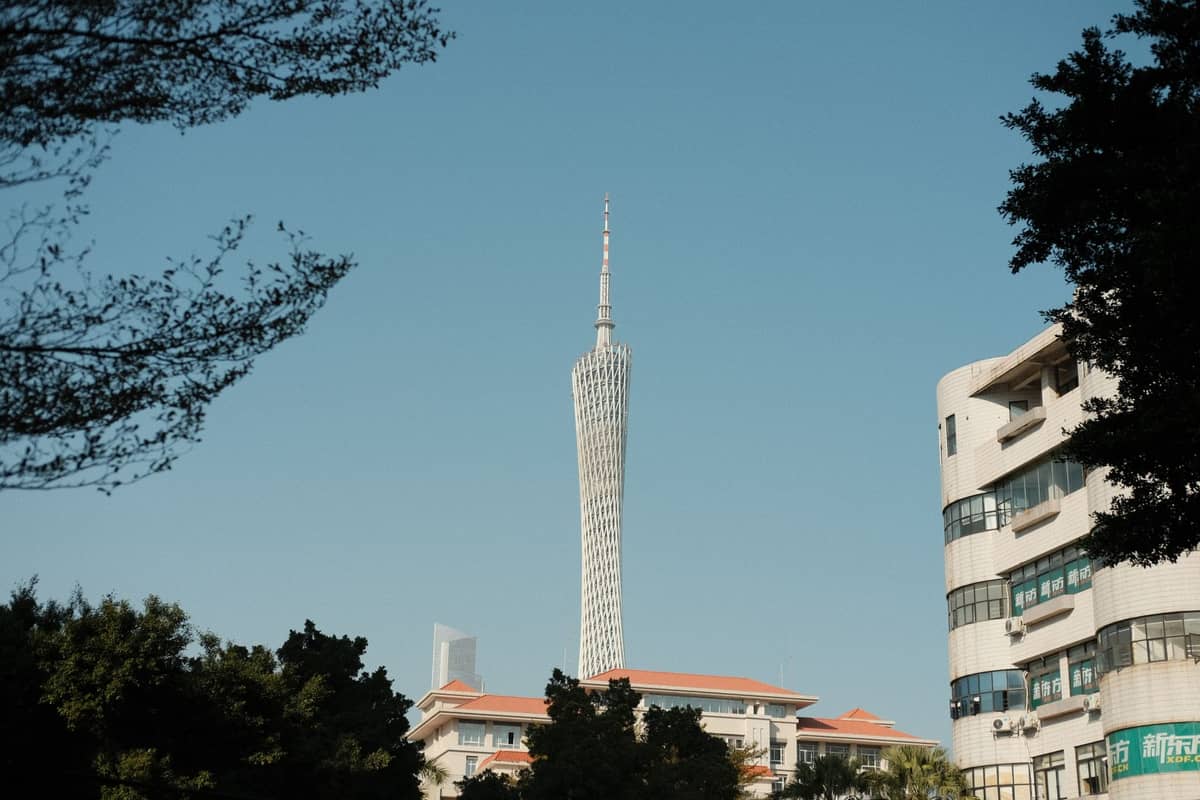
The Guangdong Museum (2010), designed by Rocco Design Architects, takes an entirely different approach: the exterior references the form of a traditional Chinese lacquered box, with an intricate perforated screen wrapping the building volume. The contrast with the Hadid building next door is deliberate and instructive. Pair a visit to both on the same afternoon. The Canton Tower (600 meters, completed 2010) closes the composition from across the river — its hyperboloid steel mesh is visible from most of the Pearl River New Town and functions as the district's orientation point.
CITIC Plaza in Tianhe (391 meters) was the tallest building in China when it topped out in 1997 and remains a significant marker in the city's modern skyline. The Guangzhou International Finance Centre (IFC), completed in 2010, reaches 440 meters and is the work of Wilkinson Eyre Architects. Neither building is publicly accessible beyond ground-floor lobbies, but both are visible from Pearl River cruise boats and from the Canton Tower observation deck, making a river cruise a practical way to read the whole skyline in context.
✨ Pro tip
The best single vantage point for understanding Guangzhou's architectural range — from the Pearl River New Town towers to the Opera House and Canton Tower — is from the Haizhu riverbank opposite Zhujiang New Town, accessible on foot or by metro (Chigang Pagoda Station, Line 8). The view is free, faces north, and is best photographed in the late afternoon when the buildings catch direct western light.
Planning an Architecture Walk: Practical Logistics
A focused architecture itinerary works best split across two or three days, separating the historic districts from the contemporary cluster. For the Lingnan and colonial layer, base your exploration in Liwan: take Metro Line 8 to Chenjiaci Station for the Chen Clan Ancestral Hall, then walk north to Shangxiajiu and Yongqingfang, ending on Shamian Island. This covers roughly 3-4 km on foot. For the contemporary layer, Pearl River New Town and Zhujiang New Town are walkable from Zhujiang New Town Station (Line 5) or Liede Station (Line 5). A Pearl River evening cruise is an efficient way to see the contemporary skyline without walking the full riverfront.
October through March is the practical window for serious street-level exploration. During the June-to-September rainy season, the humidity and heat make extended outdoor walking genuinely uncomfortable, though qilou arcades in Liwan do provide significant shelter. For context on seasonal timing, the best time to visit Guangzhou guide covers climate considerations in detail. Autumn, particularly October and November, is widely considered the best balance of weather and crowd levels — this applies to architecture walking as much as to any outdoor activity.
- Wear flat, comfortable shoes: Lingnan stone and brick streets are uneven and often wet.
- Carry a portable charger: photography-heavy days drain phones quickly.
- Start early (before 9am) in Liwan: the light is better for photography and the streets are less crowded.
- The Guangzhou Metro covers all major architectural clusters; a transit card (Yang Cheng Tong) loaded with CNY 50-100 is sufficient for most walking-tour days.
- Dress codes at the Chen Clan Ancestral Hall and religious buildings on Shamian Island apply: cover shoulders and knees.
- Verify current admission prices and opening hours for all sites through the official Guangzhou tourism portal before visiting, as these change seasonally.
Beyond the Highlights: Less Visited Architecture Worth Seeking
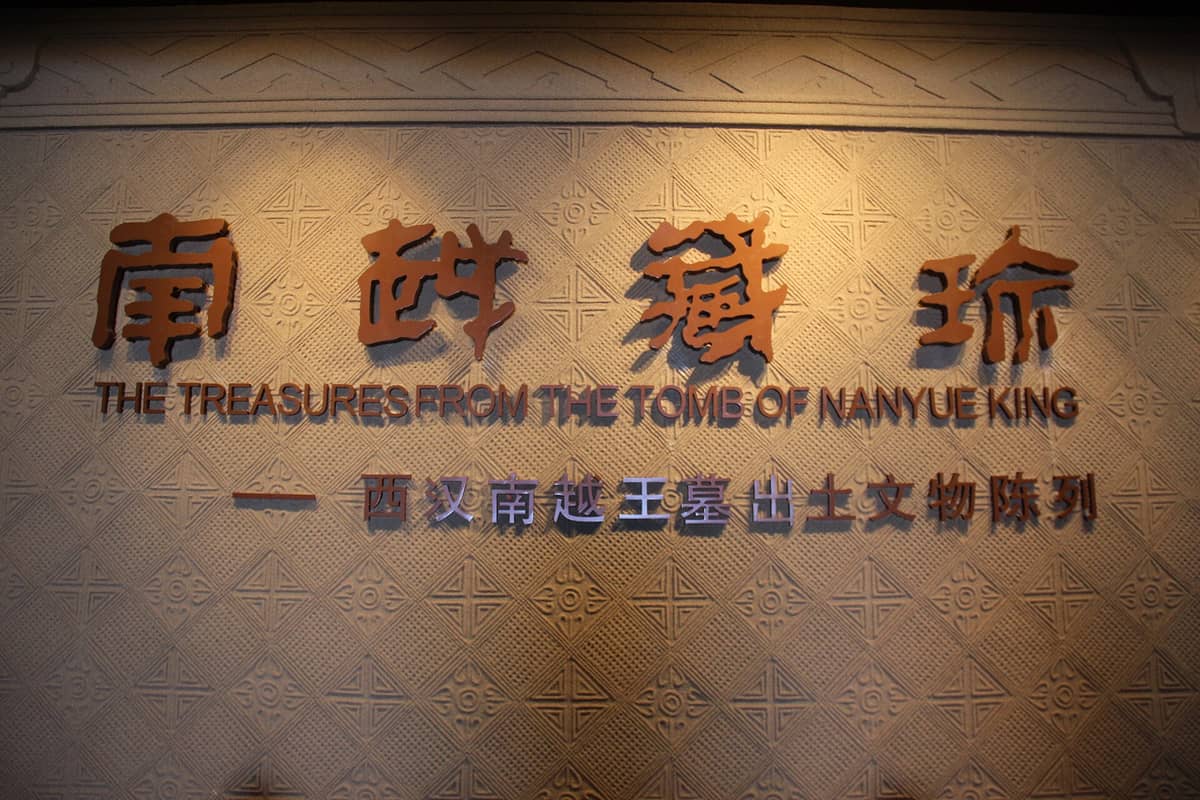
The Nanyue King Mausoleum Museum in Yuexiu is as much about contemporary exhibition architecture as it is about the Han Dynasty tomb it houses. The building, completed in 1988, was designed specifically to integrate the in-situ archaeological site, and it demonstrates an approach to protective enclosure architecture that influenced museum design across China. Entry fee applies.
The Sun Yat-sen Memorial Hall in Yuexiu is a Republican-era civic building (1931) that merits attention for its structural ambition: a vast octagonal auditorium seating over 5,000 people was built with no interior columns, relying entirely on a timber and steel roof structure. The exterior combines Chinese imperial roof forms with a classically proportioned base — it is a precise artifact of the early 20th-century project to create a modern Chinese national architectural language. Visiting the grounds is free; interior access may require a ticket.
For a complete contrast, the Guangzhou Opera House and the adjacent Guangzhou Museum of Art in Ersha Island represent two different approaches to cultural institution design in the same city and the same era. The Museum of Art is more conventional in its massing but occupies a strong riverside site on Ersha Island, and the gardens between buildings are well maintained and free to walk through.
⚠️ What to skip
Several 'Lingnan architecture tour' products sold by local agencies focus almost exclusively on the Chen Clan Ancestral Hall and Shamian Island, covering the same ground in four hours that an independent visitor can cover in two. If you are comfortable navigating by metro and on foot, independent exploration of Liwan is more rewarding and considerably cheaper. Save guided tours for sites with significant historical context that benefits from explanation, such as the Nanyue King Mausoleum.
FAQ
What is Lingnan architecture and where can I see it in Guangzhou?
Lingnan architecture is the regional building tradition of the Pearl River Delta, adapted to Guangzhou's hot, humid subtropical climate. Key features include qilou arcade-streets, wok-ear gable roofs, interior courtyards, and elaborate stone, brick, and wood carving. The best places to see it are the Chen Clan Ancestral Hall in Liwan District, the Shangxiajiu and Yongqingfang areas, and Shawan Ancient Town in Panyu District.
Is the Guangzhou Opera House open to visitors who are not attending a performance?
The public foyer and exterior of the Guangzhou Opera House are accessible without a performance ticket during opening hours when the venue is open to visitors. The main auditorium itself requires a ticket. It is worth visiting purely for the architecture — the interior geometry by Zaha Hadid Architects is as significant as the exterior. Check the official Opera House website for current visiting hours before going.
What is the best time of year to do architectural walking tours in Guangzhou?
October through March offers the most comfortable conditions for extended outdoor walking. The city's rainy season runs roughly April through September, with June to August being both the hottest and wettest period. Lingnan qilou arcades do provide rain shelter, but summer heat makes long walks genuinely taxing. October and November are the best single months: dry, mild, and with good light for photography.
How do I get around Guangzhou's main architectural sites by metro?
The Guangzhou Metro connects all major clusters. For Lingnan heritage in Liwan, use Line 1 (Chenjiaci Station for the Chen Clan Ancestral Hall; Huangsha Station for Shamian Island). For the contemporary Pearl River New Town cluster including the Opera House and Guangdong Museum, use Line 3 or Line 5 (Zhujiang New Town Station). The Canton Tower is served by Canton Tower Station on Line 3. A stored-value Yang Cheng Tong transit card is the easiest way to pay.
Is Guangzhou worth visiting specifically for architecture?
Yes, more than most visitors expect. The combination of intact Lingnan heritage in Liwan, a coherent cluster of internationally significant contemporary buildings in Zhujiang New Town, and transitional Republican-era civic architecture in Yuexiu gives Guangzhou an architectural range that few Chinese cities can match in such a compact geography. It is a different proposition from Beijing or Shanghai but no less serious as a destination for architecture travel.