Guangzhou Museum of Art: What to Expect Before You Go
The Guangzhou Museum of Art (广州艺术博物院) is Guangdong's premier public art institution, offering free admission to rotating and permanent collections spanning classical Chinese painting, Lingnan art, and contemporary works. Relocated to a striking new venue in Liwan, it rewards both serious art lovers and casual visitors with enough depth to fill two to three hours.
Quick Facts
- Location
- No. 19 Baietan South Road, Liwan District, Guangzhou
- Getting There
- Metro Line 6, Tanwei Station, Exit B
- Time Needed
- 2–3 hours
- Cost
- Free admission
- Best for
- Art enthusiasts, Lingnan culture explorers, rainy-day culture
- Official website
- www.gdmoa.org/english
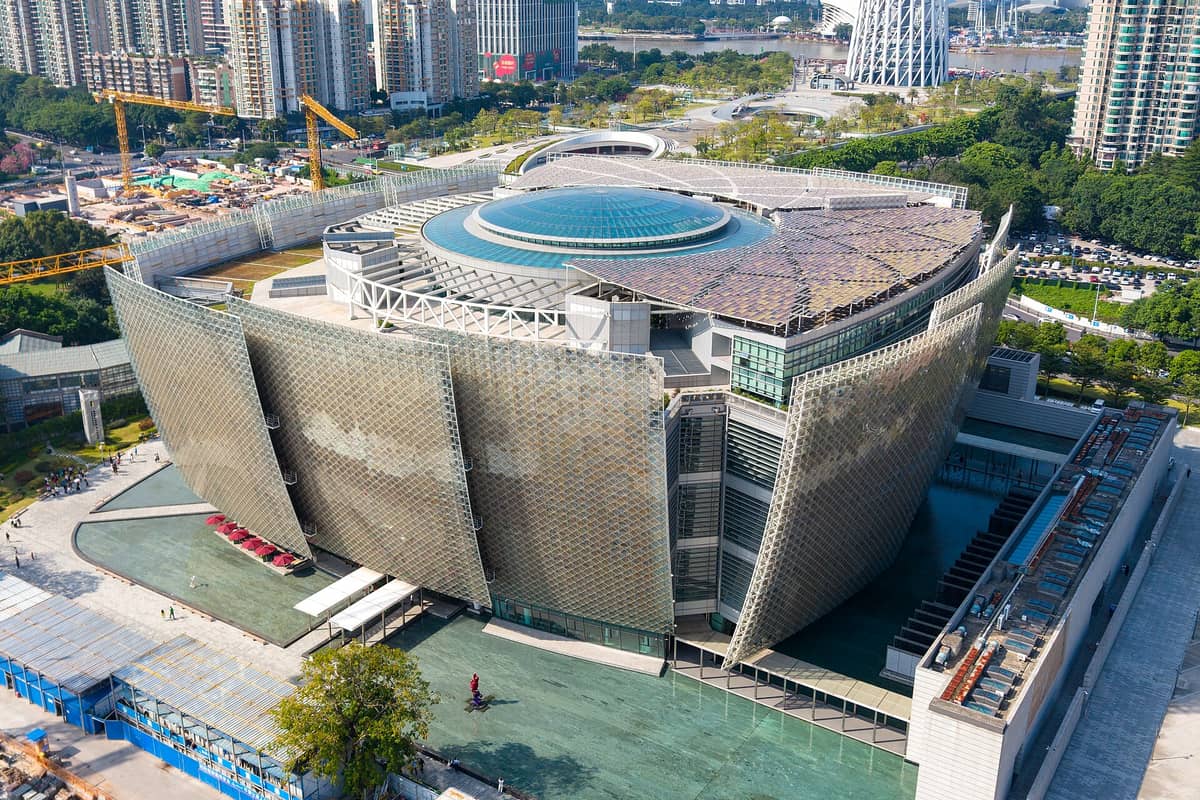
What the Guangzhou Museum of Art Actually Is
The Guangzhou Museum of Art, officially 广州艺术博物院, is the main public fine art museum for Guangdong Province and the city of Guangzhou. It is not a commercial gallery or a temporary pop-up experience: it holds permanent collections of classical Chinese painting and calligraphy, Lingnan school works, folk art objects, and rotating contemporary exhibitions that reflect the breadth of southern Chinese artistic tradition.
The museum traces its institutional roots to 1997, when the Guangdong Museum of Art was established at Luhu Road in Yuexiu District; the newer Baietan South Road venue in Liwan gives the collection significantly more exhibition space and a building designed to match the ambition of the works inside. The newer Baietan South Road venue in Haizhu gives the collection significantly more exhibition space and a building designed to match the ambition of the works inside.
For visitors planning a cultural itinerary, this museum pairs well with the Guangdong Museum and the Cantonese Opera Art Museum for a deeper read on Guangdong's artistic and historical heritage.
Getting There and Getting In
The most direct route is by transit to the Baietan area, then a short walk to No. 19 Baietan South Road. The museum is in the Baietan Greater Bay Area Art Center, so navigation is straightforward. The area has been developed significantly, so navigation is straightforward.
⚠️ What to skip
Non-Chinese visitors without a mainland ID card must call ahead to reserve entry: 020-39061000 or 020-39061009. Bring a valid passport. Walk-ins without advance reservation may be turned away.
Admission is free, which makes this an easy addition to any day in the area. The museum opens Tuesday through Sunday from 9:00 to 17:00, with last entry at 16:30. It is closed on Mondays, except during public holidays or special circumstances. Arrive before 10:00 on weekday mornings if you want the galleries to yourself. Weekends bring school groups and families, particularly between 10:30 and 14:00.
Haizhu District sits south of the Pearl River and is increasingly well-connected. If you want to understand the broader neighborhood context, the Haizhu District area includes the Haizhu Wetland and the Canton Fair Complex, so it is easy to combine this museum visit with other stops nearby.
What You See Inside: The Collections
The permanent collection is organized around several core areas. The Lingnan painting school holds particular significance here: Lingnan painters in the late 19th and early 20th centuries developed a hybrid style that merged traditional Chinese ink techniques with Japanese and Western influences, producing works with more naturalistic color and dynamic composition than purely academic Chinese painting. Seeing these works in Guangzhou, the region where the movement originated, adds a layer of context that reproduction cannot provide.
Beyond Lingnan school paintings, the museum holds calligraphy, sculpture, ceramics, and folk art objects that track the material culture of the Pearl River Delta across several centuries. The rooms are well-lit, labels appear in both Chinese and English in the main galleries, and the layout is logical enough that you can move through at your own pace without a guide.
Temporary exhibitions rotate throughout the year and have included contemporary Chinese artists, international photography shows, and themed retrospectives tied to specific historical periods. Check the official website before visiting to see what is currently showing, as the temporary gallery can be the most compelling reason to visit on a particular date.
💡 Local tip
Photography is generally permitted in the permanent galleries without flash, but specific temporary exhibitions may restrict photography. Check posted signs at each gallery entrance.
How the Visit Changes by Time of Day
Morning visitors, especially on weekdays, will find the galleries quiet enough to spend several minutes in front of a single work without anyone in the frame. The light in the building in the late morning is particularly good for appreciating ink painting, where tonal gradations matter. The air conditioning is reliable, which in a Guangzhou summer makes the museum more comfortable than most outdoor alternatives between 11:00 and 14:00.
Early afternoons on weekends are the least relaxed time to visit. School groups, tour parties, and families with children tend to concentrate in the main permanent galleries, and the noise level rises noticeably. If you have a choice, Tuesday through Friday mornings represent the most comfortable visit window.
Late afternoon, in the hour before closing, the museum thins out again. The galleries near the exit tend to be quietest at this time, and the light from street-facing windows shifts to a warmer tone. If you are a photographer interested in architectural interior shots, this is often the best window.
The Surrounding Area: Before and After Your Visit
The museum sits close enough to the Pearl River waterfront that a short walk brings you to the riverside promenade. From here, views of the Canton Tower across the water are a reasonable reward after a few hours indoors. The tower is the most recognizable structure in Guangzhou's skyline and the view from this bank of the Pearl River is one of the cleaner angles on it.
If you are curious about the broader cultural geography of Guangzhou, the Guangzhou museums guide covers the full range of public institutions across the city, which is useful if you are building a multi-day cultural itinerary.
The Baietan area around the museum has developed into a walkable cultural zone with cafes, riverside seating, and other cultural facilities nearby. It is not a traditional neighborhood in the way that Liwan or Yuexiu are, but the infrastructure for a comfortable half-day visit is in place.
Practical Assessment: Who This Museum Is For and Who Might Leave Disappointed
The Guangzhou Museum of Art is not a global-draw institution in the way that the Palace Museum or the Shanghai Museum are. Its collections are significant for understanding Cantonese and Lingnan artistic traditions specifically, but visitors who come expecting encyclopedic coverage of Chinese art history or blockbuster international loans may find the scope narrower than expected.
The English-language labeling in permanent galleries is adequate but uneven. Some sections have detailed bilingual panels; others have minimal English text. Visitors who do not read Chinese will still be able to appreciate the visual works, but some contextual depth will be lost without a guide or advance reading.
Travelers on a short trip who have already decided on the Guangdong Museum for their main culture day may find the Guangzhou Museum of Art is best saved for a second visit rather than competing for the same day. Both are free, but each demands real attention to get full value. If you have only one culture slot in a three-day trip, decide based on your specific interests: Guangdong Museum for broader history, Guangzhou Museum of Art for fine arts and Lingnan painting.
ℹ️ Good to know
The museum's Luhu Road address in Yuexiu District appears in older search results and guidebooks. The current venue is at No. 19 Baietan South Road in Haizhu District. Confirm the address before navigating.
Insider Tips
- Call 020-39061000 at least one day before your visit if you do not have a Chinese ID card. The reservation process is straightforward but cannot be skipped, and staff are accustomed to handling international visitors.
- The museum's free admission means there is no penalty for a short visit. If you are passing through the Baietan area and have 45 minutes, a focused look at the Lingnan painting galleries alone is worth the stop.
- Rainy days in Guangzhou are common from April through September. The museum's air-conditioned galleries make it one of the more practical options for a wet afternoon in Haizhu, particularly because there is no queue cost to entering.
- Check the official website at gdmoa.org/english before visiting. The rotating temporary exhibition schedule is updated there, and some shows are genuinely worth timing your visit around.
- If you plan to photograph the building's architecture, the exterior elevation facing the river is the more photogenic side. Early morning light from the east hits this facade cleanly before the surrounding buildings cast shadows.
Who Is Guangzhou Museum of Art For?
- Art history travelers with specific interest in Lingnan school painting and southern Chinese visual culture
- Visitors looking for a free, air-conditioned, low-pressure cultural half-day in Haizhu
- Photographers interested in contemporary museum architecture and Chinese ink painting details
- Travelers building a multi-institution cultural itinerary across Guangzhou's main museums
- Anyone caught in Guangzhou's rainy season needing an indoor experience with genuine substance
Nearby Attractions
Other things to see while in Haizhu:
- Canton Fair Complex (Pazhou)
The Canton Fair Complex on Pazhou Island is the home of China's most important trade fair, which has been held since 1957. Even outside fair season, the sheer scale of this architectural landmark makes it one of Guangzhou's most distinctive destinations. Here is what visiting actually looks like.
- Haizhu Wetland Park
Guangzhou Haizhu National Wetland Park is one of the largest urban wetlands in China, covering roughly 1,100 hectares of canals, fruit orchards, and reed beds in Haizhu District. Recognized as a Ramsar site in 2022 and listed on the IUCN Green List, it offers a genuine break from the city without leaving it.
- Huangpu Ancient Port
Huangpu Ancient Port (黄埔古港) in Haizhu District is where Guangzhou's centuries-long role as a global trading hub left its clearest mark. This free, open-access historic site in Shiji Village preserves the atmosphere of a historic port settlement, from ancestral halls to riverside stone quays.
- Pazhou Pagoda
Rising above the rooftops of Pazhou Village in Haizhu District, Pazhou Pagoda is one of Guangzhou's oldest standing structures, built between 1597 and 1600 during the Ming dynasty. It served as a navigational landmark for ships entering the Pearl River, and today it remains a quiet, largely overlooked counterpoint to the glass towers of the nearby Canton Fair complex.