Guangzhou Haizhu National Wetland Park: Urban Nature Worth the Trip
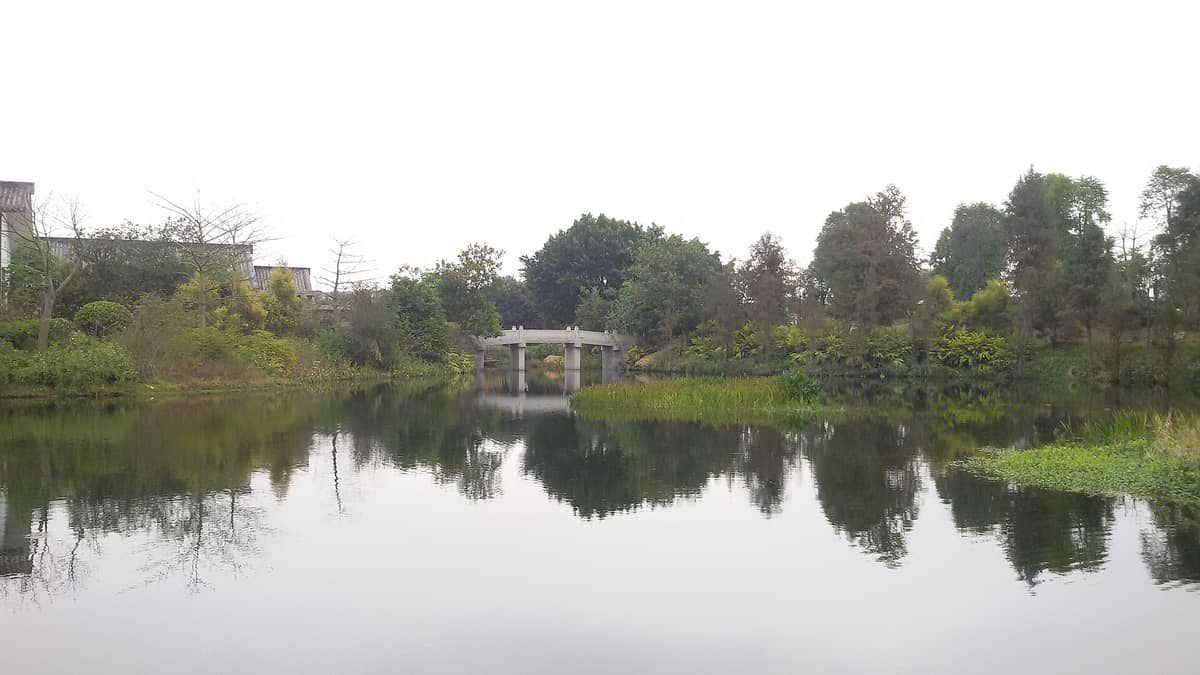
Guangzhou Haizhu National Wetland Park is one of the largest urban wetlands in China, covering roughly 1,100 hectares of canals, fruit orchards, and reed beds in Haizhu District. Recognized as a Ramsar site in 2022 and listed on the IUCN Green List, it offers a genuine break from the city without leaving it.
Quick Facts
- Location
- No. 168 Xinjiao Middle Road, Haizhu District, Guangzhou
- Getting There
- Metro Line 18, Longtan Station, Exit G
- Time Needed
- 2 to 4 hours
- Cost
- ¥20 CNY adults; concession pricing may vary; check the gate for current family and discount tickets
- Best for
- Nature walks, birdwatching, photography, families, and anyone needing a genuine change of pace from urban Guangzhou
- Official website
- http://en.haizhu.gov.cn/haizhuwetland.html
What Haizhu Wetland Actually Is
Guangzhou Haizhu National Wetland Park sits just south of the Pearl River in Haizhu District. That proximity is what makes it unusual. Most cities of this size have long since paved over their low-lying delta land. Guangzhou largely did too, but Haizhu's old lychee and mulberry orchards, sustained for centuries by canal irrigation, survived long enough to be reclassified as a national wetland reserve.
The park covers approximately 1,100 hectares in total, with 751.4 hectares formally designated as a Ramsar Wetland Site in October 2022. That designation places it alongside internationally significant wetlands for waterbird habitat. The IUCN Green List recognition, also awarded in 2022, reflects standards for effective and equitable management rather than just scenic value. In short, the ecological credentials here are real, not marketing.
Haizhu sits at the southern end of Haizhu District, which is itself a large island-like landmass formed by the Pearl River and its branches. The wetland functions as the district's ecological core, buffering air temperatures, filtering runoff, and providing the kind of continuous green corridor that urban planners in most Chinese cities can only draw on paper.
The Experience at Different Hours
Arrive just after opening at 9:00 AM and the park is noticeably quiet. The light is soft, the canal surfaces are still, and the sound mix is dominated by birdsong with distant traffic as a low backdrop. Early morning is the most productive window for birdwatching: egrets and herons work the shallow margins, and kingfishers are regularly spotted along the narrower inner channels. The air carries a faint vegetative damp, the particular smell of still water and lychee leaf, that disappears once temperatures climb.
By midmorning on weekends, visitor density increases noticeably around the main entrance and the more photogenic wooden boardwalk sections. Families with young children occupy the open lawns. Elderly residents, a core weekday audience, practice tai chi on paved areas near the water. Midday in summer (June through August) is genuinely uncomfortable: high temperatures combined with high humidity make extended walking unpleasant, and the park offers limited shade on its more exposed sections.
💡 Local tip
For the best combination of light, temperature, and wildlife activity, visit on a weekday between 9:00 AM and 11:00 AM. Autumn (October to November) is the peak season for migratory birds and the most comfortable weather overall.
Late afternoon, roughly 3:30 PM onward, brings a second wave of visitors after school hours, and the light becomes warmer and more useful for photography. The park typically closes around 5:00 PM, so plan your final section accordingly.
What to Actually See and Walk
The park is large enough that you will not cover it all in a single visit without rushing. The canal and boardwalk network forms the primary route structure. Wooden walkways run above water level through reed beds and over shallow channels, giving clear sightlines into habitats that would otherwise be inaccessible on foot. These sections are the visual highlight of the park and work particularly well for close-range views of waterbirds.
The old lychee orchards are a less-visited but more distinctive feature. These groves date back generations and are the ecological foundation of the wetland. In late June, when lychee is in season, the orchard sections carry a sweet fermenting fragrance from fallen fruit. Outside of fruit season, the orchards are cool, heavily shaded corridors with a different character from the open water sections.
Bird diversity is the park's most documented ecological feature. Over 180 bird species have been recorded, including several migratory species that pass through during the autumn and spring migration windows. The reed beds support breeding populations of bitterns and reed warblers. Visitors with binoculars will get significantly more value from the park than those without.
ℹ️ Good to know
The park's official name in Chinese is 广州海珠国家湿地公园.
Getting There and Practical Logistics
The park is accessible by Guangzhou Metro Line 3 or Line 18, both stopping at Longtan Station. Use Exit G, which places you closest to the main entrance on Xinjiao Middle Road. The walk from the exit to the gate takes roughly 5 to 8 minutes on flat ground. There is no need for a taxi or ride-hail from this metro station.
If you are traveling around the city on the same day, the Guangzhou MetroIf you are traveling around the city on the same day, Metro Line 18 connects Longtan Station efficiently to major transfer hubs including Tianhe and Yuexiu. A stored-value Metro card, purchasable at any station, makes entry faster than buying single-journey tickets.
Admission is ¥20 CNY for a standard adult ticket. Family and concession pricing may vary; children under 1.2 meters in height enter free. Ticket rules are subject to change, so verify at the gate if you are in a borderline category.
Opening hours are 9:00 AM to 5:00 PM daily. National holiday weeks (particularly Golden Week in early October and the Lunar New Year period) bring significantly higher visitor numbers. Weekday visits in those weeks are preferable to weekends. national holiday weeks (particularly Golden Week in early October and the Lunar New Year period) bring significantly higher visitor numbers. Weekday visits in those weeks are preferable to weekends.
⚠️ What to skip
The park has limited food and drink options inside. Bring water, particularly if visiting in warm months. Summers in Guangzhou are hot and humid, and the open sections of the boardwalk provide little shade.
Ecological Context: Why This Place Matters
Haizhu Wetland is not simply a landscaped park built to look natural. The canal-and-orchard system here has been in continuous agricultural use for several hundred years, with mulberry and lychee cultivation sustained by a network of dykes and water channels that mirror the broader Pearl River Delta's traditional land-use pattern. This history is the reason the wetland survived at all in a city of this density.
The Ramsar designation in October 2022 placed the core 751.4-hectare zone on the international register of wetlands of importance for waterbirds, particularly relevant given Guangzhou's position on the East Asian-Australasian Flyway, one of the world's major migratory bird routes. The park serves as a genuine stopover and wintering site, not a decorative pond with a few ducks.
For travelers with a broader interest in Guangzhou's natural spaces, the South China National Botanical Garden and Nansha Wetland Park offer complementary experiences. Nansha, farther south near the Pearl River estuary, has a distinctly wilder character and is worth the longer journey if wetland ecology is a priority for you.
Photography, Accessibility, and What to Bring
The boardwalk sections offer clean compositions over water with no road noise visible in frame, which is rare in an urban park of this type. Early morning light from the east hits the eastern canal sections well in spring and autumn. Telephoto lenses in the 200 to 400mm range are useful for bird photography without disturbing nesting areas. A polarizing filter helps reduce surface glare on the canals.
The main paths and boardwalks are flat and paved or planked, making the core circuit manageable for pushchairs and wheelchairs. The off-path orchard areas involve uneven ground and are not reliably accessible. Wear comfortable walking shoes; sandals are workable but less ideal on the wooden sections when wet. Sun protection (hat, sunscreen) is essential from April through October.
Families traveling with children will find Haizhu Wetland more engaging than most urban parks in Guangzhou. For additional family-oriented attractions nearby, see the Guangzhou with kids guide for further options across the city.
Who This Park Is Not For
Travelers on a very tight one or two day schedule who are prioritizing Guangzhou's historical and architectural highlights may find Haizhu Wetland a lower priority than sites in Yuexiu or Liwan. The park does not deliver a concentrated hit of cultural or historical content; it rewards patience and a slower pace. If you are the kind of visitor who becomes restless without a clear narrative or visual payoff every few minutes, this is not your best use of half a day in Guangzhou.
The park is also less compelling in summer for anyone sensitive to heat. June through August visits are genuinely uncomfortable between 10:00 AM and 4:00 PM, and the wildlife is less active in that window. If summer is your only option, plan a very early arrival and budget for a short visit rather than a full loop.
Insider Tips
- Rent a bicycle if the option is available inside the park: the canal network is large enough that cycling between sections saves time and allows you to cover the more remote orchard areas that most walkers skip.
- The main entrance near Xinjiao Middle Road is served by Metro Line 18 at Longtan Station, Exit G. If you have time, enter through the main gate and follow the circuit to cover more ground without backtracking.
- October and November are the most consistent months for migratory bird sightings. Bring binoculars even if you are not a regular birdwatcher: the egret and heron activity in the shallow channels is visible to the naked eye and photogenic.
- Weekday mornings during school terms are by far the quietest visiting window. The contrast with a Saturday afternoon in the same park is significant enough to make the timing worth adjusting for.
- Food and drink options inside the park are limited. The streets immediately outside the main gate have a handful of small shops and food stalls, so stock up before entering rather than counting on finding something inside. The streets immediately outside the main gate have a handful of small shops and food stalls, so stock up before entering rather than counting on finding something inside.
Who Is Haizhu Wetland Park For?
- Nature and wildlife enthusiasts who want genuine ecological value, not just a landscaped green space
- Families with young children looking for flat, safe outdoor space well away from traffic
- Photographers seeking clean canal and wetland compositions inside an urban environment
- Birdwatchers, particularly during spring and autumn migration windows
- Visitors who want a genuine break from the commercial intensity of central Guangzhou
Nearby Attractions
Other things to see while in Haizhu:
- Canton Fair Complex (Pazhou)
The Canton Fair Complex on Pazhou Island is the home of China's most important trade fair, which has been held since 1957. Even outside fair season, the sheer scale of this architectural landmark makes it one of Guangzhou's most distinctive destinations. Here is what visiting actually looks like.
- Guangzhou Museum of Art
The Guangzhou Museum of Art (广州艺术博物院) is Guangdong's premier public art institution, offering free admission to rotating and permanent collections spanning classical Chinese painting, Lingnan art, and contemporary works. Relocated to a striking new venue in Liwan, it rewards both serious art lovers and casual visitors with enough depth to fill two to three hours.
- Huangpu Ancient Port
Huangpu Ancient Port (黄埔古港) in Haizhu District is where Guangzhou's centuries-long role as a global trading hub left its clearest mark. This free, open-access historic site in Shiji Village preserves the atmosphere of a historic port settlement, from ancestral halls to riverside stone quays.
- Pazhou Pagoda
Rising above the rooftops of Pazhou Village in Haizhu District, Pazhou Pagoda is one of Guangzhou's oldest standing structures, built between 1597 and 1600 during the Ming dynasty. It served as a navigational landmark for ships entering the Pearl River, and today it remains a quiet, largely overlooked counterpoint to the glass towers of the nearby Canton Fair complex.