Pazhou Pagoda: Guangzhou's Forgotten Ming-Dynasty Tower
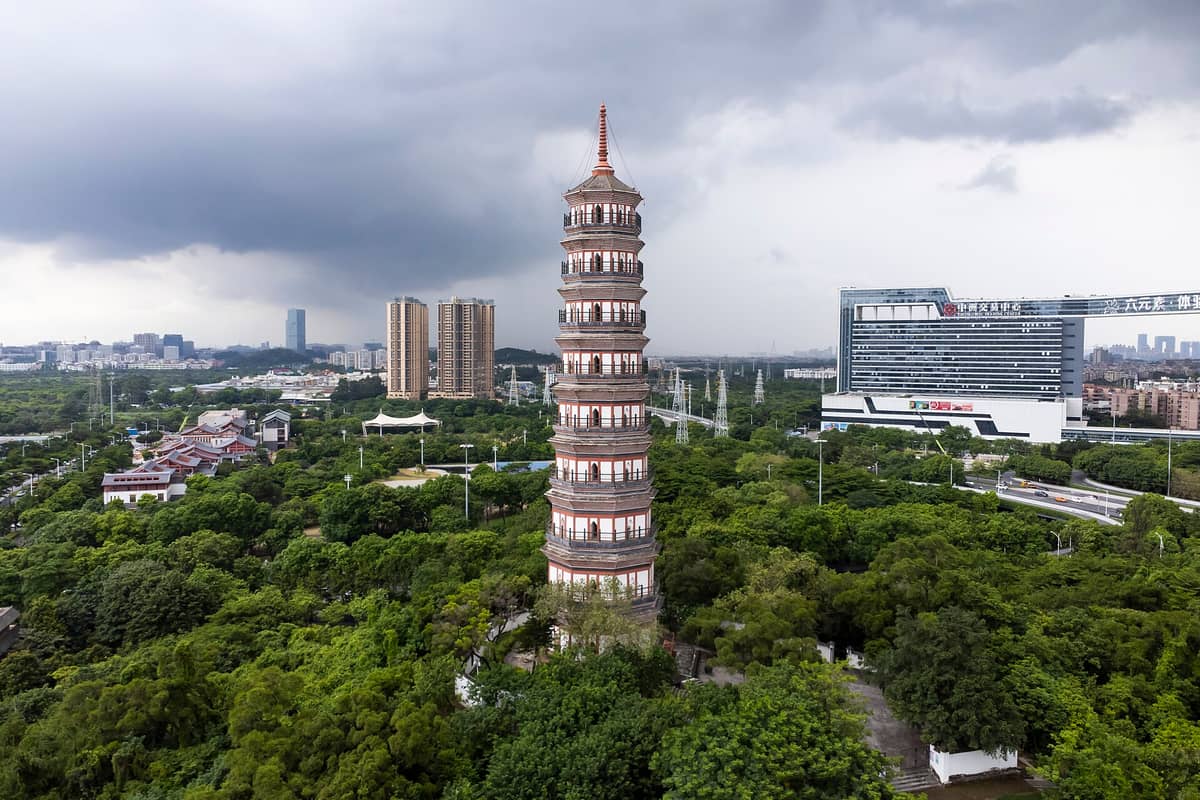
Rising above the rooftops of Pazhou Village in Haizhu District, Pazhou Pagoda is one of Guangzhou's oldest standing structures, built between 1597 and 1600 during the Ming dynasty. It served as a navigational landmark for ships entering the Pearl River, and today it remains a quiet, largely overlooked counterpoint to the glass towers of the nearby Canton Fair complex.
Quick Facts
- Location
- Pazhou Village, Haizhu District, Guangzhou
- Getting There
- Pazhou Station (Metro Line 8), then approx. 800 m / 10-min walk
- Time Needed
- 30–60 minutes
- Cost
- Free (reported by multiple listings; verify on arrival)
- Best for
- History enthusiasts, architecture lovers, photographers seeking quieter subjects
What Is Pazhou Pagoda?
Pazhou Pagoda, known in Chinese as 琶洲塔 (Pazhouta), stands in Pazhou Village in Haizhu District. It is also sometimes referred to as Whampoa Pagoda in older Western records, a nod to the colonial-era pronunciation of the area's name. Construction began in 1597 and was completed in 1600, placing it firmly in the Wanli period of the Ming dynasty — a time when Guangzhou's Pearl River delta was already one of the most active maritime trade zones in Asia.
The pagoda was not built as a religious site in any strict devotional sense, though its form follows traditional Buddhist multi-tiered tower architecture. Its primary function was practical: to serve as a navigational beacon for cargo vessels and trading junks approaching Guangzhou from the South China Sea. A ship's pilot could spot the pagoda's silhouette against the flat delta landscape and use it to orient toward the river channel. That utilitarian origin makes Pazhou Pagoda somewhat unusual among Guangzhou's surviving historic towers.
ℹ️ Good to know
Opening hours are inconsistently reported across listings, with some sources showing 10:00–16:00. Confirm hours locally or by calling ahead before making a dedicated trip.
The Architecture: What You'll Actually See
The tower is a classic octagonal, multi-storey brick pagoda typical of the late Ming period in Lingnan (southern China). Sources conflict on its exact height, with figures ranging around 59 metres, so treat any single measurement with caution until a reliable on-site source can confirm it. What is less disputed is the overall visual impression: the pagoda narrows steadily as it rises, each storey marked by overhanging eaves and decorative corbelling that casts clean horizontal shadows in morning and afternoon light.
The brickwork is the most tactile element of the structure. Up close, the masonry shows centuries of weathering, with patches of moss and lichen settling into the mortar joints on the shadowed north face. The exterior colour sits somewhere between ochre and dark terracotta depending on the time of day and cloud cover, which makes it photograph very differently at dawn versus the flat midday light. The surrounding compound includes a small garden area with stone elements, giving the pagoda a modest but legible context rather than dropping it into the middle of a car park.
The experience here is largely about the exterior and the surrounding grounds. That is an important expectation to set before arriving.
Historical Context: Trade, Navigation, and the Pearl River
Guangzhou's position as China's principal port for foreign maritime trade during the Ming and Qing dynasties gives Pazhou Pagoda a significance that goes beyond its modest footprint. The Pearl River corridor between Pazhou and what is now Huangpu district was where foreign ships anchored and waited for customs clearance. Understanding that context makes the pagoda far more interesting: it was, in effect, one of the first things a European or Southeast Asian trader would have seen after days at sea. For more on the river's role in that history, the Pearl River guide covers the full corridor in detail.
The Pazhou area during the Qing dynasty became associated with the trade anchorage known in Western records as Whampoa Reach, where deep-draught foreign vessels would stop because they could not proceed further upriver. The East India Companies, American traders, and merchants from across maritime Asia all knew this stretch of water. The pagoda would have been a constant visual reference across that whole era of trade.
Today, Pazhou is better known to international visitors as the home of the Canton Fair Complex, one of the largest trade fair venues in the world.home of the Canton Fair complex, one of the largest trade fair venues in the world. The contrast between the Ming tower and the vast exhibition halls a short walk away is genuinely striking and speaks to the continuity of Guangzhou's commercial identity across four centuries.
The Neighbourhood Around the Pagoda
Pazhou Village retains a Pazhou Village retains a local residential character, meaning you'll walk through a mix of older low-rise lanes and newer infill construction on the way from the metro station. The 10-minute walk from Pazhou Metro Station is straightforward. Having the address in Chinese characters on your phone is a practical safeguard.
Haizhu District as a whole is less tourist-trafficked than Yuexiu or Tianhe, which is partly what makes Pazhou Pagoda feel so unhurried. If you're building a half-day itinerary, the Haizhu District area also includes the Haizhu Wetland Park to the south, which makes a logical pairing for those who want to balance history with open space.
When to Visit and How the Experience Changes
Morning visits, roughly between 9:00 and 11:00, offer the best light for photography, with the low eastern sun catching the texture of the brickwork. The surrounding area is also calmer at that hour, with neighbourhood residents going about their morning routines rather than the midday foot traffic that builds if it happens to coincide with a Canton Fair period.
During Canton Fair sessions, which typically run in April and October, the Pazhou area becomes significantly more congested with business travellers moving between the exhibition halls. The pagoda itself remains calm by comparison, but transport to and from the area takes longer, During Canton Fair sessions, which typically run in April and October, the Pazhou area becomes significantly more congested with business travellers moving between the exhibition halls. The pagoda itself remains calm by comparison, but transport to and from the area takes longer. Outside of fair periods, the neighbourhood operates at a noticeably quieter pace.
Weather plays a meaningful role in the experience. Guangzhou's summer months from June through August bring high humidity and frequent afternoon rain showers. The pagoda has no sheltered viewing area, so a visit during a downpour is uncomfortable. Autumn, particularly October and November, is the most comfortable season for this kind of outdoor, slow-paced historic site visit. For a broader seasonal overview, see the best time to visit Guangzhou guide.
💡 Local tip
Visit in the morning on a weekday outside Canton Fair periods for the quietest experience. Bring water, as there are no vendors or facilities immediately around the pagoda compound.
Photography Notes and Practical Details
The pagoda photographs best from a slight distance, where you can capture the full height and the layered eaves in a single frame. From directly at the base, the perspective collapses the tiers. A mid-range or standard lens works well; a wide-angle can distort the proportions of the masonry. The north face holds shadow for most of the day, so compositions that face south or southwest tend to be better lit during morning hours.
Accessibility information for the site is limited. The exterior grounds are at street level and should be navigable without stairs, but no formal accessibility documentation was found for this attraction. Interior access is reported to be closed to the public, so there are no elevated viewing levels to account for.
Getting here by metro is straightforward. Take Guangzhou Metro Line 8 to Pazhou Station and walk approximately 800 metres, which takes around 10 minutes on foot. For general orientation on getting around the city by public transport, the guide covers metro routes, ticketing, and navigation tips. For general orientation on getting around the city by public transport, the getting around Guangzhou guide covers metro routes, ticketing, and navigation tips.
Practical Assessment: Is It Worth the Trip?
Pazhou Pagoda is not a major attraction in the sense of offering a rich on-site interpretive experience. There is no museum, no multilingual signage, and no ability to climb the tower. If you're evaluating it against a full day's programme, it works best as a 30-to-45-minute addition to a Haizhu itinerary rather than a standalone destination requiring a dedicated metro trip from the other side of the city.
That said, for travellers with a genuine interest in Guangzhou's architectural history or the city's maritime trading past, the pagoda carries real historical weight that most visitors walk past entirely. Paired with nearby context, it adds depth that a purely commercial-district itinerary lacks. Travellers interested in the city's wider architectural heritage might also find value in the Guangzhou architecture guide, which places the pagoda among a broader set of historic structures.
⚠️ What to skip
If you are visiting Guangzhou for only 2–3 days and prioritising high-impact experiences, Pazhou Pagoda may not compete with the city's bigger-draw sites. It rewards slow, curious travellers more than those on a tight schedule.
Insider Tips
- Have the Chinese characters 琶洲塔 saved on your phone to show locals if you get turned around in the village lanes near the pagoda.
- The 10-minute walk from Pazhou Metro Station passes through a genuine urban village, which is interesting in its own right. Look up at the narrow sky gaps between buildings in the residential alleys.
- If you visit during a Canton Fair period, If you visit during a Canton Fair period, add extra time each way for metro crowding and slower pedestrian flow around the Pazhou area.
- The pagoda's north face retains more original weathered texture than the south face, which has had more maintenance work. Walk around the full perimeter before settling on your vantage point.
- Opening hours are inconsistently reported across sources. Arriving between 10:00 and 15:00 gives you the most reliable window based on available listings, but confirm locally before a dedicated trip.
Who Is Pazhou Pagoda For?
- Travellers with an interest in Ming-dynasty architecture who want to see something most visitors skip
- History enthusiasts tracing Guangzhou's maritime trade and Pearl River commerce
- Photographers looking for textured, low-crowd subjects with good morning light
- Visitors already in the Pazhou area for the Canton Fair who want brief historical context
- Slow travellers building a half-day Haizhu itinerary combining history and open space
Nearby Attractions
Other things to see while in Haizhu:
- Canton Fair Complex (Pazhou)
The Canton Fair Complex on Pazhou Island is the home of China's most important trade fair, which has been held since 1957. Even outside fair season, the sheer scale of this architectural landmark makes it one of Guangzhou's most distinctive destinations. Here is what visiting actually looks like.
- Guangzhou Museum of Art
The Guangzhou Museum of Art (广州艺术博物院) is Guangdong's premier public art institution, offering free admission to rotating and permanent collections spanning classical Chinese painting, Lingnan art, and contemporary works. Relocated to a striking new venue in Liwan, it rewards both serious art lovers and casual visitors with enough depth to fill two to three hours.
- Haizhu Wetland Park
Guangzhou Haizhu National Wetland Park is one of the largest urban wetlands in China, covering roughly 1,100 hectares of canals, fruit orchards, and reed beds in Haizhu District. Recognized as a Ramsar site in 2022 and listed on the IUCN Green List, it offers a genuine break from the city without leaving it.
- Huangpu Ancient Port
Huangpu Ancient Port (黄埔古港) in Haizhu District is where Guangzhou's centuries-long role as a global trading hub left its clearest mark. This free, open-access historic site in Shiji Village preserves the atmosphere of a historic port settlement, from ancestral halls to riverside stone quays.