South China National Botanical Garden: Guangzhou's Living Scientific Archive
Established in 1929 and elevated to national botanical garden status in 2022, South China National Botanical Garden in Tianhe District is one of China's most significant plant research and conservation sites. Covering an enormous area with themed collections, a tropical conservatory, and forest walking paths, it rewards visitors who want more than a city park.
Quick Facts
- Location
- No. 723 Xingke Road, Tianhe District, Guangzhou
- Getting There
- Metro Line 6, Botanical Garden Station (Exit A), about a 5–8 minute walk to the main entrance
- Time Needed
- 2.5–4 hours for a thorough visit; half a day if you include the conservatory
- Cost
- 20 RMB standard admission; 50 RMB combined ticket including the greenhouse/conservatory area
- Best for
- Nature lovers, families with children, photography enthusiasts, and anyone needing a break from the urban core
- Official website
- http://english.scib.cas.cn
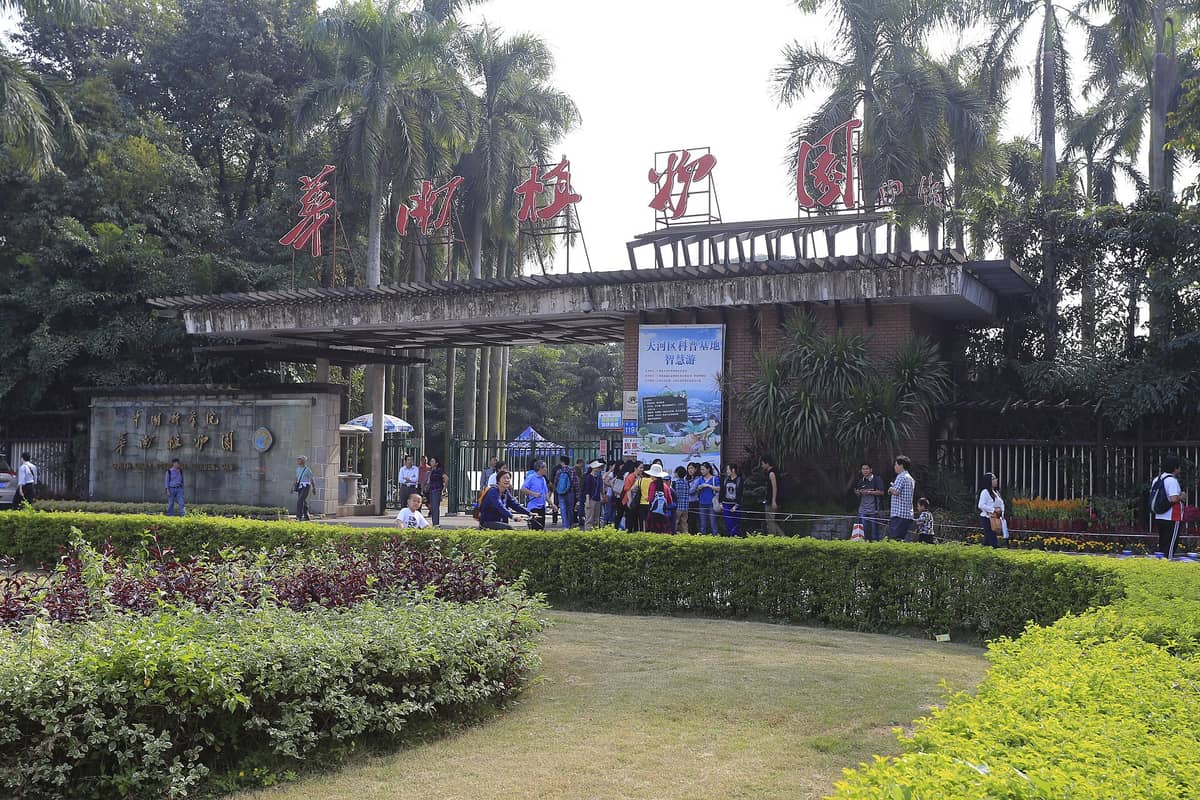
What the South China National Botanical Garden Actually Is
South China National Botanical Garden is not a decorative city park with flower beds and benches. It is a working scientific institution, rooted in nearly a century of botanical research, that happens to be open to the public. The garden traces its founding to 1929, was reorganized as the South China Institute of Botany in 1954, and was officially renamed South China Botanical Garden in 2003 under the Chinese Academy of Sciences.. In 2022, the State Council approved its upgrade to national botanical garden status, making it one of only a handful of such institutions in China. That designation matters: it signals the scale of the living collections, the depth of the taxonomic research conducted here, and the weight the Chinese government places on subtropical and tropical plant conservation.
For a traveler, the practical implication is that what you find here is genuine: rare species, seriously maintained themed gardens, and greenhouses that serve conservation programs rather than Instagram aesthetics alone. The garden holds collections of bryophytes, ferns, gymnosperms, and flowering plants, with particular strength in species native to South China and Southeast Asia. If you have even a passing interest in plants, ecology, or landscape, this place will hold your attention far longer than you expect.
Getting There and Finding Your Way In
The most straightforward approach is Guangzhou Metro Line 6, alighting at Botanical Garden Station and using Exit A. The main entrance on Tianyuan Road is roughly 200 to 370 meters from the exit, depending on which gate you read. It is a flat, walkable stretch. If you are arriving by car or prefer a different angle of approach, The west gate is accessible via No. 723 Xingke Road, which also has parking. For those traveling by bus, the garden's official transport information lists routes B12, 30, 39, 83, 84A, 84, 494, 534, 535, 564, and 775 to the main entrance stop. Bus coverage is extensive given the garden's size, though peak-hour services on some routes can be crowded. For a broader overview of navigating the city, the guide to getting around Guangzhou covers metro navigation and ticketing in detail.
💡 Local tip
The garden is large enough that you should plan your route before entering. Pick up a printed map at the main gate or check the official website's garden map in advance. Without a plan, it is easy to spend your time on one section and miss the conservatory entirely.
Opening hours are 7:30 to 17:30 daily. Arriving early, particularly on weekday mornings, gives you the best experience. By 10:00 on weekends, school groups and family visitors begin arriving in numbers, and some of the narrower garden paths become genuinely congested.
The Conservatory: The Garden's Most Compelling Space
The tropical conservatory is the single most rewarding hour you can spend inside the garden. The structure houses plant species that cannot survive Guangzhou's winters outdoors, including humid tropical specimens from rainforest understories. The air inside is noticeably warmer and more humid than the open garden, and there is a particular quality to the light that filters through the glass canopy onto layered foliage below. The smell is rich and slightly earthy, the kind of green-organic warmth that is hard to describe but immediately recognizable.
For families, the conservatory is one of the better experiences in the city for children who learn about plants in school but have never seen a vanilla orchid growing on a climbing stem, or a cacao tree with pods emerging directly from the trunk. The plants are labeled, though labeling quality and language availability can vary across sections. Bringing a plant identification app as a supplement is a practical move.
ℹ️ Good to know
The conservatory is included in the 50 RMB combined ticket but not the 20 RMB standard admission. If botanical diversity is your priority, the combined ticket is worth the difference.
The Open Garden: Themed Collections and Walking Routes
Beyond the conservatory, the garden is organized into a series of themed plant collections spread across a substantial area. There are sections dedicated to medicinal plants, bamboo, woody plants, aquatic species, and bryophytes, among others. The medicinal plant garden is particularly interesting because it reflects South China's deep history of using native flora in traditional medicine, with labels that often note the plant's application alongside its taxonomy. Walking through it with any background in Chinese herbal medicine gives a different layer of meaning to what you see.
The bamboo collection is quieter and slightly overlooked by casual visitors, but worth the detour. The diversity of bamboo species here is a reminder that bamboo is not one plant but an entire subfamily of grasses, with enormous variation in height, stem color, and growth habit. On a still morning, the sound inside a mature bamboo grove, the faint creaking and rustling overhead, is genuinely distinctive.
The aquatic plant sections and any water features in the garden change significantly with the seasons. Lotus blooms peak in summer, and the lily ponds look very different in December than they do in July. If seasonal plant spectacle matters to your planning, the best time to visit Guangzhou guide covers seasonal considerations across the city, which also apply here.
How the Experience Changes by Time of Day and Season
Weekday mornings before 9:30 are the quietest window. The air is still cool relative to the afternoon, birds are active, and the light at that hour sits at a low angle that makes the garden's forest sections look genuinely beautiful. Older Guangzhou residents often arrive at this hour for morning walks, and their presence gives the place a relaxed neighborhood rhythm that disappears once tour groups arrive.
Midday in summer is the one time this garden becomes genuinely uncomfortable. Guangzhou's summer heat, coupled with the garden's partial sun exposure in open collection areas, can be punishing between 11:00 and 14:00 in July and August. The forested sections stay meaningfully cooler, but if you are not accustomed to humid subtropical heat, summer visits should start early and finish by late morning. Autumn, from October through November, is the most comfortable season for extended walking. Temperatures drop, the humidity eases, and the garden's foliage takes on seasonal variation, though this is subtropical, not the dramatic autumn color of temperate latitudes.
Spring visits from March to May can be beautiful but carry the risk of Guangzhou's persistent drizzle and fog. Light rain is not necessarily a reason to skip the garden; the forest sections smell particularly good after rain, and crowds are thinner. Bring a light waterproof layer. For a fuller picture of seasonal conditions, the Guangzhou in autumn guide offers additional context on what to expect in the city's best walking season.
⚠️ What to skip
In summer, sunscreen, a hat, and a water bottle are not optional. There are rest areas and shade structures in the garden, but some collection zones are exposed. The garden's scale means you may walk further than anticipated.
Photography, Accessibility, and Practical Details
The garden is a strong photography location at any time of year, but early morning light in the forested sections is particularly good. The conservatory offers interesting close-up photography of tropical plant forms, though the mixed artificial and natural light inside can create exposure challenges. A phone camera handles the broader landscape shots well; for detail work in the conservatory, manual exposure control is an advantage.
On accessibility: the garden's official information covers metro and bus access and notes parking at the west gate, but detailed wheelchair accessibility information is not published on the official English-language site. The terrain across the open garden is largely flat and paved along main paths, but some themed sections involve uneven ground or steps. Visitors with significant mobility limitations should contact the garden directly before visiting to confirm which areas are navigable.
The garden sits within Tianhe District, one of Guangzhou's major central districts, which means it is genuinely easy to combine with other activities on the same day. The Tianhe District area has a range of dining options within a short taxi or metro ride. If you are building a full day itinerary that includes green space alongside urban exploration, the things to do in Guangzhou guide has broad coverage of options across all districts.
Who Should Adjust Expectations
If you are arriving expecting the visual drama of a landscaped pleasure garden, curated flower displays, or the kind of Instagrammable symmetry found in European botanical gardens, you may find this place underwhelming. The priority here is scientific collection, not visual presentation. Large portions of the garden look like organized forest or research plots, not manicured showpieces. That is exactly what makes it interesting to the right visitor, and exactly what might disappoint someone who just wants a pretty outdoor backdrop.
Visitors who expect extensive English signage throughout will also find gaps. The main sections are labeled in both Chinese and English, but depth of information in English decreases as you move into more specialized collection areas. A translation app is a useful tool to have on hand.
Insider Tips
- The west gate entrance on Xingke Road is far less used than the main gate and can save significant time on busy weekends. If you are arriving by rideshare, give this address to your driver.
- The garden's scientific library and research buildings are not generally open to the public, but the area near the administrative center tends to have the most mature tree canopy in the whole site, making it one of the cooler and quieter walking routes on hot days.
- For the best light in the conservatory, visit on overcast days. Direct sun through the glass roof creates harsh shadows on plant displays and makes photography difficult. An overcast sky diffuses the light beautifully.
- The medicinal plant section has labels that include both the plant's scientific name and its traditional Chinese medicinal use. Even without a botanical background, reading these labels alongside a basic guide to Chinese herbal medicine turns the section into a genuinely instructive experience.
- If you are visiting with young children, the aquatic plant areas around any pond features hold attention particularly well. The combination of water, large floating leaves, and fish typically visible in the ponds tends to be more engaging for small children than labeled plant collections.
Who Is South China National Botanical Garden For?
- Travelers who want meaningful green space well beyond the typical urban park experience
- Families looking for an educational outdoor activity that covers real ground with children
- Photography enthusiasts interested in botanical and nature subjects rather than city skylines
- Anyone who wants to understand the plant biodiversity of South China and Southeast Asia in a structured setting
- Visitors planning a longer Guangzhou stay who want contrast from the city's commercial and historical districts