Guangzhou Zoo: The Complete Visitor Guide
One of South China's oldest public zoos, Guangzhou Zoo covers 42 hectares in Yuexiu District and houses over 400 animal species. At RMB 20 for adults, it offers genuine value — especially for families — though the experience varies significantly depending on when you visit and which sections you prioritize.
Quick Facts
- Location
- No. 120 Xianlie Middle Road (Xianliezhonglu), Yuexiu District, Guangzhou
- Getting There
- Metro Line 5, Zoo (Dongwuyuan) Station (south gate); multiple bus lines to Zoo Station / Dongwuyuan Station
- Time Needed
- 2–4 hours depending on pace and interests
- Cost
- RMB 20 adults; RMB 10 children (1.2–1.5 m) and seniors 60–64; free under 1.2 m and over 65
- Best for
- Families with children, casual nature walks, budget-conscious travelers
- Official website
- www.gzzoo.com
What Guangzhou Zoo Actually Is
Guangzhou Zoo, known in Chinese as 广州动物园, occupies 42 hectares in the heart of Yuexiu District, one of the city's oldest and most historically layered neighborhoods. The zoo has been part of Guangzhou's public life since it opened to the public in 1958, making it one of the most established zoological parks in southern China. More than six decades on, it still draws a consistent local crowd, particularly on weekends and during school holidays, when the pathways between enclosures fill with families, grandparents pushing strollers, and children clutching snack bags.
The collection spans over 450 species, covering mammals, birds, reptiles, and aquatic animals. The giant panda enclosure tends to draw the longest queues, but the big cat houses, primate areas, and the African ungulate zone also hold genuine interest. This is not a redesigned safari-style facility with naturalistic open landscapes — much of the infrastructure reflects its mid-twentieth-century origins, and some enclosures are compact by contemporary standards. Visitors with high expectations shaped by modern zoological parks in other countries may find it underwhelming in places. That said, the ticket price is low, the grounds are green and reasonably maintained, and on a weekday morning the zoo offers a quietly pleasant few hours.
💡 Local tip
Arrive as close to opening as possible on weekends. By 10:30 am the main pathways near the panda enclosure and big cat houses are noticeably crowded. Weekday mornings are significantly calmer, and animals are generally more active in cooler morning temperatures.
Getting There and Getting In
The most straightforward approach is Metro Line 5 to Zoo (Dongwuyuan) Station — Exit B leads toward the South Gate. If you prefer the bus, routes 6, 16, 78, 192, 199, 201, 219, 236, 246, and 547 serve Dongwuyuan (Zoo) Station. For the North Gate, nearby bus options may vary by route and starting point.
Tickets are purchased at the main gate. Adult admission is RMB 20. Children and seniors receive discounted admission, and some categories may qualify for free entry. Some individual animal shows or aquarium sections may carry separate charges — check the boards at the entrance before committing. Payment by WeChat Pay or Alipay is widely accepted at Chinese ticketing counters, though cash is also an option.
The zoo sits within Yuexiu District, which has a strong concentration of historical and cultural attractions. If you're planning a full day in the area, the Yuexiu Park and the Nanyue King Mausoleum Museum are both reachable by metro and pair well with a morning at the zoo. See our broader guide to Yuexiu District for context on the neighborhood.
What You'll Actually See: A Practical Walkthrough
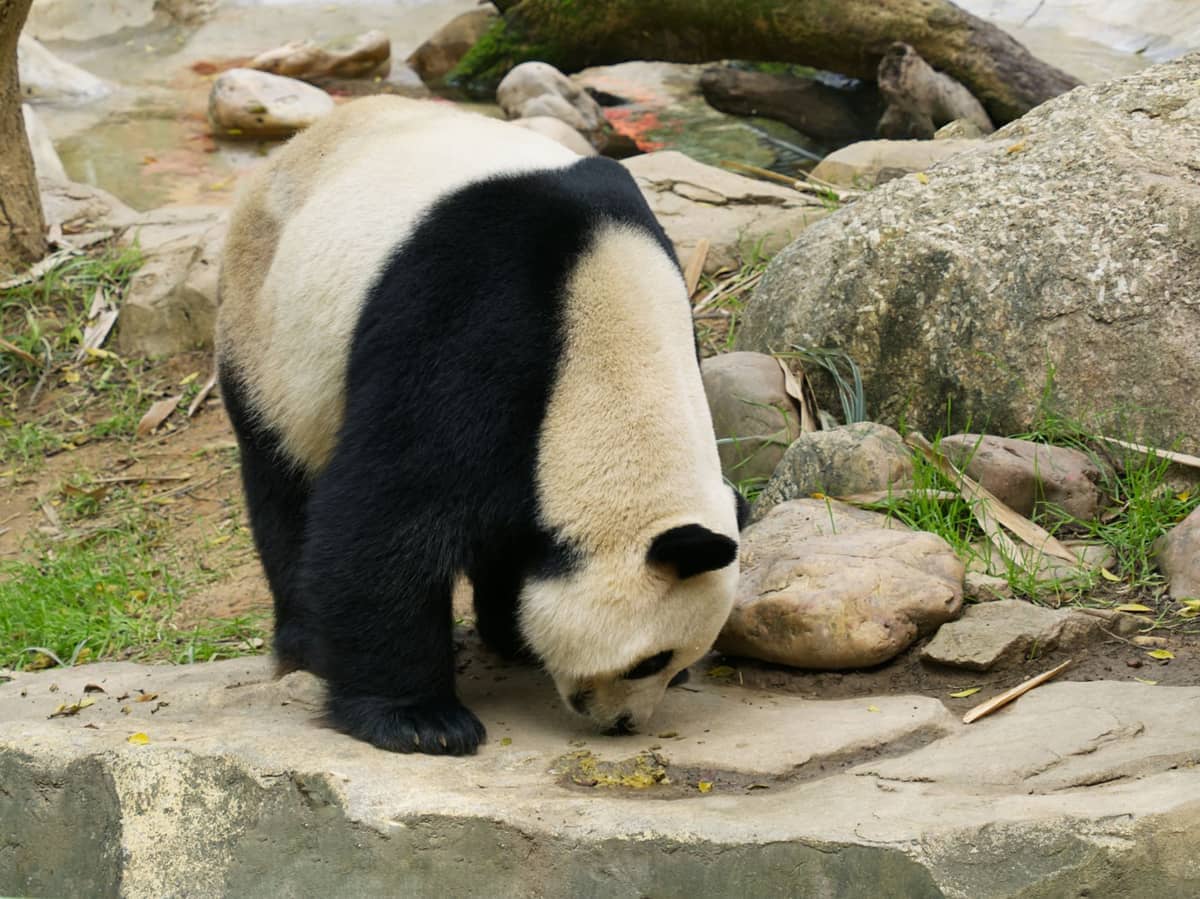
The main entrance deposits you onto a central axis that branches off toward the different animal zones. The giant panda area is typically the first major draw, positioned to catch early-morning visitors. The pandas are most active in cooler temperatures, so a 9 am arrival gives you a meaningfully better experience than arriving mid-afternoon, when they're likely resting. The enclosure is reasonably sized, though you'll be sharing the viewing area with a crowd on any weekend.
The primate section is one of the more engaging parts of the zoo — the enclosures here tend to keep animals visible and active, and younger visitors in particular respond to the chimpanzee and orangutan displays. The big cat houses are worth walking through, and the African ungulate area provides a bit of visual scale. The reptile house is a darker, quieter space that some visitors find surprisingly absorbing, especially on hot afternoons when you're looking for shade and a change of pace.
The aquarium and bird enclosures involve separate queuing at busier times. If these are priorities, head there first before the main pathways get congested. The children's amusement area near the center of the grounds caters specifically to families with very young children and can get loud and crowded by late morning on holidays.
ℹ️ Good to know
Opening hours reported by current travel sources are 8:00–18:00, with last admission around 16:30. Confirm the current schedule on the official site at gzzoo.com before visiting, as hours can shift.
How the Experience Changes Through the Day
Early morning, before 9:30 am, is the best window. The air is cooler, the crowds are thin, and many of the mammals are noticeably more active. You'll hear birdsong clearly, smell the damp earth and vegetation, and have room to stop and observe without people pressing around you. The light at this hour is also good for photography through enclosure glass, with less glare and reflection.
By late morning on weekends, the atmosphere shifts. The main paths fill up, particularly near the pandas and the children's zone. Food stalls do brisk business in the central area, and the ambient noise level rises considerably. This isn't necessarily a problem — the zoo is used to high-traffic days — but it changes the character of the visit from reflective to festive. If you're traveling with children who enjoy the energy of a crowd, midday on a weekend works fine.
Afternoon visits in summer (June through August) come with Guangzhou's characteristic heat and humidity. The grounds have tree cover in places, but stretches between enclosures can feel exposed. Bring water, wear light clothing, and consider whether the aquarium or reptile house might offer the most comfortable afternoon routing. In autumn and winter, afternoon visits are considerably more pleasant, and the animals in outdoor enclosures are often more active than they would be in peak summer heat.
Historical and Cultural Context
Guangzhou Zoo was established as part of a broader effort to develop public cultural and educational infrastructure in the city in the 1950s, in the early years of the People's Republic of China. Public zoos during this era were conceived as educational institutions as much as places of entertainment, a dual purpose that still echoes in the signage and layout. The Yuexiu location placed the zoo within a district that already held significant historical weight: Yuexiu is home to some of the city's oldest civic spaces and landmarks, including Zhenhai Tower and the Five Rams Statue.
The zoo has been incrementally upgraded over the decades, but it retains the character of its original construction period more than many comparable institutions in larger Chinese cities. For visitors interested in how Chinese urban leisure space evolved during the twentieth century, the zoo is a layered document of that history. If broader Guangzhou history is part of your visit, the Five Rams Statue and the Zhenhai Tower are a short distance away in Yuexiu Park.
Weather, Seasons, and When to Skip It
Guangzhou's humid subtropical climate means summer visits (June to August) are genuinely taxing. Temperatures regularly exceed 33°C with high humidity, and much of the zoo's layout requires extended outdoor walking. This doesn't make a summer visit impossible, but it does make it tiring, and it's less enjoyable for children and older visitors.
The recommended windows are October to November and March to April. Temperatures are milder, humidity drops, and the outdoor sections of the zoo are far more comfortable to walk. The gardens and tree-lined paths look their best in these months, and the animals in open-air enclosures are more active. Guangzhou's rainy season runs roughly April through September, with the heaviest rainfall in May and June. The zoo continues to operate in rain, but navigating muddy paths and managing wet children between enclosures is harder work than it sounds.
For a broader picture of when Guangzhou rewards a visit, see the guide on the best time to visit Guangzhou.
⚠️ What to skip
Visitors expecting a modern, naturalistic zoo experience may be disappointed. Some enclosures are older in design and smaller than those found in recently redesigned Chinese zoos. The zoo is honest about what it is: an affordable, accessible, long-standing public facility. Adjust expectations accordingly.
Photography, Accessibility, and Practical Notes
Photography is generally permitted throughout the grounds. Flash photography toward enclosure glass tends to produce poor results and can disturb the animals. The early-morning light, before the overhead sun flattens everything, gives the best results in outdoor sections. The indoor reptile house and aquarium require patience with low-light conditions; a camera that handles ISO noise reasonably well will serve you better than a budget smartphone in those spaces.
The zoo is accessible by stroller along its main pathways, and the flat terrain of most of the central grounds makes it manageable for visitors with limited mobility. No specific wheelchair-accessibility provisions were confirmed in available sources, so visitors with specific mobility requirements are advised to contact the zoo directly via www.gzzoo.com before visiting. Food and drink stalls are positioned throughout the grounds, and there is a more substantial restaurant area near the center. Tap water throughout Guangzhou is generally not recommended for drinking without boiling or filtration; bring sealed bottled water for the visit.
If the zoo forms part of a broader day exploring Guangzhou with children, the guide to Guangzhou with kids covers other family-oriented options across the city.
Insider Tips
- The panda enclosure has a secondary viewing angle from a slightly elevated path on the left side — most visitors stick to the main front viewing area, so this quieter angle often gives you cleaner sightlines without the crowd.
- Weekday mornings during the school term are the least crowded times, particularly Tuesday through Thursday. The difference in atmosphere between a Tuesday at 9 am and a Sunday at 11 am is substantial.
- The South Entrance, served by a different set of bus routes, can be less congested than the main gate on busy days. If you're arriving by bus from the south of Yuexiu District, this entrance can save you a noticeable amount of queuing.
- Bring your own snacks and water rather than relying entirely on in-zoo vendors, where pricing is higher and queues get long on holidays. A light bag with water, sunscreen, and a compact umbrella covers most scenarios year-round.
- Check the zoo's official WeChat account or website (www.gzzoo.com) before visiting for any scheduled animal shows, as these have their own timetables and can draw significant queues if you're not positioned early.
Who Is Guangzhou Zoo For?
- Families with children aged 3 to 12 looking for a half-day outdoor activity
- Budget travelers wanting a green, low-cost respite in the middle of Yuexiu District
- Visitors curious about Chinese public leisure culture from the mid-twentieth century
- Travelers combining a Yuexiu sightseeing day with a relaxed morning activity
- Anyone looking for a cooler, tree-lined alternative to Guangzhou's urban streetscape on a mild autumn or spring day
Nearby Attractions
Other things to see while in Yuexiu:
- Beijing Road Pedestrian Street
Beijing Road Pedestrian Street runs through the historic heart of Yuexiu District, layering modern retail over more than a thousand years of commercial history. Entry is free, the metro drops you right at the door, and the glass-covered archaeological ruins embedded in the pavement are an unexpected highlight worth stopping for.
- Canton Orchid Garden
Tucked inside Yuexiu District, the Canton Orchid Garden is a compact but carefully curated public garden dedicated entirely to orchid cultivation. At RMB 8 entry, it offers a rare pocket of calm in central Guangzhou, best appreciated in the cooler months when the flowers are at their peak.
- Ersha Island
Ersha Island sits in the Pearl River between Guangzhou Bridge and Haiyin Bridge, covering 1.26 square kilometers of parks, cultural venues, and tree-lined promenades. Free to enter and open around the clock, it offers a rare change of pace from the city's commercial core.
- Five Rams Statue
Carved from over 130 pieces of granite and completed in the late 1950s, the Five Rams Statue stands as one of Guangzhou's most recognizable landmarks. Located inside Yuexiu Park, it is free to visit and open daily, and is often best experienced in the early morning when the park is quiet and the light is soft.