Malasaña is Madrid's most storied counter-cultural neighborhood, a compact square of streets between Gran Vía and Calle de Carranza where the city's post-Franco creative explosion took root in the late 1970s. Today it balances a genuine residential character with an active bar and café scene, vintage shopping, and some of the best people-watching in the capital.
Malasaña is where Madrid reinvented itself after Franco. The neighborhood that gave birth to the Movida Madrileña still carries that energy in its low-lit bars, street art-covered walls, and the easy mix of students, artists, and long-term residents who fill Plaza del Dos de Mayo at all hours. It is one of the few central Madrid neighborhoods that manages to feel genuinely local despite being firmly on the tourist map.
Orientation: Where Malasaña Sits in Madrid
Malasaña occupies a roughly rectangular area in the Centro district, one of Madrid's most central administrative zones. Its four defining borders are Gran Vía to the south, Calle de Fuencarral to the east, Calle de Carranza to the north, and Calle de San Bernardo to the west. The entire neighborhood can be walked end to end in about fifteen minutes, which makes its density of bars, shops, and cultural spaces all the more striking.
The neighborhood sits directly north of Sol and the historic centre, separated from it by Gran Vía. To the east, Calle de Fuencarral forms a natural boundary with Chueca, Madrid's LGBTQ+ quarter, and the two neighborhoods bleed into each other along their shared edge. To the north, across Calle de Carranza, lies Chamberí, a quieter and more traditional residential district.
Administratively, Malasaña is part of what the municipality calls the Universidad neighborhood, though most residents and visitors use Malasaña as the working name. The streets follow a relatively regular grid, but the terrain has subtle undulation, and the feel shifts noticeably as you move away from Plaza del Dos de Mayo toward the edges: more commercial near Gran Vía, more residential and quieter as you approach Calle de Carranza.
ℹ️ Good to know
Malasaña and Chueca share the Fuencarral corridor, and the boundary between them is porous. If you are staying in either neighborhood, you are within easy walking distance of both.
Character and Atmosphere: What It Actually Feels Like
Mornings in Malasaña are slow and unhurried. The cafés along Calle del Espíritu Santo and the side streets near Plaza del Dos de Mayo open gradually from around 9am, and the clientele at that hour is almost entirely local: residents picking up a cortado, older neighbors reading the paper, a handful of students with laptops. The streets smell of coffee and, occasionally, last night's cigarette smoke drifting from a closed doorway. It is the kind of morning quiet that feels earned.
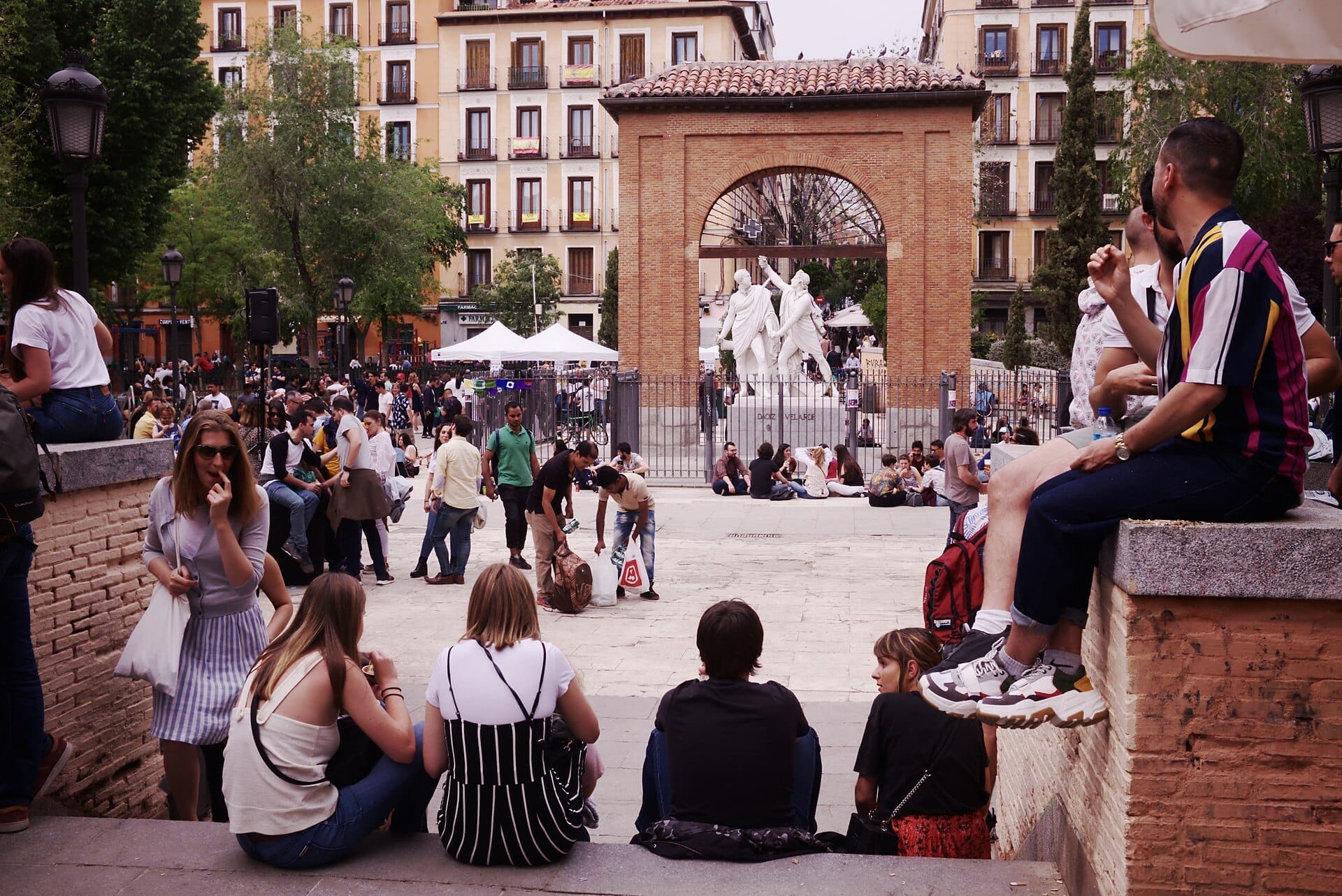
By mid-afternoon, the pace picks up. The plaza fills with people sitting on the low stone barriers around the central monument, the terraza tables outside the surrounding bars do steady business, and the vintage and independent clothing shops along Calle del Fuencarral's southern stretch and the interior streets start to see real foot traffic. The afternoon light in late spring and early autumn is especially flattering here: long shadows across the cobblestones, warm gold on the older building facades.
After dark is when Malasaña fully commits to its reputation. The streets around Calle del Barco, Calle de San Vicente Ferrer, and Calle de Valverde fill steadily from around 10pm, accelerating toward midnight and beyond. This is not a tourist theme park version of Madrid nightlife: many of the bars are small, slightly scruffy, and packed with Spanish speakers. Noise levels on weekends can be significant, particularly on streets directly adjacent to bars with outdoor seating, and this is worth accounting for when choosing accommodation.
The neighborhood carries the legacy of the Movida Madrileña, the cultural explosion that followed Franco's death in 1975, when Madrid's young creative class reclaimed public life through music, film, art, and sheer presence in public space. That history is not just mythology: it shaped the physical culture of the neighborhood, the tolerance for eccentricity, the mix of art spaces and dive bars. Today Malasaña has gentrified considerably, but it retains more of its original texture than many comparable European neighborhoods in similar positions.
What to See and Do
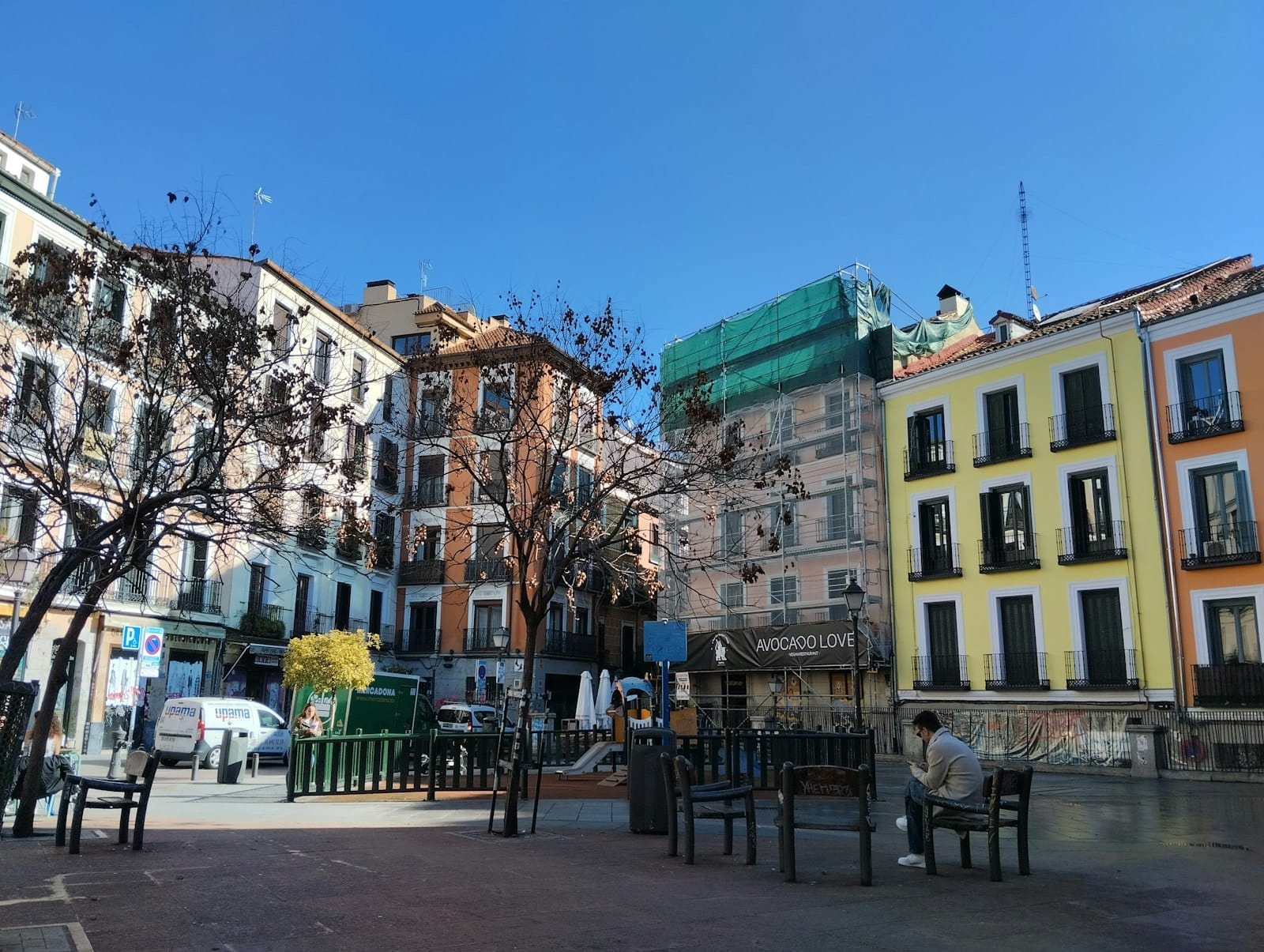
The emotional center of the neighborhood is Plaza del Dos de Mayo, a medium-sized square dominated by a monument to the Spanish officers Daoíz and Velarde, who died defending the neighborhood during the 2 May 1808 uprising against Napoleonic forces. The date is still commemorated annually with celebrations in the plaza. At any other time, the square functions as a neighborhood living room: children playing, groups of friends on the benches, the surrounding bars spilling chairs and tables onto the surrounding stones.
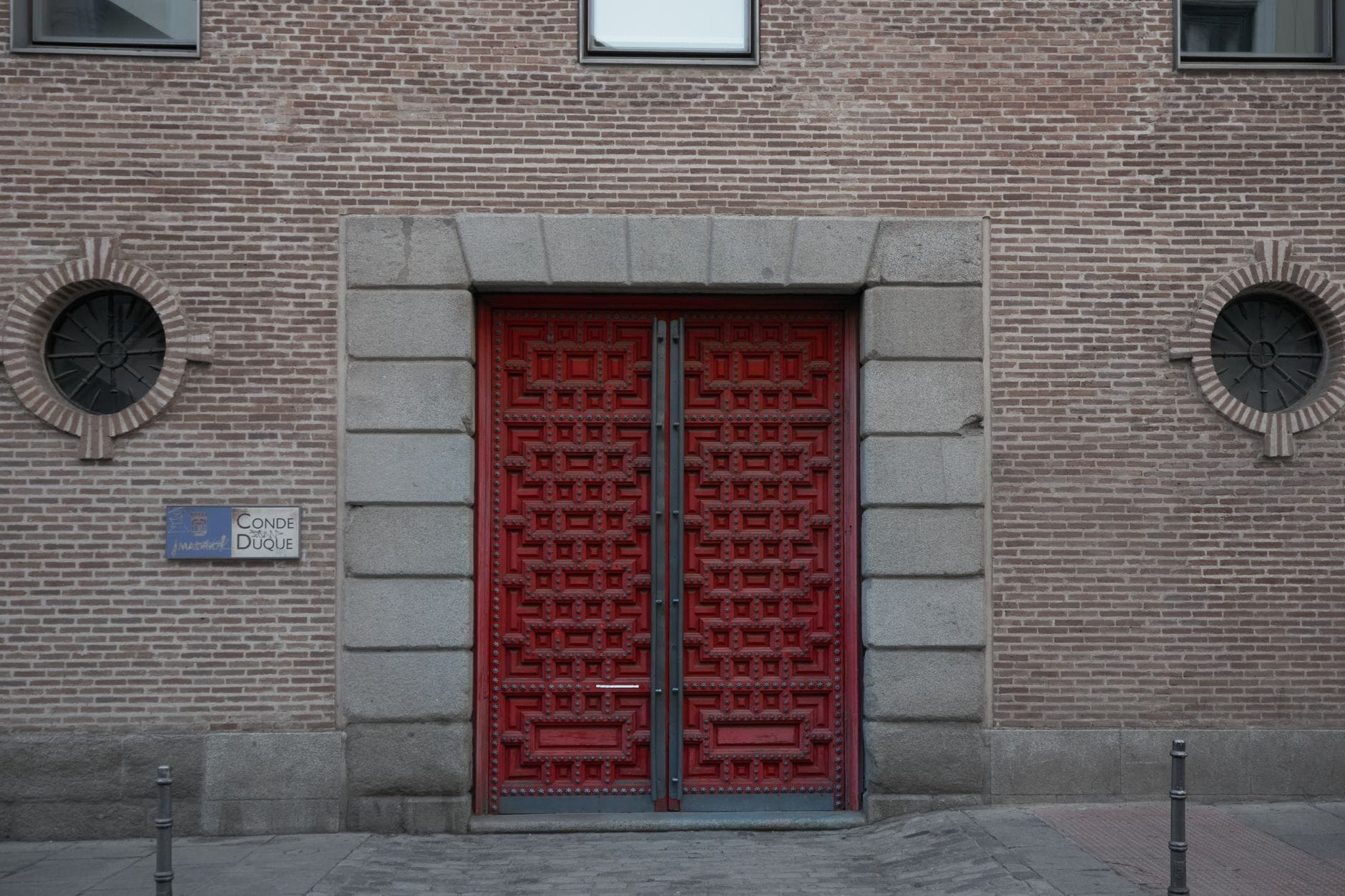
A short walk west along Calle del Conde Duque brings you to the Conde Duque Cultural Center, one of Madrid's most architecturally striking cultural venues. The building was originally an 18th-century military barracks and now houses exhibition spaces, a public library, an auditorium, and a small open-air area used for summer concerts and events. Entry to the permanent spaces is free, and temporary exhibitions are typically low-cost or free. It is an excellent stop that most visitors to Malasaña skip entirely.
The Iglesia de San Antonio de los Alemanes, on Calle de la Puebla just south of the neighborhood's core, is a 17th-century circular church with a Baroque interior featuring floor-to-ceiling frescoes. It is small, quiet, and rarely crowded, making it one of those places where the impact of the interior comes as a genuine surprise. Check current opening times before visiting, as hours can vary.
For shopping, Calle de Fuencarral is the main artery. The stretch between Gran Vía and Tribunal metro station concentrates independent fashion boutiques, vintage stores, and a handful of international brands. The side streets immediately west of Fuencarral, particularly Calle del Espíritu Santo and Calle de la Palma, have more independent and sometimes lower-profile shops worth exploring.
Plaza del Dos de Mayo: the neighborhood's central square and social hub
Conde Duque Cultural Center: free cultural programming in a converted 18th-century barracks
Iglesia de San Antonio de los Alemanes: intimate Baroque church with exceptional frescoes
Calle de Fuencarral: the main shopping street for independent and vintage fashion
Street art along Calle del Espíritu Santo and surrounding side streets
💡 Local tip
The Conde Duque Cultural Center often participates in Madrid's summer outdoor programming with concerts and film screenings. Check the Madrid city cultural calendar if you are visiting between June and September.
Eating and Drinking
Malasaña's food scene is eclectic in a way that reflects the neighborhood's demographics: a mix of traditional Madrid bars, international street food formats, specialty coffee spots, and a growing number of mid-range restaurants that serve a younger crowd. You will not find the formal white-tablecloth dining here that you get in Salamanca, but that is not the point. Most meals fall in the 12 to 25 euro range for a main course with a drink.
For tapas and traditional Spanish food, the bars clustered around Plaza del Dos de Mayo and on Calle de San Vicente Ferrer offer the kind of unpretentious bocadillos, croquetas, and patatas bravas that define Madrid's bar culture. This is also the neighborhood to explore if you are interested in the city's broader food scene: the Madrid tapas culture is alive here in a less touristic form than you will find near Sol or Plaza Mayor.
Specialty coffee arrived in Malasaña earlier than most Madrid neighborhoods, and the concentration of good third-wave cafés is high for a central area. Several spots on Calle del Espíritu Santo and near Plaza del Dos de Mayo serve well-prepared filter coffee, something that can still be very difficult to find elsewhere in Madrid.
The bar scene is the main draw after dark. Malasaña's bars tend toward low lighting, music that competes with conversation, and a loosely alternative aesthetic. There are cocktail bars, craft beer spots, and old-school cervecerías sitting within a few streets of each other. The concentration of bars means that hopping between several in a single evening is easy on foot and does not require any planning. Prices are moderate by European capital standards: a beer typically costs 2.50 to 4 euros, cocktails from around 8 to 12.
⚠️ What to skip
Malasaña is primarily a bar and drinking neighborhood rather than a serious food destination. If a high-quality dinner is your priority, consider eating in a neighboring area and returning to Malasaña afterward for drinks.
Getting There and Around
Malasaña has no single metro station at its center, but several stations on the perimeter provide straightforward access. Tribunal (Line 1 and Line 10) sits on the eastern edge at the intersection of Calle de Fuencarral and Calle de Carranza, which places you a three to four minute walk from Plaza del Dos de Mayo. Gran Vía station (Lines 1 and 5) is on the southern border and deposits you at the base of the neighborhood. Noviciado (Line 2) is useful for the western sections near Calle de San Bernardo, and Plaza de España (Lines 2, 3 and 10) is a short walk to the southwest.
The neighborhood is entirely walkable from several central Madrid points. From Puerta del Sol, the walk north up Calle de Fuencarral takes about 12 to 15 minutes and passes through the southern end of the neighborhood naturally. From Gran Vía, you can enter Malasaña directly by walking north on any of the connecting streets. For broader transit guidance across the city, the Madrid transport overview covers the metro zones and ticket options in detail.
Within Malasaña itself, everything is on foot. The streets are narrow enough that cycling can feel awkward in busier sections, though the wider streets on the perimeter have cycling infrastructure. Night buses (the N-series EMT routes) serve the surrounding streets if you need to return to the neighborhood after the metro closes, around 1:30am, with all-night service every night and increased frequency on weekends.
Where to Stay
Malasaña is a reasonable base for visitors who want to be at the center of Madrid's nightlife and creative scene without paying the premium that comes with staying directly on or around Gran Vía or near the major tourist monuments. For a broader comparison of Madrid's accommodation options by neighborhood, the where to stay in Madrid guide lays out the tradeoffs clearly.
The best streets for accommodation within Malasaña are those slightly removed from the immediate bar cluster around Plaza del Dos de Mayo: the northern section of the neighborhood toward Calle de Carranza, and the western side along and near Calle del Conde Duque, tend to be noticeably quieter at night. Streets within two or three blocks of the plaza, particularly those running east-west between Calle del Barco and Calle de la Palma, can be particularly noisy on Thursday through Saturday nights until the early hours.
The accommodation stock is dominated by small boutique hotels, apartment rentals, and a handful of hostels with a social focus. There are no large chain hotels inside the neighborhood's core boundaries. This suits independent travelers well but means less consistency in service and facilities than you might find in Salamanca or the Gran Vía corridor.
💡 Local tip
If you are a light sleeper, ask specifically about street-facing rooms on lower floors before booking. Upper floors on interior-facing rooms are significantly quieter on weekend nights.
Malasaña and the Wider City: How It Connects
One of Malasaña's genuine advantages as a base is its position relative to the rest of Madrid. The city's three great art museums, the Museo del Prado, the Museo Reina Sofía, and the Museo Thyssen-Bornemisza are all reachable in 20 to 30 minutes by metro or a longer walk south. The Royal Palace, Plaza Mayor, and the old city core are under 20 minutes on foot.
For visitors planning a full city itinerary, Malasaña works well as an evening base after daytime excursions to other parts of Madrid. The neighborhood's bar and café culture means there is always somewhere to land at the end of the day. If you are planning multiple days in the city, the 3-day Madrid itinerary shows how Malasaña fits into a broader visit, and the Madrid nightlife guide covers the full city's late-night options with Malasaña as a central reference point.
TL;DR
Malasaña is Madrid's most character-rich central neighborhood, shaped by the post-Franco Movida Madrileña and still carrying genuine alternative energy despite considerable gentrification.
Best for: travelers who want to experience real Madrid neighborhood life, a strong bar and café scene, independent shopping, and proximity to the historic center without the full tourist-trap atmosphere.
The area around Plaza del Dos de Mayo and the Conde Duque Cultural Center rewards slow exploration on foot; most of what makes Malasaña worthwhile cannot be rushed.
Night noise is a real consideration: streets near the bar cluster can be loud until 3am or later on weekends, and accommodation choices within the neighborhood should be made with this in mind.
Transit access is excellent via Tribunal, Gran Vía, and Noviciado metro stations, and the entire neighborhood is walkable from Sol, Gran Vía, and Chueca.
Three days in Madrid is enough to cover the Royal Palace, the world-class Art Triangle museums, Retiro Park, and the city's most rewarding neighborhoods. This itinerary is built around real logistics, free entry windows, and practical advice on where to spend your time and where to skip.
Madrid is one of Europe's great museum cities. The Prado, Reina Sofía, and Thyssen-Bornemisza alone would justify a week, but the city also hides royal convents, Goya frescoes, and lavish private palaces that most visitors never find. This guide covers every museum worth your time, with practical advice on free hours, passes, and crowd strategy.
Madrid rewards visitors year-round, but the best time to visit depends on your priorities. This guide covers weather patterns, crowd levels, hotel prices, and key events for every season so you can choose the trip that actually suits you.
Madrid rewards those who look up and climb higher. Whether you want a sundowner drink with skyline views or a free panoramic terrace above the city's rooftops, this guide covers the best vantage points in the capital, from iconic cultural landmarks to the most atmospheric rooftop bars.
Madrid sits at the geographic heart of Spain, putting some of the country's most remarkable cities and landscapes within an hour or two by train. This guide covers the best day trips from Madrid, from UNESCO World Heritage cities to royal palaces and medieval walls.
Madrid is one of Europe's most generous cities for budget travelers. From world-class museums with free evening hours to royal gardens, ancient temples, and legendary flea markets, you can fill days with remarkable experiences without paying a single euro.
Madrid has one of Europe's most extensive public transport networks, covering the metro, city buses, night services, and direct airport links from Adolfo Suárez Madrid-Barajas Airport. This guide breaks down every option with real prices, schedules, and the practical knowledge to move around the city without stress.
Madrid rewards curious visitors who look beyond the Prado and Plaza Mayor. From a royal convent hiding five centuries of treasures to a park that erupts in almond blossom each February, these are the experiences that most tourists never find but locals quietly love.
Madrid punches well above its weight as a luxury destination. This guide covers the best five-star hotels, designer shopping streets, fine dining, and cultural experiences that make the Spanish capital one of Europe's most rewarding upscale city breaks.
Madrid's built environment tells six centuries of history across a single city. This guide walks you through the key architectural periods, the most significant buildings, and how to plan a self-guided tour without wasting a day on tourist traps.
Madrid transforms into one of Europe's most festive cities each December, with illuminated boulevards, outdoor markets, and a calendar packed with seasonal events. This guide covers every major Christmas market, the best neighborhoods for lights, practical timing advice, and what to skip.
Madrid's religious heritage goes far deeper than its famous cathedral. The city holds royal convents still inhabited by nuns, a basilica with one of the world's largest domes, a hermitage painted by Goya, and an Egyptian temple reconstructed in a city park. This guide covers the best of them all.
Madrid is one of Spain's premier flamenco destinations, with daily shows running year-round across tablaos, dedicated theaters, and cultural festivals. This guide breaks down the best venues, clear price comparisons, what to avoid, and how to book smart.
Madrid's food scene rewards the curious and punishes the impatient. This guide covers the essential dishes you shouldn't leave without trying, where to find them, what to pay, and how to eat like a local — from a €3 breakfast espresso to a late-night tapa in La Latina.
Madrid rewards couples with an exceptional mix of grand parks, world-class art, intimate flamenco shows, and long evening meals that stretch well past midnight. This guide covers the best romantic things to do in Madrid Spain, from free sunset viewpoints to splurge-worthy experiences worth every euro.
The Sierra de Guadarrama sits just about an hour to 90 minutes from central Madrid and offers over 80 km of marked trails through pine forests, granite peaks, and high mountain passes. This guide covers the best hiking areas, how to get there by bus or train, and what to do in the city to prepare for your mountain day.
Spring is widely considered the best time to visit Madrid, with mild temperatures, long days, and a packed festival calendar. This guide breaks down what each month actually looks and feels like, from April showers to June's first heat, so you can plan without surprises.
Summer in Madrid means intense heat, long evenings, and a city that runs on its own schedule. This guide covers everything from surviving 38°C afternoons to finding shade in Retiro, timing museum visits, and understanding why August feels like a different city entirely.
Madrid transforms in winter into one of Europe's most festive cities, with over 240 illuminated locations, a Christmas market in Plaza Mayor, and the spectacular Cabalgata de Reyes on 5 January. This guide covers what to expect from the weather, where to find the best markets, how to experience Epiphany like a local, and practical tips for navigating the city in the cold months.
Madrid's market scene spans 19th-century iron halls, neighborhood produce markets, gourmet food halls, and one of Europe's great flea markets. This guide covers the best of each category, with practical tips on when to go, what to eat, and which markets are worth your time.
Madrid nightlife runs on a schedule unlike anywhere else in Europe. Bars don't fill until midnight, clubs peak at 3am, and the city doesn't sleep until sunrise. This guide covers the best districts, venues, realistic costs, and the timing rules that separate a great night from an expensive disappointment.
Madrid is one of Europe's most affordable capitals once you know where to look. This guide breaks down realistic daily costs, free museum windows, budget food strategies, and transport tricks to help you see the best of the city without overspending.
Seven days in Madrid gives you enough time to cover the world-class museums, explore distinct neighborhoods, eat well, and still fit in a day trip or two. This guide breaks it all down day by day, with practical logistics, tested recommendations, and the details most itineraries skip.
Madrid ranks among Europe's safer capital cities, but tourists face real risks from pickpocketing, distraction theft, and a handful of well-documented scams. This guide breaks down the actual threats, neighborhood by neighborhood, and gives you practical tools to stay safe without being paranoid.
Every May, Madrid throws one of Europe's great city festivals in honour of San Isidro Labrador. From free open-air concerts and religious processions to the world's most prestigious bullfighting fair, this guide covers everything you need to plan your visit.
Madrid is one of Europe's great shopping cities, with options ranging from high-street chains on Gran Vía to designer boutiques on Calle Serrano and centuries-old flea markets in La Latina. This guide breaks down every major shopping zone, market, and mall by budget, style, and practicality.
Madrid is one of Europe's most rewarding cities for solo travelers. This guide covers everything from navigating the metro alone to dining at tapas bars without awkwardness, plus straightforward safety advice, neighborhood breakdowns, and practical logistics for first-timers and seasoned solo travelers alike.
Madrid is one of Europe's great cities for eating at the bar, moving from spot to spot, and drinking cold beer with small plates of food. This guide covers the best tapas neighborhoods, top bars, realistic prices, timing advice, and everything you need to do a proper crawl without looking like a tourist.
Traveling from Madrid to Lisbon involves more choices than most travelers expect. This guide breaks down every realistic option — flight, bus, and train — with straightforward advice on cost, time, and what to book first.
The Madrid to Seville route is one of Spain's most travelled intercity connections, and you have more options than ever. This guide covers AVE train times, low-cost operators, bus routes, driving, and exactly how to get the best fare.
The Madrid to Valencia route is one of Spain's most travelled corridors, served by multiple high-speed train operators with journey times under two hours. This guide covers every transport option, how to get the best fares, which stations to use, and what to know before you go.
Spain's two great cities each make a compelling case. Madrid is the capital, the art powerhouse, and the city that never sleeps. Barcelona has Gaudí, the Mediterranean, and a culture distinct from the rest of Spain. This guide breaks down the real differences so you can choose, or plan to do both.
Madrid's historic core is compact enough that you can cover its greatest landmarks on foot, entirely on your own schedule. This guide breaks down the best self-guided walking routes by theme and distance, with real pricing, opening hours, app recommendations, and practical advice on when to walk and what to skip.
Madrid is one of Europe's most underrated family destinations, with free museum entry for children under 18 at some major museums, sprawling parks, three theme parks within day-trip range, and a metro system that cuts fares for young travellers. This guide covers everything families need to plan a smooth, enjoyable trip.
Madrid rewards visitors who go beyond the obvious. This guide covers the top things to do in Madrid Spain, from world-class art museums and the Royal Palace to Sunday flea markets, flamenco tablaos, and the city's best parks, with practical tips on free entry times, seasonal crowds, and neighborhood logic.
Madrid's food scene spans centuries-old taverns, world-class tasting menus, and multicultural street-level dining. This guide breaks down the best restaurants by neighborhood and budget, with practical booking advice and frank takes on what to skip.
Choosing where to stay in Madrid shapes your entire trip. This guide breaks down the city's key neighborhoods by atmosphere, price range, and practical location, so you can pick the right base from the start.