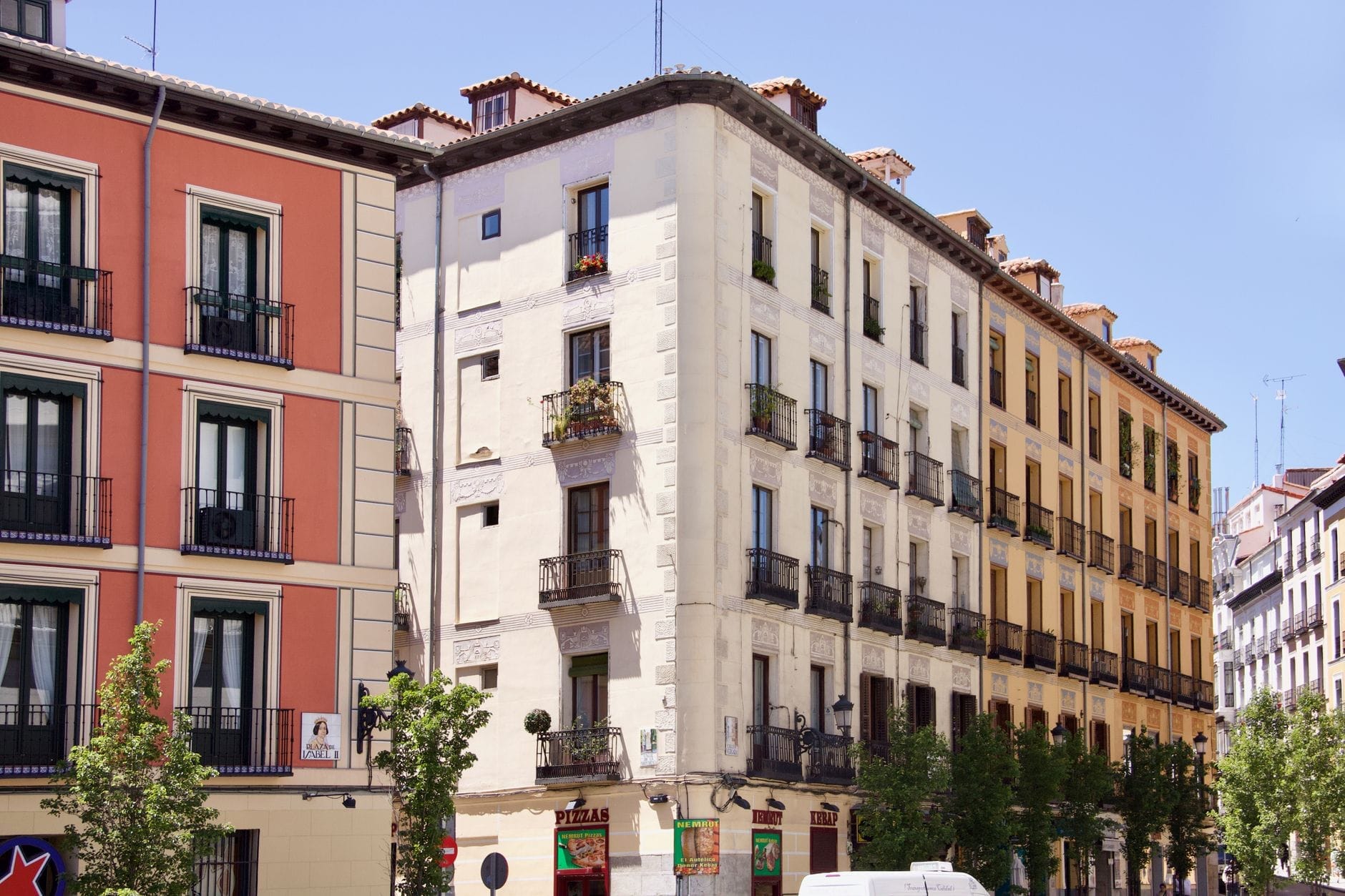
Chueca is the heart of Madrid's LGBTQ+ scene and one of the city's most socially open, commercially diverse neighborhoods. Centered on the small but lively Plaza de Chueca, it blends independent boutiques, excellent food markets, terrace cafés, and a nightlife culture that draws residents and visitors alike. Whether you come for brunch, shopping, or a night out, Chueca has a distinct energy that sets it apart from every other corner of the city.
Chueca is Madrid's most openly expressive neighborhood: a compact grid of streets between Gran Vía and Alonso Martínez where independent shops, terrace bars, and a deeply rooted LGBTQ+ identity shape everything from the shop fronts to the conversation at the next table. It is not a theme-park version of tolerance; it is a genuinely lived-in place that happens to also throw some of the best street parties in Spain.
Orientation
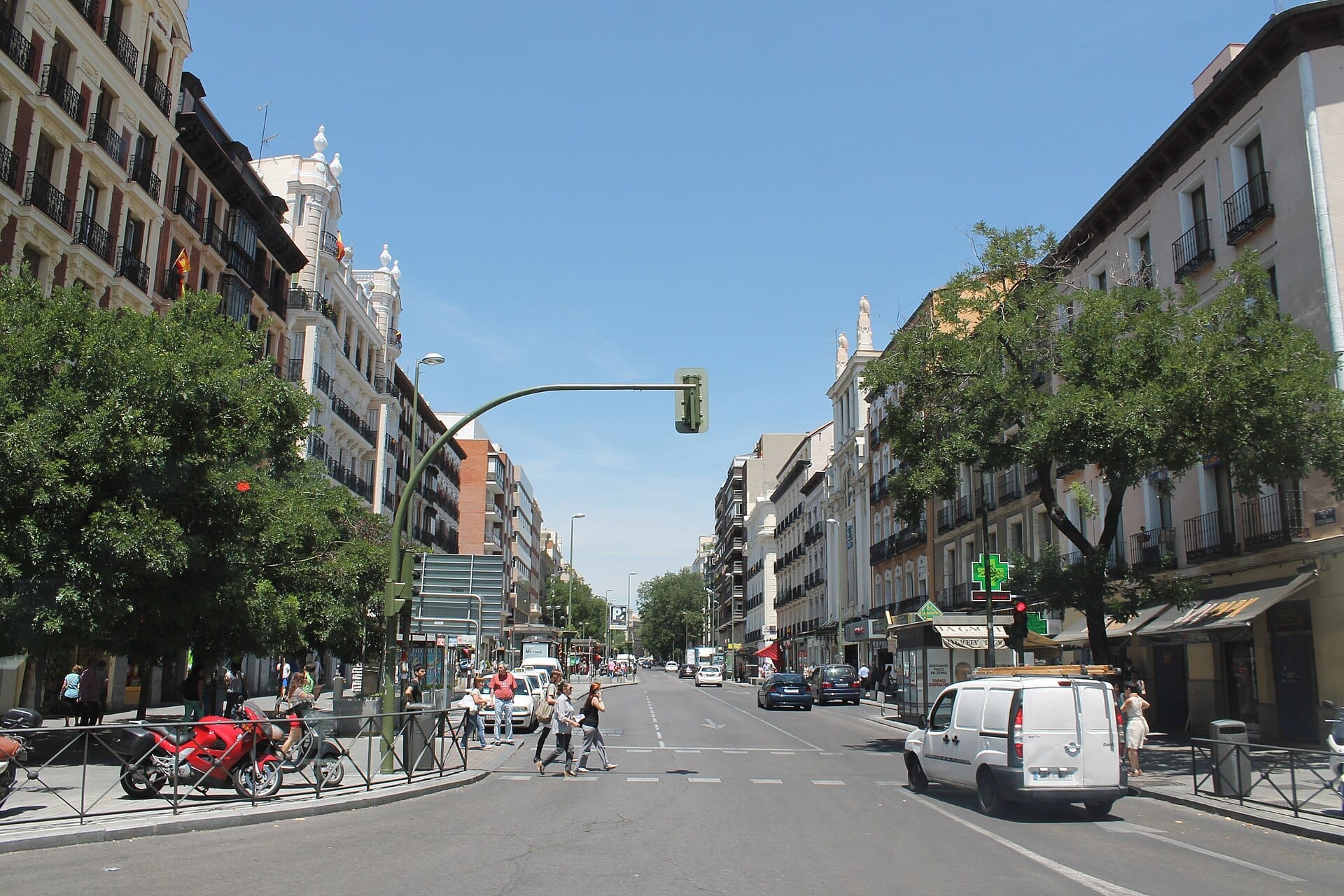
Chueca sits in the Justicia district, just north of the historic city core. Its rough boundaries run south along Gran Vía, north toward Calle de Santa Engracia and the edge of Alonso Martínez, west into the streets of Malasaña, and east toward Calle de Génova and the beginning of Almagro. In practice, most visitors experience Chueca as the blocks radiating outward from Plaza de Chueca itself: Calle de Pelayo running south, Calle de Fuencarral to the west, Calle de Hortaleza to the east, and Calle de Augusto Figueroa cutting across the middle.
The neighborhood connects naturally to several adjacent areas. Walk two blocks south along Calle de Fuencarral and you reach Gran Vía and the commercial center of Madrid. Head west along any cross street and within ten minutes you are in Malasaña, Chueca's slightly grungier, more bohemian neighbor. Go east and you approach the more residential streets of Chamberi and, further along, the beginning of the Salamanca district. This central position makes Chueca one of the easiest neighborhoods in Madrid to use as a base.
The street grid is tight and regular, which helps with navigation. Most blocks are short enough that a wrong turn costs you thirty seconds, not thirty minutes. The terrain is essentially flat, with no meaningful inclines, so getting around on foot is straightforward at any pace.
Character & Atmosphere
Early mornings in Chueca belong to the locals. Around 8am, the cafés on Calle de Augusto Figueroa start filling with people drinking café con leche at the bar, talking quickly, checking phones. The street cleaners are still out. The shutters on the boutiques are still down. At this hour, Chueca feels like any other central Madrid barrio: working-class-turned-gentrified, with older residents collecting bread and younger ones heading to the metro.
By mid-morning, the neighborhood shifts register. The Mercado de San Antón on Calle de Augusto Figueroa starts drawing food shoppers and tourists to its stalls. The terrace chairs on Plaza de Chueca fill up. The boutiques on Calle de Pelayo and Calle de Hortaleza open their doors and prop them wide, spilling music onto the pavement. On a weekday in spring, the square itself functions as a kind of village green: dog walkers, people eating takeaway sandwiches, a few tourists consulting maps.
Afternoons in summer can feel intense. The sun hits the square directly and the temperature climbs well above 30°C. Most activity retreats indoors or into shaded terraces between 2pm and 6pm. This is the time to sit inside a café, explore the covered floors of San Antón, or duck into a gallery. The light returns to something beautiful around 7pm, when the sun drops enough to cast long shadows across the terracotta facades and the streets fill again.
Weekends are where Chueca becomes definitively itself. Friday and Saturday nights, Calle de Pelayo and the streets around Plaza de Chueca are packed. The crowd is mixed in age, nationality, and identity in a way that feels entirely unforced. Bars spill onto the street. Music competes from multiple doorways. People move between venues in loose groups. The atmosphere stays up well past 3am without tipping into the kind of aggressive energy you sometimes get in larger club districts. It is loud, sociable, and rarely threatening.
ℹ️ Good to know
During Madrid's LGBTQ+ Pride celebrations, typically held in late June and early July, Chueca becomes the epicenter of one of Europe's largest Pride events. The streets are closed to traffic, stages are set up, and the neighborhood hosts hundreds of thousands of visitors over several days. If you plan to visit during this period, book accommodation months in advance.
What to See & Do
Plaza de Chueca is the neighborhood's gravitational center and a good place to start any visit. The square itself is modest in size, lined with café terraces and the facade of the old pharmacy that anchors one corner. It functions more as a meeting point and social hub than a conventional tourist sight, but standing in it for twenty minutes gives you a clear read on the neighborhood's pace and personality.
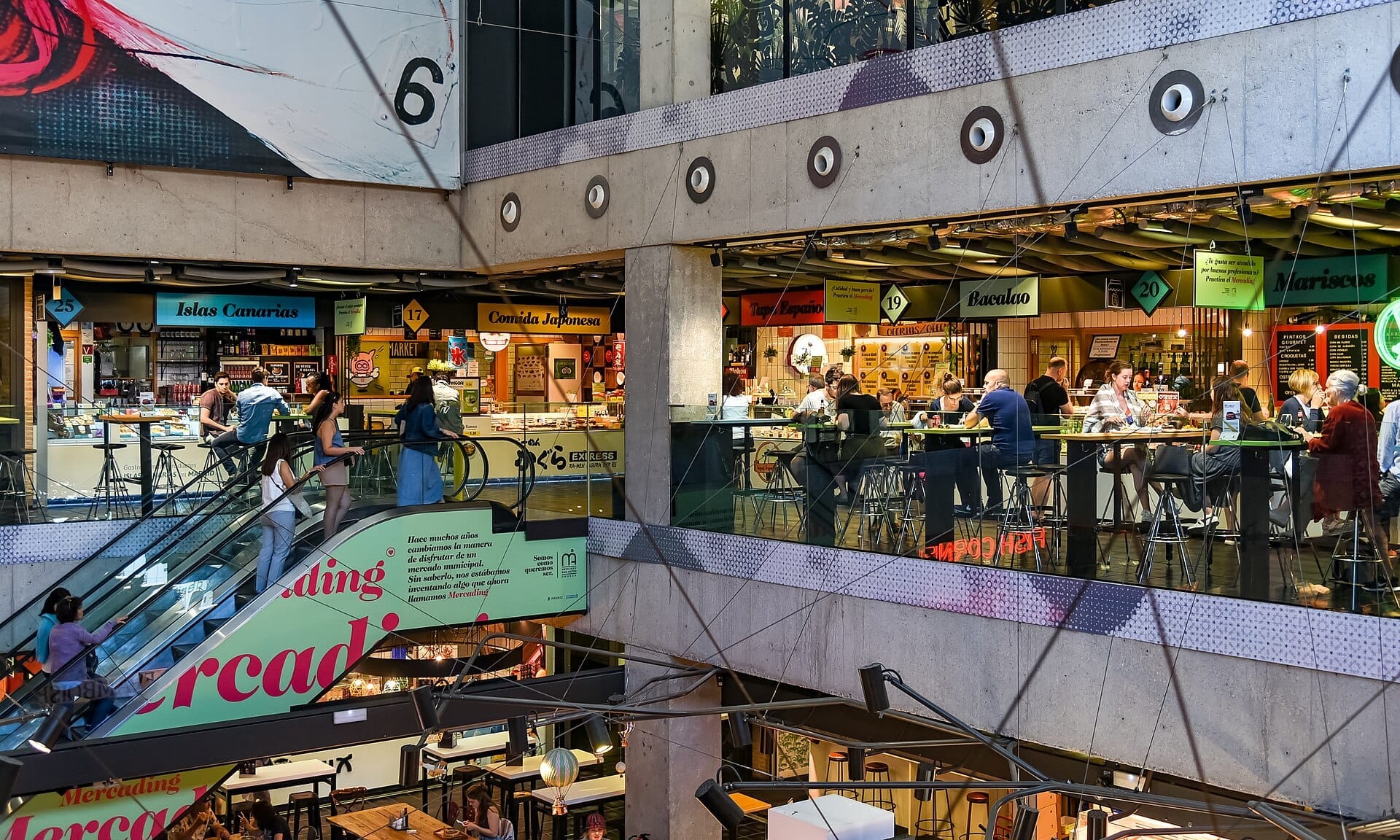
The Mercado de San Antón on Calle de Augusto Figueroa is one of the better food markets in central Madrid. Unlike the purely tourist-facing Mercado de San Miguel near Plaza Mayor, San Antón operates across multiple floors with a traditional fresh-produce market on the ground level, food stalls and tapas bars on the middle floor, and a rooftop terrace bar on top. It draws both residents doing their weekly shopping and visitors grazing through the stalls, which keeps it from feeling like a performance.
Shopping is a genuine draw in Chueca. Calle de Fuencarral forms the western border of the neighborhood and is one of Madrid's best streets for independent fashion, streetwear, and concept stores, with a concentration of shops that runs from Gran Vía all the way up to Tribunal. The side streets, particularly Calle de Pelayo and Calle de Hortaleza, carry the same energy in a smaller format: vintage clothing, design shops, bookstores, and a handful of studios selling local artists' work.
For a longer cultural detour, the Museo de Historia de Madrid is a short walk north on Calle de Fuencarral and houses a detailed chronicle of Madrid's urban development from the 16th century onward, including a large-scale model of the city as it looked in 1830. Entry is free, the building is a restored 18th-century hospice with a notable baroque doorway, and it rarely feels crowded.
Plaza de Chueca: the neighborhood's central square and social anchor
Mercado de San Antón (Calle de Augusto Figueroa): three-floor food market with rooftop terrace
Calle de Pelayo: the main shopping and bar street running south from the plaza
Calle de Fuencarral: Madrid's best independent fashion corridor along the western boundary
Calle de Hortaleza: boutiques, cafés, and gallery spaces heading east
Museo de Historia de Madrid: free city history museum a short walk north
💡 Local tip
The rooftop terrace at Mercado de San Antón is well worth going up to, especially in the late afternoon. You get unobstructed views over the rooftops of central Madrid, and it is far less crowded than the rooftop bars along Gran Vía.
Eating & Drinking
Chueca has one of the most varied eating scenes of any Madrid neighborhood its size. The range runs from no-frills traditional tabernas to considered modern Spanish cooking, with a strong current of international restaurants reflecting the neighborhood's cosmopolitan character. For a broader overview of what Madrid does well at the table, the Madrid food guide covers the city's culinary landscape in detail, but Chueca specifically rewards dedicated exploration.
The streets around Plaza de Chueca are lined with terrace bars that do a solid trade in vermouth and small plates during the midday aperitivo hour, roughly noon to 2pm. Ángel Sierra, on the corner of the square itself, is one of the oldest bars in the neighborhood and still draws a loyal crowd for its draught vermouth served from the tap. The bar has been operating for well over a century and its interior, tiled and wood-paneled, looks the part.
For sit-down dining, Calle de Libertad and the surrounding blocks have a concentration of restaurants covering Peruvian, Japanese, Lebanese, and contemporary Spanish cooking, generally in the mid-range price bracket of 15 to 30 euros per person for a full meal with a drink. The neighborhood also has a strong brunch culture, particularly on weekend mornings when cafés on Calle de Hortaleza fill up with people staying for eggs and coffee well into the early afternoon.
The bar and nightlife scene is substantial and anchored around Calle de Pelayo and the side streets connecting toward Calle de Recoletos. This is not a club district in the sense that Malasaña's Calle del Pez or the venues around Madrid's broader nightlife circuit can be; Chueca runs more on bar-to-bar movement than on large-format club nights. Most bars are open until 3am on weekends, with a smaller number staying open later. The atmosphere across most venues is inclusive and the music tends toward pop and dance rather than anything harder.
Ángel Sierra: historic tiled bar on Plaza de Chueca, vermouth from the tap, very local
Mercado de San Antón: mid-floor stalls ideal for grazing on jamón, cheese, and cooked dishes
Calle de Libertad: good concentration of mid-range international and Spanish restaurants
Calle de Hortaleza: weekend brunch cafés with outdoor seating
Calle de Pelayo: the main corridor for bar-hopping on weekend nights
⚠️ What to skip
On Friday and Saturday nights, the streets immediately around Plaza de Chueca can get significantly crowded from about 11pm onward. If you have mobility concerns or prefer quieter dining, aim to eat by 9pm and move away from the square before midnight. The noise on terraces facing the plaza stays high until at least 2am on weekends.
Getting There & Around
The neighborhood is served directly by Metro Chueca on Line 5 (the blue line), which puts you at the eastern edge of the neighborhood, a two-minute walk from Plaza de Chueca. Metro Tribunal on Lines 1 and 10 (the light blue and dark blue lines) covers the northern section of Calle de Fuencarral and is useful if you are coming from Sol, Atocha, or Gran Vía. Both stations are small and rarely congested outside of rush hours.
Gran Vía station, shared by Lines 1 and 5, sits at the southern boundary and is one of the main interchanges in central Madrid; if you are coming from the airport, you typically connect via Line 8 to Nuevos Ministerios and then change to Line 10 or commuter rail rather than directly to Gran Vía. From Gran Vía station, walk north along Calle de Fuencarral and you enter Chueca within two to three minutes.
On foot, Chueca is within easy walking distance of most central Madrid destinations. It is roughly ten to twelve minutes from Puerta del Sol, fifteen minutes from the Museo del Prado (walking briskly), and five minutes from the southern end of Gran Vía. For those using EMT city buses, several routes use Calle de Fuencarral and Calle de Génova as corridors, connecting Chueca to the wider metro network of buses.
If you are planning to combine Chueca with a day of wider sightseeing, the guide to getting around Madrid covers the Metro zone system, bus routes, and practical tips for navigating the city without overspending on transport.
Where to Stay
Chueca is a solid base for visitors who want to be central without being in the middle of the Sol-Plaza Mayor tourist corridor. The accommodation stock ranges from boutique hotels in renovated 19th-century buildings on the quieter streets north of the square to smaller guesthouses and apartment rentals along the more active streets near Calle de Pelayo. For a broader comparison of where to base yourself across the city, the where to stay in Madrid guide covers the tradeoffs between neighborhoods.
The best streets for accommodation in Chueca are those that sit between the plaza and the quieter northern end of the neighborhood, toward Alonso Martínez. These streets get the daytime energy of the neighborhood without the late-night noise that affects the blocks directly on Calle de Pelayo and the plaza-facing buildings. If you are a light sleeper and still want to stay in the area, look for rooms in buildings set back from the main bar streets or with interior-facing windows.
Chueca is particularly well suited to solo travelers, couples, and LGBTQ+ visitors who want to be in a socially open neighborhood with good food, easy transit connections, and a street life that stays interesting at multiple times of day. Families with young children may find the late-night energy on weekends disruptive, and the lack of large green spaces immediately in the neighborhood means that traveling with kids works better if you are willing to take the metro to Retiro for outdoor time.
Practical Considerations
Chueca is generally considered a safe neighborhood by Madrid standards, and its central location and high foot traffic at most hours contribute to that. Standard city precautions apply: watch your pockets in crowded bar areas on weekend nights, and be alert around ATMs after dark. For broader advice on staying safe while traveling in Madrid, the Madrid safety tips guide covers the key points without overstating risks.
Noise is the main drawback for anyone staying in the neighborhood. The streets around Plaza de Chueca stay active until well after 2am on weekends throughout the year, and until 3am or later during summer months when the terraces operate on extended hours. This is not unique to Chueca among central Madrid neighborhoods, but it is worth factoring into your accommodation choice. The neighborhood does not have a notably touristy strip that you need to avoid for pricing purposes: most restaurants and bars are priced for a mixed local and visiting crowd, not inflated for tourists passing through.
If you are visiting Chueca as part of a wider Madrid trip, it connects naturally with an itinerary that includes Malasaña to the west and the Alonso Martínez area to the north. Budget a half-day for shopping and lunch, a full day if you add the Museo de Historia and a proper sit-down dinner. For those on a tighter budget, Madrid on a budget has practical advice on where to eat and drink without spending more than necessary.
TL;DR
Chueca is Madrid's LGBTQ+ neighborhood and a notably open, socially mixed area of the city with strong food, shopping, and nightlife credentials.
Best for: LGBTQ+ travelers, couples, solo visitors, anyone who wants a lively, central base with good independent shops and restaurants.
Key attractions: Plaza de Chueca, Mercado de San Antón, Calle de Fuencarral, Calle de Pelayo bar scene.
Transit: Metro Chueca (Line 5) and Metro Tribunal (Line 1) both serve the neighborhood, with Gran Vía station at the southern edge.
Main drawback: Weekend nights are loud and the streets around the plaza stay active until 2-3am. Light sleepers should choose accommodation carefully.
Three days in Madrid is enough to cover the Royal Palace, the world-class Art Triangle museums, Retiro Park, and the city's most rewarding neighborhoods. This itinerary is built around real logistics, free entry windows, and practical advice on where to spend your time and where to skip.
Madrid is one of Europe's great museum cities. The Prado, Reina Sofía, and Thyssen-Bornemisza alone would justify a week, but the city also hides royal convents, Goya frescoes, and lavish private palaces that most visitors never find. This guide covers every museum worth your time, with practical advice on free hours, passes, and crowd strategy.
Madrid rewards visitors year-round, but the best time to visit depends on your priorities. This guide covers weather patterns, crowd levels, hotel prices, and key events for every season so you can choose the trip that actually suits you.
Madrid rewards those who look up and climb higher. Whether you want a sundowner drink with skyline views or a free panoramic terrace above the city's rooftops, this guide covers the best vantage points in the capital, from iconic cultural landmarks to the most atmospheric rooftop bars.
Madrid sits at the geographic heart of Spain, putting some of the country's most remarkable cities and landscapes within an hour or two by train. This guide covers the best day trips from Madrid, from UNESCO World Heritage cities to royal palaces and medieval walls.
Madrid is one of Europe's most generous cities for budget travelers. From world-class museums with free evening hours to royal gardens, ancient temples, and legendary flea markets, you can fill days with remarkable experiences without paying a single euro.
Madrid has one of Europe's most extensive public transport networks, covering the metro, city buses, night services, and direct airport links from Adolfo Suárez Madrid-Barajas Airport. This guide breaks down every option with real prices, schedules, and the practical knowledge to move around the city without stress.
Madrid rewards curious visitors who look beyond the Prado and Plaza Mayor. From a royal convent hiding five centuries of treasures to a park that erupts in almond blossom each February, these are the experiences that most tourists never find but locals quietly love.
Madrid punches well above its weight as a luxury destination. This guide covers the best five-star hotels, designer shopping streets, fine dining, and cultural experiences that make the Spanish capital one of Europe's most rewarding upscale city breaks.
Madrid's built environment tells six centuries of history across a single city. This guide walks you through the key architectural periods, the most significant buildings, and how to plan a self-guided tour without wasting a day on tourist traps.
Madrid transforms into one of Europe's most festive cities each December, with illuminated boulevards, outdoor markets, and a calendar packed with seasonal events. This guide covers every major Christmas market, the best neighborhoods for lights, practical timing advice, and what to skip.
Madrid's religious heritage goes far deeper than its famous cathedral. The city holds royal convents still inhabited by nuns, a basilica with one of the world's largest domes, a hermitage painted by Goya, and an Egyptian temple reconstructed in a city park. This guide covers the best of them all.
Madrid is one of Spain's premier flamenco destinations, with daily shows running year-round across tablaos, dedicated theaters, and cultural festivals. This guide breaks down the best venues, clear price comparisons, what to avoid, and how to book smart.
Madrid's food scene rewards the curious and punishes the impatient. This guide covers the essential dishes you shouldn't leave without trying, where to find them, what to pay, and how to eat like a local — from a €3 breakfast espresso to a late-night tapa in La Latina.
Madrid rewards couples with an exceptional mix of grand parks, world-class art, intimate flamenco shows, and long evening meals that stretch well past midnight. This guide covers the best romantic things to do in Madrid Spain, from free sunset viewpoints to splurge-worthy experiences worth every euro.
The Sierra de Guadarrama sits just about an hour to 90 minutes from central Madrid and offers over 80 km of marked trails through pine forests, granite peaks, and high mountain passes. This guide covers the best hiking areas, how to get there by bus or train, and what to do in the city to prepare for your mountain day.
Spring is widely considered the best time to visit Madrid, with mild temperatures, long days, and a packed festival calendar. This guide breaks down what each month actually looks and feels like, from April showers to June's first heat, so you can plan without surprises.
Summer in Madrid means intense heat, long evenings, and a city that runs on its own schedule. This guide covers everything from surviving 38°C afternoons to finding shade in Retiro, timing museum visits, and understanding why August feels like a different city entirely.
Madrid transforms in winter into one of Europe's most festive cities, with over 240 illuminated locations, a Christmas market in Plaza Mayor, and the spectacular Cabalgata de Reyes on 5 January. This guide covers what to expect from the weather, where to find the best markets, how to experience Epiphany like a local, and practical tips for navigating the city in the cold months.
Madrid's market scene spans 19th-century iron halls, neighborhood produce markets, gourmet food halls, and one of Europe's great flea markets. This guide covers the best of each category, with practical tips on when to go, what to eat, and which markets are worth your time.
Madrid nightlife runs on a schedule unlike anywhere else in Europe. Bars don't fill until midnight, clubs peak at 3am, and the city doesn't sleep until sunrise. This guide covers the best districts, venues, realistic costs, and the timing rules that separate a great night from an expensive disappointment.
Madrid is one of Europe's most affordable capitals once you know where to look. This guide breaks down realistic daily costs, free museum windows, budget food strategies, and transport tricks to help you see the best of the city without overspending.
Seven days in Madrid gives you enough time to cover the world-class museums, explore distinct neighborhoods, eat well, and still fit in a day trip or two. This guide breaks it all down day by day, with practical logistics, tested recommendations, and the details most itineraries skip.
Madrid ranks among Europe's safer capital cities, but tourists face real risks from pickpocketing, distraction theft, and a handful of well-documented scams. This guide breaks down the actual threats, neighborhood by neighborhood, and gives you practical tools to stay safe without being paranoid.
Every May, Madrid throws one of Europe's great city festivals in honour of San Isidro Labrador. From free open-air concerts and religious processions to the world's most prestigious bullfighting fair, this guide covers everything you need to plan your visit.
Madrid is one of Europe's great shopping cities, with options ranging from high-street chains on Gran Vía to designer boutiques on Calle Serrano and centuries-old flea markets in La Latina. This guide breaks down every major shopping zone, market, and mall by budget, style, and practicality.
Madrid is one of Europe's most rewarding cities for solo travelers. This guide covers everything from navigating the metro alone to dining at tapas bars without awkwardness, plus straightforward safety advice, neighborhood breakdowns, and practical logistics for first-timers and seasoned solo travelers alike.
Madrid is one of Europe's great cities for eating at the bar, moving from spot to spot, and drinking cold beer with small plates of food. This guide covers the best tapas neighborhoods, top bars, realistic prices, timing advice, and everything you need to do a proper crawl without looking like a tourist.
Traveling from Madrid to Lisbon involves more choices than most travelers expect. This guide breaks down every realistic option — flight, bus, and train — with straightforward advice on cost, time, and what to book first.
The Madrid to Seville route is one of Spain's most travelled intercity connections, and you have more options than ever. This guide covers AVE train times, low-cost operators, bus routes, driving, and exactly how to get the best fare.
The Madrid to Valencia route is one of Spain's most travelled corridors, served by multiple high-speed train operators with journey times under two hours. This guide covers every transport option, how to get the best fares, which stations to use, and what to know before you go.
Spain's two great cities each make a compelling case. Madrid is the capital, the art powerhouse, and the city that never sleeps. Barcelona has Gaudí, the Mediterranean, and a culture distinct from the rest of Spain. This guide breaks down the real differences so you can choose, or plan to do both.
Madrid's historic core is compact enough that you can cover its greatest landmarks on foot, entirely on your own schedule. This guide breaks down the best self-guided walking routes by theme and distance, with real pricing, opening hours, app recommendations, and practical advice on when to walk and what to skip.
Madrid is one of Europe's most underrated family destinations, with free museum entry for children under 18 at some major museums, sprawling parks, three theme parks within day-trip range, and a metro system that cuts fares for young travellers. This guide covers everything families need to plan a smooth, enjoyable trip.
Madrid rewards visitors who go beyond the obvious. This guide covers the top things to do in Madrid Spain, from world-class art museums and the Royal Palace to Sunday flea markets, flamenco tablaos, and the city's best parks, with practical tips on free entry times, seasonal crowds, and neighborhood logic.
Madrid's food scene spans centuries-old taverns, world-class tasting menus, and multicultural street-level dining. This guide breaks down the best restaurants by neighborhood and budget, with practical booking advice and frank takes on what to skip.
Choosing where to stay in Madrid shapes your entire trip. This guide breaks down the city's key neighborhoods by atmosphere, price range, and practical location, so you can pick the right base from the start.