3 Days in Madrid: The Perfect Itinerary
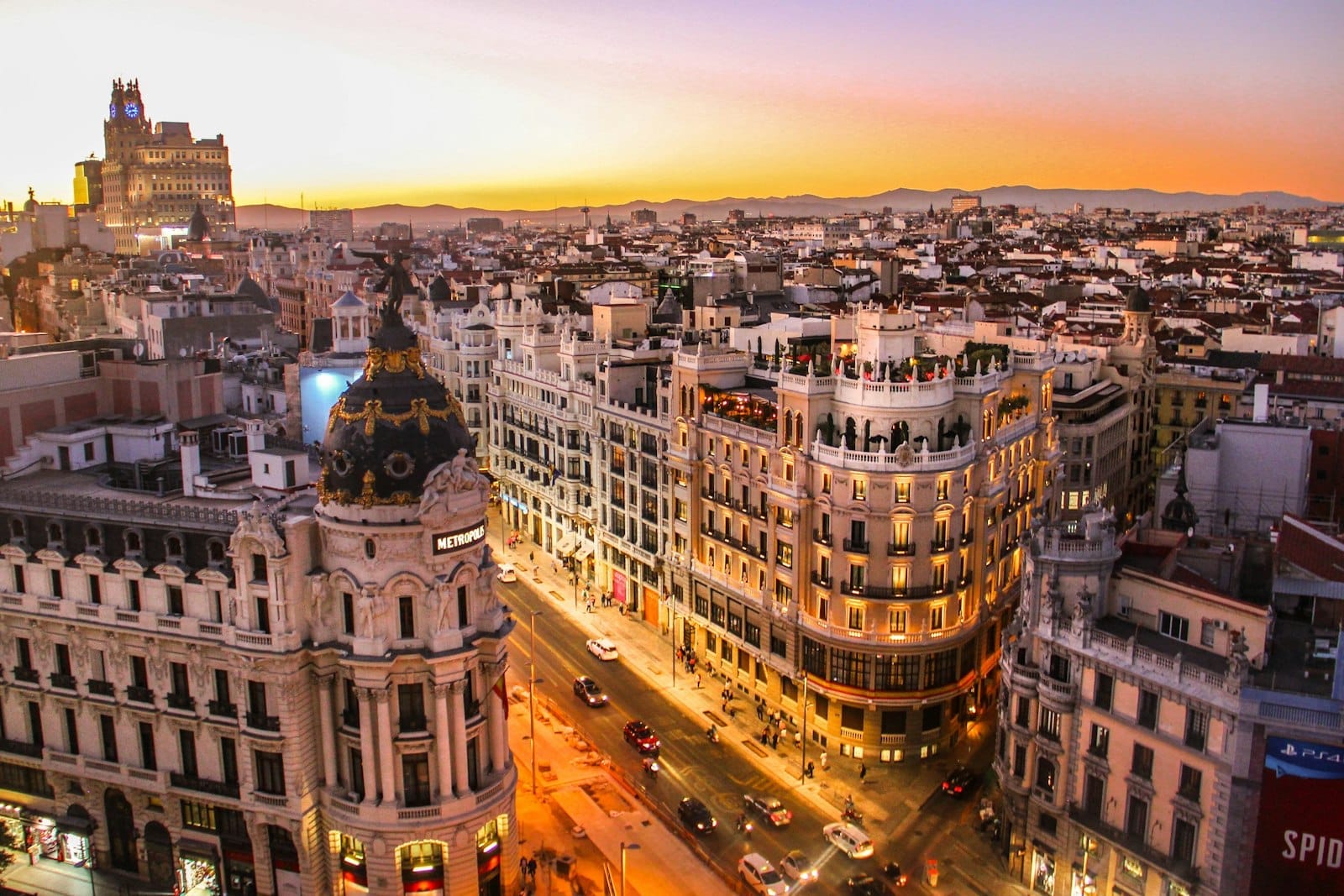
Three days in Madrid is enough to cover the Royal Palace, the world-class Art Triangle museums, Retiro Park, and the city's most rewarding neighborhoods. This itinerary is built around real logistics, free entry windows, and practical advice on where to spend your time and where to skip.
Plan and book this trip
Tools from our partner Travelpayouts help you compare flights and hotels. If you book through them, we may earn a commission at no extra cost to you.
Flights
Hotels map
TL;DR
- Three days is a realistic window to cover Madrid's top highlights — Royal Palace, Prado, Reina Sofía, Retiro Park — if you plan by neighborhood and avoid backtracking.
- The Paseo del Arte card (~€32.80) covers all three Art Triangle museums and pays for itself quickly — see our guide to Madrid's best museums for deeper coverage.
- The Prado, Reina Sofía, and Thyssen all offer free entry at specific hours (evenings and Sunday afternoons) — use these strategically to cut costs without sacrificing quality.
- Day 1: Historic center and Royal Palace. Day 2: Art Triangle and Retiro. Day 3: Neighborhoods (La Latina, Malasaña, or Lavapiés). This order minimizes metro time and fatigue.
- Spring (April–May) and early autumn (September–October) are the best windows for this itinerary — for full context, see the best time to visit Madrid.
Before You Go: Logistics That Will Save You Time
Madrid sits at 667 metres above sea level in the center of the Iberian Peninsula, which means the climate is more extreme than coastal Spain. Summers push above 35°C regularly, making midday sightseeing genuinely uncomfortable in July and August. For a 3-day itinerary, April–May and September–October give you the best balance: mild temperatures (around 18–25°C), longer daylight, and shorter queues at major sites.
From Adolfo Suárez Madrid–Barajas Airport (IATA: MAD), you have three realistic options to reach the center. Metro Line 8 connects Terminal 4 to Nuevos Ministerios in around 25–30 minutes; note there is a airport supplement on top of the standard fare, so verify the current total with Metro Madrid before you travel. The Cercanías C-1 train serves Terminal 4 and connects to Atocha and Chamartín stations — useful if your hotel is near those hubs. Official white taxis (with a red diagonal stripe) operate flat-rate fares to central Madrid; confirm the current tariff with the Ayuntamiento de Madrid. For full transport options, our guide to getting around Madrid covers every scenario.
💡 Local tip
Book Prado and Royal Palace tickets online before you arrive. Both sell out timed slots during peak season, and skipping the queue at these two sites alone can save you 45–90 minutes across your trip. The Prado's official site (museodelprado.es) and Patrimonio Nacional (patrimonionacional.es) handle ticketing directly.
On passes: the Paseo del Arte card (€32.80, verify current price) covers single-entry to the Prado, Reina Sofía, and Thyssen-Bornemisza. If you plan to visit all three — which you should in 3 days — it's the obvious choice. A separate national museum annual pass (€36) covers more institutions including the Prado, Reina Sofía, Museo Arqueológico Nacional, and Museo Sorolla. This is worth it only if you're spending more than two full days in museums. For a 3-day trip, stick with the Paseo del Arte card.
Day 1: The Historic Core, Royal Palace, and Plaza Mayor
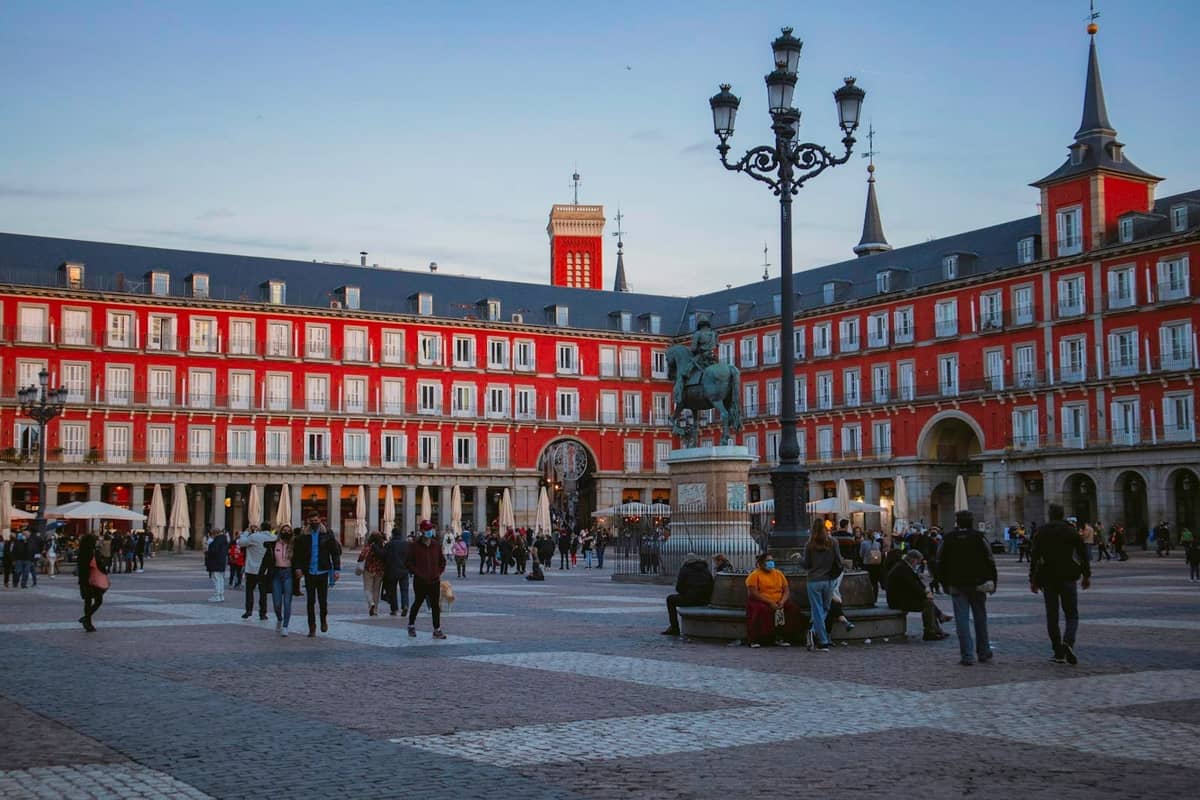
Start at Puerta del Sol, the geographic center of Spain and the beating heart of Madrid. It's crowded at most hours, but worth 15 minutes of orientation before you head west. From Sol, walk ten minutes to the Plaza Mayor, a 17th-century arcaded square that functions as both a tourist landmark and a working plaza. The architecture is impressive; the cafés lining the perimeter are overpriced. Buy your coffee elsewhere and spend the savings on a museum.
From Plaza Mayor, walk southwest through the narrow streets of La Latina toward the Royal Palace complex. The Palacio Real de Madrid is the largest royal palace in Western Europe by floor area and easily warrants two to three hours. The official residence of the Spanish royal family (used for state ceremonies, not daily living), it contains around 3,400 rooms, though only a selection are open to visitors. Timed entry is strongly recommended. After the palace, cross into the Jardines de Sabatini for the best exterior view of the north facade, then loop around to the Plaza de Oriente for the front-facing perspective.
Just south of the palace sits the Almudena Cathedral, Madrid's main cathedral, completed in 1993 after over a century of construction. It's architecturally eclectic and interesting as a modern cathedral, though it lacks the centuries-old gravitas of, say, Toledo's cathedral. Entry is free; the crypt museum charges a small fee. Combine this with the palace visit and you've covered the entire western historic complex without needing the metro.
End day one in La Latina, specifically around Cava Baja, which is Madrid's most concentrated strip of traditional tapas bars. This is where locals and savvy visitors eat standing at the bar rather than sitting at tables. Order house wine or vermouth with your tapas and budget around €15–25 per person for a solid evening meal done this way.
⚠️ What to skip
Avoid eating at any restaurant with a photo menu directly on Plaza Mayor or Puerta del Sol. Prices are inflated by 30–50% compared to streets just two blocks away, and quality rarely justifies it. Walk one street back from any major square and you'll immediately find better value.
Day 2: The Art Triangle and Retiro Park
The so-called Art Triangle refers to three world-class museums within a 15-minute walk of each other along the Paseo del Prado: the Prado, the Reina Sofía, and the Thyssen-Bornemisza. Covering all three in one day is possible but exhausting. A more intelligent approach: spend the morning at the Museo del Prado, take a midday break in Retiro, then visit one of the other two in the late afternoon during free-entry hours.
- Museo del Prado The anchor of any Madrid art itinerary. Focus on Velázquez (Las Meninas, room 12), Goya's Black Paintings (rooms 67–68), and El Greco if time allows. Hours: Mon–Sat 10:00–20:00, Sun/holidays 10:00–19:00. Admission: €15 adults, €7.50 seniors 65+, free for under-18s and students up to 26. Free entry Mon–Sat 18:00–20:00 and Sun 17:00–19:00 — expect queues of 20–40 minutes during these windows.
- Museo Reina Sofía Home to Picasso's Guernica and a strong permanent collection of 20th-century Spanish and international modern art. Free entry Monday and Wednesday–Saturday 19:00–21:00, Sunday 12:30–14:30. Closed Tuesdays. The building itself — a converted 18th-century hospital with a glass elevator addition — is worth noticing.
- Museo Thyssen-Bornemisza The most overlooked of the three, which means shorter queues. Exceptional breadth from medieval to pop art, including strong holdings in Dutch Golden Age and German Expressionism. Free on Mondays (permanent collection). Check current times and prices at museothyssen.org before visiting.
After the Prado, spend 90 minutes in Parque del Retiro, a 125-hectare park that became a UNESCO World Heritage Site in 2021 as part of the Paseo del Prado and Buen Retiro cultural landscape. It's free to enter (roughly 06:00–midnight in summer, earlier closure in winter). The rowboat rental on the Estanque Grande costs around €8 for 45 minutes — a genuine highlight on a clear afternoon, not a tourist gimmick. The Palacio de Cristal (Crystal Palace) inside the park is one of Madrid's most beautiful 19th-century structures and hosts free contemporary art exhibitions from the Reina Sofía collection.
Day 3: Madrid's Neighborhoods — Where the City Actually Lives
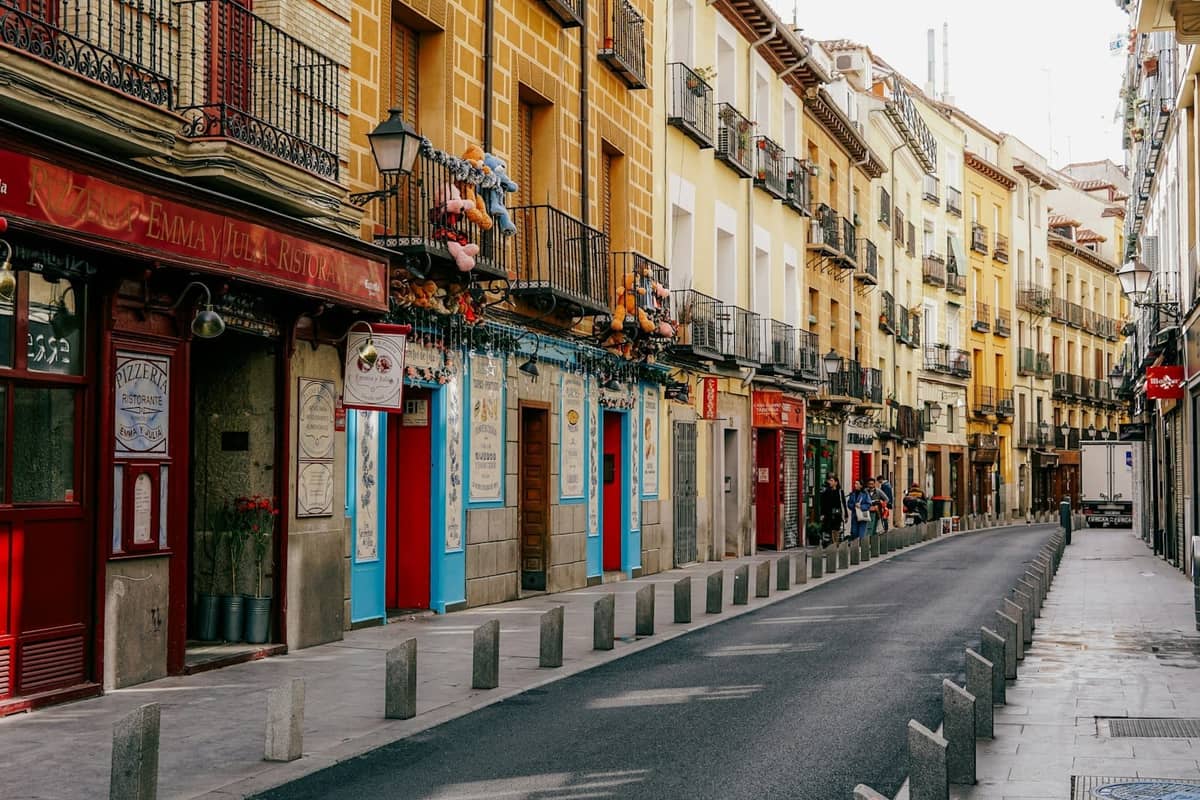
The third day is when most itineraries fall apart because travelers try to squeeze in more monuments. Resist that. Day 3 is for neighborhoods, markets, and eating well. Madrid's residential barrios are among its strongest assets and require no entrance fee.
Start the morning at El Rastro if you're visiting on a Sunday. This open-air flea market in La Latina draws thousands of vendors and buyers along Calle de la Ribera de Curtidores and surrounding streets from around 09:00 to 15:00. It's chaotic, often crowded, and not the place to find bargains on antiques anymore — but it's a genuine slice of Madrid street culture. Keep valuables secured; pickpocketing does occur in dense crowds.
From La Latina, walk north through Malasaña, the neighborhood around Plaza Dos de Mayo that has been Madrid's creative and counterculture center since the 1980s Movida Madrileña. Today it's a mix of independent shops, coffee roasters, vintage clothing, and tapas bars that haven't been sanitized for tourists. Lunch here is cheaper and more interesting than in the historic center. Budget €10–15 for a solid menú del día (three courses with wine) at any bar displaying it on a chalkboard.
Alternatively, swap Malasaña for Lavapiés, Madrid's most culturally mixed neighborhood, or spend the afternoon in Chueca for independent boutiques and café culture. Each has a distinct character; Lavapiés skews grittier and more international, Chueca is polished and cosmopolitan. Neither is wrong — it depends on what kind of city energy you want.
✨ Pro tip
The menú del día (daily set menu) is one of the best value-for-money eating strategies in Madrid. Available Monday–Friday at most traditional restaurants from around 13:30–16:00, it typically includes a starter, main, dessert or coffee, and a drink for €10–15. This is how office workers eat lunch. You get the same quality as dinner at roughly half the price.
Practical Tips: What Actually Matters for 3 Days in Madrid
- Madrid runs late: dinner before 21:00 marks you immediately as a tourist. Locals eat dinner at 21:30–23:00. Adjust your schedule accordingly or you'll find half the restaurants empty or not yet open.
- The Madrid Metro covers everything you need for this itinerary. Lines 1, 2, and 5 connect the major sites. Single tickets and 10-trip cards are available; verify current prices with Metro Madrid as fares are periodically updated.
- Tap water in Madrid is safe to drink and high quality — don't buy bottled water when sightseeing. Carry a refillable bottle.
- Spain uses Type C and F plugs (two round pins) at 230V/50Hz. North American and UK travelers need adapters.
- The emergency number across Spain is 112. English-speaking operators are available.
- ATMs are widely available; Visa and Mastercard are accepted almost everywhere. Inform your bank before travel. American Express has more limited acceptance at smaller bars and markets.
- August is the quietest month locally — many Madrileños leave the city — but it's still peak tourist season and extremely hot. If you visit in August, shift sightseeing to mornings (before 12:00) and evenings (after 19:00).
If you have flexibility, extending to four or five days allows you to add a day trip. Toledo (about 30 minutes by high-speed AVE train from Atocha) and Segovia (around 30 minutes from Chamartín by AVE) are the most rewarding half-day options. Our guide to day trips from Madrid covers the full range of options with transport details.
Budget Breakdown for 3 Days in Madrid
Madrid is not a cheap city by Iberian standards, but it rewards strategic planning. Museum free hours, the menú del día, and free parks and plazas mean you can have an excellent trip without spending heavily every day. Below is a realistic framework; all figures should be verified against current prices before you travel.
- Budget traveler (€60–90/day per person) Stay in a hostel or guesthouse, use museum free hours, eat menú del día at lunch, tapas at bars in the evening. Metro for transport. This is perfectly achievable without sacrificing the key experiences.
- Mid-range (€120–180/day per person) 3-star hotel, Paseo del Arte card for museums, restaurant dinners, occasional taxi. Comfortable and stress-free. This is the sweet spot for most first-time visitors.
- Higher-end (€250+/day per person) 4–5-star hotel in Salamanca or near Gran Vía, private guided tours, restaurant reservations at established names. Madrid's luxury scene is strong but less ostentatious than Paris or London — quality is high, pretension is lower.
For accommodation, the neighborhoods around Sol and Centro put you closest to Day 1 and Day 3 sights. Retiro and Salamanca are quieter and upscale, and position you well for the Art Triangle and Retiro Park. Our guide to where to stay in Madrid breaks down every neighborhood with candid assessments of the trade-offs.
FAQ
Is 3 days enough for Madrid?
Yes, if you plan well. Three days covers the Royal Palace, the Art Triangle museums (Prado, Reina Sofía, Thyssen), Retiro Park, and at least two or three neighborhoods. You won't see everything — Madrid rewards longer stays — but a focused 3-day itinerary hits the essential highlights without feeling rushed.
What is the best way to get around Madrid in 3 days?
Walking and the metro. The historic center, Art Triangle, and Retiro are all within a roughly 3-kilometer radius. For the Royal Palace area, Metro Line 2 (Opera station) or Line 5 (La Latina station) are useful. Taxis and ride-hailing apps (Uber, Cabify, Bolt operate in Madrid) are practical for late nights when metro frequency drops.
When is the Prado Museum free?
Monday–Saturday from 18:00–20:00 and Sunday from 17:00–19:00. Free entry windows draw queues of 20–40 minutes during peak season. Arriving 15–20 minutes before the free period begins helps. Standard admission is €15 for adults; always verify current prices at museodelprado.es.
What should I eat in Madrid in 3 days?
Cocido madrileño (chickpea stew, a Madrid specialty), jamón ibérico, tortilla española, and croquetas are the local staples. For tapas, focus on bars in La Latina and Cava Baja rather than around Plaza Mayor. Use the menú del día for lunch on at least one or two days — it's the most authentic and economical way to eat well.
Should I get the Madrid Paseo del Arte card?
Yes, if you plan to visit the Prado, Reina Sofía, and Thyssen-Bornemisza. At around €32.80 (verify current price), it costs less than two full-price adult admissions across the three museums. It's not worth it if you're relying entirely on free-entry hours or only visiting one or two of the three.