Lavapiés is the most culturally layered neighborhood in central Madrid, occupying the southern slope of the city center with a mix of centuries-old tenement buildings, international street food, independent theater, and one of the densest concentrations of street art in Spain. It rewards curious travelers willing to move at its own pace.
Lavapiés is the neighborhood Madrid keeps for itself. Part medieval quarter, part immigrant hub, part alternative arts district, it sits just south of the historic center with a character that is entirely its own: unpolished, creative, and genuinely international in a way few European city neighborhoods manage to be.
Orientation
Lavapiés sits in the southern half of Madrid's Centro district, within the administrative barrio of Embajadores. It occupies a gentle south-facing slope that descends from Calle de la Magdalena in the north toward Ronda de Valencia in the south, with Calle de Embajadores forming the western edge and Calle Atocha marking the northeast boundary. This puts it immediately south of the historic theater district around Antón Martín and Tirso de Molina, and just east of La Latina.
The neighborhood's center of gravity is the area connecting Lavapiés to La Latina, though the two barrios feel distinctly different. Where La Latina is polished and tapas-bar-famous, Lavapiés is rougher around the edges and more ethnically mixed. The central reference point is Plaza de Lavapiés itself, a modest square flanked by a corner pharmacy, a few terraza bars, and a fountain that becomes a social gathering point on warm evenings. From here, the main arteries fan out: Calle Argumosa heads east toward the Reina Sofía, while Calle del Olivar and Calle de la Fe push north into the tighter residential grid.
Geographically, Lavapiés is framed by some of Madrid's most important transit hubs. Atocha station sits at the northeastern corner, connecting the neighborhood to the high-speed rail network and to the lower stretch of the Paseo del Prado. The Glorieta de Embajadores anchors the southwestern side. This positioning makes Lavapiés more accessible than it first appears from a map: you are never more than a ten-minute walk from major landmarks, but the neighborhood manages to feel like a world apart.
Character & Atmosphere
Lavapiés was historically a Jewish quarter located outside the city walls during the medieval period, later becoming home to successive waves of working-class residents, artists, and migrants. That layering is visible everywhere. You will find a Chinese grocery wedged between a Moroccan halal butcher and a bar that has been serving vermouth since the 1970s. On the same block, a freshly painted mural covers an entire building facade, and a handwritten flyer announces a flamenco night in a basement venue.
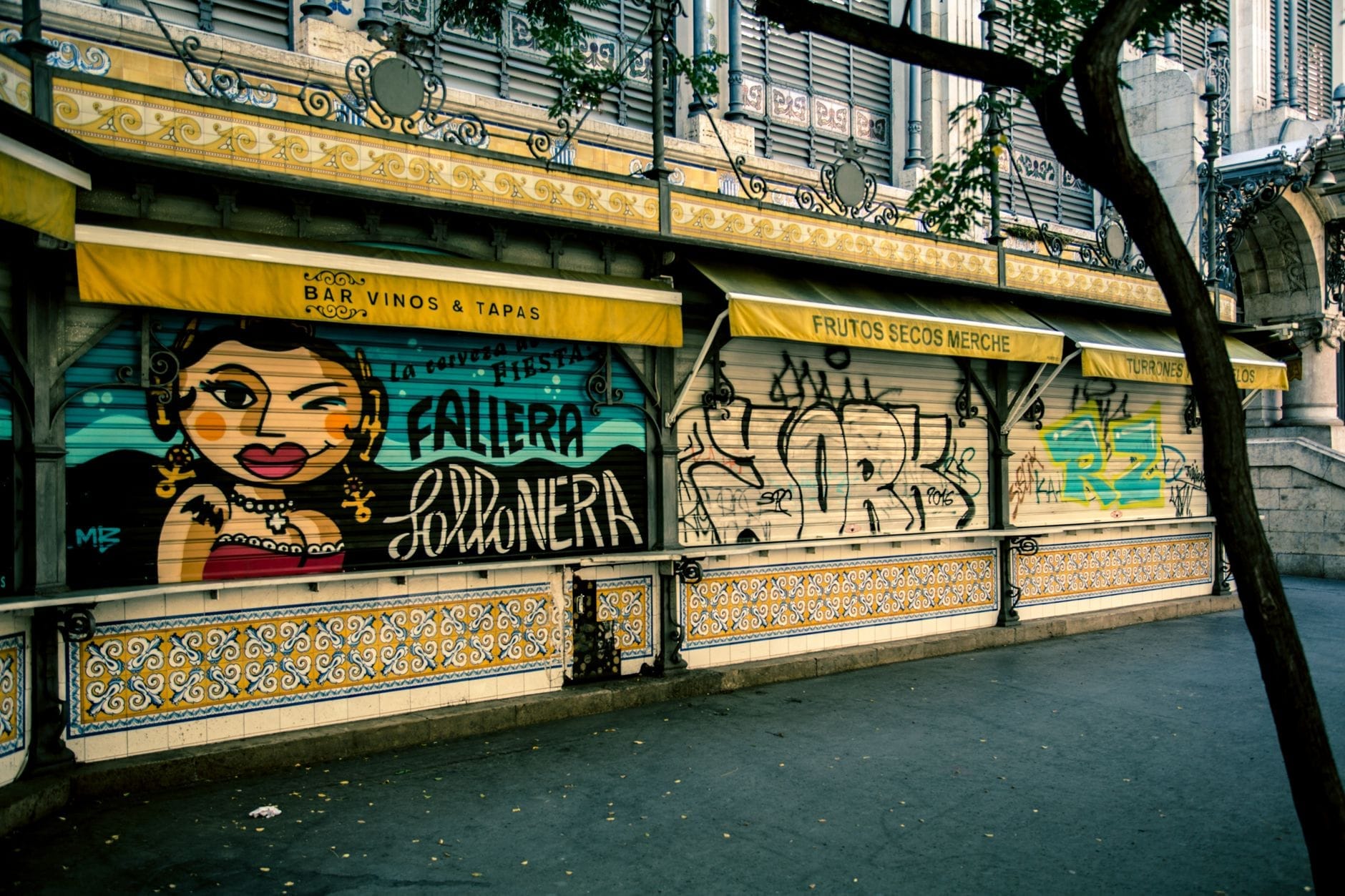
In the morning, the neighborhood moves slowly. Shopkeepers roll up their metal shutters, which are themselves often painted with elaborate street art. By 10am, the terraces of Calle Argumosa fill with people reading newspapers or nursing café con leche, a mix of older Spanish residents and younger creative types who moved in as rents started rising. The market at Mercado de Antón Martín, just at the northern edge of the neighborhood, draws a steady flow of locals from around 9am onward.
Afternoons are quieter in the residential streets, but the cultural venues pick up. The Museo Reina Sofía sits practically on the neighborhood's northeastern edge, meaning the blocks around it carry a steady current of museum-goers who spill into the nearby bars and bookshops after their visit. By late afternoon, the light falls at a low angle across the hillside streets, catching the painted shutters and tiled facades in a way that makes even the scuffier corners look cinematic.
After dark, Lavapiés is at its most energetic and its most polarizing. The terraces of Plaza de Lavapiés and Calle Argumosa fill up, the small theaters and alternative music venues open their doors, and groups gather on the steps and corners for botellón-style socializing. The atmosphere is generally relaxed but not sanitized. Travelers accustomed to the curated bar-hopping of Malasaña or Chueca may find the energy here rawer. Parts of the neighborhood, particularly around Calle del Amparo and the streets closer to Embajadores, can feel more chaotic late at night, and it is worth being aware of your surroundings in quieter side streets after midnight.
⚠️ What to skip
Lavapiés is generally safe for visitors during the day and early evening, but like many dense urban neighborhoods with significant nighttime activity, it has areas that feel edgier after dark. Online travel forums and local residents have flagged concerns about certain streets around Plaza de Lavapiés and Calle de Embajadores at night. Exercise standard urban awareness, keep valuables out of sight, and stick to the well-lit main streets if you are unfamiliar with the area.
What to See & Do
The single most important cultural institution in or adjacent to Lavapiés is the Museo Reina Sofía, Spain's national museum of modern and contemporary art. It anchors the northern end of the neighborhood at Glorieta del Emperador Carlos V, within easy walking distance of Plaza de Lavapiés. Picasso's Guernica is housed here, and the museum's collection spans Spanish and international 20th-century art. If you are combining a museum visit with a wander through Lavapiés, enter from the Calle Santa Isabel side and walk south down Calle Argumosa afterward.
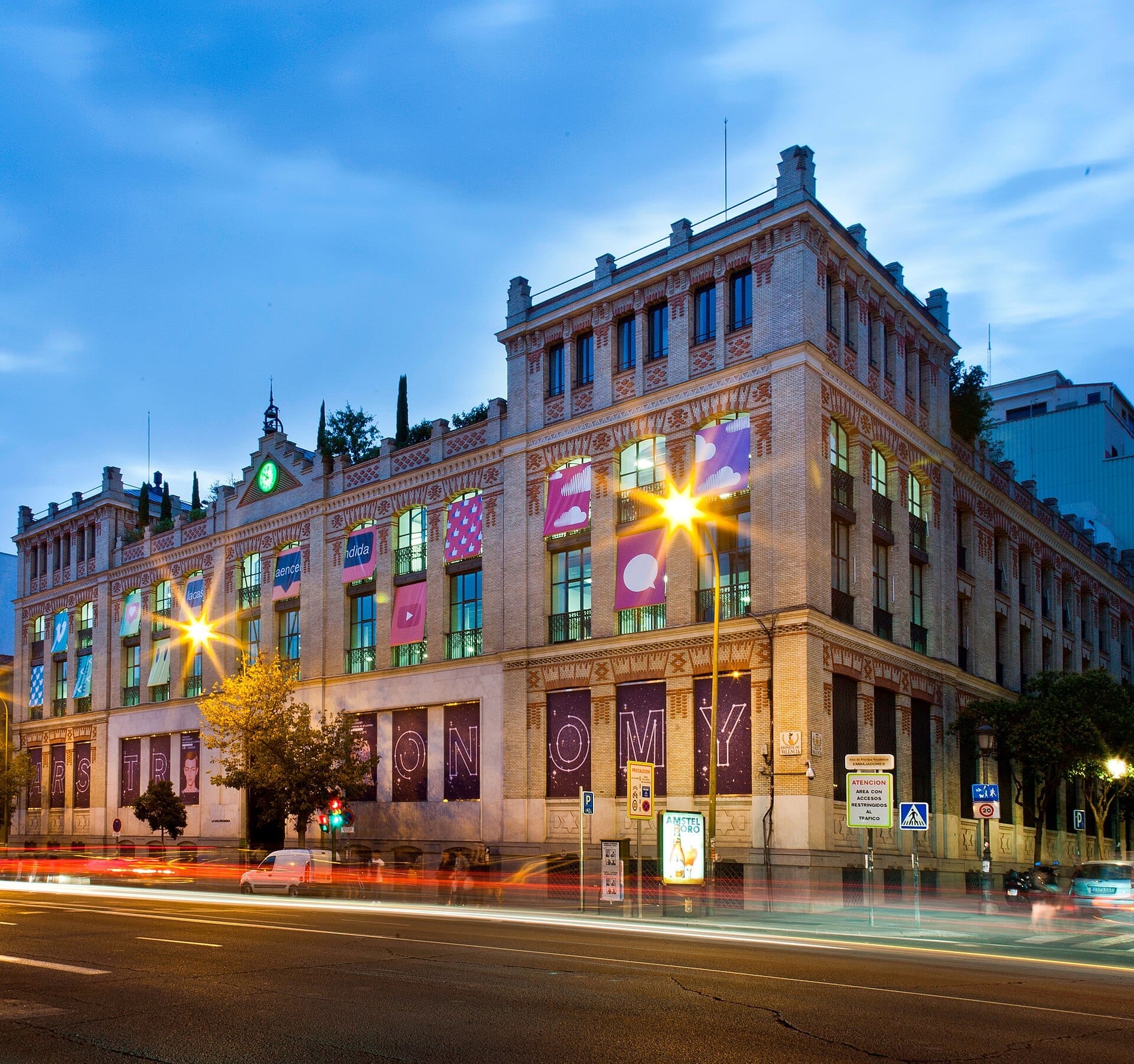
Street art is arguably Lavapiés's most distinctive outdoor attraction. The neighborhood functions as an open-air gallery across its entire street grid: large-scale murals cover building facades along Calle del Olivar, Calle Ministriles, and many of the cross streets connecting to Embajadores. The painted metal shutters (persianas) of closed shops are themselves a local art form. La Casa Encendida, a major contemporary arts center on Ronda de Valencia at the southern boundary of the neighborhood, hosts exhibitions, film screenings, workshops, and live events, often free or low-cost. It is one of the best cultural spaces in Madrid for catching emerging artists and experimental programming.
On Sunday mornings, the El Rastro flea market takes over the streets immediately to the northwest of Lavapiés, radiating out from Plaza de Cascorro down Ribera de Curtidores. It is one of the largest street markets in Europe, running from around 9am to 2pm, and while it draws enormous crowds, it remains a thoroughly local institution where you can find antiques, second-hand clothing, vinyl records, and more. Arrive early to browse properly; by noon the crowds make it difficult to move.
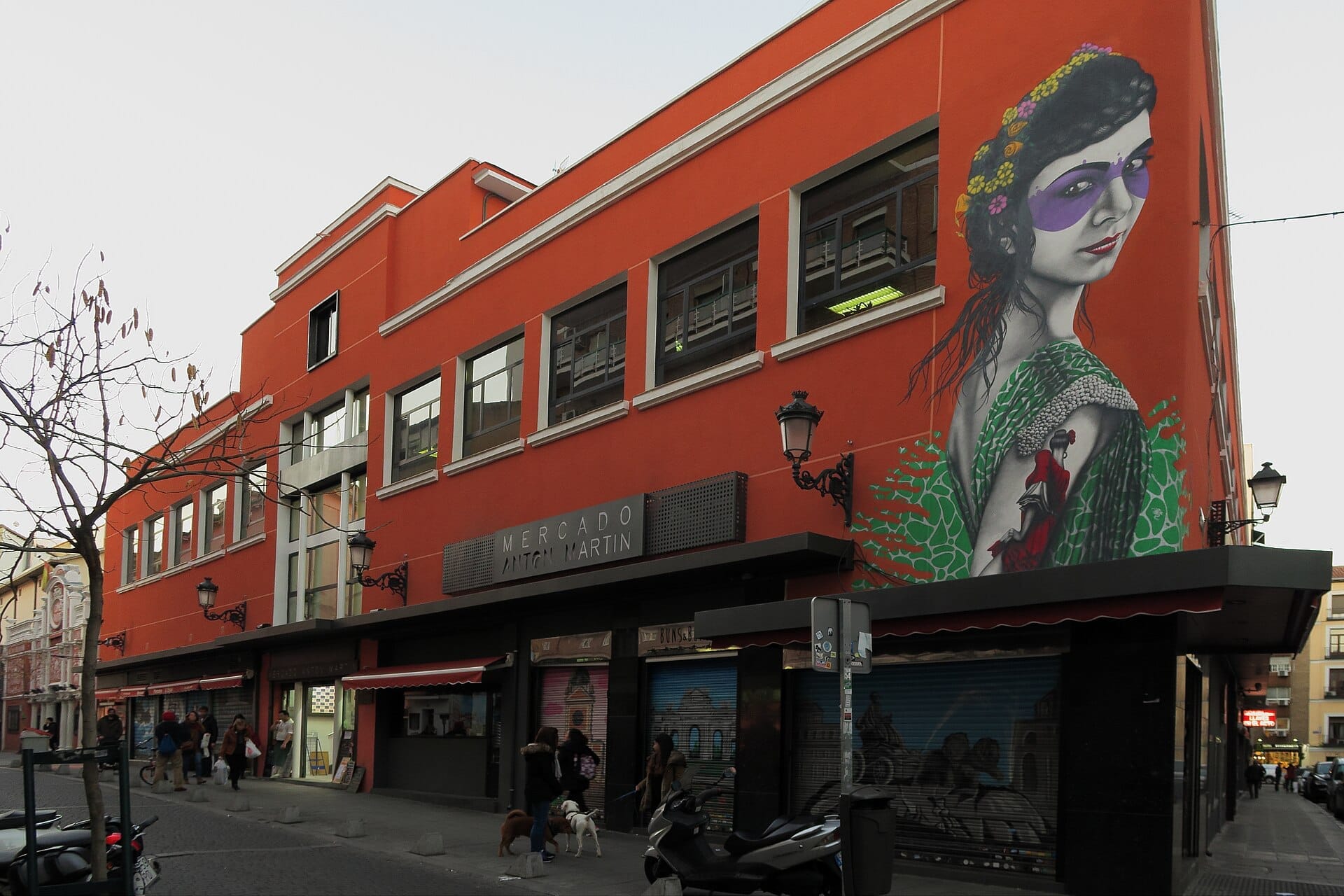
The Mercado de Antón Martín on Calle de Santa Isabel, just north of the neighborhood proper, is a covered market with a mix of traditional food stalls and newer gastronomy concepts. It is a quieter, less touristy alternative to the Mercado de San Miguel near Plaza Mayor. The neighborhood also has a strong independent theater and performance scene, with small venues scattered through the residential streets hosting alternative drama, flamenco workshops, and experimental music.
Museo Reina Sofía: Picasso's Guernica and Spain's finest modern art collection, on the neighborhood's northeastern edge
La Casa Encendida: contemporary arts center on Ronda de Valencia with free and low-cost programming
El Rastro: Sunday flea market radiating from Plaza de Cascorro, one of Madrid's longest-running traditions
Mercado de Antón Martín: covered market on Calle de Santa Isabel for everyday fresh produce and local gastronomy
Street art circuit: self-guided walk through murals on Calle del Olivar, Calle Ministriles, and surrounding streets
Independent theater venues: small basement and converted-space venues throughout the barrio for alternative performance
💡 Local tip
The Reina Sofía offers free admission on Monday evenings, Wednesday through Saturday after 7pm, and Sunday mornings after 12:30pm (check current hours before visiting, as these are subject to change). Combining a late-afternoon museum visit with a walk down Calle Argumosa for drinks is one of the best free itineraries in this part of the city.
Eating & Drinking
Lavapiés has one of the most remarkably international food scenes in Madrid. This is not a neighborhood where you go for the city's classic tapas crawl: instead, you find Indian thali restaurants, Ethiopian and Eritrean injera houses, Moroccan tagine spots, Chinese noodle bars, and Japanese ramen all within a few blocks of each other. The diversity reflects the neighborhood's resident population and makes it a real outlier in a city where most visitors stay within a narrower culinary comfort zone.
Calle Argumosa is the most comfortable entry point for eating and drinking, lined with terraza-facing bars and cafés that are busy from mid-morning onward. Prices here are noticeably lower than in comparable tourist-facing streets in Malasaña or the area around Gran Vía. A beer or a glass of wine typically costs one to two euros less than you would pay a few blocks north, and the food is proportionally more affordable. The street runs east from Plaza de Lavapiés toward Atocha and is the neighborhood's most sociable strip.
For Spanish food specifically, look for the older tabernas scattered through the residential streets: places that have been serving cocido madrileño, callos a la madrileña, and simple fried fish since well before the neighborhood became fashionable. These tend not to have websites or English menus, but a basic pointing-and-smiling approach works well. A set lunch menu (menú del día) in Lavapiés typically runs between nine and thirteen euros for three courses with bread and a drink, making it one of the better-value lunch neighborhoods in central Madrid.
The bar scene leans alternative and eclectic. Small music bars, venues showing football, craft beer spots, and vermouth-focused tabernas all coexist within a short walking radius. The neighborhood also has a small concentration of cultural bars that double as art spaces or host regular live music. For a broader view of Madrid's food culture, the Madrid food guide covers the full city, but Lavapiés deserves its own detour for anyone interested in eating beyond Spanish tradition.
ℹ️ Good to know
Many of the smaller ethnic restaurants in Lavapiés are cash-only, do not have websites, and keep irregular hours. It is worth walking the streets in the early afternoon to identify places that appeal to you, check their hours, and return in the evening. The neighborhood rewards slow exploration more than advance research.
Getting There & Around
Lavapiés is served by more metro stations than almost any comparably sized neighborhood in Madrid. The most central is Lavapiés station on Metro Line 3 (the yellow line), which sits directly on Plaza de Lavapiés and is the obvious entry point. Antón Martín, also on Line 1 (the light blue line), covers the northern approach near Calle de la Magdalena. Embajadores on Lines 3 and 5 is useful for the western and southwestern parts of the neighborhood. Tirso de Molina on Line 1 sits at the northwestern corner, near El Rastro. For arriving from Atocha station, the neighborhood is about a ten-minute walk west and slightly uphill from the main entrance.
On foot, Lavapiés connects naturally to several surrounding neighborhoods. Walking north from Plaza de Lavapiés takes you up through the Antón Martín area and into the literary café district around Calle de las Huertas and Plaza de Santa Ana within about ten minutes. Heading northwest brings you into La Latina and the area around Calle Cava Baja. The Reina Sofía is walkable in under five minutes from the northeastern edge of the neighborhood. The compact geography of central Madrid means Lavapiés is a practical base for exploring a large radius without heavy reliance on transit.
For more general transit advice across the city, the getting around Madrid guide covers the Metro zone system, the Tarjeta Multi transport card, and how to navigate between neighborhoods efficiently. The Multi card is loaded with ten-trip blocks and is significantly cheaper than buying single tickets; it is well worth picking up at any Metro station ticket machine.
Metro Line 3 (yellow): Lavapiés station, directly on Plaza de Lavapiés
Metro Line 1 (light blue): Antón Martín (north) and Tirso de Molina (northwest)
Metro Lines 3 and 5: Embajadores (southwest)
Atocha rail hub: 10-minute walk east, connecting to Cercanías, AVE high-speed rail, and Metro Line 1
Walking: 10 minutes to Sol, 10 minutes to La Latina, 5 minutes to Reina Sofía
Where to Stay
Lavapiés is not a traditional hotel neighborhood. Accommodation options are mostly independent hostels, small guesthouses, and short-term apartment rentals rather than branded hotels. This makes it a good choice for budget travelers, longer-stay visitors, and anyone who prefers a residential feel over a hotel corridor. For travelers looking at a wider range of accommodation across the city, the where to stay in Madrid guide gives a full breakdown of neighborhoods by traveler type.
The best-positioned area within the neighborhood for accommodation is the northern section, roughly between Calle de la Magdalena and Plaza de Lavapiés itself. This puts you within easy walking distance of the Reina Sofía, the Antón Martín market, and the bar and restaurant streets, while keeping you slightly removed from the louder nighttime activity concentrated around the plaza itself and Calle Argumosa. Streets like Calle de la Fe, Calle del Calvario, and Calle de Jesús y María offer quieter sleeping without sacrificing walkability.
Lavapiés suits independent travelers, solo visitors, and couples who want a more authentic residential experience rather than a central tourist hotel. Families with young children or travelers who place a premium on quiet nights may find the neighborhood less suitable, particularly on Thursday through Saturday evenings when terrace noise and street activity run late. For those, the Retiro or Chamberí districts offer more tranquil alternatives without being far from the center.
Practical Considerations
Lavapiés is one of the more affordable neighborhoods in central Madrid for both accommodation and food, which makes it attractive for travelers exploring Madrid on a budget. The menú del día lunch deal is widely available here at competitive prices, the bar terraces charge less than equivalent spots in Malasaña or Sol, and the neighborhood's main cultural attractions (street art, La Casa Encendida, the Sunday Rastro) are free.
The neighborhood's multicultural character means you will encounter a wider range of spoken languages than in more tourist-focused parts of the city. English is less universally available in the smaller shops and restaurants than in Sol or the Salamanca district, but this is part of what makes Lavapiés feel like an actual neighborhood rather than a visitor zone. Basic Spanish phrases go a long way here. For context on the wider city and how Lavapiés fits into a multi-day itinerary, the 3 days in Madrid itinerary offers a practical framework for first-time visitors.
The neighborhood comes into its own during cultural festivals. The annual Festivales de Verano del Lavapiés brings outdoor performances, music, and film screenings to the streets and plazas in summer. For visitors interested in flamenco, the neighborhood has a long association with tablaos and informal flamenco peñas, and the Madrid flamenco guide can help identify current venues and shows.
TL;DR
Lavapiés is Madrid's most culturally diverse central neighborhood, with visible communities from across Africa, Asia, and Latin America alongside long-term Spanish residents and a creative class that has been drawn in over the past two decades.
Best for: independent travelers, budget-conscious visitors, anyone interested in street art, multicultural food, and alternative cultural programming.
Not ideal for: travelers who want polished tapas-bar streets, quiet nights, or a conventional hotel stay.
Key attractions: Museo Reina Sofía (adjacent), La Casa Encendida, El Rastro Sunday market, Mercado de Antón Martín, and one of the city's densest street art circuits.
Transit: excellently connected via Metro Lines 1, 3, and 5, with Atocha rail hub a short walk away. Walking distance to Sol, La Latina, and the Paseo del Prado museum corridor.
Three days in Madrid is enough to cover the Royal Palace, the world-class Art Triangle museums, Retiro Park, and the city's most rewarding neighborhoods. This itinerary is built around real logistics, free entry windows, and practical advice on where to spend your time and where to skip.
Madrid is one of Europe's great museum cities. The Prado, Reina Sofía, and Thyssen-Bornemisza alone would justify a week, but the city also hides royal convents, Goya frescoes, and lavish private palaces that most visitors never find. This guide covers every museum worth your time, with practical advice on free hours, passes, and crowd strategy.
Madrid rewards visitors year-round, but the best time to visit depends on your priorities. This guide covers weather patterns, crowd levels, hotel prices, and key events for every season so you can choose the trip that actually suits you.
Madrid rewards those who look up and climb higher. Whether you want a sundowner drink with skyline views or a free panoramic terrace above the city's rooftops, this guide covers the best vantage points in the capital, from iconic cultural landmarks to the most atmospheric rooftop bars.
Madrid sits at the geographic heart of Spain, putting some of the country's most remarkable cities and landscapes within an hour or two by train. This guide covers the best day trips from Madrid, from UNESCO World Heritage cities to royal palaces and medieval walls.
Madrid is one of Europe's most generous cities for budget travelers. From world-class museums with free evening hours to royal gardens, ancient temples, and legendary flea markets, you can fill days with remarkable experiences without paying a single euro.
Madrid has one of Europe's most extensive public transport networks, covering the metro, city buses, night services, and direct airport links from Adolfo Suárez Madrid-Barajas Airport. This guide breaks down every option with real prices, schedules, and the practical knowledge to move around the city without stress.
Madrid rewards curious visitors who look beyond the Prado and Plaza Mayor. From a royal convent hiding five centuries of treasures to a park that erupts in almond blossom each February, these are the experiences that most tourists never find but locals quietly love.
Madrid punches well above its weight as a luxury destination. This guide covers the best five-star hotels, designer shopping streets, fine dining, and cultural experiences that make the Spanish capital one of Europe's most rewarding upscale city breaks.
Madrid's built environment tells six centuries of history across a single city. This guide walks you through the key architectural periods, the most significant buildings, and how to plan a self-guided tour without wasting a day on tourist traps.
Madrid transforms into one of Europe's most festive cities each December, with illuminated boulevards, outdoor markets, and a calendar packed with seasonal events. This guide covers every major Christmas market, the best neighborhoods for lights, practical timing advice, and what to skip.
Madrid's religious heritage goes far deeper than its famous cathedral. The city holds royal convents still inhabited by nuns, a basilica with one of the world's largest domes, a hermitage painted by Goya, and an Egyptian temple reconstructed in a city park. This guide covers the best of them all.
Madrid is one of Spain's premier flamenco destinations, with daily shows running year-round across tablaos, dedicated theaters, and cultural festivals. This guide breaks down the best venues, clear price comparisons, what to avoid, and how to book smart.
Madrid's food scene rewards the curious and punishes the impatient. This guide covers the essential dishes you shouldn't leave without trying, where to find them, what to pay, and how to eat like a local — from a €3 breakfast espresso to a late-night tapa in La Latina.
Madrid rewards couples with an exceptional mix of grand parks, world-class art, intimate flamenco shows, and long evening meals that stretch well past midnight. This guide covers the best romantic things to do in Madrid Spain, from free sunset viewpoints to splurge-worthy experiences worth every euro.
The Sierra de Guadarrama sits just about an hour to 90 minutes from central Madrid and offers over 80 km of marked trails through pine forests, granite peaks, and high mountain passes. This guide covers the best hiking areas, how to get there by bus or train, and what to do in the city to prepare for your mountain day.
Spring is widely considered the best time to visit Madrid, with mild temperatures, long days, and a packed festival calendar. This guide breaks down what each month actually looks and feels like, from April showers to June's first heat, so you can plan without surprises.
Summer in Madrid means intense heat, long evenings, and a city that runs on its own schedule. This guide covers everything from surviving 38°C afternoons to finding shade in Retiro, timing museum visits, and understanding why August feels like a different city entirely.
Madrid transforms in winter into one of Europe's most festive cities, with over 240 illuminated locations, a Christmas market in Plaza Mayor, and the spectacular Cabalgata de Reyes on 5 January. This guide covers what to expect from the weather, where to find the best markets, how to experience Epiphany like a local, and practical tips for navigating the city in the cold months.
Madrid's market scene spans 19th-century iron halls, neighborhood produce markets, gourmet food halls, and one of Europe's great flea markets. This guide covers the best of each category, with practical tips on when to go, what to eat, and which markets are worth your time.
Madrid nightlife runs on a schedule unlike anywhere else in Europe. Bars don't fill until midnight, clubs peak at 3am, and the city doesn't sleep until sunrise. This guide covers the best districts, venues, realistic costs, and the timing rules that separate a great night from an expensive disappointment.
Madrid is one of Europe's most affordable capitals once you know where to look. This guide breaks down realistic daily costs, free museum windows, budget food strategies, and transport tricks to help you see the best of the city without overspending.
Seven days in Madrid gives you enough time to cover the world-class museums, explore distinct neighborhoods, eat well, and still fit in a day trip or two. This guide breaks it all down day by day, with practical logistics, tested recommendations, and the details most itineraries skip.
Madrid ranks among Europe's safer capital cities, but tourists face real risks from pickpocketing, distraction theft, and a handful of well-documented scams. This guide breaks down the actual threats, neighborhood by neighborhood, and gives you practical tools to stay safe without being paranoid.
Every May, Madrid throws one of Europe's great city festivals in honour of San Isidro Labrador. From free open-air concerts and religious processions to the world's most prestigious bullfighting fair, this guide covers everything you need to plan your visit.
Madrid is one of Europe's great shopping cities, with options ranging from high-street chains on Gran Vía to designer boutiques on Calle Serrano and centuries-old flea markets in La Latina. This guide breaks down every major shopping zone, market, and mall by budget, style, and practicality.
Madrid is one of Europe's most rewarding cities for solo travelers. This guide covers everything from navigating the metro alone to dining at tapas bars without awkwardness, plus straightforward safety advice, neighborhood breakdowns, and practical logistics for first-timers and seasoned solo travelers alike.
Madrid is one of Europe's great cities for eating at the bar, moving from spot to spot, and drinking cold beer with small plates of food. This guide covers the best tapas neighborhoods, top bars, realistic prices, timing advice, and everything you need to do a proper crawl without looking like a tourist.
Traveling from Madrid to Lisbon involves more choices than most travelers expect. This guide breaks down every realistic option — flight, bus, and train — with straightforward advice on cost, time, and what to book first.
The Madrid to Seville route is one of Spain's most travelled intercity connections, and you have more options than ever. This guide covers AVE train times, low-cost operators, bus routes, driving, and exactly how to get the best fare.
The Madrid to Valencia route is one of Spain's most travelled corridors, served by multiple high-speed train operators with journey times under two hours. This guide covers every transport option, how to get the best fares, which stations to use, and what to know before you go.
Spain's two great cities each make a compelling case. Madrid is the capital, the art powerhouse, and the city that never sleeps. Barcelona has Gaudí, the Mediterranean, and a culture distinct from the rest of Spain. This guide breaks down the real differences so you can choose, or plan to do both.
Madrid's historic core is compact enough that you can cover its greatest landmarks on foot, entirely on your own schedule. This guide breaks down the best self-guided walking routes by theme and distance, with real pricing, opening hours, app recommendations, and practical advice on when to walk and what to skip.
Madrid is one of Europe's most underrated family destinations, with free museum entry for children under 18 at some major museums, sprawling parks, three theme parks within day-trip range, and a metro system that cuts fares for young travellers. This guide covers everything families need to plan a smooth, enjoyable trip.
Madrid rewards visitors who go beyond the obvious. This guide covers the top things to do in Madrid Spain, from world-class art museums and the Royal Palace to Sunday flea markets, flamenco tablaos, and the city's best parks, with practical tips on free entry times, seasonal crowds, and neighborhood logic.
Madrid's food scene spans centuries-old taverns, world-class tasting menus, and multicultural street-level dining. This guide breaks down the best restaurants by neighborhood and budget, with practical booking advice and frank takes on what to skip.
Choosing where to stay in Madrid shapes your entire trip. This guide breaks down the city's key neighborhoods by atmosphere, price range, and practical location, so you can pick the right base from the start.