La Latina sits in the heart of old Madrid, preserving a medieval street plan that most of the city long since paved over. It is where madrileños go for Sunday tapas after El Rastro, and where the city's oldest taverns still operate on the same cobbled lanes they have occupied for centuries.
La Latina is where Madrid's history is most legible at street level: crooked alleys, irregular squares, and tavern doorways that have been pouring wine since the Habsburg era. It is simultaneously one of the city's most authentic residential neighborhoods and its most celebrated tapas destination, with Cava Baja serving as the nerve center of Madrid's bar culture every weekend.
Orientation
La Latina occupies the southwestern corner of Madrid's Centro district, roughly triangular in shape and defined by three main arteries: Calle de Toledo to the east, Calle de Embajadores to the southeast, and Ronda de Toledo along the southern edge. The northern tip begins around Plaza de la Cebada and the old city walls, while the southern boundary stretches down to Ribera de Curtidores and the open space of Plaza de Cascorro.
To the north, La Latina connects seamlessly with the Madrid de los Austrias quarter, the oldest core of the city centered on Plaza Mayor and the Palacio Real. Walk east along Calle de Toledo and you cross into Sol within ten minutes. Head south past Ronda de Toledo and you enter Embajadores and then Lavapiés, a neighborhood with a markedly different character. The transition is immediate: the streets widen, the architecture changes, and the social mix shifts.
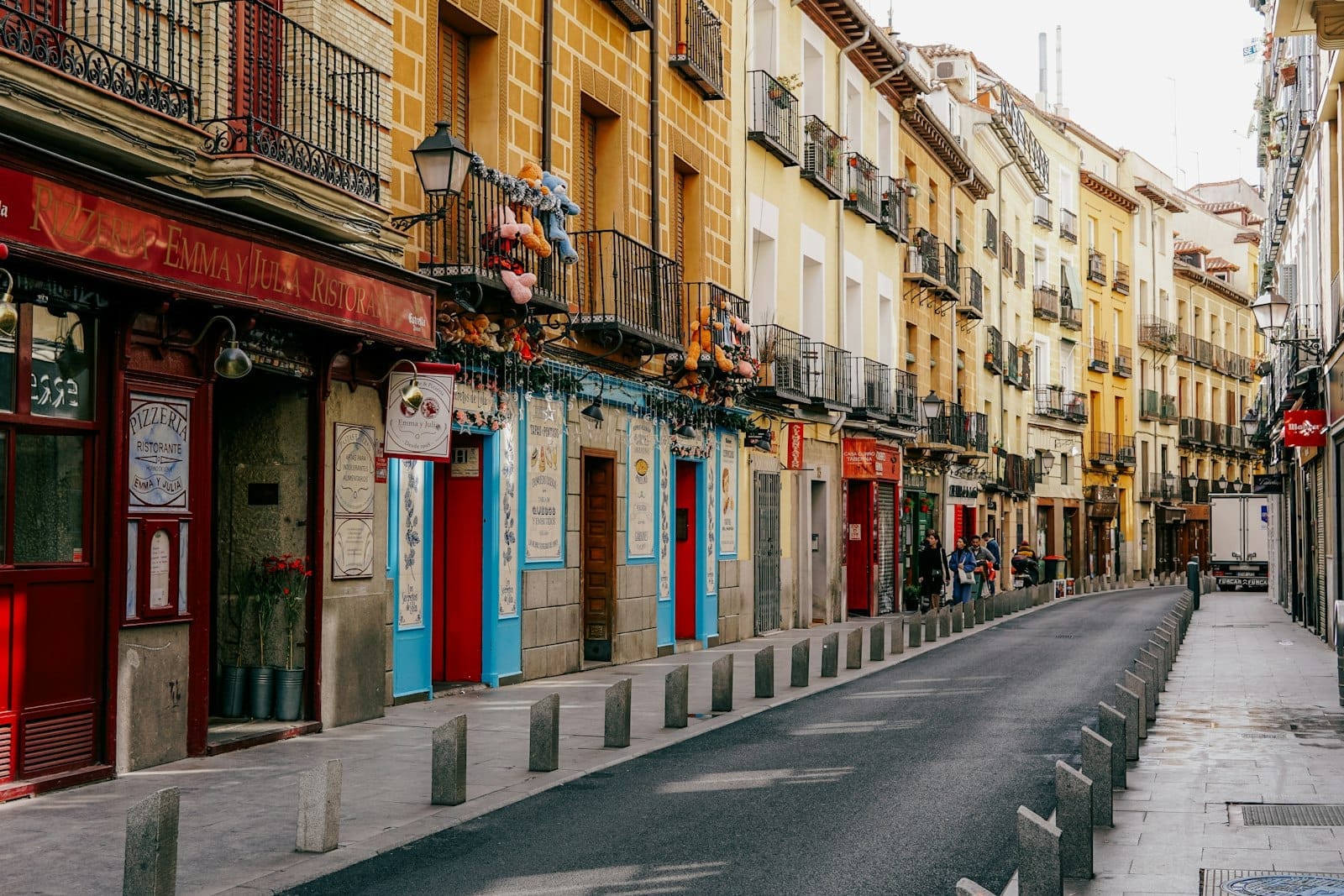
The street grid here follows the logic of the Middle Ages rather than any planner's grid. Calle de la Cava Baja and Calle de la Cava Alta run roughly parallel and slightly curved, tracing the line of the old city moat. Between them and the surrounding lanes, the neighborhood folds into small squares and unexpected dead ends that reward slow, directionless walking.
ℹ️ Good to know
La Latina is compact enough to cross on foot in 15 minutes, but its maze of side streets means most visitors end up spending far longer than planned. The neighborhood's total walkable area from Plaza de la Cebada to Ribera de Curtidores is roughly 700 meters.
Character & Atmosphere
La Latina reads differently depending on when you arrive. On weekday mornings, it is a working neighborhood. Locals queue at the Mercado de la Cebada on Plaza de la Cebada, shopkeepers pull up metal shutters on the side streets, and the cafés along Calle de Toledo fill with people reading newspapers over coffee. The streets are narrow enough that morning light only reaches the lower half of the buildings for a couple of hours, giving the lanes a cool, shadowed feel even in summer.
By late afternoon, the bars on Cava Baja begin to fill. This is one of Madrid's most celebrated bar streets, lined on both sides with traditional taverns, some of them unchanged in décor for decades. The tiles, the barrels behind the counter, the platters of bravas and jamón placed without ceremony on the zinc bars: it is an experience that feels entirely unrehearsed precisely because it is so deeply routine for the people who live here. By 8 or 9 in the evening on a Friday or Saturday, Cava Baja is shoulder-to-shoulder, and the crowd spills into Calle del Almendro and Plaza de la Paja.
Sunday mornings belong entirely to El Rastro and the ritual that follows it. The flea market draws thousands of people to the streets around Plaza de Cascorro from around 9am until 3pm, after which the crowds migrate to the tapas bars, particularly along Cava Baja and around Plaza de la Paja. By 2pm the outdoor terraces are packed and the noise level is considerable. This Sunday post-Rastro ritual is one of Madrid's most reliable social institutions.
Late at night, particularly on weekends, La Latina is loud. The streets are narrow, the bars stay open late, and sound travels. Residents have long debated the noise with bar owners and the city government. If you are a light sleeper, accommodation on Cava Baja or Calle del Almendro on a Friday or Saturday night will be a challenge.
What to See & Do
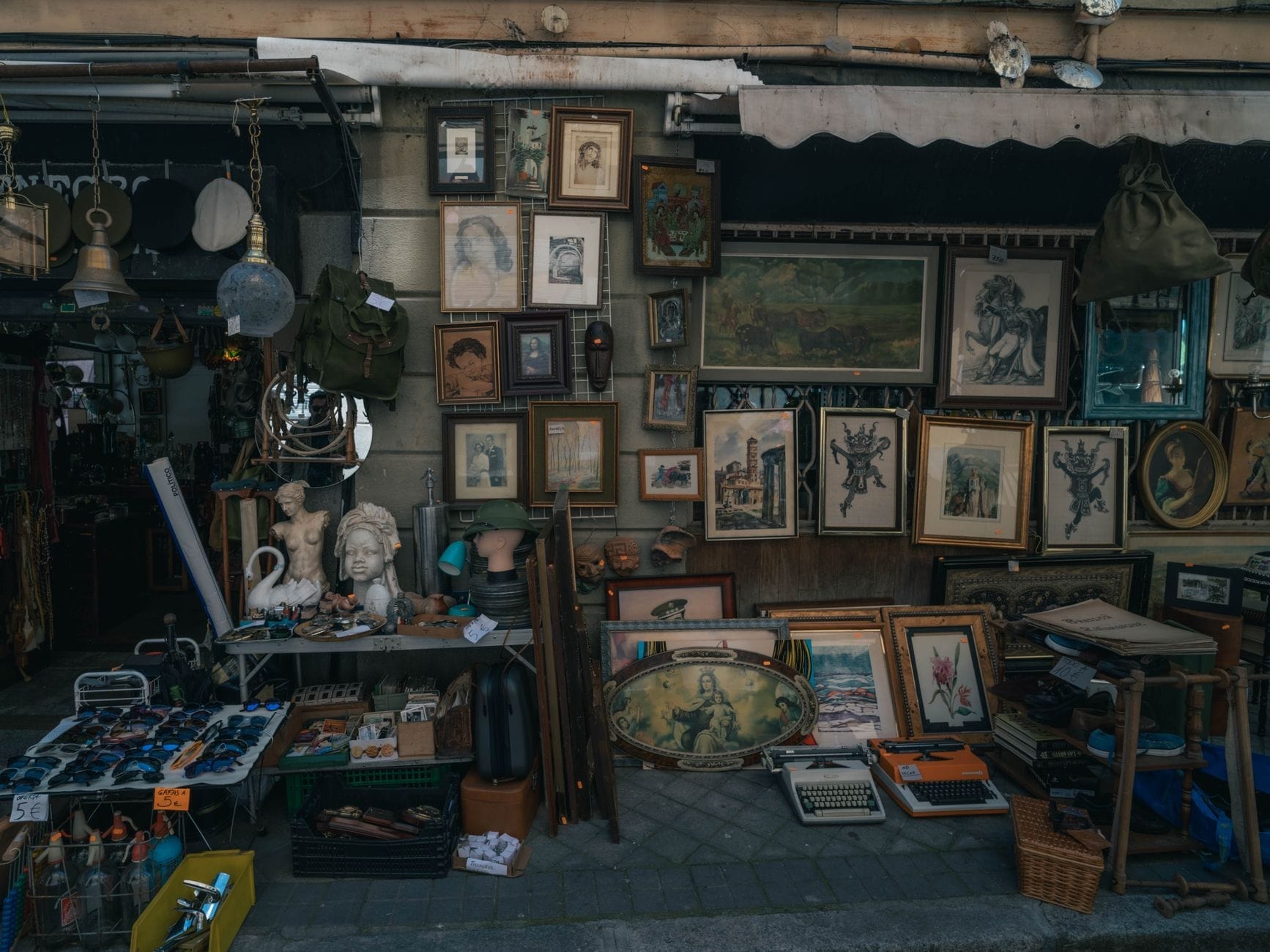
The anchor experience of any visit to La Latina is El Rastro, Madrid's centuries-old open-air flea market held every Sunday and on public holidays. It spreads down the slope from Plaza de Cascorro along Ribera de Curtidores and branches into the surrounding side streets. You will find antique furniture, vintage clothing, old books, vinyl records, tools, ceramics, and considerable amounts of junk. The quality varies enormously stall by stall, but the experience of the market itself, the crowd, the noise, the smell of churros from nearby stalls, is worth the trip regardless of whether you buy anything.
⚠️ What to skip
El Rastro attracts large crowds and, with them, pickpockets. Keep bags zipped and in front of you, and avoid placing your phone on the bar or in a back pocket. The most congested stretch is Ribera de Curtidores between Plaza de Cascorro and the bottom of the slope.
Plaza de la Paja is the neighborhood's most beautiful square, and arguably one of the finest in all of Madrid. It occupies the site of the old medieval market, and its current form, with a long, gently sloping open space flanked by old buildings, has a quieter dignity than the more tourist-heavy plazas elsewhere in the city. The square connects uphill to the Jardines de las Vistillas, a tree-lined terrace with views west across to the mountains on clear days, a popular spot for evening drinks in summer.
The Mercado de la Cebada, on the square of the same name, is the neighborhood's main food market and one of Madrid's largest. It is a functioning market for locals, not a tourist food hall, which makes it more useful than picturesque. For the latter, Mercado de San MiguelMercado de San Miguel is a short walk away near Plaza Mayor, though it is a very different proposition in terms of price and atmosphere.
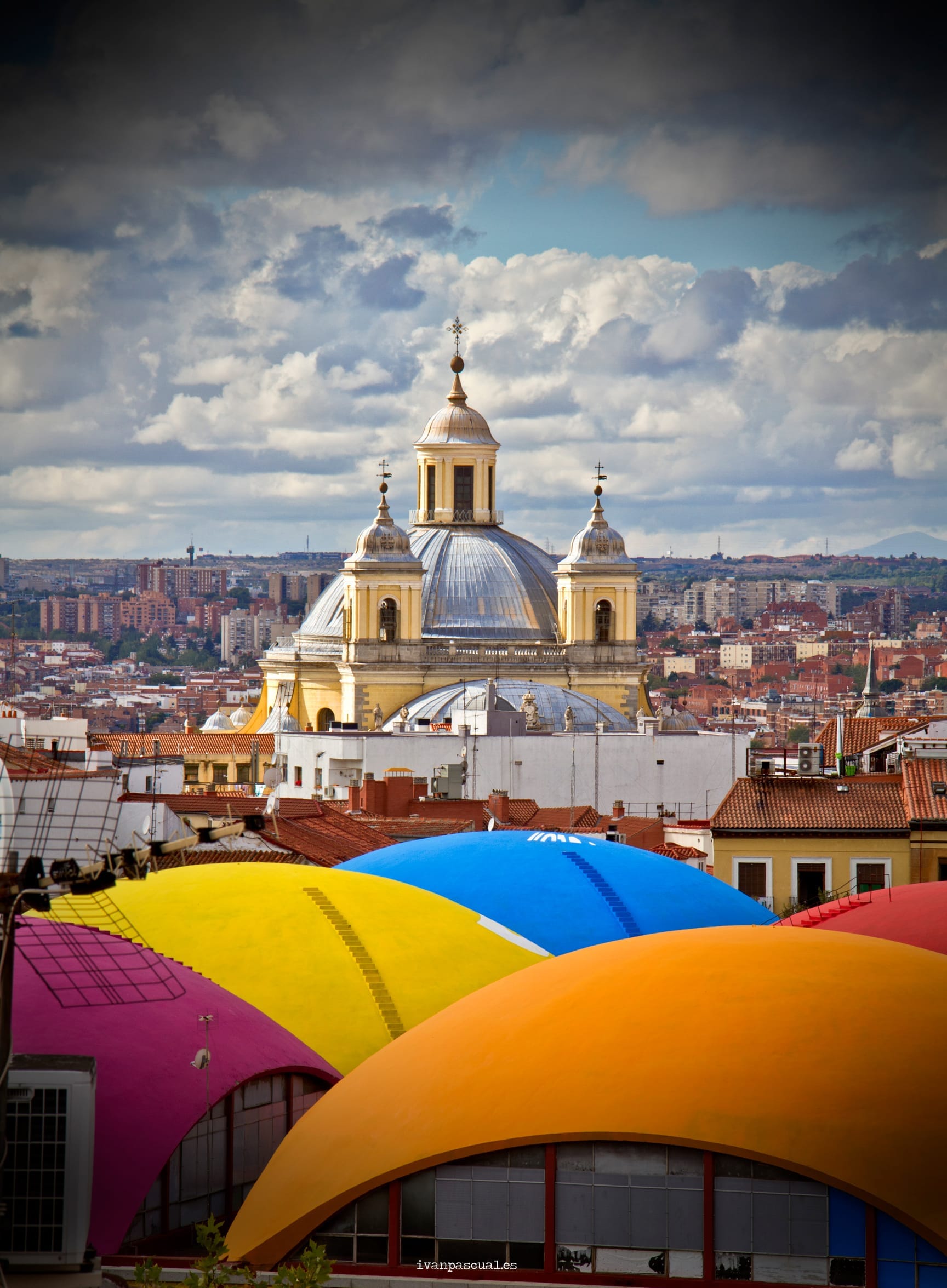
The neighborhood's historic religious buildings are worth noting without becoming the entire purpose of a visit. The Basílica de San Francisco el Grande sits just southwest of the neighborhood proper on Gran Vía de San Francisco, its enormous dome visible for some distance. Its interior contains significant artworks including an early Goya painting. A short walk northwest brings you to the Almudena Cathedral and the Royal Palace, though these technically belong to the Madrid de los Austrias zone rather than La Latina itself.
El Rastro flea market: Sundays and public holidays, Plaza de Cascorro to Ribera de Curtidores, 9am–3pm
Cava Baja and Cava Alta: the main tapas streets, best explored on foot from north to south
Plaza de la Paja: the neighborhood's medieval heart, quieter than Plaza Mayor and more atmospheric
Jardines de las Vistillas: elevated terrace gardens with views toward the sierra, good at sunset
Mercado de la Cebada: working food market on Plaza de la Cebada, open weekday mornings
Calle del Almendro and surrounding side streets: the residential core, less trafficked and worth wandering
Eating & Drinking
La Latina's food identity is built around traditional Spanish tapas, and specifically around the kind served in old-fashioned tabernas rather than modern gastro-bars. Cava Baja is the street where this culture concentrates most densely. The format is consistent: you stand at the bar, order wine or beer, and receive a free or very inexpensive small dish alongside it. Move from bar to bar along the street, and you can eat well for a reasonable sum, provided you keep moving rather than settling at a table.
The neighborhood's traditional dishes lean toward Castilian basics: patatas bravas, croquetas, jamón ibérico, tortilla española, and bocadillos de calamares, the Madrid-style squid roll that is a city institution. The closer you stay to Cava Baja and the central streets, the more consistent the quality, though prices are slightly higher than in less-visited parts of the city. Wander a block or two off the main strip and you will find bars with almost identical menus but considerably fewer tourists and noticeably lower prices.
For a deeper look at Madrid's food culture and where to find the best examples in La Latina and beyond, the Madrid tapas guide covers the full picture. La Latina also appears prominently in the broader Madrid food guide, which puts the neighborhood's tavern culture in context alongside the rest of the city.
Drinking culture here centers on vermouth in the mornings and early afternoons, particularly on Sundays before and after El Rastro, and on wine and beer in the evenings. Several bars on Cava Baja and around Plaza de la Paja have been serving the same house vermut for decades. The outdoor terraces on Plaza de la Paja are pleasant in good weather but fill up quickly on weekend afternoons. If you arrive before 1pm on a Sunday, you will find seats; by 2pm that is rarely the case.
💡 Local tip
The Sunday tapas crawl works best if you start at the northern end of Cava Baja near Plaza de la Cebada and work your way south, finishing around Plaza de la Paja or the Jardines de las Vistillas. Arriving before 1:30pm gives you access to bar stools and outdoor tables; the full crowds hit after 2pm when El Rastro winds down.
Getting There & Around
The most direct metro access is via Line 5, which stops at La Latina station (for the northern part of the neighborhood, closest to Cava Baja and Plaza de la Cebada) and Puerta de Toledo station (for the southern end near El Rastro and Ribera de Curtidores). Both stations put you within a two-minute walk of the neighborhood's main streets. From Puerta del Sol, the walk to Cava Baja takes around 12 to 15 minutes through the old town, passing through or near Plaza Mayor.
Several EMT bus lines serve the area: routes 17, 18, 23, 35, and 60 all pass through or near La Latina, connecting it to Atocha, Sol, and Moncloa. For a broader understanding of how to move around the city from La Latina as a base, the Madrid transport guide covers metro zones, bus networks, and how to use the multi-journey cards that make public transport significantly cheaper than single tickets.
Within La Latina, everything is walkable, and in many cases walking is the only sensible option since the streets are too narrow and irregular for easy navigation by car or taxi. The neighborhood's topography is mildly hilly: Cava Baja runs at a slight downward slope from north to south, and the streets west toward the Vistillas gardens climb noticeably. None of the gradients are steep, but comfortable shoes matter more here than in flatter parts of the city center.
On Sunday mornings during El Rastro, vehicle access to much of La Latina is restricted, and the metro is by far the most practical option. The La Latina and Puerta de Toledo metro stations handle large volumes of people on those mornings; arriving before 10am avoids the worst of the crowds both on the streets and in the stations.
Where to Stay
La Latina is a genuine residential neighborhood, which means accommodation options are more limited than in Sol or Gran Vía, and the stock leans toward smaller guesthouses, boutique hotels, and apartment rentals rather than large international chains. For a broader comparison of Madrid's neighborhoods as places to stay, where to stay in Madrid covers the tradeoffs in detail.
Staying in La Latina puts you within walking distance of the Royal Palace, Plaza Mayor, and Lavapiés, with the Prado and Reina Sofía museums reachable in around 20 to 25 minutes on foot or a few stops by metro. The neighborhood works well as a base for travelers who prioritize character and want to be in the old city rather than in a more generic central hotel district.
The caveat: weekend nights in La Latina are loud. Cava Baja and the streets immediately around it see significant bar traffic until late, and the narrow streets amplify noise considerably. If you value sleep over proximity to the action, choose accommodation on the quieter western fringe of the neighborhood, toward the Vistillas gardens, or look at neighboring areas like Lavapiés to the east, which has a calmer nighttime atmosphere on weekdays.
💡 Local tip
For the best of both worlds, look for accommodation on the western side of La Latina, closer to the Jardines de las Vistillas than to Cava Baja. You remain a five-minute walk from the tapas strips but away from the loudest nighttime streets.
Who La Latina Is For
La Latina is one of the most rewarding parts of Madrid for first-time visitors precisely because it delivers what many European old-town neighborhoods only promise: genuinely functioning local life, historic streets that have not been entirely hollowed out for tourism, and a food and bar culture that operates on Madrid's terms rather than on visitor schedules. A Sunday in La Latina, starting with El Rastro and moving to tapas on Cava Baja, is as good an introduction to the city as any museum.
It is less suited to travelers who want quiet, cutting-edge dining, or the kind of youthful creative energy found in Malasaña or Chueca. La Latina's food scene is traditional by design; innovation is not really the point. If you are looking for natural wine bars, modern Spanish cuisine, or international restaurants, you will find more options a metro stop or two away.
TL;DR
Best for: First-time visitors to Madrid, tapas enthusiasts, Sunday market lovers, anyone who wants to walk medieval streets that still function as a real neighborhood.
Signature experience: The Sunday El Rastro market followed by a slow tapas crawl down Cava Baja, finishing with vermouth on Plaza de la Paja.
Key streets: Cava Baja, Cava Alta, Calle del Almendro, Ribera de Curtidores, Calle de Toledo.
Drawback: Loud on Friday and Saturday nights, very crowded on Sunday afternoons; not ideal for travelers who need quiet or prefer modern dining.
Transit: Metro Line 5 (La Latina and Puerta de Toledo stations); 12-15 minute walk from Puerta del Sol.
Three days in Madrid is enough to cover the Royal Palace, the world-class Art Triangle museums, Retiro Park, and the city's most rewarding neighborhoods. This itinerary is built around real logistics, free entry windows, and practical advice on where to spend your time and where to skip.
Madrid is one of Europe's great museum cities. The Prado, Reina Sofía, and Thyssen-Bornemisza alone would justify a week, but the city also hides royal convents, Goya frescoes, and lavish private palaces that most visitors never find. This guide covers every museum worth your time, with practical advice on free hours, passes, and crowd strategy.
Madrid rewards visitors year-round, but the best time to visit depends on your priorities. This guide covers weather patterns, crowd levels, hotel prices, and key events for every season so you can choose the trip that actually suits you.
Madrid rewards those who look up and climb higher. Whether you want a sundowner drink with skyline views or a free panoramic terrace above the city's rooftops, this guide covers the best vantage points in the capital, from iconic cultural landmarks to the most atmospheric rooftop bars.
Madrid sits at the geographic heart of Spain, putting some of the country's most remarkable cities and landscapes within an hour or two by train. This guide covers the best day trips from Madrid, from UNESCO World Heritage cities to royal palaces and medieval walls.
Madrid is one of Europe's most generous cities for budget travelers. From world-class museums with free evening hours to royal gardens, ancient temples, and legendary flea markets, you can fill days with remarkable experiences without paying a single euro.
Madrid has one of Europe's most extensive public transport networks, covering the metro, city buses, night services, and direct airport links from Adolfo Suárez Madrid-Barajas Airport. This guide breaks down every option with real prices, schedules, and the practical knowledge to move around the city without stress.
Madrid rewards curious visitors who look beyond the Prado and Plaza Mayor. From a royal convent hiding five centuries of treasures to a park that erupts in almond blossom each February, these are the experiences that most tourists never find but locals quietly love.
Madrid punches well above its weight as a luxury destination. This guide covers the best five-star hotels, designer shopping streets, fine dining, and cultural experiences that make the Spanish capital one of Europe's most rewarding upscale city breaks.
Madrid's built environment tells six centuries of history across a single city. This guide walks you through the key architectural periods, the most significant buildings, and how to plan a self-guided tour without wasting a day on tourist traps.
Madrid transforms into one of Europe's most festive cities each December, with illuminated boulevards, outdoor markets, and a calendar packed with seasonal events. This guide covers every major Christmas market, the best neighborhoods for lights, practical timing advice, and what to skip.
Madrid's religious heritage goes far deeper than its famous cathedral. The city holds royal convents still inhabited by nuns, a basilica with one of the world's largest domes, a hermitage painted by Goya, and an Egyptian temple reconstructed in a city park. This guide covers the best of them all.
Madrid is one of Spain's premier flamenco destinations, with daily shows running year-round across tablaos, dedicated theaters, and cultural festivals. This guide breaks down the best venues, clear price comparisons, what to avoid, and how to book smart.
Madrid's food scene rewards the curious and punishes the impatient. This guide covers the essential dishes you shouldn't leave without trying, where to find them, what to pay, and how to eat like a local — from a €3 breakfast espresso to a late-night tapa in La Latina.
Madrid rewards couples with an exceptional mix of grand parks, world-class art, intimate flamenco shows, and long evening meals that stretch well past midnight. This guide covers the best romantic things to do in Madrid Spain, from free sunset viewpoints to splurge-worthy experiences worth every euro.
The Sierra de Guadarrama sits just about an hour to 90 minutes from central Madrid and offers over 80 km of marked trails through pine forests, granite peaks, and high mountain passes. This guide covers the best hiking areas, how to get there by bus or train, and what to do in the city to prepare for your mountain day.
Spring is widely considered the best time to visit Madrid, with mild temperatures, long days, and a packed festival calendar. This guide breaks down what each month actually looks and feels like, from April showers to June's first heat, so you can plan without surprises.
Summer in Madrid means intense heat, long evenings, and a city that runs on its own schedule. This guide covers everything from surviving 38°C afternoons to finding shade in Retiro, timing museum visits, and understanding why August feels like a different city entirely.
Madrid transforms in winter into one of Europe's most festive cities, with over 240 illuminated locations, a Christmas market in Plaza Mayor, and the spectacular Cabalgata de Reyes on 5 January. This guide covers what to expect from the weather, where to find the best markets, how to experience Epiphany like a local, and practical tips for navigating the city in the cold months.
Madrid's market scene spans 19th-century iron halls, neighborhood produce markets, gourmet food halls, and one of Europe's great flea markets. This guide covers the best of each category, with practical tips on when to go, what to eat, and which markets are worth your time.
Madrid nightlife runs on a schedule unlike anywhere else in Europe. Bars don't fill until midnight, clubs peak at 3am, and the city doesn't sleep until sunrise. This guide covers the best districts, venues, realistic costs, and the timing rules that separate a great night from an expensive disappointment.
Madrid is one of Europe's most affordable capitals once you know where to look. This guide breaks down realistic daily costs, free museum windows, budget food strategies, and transport tricks to help you see the best of the city without overspending.
Seven days in Madrid gives you enough time to cover the world-class museums, explore distinct neighborhoods, eat well, and still fit in a day trip or two. This guide breaks it all down day by day, with practical logistics, tested recommendations, and the details most itineraries skip.
Madrid ranks among Europe's safer capital cities, but tourists face real risks from pickpocketing, distraction theft, and a handful of well-documented scams. This guide breaks down the actual threats, neighborhood by neighborhood, and gives you practical tools to stay safe without being paranoid.
Every May, Madrid throws one of Europe's great city festivals in honour of San Isidro Labrador. From free open-air concerts and religious processions to the world's most prestigious bullfighting fair, this guide covers everything you need to plan your visit.
Madrid is one of Europe's great shopping cities, with options ranging from high-street chains on Gran Vía to designer boutiques on Calle Serrano and centuries-old flea markets in La Latina. This guide breaks down every major shopping zone, market, and mall by budget, style, and practicality.
Madrid is one of Europe's most rewarding cities for solo travelers. This guide covers everything from navigating the metro alone to dining at tapas bars without awkwardness, plus straightforward safety advice, neighborhood breakdowns, and practical logistics for first-timers and seasoned solo travelers alike.
Madrid is one of Europe's great cities for eating at the bar, moving from spot to spot, and drinking cold beer with small plates of food. This guide covers the best tapas neighborhoods, top bars, realistic prices, timing advice, and everything you need to do a proper crawl without looking like a tourist.
Traveling from Madrid to Lisbon involves more choices than most travelers expect. This guide breaks down every realistic option — flight, bus, and train — with straightforward advice on cost, time, and what to book first.
The Madrid to Seville route is one of Spain's most travelled intercity connections, and you have more options than ever. This guide covers AVE train times, low-cost operators, bus routes, driving, and exactly how to get the best fare.
The Madrid to Valencia route is one of Spain's most travelled corridors, served by multiple high-speed train operators with journey times under two hours. This guide covers every transport option, how to get the best fares, which stations to use, and what to know before you go.
Spain's two great cities each make a compelling case. Madrid is the capital, the art powerhouse, and the city that never sleeps. Barcelona has Gaudí, the Mediterranean, and a culture distinct from the rest of Spain. This guide breaks down the real differences so you can choose, or plan to do both.
Madrid's historic core is compact enough that you can cover its greatest landmarks on foot, entirely on your own schedule. This guide breaks down the best self-guided walking routes by theme and distance, with real pricing, opening hours, app recommendations, and practical advice on when to walk and what to skip.
Madrid is one of Europe's most underrated family destinations, with free museum entry for children under 18 at some major museums, sprawling parks, three theme parks within day-trip range, and a metro system that cuts fares for young travellers. This guide covers everything families need to plan a smooth, enjoyable trip.
Madrid rewards visitors who go beyond the obvious. This guide covers the top things to do in Madrid Spain, from world-class art museums and the Royal Palace to Sunday flea markets, flamenco tablaos, and the city's best parks, with practical tips on free entry times, seasonal crowds, and neighborhood logic.
Madrid's food scene spans centuries-old taverns, world-class tasting menus, and multicultural street-level dining. This guide breaks down the best restaurants by neighborhood and budget, with practical booking advice and frank takes on what to skip.
Choosing where to stay in Madrid shapes your entire trip. This guide breaks down the city's key neighborhoods by atmosphere, price range, and practical location, so you can pick the right base from the start.