Royal Palace of Madrid: What to Expect Inside Europe's Grandest Residence
The Palacio Real de Madrid is the largest royal palace in Western Europe, covering about 135,000 square metres and containing over 3,000 rooms filled with royal armour, Stradivarius instruments, and Tiepolo frescoes. Construction began in 1738 under Felipe V and the palace remains the official residence of the Spanish Crown, though the royal family lives elsewhere.
Quick Facts
- Location
- Plaza de Oriente, Sol-Centro, Madrid
- Getting There
- Ópera (Lines 2 and 5) or Príncipe Pío (Cercanías C1, C7, C10)
- Time Needed
- 2 to 3 hours for palace interiors; add 1 hour for gardens
- Cost
- Standard: 14 € | Reduced: check current concessions online | Under 5: Free
- Best for
- History lovers, architecture enthusiasts, first-time Madrid visitors
- Official website
- www.patrimonionacional.es/en/visita/royal-palace-madrid
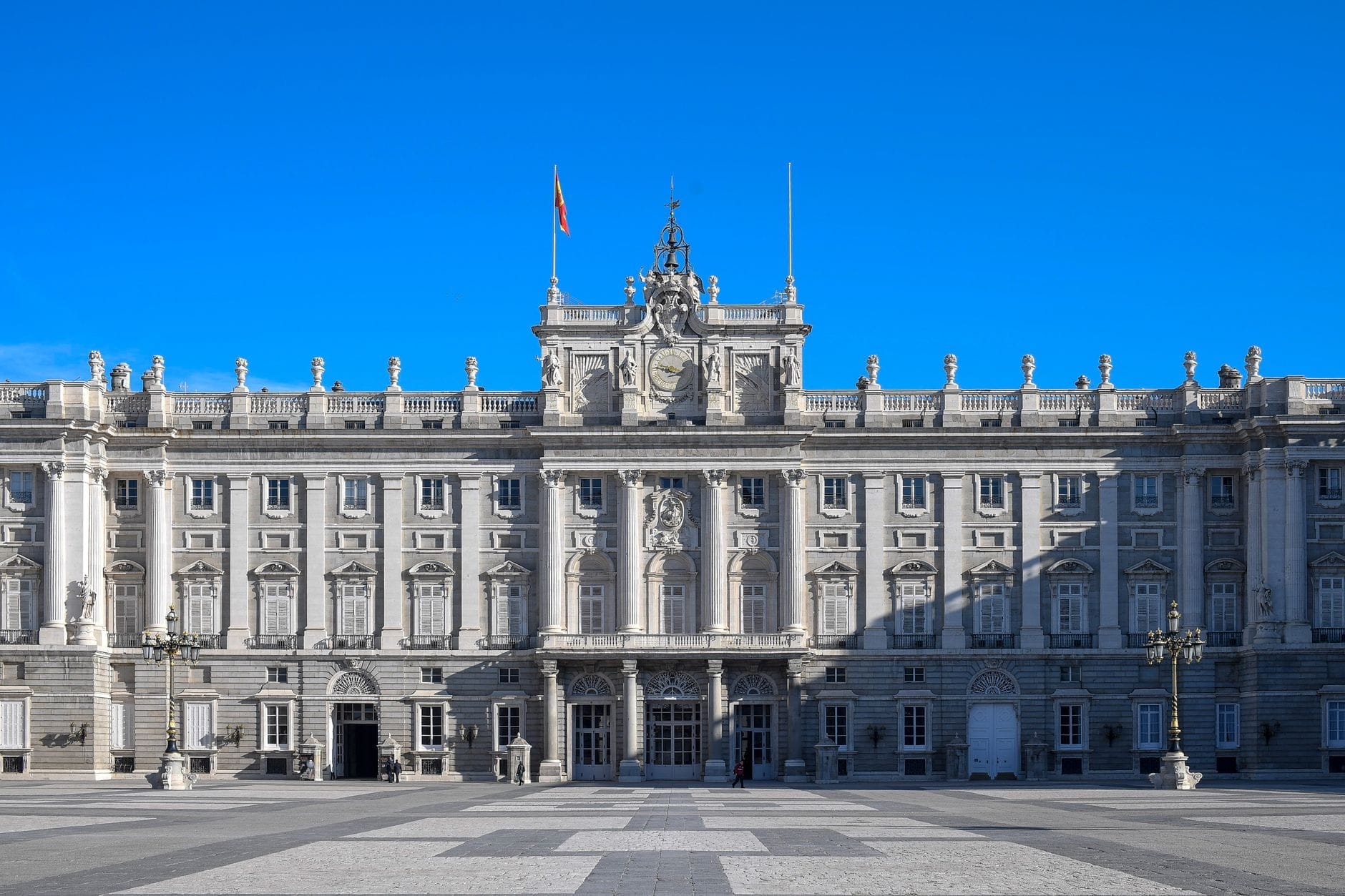
What the Palacio Real Actually Is
The Palacio Real de Madrid is the official residence of the Spanish Crown, though King Felipe VI and Queen Letizia live at the Palacio de la Zarzuela outside the city. That distinction matters: the Royal Palace is fully open to visitors because it functions as a state ceremonial building rather than a private home. What you get access to is, by any measure, extraordinary: more than 3,000 rooms spread across about 135,000 square metres, making it the largest royal palace in Western Europe by floor area.
Construction of the current building began in 1738 under Felipe V, who commissioned Filippo Juvara and then Giovanni Battista Sacchetti to design a palace on the site of the old Alcázar fortress, which burned down in 1734. It took around 17 years to complete. The first king to actually live there was Carlos III, who moved in around 1764. The style is Spanish Baroque meeting Italian classicism: the exterior is entirely clad in limestone and granite, which gives the facade a cool, almost silvery appearance in morning light and a deeper golden tone in the afternoon.
💡 Local tip
Buy tickets online through the Patrimonio Nacional website before you visit. Walk-up queues at the Santiago Arch entrance can stretch 40 minutes or more in peak season, and online bookings let you choose a timed entry slot.
Opening Hours and Getting There
Hours vary by season. From April through September, the palace is open Monday to Saturday 10:00 to 19:00 and Sunday 10:00 to 16:00. From October through March, it closes an hour earlier on weekdays and Saturdays (18:00), with Sunday hours at 16:00. Last admission is one hour before closing in all cases. The palace is closed on 1 January, 6 January, 1 May, 24 December from 15:00, and 31 December from 15:00. Check the Patrimonio Nacional website before visiting, as the palace occasionally closes for official state functions without advance public notice.
Visitor access is through the Santiago Arch on Calle Bailén, opposite Calle Requena. The nearest metro station is Ópera, served by Lines 2, 5, and R, and is about a five-minute walk from the main entrance. If you are arriving by Cercanías commuter rail, Príncipe Pío station (lines C1, C10, and regional services) is roughly a ten-minute walk along Calle de Bailén. Buses on several EMT Madrid routes also stop nearby. Arriving by metro is the easiest option for most visitors.
The surrounding area rewards extra time. Plaza de Oriente sits directly in front of the palace's eastern facade, a formal garden square with an equestrian statue of Felipe IV at its centre. The Jardines de Sabatini are on the palace's north side and offer some of the best exterior views of the building without any admission fee.
Tickets & tours
Hand-picked options from our booking partner. Prices are indicative; availability and final rates are confirmed when you complete your booking.
Flexible time Real Madrid: Bernabeu Stadium & Museum Entry
From 42 €Instant confirmationReal Madrid Bernabeu Stadium tour and gourmet tasting
From 79 €Instant confirmationFree cancellationDescalzas Reales Monastery and Madrid of the Austrias guided tour
From 85 €Instant confirmationFree cancellationReal Madrid: Bernabeu Stadium & Museum Entry
From 35 €Instant confirmation
What You Will See Inside
Not all 3,418 rooms are open to the public. The visitor route covers roughly 50 of the most significant state rooms, which is still a substantial walk of well over a kilometre through corridors lined with tapestries, chandeliers, and portraits. Budget at least two hours if you intend to read the room labels properly.
The Grand Staircase hits you first: a single, ceremonial marble staircase rising to the piano nobile under a painted ceiling by Corrado Giaquinto. It sets the tone for everything that follows. The Throne Room is the most photographed space inside: scarlet walls, a frescoed ceiling by Giovanni Battista Tiepolo, and two lions cast in bronze flanking the twin thrones. Tiepolo's ceiling work appears in several rooms and is considered among the finest examples of 18th-century decorative painting in Europe.
The Royal Armoury is a separate highlight and one of the richest collections of historic arms and armour in the world. The jousting armour of Carlos V is particularly striking. The palace also houses a collection of five Stradivarius string instruments, an ensemble that is almost certainly unique among royal collections. The Royal Pharmacy, included in the standard ticket, shows an apothecary largely intact from the 18th and 19th centuries, with original ceramic jars and distillation equipment still in display cases.
ℹ️ Good to know
Audio guides are available in multiple languages and are worth considering, as room labelling inside the palace is occasionally sparse in English. Guided tours in English run at scheduled times and are bookable through the official website.
How the Experience Changes by Time of Day
Arriving at opening time, around 10:00, is consistently the best strategy. Tour groups tend to arrive between 10:30 and 11:00, so there is a narrow window when the state rooms feel relatively calm. The morning light through the east-facing windows of the Throne Room is also markedly different from afternoon visits: warmer and more direct, catching the gold threading in the wall fabric in a way that later visitors simply do not see.
Midday visits from roughly 11:30 to 14:00 coincide with peak crowd density. The Grand Staircase and Throne Room become noticeably congested, and moving through at your own pace becomes difficult. If you arrive mid-morning and plan to stay through lunch, the crowds do thin slightly after 13:30 as tour groups rotate out, but the experience is still busier than an early visit.
Afternoon visits have one specific advantage in summer: by 16:00 or 17:00, the coaches have mostly left and the palace is quieter again, though you are working against the closing time. The exterior courtyard, the Plaza de la Armería, receives excellent late-afternoon light in spring and summer and is worth standing in for a few minutes even if you are mainly focused on the interiors.
The Grounds and Surrounding Space
The Campo del Moro gardens on the palace's western side stretch down toward the Manzanares River valley and offer an unusual perspective: looking back up toward the palace from the lower paths, the building appears to rise almost from the cliff edge. Access to the Campo del Moro is from the Paseo de la Virgen del Puerto and is free of charge, making it an ideal option if you want to see the palace's exterior without paying admission.
The Jardines de Sabatini on the northern flank were designed in the 1930s in a formal French geometric style and are open to the public for free. They connect visually but not physically to the palace grounds and make a good starting or ending point for a walk toward the Plaza de España or down to Madrid Río.
Practical Considerations Before You Go
Photography is permitted inside the palace without flash, which is a genuine concession that many comparable royal collections do not offer. Tripods are not allowed. Storage lockers are available at the entrance for large bags, and security checks are thorough, similar to an airport. Wearing comfortable flat shoes matters: the floors in the state rooms are original parquet or marble, and most visitor routes involve sustained walking on hard surfaces for 90 minutes to two hours with no seating along the route.
Wheelchair users should note that wheelchairs are available to borrow on site. The main visitor route is largely accessible, though certain areas have historic thresholds or surface changes. Confirm current accessibility arrangements with Patrimonio Nacional before your visit, particularly if partial renovations are ongoing, as access configurations do shift.
In terms of weather, the palace itself is of course indoors and climate-controlled, but arriving in Madrid's July and August heat means the queue outside can be quite uncomfortable. Bringing water and arriving at opening time is especially important in summer. Spring and autumn visits are easier: the light is softer, the heat is manageable, and the crowds are somewhat thinner than peak July.
If you are planning several major Madrid cultural sites in a short trip, consider whether to combine the palace with the nearby Almudena Cathedral on the same day, as they are directly adjacent. A broader plan covering Madrid's museum triangle on Paseo del Prado is best mapped out using a 3-day Madrid itinerary to avoid duplicating effort.
Is It Worth the Ticket Price?
At around 14 euros for a standard adult ticket, the Royal Palace sits at the higher end of Madrid attraction pricing. The comparison that matters is with the Prado or the Reina Sofía, both of which charge significantly less. What the palace offers that no museum can replicate is the experience of scale: rooms designed to make visitors feel small, ceilings that require you to stop and look up, and the accumulated weight of centuries of Spanish royal history in a single building. For visitors with a genuine interest in European history, decorative arts, or Baroque architecture, the price is justified.
Visitors primarily focused on painting collections may find the Museo del Prado or the Museo Thyssen-Bornemisza more rewarding per euro spent. The palace's painting collection is substantial but not always its strongest argument. The armoury, the Tiepolo frescoes, and the sheer physical scale of the building are.
Insider Tips
- The Changing of the Guard ceremony at the palace takes place on the first Wednesday of each month in the Plaza de la Armería, usually around midday. It is free to watch from outside and draws significant crowds, so arrive 20 minutes early for a clear sightline.
- If you only have time to prioritise two rooms, make them the Throne Room and the Royal Armoury. Both are concentrated expressions of what makes the palace unusual and neither can be skipped in good conscience.
- The Jardines de Sabatini are open free of charge and close later than the palace itself. They make a genuinely pleasant place to sit after a long interior visit, and the view of the palace's northern facade from the central fountain is one of the better photographs you can take in Madrid without a ticket.
- The palace occasionally closes without public advance notice when official state ceremonies are held. Always check the Patrimonio Nacional website or social media channels the day before your planned visit, especially if you are travelling to Madrid specifically for this.
- Check the official Patrimonio Nacional website for digital resources such as maps and visit information; these can be a practical alternative to buying a physical audio guide if you already have a smartphone.
Who Is Palacio Real de Madrid For?
- First-time visitors to Madrid who want to understand the country's royal and imperial history in one place
- Architecture enthusiasts drawn to Spanish Baroque and 18th-century Italian classicism
- Families with older children interested in the Royal Armoury's historic weapons and armour collection
- Travellers with a particular interest in decorative arts, tapestries, and 18th-century European court culture
- Photographers looking for grand interior spaces where personal photography without flash is permitted
Nearby Attractions
Other things to see while in Sol & Centro:
- Catedral de la Almudena
The Almudena Cathedral took more than a century from the laying of its foundation stone to its consecration in 1993, making it one of Europe's newest major cathedrals. Free to enter and directly opposite the Royal Palace, it rewards visitors who look beyond its mismatched facade to discover a surprisingly bold and colorful interior.
- Campo del Moro Gardens
The Jardines del Campo del Moro spread across more than 20 hectares directly behind the Royal Palace, offering one of the most dramatic views of the Palacio Real in Madrid. Admission is free, crowds are thin compared to the palace itself, and the romantic English-style landscape feels worlds away from the city streets above.
- Círculo de Bellas Artes
Few buildings in central Madrid earn attention on multiple levels at once. The Círculo de Bellas Artes delivers: a landmark Palacios-designed tower within the Paisaje de la Luz UNESCO World Heritage area with a rooftop terrace above the Gran Vía skyline, rotating art exhibitions, and one of the city's most atmospheric cafés. Entry to the building and La Pecera café is free; the rooftop, exhibitions, and combined tickets have separate fees starting from around €6.
- Edificio Metrópolis
Standing at the junction of Calle de Alcalá and Gran Vía, the Edificio Metrópolis is Madrid's most iconic piece of Belle Époque architecture. Its slate dome, gilded detailing, and winged Victory statue make it a landmark that rewards careful observation, even though the building itself is not a public museum. Here is everything you need to know before you go.