Almudena Cathedral: Madrid's Unexpected Architectural Masterpiece
The Almudena Cathedral took more than a century from the laying of its foundation stone to its consecration in 1993, making it one of Europe's newest major cathedrals. Free to enter and directly opposite the Royal Palace, it rewards visitors who look beyond its mismatched facade to discover a surprisingly bold and colorful interior.
Quick Facts
- Location
- Calle de Bailén 10, 28013 Madrid (Madrid de los Austrias / Palacio area, opposite the Royal Palace)
- Getting There
- Metro: Ópera (Lines 2 & 5), short walk; multiple city buses stop at Palacio Real
- Time Needed
- 45–90 minutes for the interior; longer if combining with the crypt or museum
- Cost
- Free entry to the nave; a voluntary €1 donation toward maintenance is requested at the entrance
- Best for
- Architecture enthusiasts, religious history, first-time Madrid visitors, and anyone visiting the Royal Palace
- Official website
- catedraldelaalmudena.es/en/home
What Is the Almudena Cathedral?
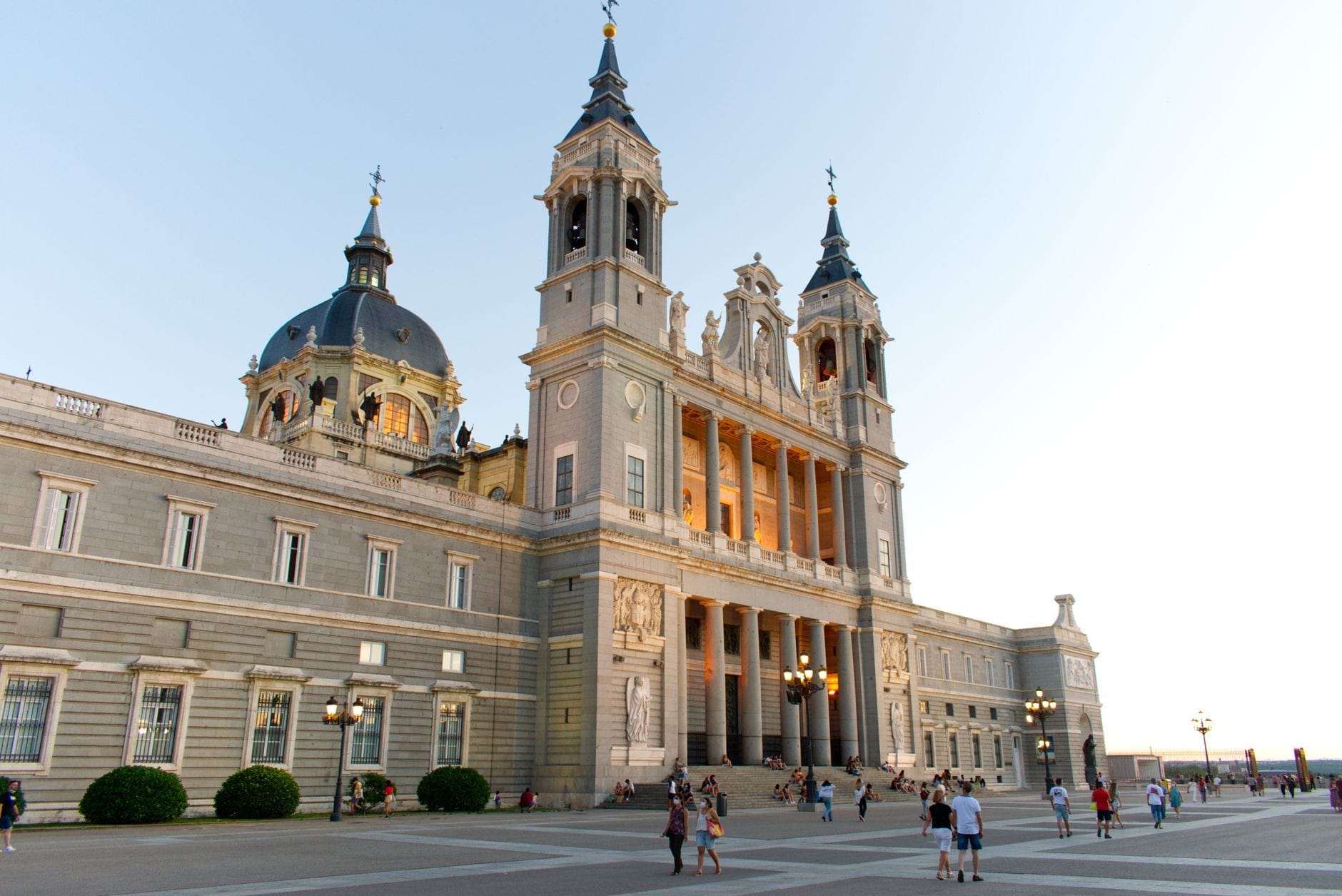
The Santa Iglesia Catedral Metropolitana de Santa María la Real de la Almudena, to use its full official name, sits at the symbolic heart of Madrid on Calle de Bailén 10, pressed up against the city's western escarpment with direct sightlines to the Royal Palace across the Plaza de la Armería. It is the seat of the Archdiocese of Madrid and the city's principal Catholic temple, yet it carries an oddity that most guidebooks gloss over: for a structure of this scale, it is remarkably young. The first stone was laid by King Alfonso XII on 4 April 1883. Consecration only came 110 years later, when Pope John Paul II dedicated the cathedral on 15 June 1993.
That long, interrupted construction is written into the building's bones. Construction stalled repeatedly through civil war, political upheaval, and shifting architectural fashions, which is why the exterior mixes neoclassical and neo-Gothic registers that do not quite harmonize. The facade that faces the Royal Palace reads as formal and restrained, while the dome above it has a more assertive baroque presence. Many visitors arrive expecting something like Seville or Burgos and feel momentarily underwhelmed. That reaction is understandable, but it changes the moment you step inside.
💡 Local tip
Entry to the cathedral nave is free. A voluntary €1 donation toward maintenance is suggested at the entrance. No ticket queue, no booking required on most days.
The Interior: Where the Cathedral Earns Its Place
The interior of Almudena Cathedral is not the solemn, stone-grey space that the exterior implies. The nave runs approximately 102 metres in length, and the dome rises to around 73 metres at its peak, with an interior dome diameter of about 20 metres. The scale alone commands attention. But what actually surprises visitors is the color. The vaulted ceiling is painted in geometric patterns of cerulean blue, gold, and cream, a deliberate 20th-century design decision that gives the space an almost North African luminosity. Thin clerestory windows let natural light filter down the side aisles throughout the morning and early afternoon, shifting from pale gold to a cooler white as the day moves on.
The choir stalls, chapels, and altarpiece are worth moving through slowly rather than drifting up the central nave and back. Each lateral chapel has a distinct character, with some retaining older devotional art and others featuring more contemporary religious sculpture. The Chapel of Nuestra Señora de la Almudena houses the statue of the cathedral's patron, a Romanesque-influenced image of the Virgin that is central to Madrid's civic religious identity and is paraded through the city streets during the November feast day celebrations.
The crypt beneath the cathedral is a separate and genuinely remarkable space that many visitors miss entirely. Built in a neo-Romanesque style and completed before the main cathedral above it, the crypt dates from the late 19th century and has an atmospheric low-vaulted character that feels distinctly medieval. It is also where Princess Mercedes, the first wife of King Alfonso XII, is buried. Access to the crypt is by free visit with a voluntary €1 donation requested.
Tickets & tours
Hand-picked options from our booking partner. Prices are indicative; availability and final rates are confirmed when you complete your booking.
Cuenca's cathedral and city tour from Madrid
From 89 €Instant confirmationFree cancellationWine experience with castles, medieval cities or cathedrals guided tour from Madrid
From 170 €Instant confirmationFree cancellationToledo half-day tour from Madrid with cathedral tickets
From 64 €Instant confirmationFree cancellationToledo full-day tour from Madrid
From 25 €Instant confirmationFree cancellation
How the Experience Changes by Time of Day
Morning visits, particularly between 10:00 and 12:00, offer the cathedral at its quietest. Tour groups typically arrive after 11:00, so the first hour after opening is when you can move through the chapels in near silence, with the filtered morning light at its most directional and interesting for photography. The smell of stone and candlewax is strongest in the morning before the crowds warm the air.
Midday through early afternoon sees the heaviest foot traffic, particularly in summer. The cathedral remains open through the afternoon without a siesta closure, unlike many Spanish churches, but the combination of large groups and the building's acoustic liveliness means it feels considerably less contemplative between 13:00 and 16:00. If you are visiting in July or August, note that opening hours extend to 21:00, which creates an opportunity for a late-afternoon visit when the harshest heat has passed and group tours have largely cleared out, while in other months the cathedral closes at 20:30.
ℹ️ Good to know
Opening hours: September to June, daily 10:00–20:30; July and August, daily 10:00–21:00. Hours may vary on major liturgical dates, so check the official site before visiting on public holidays or feast days.
Evening light, roughly 18:00 onward in winter and 19:00 in summer, produces a warm glow through the western windows that catches the painted ceiling at an angle not visible at other times. The atmosphere is calmer, the light is richer, and if vespers or a liturgical ceremony happens to be scheduled, the sound of choral singing in the space is deeply affecting.
Historical and Cultural Context
Madrid is, by European capital standards, late to the cathedral game. Most comparable cities had their principal churches established in the medieval period. Madrid only became Spain's permanent capital under Philip II in 1561, and for centuries the Royal Chapel within the Palace complex served the city's religious functions. Plans for a proper cathedral were long debated but never realized until the 19th century, and even then construction moved at a pace defined by political crises rather than architectural ambition.
The cathedral's name references the Almudena, a name derived from the Arabic word for citadel, al-mudayna, reflecting the layered history of the site. According to tradition, an image of the Virgin Mary was hidden behind the city walls during the Moorish occupation of the early medieval period and rediscovered at the time of the Christian reconquest of Madrid in 1083. That legend, whether historical or devotional, anchors the cathedral's identity in the city's origin story. For more of Madrid's layered architectural and religious heritage, see the guide to Madrid's churches.
The decision to consecrate the cathedral in 1993 rather than wait for a more complete artistic program was partly symbolic: the ceremony brought one of the longest-running construction projects in Spanish ecclesiastical history to a formal close. The building has continued to receive artistic additions since then, including the stained glass installed after consecration, meaning that in a real sense the cathedral is still accumulating its identity.
Getting There and Practical Walkthrough
The most straightforward approach is via the Ópera metro station (Lines 2 and 5), a five to seven minute walk uphill along Calle del Arenal toward the Royal Palace and then over to Calle de Bailén. The approach from Ópera gives you a useful urban transition from the commercial streets around Puerta del Sol toward the monumental axis of the city. Alternatively, several city bus lines stop at or near the Palacio Real stop on Calle de Bailén. If you are already at the Royal Palace of Madrid, the cathedral entrance is directly across the Plaza de la Armería, perhaps 150 metres away.
Enter through the main door on the plaza side for the full visual impact of the nave. If that door is closed for a ceremony, lateral doors on the Calle de Bailén side provide access. There is no bag check or security screening under normal visitor conditions, though bags may be inspected during high-profile religious events.
Photography is generally permitted in the nave without flash. During active liturgy or ceremonies, photography is expected to stop as a matter of respect. Shoulders and knees should be covered, though there are no formal enforcement measures beyond a sign at the entrance. Practical shoes matter more than you might expect: the floor transitions between polished stone and older uneven sections in parts of the crypt.
⚠️ What to skip
The cathedral closes partially or fully for significant liturgical events, weddings, and state ceremonies. On these days access for visitors may be restricted without advance notice. The Royal Family has used the Almudena for major ceremonies, including state funerals and the 2004 wedding of King Felipe VI, so security closures do occur.
The Surrounding Area
The cathedral sits at the edge of Madrid's historic royal quarter, and a visit here fits naturally into a half-day that also takes in the Plaza de Oriente and the grounds of the Campo del Moro, the formal gardens that descend below the Royal Palace toward the Manzanares River. The viewpoints from Calle de Bailén along the western edge of the escarpment give wide views across the Casa de Campo and toward the Sierra de Guadarrama on clear days, a perspective that reveals why this ridge was chosen as a defensive and symbolic site for both palace and cathedral.
Just a few minutes' walk north, the Jardines de Sabatini offer a formal garden with hedged parterres and fountains that make a pleasant stop before or after the cathedral. If you are building a full day in this part of the city, the Madrid architecture guide maps out a coherent route through the monumental centre.
Who Should Visit and Who Might Not
Almudena Cathedral is not a candidate for the best cathedral in Spain. Seville, Toledo, Burgos, and León each surpass it in artistic depth and historical layering. If you are visiting Madrid as part of a broader Spain itinerary and already have those cities ahead of you, managing expectations here is reasonable. The exterior will not photograph as dramatically as those rivals, and the sense of accumulated centuries is thinner.
That said, for a first-time visitor to Madrid or anyone pairing it with the Royal Palace, entry is free and the interior is certainly worth thirty minutes of attention. Architecture enthusiasts interested in 19th and 20th century ecclesiastical styles, and particularly in how neoclassical and neo-Gothic conventions get resolved into a single structure, will find the building thought-provoking rather than merely competent. Travelers with a particular interest in modern religious art and the ways in which a contemporary artistic program gets installed in a large cathedral will also find material to engage with.
Those with no particular interest in religious architecture and limited time in Madrid might reasonably prioritize the Royal Palace next door, or the major art museums along the Paseo del Prado, over the cathedral. The Almudena rewards curiosity but does not demand a visit the way some landmarks do.
Insider Tips
- The crypt below the cathedral is accessed from a separate entrance on Calle Mayor and is almost always less crowded than the main nave. Its neo-Romanesque vaulting and subdued lighting make it feel far older than the cathedral above, and it is well worth the few minutes it takes to find the entrance.
- If you stand at the west end of the nave and look back toward the main door, the painted ceiling reads at its most impressive from this angle, with the full geometric program visible in a single sightline. Most visitors walk in and immediately look forward toward the altar, missing this perspective entirely.
- The narrow balcony-level walkway in parts of the nave is not always open to the public, but when it is, it offers an eye-level view of the painted vaulting that no photograph from the floor can replicate. Ask at the information desk whether access is available on the day you visit.
- Arriving at 10:00 when the doors open on a weekday gives you the cathedral almost entirely to yourself for the first twenty to thirty minutes. The quality of morning light on the painted ceiling at this hour is notably different from midday, and the building is at its most contemplative.
- The plaza between the cathedral and the Royal Palace, the Plaza de la Armería, is one of Madrid's best photography locations for capturing both buildings in a single frame. The best light for this shot is in the early morning, when the sun is low and coming from the east, illuminating the cathedral facade without blowing out the sky.
Who Is Catedral de la Almudena For?
- First-time visitors to Madrid combining the cathedral with the Royal Palace in a single morning
- Architecture enthusiasts interested in 19th and 20th century Spanish ecclesiastical design
- Travelers interested in the civic and religious history of Madrid
- Budget travelers looking for significant free cultural experiences in the city centre
- Visitors wanting to understand the symbolic relationship between church and monarchy in Spanish history
Nearby Attractions
Other things to see while in Sol & Centro:
- Campo del Moro Gardens
The Jardines del Campo del Moro spread across more than 20 hectares directly behind the Royal Palace, offering one of the most dramatic views of the Palacio Real in Madrid. Admission is free, crowds are thin compared to the palace itself, and the romantic English-style landscape feels worlds away from the city streets above.
- Círculo de Bellas Artes
Few buildings in central Madrid earn attention on multiple levels at once. The Círculo de Bellas Artes delivers: a landmark Palacios-designed tower within the Paisaje de la Luz UNESCO World Heritage area with a rooftop terrace above the Gran Vía skyline, rotating art exhibitions, and one of the city's most atmospheric cafés. Entry to the building and La Pecera café is free; the rooftop, exhibitions, and combined tickets have separate fees starting from around €6.
- Edificio Metrópolis
Standing at the junction of Calle de Alcalá and Gran Vía, the Edificio Metrópolis is Madrid's most iconic piece of Belle Époque architecture. Its slate dome, gilded detailing, and winged Victory statue make it a landmark that rewards careful observation, even though the building itself is not a public museum. Here is everything you need to know before you go.
- Espacio Fundación Telefónica
Occupying four floors of the iconic Telefónica building on Gran Vía, Espacio Fundación Telefónica is one of Madrid's most rewarding free cultural spaces. Opened in 2012, it presents rotating exhibitions on art, digital culture, and the history of telecommunications across 6,000 square metres of gallery space inside a 1920s architectural landmark.