Espacio Fundación Telefónica: Free Art and Technology in One of Europe's First Skyscrapers
Occupying four floors of the iconic Telefónica building on Gran Vía, Espacio Fundación Telefónica is one of Madrid's most rewarding free cultural spaces. Opened in 2012, it presents rotating exhibitions on art, digital culture, and the history of telecommunications across 6,000 square metres of gallery space inside a 1920s architectural landmark.
Quick Facts
- Location
- C/ Fuencarral 3, 28004 Madrid (just off Gran Vía, Sol-Centro)
- Getting There
- Gran Vía (Lines 1 & 5) — approx. 1 min walk; Sevilla (Line 2) — approx. 5 min
- Time Needed
- 1.5 to 2.5 hours depending on exhibitions
- Cost
- Free admission; guided visits also free but require prior reservation
- Best for
- Art lovers, architecture enthusiasts, tech-curious visitors, rainy-day culture
- Official website
- espacio.fundaciontelefonica.com
What Is Espacio Fundación Telefónica?
Espacio Fundación Telefónica is a free cultural centre run by the corporate foundation of Telefónica, one of Spain's largest companies. It sits inside the Telefónica building at the corner of Gran Vía and Calle Fuencarral — a building that, when completed in 1929, was widely regarded as one of the first true skyscrapers in Europe. Today, approximately 6,000 square metres spread across four floors are devoted to rotating and permanent exhibitions covering contemporary art, digital innovation, and the evolution of communications technology.
The space opened to the public in May 2012 and has since positioned itself as one of central Madrid's most intellectually serious free attractions. Unlike many corporate-sponsored cultural venues, the programming here takes genuine risks: expect experimental digital art, retrospectives of major Spanish photographers, and thematic shows exploring how technology reshapes society and the arts.
💡 Local tip
All exhibitions are free to enter, but you must obtain a free ticket (which can be reserved through the official website). Guided visits are also free but must be reserved in advance through the official website. Turn up without a booking and you can still usually obtain a same-day ticket on site if capacity allows, and then explore the permanent collection and most temporary shows independently.
The Building: Europe's First Skyscraper
Before you step inside, look up. The Telefónica building — constructed between 1924 and 1929 to designs by American architect Lewis S. Weeks in collaboration with Spanish architect Ignacio de Cárdenas Pastor — rises 89 metres above Gran Vía. At the time of completion, nothing else in Europe matched its height or its structural ambition. The facade blends neo-Baroque ornamentation at the top with an American commercial base, and the whole thing is clad in pale brick that turns a warm amber in late afternoon light.
The building's cultural and historical weight extends beyond architecture. During the Spanish Civil War (1936–1939), the upper floors were used as observation points, and the facade still bears traces of artillery damage on some sections. This context is addressed in parts of the permanent collection. Standing on Gran Vía outside the entrance, you are also a short walk from other significant architectural landmarks — the Gran Vía streetscape itself is one of Madrid's great early 20th-century urban projects, and the surrounding buildings reward slow observation.
Inside, the building's age is present in the proportions of the rooms and corridors, even though the interior has been modernised for gallery use. The lifts are functional but unhurried. The stairwells have a certain institutional gravity. This is not a sleek white-cube contemporary arts centre — the space has texture and history, which often enriches rather than competes with the work on display.
Tickets & tours
Hand-picked options from our booking partner. Prices are indicative; availability and final rates are confirmed when you complete your booking.
Tickets for Fundacion Mapfre Madrid Sala Recoletos
From 5 €Instant confirmationFree cancellationRoyal Monastery of El Escorial and the Valley of the Fallen trip from Madrid
From 64 €Instant confirmationFree cancellationFlexible time Real Madrid: Bernabeu Stadium & Museum Entry
From 42 €Instant confirmationMuseum of Senses Madrid entrance ticket
From 19 €Instant confirmation
What You Will Actually See
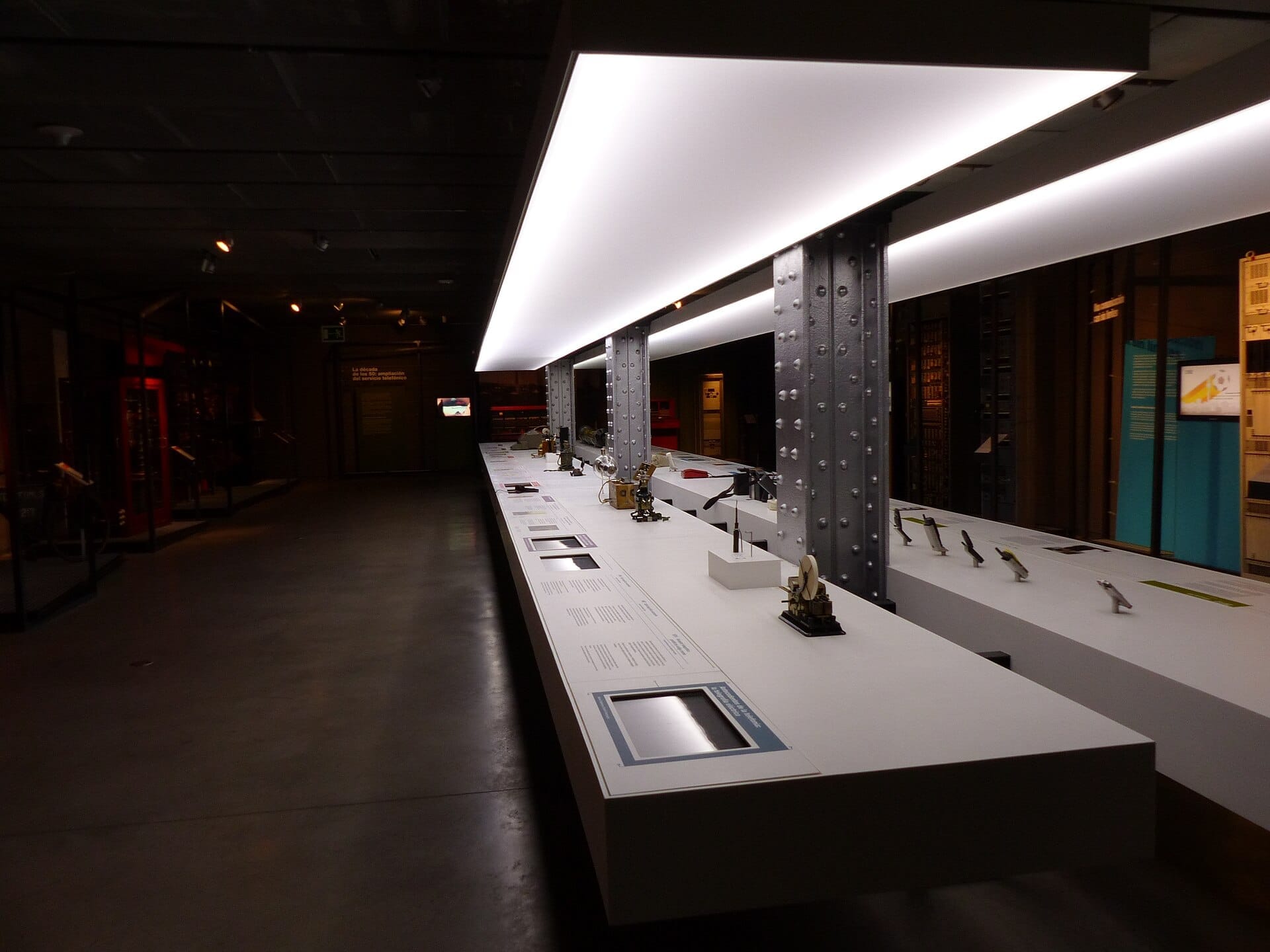
The four exhibition floors are arranged thematically rather than chronologically. The permanent collection traces the history of telecommunications from the early telegraph era through to the internet age, using original artefacts, archival photographs, and interactive displays. For visitors with a general interest in modern history, this section alone repays a careful hour: the progression from Morse code apparatus to mobile telephony is presented with context rather than corporate self-congratulation.
The temporary exhibitions occupy larger portions of the space and change several times per year. Past shows have included major retrospectives of Spanish documentary photography, immersive digital art installations, and surveys of contemporary Latin American artists. The quality is consistently high. Because these exhibitions rotate, the experience of returning after six months is markedly different — a detail that distinguishes this from attractions where repeat visits offer diminishing returns.
The upper floors occasionally feature works that engage with sound, and early mornings on weekdays are when these rooms feel most effective: low visitor numbers, natural light coming through the windows, and the muffled noise of Gran Vía below create an unexpectedly contemplative atmosphere. By midday on Saturdays, the same spaces fill quickly, which can dilute the experience of audio-led or spatially sensitive works.
ℹ️ Good to know
Photography policies vary by exhibition. In most cases, personal photography without flash is permitted in the permanent collection areas. Temporary exhibitions sometimes restrict photography entirely — check the signage at each room entrance or ask staff on arrival.
How Visits Change by Time of Day and Week
Weekday mornings between 10:00 and 13:00 offer the most relaxed visit. School groups occasionally arrive during mid-morning, typically Tuesdays through Thursdays — if you encounter one, moving to a different floor and returning later usually resolves the crowding. The building's four-floor layout means the visitor flow disperses well.
Weekend afternoons, particularly Saturdays between 13:00 and 17:00, see the highest footfall. The entrance hall near Calle Fuencarral can feel congested, and queues for the lift form intermittently. Using the stairs is both faster and gives you a clearer sense of the building's original proportions. If you are visiting on a weekend or public holiday, note that opening does not begin until 11:00 rather than 10:00 on those days.
The final hour before closing (19:00 to 20:00) is reliably quiet on weekdays and can be a pleasant time to return to a specific room you wanted to revisit. Staff begin preparing for closure from around 19:45, so plan to finish your visit slightly before the official closing time.
Location, Access, and Getting There
The address is C/ Fuencarral 3, which puts the entrance on a side street rather than directly on Gran Vía itself — a detail that catches some visitors off guard. Walk up Gran Vía from the direction of Puerta del Sol, and the building is on your left before the Gran Vía Metro station. The entrance on Fuencarral is clearly signed.
The Gran Vía Metro station (Lines 1 and 5) is roughly one minute on foot from the entrance. Sevilla station (Line 2) is about five minutes away. From Puerta del Sol, the walk takes under ten minutes at an easy pace, passing through some of central Madrid's most commercially active streets.
Accessibility is thoughtfully handled: there is step-free access throughout, a lift between all exhibition floors, adapted toilets, wheelchair loan available on request, rest seating within exhibition rooms, and an induction loop for visitors with hearing impairments. This is one of the more practically accessible cultural spaces in central Madrid.
⚠️ What to skip
The venue is closed on Mondays, and every year on 25 December, 1 January, and 6 January. If your Madrid trip falls over New Year, check the schedule before building this into your plans.
Practical Walkthrough: What to Expect on Arrival
There is no bag check requirement, though large backpacks must go to a free cloakroom before entering the galleries. The ground floor reception is staffed and clearly signposted in both Spanish and English. Collect a floor plan at the desk — the layout is logical but the building's age means rooms connect in slightly unexpected ways, and the map prevents unnecessary backtracking.
Begin with the permanent telecommunications history collection if you want chronological grounding before exploring the temporary shows. If you are pressed for time, head directly to whichever temporary exhibition is currently featured — the current show is always summarised on the website before your visit, so you can prioritise effectively.
After your visit, the immediate area rewards continued exploration. Plaza Mayor is roughly fifteen minutes south on foot, while the independent shops of Calle Fuencarral begin directly outside the entrance and continue north toward Malasaña.
Is This Worth Your Time?
For free admission, the depth on offer here is genuine and occasionally exceptional. The programming is not aimed at casual tourists looking for ten-minute cultural credits — it rewards visitors who engage with the content and take time across multiple floors. If you treat this as a quick stop between other landmarks, you will likely feel underwhelmed.
Visitors looking for classical art, Spanish Golden Age painting, or the kind of grand permanent collection found at the Prado will not find that here. The focus is firmly on modern and contemporary themes, often with a technology or communications lens. That specificity is what makes it valuable for the right visitor and less relevant for others.
Families with young children can engage with the interactive elements of the telecommunications history section, though this is not primarily a children's attraction. For a more deliberately family-focused cultural experience, the Museo de Ciencias Naturales or the Museo Arqueológico Nacional may offer a more suitable environment.
Insider Tips
- The building's exterior is photographically strongest in the late afternoon when the brick turns warm amber and the Gran Vía crowds thin slightly — spend a few minutes outside before going in.
- Guided visits are free but fill quickly for popular temporary exhibitions. Book through the official website as soon as your travel dates are confirmed, not on the day of arrival.
- If you arrive and a temporary exhibition has photography restrictions, the permanent telecommunications collection almost always permits personal photography without flash — useful if documentation is part of why you visit galleries.
- The cloakroom for large bags is on the ground floor near the entrance. Leaving bags there genuinely improves the experience in the tighter exhibition rooms — the staff are attentive and the service is free.
- Weekday afternoons between 15:00 and 17:00 tend to be the quietest visiting window — after the lunchtime rush and before the post-work walk-in visitors arrive.
Who Is Espacio Fundación Telefónica For?
- Contemporary art and digital culture enthusiasts who want depth without paying admission fees
- Architecture lovers interested in early 20th-century European commercial building history
- Travellers seeking a rainy-day indoor cultural option in a central, easily accessible location
- Repeat visitors to Madrid looking for programming that noticeably changes between trips
- Photography-focused visitors interested in Spanish documentary and contemporary photographic arts
Nearby Attractions
Other things to see while in Sol & Centro:
- Catedral de la Almudena
The Almudena Cathedral took more than a century from the laying of its foundation stone to its consecration in 1993, making it one of Europe's newest major cathedrals. Free to enter and directly opposite the Royal Palace, it rewards visitors who look beyond its mismatched facade to discover a surprisingly bold and colorful interior.
- Campo del Moro Gardens
The Jardines del Campo del Moro spread across more than 20 hectares directly behind the Royal Palace, offering one of the most dramatic views of the Palacio Real in Madrid. Admission is free, crowds are thin compared to the palace itself, and the romantic English-style landscape feels worlds away from the city streets above.
- Círculo de Bellas Artes
Few buildings in central Madrid earn attention on multiple levels at once. The Círculo de Bellas Artes delivers: a landmark Palacios-designed tower within the Paisaje de la Luz UNESCO World Heritage area with a rooftop terrace above the Gran Vía skyline, rotating art exhibitions, and one of the city's most atmospheric cafés. Entry to the building and La Pecera café is free; the rooftop, exhibitions, and combined tickets have separate fees starting from around €6.
- Edificio Metrópolis
Standing at the junction of Calle de Alcalá and Gran Vía, the Edificio Metrópolis is Madrid's most iconic piece of Belle Époque architecture. Its slate dome, gilded detailing, and winged Victory statue make it a landmark that rewards careful observation, even though the building itself is not a public museum. Here is everything you need to know before you go.