Museo Nacional de Ciencias Naturales: Madrid's Natural History Giant
Founded in 1815 (with roots in the Royal Cabinet of Natural History created by King Carlos III in 1771), the Museo Nacional de Ciencias Naturales is one of Europe's oldest natural history museums, housing more than eight million specimens across paleontology, zoology, geology, and more. Located in the Chamberí district near Gregorio Marañón metro, it offers a genuine scientific institution experience rather than a polished tourist attraction.
Quick Facts
- Location
- Calle José Gutiérrez Abascal 2, Chamartín, Madrid
- Getting There
- Gregorio Marañón (Lines 7 and 10)
- Time Needed
- 2 to 3 hours
- Cost
- General: €7 | Reduced: €3.50 | Free Sundays 18:30–20:00
- Best for
- Families with children, science enthusiasts, rainy day visits
- Official website
- www.mncn.csic.es/es
What the Museo Nacional de Ciencias Naturales Actually Is
The Museo Nacional de Ciencias Naturales (MNCN) is not a flashy interactive science center or a children's discovery zone. It is a functioning research institution, affiliated with Spain's national research council (CSIC), that also opens its historic collections to the public. That distinction matters. When you walk through its galleries, you are looking at specimens that real scientists work with: fossils, taxidermied fauna, mineral samples, and entomological collections that have been building since King Carlos III established the Royal Cabinet of Natural History in 1771. The museum adopted its current name in 1815, but the accumulation behind its walls is far older.
With more than eight million specimens on record, the MNCN holds one of the largest natural history collections in Europe. Most of that collection is not on public display at any given time, which keeps the permanent galleries from feeling overwhelming while leaving room for rotating exhibitions that give regular visitors new reasons to return.
💡 Local tip
Entry is free every Sunday between 18:30 and 20:00. If your schedule is flexible, this is the smartest way to visit — though expect more families with young children at that hour.
The Building and Its Setting
The museum occupies a neoclassical building on Calle José Gutiérrez Abascal, at the northern edge of the Paseo de la Castellana. The structure was originally designed in the late 18th century and shares its block with the Higher Council of Scientific Research. It is not the most photogenic building in Madrid from the outside — the facade is restrained and institutional — but that understatement sets an appropriate tone for what is inside: collections prioritized over spectacle.
The surrounding area belongs to the Chamberí district, one of Madrid's more residential and traditionally bourgeois quarters. There are good cafés within a short walk, and the neighborhood rewards an unhurried exploration before or after your museum visit. The nearest metro, Gregorio Marañón, sits at the intersection of Lines 7 and 10 and is just a few minutes on foot from the museum entrance.
Tickets & tours
Hand-picked options from our booking partner. Prices are indicative; availability and final rates are confirmed when you complete your booking.
Art & Brunch at Museo Nacional Thyssen-Bornemisza tickets
From 50 €Instant confirmationFree cancellationPaseo del Arte pass for Museo Nacional Thyssen-Bornemisza, Reina Sofia Museum and Prado Museum
From 37 €Instant confirmationMuseo Nacional Thyssen-Bornemisza Skip-the-Line Tickets
From 14 €Instant confirmationMuseo Nacional Thyssen-Bornemisza skip-the-line tickets with audio guide
From 19 €Instant confirmation
The Permanent Galleries: What You Will Actually See
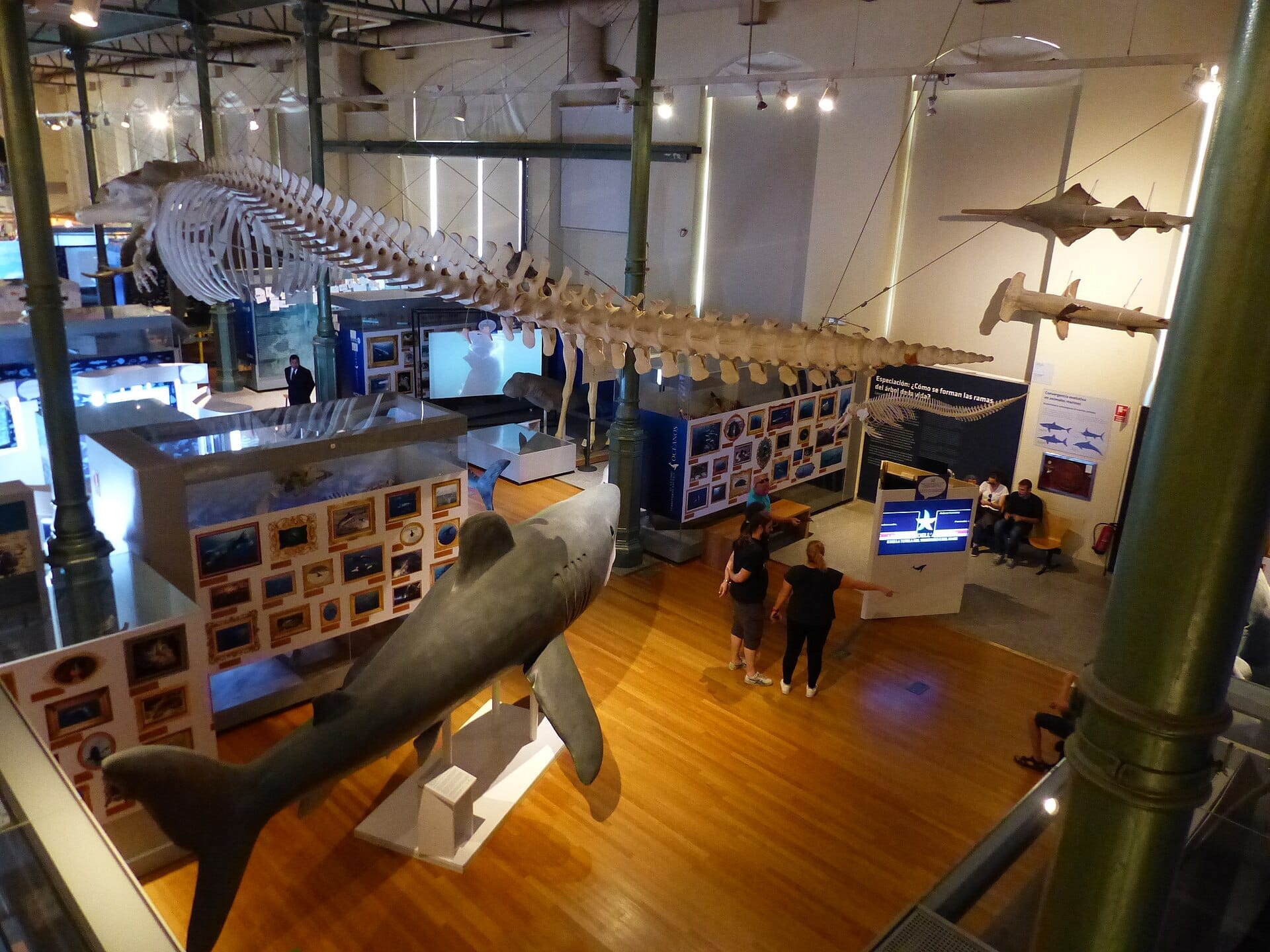
The permanent collection is organized across multiple floors and thematic rooms. Paleontology is a clear highlight: the dinosaur gallery draws children and adults alike, with full skeletal reconstructions that take up considerable vertical space. The specimens are presented with taxonomic and temporal context rather than theatrical lighting, so the experience feels more like a university natural history wing than an entertainment venue. That is either a feature or a limitation depending on what you are looking for.
The zoology rooms contain an extensive range of taxidermied mammals, birds, reptiles, and fish from around the world. Some of the older specimens show their age, and display techniques in certain rooms have not been radically updated in decades. This is worth knowing before you arrive with high expectations shaped by the Natural History Museums in London or New York. The MNCN has real scientific weight, but its presentation budget and visual drama do not always match its collection depth.
The mineral and geology section tends to be quieter than the dinosaur or mammal halls, and that relative calm makes it a good option for visitors who find crowded galleries tiring. The crystal and gemstone displays include some genuinely striking specimens.
ℹ️ Good to know
The museum runs temporary exhibitions throughout the year on topics ranging from climate science to specific taxonomic groups. Check the MNCN website before your visit to see what is currently showing, as these can add significantly to the experience.
How the Experience Changes by Time and Day
Weekday mornings, particularly Tuesday through Thursday, are the quietest windows. School groups do visit the MNCN regularly — it is an active educational institution — so mid-morning on a Tuesday can occasionally mean a corridor filled with eight-year-olds on a field trip. By late morning that energy tends to dissipate, and early afternoon is typically the calmest period.
Saturday mornings attract families, and the museum fills steadily through the afternoon. The free Sunday evening hours between 17:00 and 20:00 bring a reliable surge of visitors near closing time. If you want a more contemplative visit, arriving at opening on a weekday Tuesday or Wednesday is the most reliable strategy.
The building is well-lit internally with natural light in several sections, but the galleries do not feel bright or airy throughout. Bring reading glasses if you rely on them for small specimen labels, as the text on older display cases can be fine and relatively low-contrast.
Practical Information for Your Visit
Opening hours run Tuesday through Friday from 10:00 to 17:00, and on Saturdays, Sundays, and public holidays from 10:00 to 20:00. During the month of August, the museum opens from 10:00 to 15:00 from Tuesday to Sunday. The museum is closed on Mondays (except public holidays), and also closes on 1 January, 6 January, 1 May, and 25 December. On 24 and 31 December it opens from 10:00 to 15:00 only. Verify current hours on the official website before traveling, as these can change for maintenance periods or special events.
General admission is €7, with a reduced rate of €3.50 available under certain conditions detailed on the museum website. Tickets can be purchased online in advance, which is worth doing on weekends to avoid any queue at the entrance desk. The museum is listed as accessible for visitors with reduced mobility; contact the museum directly if you have specific accessibility requirements.
Getting here without a car is straightforward. Take the Madrid Metro to Gregorio Marañón on Line 7 or Line 10, then walk approximately five minutes south along the Castellana. If you are combining the visit with the art triangle, note that the MNCN sits some distance north of the Museo del Prado — plan your routing accordingly rather than assuming an easy walk between them.
⚠️ What to skip
The museum has no large on-site café or restaurant. There is a small area for refreshments, but it is not a reliable full lunch option. Plan to eat before you arrive or in the surrounding neighborhood afterward.
Context: Why This Museum Exists and Why It Matters
The MNCN's origin in 1771 places it among Europe's earliest public natural history institutions, predating many of its more famous equivalents. Its founding under Carlos III reflected the Enlightenment impulse to systematically collect, categorize, and study the natural world — an ambition that was European in scope but expressed here through specimens arriving from the Spanish empire's far-flung territories. That colonial collecting history is part of the record, and visitors with an interest in the ethics and politics of museum collections will find the MNCN a thoughtful place to consider those questions.
The museum sits within a broader Madrid cultural context that includes significant science and cultural institutions nearby. For visitors building a fuller picture of Madrid's institutional landscape, Madrid's best museums range well beyond the better-known art galleries and include institutions that reveal the city's scientific and historical depth.
Who Should Think Twice Before Visiting
If you are expecting the scale and production values of London's Natural History Museum or the Smithsonian in Washington, you will likely find the MNCN underwhelming in terms of display design and interactive elements. It is a serious scientific collection presented in a relatively traditional format, and some areas show the limitations of an institution that has had to manage with research rather than tourism as its primary mission.
Visitors with very limited time in Madrid and no particular interest in natural sciences should probably prioritize differently. Madrid's art museums — the Prado, the Reina Sofía, the Thyssen — represent a stronger case for the single must-see experience. The MNCN makes more sense as a second or third day addition, or as a genuine priority for those who find natural history collections truly compelling.
If you are traveling with children and want to balance natural sciences with art and history, consider pairing the MNCN with nearby attractions in Chamberí or a visit to the Museo Arqueológico Nacional, which offers a similarly substantive collection on a different subject.
Insider Tips
- The free Sunday evening window (18:30–20:00) is best used by arriving at 18:30 sharp rather than drifting in later — the last half-hour can feel rushed as staff prepare to close.
- The museum's research library and archive are separate from the public galleries; if you have a specialist interest in accessing collections or documentation, contact the MNCN in advance through the CSIC contact channels.
- Temporary exhibitions sometimes carry their own admission or are included with the general ticket — check the website before buying online to understand exactly what the ticket covers on your visit date.
- The paleontology and dinosaur rooms tend to clear out considerably by mid-afternoon on weekdays, making 14:00–15:30 the calmest window for adults who want to read the signage without navigating around school groups.
- The neighborhood around Gregorio Marañón metro has several good traditional Madrid cafés on and around Calle de Príncipe de Vergara — worth knowing for a post-visit coffee or early lunch before the museum opens.
Who Is Museo Nacional de Ciencias Naturales For?
- Families with children aged 6 and up, particularly those with an interest in dinosaurs and wildlife
- Science-focused travelers or anyone who prefers collections with genuine research depth over curated spectacle
- Rainy or very hot days when outdoor exploration in Madrid becomes uncomfortable
- Visitors on a budget, especially on free-entry Tuesdays and Sunday evenings
- Travelers building a multi-day Madrid itinerary who want cultural range beyond the art museums
Nearby Attractions
Other things to see while in Chamberí:
- Calle de Ponzano
Calle de Ponzano is a one-kilometre stretch in the Chamberí district that packs in over 70 bars and restaurants, drawing a largely local but increasingly mixed crowd. It's the kind of street where office workers, retirees, and twentysomethings share space without any of the self-consciousness that comes with tourist-facing nightlife zones.