Museo Arqueológico Nacional: Spain's Story, Stone by Stone
The Museo Arqueológico Nacional (MAN) holds Spain's most comprehensive collection of archaeological treasures, from prehistoric cave art reproductions to Roman mosaics and medieval Islamic goldwork. Located in the Barrio de Salamanca, it is one of the most substantive and undervisited museum experiences in Madrid.
Quick Facts
- Location
- Calle Serrano 13, Barrio de Salamanca, Madrid
- Getting There
- Metro: Serrano (L4) or Retiro (L2); Cercanías: Recoletos (C1, C2, C7, C8, C10)
- Time Needed
- 2 to 3 hours for a focused visit; 4+ hours if you read every label
- Cost
- 3€ general; 1.50€ reduced; free Saturdays from 14:00, Sunday mornings, and under-18s
- Best for
- History enthusiasts, archaeology buffs, families with curious teenagers, rainy-day culture seekers
- Official website
- www.man.es
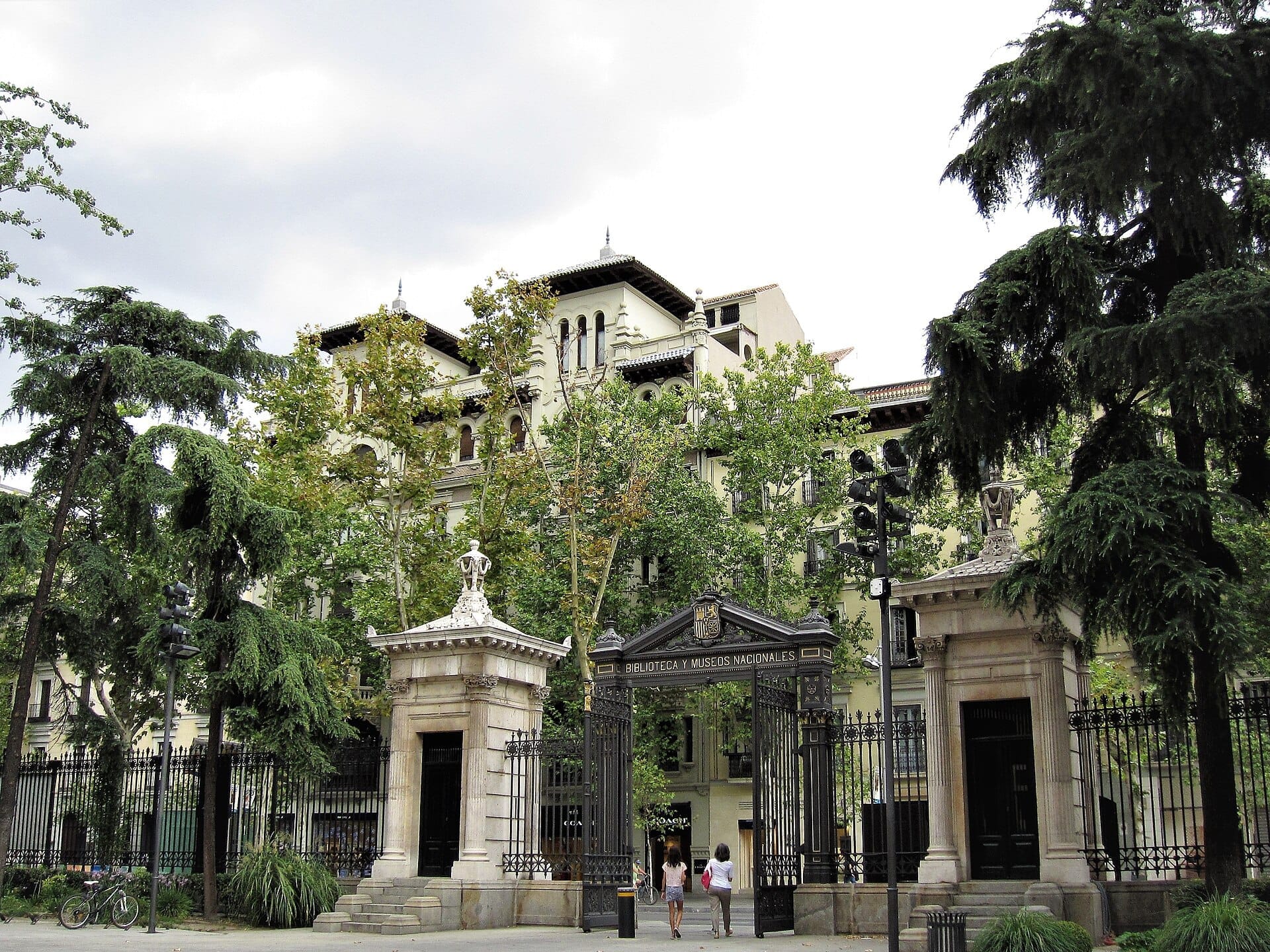
What the Museo Arqueológico Nacional Actually Is
The Museo Arqueológico Nacional, known by its abbreviation MAN, is Spain's principal state collection dedicated to archaeology, prehistory, and ancient cultures. Founded in 1867 by Queen Isabel II, it occupies the neoclassical Palacio de Biblioteca y Museos Nacionales on Calle Serrano 13, a grand 19th-century building it shares with the National Library of Spain. After an extensive renovation that closed sections of the museum for several years, MAN reopened in fully restored form in 2014, and the difference shows: the galleries are well-lit, logically sequenced, and warmly inviting.
The collection spans human presence on the Iberian Peninsula from the Palaeolithic era through to the early medieval period, covering cultures that most visitors have never encountered in depth: Iberian, Phoenician, Greek colonial, Carthaginian, Roman provincial, Visigothic, and early Islamic. This is not a generalised 'world history' museum. It is specifically and rigorously focused on what happened here, on this peninsula, over thousands of years. That specificity is its strength.
ℹ️ Good to know
Opening hours: Tuesday to Saturday 09:30–20:00; Sundays and public holidays 09:30–15:00. Closed Mondays and on 1 and 6 January, 1 May, and 24, 25 and 31 December.
The Building and What You See First
The museum's entrance on Calle Serrano is marked by a broad stone staircase and a facade that announces institutional seriousness rather than tourist spectacle. The building shares its block with the Biblioteca Nacional, and the two institutions together create a cultural anchor in a neighbourhood otherwise defined by designer boutiques and cafe terraces. Arriving on foot from the Serrano metro exit takes about three minutes along one of Madrid's most expensive shopping streets, which makes the abrupt shift into ancient Iberia feel all the more deliberate.
Inside, the entrance hall is airy and cool even in summer, with high ceilings and a calm that contrasts with the noise of Salamanca's streets. The permanent collection is arranged chronologically across multiple floors, beginning with Palaeolithic tools and working forward through the millennia. Signage is in Spanish and English throughout, a practical detail that sets MAN apart from several other major Madrid museums where English translations are patchy.
The ground floor also leads to the garden, where a full-scale replica of the famous Altamira cave paintings is installed underground. This is one of the museum's most popular features and worth planning time for. For more context on Madrid's broader museum landscape, the guide to Madrid's best museums offers useful comparisons across the city's major collections.
Tickets & tours
Hand-picked options from our booking partner. Prices are indicative; availability and final rates are confirmed when you complete your booking.
Art & Brunch at Museo Nacional Thyssen-Bornemisza tickets
From 50 €Instant confirmationFree cancellationPaseo del Arte pass for Museo Nacional Thyssen-Bornemisza, Reina Sofia Museum and Prado Museum
From 37 €Instant confirmationMuseo Nacional Thyssen-Bornemisza Skip-the-Line Tickets
From 14 €Instant confirmationMuseo Nacional Thyssen-Bornemisza skip-the-line tickets with audio guide
From 19 €Instant confirmation
The Collection: What to Prioritise
The museum holds over a million objects, though only a fraction are on display at any given time. The items that attract the most sustained attention tend to be the Iberian sculptures, particularly the Lady of Elche, a remarkable 4th-century BCE stone bust that appears on countless Spanish textbooks and postage stamps. Seeing it in person is remarkably striking: the headdress, the circular ear ornaments, and the calm, slightly removed expression create an object that feels simultaneously ancient and unnervingly contemporary.
The Roman rooms are extensive and well-curated, with floor mosaics, portrait busts, bronze figurines, and everyday objects that provide texture beyond the usual imperial grandeur. The Visigothic treasury, including pieces from the Guarrazar hoard, a collection of votive crowns from 7th-century Visigothic kings discovered in Toledo province in the 19th century, is one of the finest such displays in Europe. The gold is extraordinary and the historical context provided by the room's panels is unusually clear.
The Altamira cave replica, located in the garden basement, uses the same pigments and surface textures as the original cave in Cantabria. The recreation is accurate enough that you can appreciate the skill involved without requiring a trip to northern Spain. Children respond strongly to this space; so do most adults, once they absorb the age of what they are looking at. Bison rendered on stone 14,000 years ago, in confident, fluid lines, with no apparent hesitation.
💡 Local tip
If your time is limited, prioritise the Iberian sculpture rooms on the ground floor, the Visigothic treasury, and the Altamira replica in the garden. These three areas represent the collection's most distinctive strengths and take roughly 90 minutes combined.
How the Experience Changes by Time of Day
Tuesday to Friday mornings, particularly before 11:30, offer the quietest conditions. The galleries feel spacious, staff are attentive, and you can stand in front of the Lady of Elche without navigating around school groups. The light in the upper floor rooms is consistent throughout the day, as the galleries rely on controlled artificial lighting rather than natural light, which protects the collection and removes the variable of time from your experience inside.
Saturday afternoons from 14:00 are free for all visitors, which brings a noticeable increase in foot traffic, especially in the ground floor rooms. The museum handles this reasonably well given its size, but if you want the collection largely to yourself, the free Saturday window is not the optimal moment. Sunday mornings are also free and tend to be moderate in terms of crowds, particularly in the first hour after opening at 09:30.
Late weekday afternoons, between 17:00 and 19:30, offer a second quiet window. Visitors who arrive at 18:00 on a Tuesday or Thursday often find the upper floors nearly empty, which makes these rooms, particularly those covering prehistoric and Bronze Age material, unexpectedly contemplative spaces.
Getting There and Practical Navigation
The most direct approach is the Serrano metro station on Line 4, which deposits you about a three-minute walk south of the museum entrance. The Retiro station on Line 2 is slightly farther but useful if you are combining the visit with time in Retiro Park. If you are arriving by Cercanías suburban rail, Recoletos station on lines C1, C2, C7, C8, and C10 leaves you about a five-minute walk northwest of the museum. Car parks are available on nearby Calle Villanueva and Calle Colón, though driving into Salamanca during weekday hours means navigating significant traffic on the main avenues.
The museum sits in the Barrio de Salamanca, which rewards a longer visit if you have the afternoon free. The neighbourhood's grid of wide streets and well-maintained 19th-century architecture makes for pleasant walking, and the area's cafes and restaurants are easily accessible for a post-museum break.
💡 Local tip
Coat check is available and free near the entrance. Large bags must be checked before entering the galleries. Photography without flash is permitted throughout the permanent collection.
Accessibility and Visitor Facilities
MAN offers accessible workshop visits designed for visitors with different access needs, as well as guided tours adapted for visitors with visual disabilities. The museum's 2014 renovation substantially improved physical access throughout the building. For specific details on ramps, lifts, and accessible facilities, it is worth contacting the museum directly before your visit, as configurations can vary by gallery level.
The museum has a cafe and a bookshop, both useful without being exceptional. The bookshop carries a solid range of Spanish-language publications on Iberian archaeology and a smaller selection in English. The cafe is adequate for a coffee break but not a reason to extend your visit.
Is MAN Worth Your Time?
For anyone interested in the deep history of Spain and the Mediterranean world, MAN is not just worth visiting: it is the most concentrated and coherent account of that history available anywhere in the country. The collection is rigorous, the post-renovation presentation is clean and modern, and the admission price is low enough to make it feel almost incongruously affordable.
Visitors who find archaeology dry or who are primarily in Madrid for art will likely find the Prado or the Reina Sofía more immediately rewarding. MAN asks something of you: a willingness to slow down, read labels, and engage with objects whose cultural context requires a moment of adjustment. If that is not your travel mode, it is worth knowing before you arrive. For those planning a broader cultural itinerary, the guide to things to do in Madrid covers how MAN fits alongside the city's other major draws.
MAN is rarely mentioned in the same breath as the Prado or the Thyssen, which means it carries none of the obligatory weight of those institutions. You visit because you want to, not because you feel you must. That changes the experience considerably. If your schedule allows for one museum outside the 'Golden Triangle,' compared to the Prado, MAN offers less visual spectacle but arguably more historical substance per hour spent.
Insider Tips
- The Altamira cave replica is accessible from the garden, not from inside the main building. Head outside through the ground floor exit and follow the signs down. Many visitors miss it entirely because they assume it requires a separate ticket or a long detour.
- Free entry on Saturdays from 14:00 makes sense if you are already in the neighbourhood, but the Tuesday-to-Friday morning window between 10:00 and 12:00 offers the same collection with a fraction of the foot traffic.
- The audio guide is available in Spanish and English. The English version is well-produced and genuinely adds context for the Iberian and Visigothic sections, which are harder to appreciate without background knowledge.
- The museum café has outdoor seating in the garden during warmer months. It is a calm spot that most visitors walk past without noticing, positioned away from the main gallery flow.
- The Lady of Elche room can get crowded with guided tour groups around mid-morning on weekdays. Arriving before 10:00 or after 17:00 gives you more time in front of the piece without competing for space.
Who Is Museo Arqueológico Nacional For?
- Travellers who want to understand Spain's history before visiting its ancient sites elsewhere
- Families with teenagers interested in history, ancient cultures, or archaeology
- Visitors with a half-day free who want substance over spectacle
- Anyone combining a Salamanca neighbourhood walk with an afternoon museum visit
- Budget-conscious travellers looking for high-quality cultural experiences at low cost
Nearby Attractions
Other things to see while in Barrio de Salamanca:
- Calle de Serrano
Calle de Serrano is Madrid's most prestigious shopping corridor, stretching roughly 4 kilometers through the elegant Barrio de Salamanca and into Chamartín. From international luxury flagship stores near Puerta de Alcalá to local Spanish designers and fine food markets further north, the street offers a complete portrait of how Madrid's wealthiest neighborhood shops, eats, and moves.
- Fundación Mapfre – Sala Recoletos
Tucked into a beautifully restored 1880s building on one of Madrid's most elegant boulevards, Fundación MAPFRE Sala Recoletos is a compact, carefully programmed gallery that consistently delivers exhibitions rivalling much larger institutions. With roughly 1,000 square metres across three rooms, it focuses on photography, modern art, and overlooked masters — and it is free every non-holiday Monday afternoon.
- Plaza de Toros de Las Ventas
Plaza de Toros de Las Ventas is one of Europe's most architecturally striking arenas, a Neo-Mudéjar landmark with a capacity of 23,798 seats and a history stretching back to 1931. Whether you attend a corrida or simply take the guided tour, the scale and detail of this place are genuinely arresting.
- Mercado de La Paz
Opened in 1882 and still going strong, Mercado de La Paz is the working neighborhood market at the heart of Madrid's upscale Salamanca district. With around 35 stalls selling everything from Iberian ham to fresh fish, it offers a grounded, local counterpoint to the area's designer boutiques — and it costs nothing to walk in.