Mercado de La Paz: The Real Food Market of Salamanca
Opened in 1882 and still going strong, Mercado de La Paz is the working neighborhood market at the heart of Madrid's upscale Salamanca district. With around 35 stalls selling everything from Iberian ham to fresh fish, it offers a grounded, local counterpoint to the area's designer boutiques — and it costs nothing to walk in.
Quick Facts
- Location
- Calle Ayala, 28, 28001 Madrid (Barrio de Salamanca)
- Getting There
- Serrano (L4, ~3 min walk) or Velázquez (L4, ~5 min walk)
- Time Needed
- 30–60 minutes to browse; longer if eating
- Cost
- Free entry; purchases in euros
- Best for
- Food lovers, self-catering travelers, local culture seekers
- Official website
- www.mercadodelapaz.com
What Is Mercado de La Paz?
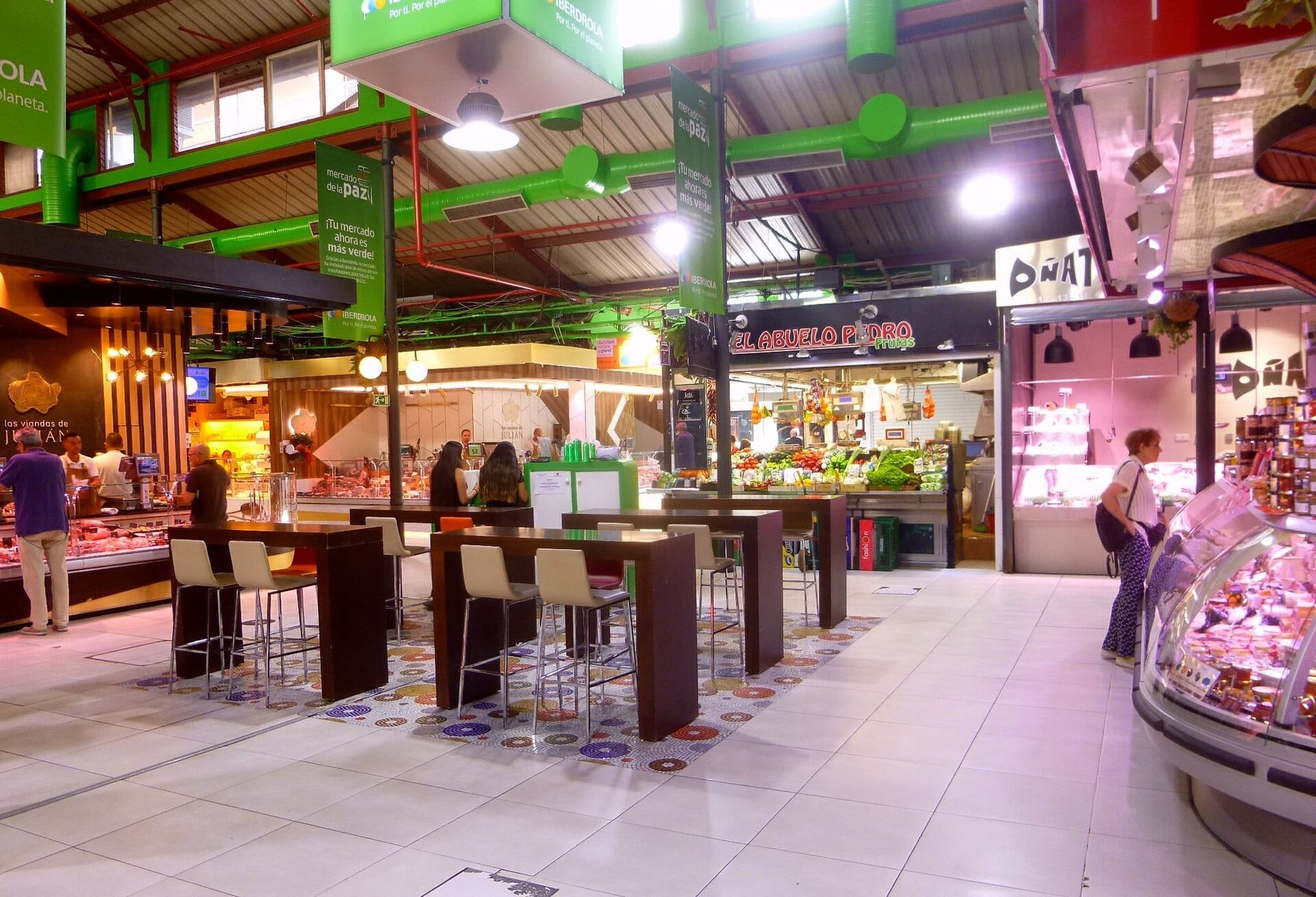
Mercado de La Paz is a covered municipal market in Madrid's Salamanca district, inaugurated in 1882 and built around a structural iron framework that still defines the interior today. It is not a tourist market. There are no souvenir stalls, no overpriced sangria, no artisan crafts pitched at visitors. What you get instead is roughly 35 working stalls selling fresh produce, fish, meat, cheese, charcuterie, and prepared foods to the people who actually live in one of Madrid's wealthiest and most food-conscious neighborhoods.
That context matters. Salamanca is a district where residents spend seriously on quality ingredients, and the vendors at La Paz respond accordingly. The fish counter will have varieties you won't see in supermarkets. The charcuterie stalls carry aged Iberian products with real provenance. It's a market that functions as a daily institution, not a weekend attraction. If you want to understand how Madrid's affluent middle class actually eats, this is more revealing than any restaurant. Pair a visit with a walk down Calle Serrano nearby to get the full flavor of the Salamanca experience.
💡 Local tip
Go between 10:00 and 12:00 on a weekday for the best combination of fresh stock and a relaxed atmosphere. Saturday mornings are busier but have a particular neighborhood energy worth experiencing at least once.
The Architecture: Iron, Light, and Longevity
The building itself is worth pausing to appreciate before you start shopping. Constructed in 1882 using iron as its primary structural material, Mercado de La Paz belongs to the same architectural tradition as Madrid's other late 19th-century covered markets, a period when iron construction was considered modern and ambitious. The material creates a high, open interior that lets in diffused natural light through upper-level windows, giving the market a quality that feels both functional and surprisingly airy.
Over 140 years, the building has been maintained and updated without losing its essential character. The iron columns, the vaulted ceiling sections, and the layout of stalls arranged along internal corridors all reflect the original design logic. It is compact by the standards of some European markets, which is part of its appeal. Nothing feels sprawling or disorienting. You can cover the whole space in a single pass and then circle back to whatever caught your attention.
For travelers interested in Madrid's architectural history across different building types, the Madrid architecture guide covers this era of iron-and-glass civic construction in broader context.
Tickets & tours
Hand-picked options from our booking partner. Prices are indicative; availability and final rates are confirmed when you complete your booking.
Royal Monastery of El Escorial and the Valley of the Fallen trip from Madrid
From 64 €Instant confirmationFree cancellationFlexible time Real Madrid: Bernabeu Stadium & Museum Entry
From 42 €Instant confirmationMuseum of Senses Madrid entrance ticket
From 19 €Instant confirmationAvila and Segovia full-day tour from Madrid
From 50 €Instant confirmationFree cancellation
What You'll Find Inside: Stalls, Products, and Atmosphere
Around 35 establishments operate within La Paz, ranging from single-product specialists to broader grocery stalls. The fish and seafood section is particularly strong, reflecting the Spanish habit of sourcing fresh fish even far inland. Madrid's position at the center of a national distribution network means Atlantic and Mediterranean catches arrive overnight, and the fishmongers at La Paz tend to stock a serious range: whole fish, shellfish, salt cod, and prepared cuts.
The meat and charcuterie counters are where Salamanca's spending power becomes visible. You'll see jamón ibérico de bellota displayed on wooden stands, premium cuts of beef and pork, and aged cheeses from across Spain. Some stalls specialize in specific regions or products; ask questions, because vendors here are used to customers who know what they want and appreciate detail.
There are also prepared food stalls and a bar or two inside the market where you can grab a coffee or a quick bite while shopping. These aren't destination spots in themselves, but they serve their purpose for a mid-shop break. Fruit and vegetable vendors, olive specialists, and bakery products round out the offer. If you're self-catering or assembling a picnic, La Paz is one of the better places in central Madrid to source quality ingredients.
ℹ️ Good to know
The market has three separate ground-level entrances: the main one on Calle Ayala, plus entrances on Calle Lagasca and Calle Claudio Coello. If you arrive from the Serrano metro exit, the Lagasca entrance is usually most direct.
How It Changes Through the Day
Early morning, around 9:00 to 10:00, the market is at its most active behind the scenes. Deliveries are completed, stalls are being arranged, and the internal temperature is still cool. The smell at this hour is clean and sharp: fresh fish on ice, citrus, the slight mineral note of refrigerated meat counters. Serious shoppers and restaurant buyers tend to come early.
Mid-morning through noon is the most sociable stretch. Locals stop in between errands, conversations happen over cheese selections, and the bar inside picks up its coffee trade. This is when you see the market functioning as a community space as much as a retail one. The noise level rises to a comfortable hum of transactions and chatter, nothing overwhelming, but full of life.
By early afternoon on weekdays, the market quiets significantly. Stalls begin winding down their fresh stock, and some vendors start closing up even though the official weekday hours run until 20:00. Saturday operates differently: the morning shift is compressed and energetic, with shoppers aware the market closes at 14:30, which creates a slightly more focused, purposeful atmosphere. Sunday closure is firm.
Getting There and Practical Logistics
The market sits at Calle Ayala, 28, in the heart of Salamanca. Metro access is straightforward: Line 4 stops at both Serrano (about a 3-minute walk) and Velázquez (about 5 minutes). Line 5 serves Rubén Darío and Núñez de Balboa, both within comfortable walking distance. Line 9 stops at Príncipe de Vergara. If you're coming by bus, EMT routes 2, 9, 19, 51, and 74 stop at Velázquez–Ayala.
There is no admission fee. You walk in, browse, and buy what you want. Credit cards are accepted at many stalls, but it's worth carrying some cash for smaller purchases or stalls that prefer it. The market is covered, so weather is irrelevant to the shopping experience, though the surrounding streets are exposed and worth factoring into your wider plans.
Travelers using Madrid's public transport for the first time may want to consult the getting around Madrid guide before planning their route, as the metro zone system affects pricing.
⚠️ What to skip
Mobility accessibility details are not explicitly confirmed on the official market site. If step-free access or adapted facilities are important to your visit, contact the market directly before going.
Who This Market Is For
Mercado de La Paz works best for travelers who are genuinely interested in food, who want to see how a real neighborhood market operates, or who are staying somewhere with cooking facilities and want quality local ingredients. It also works well as a 30-minute stop on a broader Salamanca walk, giving some texture to a district that can otherwise feel like a high-end shopping corridor.
It is less suited to visitors who've already done Mercado de San Miguel or Mercado de San Antón and are looking for something similar. La Paz is categorically different: less polished, less designed for grazing tourists, and more focused on function. That's a feature rather than a flaw, but knowing the difference will save disappointment. If you want a lively food hall atmosphere with tapas and wine on offer throughout the space, look elsewhere.
For a broader picture of where La Paz fits within Madrid's market landscape, the Madrid markets guide compares the city's main options by type and audience.
Photography Notes
The iron interior photographs well in mid-morning light when the upper windows let in natural illumination without harsh shadows. The fish and produce counters are visually strong, with good color and texture. Ask before photographing vendors at close range; most are fine with it, but it's basic courtesy in a working market. The exterior facade on Calle Ayala is relatively modest, so don't expect a dramatic architectural shot from the street.
Insider Tips
- The fish counters are best stocked Tuesday through Friday. Monday can be lighter after the Sunday closure, and Saturday stock is more limited given the early closing time.
- Several charcuterie vendors will vacuum-pack jamón and other cured products for travel. If you're heading home with provisions, ask about packaging options before you buy.
- The bar inside the market serves coffee and simple food at market prices, not tourist prices. It's a reliable and inexpensive stop in a neighborhood where café prices can be steep.
- Use the Calle Lagasca entrance if you're arriving from the Serrano metro exit — it's more direct and drops you closer to the fish section.
- If you're in Madrid in December, La Paz stocks seasonal specialties around Christmas: specific cuts for traditional dishes, imported shellfish, and regional sweets. The atmosphere shifts noticeably during this period.
Who Is Mercado de La Paz For?
- Food travelers who want to shop where Salamanca residents actually buy their ingredients
- Self-catering visitors assembling high-quality picnic or apartment meals
- Architecture enthusiasts interested in Madrid's 19th-century iron market tradition
- Travelers who prefer observing local daily life over curated tourist experiences
- Anyone wanting a calm, authentic contrast to Madrid's more visitor-oriented market spaces
Nearby Attractions
Other things to see while in Barrio de Salamanca:
- Calle de Serrano
Calle de Serrano is Madrid's most prestigious shopping corridor, stretching roughly 4 kilometers through the elegant Barrio de Salamanca and into Chamartín. From international luxury flagship stores near Puerta de Alcalá to local Spanish designers and fine food markets further north, the street offers a complete portrait of how Madrid's wealthiest neighborhood shops, eats, and moves.
- Fundación Mapfre – Sala Recoletos
Tucked into a beautifully restored 1880s building on one of Madrid's most elegant boulevards, Fundación MAPFRE Sala Recoletos is a compact, carefully programmed gallery that consistently delivers exhibitions rivalling much larger institutions. With roughly 1,000 square metres across three rooms, it focuses on photography, modern art, and overlooked masters — and it is free every non-holiday Monday afternoon.
- Plaza de Toros de Las Ventas
Plaza de Toros de Las Ventas is one of Europe's most architecturally striking arenas, a Neo-Mudéjar landmark with a capacity of 23,798 seats and a history stretching back to 1931. Whether you attend a corrida or simply take the guided tour, the scale and detail of this place are genuinely arresting.
- Museo Arqueológico Nacional
The Museo Arqueológico Nacional (MAN) holds Spain's most comprehensive collection of archaeological treasures, from prehistoric cave art reproductions to Roman mosaics and medieval Islamic goldwork. Located in the Barrio de Salamanca, it is one of the most substantive and undervisited museum experiences in Madrid.