Madrid Architecture Guide: From Habsburg Squares to 21st-Century Skyscrapers
Madrid's built environment tells six centuries of history across a single city. This guide walks you through the key architectural periods, the most significant buildings, and how to plan a self-guided tour without wasting a day on tourist traps.
Plan and book this trip
Tools from our partner Travelpayouts help you compare flights and hotels. If you book through them, we may earn a commission at no extra cost to you.
Flights
Hotels map
TL;DR
- Madrid's architecture spans six distinct periods: Habsburg, Bourbon, Neoclassical, Rationalist, Postmodern, and contemporary High-Tech.
- The three best areas for an architecture walk are the historic centre around Sol and Centro, the Paseo del Prado cultural corridor, and the Cuatro Torres business district in the north.
- Spring (April-May) and autumn (September-October) are the most practical seasons for outdoor architecture routes, avoiding Madrid's extreme summer heat above 35°C.
- The Royal Palace, Palacio de Cibeles, and Gran Vía are free or low-cost to admire from outside; interior visits range from roughly €8-15 per person.
- Madrid is not a city frozen in the Habsburg era. Its contemporary architecture, from CaixaForum Madrid to the Cuatro Torres towers, is world-class and largely overlooked by visitors.
Habsburg Madrid: The Foundations of the City (16th-17th Century)
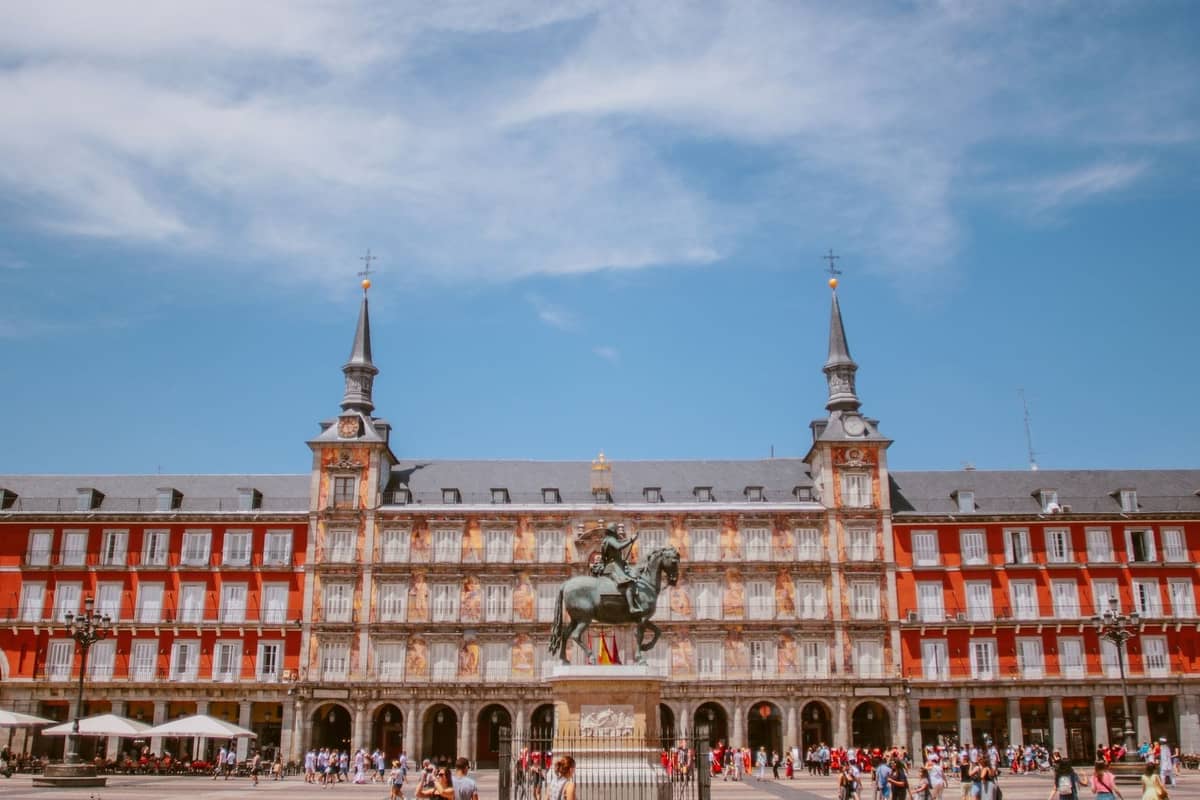
When Philip II moved the Spanish court to Madrid in 1561, the city transformed almost overnight from a modest Castilian town into an imperial capital. The architectural legacy of this period is concentrated in a compact area you can cover on foot in a morning. The defining characteristic of Spanish Habsburg architecture is restraint: austere stone facades, slate roofs, and towers with pointed spires, a style sometimes called Herreran after architect Juan de Herrera, who designed El Escorial just outside the city.
The centrepiece of Habsburg Madrid is the Plaza Mayor, completed in its current form in 1619 under Philip III. The colonnaded square measuring roughly 130 by 95 metres was built for public spectacles, markets, and royal proclamations. The uniform red-brick facade and slate rooftops are characteristic of the period. It is genuinely impressive at dawn or dusk when the tourist crowds thin out, and worth far less attention on a Saturday afternoon in July when it becomes an overpriced restaurant trap.
💡 Local tip
Start your Habsburg walk at the Plaza Mayor before 9:00 a.m. to see the square without crowds and to photograph the architecture in good morning light. From there, walk south toward La Latina and the Plaza de la Paja, which predates the Plaza Mayor and shows an earlier, rougher version of medieval Madrid.
Just west of the historic centre, the Real Monasterio de la Encarnación (1616) and the Monasterio de las Descalzas Reales (1559) are two of the most architecturally significant Habsburg-era religious buildings in the city. Both are active religious institutions with visiting hours that change seasonally, so check current schedules before you go. The Descalzas Reales in particular contains an extraordinary collection of tapestries and painted ceilings that most visitors to Madrid never see.
Bourbon Madrid: Palaces, Boulevards, and Neoclassical Ambition (18th Century)
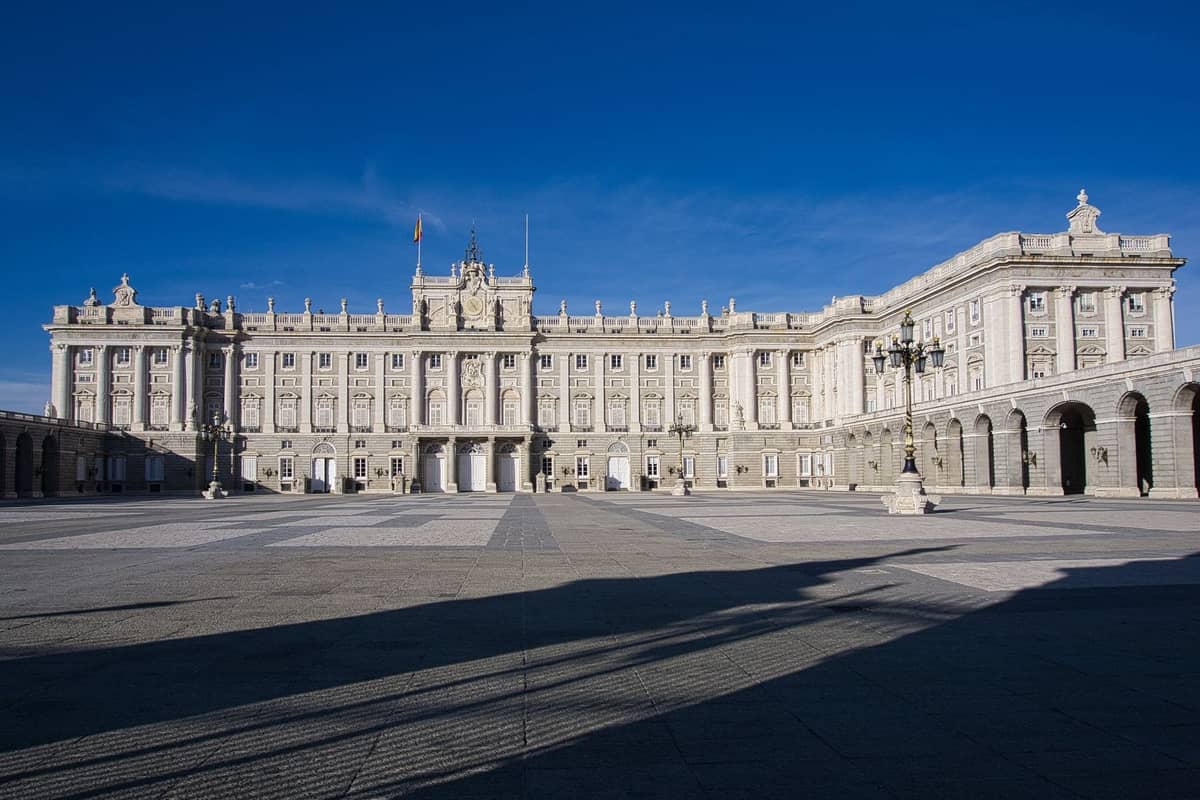
The Bourbon dynasty, which replaced the Habsburgs after the War of Spanish Succession (1700-1714), brought French and Italian architectural tastes to Madrid. The results are bigger, more ornate, and more openly theatrical than anything built under the Habsburgs. This is the period that gave Madrid its most recognisable landmark.
The Royal Palace of Madrid (Palacio Real) is one of the largest palaces in Western Europe, with 3,418 rooms across a building that took most of the 18th century to complete. The exterior was designed by Italian architect Filippo Juvara and his successor Giovanni Battista Sacchetti in a late Baroque to Neoclassical style using Colmenar limestone and granite. Admission for interior visits runs around €12-15 depending on the circuit chosen; the palace grounds and the adjacent Jardines de Sabatini are free. Arrive before 10:00 a.m. or book tickets online to avoid the worst queues.
The Bourbon reign also saw the creation of the Paseo del Prado, a neoclassical boulevard commissioned by Charles III in the 1770s as part of a broader urban improvement program. Charles III is sometimes called the best mayor Madrid ever had, and the Paseo del Prado is his most visible legacy. The boulevard links several major institutions including the Prado Museum and the Real Jardín Botánico, both dating from the same reform era. The Prado itself, designed by Juan de Villanueva in 1785, is a masterpiece of Spanish Neoclassicism with its Doric columns and sober stone facade.
ℹ️ Good to know
The Paseo del Prado and Buen Retiro Park were jointly inscribed as a UNESCO World Heritage Site in 2021, recognised as a landscape of arts and sciences. This is the city of Madrid's only UNESCO World Heritage designation and covers the cultural corridor from Atocha station in the south to the Cibeles fountain in the north.
The 19th and Early 20th Century: Eclecticism, Gran Vía, and Rationalism
Madrid's 19th century produced a wave of eclectic architecture that borrowed freely from Gothic, Mudéjar, and Renaissance sources depending on the function of the building. The Palacio de Comunicaciones (now Palacio de Cibeles), the Banco de España, and the Congreso de los Diputados all date from this period and line the streets around the Paseo del Prado and Plaza de Cibeles like an outdoor exhibition of historicist styles.
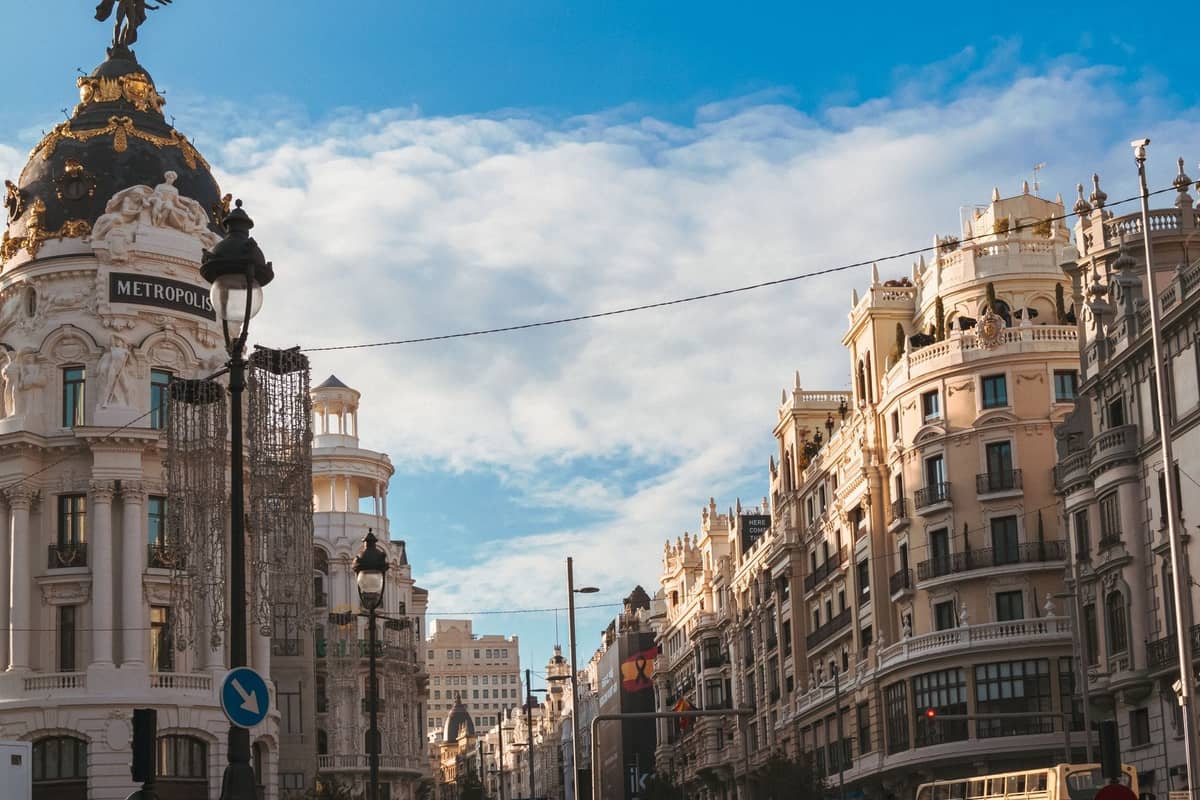
The early 20th century brought Madrid its most dramatic streetscape. Gran Vía was carved through the old city centre between 1910 and 1931, displacing thousands of residents to create a Haussmann-style boulevard lined with Beaux-Arts and early Modernist buildings. The Edificio Metrópolis (1911), with its white stone facade and copper dome, anchors the southern end. The Telefónica Building (1929), designed with input from American architects, was at the time one of the tallest buildings in Europe. Walking Gran Vía from Cibeles to Plaza de España takes about 25 minutes and covers four distinct architectural sub-periods within a single kilometre.
The Edificio Metrópolis is best photographed from the corner of Calle de Alcalá and Gran Vía, looking southwest. The gilt statue on top, representing the Winged Victory, was added in 1975. Meanwhile, the Círculo de Bellas Artes (1926), just off Gran Vía, is an Antonio Palacios design worth entering: the rooftop terrace costs a few euros but offers some of the best urban views in the city centre.
- Edificio Metrópolis Corner of Gran Vía and Calle de Alcalá. Beaux-Arts, 1911. Free to view from outside; iconic copper dome and stone facade.
- Palacio de Cibeles Plaza de Cibeles. Eclecticism with Gothic and Plateresque elements, completed 1919. Now Madrid's City Hall with a free rooftop viewpoint (check opening days).
- Círculo de Bellas Artes Calle de Alcalá 42. Antonio Palacios, 1926. Rooftop access for around €4-5; excellent 360-degree views.
- Telefónica Building Gran Vía 28. Early skyscraper by Ignacio de Cárdenas, 1929. Houses Espacio Fundación Telefónica with free exhibition access.
- Mercado de San Miguel Near Plaza Mayor. Cast-iron market hall, 1916. Now a food market; the iron structure is worth seeing even if the food prices are tourist-level.
Post-War Rationalism and Late 20th Century: Architecture Under Franco and After
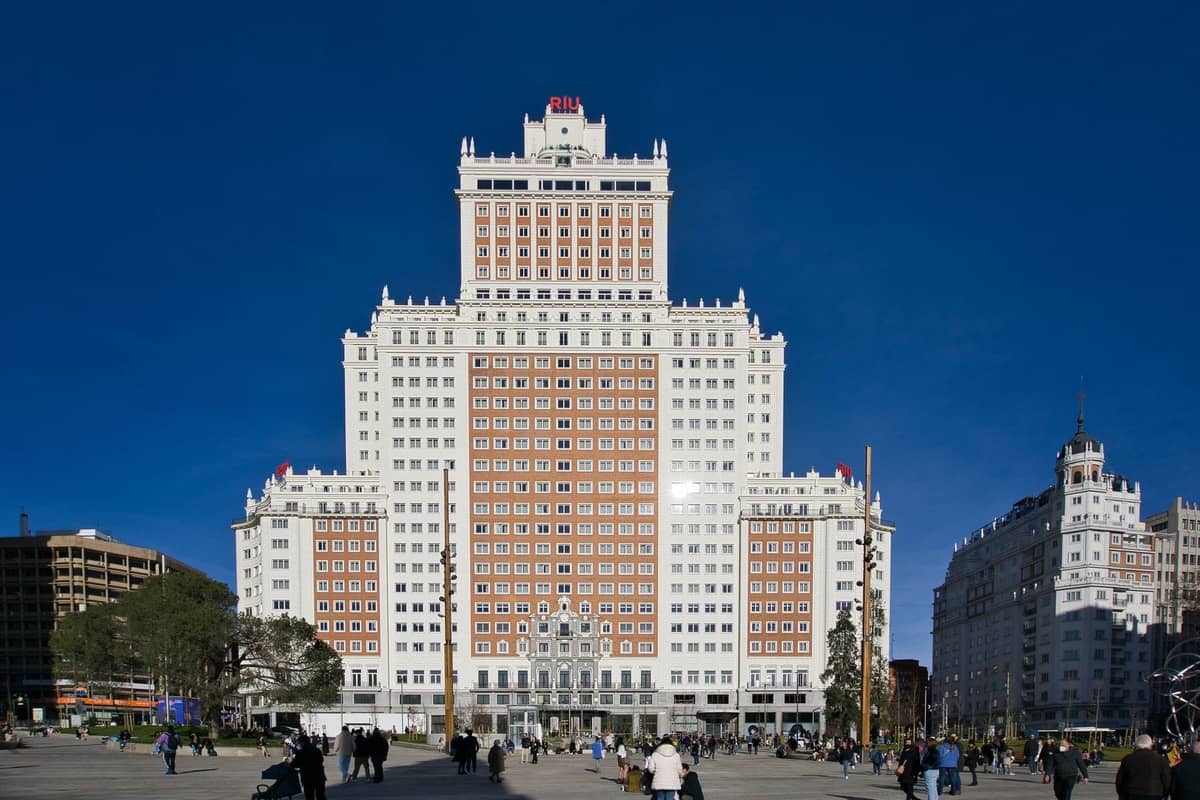
The Franco era (1939-1975) produced some of the most ideologically loaded architecture in Madrid's history. The regime initially favoured a monumental neo-Herreran style meant to evoke imperial Spain, visible in the Valley of the Fallen outside the city and in some government buildings along Paseo de la Castellana. By the 1950s and 1960s, however, Madrid's architecture shifted toward International Modernism as Spain opened economically. The result is a city with a schizophrenic mid-century layer: austere Francoist monumentalism and sleek curtain-wall office buildings sometimes within the same block.
The transition to democracy after 1975 and Madrid's emergence as a cultural capital through the Movida Madrileña of the 1980s triggered an architectural boom. The city invested heavily in public buildings and cultural institutions. Ricardo Bofill, Rafael Moneo, and other major Spanish architects left significant work in the city during this period. Moneo's extension to the Atocha railway station (1992), with its enclosed tropical garden in the old iron-and-glass terminus, is one of the most quietly impressive pieces of late 20th-century architecture in Spain.
✨ Pro tip
Atocha Station is free to enter and the botanical garden inside the old terminal hall is open to anyone passing through. Most visitors rush to catch trains and miss the iron vaulting overhead. Give yourself 15 minutes to walk through the old hall before or after any train journey from this station.
Contemporary Madrid: CaixaForum, Cuatro Torres, and 21st-Century Design
Madrid's contemporary architecture is probably the least appreciated aspect of the city among short-stay visitors, and the most interesting for anyone who follows international design. The city has produced or hosted work by Herzog and de Meuron, Jean Nouvel, Norman Foster, and Rafael Moneo in the past two decades, most of it concentrated in two areas: the Paseo del Prado cultural corridor and the Cuatro Torres business district in the north.
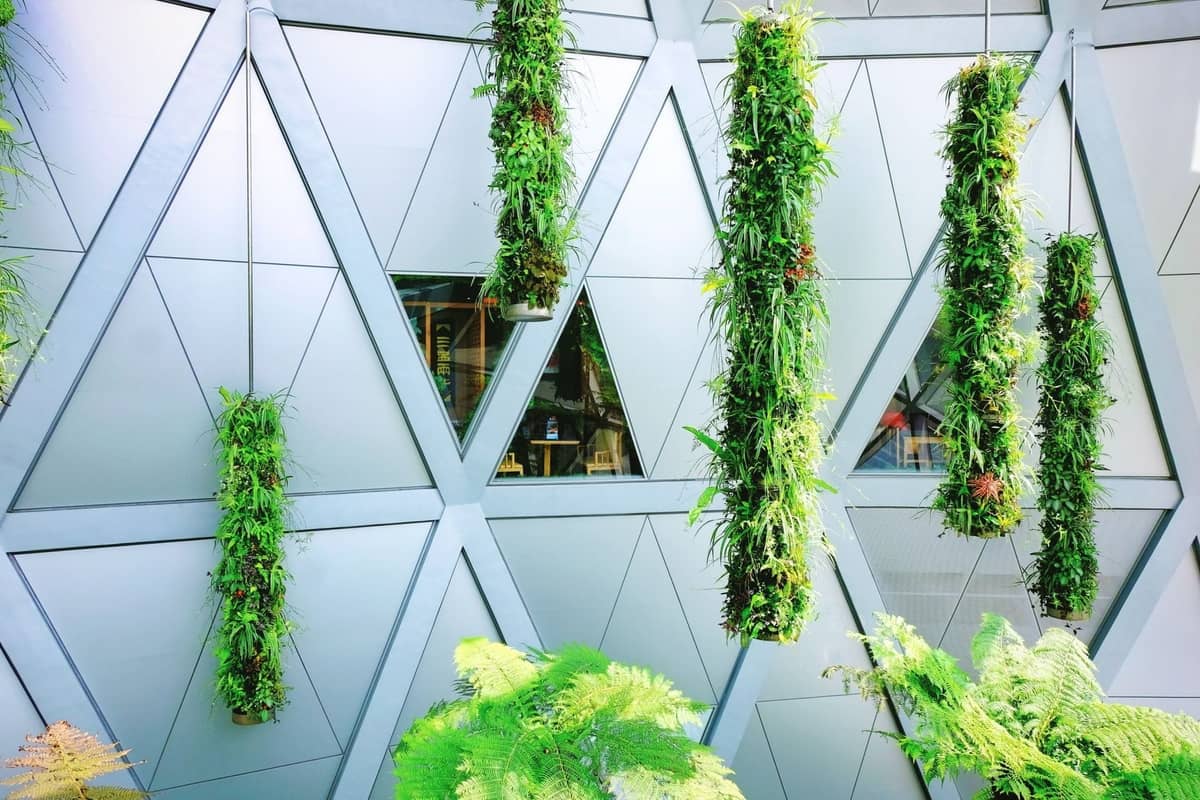
CaixaForum Madrid (2008) by Herzog and de Meuron is the standout example. The building appears to float above the ground, its rusted Corten steel exterior contrasting with a vertical garden designed by Patrick Blanc on the adjacent facade. The transformation of a disused power station into a contemporary arts venue while preserving and elevating the original brick structure is technically and aesthetically remarkable. Entry to the building's public areas is free; temporary exhibitions carry an admission charge of around €7-9.
At the northern edge of the city, the Cuatro Torres business district groups four towers between 214 and 250 metres tall, completed between 2008 and 2009. The Torre de Cristal by César Pelli, the Torre Espacio by Pei Cobb Freed, the Torre PwC by Carlos Rubio Carvajal, and the Torre Cepsa by Norman Foster form a cluster visible from much of northern Madrid. They are not open to the general public for tours, but the base-level plaza is accessible and gives a sense of scale. The Cuatro Torres area is about 20 minutes by metro from central Madrid on Line 10.
- CaixaForum Madrid: Herzog and de Meuron, 2008. Paseo del Prado 36. Free building access; paid exhibitions.
- Torre Cepsa (Cuatro Torres): Norman Foster, 2008. 248 metres. Most architecturally refined of the four towers.
- Museo Reina Sofía extension: Jean Nouvel, 2005. The Nouvel Building adds a bold red steel canopy to the neoclassical original.
- Estadio Santiago Bernabéu renovation: L35 Architects, GMP, and Ribas & Ribas, completed 2023. One of Europe's most technically complex stadium redesigns, with a retractable roof and a titanium-mesh outer skin.
- Matadero Madrid: Converted early 20th-century slaughterhouse complex now used as a cultural centre. Industrial brick architecture repurposed for contemporary use.
How to Plan Your Madrid Architecture Route
Madrid's architecture is spread across a relatively compact city, but the different periods cluster in distinct zones. A logical approach is to split your exploration across two half-days rather than trying to cover everything in one exhausting march.
Day one, morning: Start at the Royal Palace and work east through the Habsburg and Bourbon layers toward Gran Vía, finishing at the Círculo de Bellas Artes rooftop for late-afternoon light. This covers roughly 4 kilometres on foot and takes about four hours with stops. Day two, focus on the Paseo del Prado corridor from Atocha to Cibeles, which concentrates the Neoclassical, eclectic, and contemporary architecture including the Prado, the Reina Sofía, and CaixaForum. For contemporary architecture and the Cuatro Torres, a metro trip to the north is the most efficient option, best combined with a visit to Estadio Santiago Bernabéu if football stadiums interest you architecturally.
⚠️ What to skip
Madrid in July and August regularly reaches 35-38°C. Outdoor architecture walks become distinctly unpleasant between 12:00 and 17:00. If you are visiting in summer, plan outdoor routes before 10:00 a.m. or after 19:00, and use indoor museum visits to fill the midday hours. Spring and autumn are significantly better for full-day walking routes.
For a more structured experience, guided architecture walks depart regularly from the city centre and cover specific periods or neighbourhoods in depth. The official Madrid tourism website (esmadrid.com) maintains a contemporary architecture route. Alternatively, Madrid walking tours often include architectural commentary, particularly those focused on the city centre and Paseo del Prado. If you prefer to go independently, the getting around Madrid guide covers metro lines and walking distances between districts.
FAQ
What architectural style is Madrid most known for?
Madrid is most associated with Habsburg-era civic architecture (Plaza Mayor, city gates) and Bourbon Neoclassicism (Royal Palace, Prado Museum). However, the early 20th-century Beaux-Arts and Rationalist buildings along Gran Vía are equally significant and more overlooked. The city also has a strong contemporary architecture scene, particularly around the Paseo del Prado and the Cuatro Torres district.
How do I see the best of Madrid's architecture in one day?
Start at the Royal Palace early in the morning, walk east across Plaza de Oriente and through the historic centre to Plaza Mayor, then head along Calle de Alcalá toward Gran Vía. Walk Gran Vía toward Plaza de España, then make your way to the Paseo del Prado corridor via the Cibeles fountain. End at CaixaForum near Atocha. This covers the main periods in a logical geographic sequence of about 6-7 kilometres.
Is the Royal Palace worth visiting inside, or just from outside?
The exterior and the surrounding Plaza de Oriente are worth seeing regardless. The interior is worth the admission (around €12-15) if you have a genuine interest in royal ceremonial spaces, Baroque decoration, and the Royal Armory, which is one of the best collections of its kind in Europe. If your primary interest is architecture rather than decorative arts, the exterior, gardens, and nearby Campo del Moro provide enough architectural context without the queue.
What is the best neighbourhood for architecture in Madrid?
For historic architecture, the Centro district from Sol to La Latina is the densest concentration. For early 20th-century architecture, Gran Vía and the Barrio de Salamanca (with its late 19th-century residential grid) are standouts. For contemporary architecture, the Paseo del Prado corridor between Atocha and Cibeles covers the most ground in the smallest area, including CaixaForum, the Reina Sofía extension, and the UNESCO-recognised boulevard itself.
Are there free architecture experiences in Madrid?
Many of Madrid's most significant architectural landmarks are free to experience from the outside at no cost: Plaza Mayor, Gran Vía, Plaza de Cibeles, Plaza de Oriente, the Paseo del Prado boulevard, Atocha Station (enter freely and see the botanical garden in the old terminal), and the Cuatro Torres base-level plaza. CaixaForum's ground floor and exterior are also free. The Palacio de Cibeles rooftop viewpoint is free or low-cost on certain days.