Best Self-Guided Walking Tours in Madrid: Routes, Maps & Practical Tips
Madrid's historic core is compact enough that you can cover its greatest landmarks on foot, entirely on your own schedule. This guide breaks down the best self-guided walking routes by theme and distance, with real pricing, opening hours, app recommendations, and practical advice on when to walk and what to skip.
Plan and book this trip
Tools from our partner Travelpayouts help you compare flights and hotels. If you book through them, we may earn a commission at no extra cost to you.
Flights
Hotels map
TL;DR
- Madrid's main sights cluster within 3–5 km of each other, making self-guided walking tours genuinely practical for most visitors.
- The Historic Core loop (Sol to Retiro via the Royal Palace and Prado) covers around 10–11 km and works well as a full first day in the city.
- Budget around €15–40 per day depending on how many paid attractions you enter. The Golden Triangle art combo ticket saves around €10 versus buying individually.
- Walk before 10 AM in summer: July and August temperatures regularly exceed 35°C by midday.
- Free GPS-guided apps (AI Tourguide) and cheap audio tours (Voicemap, from around US$4.99) remove any need for a paid walking group. See our guide to free things in Madrid for more zero-cost ideas.
Why Madrid Rewards Walking (and When It Doesn't)
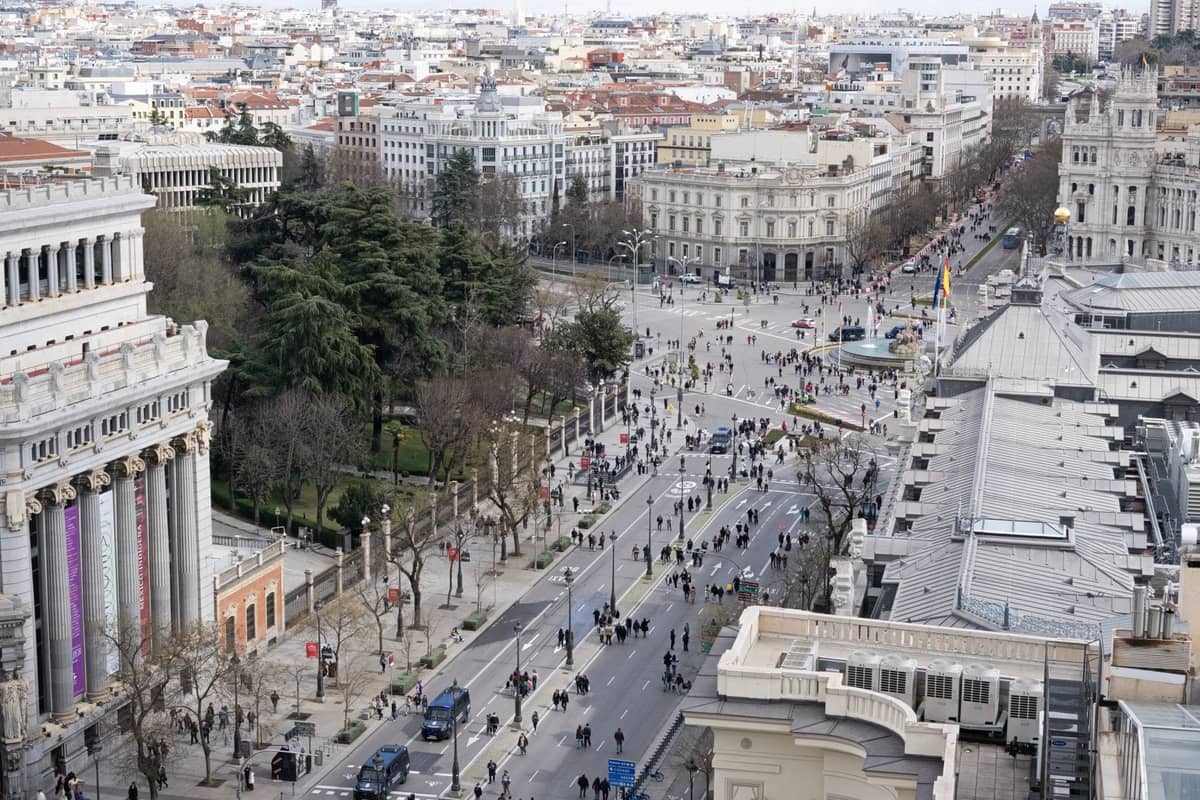
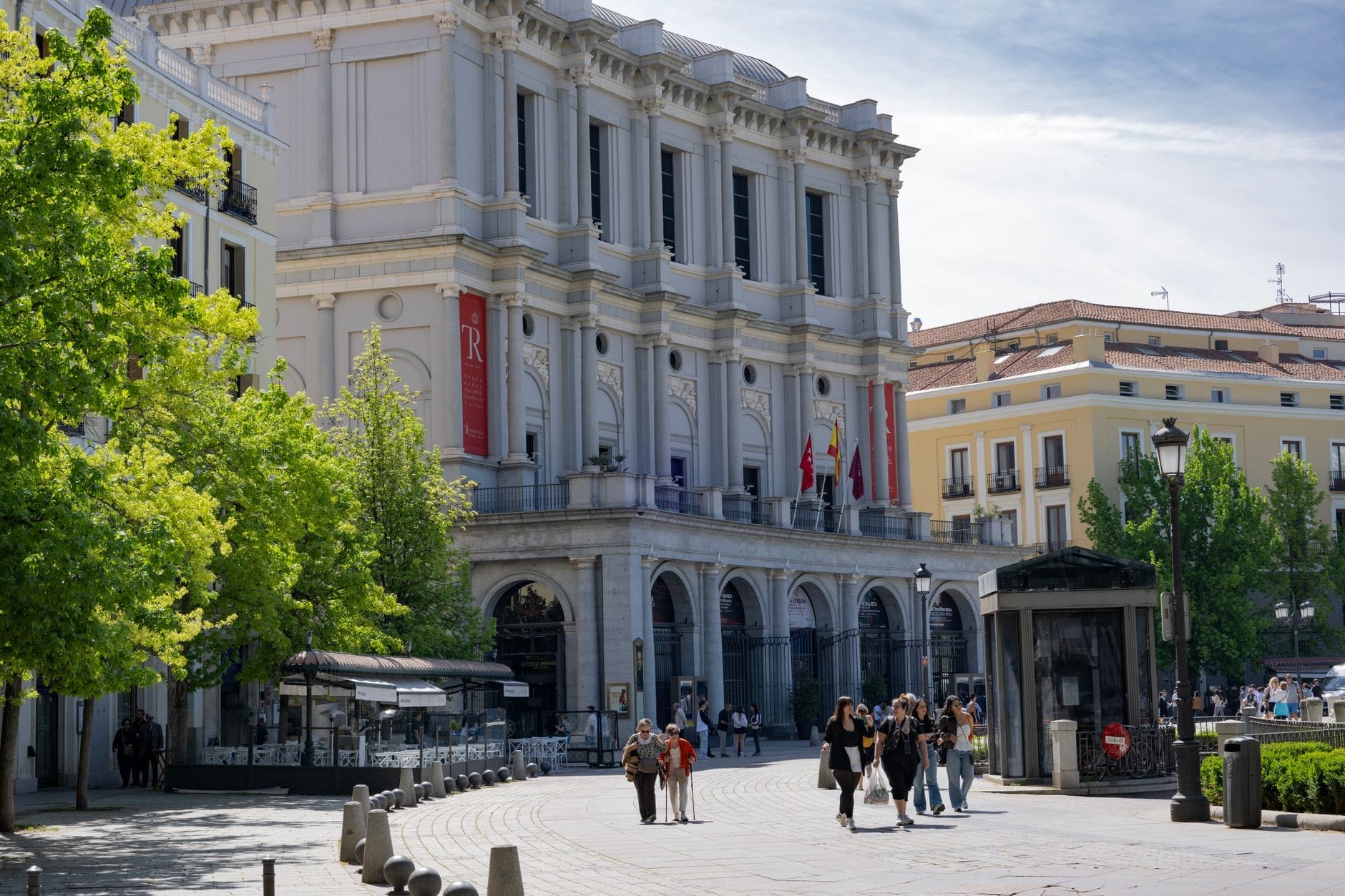
Madrid sits at 667 metres above sea level on a high plateau, which gives it a sharp continental edge: brilliant winter light, punishing summer heat. The city's historic centre is unusually flat for a European capital, and the major landmarks are remarkably close together. From the Puerta del Sol to the Prado Museum is about 1.2 km. From the Royal Palace to the Plaza Mayor is under 700 metres. This density is what makes self-guided walking here so rewarding compared to, say, Rome or Lisbon, where hills and sprawl add significant time.
The caveat: summer is brutal. June through August sees daytime highs that frequently push above 35°C, and the wide avenues offer little shade. Walking tours planned for July or August should start between 8 and 10 AM, pause during the midday hours, and resume after 6 PM when the heat drops. Spring (April to May) and autumn (September to October) are objectively the best seasons for long walks: mild temperatures, lower tourist density than peak summer, and better light for photography.
⚠️ What to skip
Avoid planning a 10 km walking day in Madrid between late June and early September without a midday break strategy. Heat exhaustion is a real risk. Carry at least 1 litre of water, and use the Retiro Park's shade or a museum interior as a midday refuge.
Route 1: The Historic Core Loop (10–11 km, Half to Full Day)
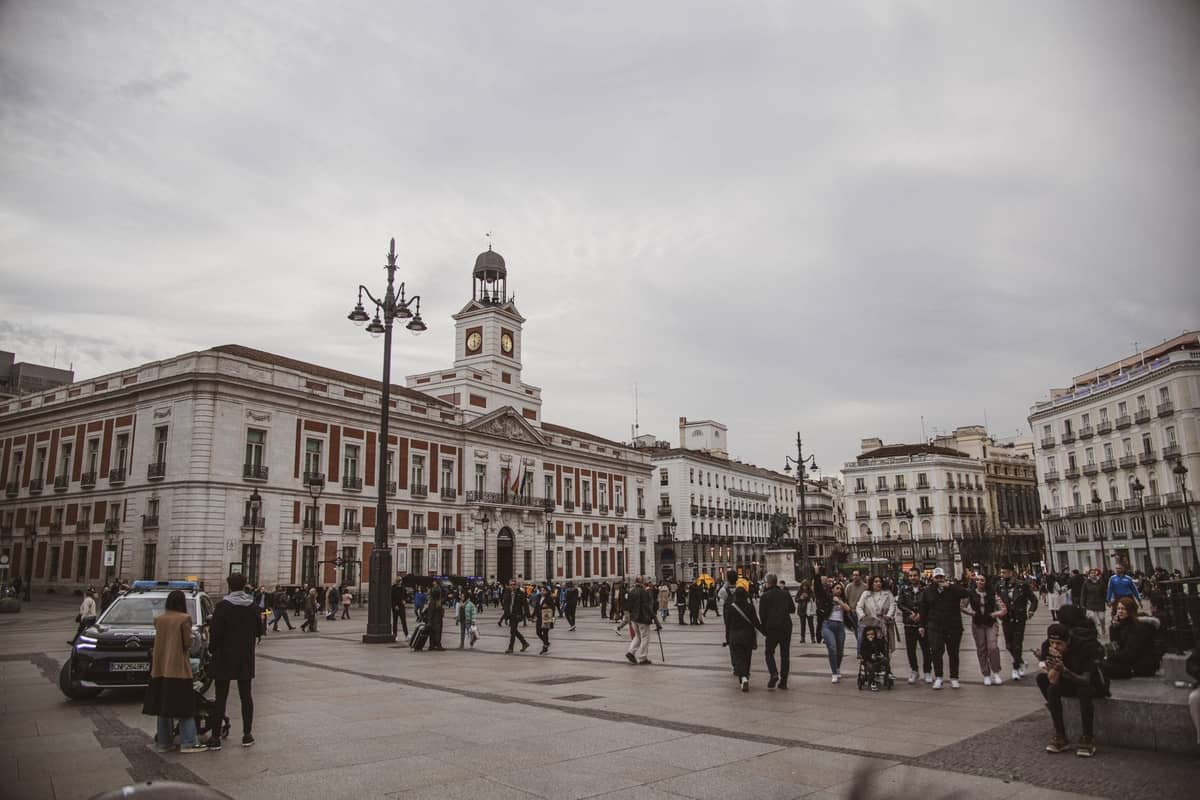
This is the backbone route that most first-time visitors should prioritise. It links the city's defining landmarks in a logical sequence without excessive backtracking. A practical order: start at Puerta del Sol, walk west along Calle del Arenal to the Plaza de Oriente and the Royal Palace of Madrid, then loop back east via the Plaza Mayor and south along Paseo del Prado toward the museum quarter.
The full loop, continuing from the Prado past the Reina Sofía and back north through Cibeles, covers approximately 10.8 km. Non-stop, that's around 2 to 2.5 hours of walking. Realistically, with pauses at monuments and a coffee stop, plan 5 to 6 hours minimum. Adding Royal Palace entry (around €15, verify current pricing on the Patrimonio Nacional website before visiting) and Prado entry (around €20) pushes total costs to roughly €30–45 for the day including food.
- Puerta del Sol The geographic centre of Spain and a natural starting point. The 'Kilometre Zero' marker is set into the pavement on the south side.
- Plaza de Oriente Formal gardens facing the Royal Palace façade. Far less crowded than the palace courtyard and worth 15 minutes of unhurried exploration.
- Royal Palace of Madrid Europe's largest royal palace by floor area. Check the official Patrimonio Nacional site for current hours (typically around 10:00–18:00) and closures on state event days.
- Plaza Mayor A 17th-century arcaded square, 129 metres by 94 metres. The café terrace prices are tourist-level; walk through and continue.
- Paseo del Prado A UNESCO World Heritage boulevard linking the three major art museums. The walk from Cibeles fountain to Atocha station is about 1.5 km.
- Museo del Prado Free entry Monday to Saturday 18:00–20:00 and Sunday 17:00–19:00. Queues at free entry times can be long; arrive 30 minutes before.
Route 2: The Royal Route (4–5 km, 3–4 Hours)
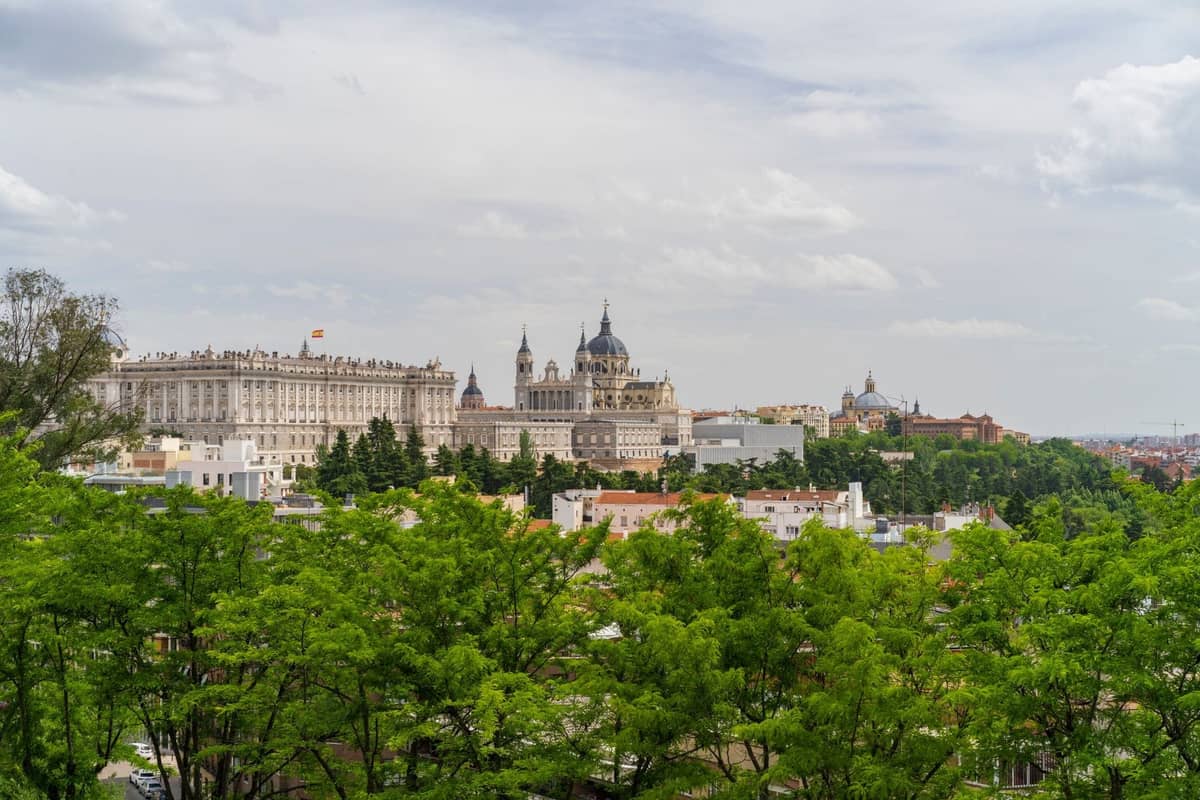
A shorter, more focused option for visitors with limited time or those travelling with children. The route runs from Puerta del Sol west through the Habsburg-era streets of the Centro district to the Royal Palace, with detours possible to the Almudena Cathedral and the Jardines de Sabatini behind the palace.
At roughly 4.2 km total, this works well as a morning activity, leaving afternoons free for museums or neighbourhoods. Budget around €15–20 if you include one paid attraction entry. The Almudena Cathedral’s main nave is free to enter (a donation is suggested), although the museum and dome have a small fee, and the Jardines de Sabatini are always open at no cost. The Templo de Debod, the relocated Egyptian temple donated to Spain in 1968, sits just north of the palace gardens and is free to enter, although access may be limited at busy times; check the Madrid City Council website for current access rules.
💡 Local tip
The best free view of the Royal Palace façade is from the Jardines de Sabatini on the north side, not the main courtyard where tour groups cluster. Visit around 9 AM for near-empty conditions and good morning light.
Route 3: The Golden Triangle of Art (2.5–3 km, 2–4 Hours Walking + Museum Time)
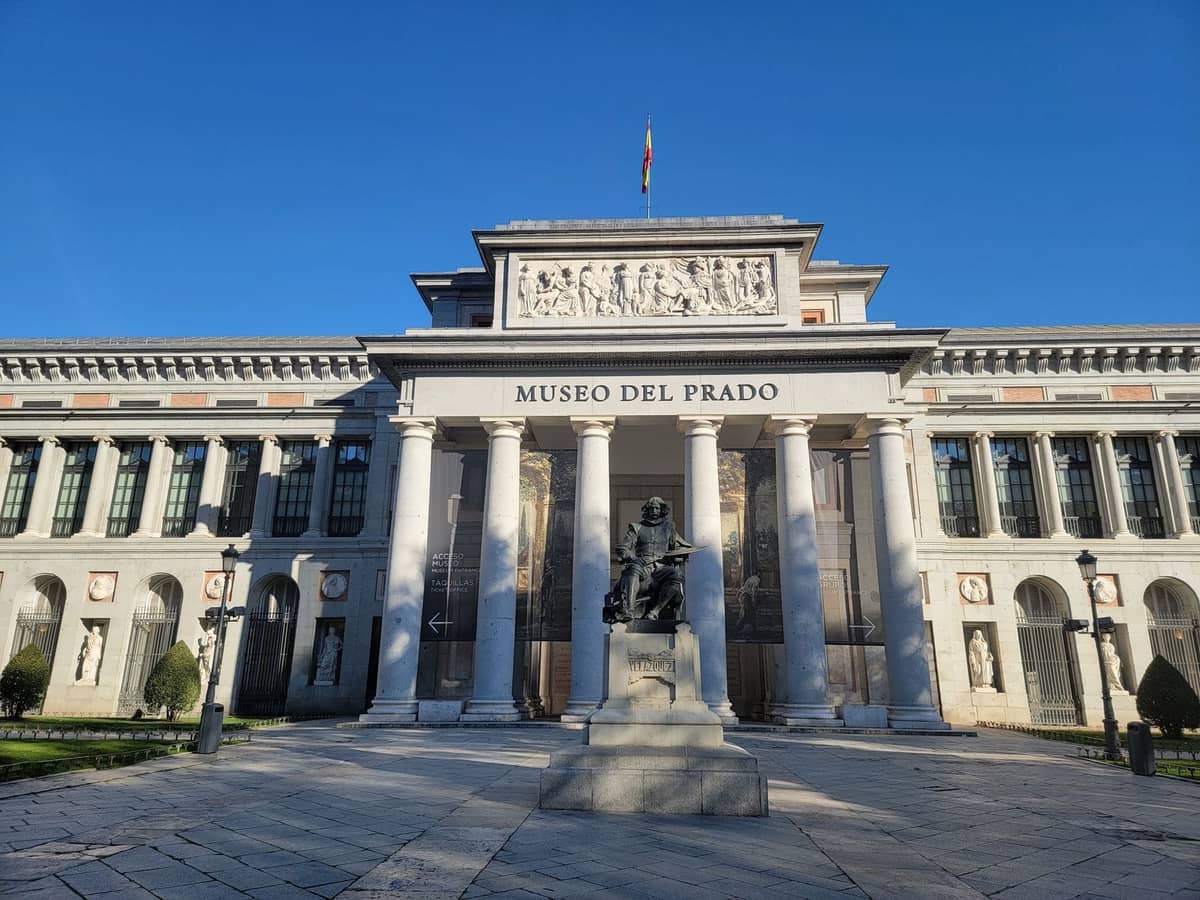
The triangle formed by the Museo del Prado, Museo Thyssen-Bornemisza, and Reina Sofía is the densest concentration of major art in any European city centre. The walking distance between all three is under 3 km. Most visitors underestimate how long they'll spend inside, so treat this as a museums-first day with the walking as connective tissue, not the main event.
Pricing note: a combined Paseo del Arte ticket covering all three museums costs around €32 versus approximately €45 buying individually. This is worth calculating before you arrive, since prices are updated periodically. The Reina Sofía is closed on Tuesdays. The Prado is closed on certain national holidays. The Thyssen is generally the most flexible in terms of opening. Check each museum's official website for current hours and closures before building your day around this route.
✨ Pro tip
If you only have time for one museum on the Golden Triangle route, the Reina Sofía's free entry window (Monday and Wednesday to Saturday, 19:00–21:00; Sunday 12:30–14:30, closed on Tuesday) lets you see Picasso's Guernica at no cost. The Prado's free window (Mon–Sat 18:00–20:00, Sun 17:00–19:00) requires longer queuing but is equally viable.
Route 4: Neighbourhood Walks Worth Planning Separately
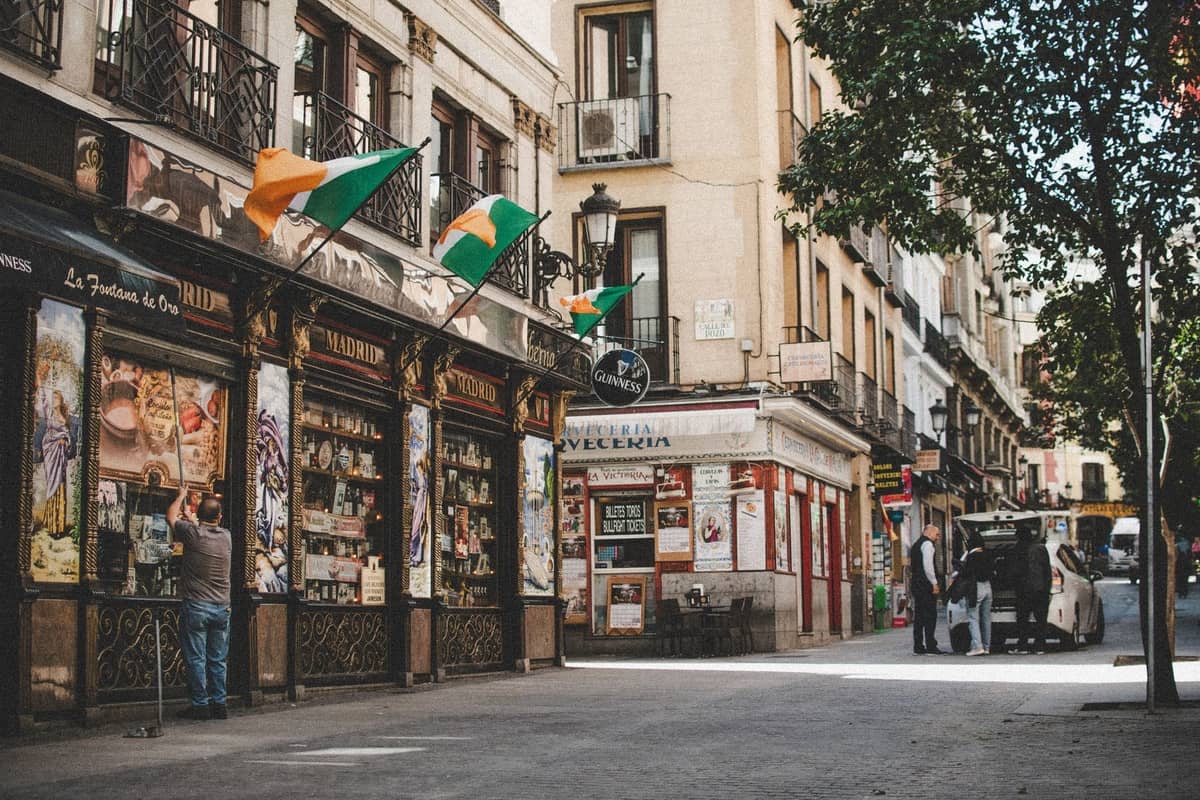
Madrid's character lives in its barrios as much as in its monuments. The neighbourhood of La Latina makes an excellent self-guided walk on its own: the medieval street grid around the Cava Baja, the market square at Plaza de la Paja, and the basilica of San Francisco el Grande can fill two to three hours without setting foot inside any paid attraction. Sunday mornings work best here, when the El Rastro flea market operates along Ribera de Curtidores from around 9 AM to 3 PM.
For a more contemporary feel, the Malasaña and Chueca neighbourhoods north of Gran Vía offer independent shops, street art, and a different pace from the monument circuit. A loop from Gran Vía north through Fuencarral and across to the Chueca grid covers around 4–5 km and gives a clear sense of why madrileños actually live in this city.
- La Latina (Sunday) El Rastro market plus the medieval streets around Cava Baja. Combine with tapas at the bars on Calle Cava Baja from around 1 PM.
- Malasaña Best explored on foot from Plaza Dos de Mayo outward. Independent bookshops, vintage clothing, and late-opening cafés.
- Chueca The grid around Calle de Hortaleza and Calle de Pelayo. Compact, walkable, and full of terrace bars.
- Barrio de las Letras The literary quarter around Plaza de Santa Ana, between the Prado and Sol. Streets paved with quotations from Spanish Golden Age writers.
- Retiro Park A full circuit of the park perimeter is about 5 km. The rose garden (Rosaleda) peaks in May; the boating lake operates year-round.
Apps and Tools for Self-Guided Walking in Madrid
Three platforms dominate the self-guided walking market in Madrid and are worth knowing before you arrive. None of them require you to book in advance or meet a group.
Questo offers 11 GPS-guided routes in Madrid, most running 1–3 hours. The app gamifies the experience with challenges and clues at each stop, which works well if you are travelling with teenagers or want more engagement than a standard audio tour. Individual routes can be unlocked, or a city pass covering all Madrid tours is available for around €39.99. No pre-booking or guide required; you start the app at the route's starting point and follow prompts.
Voicemap offers audio-first tours with a strong narrative approach. The Madrid selection includes a central city walk. Pricing is around US$4.99 per tour, which is among the lowest you will find for structured audio content. Tours work offline once downloaded, useful for areas with patchy data coverage.
AI Tourguide provides a free central Madrid route with an interactive map and AI-generated audio commentary at each stop. The only costs are site admissions. This is the most practical zero-budget option and covers the main loop (Sol, Gran Vía, Debod, Royal Palace, San Miguel market, Plaza Mayor, Reina Sofía, Prado, Retiro, Cibeles, Thyssen) in a logical sequence with distance markers.
ℹ️ Good to know
Google Maps and Apple Maps both support pedestrian routing in Madrid's historic centre and are accurate enough for navigation. Their weakness is context: they won't tell you that the courtyard of the Condes de Miranda palace on Calle del Segovia is freely visible through the gate, or that the best churros in the centre are at San Ginés, open since 1894, 200 metres from Puerta del Sol. App-based tours add that layer.
Practical Logistics: Timing, Costs, and What to Carry
Madrid's self-guided walking routes are most efficiently done on weekdays. Weekend crowds at Plaza Mayor, the Royal Palace, and the Prado are notably heavier, particularly on Saturday afternoons and Sunday mornings. If you visit on a Sunday, the El Rastro market in La Latina and free museum entry windows are the best uses of the morning rush.
For a realistic daily budget, €15–40 covers entry fees and refreshments on most themed routes. The Royal Route (4.2 km) with Royal Palace entry runs around €15–20. The full Historic Core loop with Prado and Reina Sofía entry can reach €40–45. If you use free entry windows and focus on exterior sights and free attractions like the Templo de Debod and the parks, a full walking day costs under €10. The Madrid on a budget guide covers the full picture of free and cheap options across the city.
- Wear shoes with proper support: cobblestones around Plaza Mayor and La Latina are uneven and hard on thin-soled shoes after 5+ km.
- Carry cash: some smaller tapas bars and market stalls in La Latina and Malasaña do not accept cards.
- Download offline maps before leaving your accommodation: data roaming gaps exist in some of the older underground streets.
- Book Royal Palace entry online in advance during spring and summer to avoid queues that can exceed 45 minutes.
- The Paseo del Arte combined ticket can be purchased online or at one of the three participating museums; arriving at the Thyssen first often means shorter queues.
FAQ
How long does a self-guided walking tour of central Madrid take?
The full Historic Core loop covering Sol, the Royal Palace, Plaza Mayor, and the Prado museum district is around 10–11 km. Non-stop walking takes 2–2.5 hours, but realistically plan 5–6 hours for a comfortable pace with stops, a coffee break, and at least one museum visit. Shorter themed routes like the Royal Route (4.2 km) or the Golden Triangle walk (2.5–3 km) fit into a half-day.
Is Madrid safe to walk around on a self-guided tour?
Madrid's historic centre is generally safe for pedestrians during the day and evening. As in any major European city, pickpocketing is the main concern in crowded areas: Puerta del Sol, the Metro, and El Rastro market on Sundays. Keep bags zipped and in front of you in crowded spots. Evenings in the main neighbourhoods are active and well-lit until late.
What is the best time of year for self-guided walking tours in Madrid?
April to May and September to October offer the most comfortable conditions: mild temperatures (typically 18–25°C), lower heat stress than summer, and good daylight hours. July and August are manageable if you walk early (before 10 AM) and avoid midday. Winter walks (December to February) are cold but uncrowded, with daytime temperatures around 8–12°C.
Are there free self-guided walking tours in Madrid?
Yes. AI Tourguide offers a free 14-stop central Madrid GPS route at no cost; you only pay individual site admissions. Free museum entry windows at the Prado, Reina Sofía, and Thyssen are available on weekday evenings and Sunday mornings. Exterior sights including Gran Vía, Plaza Mayor, Puerta del Sol, Plaza de Cibeles, and Templo de Debod cost nothing to see.
Do I need to book a walking tour in advance in Madrid?
Self-guided routes require no advance booking. For app-based tours on Questo or Voicemap, you can purchase and download content from your accommodation the night before. The one thing worth booking ahead is Royal Palace timed entry, particularly between March and October when queues can be significant. The Prado and Reina Sofía rarely require advance tickets outside major holiday periods, but pre-booking is available on their official websites.