Jardines de Sabatini: Madrid's Elegant Royal Gardens
Laid out in strict neoclassical geometry on the north flank of the Royal Palace, the Jardines de Sabatini are one of Madrid's most atmospheric green spaces. Free to enter, generally open daily from 09:00, with closing time varying seasonally between 21:00 and 22:00, and soaked in royal history stretching back to the 18th century.
Quick Facts
- Location
- North side of the Royal Palace of Madrid, Centro district
- Getting There
- BiciMAD docking at Plaza de España, San Quintín, Palacio de Oriente, and Plaza de Ramales stops
- Time Needed
- 30–60 minutes
- Cost
- Free entry
- Best for
- Sunset walks, palace photography, quiet afternoon escapes
- Official website
- www.esmadrid.com/en/tourist-information/jardines-de-sabatini
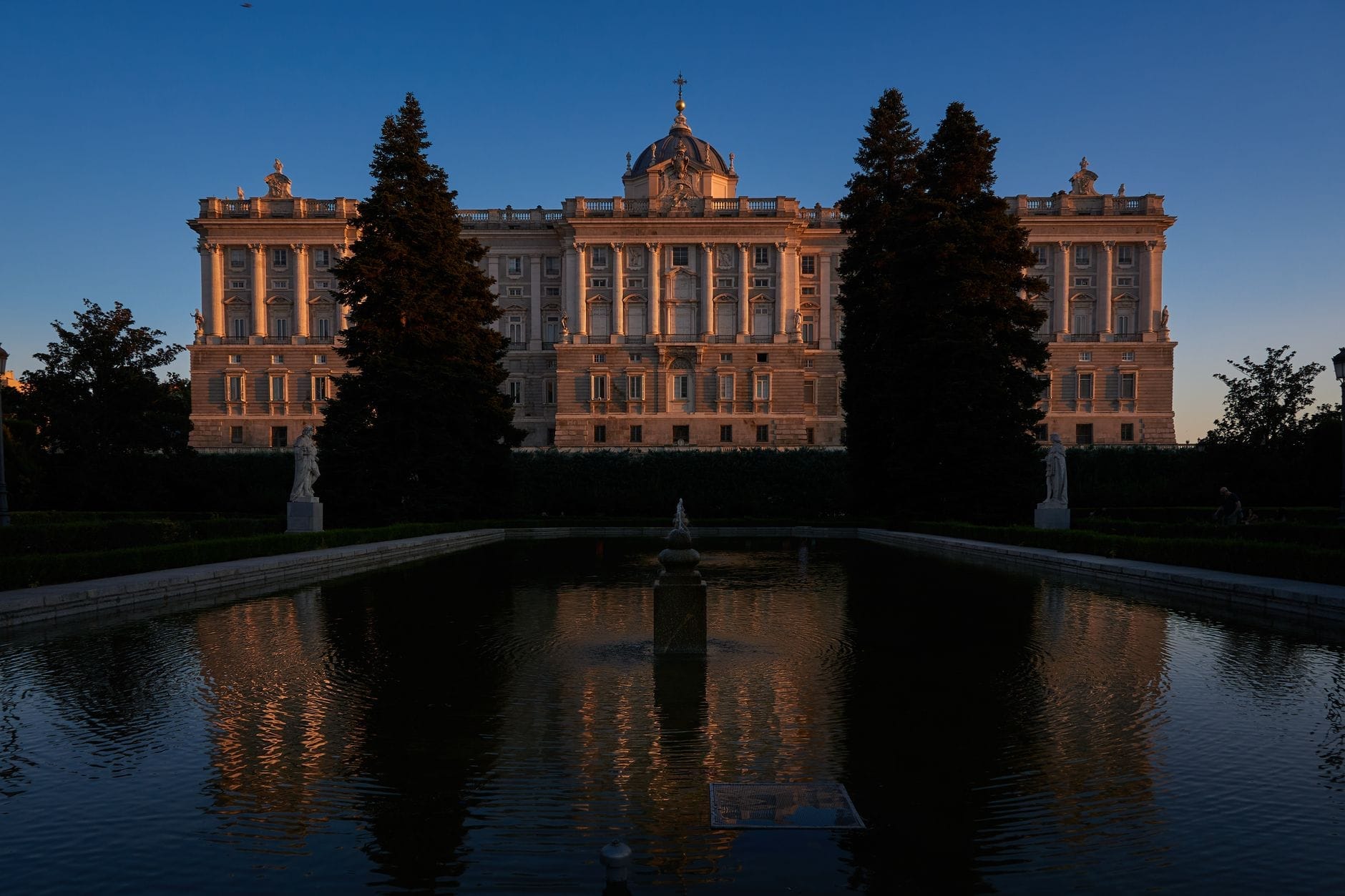
What Are the Jardines de Sabatini?
The Jardines de Sabatini occupy a long, terraced plot on the northern edge of the Royal Palace of Madrid, arranged in the formal French-influenced style that was fashionable in 18th-century European court gardens. Box hedges clipped into strict geometric shapes, gravel paths raked clean, a large rectangular reflecting pool at the centre, and rows of marble statues that were originally destined for the palace cornice: the overall effect is cool, precise, and quietly grand.
The gardens sit roughly ten metres below street level compared to the adjacent Plaza de Oriente, connected by a wide stone staircase that frames the descent theatrically. From the lower terrace, looking south, the limestone facade of the Palacio Real fills the sky. It is one of the better-framed views of the palace available anywhere in the city, and it costs nothing to enjoy.
ℹ️ Good to know
Opening hours: daily from 09:00, closing at 21:00 in winter (approximately October–April) and 22:00 in summer (approximately May–September). The gardens may close during severe weather conditions. Free admission, no ticket required.
A Brief History: From Royal Stables to Public Gardens
The name references Francesco Sabatini (1722–1797), the Sicilian-born architect who served the Spanish Crown and designed, among other structures, the royal stables that once stood on this exact site. For most of their existence, these grounds were private royal service infrastructure: a working stable block feeding the needs of the Bourbon court at the adjacent palace.
The transformation into public gardens began in the early 1930s, during Spain's Second Republic, when the stables were cleared. Work was interrupted by the Spanish Civil War, resumed, and the gardens were eventually completed in the late 1970s before being formally inaugurated by King Juan Carlos I in 1978. The long gestation explains a certain archaeological layering in the place: the formal design draws on 18th-century precedents associated with Sabatini's era, but the construction and the public access both belong to modern Madrid.
Some of the stone statues arranged along the paths were originally cast for the Royal Palace's roofline cornice but were never installed there, partly due to concerns about structural load. They ended up here instead, giving the gardens an oddly prestigious sculpture collection for a space that most visitors pass through in under an hour.
Tickets & tours
Hand-picked options from our booking partner. Prices are indicative; availability and final rates are confirmed when you complete your booking.
Royal Monastery of El Escorial and the Valley of the Fallen trip from Madrid
From 64 €Instant confirmationFree cancellationFlexible time Real Madrid: Bernabeu Stadium & Museum Entry
From 42 €Instant confirmationMuseum of Senses Madrid entrance ticket
From 19 €Instant confirmationAvila and Segovia full-day tour from Madrid
From 50 €Instant confirmationFree cancellation
What to Expect When You Arrive
Enter from Calle de Bailén, the broad road separating the palace precinct from the city grid to the east, or descend the stone staircase from Plaza de Oriente. The staircase entrance is the more dramatic approach: you step off a busy pedestrian plaza into an abruptly quieter, lower world of gravel and clipped yew.
The central rectangular pool is the garden's anchor. On calm mornings the water reflects the palace facade with reasonable clarity, and the surrounding hedges are cut low enough that the reflection is visible from multiple angles along the gravel paths. A network of box-edged parterres radiates outward from the pool, and the marble statues stand at intervals like a formal honour guard. The effect is more austere than lush: there are trees for shade, but the dominant textures are stone, gravel, and tightly managed greenery rather than wild planting or colour.
💡 Local tip
The best angle for photographing the Royal Palace facade is from the far (north) end of the reflecting pool in the late afternoon, when the sun hits the palace frontage directly. Aim for the hour before closing in spring and autumn when the light is warmest.
How the Gardens Change Through the Day
Early mornings, especially on weekdays, the Jardines de Sabatini feel almost private. Dog walkers are not permitted here (pets are not allowed, distinguishing these gardens from more relaxed city parks), so the gravel is undisturbed and the atmosphere is calm. The low morning light catches the stone statues from the side, giving them more texture and shadow than they carry at midday.
By mid-morning in summer, tour groups begin filtering through on their way between the Royal Palace and the plaza, and the gardens become a transit point rather than a destination for many visitors. In Madrid's summer heat, which regularly exceeds 33–35°C in July and August, the shade trees along the perimeter paths offer some relief, but this is not a cool retreat on a hot afternoon. Bring water and plan accordingly.
Late afternoon and evening is the most rewarding window. In summer the gardens stay open until 22:00 (21:00 in winter), and from roughly 19:00 onwards the daytime crowds thin out, the temperature drops noticeably, and the palace facade catches warm directional light. In spring and autumn, this is genuinely one of the more atmospheric spots in central Madrid: the scent of the clipped box hedging is stronger in the evening air, the fountain sounds carry further, and the sense of enclosure created by the surrounding walls and hedges becomes an asset rather than a constraint.
Practical Walkthrough and Getting There
The gardens are a short walk west from the historic core of the city. From Puerta del Sol, allow about 15–20 minutes on foot heading west along Calle Mayor and continuing to Calle de Bailén. From Plaza de España, the northern BiciMAD docking station is even closer, and the walk along the palace perimeter takes under five minutes.
The stone staircase connecting Plaza de Oriente to the lower garden level is wide but steep, with no ramp alternative at the main entrance. Visitors using wheelchairs or pushchairs should check current access arrangements with Madrid City Council before visiting, as the level change at the staircase entrance may limit independent access. The garden floor itself, once inside, is mostly flat gravel with some gentle gradients.
The Jardines de Sabatini work naturally as part of a half-day loop that includes the Royal Palace of Madrid itself, the Campo del Moro gardens on the palace's southern and western slopes, and the Plaza de Oriente directly adjacent. Together these three outdoor spaces, all free, frame the Royal Palace from different angles and take most of a leisurely morning.
⚠️ What to skip
Pets are not permitted in the Jardines de Sabatini. If you are travelling with a dog, you will need to plan around this restriction. The adjacent streets and Plaza de Oriente are pet-friendly alternatives for a short break.
Photography and What the Gardens Actually Deliver
The Jardines de Sabatini are strikingly photogenic, but the subject matter is narrower than Instagram grids sometimes suggest. The strong compositions are: the reflecting pool with the palace behind it, the rows of marble statues flanked by clipped hedges, and the view back up the stone staircase from the garden floor toward the Plaza de Oriente. Beyond those angles, the garden is fairly repetitive: it is not large enough to explore at length, and there are no hidden corners or surprising planting combinations.
As a garden experience alone, the Jardines de Sabatini are less rich than the Real Jardín Botánico near the Prado or the wilder green spaces of Retiro. Their strength is context: the formal neoclassical geometry makes sense as a prologue or epilogue to visiting the palace, and the free admission, central location, and long evening hours make them easy to slot into any itinerary.
For travellers who find strictly formal European garden design underwhelming, or who are looking for a relaxed picnic spot or somewhere to run or exercise, these gardens will disappoint. The design demands a certain engagement with geometry and history to feel worthwhile, and the no-pets rule enforces a rather composed atmosphere. The gardens are best appreciated as a frame for the palace, not as a green escape from the city in their own right.
Insider Tips
- Come between 19:00 and 21:00 on a weekday evening in April, May, or October. The tourist groups have cleared out, the light is gold, and the gardens are almost silent except for the fountains.
- The north end of the reflecting pool gives the cleanest, least-obstructed view of the Royal Palace facade. Most visitors photograph from the south end near the stairs; walk the full length of the pool before choosing your angle.
- The marble statues scattered through the garden were originally sculpted for the Royal Palace's roofline cornice and later relocated here. Look at the pedestals for carved details, and notice how some retain weathering patterns that reveal their age.
- On hot summer days, the box hedging along the east-facing perimeter paths stays in shade until well into the morning. These are the coolest spots in the garden if you need a shaded bench.
- The staircase descent from Plaza de Oriente frames the garden below you before you enter it. Pause at the top of the stairs before descending: the view of the formal parterres from above gives you the full geometric plan of the garden that disappears once you are at ground level.
Who Is Jardines de Sabatini For?
- Travellers combining a visit to the Royal Palace who want a free outdoor space to decompress after the interior tour
- Photographers looking for formal, symmetrical palace compositions in natural light
- Couples or solo walkers seeking a calm evening stroll close to the historic centre
- Architecture and garden history enthusiasts interested in 18th-century neoclassical landscape design
- Budget-conscious visitors building a free half-day itinerary around the palace precinct
Nearby Attractions
Other things to see while in Sol & Centro:
- Catedral de la Almudena
The Almudena Cathedral took more than a century from the laying of its foundation stone to its consecration in 1993, making it one of Europe's newest major cathedrals. Free to enter and directly opposite the Royal Palace, it rewards visitors who look beyond its mismatched facade to discover a surprisingly bold and colorful interior.
- Campo del Moro Gardens
The Jardines del Campo del Moro spread across more than 20 hectares directly behind the Royal Palace, offering one of the most dramatic views of the Palacio Real in Madrid. Admission is free, crowds are thin compared to the palace itself, and the romantic English-style landscape feels worlds away from the city streets above.
- Círculo de Bellas Artes
Few buildings in central Madrid earn attention on multiple levels at once. The Círculo de Bellas Artes delivers: a landmark Palacios-designed tower within the Paisaje de la Luz UNESCO World Heritage area with a rooftop terrace above the Gran Vía skyline, rotating art exhibitions, and one of the city's most atmospheric cafés. Entry to the building and La Pecera café is free; the rooftop, exhibitions, and combined tickets have separate fees starting from around €6.
- Edificio Metrópolis
Standing at the junction of Calle de Alcalá and Gran Vía, the Edificio Metrópolis is Madrid's most iconic piece of Belle Époque architecture. Its slate dome, gilded detailing, and winged Victory statue make it a landmark that rewards careful observation, even though the building itself is not a public museum. Here is everything you need to know before you go.