Estadio Santiago Bernabéu: What to Expect on a Stadium Tour
Home to Real Madrid since 1947 and recently transformed by a sweeping renovation, the Estadio Santiago Bernabéu is one of European football's most recognizable arenas. The self-guided tour takes visitors through the museum, panoramic stadium views, and other iconic areas across a purpose-built experience. Whether you follow the sport or simply appreciate large-scale architecture, the sheer scale of the place is worth the visit.
Quick Facts
- Location
- Avenida de Concha Espina, 1, 28036 Madrid (Chamartín district)
- Getting There
- Metro Line 10, Santiago Bernabéu station
- Time Needed
- About 90 minutes for the tour
- Cost
- Tickets sold online (recommended); €3 surcharge applies at the box office. Check official site for current prices.
- Best for
- Football fans, architecture enthusiasts, families, sports tourists
- Official website
- bernabeu.realmadrid.com/en-US
What the Bernabéu Actually Is
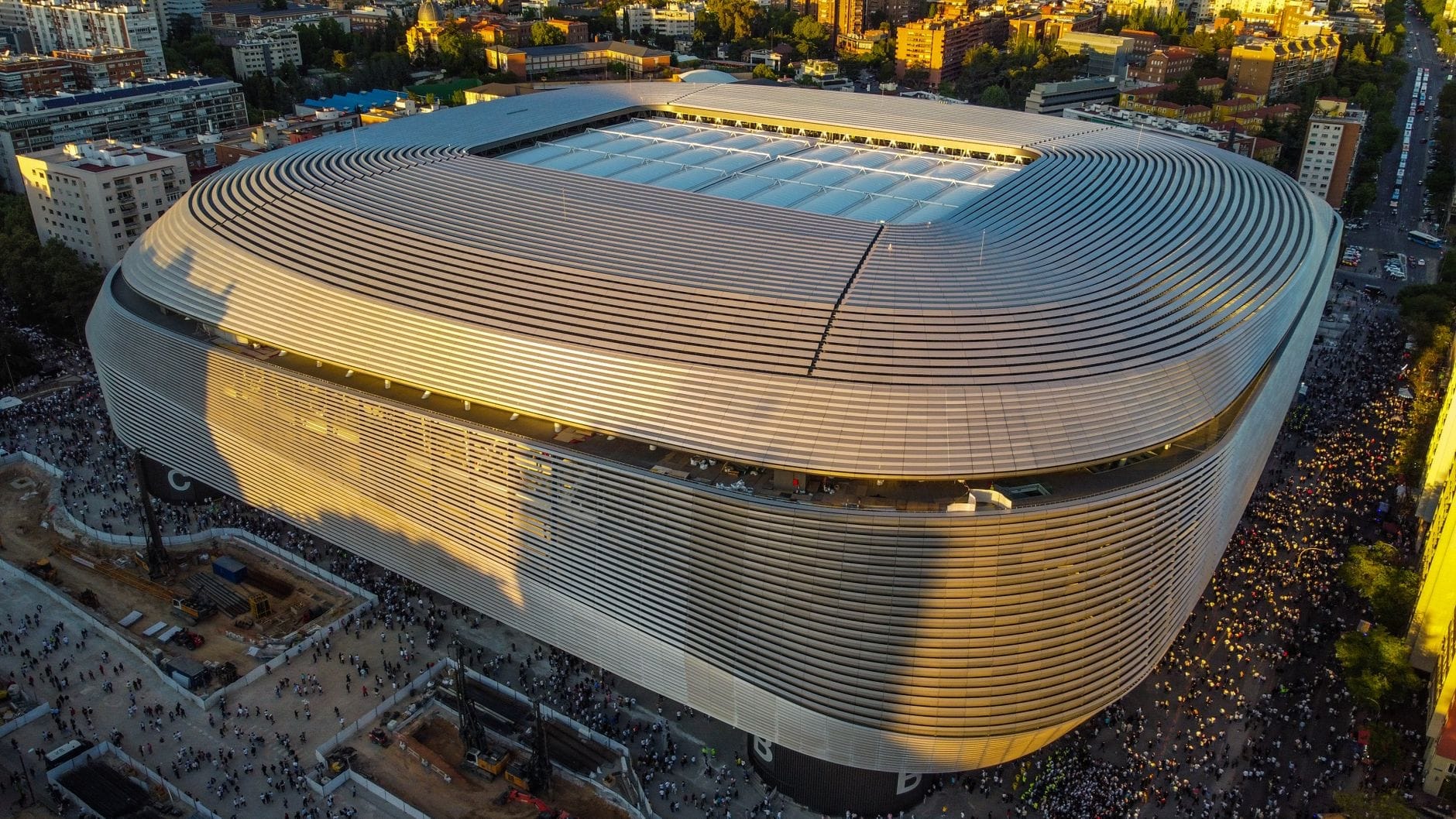
The Estadio Santiago Bernabéu is the home ground of Real Madrid CF, located on Avenida de Concha Espina in the Chamartín district of northern Madrid. Inaugurated in 1947, the stadium has undergone several expansions over the decades, but the most dramatic transformation came with a multi-year renovation completed in the mid-2020s. The rebuilt structure now has a capacity of approximately 78,000 spectators and features a retractable roof and a wrap-around LED exterior facade.
Even if you have no interest in football, it is hard to stand in the lower tier and not feel the weight of the place. The bowl closes in overhead with unusual tightness for a stadium of this size, and the new retractable roof amplifies sound in a way that makes the empty arena feel dense rather than hollow. On non-match days, the tour route opens up sections of the stadium that most visitors to Madrid never see: the press box, the VIP lounges, the pitchside tunnel, and the visitor dressing room.
💡 Local tip
Book tickets online in advance at bernabeu.realmadrid.com. The €3 box-office surcharge is avoidable, and availability can vary by date and time.
The Tour Experience: What You Walk Through
The Tour Bernabéu is a self-guided circuit with audio commentary available. You enter via a dedicated entrance and move through a structured route that covers the stadium from top to bottom. The first major highlight for most visitors is the trophy room, where the club's Champions League titles are displayed in a way that gives proper scale to Real Madrid's European record. The room is well-lit and the staging is deliberate: the trophies are placed at eye level, and the audio commentary provides match context rather than just dates and names.
From there, the route moves through the stadium’s iconic areas before descending toward pitch level. The tunnel walk is a genuine moment, and when you emerge onto the pitchside area, the scale of the bowl overhead becomes fully apparent. This is the section most visitors photograph, and for good reason. The grass itself is vivid green under the stadium lighting even on overcast days.
The visitor dressing room is a practical, slightly antiseptic space that reads as more interesting in the context of who has used it than in its physical details. The home dressing room is larger, with the squad numbers on each locker still in place. These rooms feel lived-in in a way that the trophy displays do not, and they tend to hold visitors longer than you might expect.
Tickets & tours
Hand-picked options from our booking partner. Prices are indicative; availability and final rates are confirmed when you complete your booking.
Flexible time Real Madrid: Bernabeu Stadium & Museum Entry
From 42 €Instant confirmationMadrid highlights tour with tickets to Santiago Bernabeu Stadium
From 65 €Instant confirmationSantiago Bernabeu bike or e-bike tour
From 0 €Instant confirmationReal Madrid: Bernabeu Stadium & Museum Entry
From 35 €Instant confirmation
The Renovation: Architecture Worth Paying Attention To
The post-2024 Bernabéu is genuinely one of the more architecturally significant sports venues in Europe. The exterior is now clad in a modern metallic facade that changes appearance depending on light conditions and time of day. Seen from Paseo de la Castellana at dusk, it shifts from silver-white to a warm amber as the sun drops. The cladding is not merely decorative: it acts as a climate screen and supports the building's environmental systems.
The retractable roof closes the bowl into what functions acoustically as an indoor arena. The retractable pitch system means the lower ground level can be converted into an entertainment and events space when football is not being played. This flexibility is visible during the tour: the sub-pitch level contains a multi-use floor area that is used for exhibitions and branded experiences.
For travelers interested in how major cities are rethinking large-scale public infrastructure, the Bernabéu renovation is a useful reference point alongside other Madrid projects along Paseo de la Castellana.
Timing Your Visit
Tour Bernabéu runs every day except December 25 and January 1. On non-match days, hours are Monday to Saturday 9:00 to 19:00, and Sundays and public holidays 9:30 to 18:30. On match days, the tour closes 5.5 hours before kick-off, so check the Real Madrid fixture calendar before you plan around a weekend visit.
Weekday mornings before 11:00 are consistently the least crowded windows. The trophy room and dressing room sections move quickly when busy, and some of the more atmospheric parts of the circuit (the tunnel, the pitchside area) feel less rewarding when you are moving as part of a slow-moving crowd. Saturday afternoons during the football season are the most congested, and on those days the tour atmosphere shifts from exploratory to processional.
⚠️ What to skip
On match days, large sections of the surrounding streets close to non-ticket holders several hours before kick-off. If you are visiting the area for sightseeing rather than the match, plan to arrive and leave well outside that window.
The exterior of the stadium is worth seeing at night even without a tour ticket. The LED facade activates fully after dark and the light configurations change throughout the evening. The stretch of Paseo de la Castellana directly in front of the stadium is a reasonable place to see the building in its most dramatic lighting, and the surrounding streets have a number of bars that fill with fans on match nights.
Getting There and Moving Around
The most direct route is Madrid Metro Line 10 to the Santiago Bernabéu station. The exit deposits you almost directly in front of the stadium's main visitor entrance on Avenida de Concha Espina.
Alternatively, Cercanías commuter trains stop at Chamartín, from which the stadium is a 10-minute walk south along the Castellana. This is a useful option if you are combining the Bernabéu with other destinations further north or arriving from the airport via the C-1 line. For general transit planning across the city, the guide to getting around Madrid covers Metro zones, multi-journey cards, and fare structures in detail.
The area immediately around the stadium is well-served by local buses but can become difficult to navigate by car on match days due to road closures. If you are driving, be aware that parking in the surrounding streets is metered and often full on weekends.
Context: The Bernabéu Within Madrid
The stadium sits in Chamartín, a primarily residential and commercial district in northern Madrid, several kilometres from the tourist core around Puerta del Sol and the major museums. This location means most visitors come specifically for the stadium rather than passing it incidentally. The surrounding neighbourhood is pleasant but not particularly notable for sightseeing, which means it works best as a dedicated half-day rather than a quick stop between other attractions.
The Paseo de la Castellana, Madrid's long north-south boulevard, runs alongside the stadium and connects eventually to Plaza de Colón and, further south, to the museum triangle. If you want to build a full day, combine the tour with a walk south along the Castellana toward Plaza de Colón, or continue all the way to the Museo del Prado with a break in between. The walk itself along the central boulevard takes roughly 40 minutes at a relaxed pace.
For visitors trying to structure a broader itinerary, the 3-day Madrid itinerary places the Bernabéu in context with other major draws and provides a practical framework for mixing football tourism with the city's art, food, and architecture.
Who Should Think Twice
If your interest in football is minimal and you are not particularly drawn to architecture, the Bernabéu tour is unlikely to justify its price against the number of significant museums and cultural sites available in central Madrid. The trophy room is impressive, but it is impressive primarily to people who have some frame of reference for what they are looking at. Visitors with no connection to the club or the sport often describe the experience as polished but slightly hollow, a well-designed product that depends on emotional investment to land fully.
The tour is largely accessible in terms of mobility, with lifts and ramps throughout most sections, though specific accessibility requirements should be checked directly with the stadium before purchase. Children who are not football fans may find sections of the circuit slow, though the pitchside moment and the scale of the bowl tend to land well with most ages.
Insider Tips
- The LED facade is most photogenic from across Paseo de la Castellana, not from the pavement directly in front. Cross to the central median of the boulevard for an unobstructed wide-angle view of the entire exterior, particularly effective at dusk.
- If you are visiting on a non-match weekday, the 9:00 opening slot is unusually quiet. The trophy room in particular feels different without a crowd, and the audio commentary is easier to follow at your own pace.
- Check the Real Madrid fixture calendar before booking. Tours close 5.5 hours before kick-off, and some of the best exterior lighting and atmosphere around the stadium comes from the pre-match crowd build-up if you time arrival carefully.
- The sub-pitch level events space changes contents depending on current club partnerships and exhibitions. What is running there at any given time is not always well-publicised externally, so it is worth checking the official site for current installations.
- Avoid the box office if you can. The €3 surcharge for on-site ticket purchases is simply an avoidable cost, and online tickets also give you a fixed time slot that helps you plan the rest of the day.
Who Is Estadio Santiago Bernabéu For?
- Football fans visiting Madrid specifically to see a Real Madrid landmark
- Architecture and design enthusiasts interested in large-scale contemporary sports venues
- Families with football-following children who want a structured half-day activity
- Sports tourists building a wider tour of European football stadiums
- Visitors on a longer Madrid stay who have already covered the main museum and cultural sites
Nearby Attractions
Other things to see while in Sol & Centro:
- Catedral de la Almudena
The Almudena Cathedral took more than a century from the laying of its foundation stone to its consecration in 1993, making it one of Europe's newest major cathedrals. Free to enter and directly opposite the Royal Palace, it rewards visitors who look beyond its mismatched facade to discover a surprisingly bold and colorful interior.
- Campo del Moro Gardens
The Jardines del Campo del Moro spread across more than 20 hectares directly behind the Royal Palace, offering one of the most dramatic views of the Palacio Real in Madrid. Admission is free, crowds are thin compared to the palace itself, and the romantic English-style landscape feels worlds away from the city streets above.
- Círculo de Bellas Artes
Few buildings in central Madrid earn attention on multiple levels at once. The Círculo de Bellas Artes delivers: a landmark Palacios-designed tower within the Paisaje de la Luz UNESCO World Heritage area with a rooftop terrace above the Gran Vía skyline, rotating art exhibitions, and one of the city's most atmospheric cafés. Entry to the building and La Pecera café is free; the rooftop, exhibitions, and combined tickets have separate fees starting from around €6.
- Edificio Metrópolis
Standing at the junction of Calle de Alcalá and Gran Vía, the Edificio Metrópolis is Madrid's most iconic piece of Belle Époque architecture. Its slate dome, gilded detailing, and winged Victory statue make it a landmark that rewards careful observation, even though the building itself is not a public museum. Here is everything you need to know before you go.