Fundación MAPFRE Sala Recoletos: Serious Art in a Salamanca Palace
Tucked into a beautifully restored 1880s building on one of Madrid's most elegant boulevards, Fundación MAPFRE Sala Recoletos is a compact, carefully programmed gallery that consistently delivers exhibitions rivalling much larger institutions. With roughly 1,000 square metres across three rooms, it focuses on photography, modern art, and overlooked masters — and it is free every non-holiday Monday afternoon.
Quick Facts
- Location
- Paseo de Recoletos, 23, 28004 Madrid (Barrio de Salamanca)
- Getting There
- Metro: Colón (L4), Banco de España (L2). Cercanías: Recoletos (C2, C7, C8, C10). Bus: 5, 14, 27, 37, 45, 53, 150
- Time Needed
- 45–90 minutes for a single exhibition; allow extra time if two shows overlap
- Cost
- €5 general entry (€3 reduced). Free on non-holiday Mondays 14:00–20:00. Hours: Mon 14:00–20:00; Tue–Sat 11:00–20:00; Sun & public holidays 11:00–19:00. Closed 25 Dec, 1 Jan, and 5–6 Jan
- Best for
- Photography lovers, art enthusiasts, rainy-day culture, free Monday afternoon outings
What Is Fundación MAPFRE Sala Recoletos?
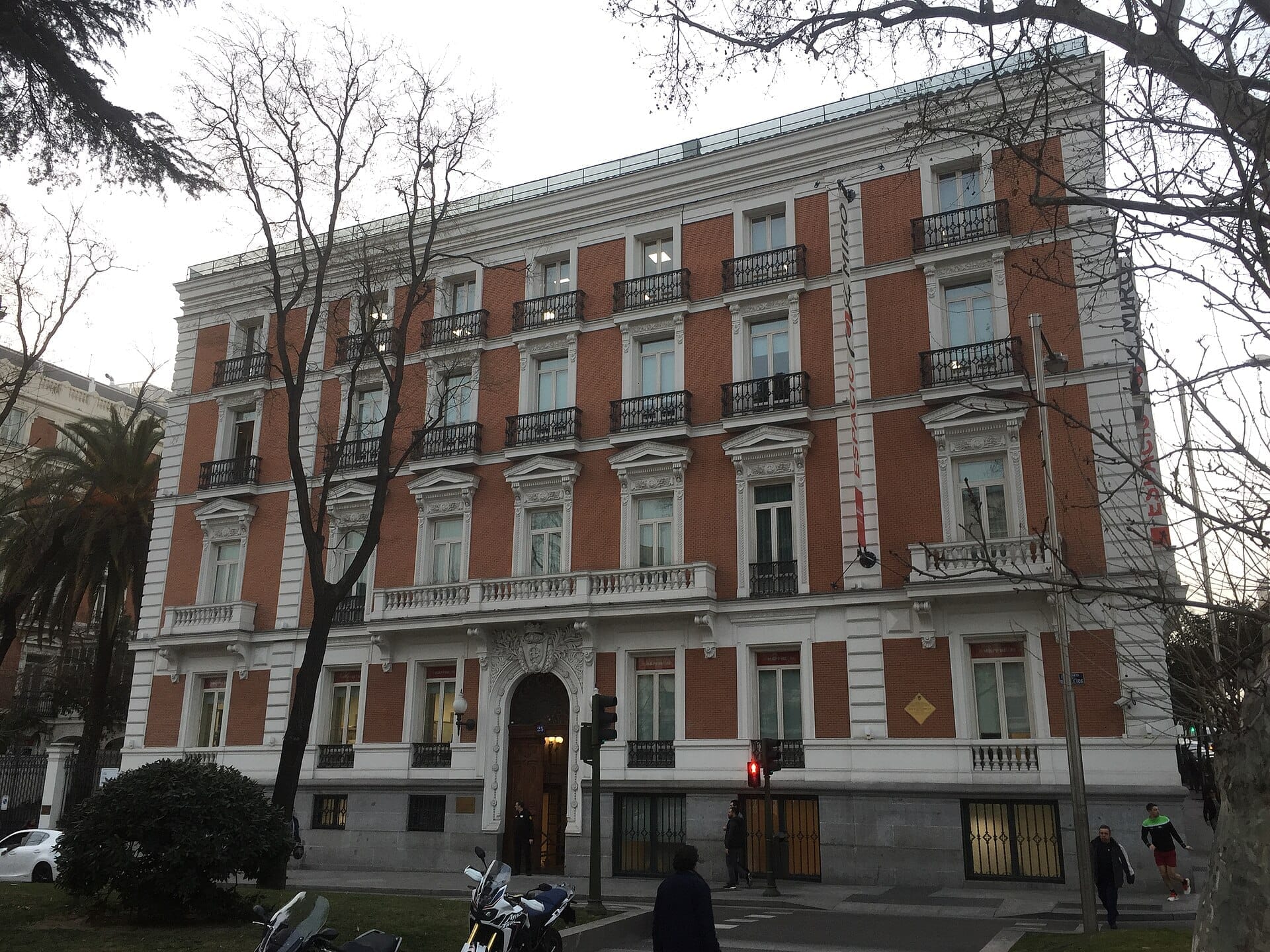
Fundación MAPFRE Sala Recoletos is a non-profit exhibition hall operated by the MAPFRE Foundation, one of Spain's largest cultural philanthropic organisations. The gallery sits at Paseo de Recoletos 23, inside a building erected between 1881 and 1884 — a period when this tree-lined boulevard was Madrid's most fashionable promenade. The space was converted for its current museum use in 2008 and has since developed a consistent reputation for well-researched shows, particularly in photography and early 20th-century painting.
At approximately 1,000 square metres divided across three rooms, this is not a sprawling institution. That is the point. Unlike Madrid's enormous trio of the Prado, Reina Sofía, and Thyssen, Sala Recoletos offers a focused, single-exhibition experience where you can actually spend time in front of works rather than rushing through halls. Crowds are rarely overwhelming, and the atmosphere tends toward quiet concentration rather than tourist throughput.
💡 Local tip
Free admission every non-holiday Tuesday makes this an easy addition to any art-focused itinerary. If a Monday visit does not work, the €5 general ticket is still among the lowest entry fees for a gallery of this calibre in central Madrid.
The Building and Its Setting
Paseo de Recoletos connects the Cibeles roundabout to the Colón square and functions as the formal southern extension of the Paseo de la Castellana. The stretch fronting Sala Recoletos is lined with outdoor café terraces, mature plane trees, and 19th-century facades — an environment that in itself rewards a slow walk. The building housing the gallery is a late Restoration-era structure, constructed at a moment when Salamanca district developers were consolidating one of the first purpose-designed bourgeois neighbourhoods in Madrid.
The exterior is relatively understated compared to the ornate palatial architecture found a few blocks away around Calle de Serrano, but step inside and the proportions become apparent: high ceilings, well-controlled natural light filtered through the modifications made during the 2008 conversion, and a layout that moves visitors through the three rooms without forcing a fixed sequence. The accessibility entrance features a double-leaf door 1.80 metres wide, making wheelchair access straightforward.
The gallery's immediate surroundings are worth factoring into your visit. The Museo Arqueológico Nacional is a short walk south, and the northern end of the Paseo del Prado corridor is reachable on foot in under fifteen minutes. A visit here pairs naturally with a longer cultural afternoon in the area.
Tickets & tours
Hand-picked options from our booking partner. Prices are indicative; availability and final rates are confirmed when you complete your booking.
Tickets for Fundacion Mapfre Madrid Sala Recoletos
From 5 €Instant confirmationFree cancellationRoyal Monastery of El Escorial and the Valley of the Fallen trip from Madrid
From 64 €Instant confirmationFree cancellationFlexible time Real Madrid: Bernabeu Stadium & Museum Entry
From 42 €Instant confirmationMuseum of Senses Madrid entrance ticket
From 19 €Instant confirmation
What to Expect Inside: The Exhibition Programme
The programming philosophy at Sala Recoletos tends to favour depth over breadth. Rather than survey shows that graze across decades, the foundation typically mounts retrospectives or thematic exhibitions that give a single artist or movement room to breathe. Photography has been a particular strength: shows dedicated to the history of photojournalism, the legacy of specific 20th-century photographers, and the boundaries between documentary and fine-art photography have all appeared in recent years.
Painting exhibitions often focus on artists who sit slightly outside the canonical art-history curriculum — Spanish modernists, Latin American figures, or European painters whose work became fragmented across private collections and has rarely been seen together. This is where the foundation's institutional backing matters: it can borrow works from private insurance-related collections, international museums, and family estates that would be unavailable to smaller independent galleries.
The three rooms allow for a natural narrative arc in most exhibitions. The first room typically sets historical or biographical context, the second develops the central argument of the show, and the third often presents later or more experimental work. At around 1,000 square metres total, you will not need more than 90 minutes even for a thorough visit, which makes this an ideal complement to a longer afternoon rather than a full-day anchor.
ℹ️ Good to know
Fundación MAPFRE also operates a second Madrid venue, the Sala Azca in Madrid's business district, and KBr Fundación MAPFRE in Barcelona. The Recoletos location is the most central and the one most visitors encounter first.
Visiting by Time of Day
Monday openings begin at 14:00, which makes afternoon visits the only option that day. The later opening on Mondays coincides with many local workers finishing lunch, and the gallery sees a modest midday-adjacent crowd. For the quietest experience on any day, the first hour after opening on Tuesday through Saturday tends to be the most peaceful: natural light from the upper facade reaches its best angle in morning hours, and the rooms are rarely busy before noon.
By mid-afternoon on weekends, particularly Saturdays, foot traffic increases noticeably. Families visiting after Sunday lunch on public holidays can make the smaller rooms feel crowded relative to their size. If the current exhibition includes large-format photography or painting, this matters: the works are best viewed without other visitors standing at close range in the same room. Plan a weekday morning if the programme is something you genuinely want to study.
The café terraces along Paseo de Recoletos fill up in the late afternoon and early evening, particularly in spring and autumn. Exiting around 18:00 and sitting outside with a coffee before heading further into Salamanca or back toward the centre is one of the pleasanter ways to end a gallery visit in this part of the city.
Getting There and Practical Logistics
The gallery is served by three Metro lines within a comfortable walking distance. Colón on Line 4 is directly adjacent to the northern end of Recoletos and is the closest stop. Banco de España on Line 2 sits at the southern end of the boulevard, adding a five-minute walk along the paseo — a pleasant route past outdoor café tables. Chueca on Line 5 approaches from the west and is similarly walkable.
Cercanías commuter trains stop at Recoletos station, which is useful if you are arriving from areas north of the city centre or connecting from the Atocha corridor. Multiple bus lines including the 5, 14, 27, 37, 45, 53, and 150 pass along or near the paseo. If you are already in the Salamanca district, walking is almost always the simplest option: the gallery is no more than ten minutes on foot from most of the neighbourhood.
For a broader sense of the Salamanca district and what surrounds this gallery, the Barrio de Salamanca neighbourhood guide covers the area's character, shopping streets, and dining options in detail.
⚠️ What to skip
The gallery is closed on 25 December, 1 January, and 5–6 January. On 24 December, 31 December, and 5 January, hours are reduced to 11:00–15:00. Always check the official schedule before visiting around Spanish public holidays, as the calendar of national and local holidays in Madrid is extensive.
Photography, Accessibility, and What to Bring
Photography policies vary by exhibition and are determined in part by the loan agreements for specific works. In general, expect restrictions on flash photography and tripods, and be prepared for some exhibitions where photography is not permitted at all. The foundation's own documentation of each show is thorough — printed catalogues are usually available at the front desk and represent good value given the quality of the curatorial essays.
Accessibility is solid. The disability entrance provides a 1.80-metre wide double-leaf door suitable for wheelchairs, and the exhibition layout across three rooms does not require navigating stairs within the gallery space. Confirm current lift access directly with the venue if this is a critical requirement.
No special clothing is required. The interior is climate-controlled, which matters in Madrid's extreme summer heat when temperatures outside regularly exceed 35°C. In winter, the gallery provides welcome warmth. Bag storage is available at the entrance if you are carrying luggage or a bulky coat.
Is It Worth Your Time?
That depends almost entirely on what is showing. When the programme aligns with your interests — particularly if you follow photography as a medium — Sala Recoletos consistently delivers exhibitions of international quality at a fraction of the cost of the major museums. The curation is scholarly without being inaccessible, and the physical scale of the space means you are never exhausted by the end of a visit.
If contemporary art or photography does not interest you, and if the current exhibition is outside your range, there is little reason to visit. Unlike the Prado or Reina Sofía, there is no permanent collection to fall back on. Each visit is defined by whatever the foundation is showing at that moment, so checking the current programme before you go is not optional — it is the entire decision.
Travellers planning a broader cultural itinerary in Madrid will find this fits naturally alongside the city's major galleries. For context on the full landscape of Madrid's art institutions, the best museums in Madrid guide provides a useful comparative overview, including which venues offer free entry and when.
Insider Tips
- Check the programme before you go, not after. The entire value of a visit depends on whether the current exhibition interests you. The foundation's website updates regularly and shows upcoming openings several months in advance.
- Monday free admission (14:00–20:00 on non-holidays) is not widely advertised on English-language sites. On a typical Monday afternoon, the gallery is remarkably quiet — often just a handful of visitors in each room — which makes it one of the better free art experiences in central Madrid.
- The outdoor terraces along Paseo de Recoletos are most comfortable in spring and autumn. Plan your visit to end around 17:00–18:00 so you can sit outside afterward before the evening crowd arrives.
- The printed exhibition catalogues sold at the entrance are produced to a high standard and often include essays not available online. At €20–€35 depending on the show, they are frequently the most substantive catalogue available for that particular artist outside of their home country.
- If you are visiting multiple cultural venues in one day, this pairs well with the Museo Arqueológico Nacional and a walk through Retiro Park. All three are within easy walking distance, and none of the three requires more than 90–120 minutes for a focused visit.
Who Is Fundación Mapfre – Sala Recoletos For?
- Photography enthusiasts looking for curated, international-quality shows outside the main museum circuit
- Art travellers who want a short, focused gallery visit without the scale and fatigue of the Prado or Reina Sofía
- Budget-conscious visitors: free on non-holiday Mondays 14:00–20:00, and only €5 general entry on all other days
- Visitors based in or exploring the Barrio de Salamanca who want to combine culture with the neighbourhood's café and restaurant scene
- Travellers seeking air-conditioned respite during Madrid's hot summer months
Nearby Attractions
Other things to see while in Barrio de Salamanca:
- Calle de Serrano
Calle de Serrano is Madrid's most prestigious shopping corridor, stretching roughly 4 kilometers through the elegant Barrio de Salamanca and into Chamartín. From international luxury flagship stores near Puerta de Alcalá to local Spanish designers and fine food markets further north, the street offers a complete portrait of how Madrid's wealthiest neighborhood shops, eats, and moves.
- Plaza de Toros de Las Ventas
Plaza de Toros de Las Ventas is one of Europe's most architecturally striking arenas, a Neo-Mudéjar landmark with a capacity of 23,798 seats and a history stretching back to 1931. Whether you attend a corrida or simply take the guided tour, the scale and detail of this place are genuinely arresting.
- Mercado de La Paz
Opened in 1882 and still going strong, Mercado de La Paz is the working neighborhood market at the heart of Madrid's upscale Salamanca district. With around 35 stalls selling everything from Iberian ham to fresh fish, it offers a grounded, local counterpoint to the area's designer boutiques — and it costs nothing to walk in.
- Museo Arqueológico Nacional
The Museo Arqueológico Nacional (MAN) holds Spain's most comprehensive collection of archaeological treasures, from prehistoric cave art reproductions to Roman mosaics and medieval Islamic goldwork. Located in the Barrio de Salamanca, it is one of the most substantive and undervisited museum experiences in Madrid.