Calle de Serrano: Madrid's Premier Shopping Street
Calle de Serrano is Madrid's most prestigious shopping corridor, stretching roughly 4 kilometers through the elegant Barrio de Salamanca and into Chamartín. From international luxury flagship stores near Puerta de Alcalá to local Spanish designers and fine food markets further north, the street offers a complete portrait of how Madrid's wealthiest neighborhood shops, eats, and moves.
Quick Facts
- Location
- Salamanca and Chamartín districts, Madrid — from Plaza de la Independencia (Puerta de Alcalá) north to Plaza de la República de Ecuador
- Getting There
- Serrano (Line 4), Retiro (Line 4), Núñez de Balboa (Lines 5 & 9)
- Time Needed
- 1.5 to 3 hours for a full north-south walk with stops; longer if shopping seriously
- Cost
- Free to walk; individual shop prices range from affordable to high-end luxury
- Best for
- Fashion lovers, window shoppers, architecture admirers, and anyone wanting to understand Madrid's upscale side
What Calle de Serrano Actually Is
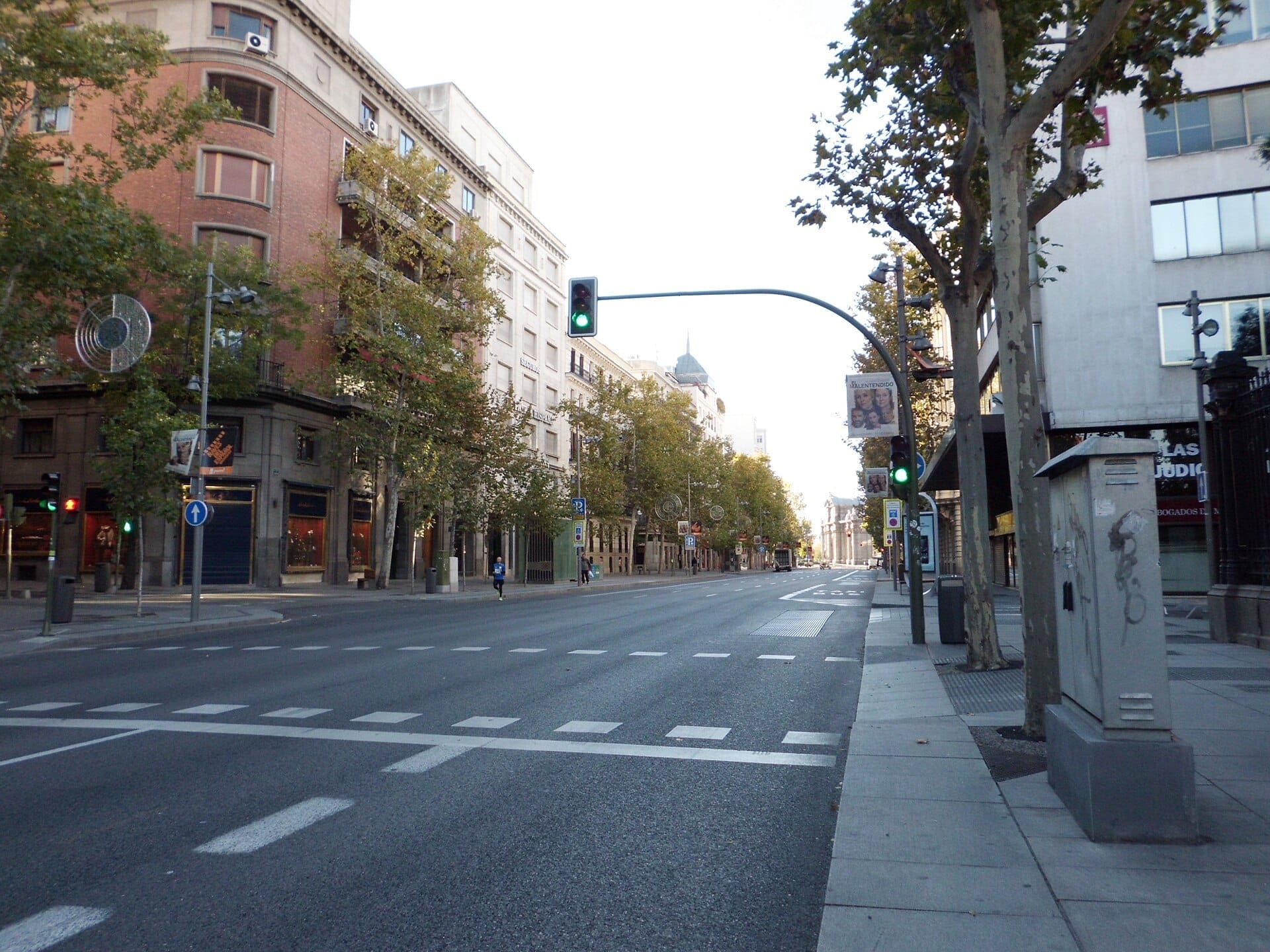
Calle de Serrano is a public street, free to walk at any hour, running approximately 4 kilometers through the districts of Salamanca and Chamartín. It begins at the southeastern end near Plaza de la Independencia, where the neoclassical arch of Puerta de Alcalá frames the sky just a short walk away, and it pushes north past cross streets like Goya, Ortega y Gasset, and Jorge Juan until it reaches number 240 near Plaza de la República de Ecuador.
The street was renamed in 1868 during the Glorious Revolution, honoring General Francisco Serrano, one of the revolution's key figures. Before that, it was known as Bulevar Narváez, created around 1863 as part of José de Salamanca's new district. Today the politics are long forgotten and the name simply means luxury retail, wide sidewalks, and the kind of window displays that make you stop walking mid-sentence. For context on how this neighborhood fits into Madrid's broader layout, the Barrio de Salamanca neighborhood guide covers the full grid of streets around it.
💡 Local tip
The most concentrated stretch of luxury retail sits between Calle de Goya and Calle de Ortega y Gasset — roughly the middle third of the street. If your time is limited, start at the Serrano metro station and walk south toward Goya for the densest block of flagship stores.
The Street at Different Times of Day
Serrano transforms significantly depending on when you arrive. At 9am on a weekday, the street belongs to dog walkers, delivery vans, and the occasional jogger cutting through from Retiro. Shop shutters are still down on most fashion boutiques, though the coffee bars and bakeries near the Goya intersection are already doing brisk business. The wide stone sidewalks feel almost spacious, and you can appreciate the consistent Haussmann-influenced residential architecture above the retail facades without a crowd in your way.
By 11am the rhythm shifts. Shop doors open, window dressers make final adjustments, and the clientele characteristic of the neighborhood begins to appear: women in their 50s and 60s dressed with real intention, young professionals on errands, and the occasional tourist with a shopping list folded in a pocket. Midday from roughly 12:30 to 2pm is when foot traffic peaks on weekdays, as locals combine shopping with lunch plans at nearby restaurants.
Late afternoon, from around 5pm to 8pm, is often the most comfortable time to visit. The light softens, especially in autumn and spring, and the street takes on a genuine social quality. People linger outside shop entrances, café terraces fill up on the side streets, and the pace slows to something closer to a paseo than a shopping run. On Saturday mornings the street is at its most energetic — families, tourists, and serious shoppers all sharing the same pavement — which is lively but can make browsing feel rushed.
Tickets & tours
Hand-picked options from our booking partner. Prices are indicative; availability and final rates are confirmed when you complete your booking.
Royal Monastery of El Escorial and the Valley of the Fallen trip from Madrid
From 64 €Instant confirmationFree cancellationFlexible time Real Madrid: Bernabeu Stadium & Museum Entry
From 42 €Instant confirmationMuseum of Senses Madrid entrance ticket
From 19 €Instant confirmationAvila and Segovia full-day tour from Madrid
From 50 €Instant confirmationFree cancellation
What You'll Actually Find Along the Street
The southern section of Serrano, between Retiro metro and the Goya junction, is where international luxury brands cluster most densely. Flagship stores from Spanish and European fashion houses face each other across a street wide enough that the display windows on opposite sides feel almost like a curated exhibition. The ground floors are retail; the upper floors of these handsome early-20th-century buildings are residential, and that contrast between workaday apartment life above and aspirational retail below is part of what makes the street feel genuinely Madrid rather than a generic luxury corridor.
The central stretch around Jorge Juan and Ortega y Gasset is where the street earns its reputation for being the most expensive commercial real estate in Madrid. Jewelry stores, premium homeware shops, and multi-brand fashion retailers dominate here. The side streets off this section, particularly Calle de Claudio Coello and Calle de Lagasca, carry overflow from Serrano's retail concentration and are worth exploring if you want slightly smaller, more independent shops. The whole area is explored in more depth in our Madrid shopping guide.
Further north, above Calle de Juan Bravo, the character changes. The pure luxury concentration thins out and you find a more mixed retail environment: Spanish mid-market chains, specialty food shops, optical stores, and the kind of pharmacies that stock skincare brands you won't find in airport duty-free. This northern section gets fewer tourists and feels more like a working neighborhood high street, which is worth knowing if the southern end feels overwhelming.
Architecture and Street Presence
Serrano's architecture is not monumental in the way of Gran Vía, but it has a coherent visual logic. The street was begun in the mid-19th century as part of the new Salamanca district laid out on a rational grid plan by the Marquis of Salamanca, and later extended north into Chamartín. The residential buildings follow a fairly consistent scale of five to seven stories with stone facades, wrought-iron balconies, and ornamented cornices. A few modernist infill buildings from the mid-20th century interrupt the rhythm, but the overall streetscape is remarkably unified for a roughly 4-kilometer stretch.
At the southern end, the proximity to Puerta de Alcalá gives the opening of Serrano a genuine sense of civic arrival. The arch, commissioned by Charles III and completed in 1778, stands just off Plaza de la Independencia and marks the threshold between the old city and the 19th-century expansion. Starting your walk here and heading north lets you feel how the city intentionally built prestige into this axis.
ℹ️ Good to know
Photography note: The best light for photographing the street's facades falls in the morning on the west side of the street (shooting east) and in the late afternoon on the east side (shooting west). The street runs roughly north-south, so midday light is harsh and flat. Overcast days actually produce the most even results for architectural shots.
Practical Walkthrough: Getting There and Moving Around
Metro Line 4 serves Serrano directly with a station at the midpoint of the street. Retiro station (also Line 4) puts you at the southern end near Goya, and Núñez de Balboa (Lines 5 and 9) is convenient for the northern section. The street itself is flat and the sidewalks are wide, which makes it one of Madrid's more comfortable walking streets even with moderate crowds. Accessibility is generally good: curb cuts are standard at intersections and most shops at street level have step-free entrances, though individual premises vary.
If you're combining Serrano with other nearby attractions, the logical pairing on the south end is Parque del Retiro, which begins just a few minutes' walk east of Plaza de la Independencia. On the north end, the street connects naturally to the broader Salamanca grid for further exploration. For a full day that combines culture with the neighborhood's retail character, the 3 days in Madrid itinerary suggests how to sequence this alongside the major museums on Paseo del Prado.
Most shops on Serrano follow Spanish retail hours: opening around 10am, closing for lunch from roughly 2pm to 5pm, then reopening until 8 or 9pm. Large chain stores and flagship boutiques often maintain continuous hours, but many of the smaller independent shops still observe the traditional break. Arriving at 2:30pm expecting to browse a dozen shops will lead to closed doors and frustration — the lunch pause is real.
Who Gets the Most From This Street (and Who Might Not)
Serrano rewards visitors who are interested in fashion, retail design, or simply observing how a wealthy European city neighborhood functions day-to-day. Even if you have no intention of buying anything, the window displays are considered among the best-maintained in Madrid, and the mix of Spanish heritage brands with international names gives the street a specific character that places like Oxford Street or the Champs-Élysées have largely lost.
Travelers looking for bargains should calibrate expectations: Serrano is not the place for affordable shopping. The Chueca neighborhood and Calle Fuencarral offer more accessible price points and independent designer shops. Visitors specifically interested in street food markets will find more to engage with at Mercado de la Paz, which sits just off Serrano on Calle de Ayala and is certainly worth a detour for its traditional market atmosphere and quality produce stalls.
Visitors primarily motivated by historical sightseeing may find the street less compelling than Madrid's older districts. The architecture is handsome but not dramatic, and there are no monuments or museums directly on Serrano itself. The street's value is experiential: it shows you a version of Madrid that is prosperous, polished, and anchored in a neighborhood with a coherent identity, which is a different kind of insight from what you get wandering the streets around Plaza Mayor.
Insider Tips
- Mercado de la Paz, on Calle de Ayala just off Serrano, is one of Madrid's best traditional food markets and almost entirely skipped by tourists. Go in the morning when the fish and meat stalls are at their freshest — it's a sharp contrast to the retail glamour outside.
- The intersection of Serrano and Ortega y Gasset is locally known as the most expensive retail corner in Madrid. Spend five minutes here watching the choreography of deliveries, window dressers, and clientele and you'll understand the Salamanca district's self-image better than any guidebook paragraph can convey.
- If you're visiting in summer, the mid-afternoon heat on Serrano's south-facing stretches can be punishing. The street has limited shade between noon and 5pm — plan your walk for early morning or evening and you'll be far more comfortable.
- The side street Calle de Claudio Coello, running parallel to Serrano one block west, carries a number of independent boutiques and galleries that attract a local clientele rather than tourists. It's worth the five-minute detour for a less curated version of the same neighborhood.
- Several of the luxury flagship stores on Serrano have particularly well-designed interiors that are worth stepping into even without buying. Staff generally don't pressure browsers, and the spatial design of some of these spaces reflects serious architectural investment.
Who Is Calle de Serrano For?
- Fashion and retail enthusiasts who want to see Madrid's luxury market in its natural context
- Architectural walkers interested in late-19th-century urban planning and the Salamanca grid
- Travelers combining a Retiro park visit with an afternoon neighborhood walk
- Anyone wanting to understand the social geography of Madrid's wealthiest residential district
- Couples or solo travelers looking for a relaxed evening stroll with good café options on the side streets
Nearby Attractions
Other things to see while in Barrio de Salamanca:
- Fundación Mapfre – Sala Recoletos
Tucked into a beautifully restored 1880s building on one of Madrid's most elegant boulevards, Fundación MAPFRE Sala Recoletos is a compact, carefully programmed gallery that consistently delivers exhibitions rivalling much larger institutions. With roughly 1,000 square metres across three rooms, it focuses on photography, modern art, and overlooked masters — and it is free every non-holiday Monday afternoon.
- Plaza de Toros de Las Ventas
Plaza de Toros de Las Ventas is one of Europe's most architecturally striking arenas, a Neo-Mudéjar landmark with a capacity of 23,798 seats and a history stretching back to 1931. Whether you attend a corrida or simply take the guided tour, the scale and detail of this place are genuinely arresting.
- Mercado de La Paz
Opened in 1882 and still going strong, Mercado de La Paz is the working neighborhood market at the heart of Madrid's upscale Salamanca district. With around 35 stalls selling everything from Iberian ham to fresh fish, it offers a grounded, local counterpoint to the area's designer boutiques — and it costs nothing to walk in.
- Museo Arqueológico Nacional
The Museo Arqueológico Nacional (MAN) holds Spain's most comprehensive collection of archaeological treasures, from prehistoric cave art reproductions to Roman mosaics and medieval Islamic goldwork. Located in the Barrio de Salamanca, it is one of the most substantive and undervisited museum experiences in Madrid.