Shopping in Madrid: Best Streets, Markets & Malls (2026 Guide)
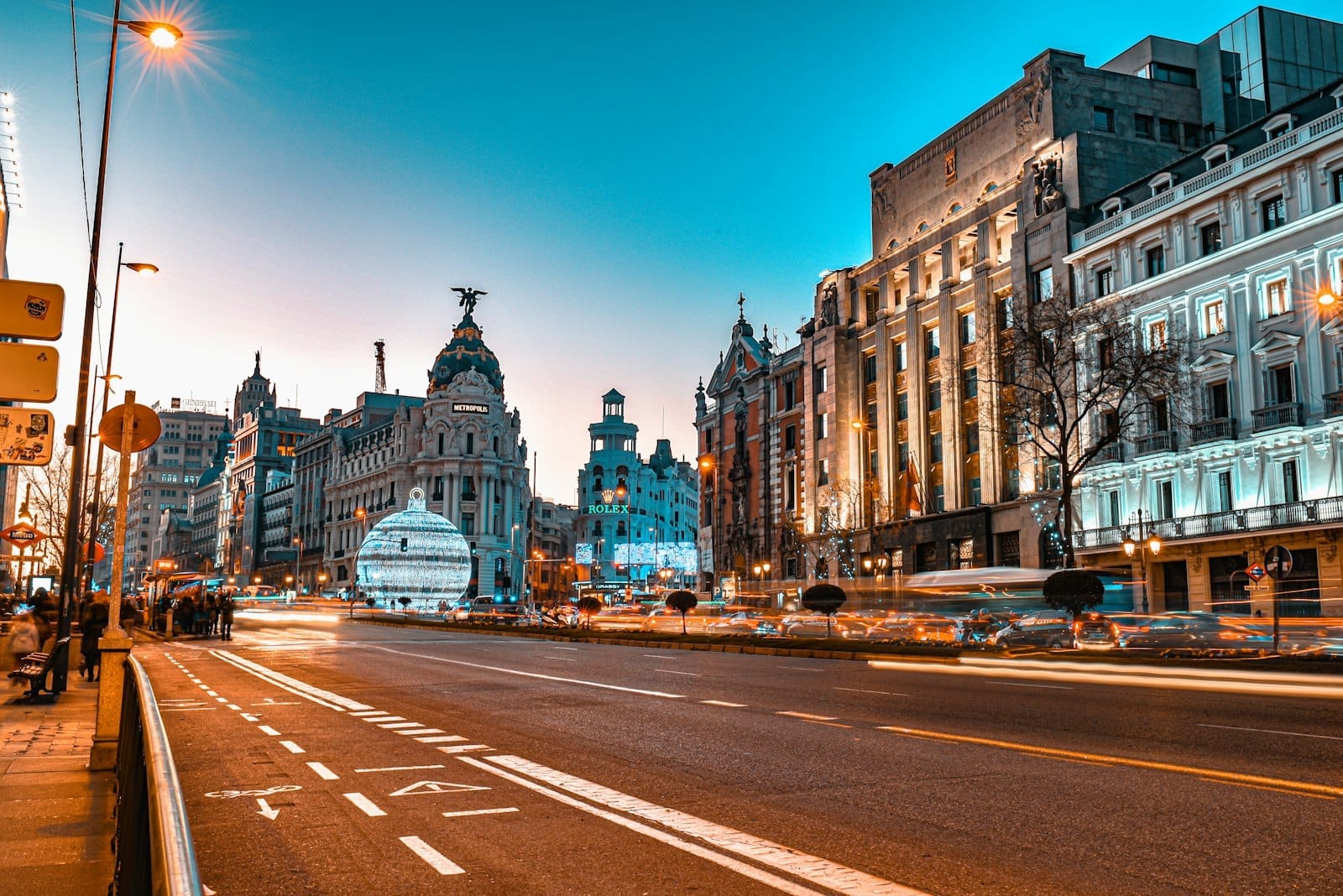
Madrid is one of Europe's great shopping cities, with options ranging from high-street chains on Gran Vía to designer boutiques on Calle Serrano and centuries-old flea markets in La Latina. This guide breaks down every major shopping zone, market, and mall by budget, style, and practicality.
Plan and book this trip
Tools from our partner Travelpayouts help you compare flights and hotels. If you book through them, we may earn a commission at no extra cost to you.
Flights
Hotels map
TL;DR
- Gran Vía and the Sol–Preciados area cover high-street shopping (Zara, Mango, Primark, El Corte Inglés) — ideal if you want everything in one area. See the full Gran Vía guide for what else is on this street.
- Calle Serrano in Salamanca is Madrid's luxury corridor — Chanel, Gucci, Loewe, and Spanish labels like Purificación García and Adolfo Domínguez all within a few blocks.
- El Rastro flea market runs every Sunday and public holiday from around 09:00–15:00 in La Latina. It does NOT operate on regular weekdays or Saturdays outside special ‘Rastro Saturdays’ events.
- Winter sales (rebajas) run January–March; summer sales run July–September. These are the best windows for serious discounts.
- For designer outlet shopping, Las Rozas Village (~30 min from central Madrid) offers up to 60% off brands like Chloé and Hugo Boss. Non-EU visitors can claim VAT refunds on qualifying purchases at most major stores.
How Madrid's Shopping Zones Work
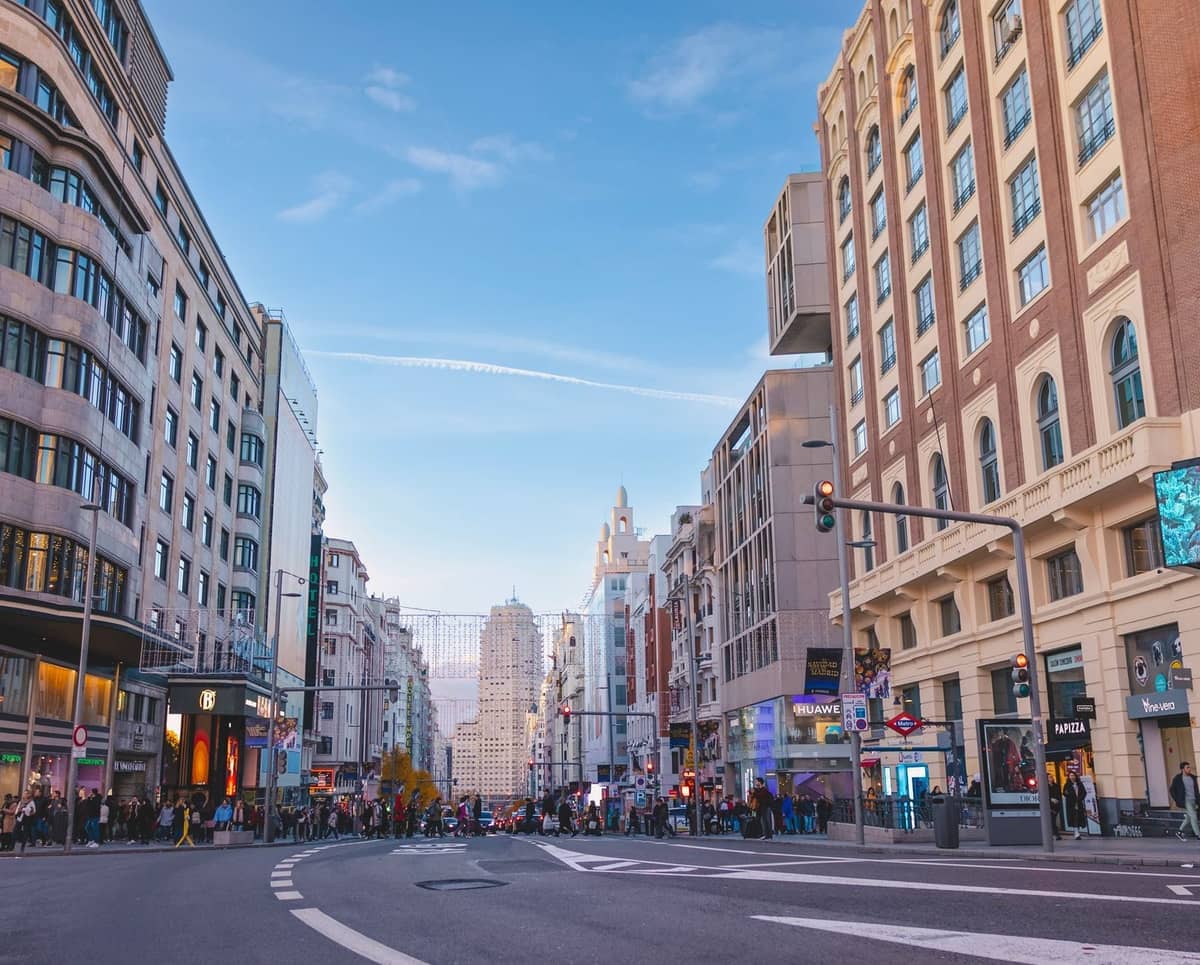
Madrid's retail landscape splits neatly into geographic zones, each with a distinct character and price bracket. Understanding which zone matches your budget and style saves time and prevents the frustration of wandering into the wrong neighborhood. In broad terms: the historic centre (Sol, Gran Vía) handles high-street and department store shopping; the Salamanca district covers luxury; Malasaña and Chueca offer independent and alternative fashion; and La Latina hosts the weekend flea market scene.
Most chain stores operate Monday to Saturday from around 10:00 to 21:00 or 22:00, with Sunday openings permitted in designated commercial zones (most of Gran Vía and the city centre qualifies). Smaller independent boutiques, particularly in neighborhoods like Malasaña, may keep shorter hours and still observe a midday break between 14:00 and 17:00. Always check hours before making a special trip.
💡 Local tip
The two main rebajas (sales) periods are the winter sales, which begin in early January, and the summer sales, which begin in early July. Discounts often start around 20–30% and deepen as the weeks progress. Arriving in the first week of January or July gives you the best selection before stock runs out.
Gran Vía and Sol: The High-Street Hub
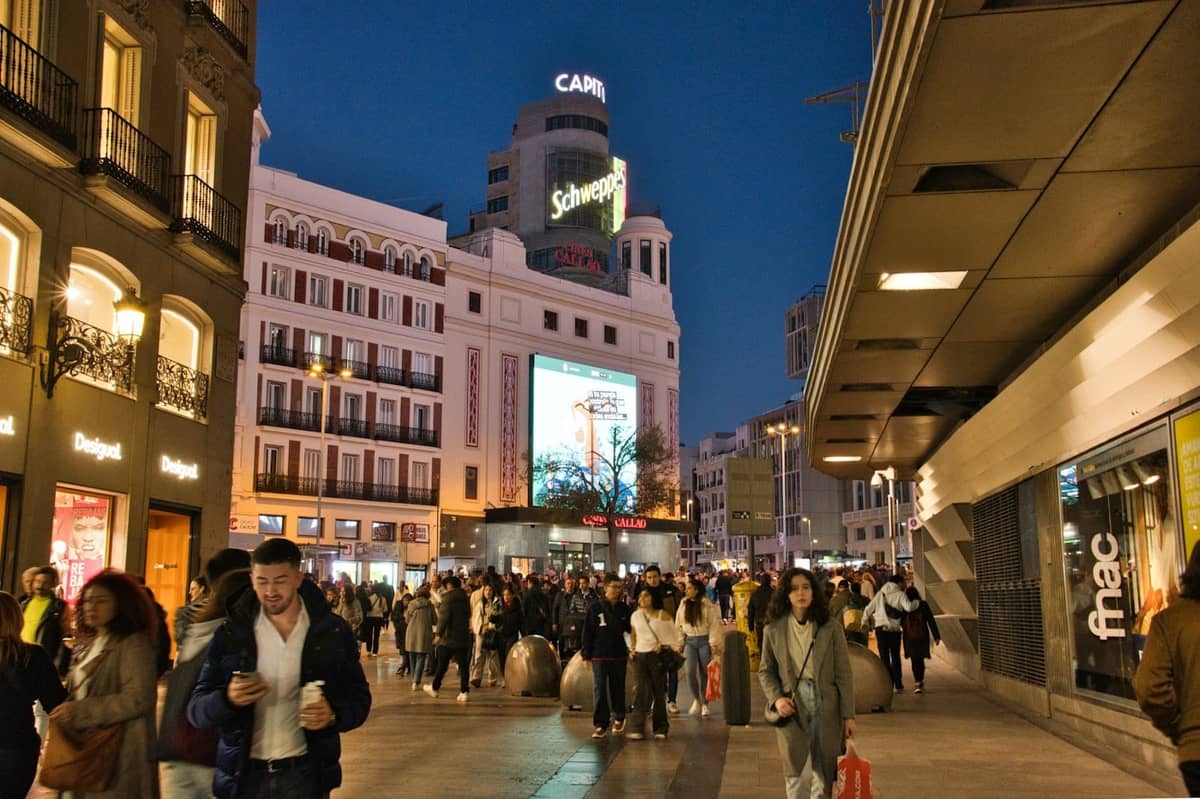
Madrid's most famous commercial street, Gran Vía, is where global brands dominate: H&M, Zara, Mango, Primark (one of the largest in Europe), Bershka, and Pull&Bear all have flagship-scale stores here. The street stretches roughly 1.3 km from Plaza de España to Calle de Alcalá, and walking it end to end while window-shopping takes around 20–30 minutes. Theater marquees, neon signs, and tourist-facing restaurants make it theatrical — sometimes overwhelming on weekend afternoons.
A short walk south from Gran Vía, the Sol–Preciados–Carmen triangle is arguably the city's highest-footfall commercial zone. El Corte Inglés operates multiple interconnected buildings here, covering everything from fashion and electronics to food halls and a travel agency. The flagship store at Puerta del Sol is one of the busiest department stores in Spain. Nearby Puerta del Sol itself functions as a transit hub between shopping zones, so you'll pass through it regardless of where you're headed.
- Best for Fast fashion, international brands, department stores, and one-stop convenience.
- Price range Mid-range to affordable. Primark on Gran Vía is one of the cheapest clothing options in the city.
- Crowd warning Saturday afternoons from 12:00–18:00 are extremely crowded. Visit on a weekday morning for a calmer experience.
- Practical tip El Corte Inglés offers a tax-free shopping service for non-EU visitors directly at the store.
Calle Serrano and Salamanca: Madrid's Luxury Quarter
Calle Serrano is the spine of Madrid's luxury shopping scene. Running through the Barrio de Salamanca, it concentrates international luxury houses — Chanel, Gucci, Louis Vuitton, Burberry — alongside Spanish luxury stalwart Loewe (founded in Madrid in 1846) and mid-to-upper brands like Adolfo Domínguez and Purificación García. The parallel streets Calle de Goya, Calle de Velázquez, and Calle de José Ortega y Gasset fill in the rest of what locals call the 'Milla de Oro' (Golden Mile).
The Salamanca experience is quieter and more curated than Gran Vía — wide pavements, tree-lined blocks, and a largely local clientele of wealthy madrileños rather than tour groups. If you're looking for the Real Madrid official shop and club merchandise, note that the club operates its own branded stores at Estadio Santiago Bernabéu in Chamartín and on Calle Gran Vía, not in Salamanca. Both carry the full range of kits, training wear, and accessories for matchday visitors and collectors.
For food shopping in this neighborhood, Mercado de la Paz on Calle de Ayala is one of Madrid's best traditional food markets, popular with Salamanca residents rather than tourists. It's a good place to pick up jamón, cheese, fresh produce, and Spanish pantry staples at realistic prices.
ℹ️ Good to know
Loewe is one of the few luxury brands that originated in Madrid. If Spanish leather goods are on your list, this is a better buy here than in most other European cities, as it is treated as a domestic brand rather than an import.
Calle Fuencarral, Malasaña, and Chueca: Independent and Alternative
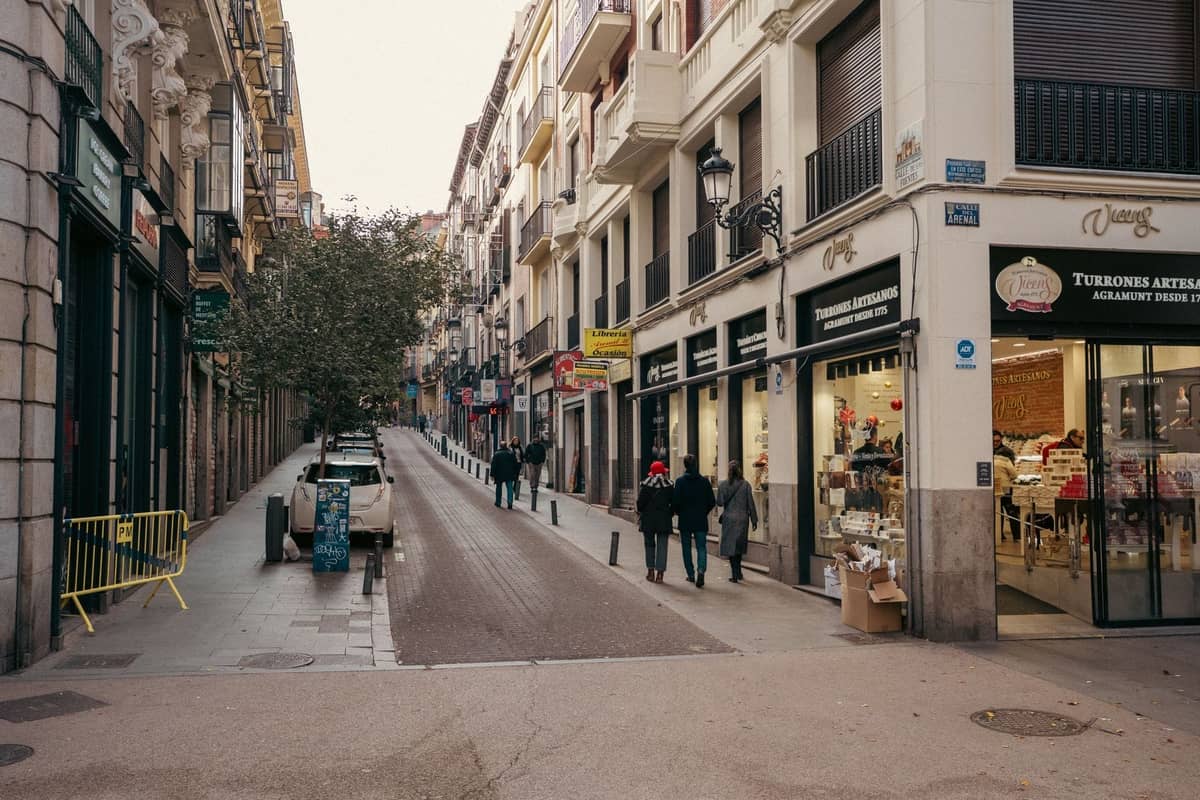
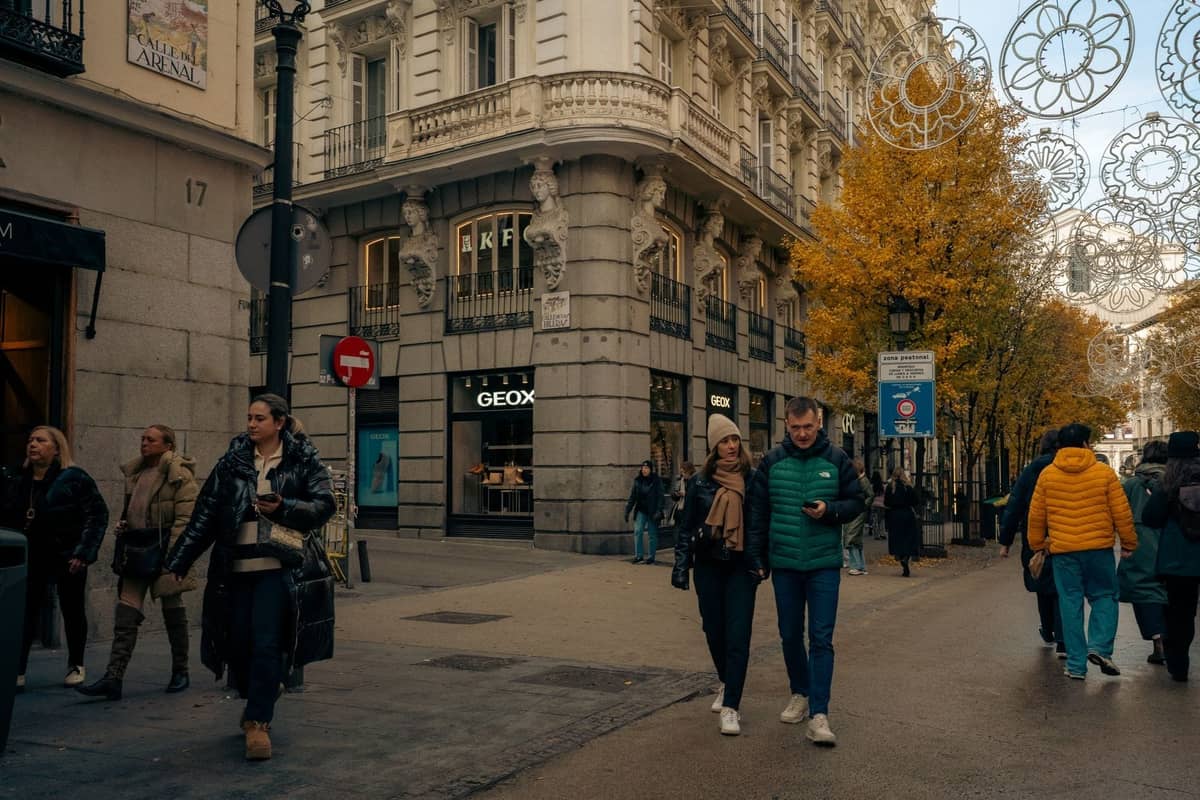
Calle Fuencarral connects Gran Vía to the Malasaña neighborhood and has a character distinct from both. You'll find youth-oriented brands (Urban Outfitters, Stradivarius) alongside independent sneaker shops, tattoo studios, and vintage stores. The street gets progressively more interesting as you move north away from Gran Vía. By the time you reach Malasaña proper, the retail shifts toward genuine independent boutiques, record shops, and concept stores.
Adjacent Chueca adds another layer, with LGBTQ+-oriented boutiques and a cluster of design-forward shops around Calle de Fuencarral and Calle de Hortaleza. If you're hunting for something locally made, unusual, or simply not available in chain stores anywhere in Europe, these two neighborhoods are the right places to spend an afternoon. Budget 2–3 hours to explore both on foot.
- Vintage clothing: Mercado El Transformador and various stores along Calle de Velarde in Malasaña.
- Spanish design labels: Look for local brands like Loreak Mendian, Hoss Intropia, or smaller independent designers with street-facing studios.
- Vinyl and music: Several independent record stores survive in Malasaña, concentrated around Plaza del Dos de Mayo.
- Concept stores: Multi-brand stores curating Spanish and international independent labels are more common here than anywhere else in Madrid.
El Rastro and Madrid's Markets
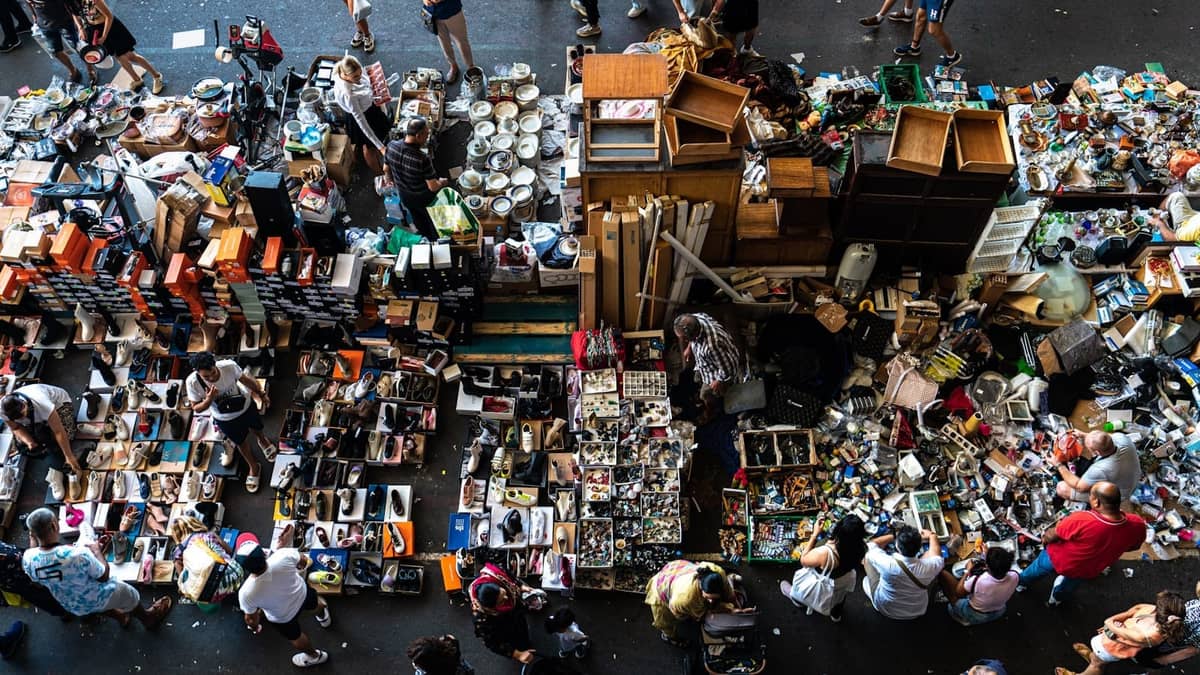
Madrid's most famous market is El Rastro, a Sunday flea market with roots going back over 400 years. It spreads across Ribera de Curtidores and a web of surrounding streets in La Latina, with more than 1,000 vendors selling antiques, secondhand clothing, tools, art prints, vinyl, and an enormous quantity of tourist trinkets. Hours run roughly 09:00 to 15:00 every Sunday and Spanish public holiday.
The market's quality is uneven. Professional antique dealers cluster toward the upper end of Ribera de Curtidores, while the lower end and side streets trend toward mass-produced goods. If you're looking for genuine vintage or antique finds, arrive early (09:00–10:00) and focus on the permanent antique shops that line the main street rather than the temporary stalls. By midday, the crowds make serious browsing difficult and pickpocketing risk increases.
⚠️ What to skip
El Rastro runs ONLY on Sundays and public holidays. It is one of Madrid's most visited weekly events and the surrounding streets fill quickly. Keep bags closed and in front of you — this is one of the higher pickpocket-risk environments in the city.
Beyond El Rastro, Madrid has a network of indoor food markets worth knowing. Mercado de San Miguel near Plaza Mayor is a tourist-facing gourmet food hall with tapas stalls and wine — attractive but not where madrileños do their weekly shopping. For an authentic food market experience, Mercado de Antón Martín in Lavapiés is a better option, with a strong local community character and a growing roster of specialty food stalls.
Outlet Shopping and Malls Outside the Centre
Las Rozas Village, located about 20–25 kilometres northwest of central Madrid, is the city's main designer outlet destination. It is part of the Bicester Village Shopping Collection and hosts over 100 boutiques representing brands like Chloé, Salvatore Ferragamo, Kenzo, Hugo Boss, and Tommy Hilfiger, with discounts typically advertised at up to 60% off original retail prices year-round. Travel time from central Madrid is around 25–30 minutes by car or taxi; bus connections and shuttle services run from specific central pickup points, and the C-8 and C-10 Cercanías lines serve Las Rozas station, from which the village is a short taxi or bus ride.
For those who want a conventional indoor mall experience, the Madrid metropolitan area has several large centres: Xanadú (which includes an indoor ski slope) in Arroyomolinos, La Vaguada in the north of the city, and Parquesur in Leganés are among the largest. These cater primarily to local families and are not typical tourist destinations, but they offer the widest range of Spanish mid-market chains alongside the international names. None of them are particularly worth a dedicated trip if you're only in Madrid for a few days.
✨ Pro tip
Non-EU visitors can reclaim VAT (IVA in Spanish) on purchases above a certain threshold at participating stores. Ask for a tax-free form (formulario de devolución de IVA) at the point of purchase and process the refund at the airport before departure. El Corte Inglés, Las Rozas Village, and most luxury boutiques in Salamanca handle this routinely.
Practical Tips for Shopping in Madrid
Madrid's shopping geography rewards planning. If you want to cover multiple zones efficiently, the Metro is fast and inexpensive. Line 5 connects Sol to La Latina (El Rastro area); Line 4 runs through Salamanca with stops at Serrano, Velázquez, and Goya. For a full breakdown of getting around the city, see the guide to getting around Madrid.
- Best time to shop Weekday mornings, especially Tuesday–Thursday. Saturday afternoons on Gran Vía approach theme-park-level density.
- VAT refunds Available to non-EU visitors on purchases typically over €90 at participating retailers. Airport processing can take 20–40 minutes — factor this into departure planning.
- Payment Cards are accepted almost everywhere in Madrid, including markets. However, some very small stalls at El Rastro are cash-only.
- Language Shop staff in Salamanca and major chain stores often speak English. In independent shops and markets, basic Spanish is helpful.
- Siesta hours Smaller independent shops, particularly in residential neighborhoods, may close from roughly 14:00–17:00. Chain stores and department stores in central zones stay open through the afternoon.
If shopping is your primary reason for visiting, timing your trip around the rebajas makes a meaningful financial difference. The January sales, starting on January 7th (after Reyes/Epiphany), are the bigger of the two annual periods. For context on when else to visit and what to expect seasonally, the best time to visit Madrid guide covers this in detail.
FAQ
Where is the Real Madrid official shop in Madrid?
Real Madrid operates official club stores (Tienda Real Madrid) at Estadio Santiago Bernabéu in the Chamartín district and on Calle Gran Vía in the city centre. Both carry the full range of replica kits, training wear, accessories, and memorabilia. The Bernabéu store is open on non-matchdays and is accessible without a stadium tour ticket.
What are Madrid's best shopping streets?
For high-street chains: Gran Vía and Calle Preciados near Puerta del Sol. For luxury brands: Calle Serrano and the surrounding streets in Salamanca (Calle de Goya, Calle de Velázquez). For independent and alternative fashion: Calle Fuencarral and the Malasaña neighborhood. Each zone has a distinct character and price range.
When does El Rastro flea market take place?
El Rastro operates every Sunday and Spanish public holiday, from approximately 09:00 to 15:00. It does not run on regular weekdays or on Saturdays, except for special ‘Rastro Saturdays’ held on the first Saturday of some months. The market is located in La Latina, centered on Ribera de Curtidores and spreading through surrounding streets.
When are the sales (rebajas) in Madrid?
Spain's main sales seasons are the winter rebajas, which begin around January 7th after Epiphany, and the summer rebajas, which begin in early July. During these periods, discounts across most clothing stores typically range from 20% to 70%, with deeper discounts appearing as each period progresses.
Can tourists get a VAT refund on shopping in Madrid?
Yes. Non-EU visitors can claim a refund on IVA (Spain's VAT, currently 21% on most goods) on purchases above a qualifying minimum threshold at participating stores. Request a tax-free form at the point of purchase. Refunds are processed at the airport before departure. Major department stores like El Corte Inglés and most luxury boutiques in Salamanca offer this service routinely.