El Rastro: Madrid's Sunday Market and the Heartbeat of La Latina
Every Sunday morning and official public holiday, a centuries-old flea market takes over the streets of La Latina. El Rastro de Madrid is free to enter, sprawling in scale, and completely unlike any indoor market in the city. Come before 10:30 if you want to browse without being swept along by the crowd.
Quick Facts
- Location
- Plaza de Cascorro and Calle de la Ribera de Curtidores, Embajadores district, Madrid
- Getting There
- La Latina (Line 5) or Tirso de Molina (Line 1)
- Time Needed
- 2 to 3 hours, depending on how deeply you browse
- Cost
- Free entry; bring cash for purchases
- Best for
- Curious browsers, antique hunters, local culture seekers, Sunday morning wanderers
- Official website
- www.esmadrid.com/en/shopping/el-rastro
What El Rastro Actually Is
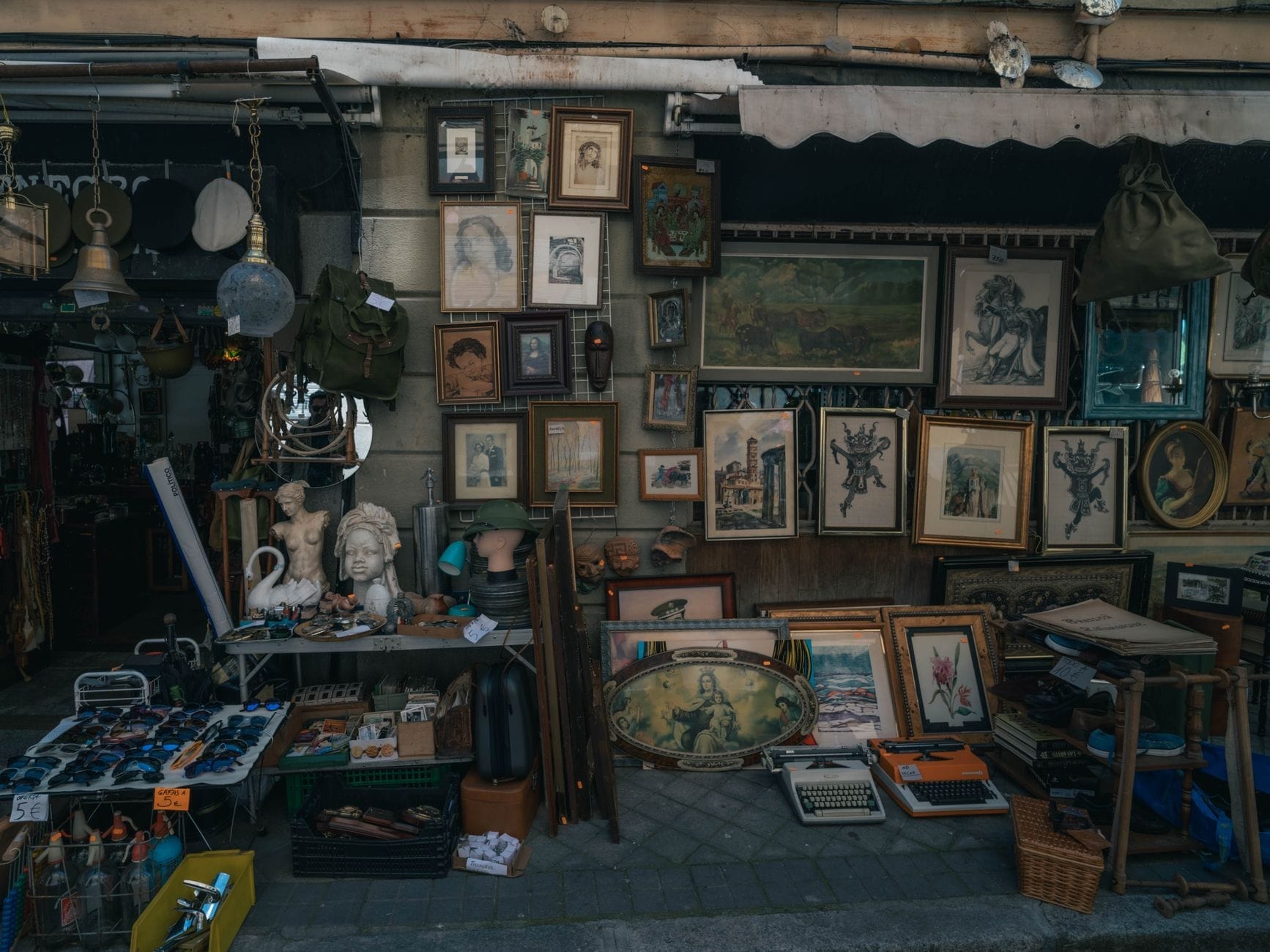
El Rastro de Madrid is a Sunday and public-holiday open-air flea market, officially documented as early as 1740, with origins commonly traced back several centuries. It occupies a steep, cobbled slope running down Calle de la Ribera de Curtidores from Plaza de Cascorro, spilling into dozens of side streets and surrounding lanes in the Embajadores district of La Latina. On any given Sunday, hundreds of individual stalls line the route, selling everything from old vinyl records, used clothing, and religious icons to tools, military memorabilia, Franco-era coins, handmade leather goods, and plastic toys from the 1980s. The range is wildly eclectic, and that is precisely the point.
This is not a curated artisan market. It is not a tourist market in the conventional sense either, though plenty of tourists attend. El Rastro exists primarily because generations of madrileños have made it a Sunday ritual, and the social dimension, the noise, the negotiation, the slow walk downhill with a coffee in hand, matters as much as any transaction.
ℹ️ Good to know
El Rastro operates Sundays and official public holidays only, from 9:00 to 15:00. Arrive by 10:30 at the latest if you want to browse at a reasonable pace. By noon, the crowd density on the main street makes careful shopping almost impossible.
The Market by Time of Day
Arriving at 9:00 means walking through a market that is still assembling itself. Vendors are unfolding tables, cardboard boxes sit half-unpacked on the pavement, and the air smells of coffee and fried churros drifting from nearby bars on Plaza de Cascorro. The light is soft and flat, the crowd is sparse, and you can actually stop to inspect things. This window, roughly 9:00 to 10:30, is when experienced buyers and dealers move through.
By 11:00, the market shifts into its social phase. Families arrive with strollers, teenagers drift in packs, tourists navigate with phones raised, and the noise level climbs sharply. The smells change too: roasting nuts from street vendors, a damp wool smell from fabric stalls, occasionally the sharp metallic scent of old hardware. Walking downhill on the main strip becomes a matter of flow rather than choice; the crowd carries you forward.
After 13:00, many of the more serious vendors begin packing up. What remains is often the least interesting stock, and the real action migrates to the bars and terraces of La Latina, where locals settle in for the extended Sunday lunch that is as much a tradition as the market itself. If you plan to eat in the neighbourhood, note that the most popular spots fill completely by 14:00.
Tickets & tours
Hand-picked options from our booking partner. Prices are indicative; availability and final rates are confirmed when you complete your booking.
Royal Monastery of El Escorial and the Valley of the Fallen trip from Madrid
From 64 €Instant confirmationFree cancellationFlexible time Real Madrid: Bernabeu Stadium & Museum Entry
From 42 €Instant confirmationMuseum of Senses Madrid entrance ticket
From 19 €Instant confirmationAvila and Segovia full-day tour from Madrid
From 50 €Instant confirmationFree cancellation
Layout and What to Expect Where
The main artery is Calle de la Ribera de Curtidores, a street whose name translates roughly as 'Street of the Leather Curriers', a reference to the tanneries that once dominated this corner of Madrid. It runs steeply downhill from Plaza de Cascorro, where a statue of Eloy Gonzalo stands as the unofficial start of the market, to Ronda de Toledo at the bottom in the Embajadores district.
The real character of El Rastro lives in its side streets. Callejón de los Embajadores, Calle de Mira el Río Alta, Calle del Carnero, and the lanes off Calle de Embajadores host smaller, often more specialized vendors. Stamp and coin collectors congregate in certain spots. Old books and sheet music appear in others. Fixed shops along the main strip remain open on Sundays and deal in antiques, restored furniture, and vintage art that operates at a higher price point than the street stalls.
There is also a separate antiques and vintage market that takes place on the first Saturday of each month at Plaza del General Vara del Rey, except in July, August, and November. It draws a different crowd and a more curated selection. For a broader picture of Madrid's market culture, the Madrid markets guide covers the full range of options across the city, from covered food halls to outdoor weekend markets.
💡 Local tip
Skip the stalls directly on the main strip for your first pass and instead walk the side streets first. The prices are often lower, the vendors less rushed, and you can circle back to anything that caught your eye.
History and Cultural Weight
The name 'El Rastro' most likely derives from the rastro, or trail of blood, left by animals being walked from the slaughterhouses that once operated nearby down to the Manzanares River. The district was for centuries associated with trades connected to livestock: tanning, butchery, candle-making from tallow. The market evolved organically from the informal buying and selling that happened around these industries, where offcuts, tools, and second-hand goods changed hands outside any formal structure.
By the 18th century the market was formalized enough to appear in written records, and it has occupied broadly the same area ever since. That continuity is unusual for a European city that has been significantly rebuilt multiple times. The fact that El Rastro still happens in the same location, on the same day, following patterns recognizable to generations of madrileños, gives it a weight that newer markets cannot replicate.
The surrounding neighbourhood of La Latina has its own layered history, much of it visible in the architecture and street plan immediately around the market. The tightly packed streets, the low building heights compared to northern Madrid, the frequency of old tile signs and iron balconies all reflect a district that developed before 20th-century planning interventions.
Getting There and Practical Navigation
Public transport is the only sensible way to arrive. On Sunday mornings, the surrounding streets are closed to most traffic and those that remain open are clogged well before 10:00. The closest Metro stop is La Latina on Line 5, which leaves you a short walk from the top of the market near Plaza de Cascorro. Tirso de Molina on Line 1 is about a five-minute walk and useful if the La Latina station is particularly crowded. Puerta de Toledo on Line 5 brings you in from the bottom of the market, which works well if you prefer to walk uphill through the stalls.
Entry is free and there is no perimeter or gate. You simply walk into the market. Bring cash. While some fixed shops accept cards, almost no street stall vendor does. ATMs in the area can have queues on Sunday mornings, so withdraw beforehand. Keep a hand on bags and pockets at all times; pickpocketing in dense crowds is a documented risk at El Rastro, and the narrow, packed streets on the main strip are a predictable environment for it.
⚠️ What to skip
Pickpocketing is a known issue at El Rastro. Use a crossbody bag worn in front, leave valuables at the hotel, and be particularly alert on the main Ribera de Curtidores strip between 11:00 and 13:00 when crowd density peaks.
Wear comfortable shoes with grip. Ribera de Curtidores is steep and the cobblestones become slippery if there has been any rain. In summer, the street is exposed to full sun with very little shade, so sunscreen and water are worth carrying. In winter, the open setting means temperatures feel colder than the thermometer suggests, especially before noon.
After the Market: La Latina on a Sunday
El Rastro and Sunday lunch in La Latina are inseparable in the local understanding. From around 13:00 onwards, the bars and restaurants on Cava Baja and the surrounding streets fill steadily. The tradition of staying for a vermut, the pre-lunch aperitif that typically involves vermouth, olives, and a small snack, is observed with genuine enthusiasm here. Booking a table for Sunday lunch at the more popular restaurants is advisable, particularly from spring through autumn.
A few hundred metres northwest of the market, Plaza de la Paja is a medieval square that most visitors to El Rastro walk past without stopping. It is worth fifteen minutes: quieter than the market, flanked by significant historic buildings including the church of San Andrés, and a good place to sit and decompress before heading back into the city.
If you have time before or after the market, the Basilica of San Francisco el Grande is a ten-minute walk south along Calle de Toledo and represents one of Madrid's most architecturally significant churches, considerably undervisited given its scale and content.
Is El Rastro Worth It?
If you arrive expecting a treasure-hunting experience where undervalued antiques sit waiting to be discovered, you will likely leave disappointed. Dealers and collectors move through this market early and thoroughly. What remains for late-morning browsers is mostly common merchandise, tourist-oriented crafts on some stalls, and a lot of things that are simply not worth buying.
The real value of El Rastro is as a cultural event rather than a shopping destination. It is one of the few places in Madrid where you can observe the city behaving as a city, with all its social layers present simultaneously, doing something it has done continuously for centuries. For that experience, it is worth at least one Sunday morning. For serious antique buying, the side streets, fixed shops, and the first-Saturday market offer more reliability.
Visitors who tend to dislike crowded outdoor events, who find loud and chaotic environments draining, or who are visiting Madrid in peak summer (when the heat on the exposed cobblestones becomes significant by 11:00) may find the market very uncomfortable. Those visitors might get more from Madrid's indoor market scene or from exploring free cultural attractions that don't depend on being there at a specific hour under specific conditions.
Insider Tips
- The fixed antique shops along the main strip and immediate side streets are open on Sundays and tend to have better-quality goods than the temporary stalls. They also have fixed prices, which removes the awkwardness of negotiation if that is not your style.
- Haggling is accepted but should be approached calmly and without drama. A simple 'would you take [lower amount]?' works better than extended back-and-forth. Vendors are not obliged to negotiate and many won't.
- The first Saturday of each month, the antiques and vintage market at Plaza del General Vara del Rey draws a smaller, more specialist crowd than the Sunday market. If you are in Madrid over a relevant weekend, it is worth combining both visits.
- Bar El Rastro, on the corner of Ribera de Curtidores and Ronda de Toledo, is a long-established neighbourhood bar with outdoor tables and a traditional Sunday morning atmosphere. It is a reliable stop for coffee before you start.
- Photography: the light on Ribera de Curtidores is best in the early morning before the crowd thickens. The stalls, faces, and texture of the street are genuinely photogenic in that window. By midday the crowd density and overhead light make interesting shots much harder to compose.
Who Is El Rastro For?
- Travelers interested in Spanish urban culture and social rituals, not just sightseeing
- Vintage and second-hand enthusiasts willing to sort through volume to find interesting pieces
- Weekend visitors to Madrid who want to spend a Sunday morning in a distinctly local setting
- Photographers looking for candid street scenes and authentic market atmosphere
- Anyone combining the market with a long Sunday lunch in La Latina afterwards
Nearby Attractions
Other things to see while in La Latina:
- Basílica de San Francisco el Grande
The Real Basílica de San Francisco el Grande rises over the western edge of La Latina with one of the largest church domes in Spain, a 33-metre diameter structure that soars roughly 58 metres above the floor. Inside, a museum-quality collection of paintings by Goya, Zurbarán, and other masters lines six ornate chapels. Admission policies can change; check current conditions, as free entry is not guaranteed every Thursday.
- Cava Baja
Calle de la Cava Baja is a 300-meter cobblestone street in La Latina that has been feeding and watering travelers since the 12th century. With more than 50 bars packed into one short stretch, it remains the beating heart of Madrid's tapas culture — best experienced on a Friday evening when the whole neighborhood spills onto the street.
- Plaza de la Paja
Plaza de la Paja was the commercial heart of medieval Madrid long before Plaza Mayor existed. Today this irregular, sloping square in La Latina remains one of the city's most atmospheric public spaces, framed by the Capilla del Obispo and an 18th-century walled garden, and free to anyone who walks in.