Madrid Tapas Guide: Best Bars & How to Do a Tapas Crawl
Madrid is one of Europe's great cities for eating at the bar, moving from spot to spot, and drinking cold beer with small plates of food. This guide covers the best tapas neighborhoods, top bars, realistic prices, timing advice, and everything you need to do a proper crawl without looking like a tourist.
Plan and book this trip
Tools from our partner Travelpayouts help you compare flights and hotels. If you book through them, we may earn a commission at no extra cost to you.
Flights
Hotels map
TL;DR
- The best tapas neighborhoods are La Latina (Cava Baja), Malasaña, and the streets around Plaza Mayor — each with a different vibe and price point.
- Expect to pay €3–€5 per tapa in most bars; tapas are not automatically free in Madrid — always ask "¿La tapa va incluida?" Check our Madrid food guide for the full eating-out picture.
- Arrive at bars around 19:30 on weekends to get a spot before locals pack them out after 22:00.
- Walk-ins are standard at traditional tabernas; only reserve for gastrobars or upscale spots on Friday and Saturday nights.
- Guided tapas tours (around $55–65 USD per person) are worth it for first-timers — see the where to eat in Madrid guide for broader dining context.
What Tapas Actually Are (and What Madrid Does Differently)
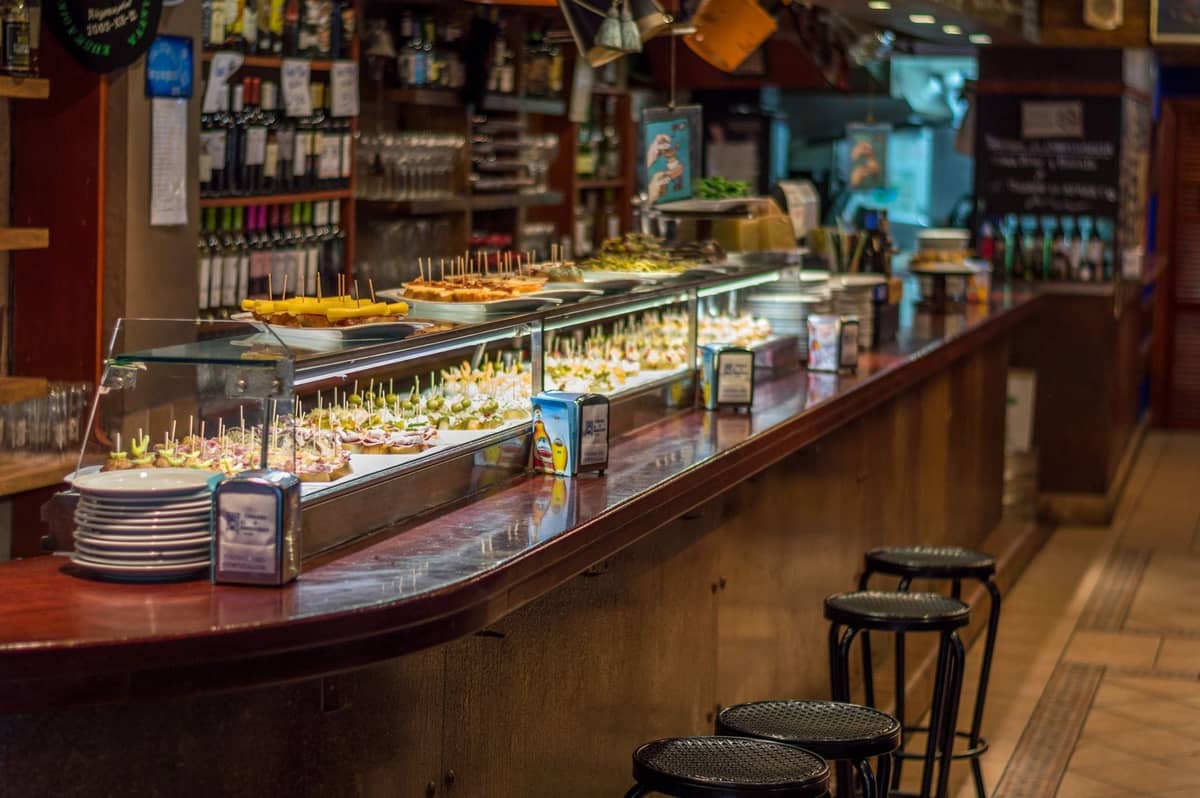
A tapa is a small portion of food — usually two or three bites — served alongside a drink. The word comes from the Spanish verb tapar (to cover), and the origin story most often told is that bartenders used to place a small plate over a glass to keep flies out, with a piece of bread or cured meat on top. Whether or not that's historically accurate, the format has defined Spanish bar culture for generations.
Madrid's tapas scene differs from Andalusia's in one important way: tapas are rarely free here. In Granada or Almería, ordering a drink often comes with a complimentary plate. In Madrid, you generally pay separately for food. There are exceptions — some traditional bars in La Latina still include a small bite with a caña — but the safest approach is to ask before ordering. The phrase is simple: '¿La tapa va incluida?' Most bartenders will appreciate that you asked rather than assumed.
⚠️ What to skip
Do not assume tapas are included with your drink. Outside of a handful of old-school tabernas, Madrid bars charge for food separately. Asking upfront avoids awkward moments at the till.
The other distinction worth knowing: Madrid has two speeds of tapas bar. The traditional taberna or tasca opens early, serves food all day, and has a menu written on a chalkboard or tiled wall. The modern gastrobar typically opens around 20:00, offers a shorter but more creative menu, and leans toward natural wine and craft vermouth. A good crawl mixes both.
The Best Tapas Neighborhoods in Madrid
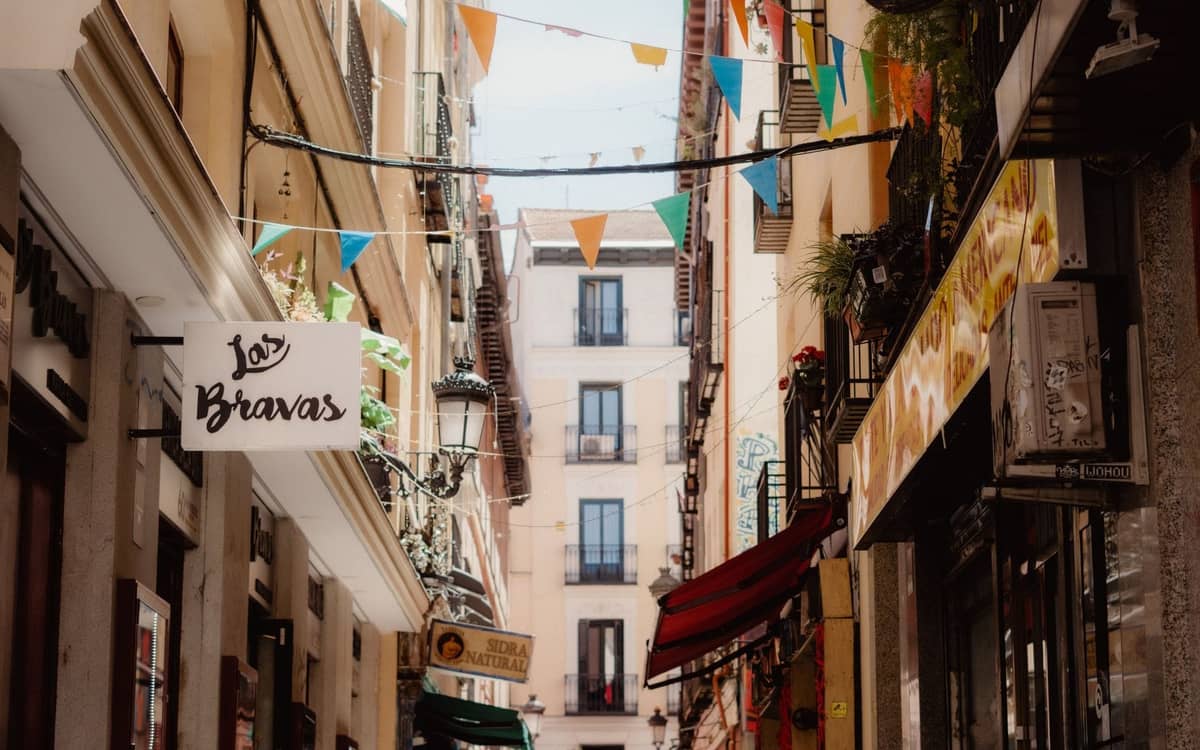
La Latina is the most concentrated tapas zone in the city. The streets of Cava Baja and Cava Alta are lined with bars almost wall to wall, ranging from centuries-old tabernas to more recent spots with creative menus. On Sunday lunchtimes after the El Rastro flea market, the entire neighborhood fills with locals doing exactly what you want to do. Timing a visit around that is one of the most authentic Madrid experiences available.
Malasaña has a younger, scruffier energy. The bars around Plaza Dos de Mayo attract a mix of students, creatives, and long-term residents. Prices are slightly lower than in La Latina, and the food skews toward inventive bocadillos (filled rolls), padron peppers, and pintxos imported from the Basque tradition. It's a better choice if you want to avoid the weekend tourist surge in the historic center.
Calle de Ponzano, in the Chamberí district, has become Madrid's most talked-about tapas street in recent years. It's roughly 400 meters long and packed with gastrobars, vermutería spots, and wine bars. The crowd is local and slightly older than Malasaña, the vermouth is excellent, and prices sit in the €3–€6 range per tapa. It gets very busy on Thursday and Friday evenings — arriving before 20:30 is strongly recommended.
- La Latina (Cava Baja / Cava Alta) Best for: classic tabernas, Sunday post-market crawls, the widest concentration of bars in the smallest area. Can feel touristy on Friday nights.
- Malasaña (around Plaza Dos de Mayo) Best for: younger crowds, lower prices, pintxos-style bars, and a less polished atmosphere. Better for a weekday crawl.
- Calle de Ponzano (Chamberí) Best for: gastrobars, vermouth culture, local clientele. The go-to street if you want to eat well rather than just eat cheaply.
- Around Plaza Mayor and Sol Best for: convenience and atmosphere, but prices are higher and tourist traps are common. Mercado de San Miguel is here — worth a visit but not the main event of a serious crawl.
- Lavapiés Best for: multicultural food scene, cheap drinks, and a gritty authenticity. Less conventional tapas, more international street food formats alongside traditional spots.
Specific Bars Worth Knowing
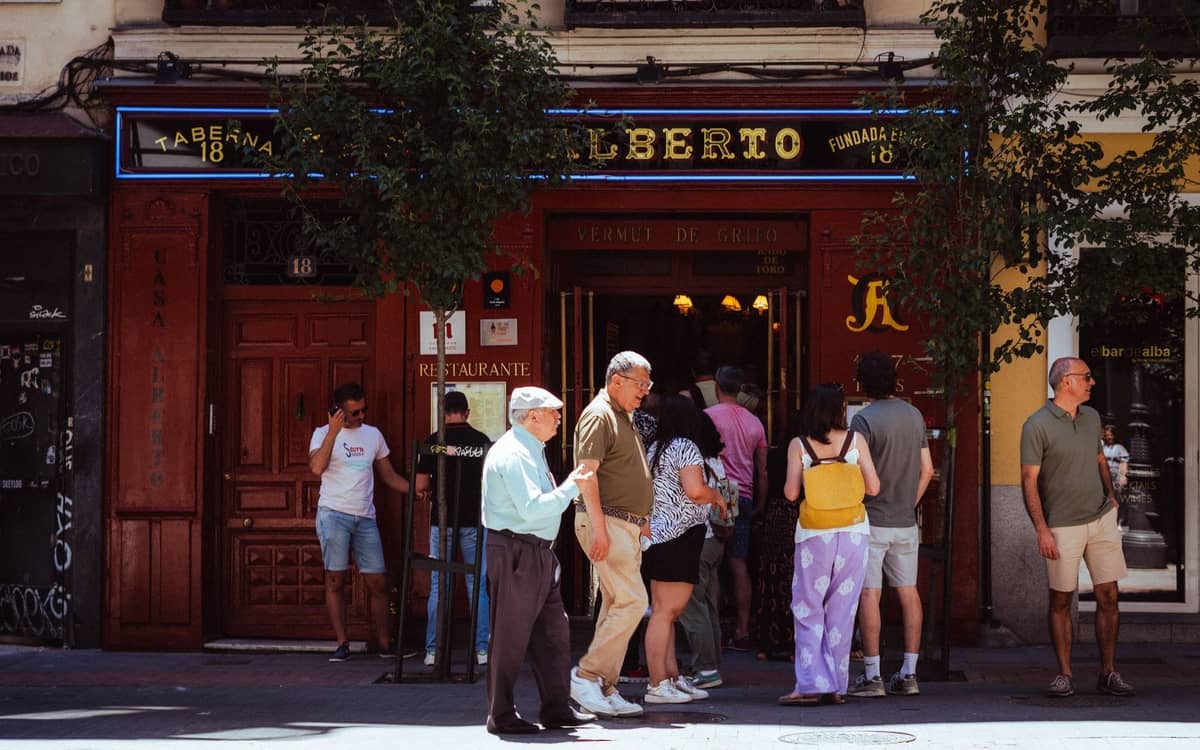
Rather than listing every bar with a good TripAdvisor score, here are the types of places that anchor a strong crawl, with specific spots that have earned consistent local reputations.
On Cava Baja, Taberna El Tempranillo is a reliable starting point for a La Latina crawl — it specializes in Spanish wines by the glass paired with well-made traditional tapas. A few doors down, Casa Lucas tilts toward contemporary Spanish cooking without abandoning the format. For something more historic, Sobrino de Botín on nearby Cuchilleros is Guinness World Record-certified as the world's oldest restaurant (established 1725), though it's a full sit-down restaurant rather than a tapas bar. Worth a look from outside even if you don't eat there.
The Mercado de San Miguel, just off Plaza Mayor, is the city's most photogenic food market. It's good for a first drink and a quick bite, but the prices are higher than standard bars (€4–€8 per small plate) and the crowd is almost entirely tourists. Think of it as a warm-up, not the main event. For a similar market format with more locals and lower prices, Mercado de San Antón in Chueca is a better bet.
✨ Pro tip
On Calle de Ponzano, try to visit at least one vermutería before moving to beer. Vermouth (vermut) is served cold, often with an olive and a slice of orange, and it's the traditional pre-lunch drink that the street is built around. A glass runs about €2.50–€3.50 and sets the right pace for a long crawl.
How to Structure a Tapas Crawl: Timing and Logistics
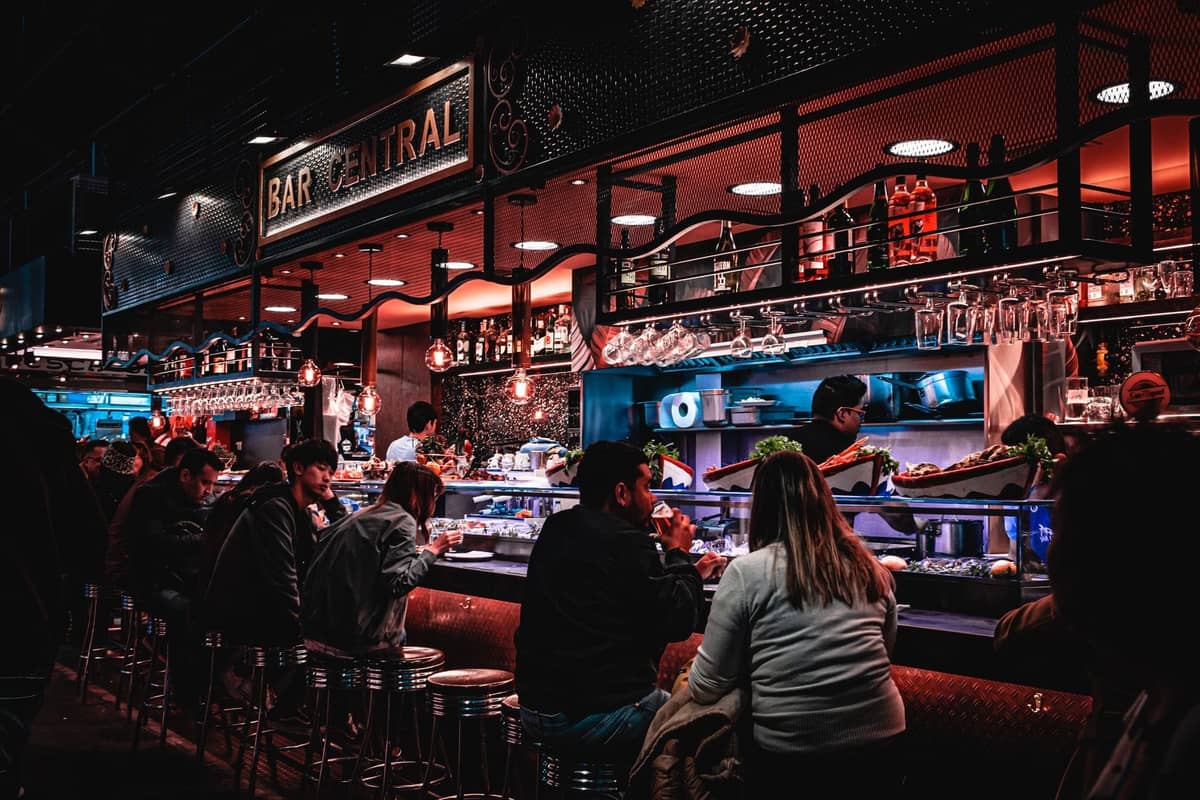
A Madrid tapas crawl works best when you treat it like a relay race rather than a marathon. The idea is to have one or two drinks and two or three tapas per bar, then move on. Staying too long in one place defeats the purpose and tends to get expensive quickly.
Timing is the single most important variable. Traditional tabernas open from around midday and serve food continuously, so lunchtime (14:00–16:00) is a legitimate crawl window used by locals every day. If you're doing an evening crawl, the sweet spot for getting space at the bar is between 19:30 and 21:00. After 22:00 on weekends, popular bars on Cava Baja and Ponzano become genuinely difficult to navigate. Summer weekends are the worst for this — factor in at least 15–20 extra minutes of street-standing between stops.
- Start with lighter, colder food: jamón, manchego, boquerones (anchovies in vinegar), or ensaladilla rusa.
- Move to hotter, richer plates mid-crawl: croquetas, patatas bravas, gambas al ajillo (garlic prawns).
- Alternate between beer (caña, around €1.80–€2.50) and vermouth or wine to manage pace.
- Eat standing at the bar whenever possible — it's faster, cheaper in some venues, and more social.
- Plan for 4–6 bars over 3–4 hours. More than that and the quality of decisions declines sharply.
- Carry small cash for traditional bars — many only accept cards above €5, and some are cash-only.
If you're short on time or navigating the city for the first time, a guided tapas tour is a reasonable shortcut. They typically run 3–4 hours, cover 4–5 bars in one neighborhood, and include food and drink. Prices are generally in the $55–$65 USD range per person. The main advantage isn't the food itself — it's the context. A good guide explains what you're eating, why that bar has been there for 80 years, and what to order. Book through established platforms with free cancellation policies, and check that the tour visits traditional bars rather than just market stalls.
What to Order: A Practical Tapas Vocabulary
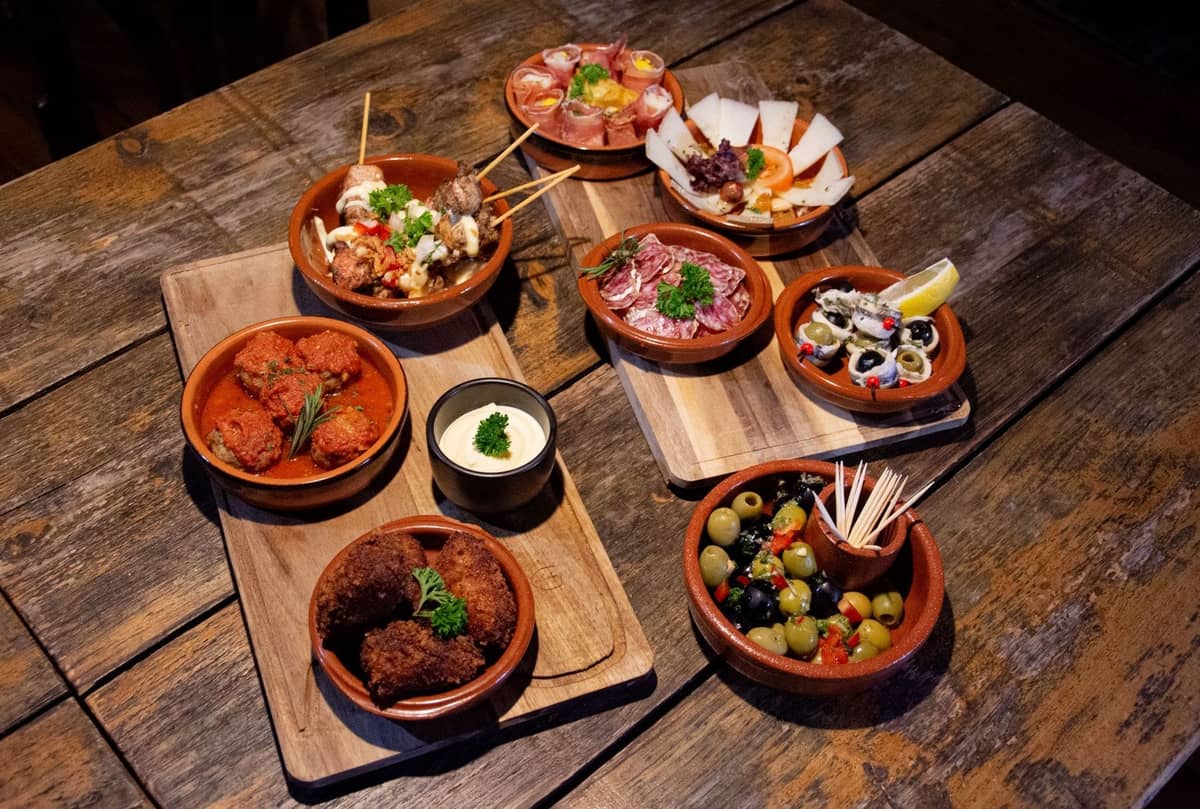
You don't need to memorize a long list, but knowing ten or twelve items means you can order confidently at any bar without staring blankly at a chalkboard. Most menus rotate seasonally, but these appear on nearly every tapas menu in Madrid:
- Patatas bravas Fried potato cubes with a spicy tomato sauce or aioli (sometimes both). The Madrid version often uses a thinner, more vinegar-forward sauce than the Catalan style.
- Croquetas de jamón Breaded, fried béchamel croquettes with Iberian ham. One of the benchmarks for judging a bar's kitchen — the inside should be smooth and just-molten, not grainy.
- Boquerones en vinagre Fresh anchovies marinated in vinegar and olive oil. White, not tinned — a completely different product from the salty brown anchovy on pizza.
- Gambas al ajillo Prawns cooked in olive oil, garlic, and dried chilli, served in a ceramic dish. Always order bread to mop up the oil.
- Jamón ibérico Cured Iberian ham. The difference between jamón serrano (cured regular pork) and jamón ibérico de bellota (acorn-fed, black-footed pig) is significant in both taste and price. Worth spending up for once.
- Tortilla española Spanish omelette made with potato and egg. The debate over whether it should be runny (jugosa) or firm is taken seriously. Most quality bars do it jugosa.
- Pimientos de padrón Small green peppers flash-fried and salted. Most are mild; roughly one in eight is intensely hot. No way to tell which.
- Caña A small draft beer, approximately 200ml. The correct drink to order at a tapas bar in Madrid. A clara is a caña mixed with lemon soda, popular in summer.
💡 Local tip
When ordering at a busy bar, make eye contact with the bartender and state your order clearly and quickly. Saying 'perdona' (excuse me) is fine to get attention. Don't wave money or snap fingers — both are considered rude by Spanish bar staff.
Prices, Tipping, and Avoiding Tourist Traps
In a standard Madrid bar away from the main tourist corridors, a caña costs around €1.80–€2.50 and a tapa runs €3–€5. A full evening crawl covering four or five bars with drinks and food at each should cost €25–€40 per person, depending on how much you order. That's significantly cheaper than a sit-down restaurant covering the same amount of food.
The tourist trap zones are predictable: anywhere within 50 meters of Plaza Mayor or Puerta del Sol tends to charge 30–50% more for the same products. Menus in multiple languages displayed outside the door are a reliable signal. That doesn't mean every bar near the center is bad — it means you should walk one or two streets further before stopping.
Tipping is not mandatory or culturally expected in Madrid tapas bars. The most common practice is to round up to the nearest euro or leave small change on the counter. On a bar tab of €12, leaving €1–€1.50 is generous. Larger tips are not expected and can occasionally come across as over-formal in a casual bar setting.
For a broader view of what eating well in Madrid costs across different meal types and neighborhoods, the Madrid on a budget guide has detailed price benchmarks. And if you want to combine a tapas crawl with exploring the city's best streets and squares, the Madrid walking tours guide maps out routes that pass through the key tapas zones.
FAQ
Are tapas free in Madrid?
Generally no. Unlike Granada or Almería where a free tapa often comes with every drink, Madrid bars typically charge for food separately. A small number of traditional tabernas include a basic tapa with a caña, but don't count on it. Ask '¿La tapa va incluida?' to confirm before ordering.
What is the best neighborhood for tapas in Madrid?
La Latina, specifically Cava Baja and Cava Alta, has the highest concentration of traditional tapas bars. For a more local, gastrobar-focused experience, Calle de Ponzano in Chamberí is the current favorite among residents. Malasaña is best for a younger crowd and lower prices.
What time do people eat tapas in Madrid?
There are two main windows: lunchtime (around 14:00–16:00) and the evening aperitivo hour starting around 19:30. On weekends, bars fill up significantly after 22:00. For the best combination of space at the bar and a local atmosphere, aim for 19:30–21:00 on weekday evenings.
How much does a tapas crawl in Madrid cost?
Budget €25–€40 per person for a self-guided crawl covering four or five bars with drinks and food at each. A caña runs €1.80–€2.50, and most tapas are €3–€5. Tourist-adjacent areas (near Plaza Mayor or Sol) charge noticeably more.
Do I need to book tapas bars in Madrid in advance?
Walk-ins are standard at traditional tabernas and most casual bars. Reservations are only necessary for gastrobars and upscale spots, and mainly on Friday and Saturday evenings. For Calle de Ponzano specifically, arriving before 20:30 usually means you'll find space without a booking.