Sobrino de Botín: Dining Inside the World's Oldest Restaurant
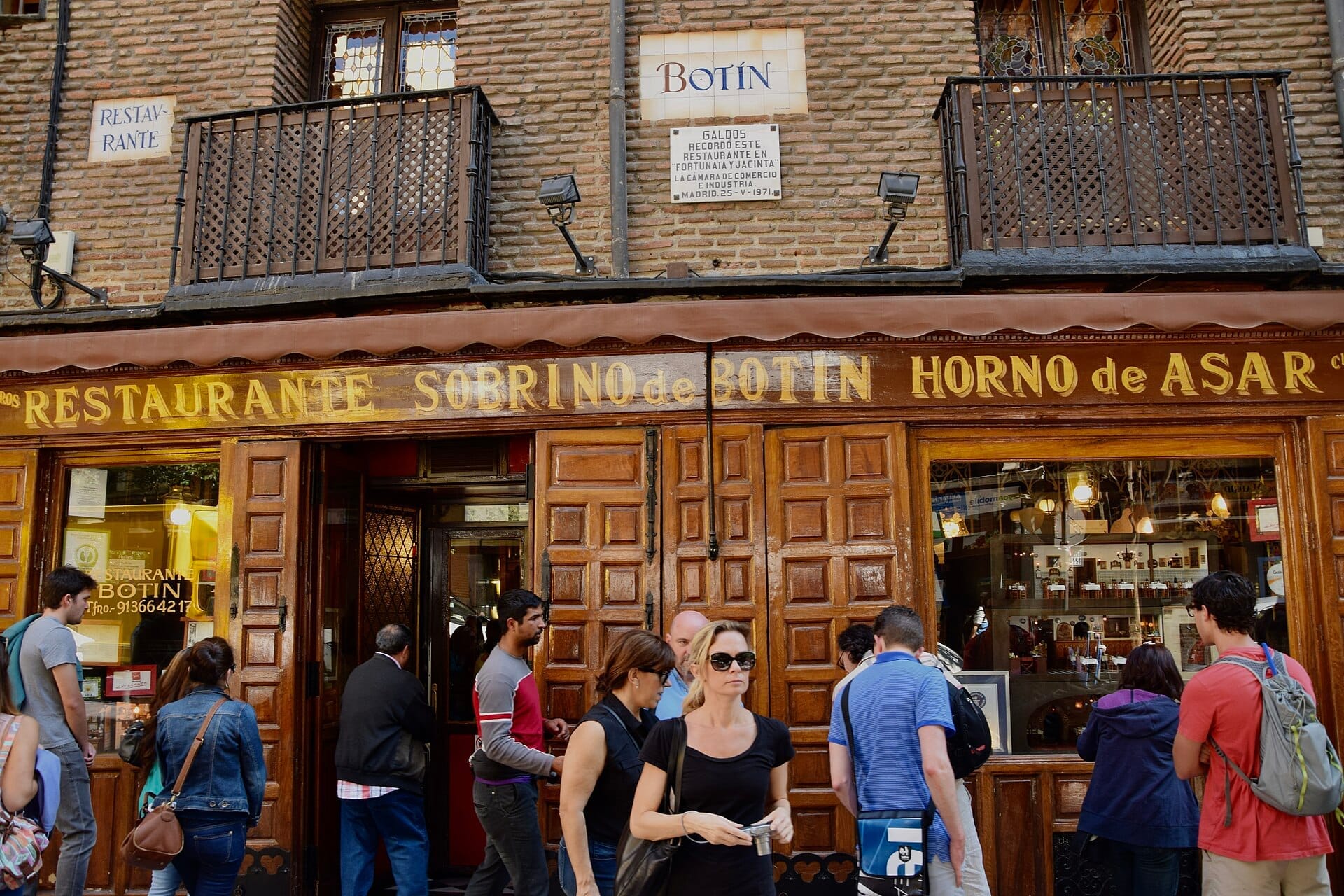
Founded in 1725 and recognized by Guinness World Records as the world's oldest restaurant, Sobrino de Botín occupies a 16th-century building just off Plaza Mayor in Madrid's historic center. It serves traditional Castilian roast dishes from a wood-fired oven that has never gone cold. This guide covers what the experience is actually like, when to go, and who should book a table.
Quick Facts
- Location
- Calle de Cuchilleros 17, 28005 Madrid (just off Plaza Mayor)
- Getting There
- Metro Sol (Lines 1, 2, 3) – approx. 8-minute walk
- Time Needed
- 1.5 to 2.5 hours for a full sit-down meal
- Cost
- No entry fee. Expect roughly €40–60 per person including wine (verify current prices)
- Best for
- History lovers, food travelers, special occasion dining, literary pilgrims
- Official website
- botin.es/en
What Sobrino de Botín Actually Is
Sobrino de Botín is not a museum, though it sometimes feels like one. It is a working restaurant on Calle de Cuchilleros 17, operating continuously since 1725, which earned it a Guinness World Records title as the oldest restaurant in the world. The building itself predates the restaurant by more than a century: the structure dates to 1590, placing it squarely in the Madrid of Philip II. The restaurant was founded by French chef Jean Botin, who ran it as Casa Botín until his nephew inherited it in 1753 and gave it the name that remains today. The current restaurant business, under the González family, has operated formally under this name since 1865.
What distinguishes Botín from a heritage attraction dressed as a restaurant is that the food still matters. The kitchen centers on a wood-fired oven believed to have been burning without interruption since the 18th century, used to roast cochinillo (suckling pig) and cordero (roast lamb). These two dishes are the reason most people book a table, and they remain the dishes the kitchen does best.
💡 Local tip
Book a table well in advance, especially for weekends and summer months. Walk-ins are extremely unlikely to succeed. Reserve through the official website at botin.es/en/
The Building: Four Floors of Living History
The entrance is a single wooden door set into a narrow alley that slopes down from Plaza Mayor toward the old city wall. Once inside, the ground floor opens into a series of small, low-ceilinged rooms with terracotta tiles underfoot, rough plaster walls, and heavy wooden beams overhead. The kitchen with its famous oven occupies this level, and if you are seated near it, you will feel the radiant heat and catch the smell of roasting meat even before your order arrives.
The restaurant spreads across four floors with more than 300 seats in total. Upper floors are reached via an interior staircase and feel progressively quieter and more intimate. The décor has not been modernized in any meaningful way: ceramic tiles carry old coats of arms, oil paintings and photographs cover nearly every wall, and the lighting stays warm and amber throughout the day. There is no elevator. Travelers with limited mobility should contact the restaurant directly before booking, as step-free access is not confirmed on the official website.
The staff numbers around 100, and the ratio of servers to diners feels high by contemporary standards. Service is formal without being stiff, and most servers speak workable English given the volume of international guests.
Tickets & tours
Hand-picked options from our booking partner. Prices are indicative; availability and final rates are confirmed when you complete your booking.
Prado museum guided tour with VIP Botin lunch
From 139 €Instant confirmationFree cancellationRoyal Monastery of El Escorial and the Valley of the Fallen trip from Madrid
From 64 €Instant confirmationFree cancellationFlexible time Real Madrid: Bernabeu Stadium & Museum Entry
From 42 €Instant confirmationMuseum of Senses Madrid entrance ticket
From 19 €Instant confirmation
The Food: What to Order and What to Expect
The menu is rooted in traditional Castilian cooking. Cochinillo asado (roast suckling pig) and cordero asado (roast lamb) are the anchor dishes and should be considered the reason you are here. Both are cooked in the original wood-fired oven and arrive at the table with crackling skin and tender interior meat. By tradition, the suckling pig is carved tableside using the edge of a plate, which the staff will demonstrate if you ask.
Starters lean toward the traditional: Castilian garlic soup (sopa de ajo), Iberian ham, and seasonal vegetable dishes appear regularly. The wine list is weighted toward Spanish regions, with a solid selection of Rioja and Ribera del Duero at various price points. A full meal with wine will typically cost in the range of €40 to €60 per person, though prices should be verified at time of booking as this figure dates to an earlier period.
⚠️ What to skip
Botín is not a budget lunch stop. It is a full-service traditional restaurant with prices to match. If you are looking for affordable tapas nearby, the surrounding streets off Plaza Mayor offer better value for casual eating.
Vegetarian options are limited. The kitchen's identity is built around roasted meat, and while there are egg-based dishes and salads, this is not a restaurant that will adapt easily to plant-based diets. If that is a priority, this is probably not the right meal.
Literary and Cultural Significance
Botín's most famous literary connection is Ernest Hemingway. The final chapter of his 1926 novel The Sun Also Rises ends with Jake Barnes eating roast pig and drinking wine here. Hemingway was a regular patron during his years in Spain, and the restaurant leans into this association without overplaying it. A framed photograph and a few references are present, but the dining rooms are not decorated as a Hemingway shrine. The association matters more as context: Botín was already old and established when a young American writer found it, and it has outlasted its most famous literary endorsement by nearly a century. For travelers following Madrid's food culture, understanding Botín as a survivor of the city's culinary history rather than a tourist construction is the right frame.
Francisco de Goya is also associated with the building, though in a more modest way: local accounts suggest he worked here as a young man before establishing himself as a painter. This is often repeated in guides but is difficult to verify with precision. Treat it as plausible local lore rather than confirmed biography.
When to Visit and How the Experience Changes by Hour
Lunch service on weekdays is the quietest window. Arriving when the doors open at lunch, before tour groups fill the upper floors, means shorter waits at the bar and a more composed atmosphere in the lower rooms. The smell from the oven is particularly strong in the first hour of service, when the kitchen is at full heat.
Dinner tends to attract a more international crowd, with groups booking the upper floors for celebratory meals. The atmosphere is louder and the pace faster. By late evening, the alley outside fills with people moving between the nearby bars and restaurants that line the streets below Plaza Mayor, so the walk in and out of the restaurant is more animated. Neither service is objectively better, but if you prefer a slower meal, lunch on a Tuesday or Wednesday gives the best chance of it.
ℹ️ Good to know
The restaurant operates daily for both lunch and dinner, from Monday to Sunday, 13:00–23:30. Hours may vary seasonally, so always confirm your booking time when reserving, and arrive on time as tables are in high demand.
Getting There and the Surrounding Area
Calle de Cuchilleros runs along the south side of Plaza Mayor, descending toward the old city. The easiest approach is to cross Plaza Mayor from the north (entering from the Calle Mayor archways) and follow the arcaded south side until you find the staircase descending to Cuchilleros. The street itself is part of the medieval street grid, narrow and sloping, with other restaurants and caves (bodegas) cut into the stone base of the plaza above.
From Metro Sol, the walk takes around eight minutes on foot. Sol serves Lines 1, 2, and 3 and is the most central interchange in Madrid. Alternatively, Metro La Latina (Line 5) places you slightly to the south and is a comparable walk through the streets of La Latina, which is worth exploring before or after your meal. The streets between Botín and the Cava Baja area hold some of the city's most concentrated traditional bars and wine cellars, making for a natural extension of a Botín visit.
If you have time before your reservation, Plaza de la Paja is a short walk south and offers a quiet square with outdoor café seating that predates the better-known plazas of central Madrid. The Mercado de San Miguel is immediately adjacent to Plaza Mayor and makes a useful pre-dinner stop for a glass of vermouth.
Is Botín Worth It?
The Guinness World Records title brings in visitors who might otherwise never cross the threshold, and the restaurant is candid about its fame. The question travelers should ask is not whether Botín is historically significant (it is) but whether the meal itself justifies the price and the planning required. On that front, the answer is a qualified yes, provided you order the roast dishes the kitchen specializes in.
The experience is not a hushed heritage moment. It is a busy, well-oiled restaurant serving hundreds of people per day across multiple floors. The food is consistent and carefully executed within a traditional register, not innovative. The atmosphere is warm and genuinely old, not fabricated. For a special occasion dinner or a meal that carries real historical weight, it delivers. For a casual lunch between museums, there are better options at a lower price point.
Travelers on tight budgets should be realistic: Botín is not the place to scrimp. If you want to experience traditional Castilian roasting at a lower price, smaller restaurants outside the immediate tourist center offer similar techniques. But for a meal that connects directly to the long sweep of Madrid's culinary history, Botín has no real equivalent.
Insider Tips
- Request a table on the ground floor when booking if you want to sit closest to the wood-fired oven. The heat and aroma are part of the experience, and upper floors feel more generic.
- The house Rioja is reliable and reasonably priced relative to the rest of the bill. Ordering by the bottle for two people makes more economic sense than individual glasses.
- If you are visiting Plaza Mayor first, look for the staircase on the south side of the square descending to Calle de Cuchilleros. The approach down those stone steps is a more atmospheric arrival than navigating from street level.
- The restaurant accepts reservations through its official website. Bookings for Saturday dinner in summer can fill weeks in advance. Weekday lunches in autumn or winter are the easiest to secure on shorter notice.
- Ask the server to demonstrate the traditional plate-edge method of carving the cochinillo if you order it. It is not theater for tourists: it is a genuine technique and explains why the skin shatters rather than tears.
Who Is Sobrino de Botín For?
- Travelers for whom food history is part of the trip, not just a side note
- Couples or small groups celebrating a birthday, anniversary, or special occasion
- Hemingway readers or literary travelers retracing the route of The Sun Also Rises
- Visitors who want to try traditional Castilian roasting in its most historic setting
- Anyone building a full day around the historic center who wants a proper sit-down lunch to anchor the itinerary
Nearby Attractions
Other things to see while in Sol & Centro:
- Catedral de la Almudena
The Almudena Cathedral took more than a century from the laying of its foundation stone to its consecration in 1993, making it one of Europe's newest major cathedrals. Free to enter and directly opposite the Royal Palace, it rewards visitors who look beyond its mismatched facade to discover a surprisingly bold and colorful interior.
- Campo del Moro Gardens
The Jardines del Campo del Moro spread across more than 20 hectares directly behind the Royal Palace, offering one of the most dramatic views of the Palacio Real in Madrid. Admission is free, crowds are thin compared to the palace itself, and the romantic English-style landscape feels worlds away from the city streets above.
- Círculo de Bellas Artes
Few buildings in central Madrid earn attention on multiple levels at once. The Círculo de Bellas Artes delivers: a landmark Palacios-designed tower within the Paisaje de la Luz UNESCO World Heritage area with a rooftop terrace above the Gran Vía skyline, rotating art exhibitions, and one of the city's most atmospheric cafés. Entry to the building and La Pecera café is free; the rooftop, exhibitions, and combined tickets have separate fees starting from around €6.
- Edificio Metrópolis
Standing at the junction of Calle de Alcalá and Gran Vía, the Edificio Metrópolis is Madrid's most iconic piece of Belle Époque architecture. Its slate dome, gilded detailing, and winged Victory statue make it a landmark that rewards careful observation, even though the building itself is not a public museum. Here is everything you need to know before you go.