Where to Stay in Madrid: The Best Neighborhoods and Hotels for Every Traveler
Choosing where to stay in Madrid shapes your entire trip. This guide breaks down the city's key neighborhoods by atmosphere, price range, and practical location, so you can pick the right base from the start.
Plan and book this trip
Tools from our partner Travelpayouts help you compare flights and hotels. If you book through them, we may earn a commission at no extra cost to you.
Flights
Hotels map
TL;DR
- Sol and Gran Vía put you closest to the major sights but come with higher prices (roughly €120-€250+ per night in high season) and heavy tourist foot traffic.
- La Latina and Barrio de las Letras offer a better balance: central, walkable, and more characterful than the Sol corridor.
- For luxury madrid hotels, Salamanca is the clear choice; for nightlife and creative energy, Malasaña and Chueca deliver.
- All central neighborhoods connect to Madrid Metro, with Sol as the main interchange hub. You do not need to stay in Sol to access the whole city.
- Book early for late spring (April-May) and early autumn (September-October), when demand peaks and good mid-range rooms sell out fast.
How to Choose Your Neighborhood in Madrid
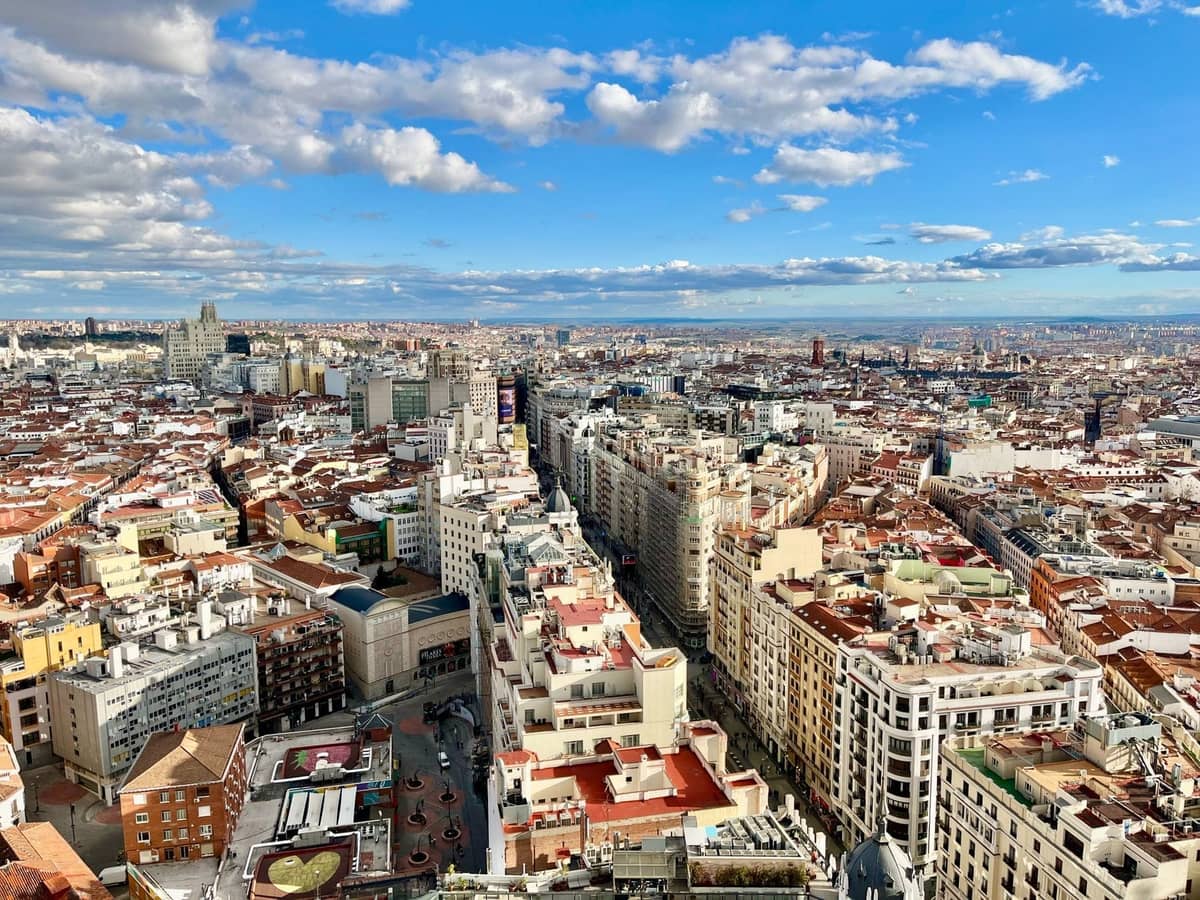
Madrid is a compact, walkable capital, and the good news is that nearly every central neighborhood puts you within 20-30 minutes of the main attractions on foot or by metro. The real question is not which area is most convenient, but which atmosphere fits your travel style and budget. A family wanting quiet mornings near a park has different priorities than a couple chasing late-night tapas and cocktails.
The city's metro network is excellent, covering all the areas below with frequent service from early morning until around 1:30 a.m. every day. If you are planning long days out at the Prado or Retiro Park, staying a metro stop away is not a hardship. Prioritize the neighborhood's feel over pinpoint proximity to any single landmark.
ℹ️ Good to know
Madrid sits at about 660–670 metres above sea level, making summers hot (often above 30–33°C in July and August) but winters noticeably cooler than coastal Spanish cities. Your neighborhood choice matters more in summer: areas with parks, shaded streets, or proximity to the river make the heat more bearable.
Sol, Gran Vía, and Los Austrias: The Historic Core
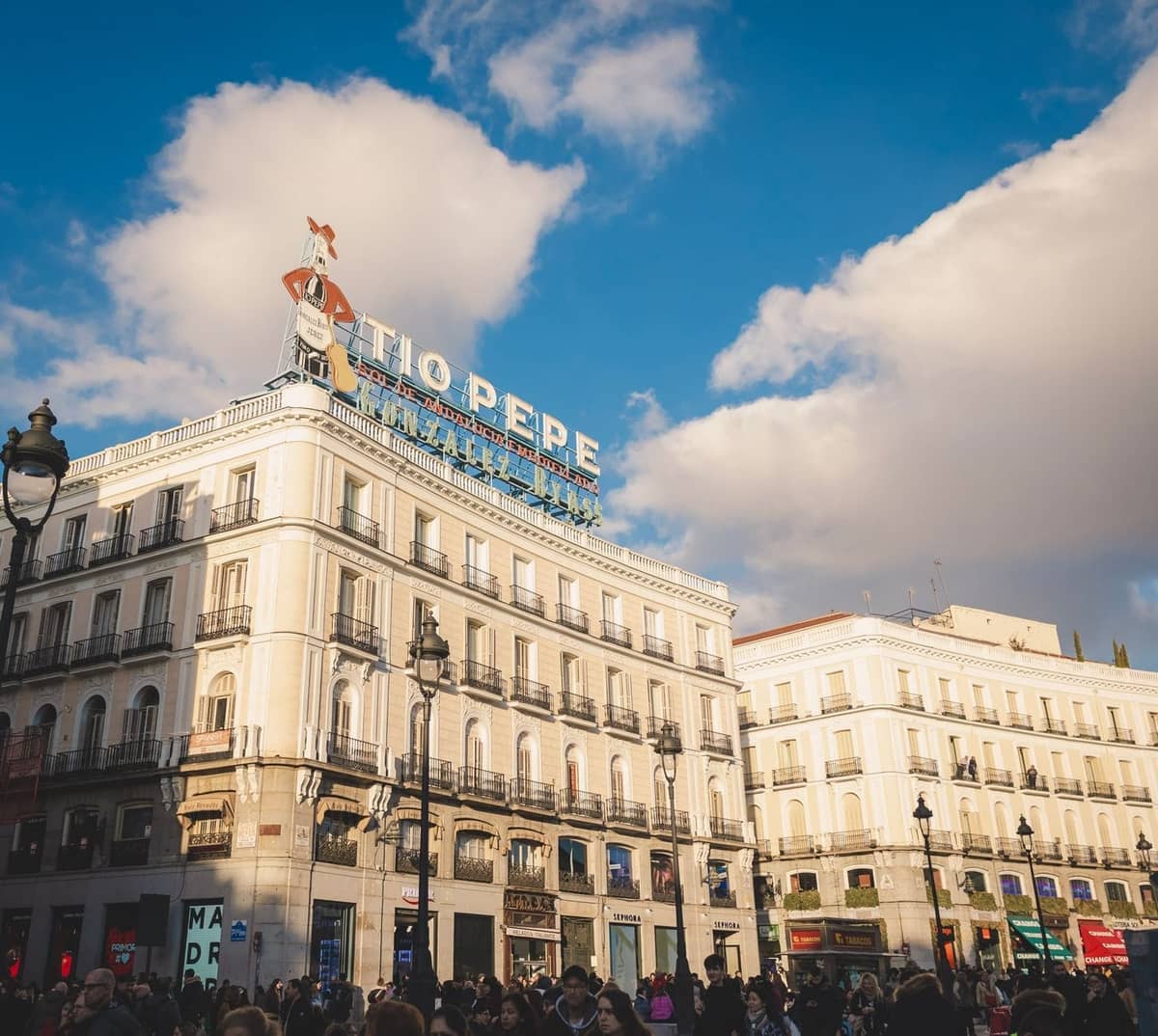
Staying in this zone means waking up next to Puerta del Sol, Plaza Mayor, and the Royal Palace within a 10-15 minute walk. For first-time visitors on a short trip, that convenience is real. The tradeoff is equally real: these streets are among the most crowded in the city, hotel prices reflect the location, and the area can feel more like a backdrop for tourism than a place where people actually live.
Expect to pay roughly €120-€250 or more per night for a decent 3-4 star hotel in this zone during high season (late spring and early autumn). Budget options exist but often compromise on size or quality. If you value being in the middle of the action and plan to spend most of your time at central landmarks, this area earns its premium. If you want more local atmosphere, you will likely enjoy the neighborhoods described below more.
⚠️ What to skip
The streets immediately around Puerta del Sol and Plaza Mayor see significant pickpocketing activity, particularly in summer. Keep bags zipped and avoid displaying expensive items in crowded areas. This does not make the area unsafe, but it does require the same awareness you would apply in any major European city centre.
Barrio de las Letras and Paseo del Prado: Culture at Your Doorstep
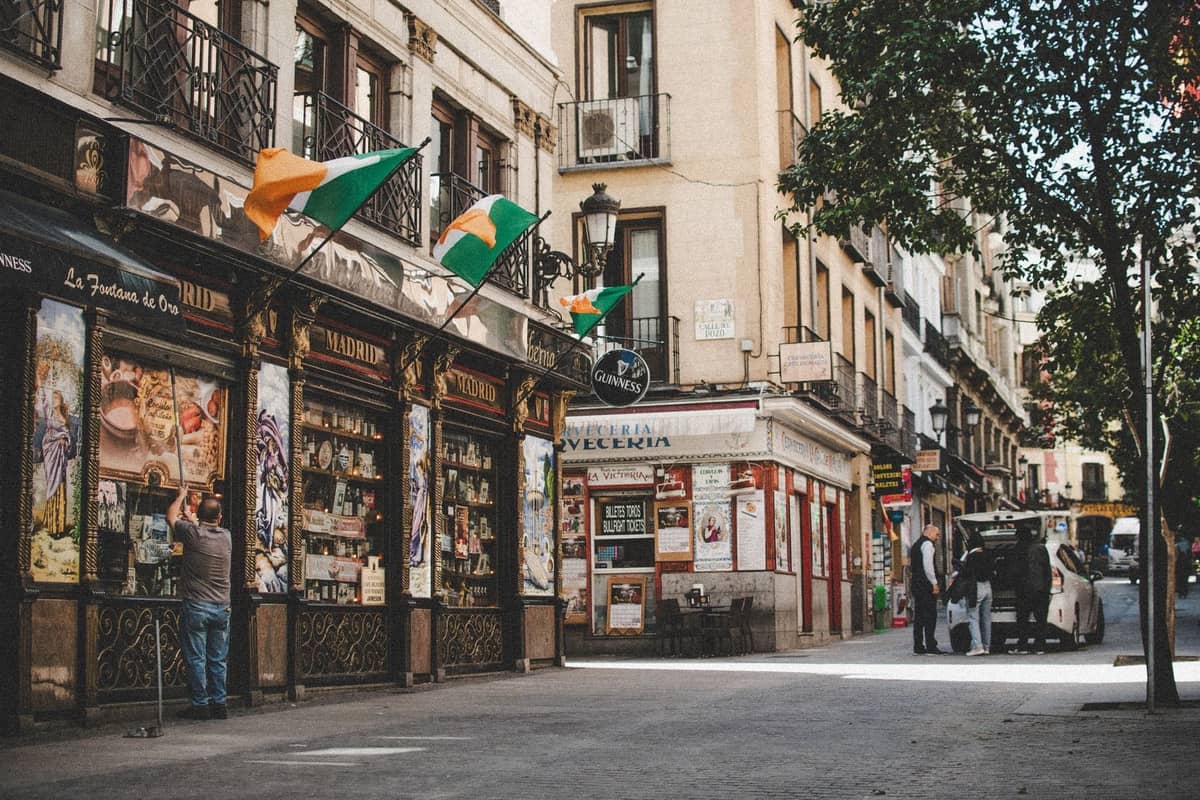
Barrio de las Letras, the old Literary Quarter, sits between Sol and Retiro. It is arguably the best all-round base in Madrid for culture-focused travelers. The Museo del Prado, Thyssen-Bornemisza, and Reina Sofía are all within a short walk. The streets here are narrower and more atmospheric than the Sol corridor, with independent restaurants, wine bars, and bookshops mixed in between.
Boutique hotels are the norm in this neighborhood. You will find well-regarded mid-range and upper-mid options in converted historic buildings, typically at slightly lower prices than equivalent quality in the Sol zone. This is also a good area for couples looking for a quieter, more romantic base while staying genuinely central.
La Latina: The Most Characterful Central Neighborhood
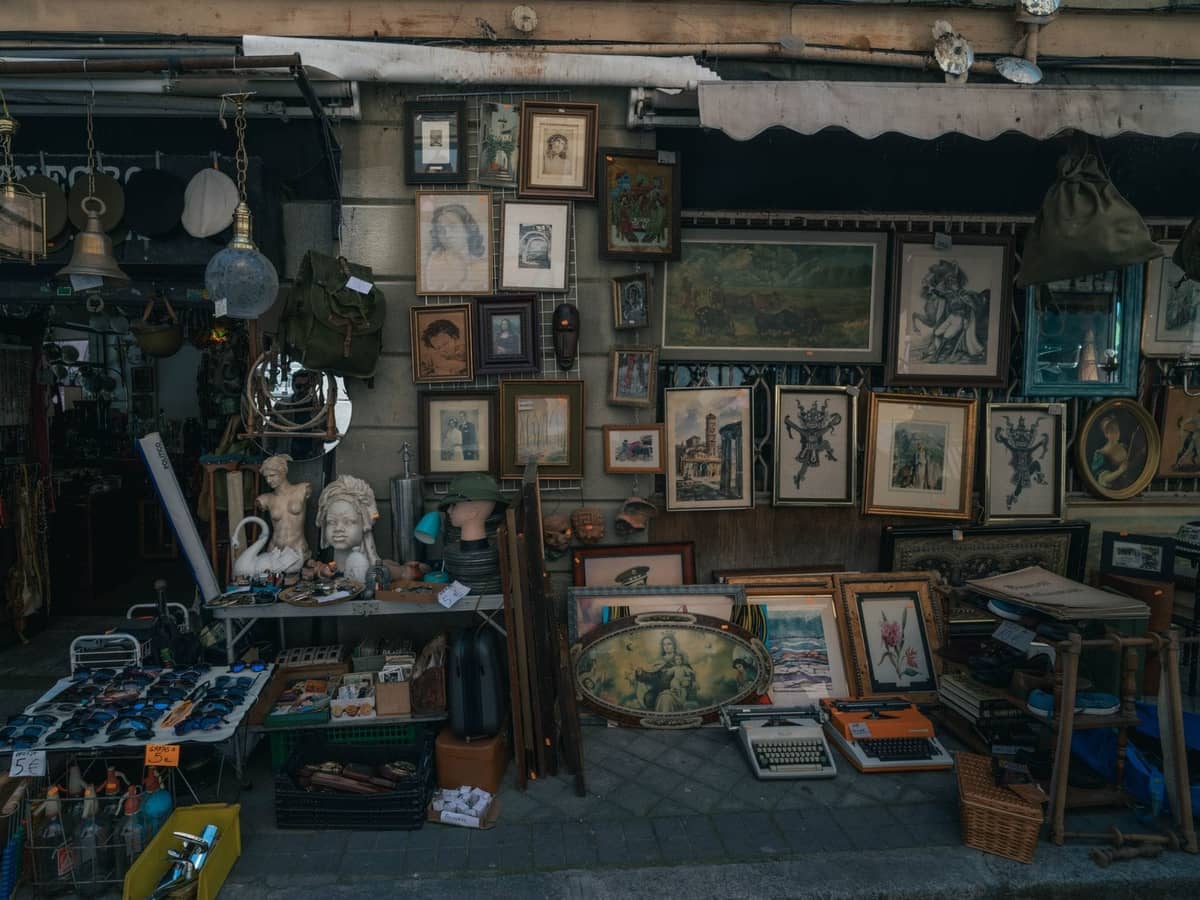
La Latina is where Madrid's older residents still live alongside younger professionals, where Sunday mornings mean browsing El Rastro flea market and stopping for vermouth at a bar on Cava Baja. The streets are medieval in layout, cobbled and hilly in places, and the entire area has a texture that Sol and Gran Vía simply cannot match.
The walk to Puerta del Sol takes about 15 minutes on foot. The Royal Palace and Almudena Cathedral are even closer, roughly 10 minutes. Metro Line 5 connects La Latina station directly to the wider network. The hotel stock here skews toward smaller boutique properties and posadas rather than large chain hotels, which suits the neighborhood's character.
- Best for Travelers who want authentic Madrid street life, easy tapas-bar access, and proximity to both the historic centre and the river parks
- Price range Generally mid-range; boutique options like Posada del León de Oro and Posada del Dragón sit in a sweet spot for quality versus cost
- Watch out for Weekend nights on Cava Baja and surrounding streets get very loud until the early hours. Request a room facing a quiet interior courtyard if noise is a concern
Malasaña and Chueca: Creative Energy and Nightlife
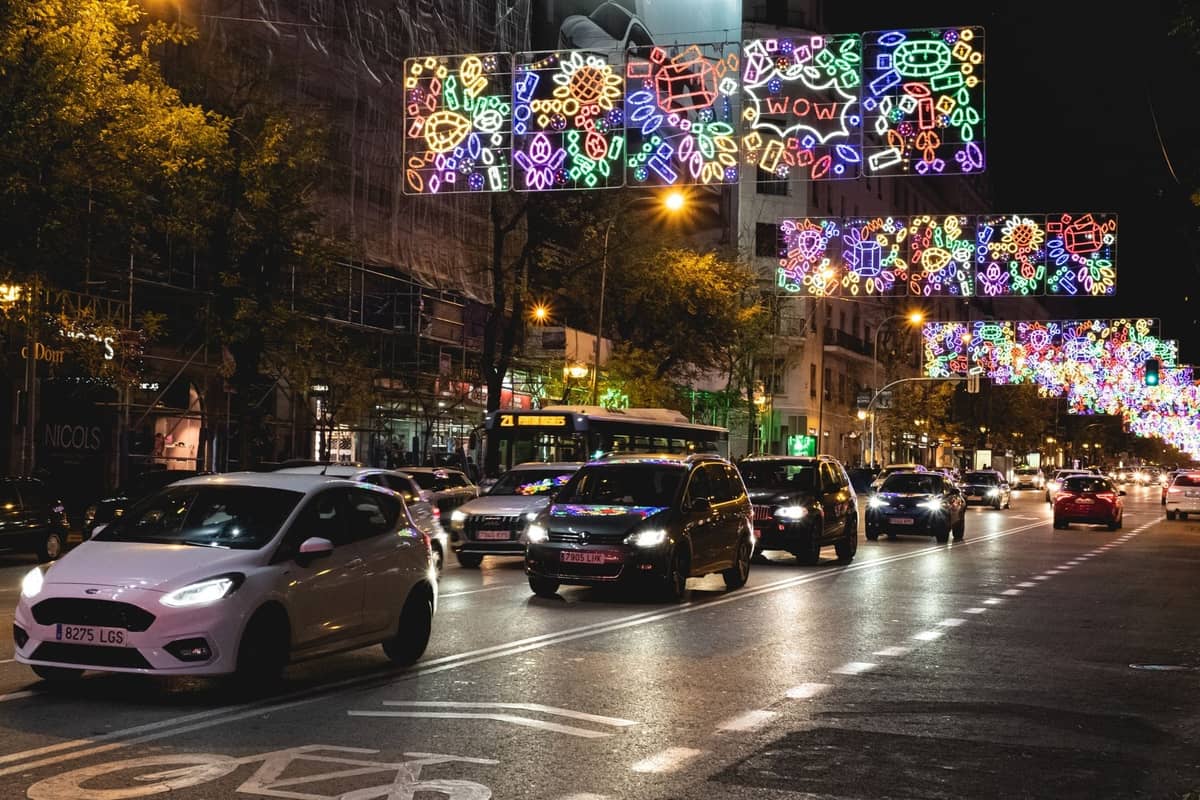
Both neighborhoods sit just north of Gran Vía and are easily walkable to almost everything central. Malasaña has a creative, slightly counterculture identity: record shops, vintage clothing, independent coffee spots, and a bar on every block. Chueca is Madrid's LGBTQ+ district, with a more fashion-forward dining and nightlife scene.
Hotel options in both neighborhoods have expanded significantly in recent years, ranging from design hostels to boutique hotels aimed at younger travelers and creative types. Prices tend to be more competitive than the Sol zone for equivalent quality. Neither neighborhood is the right choice if you need absolute quiet: both are active areas well into the night, especially on weekends.
✨ Pro tip
Malasaña is one of the most walkable bases in the city for combining culture and day-to-day life. The Museo de Historia de Madrid is right here, the Conde Duque cultural center is a short walk, and you can be at the Prado in about 25-30 minutes on foot or around 15-20 minutes by metro.
Salamanca: Madrid's Best Address for Luxury Stays
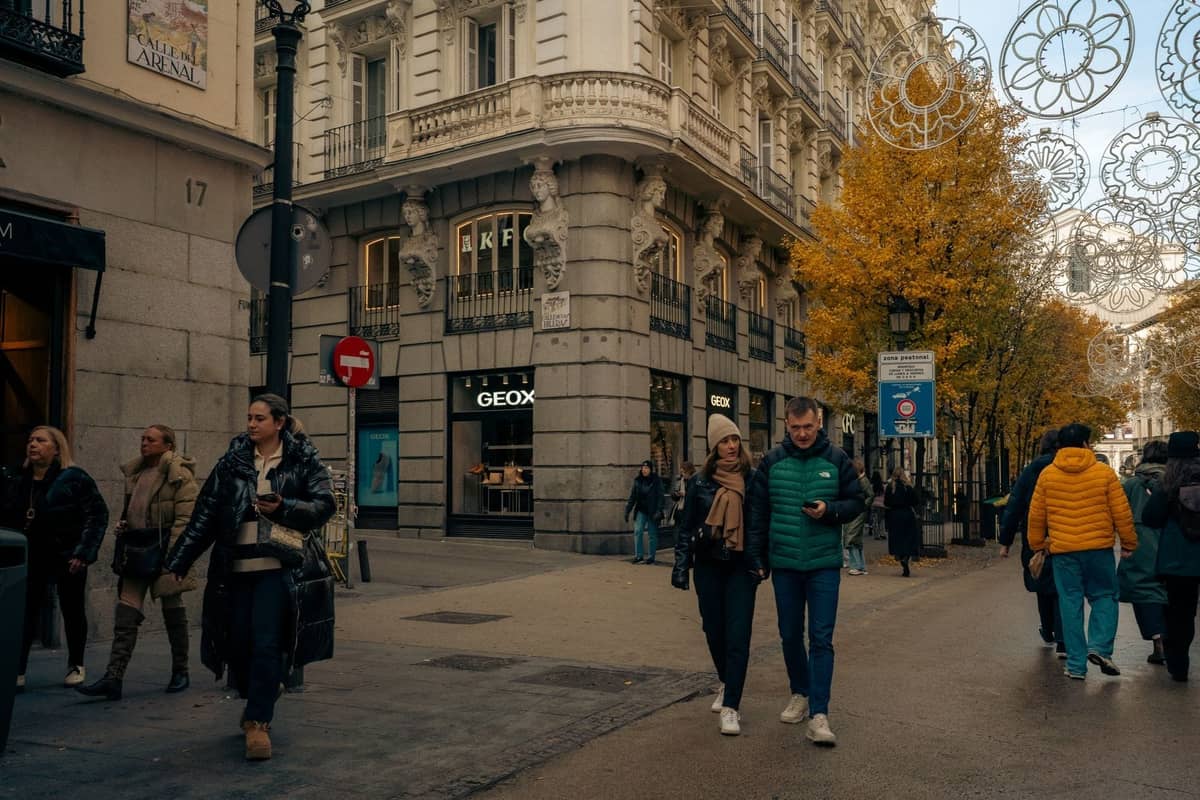
If budget is not a primary concern, Salamanca is the most consistently high-quality area in the city for upscale madrid hotels. The neighborhood is defined by its wide, grid-pattern streets built in the late 19th century, designer boutiques along Calle de Serrano, and a calm residential atmosphere that contrasts sharply with the intensity of Sol.
The major museums along the Paseo del Arte are reachable in about 20-25 minutes on foot or by metro. Retiro Park is practically next door. The restaurant and bar scene here leans upscale without being stuffy, and the overall quality of street life reflects the wealth of the area. For families traveling with children or anyone prioritizing safety, calm streets, and quality over proximity to tourist landmarks, Salamanca is worth the premium.
Retiro and Chamberí: Green Space and Residential Calm
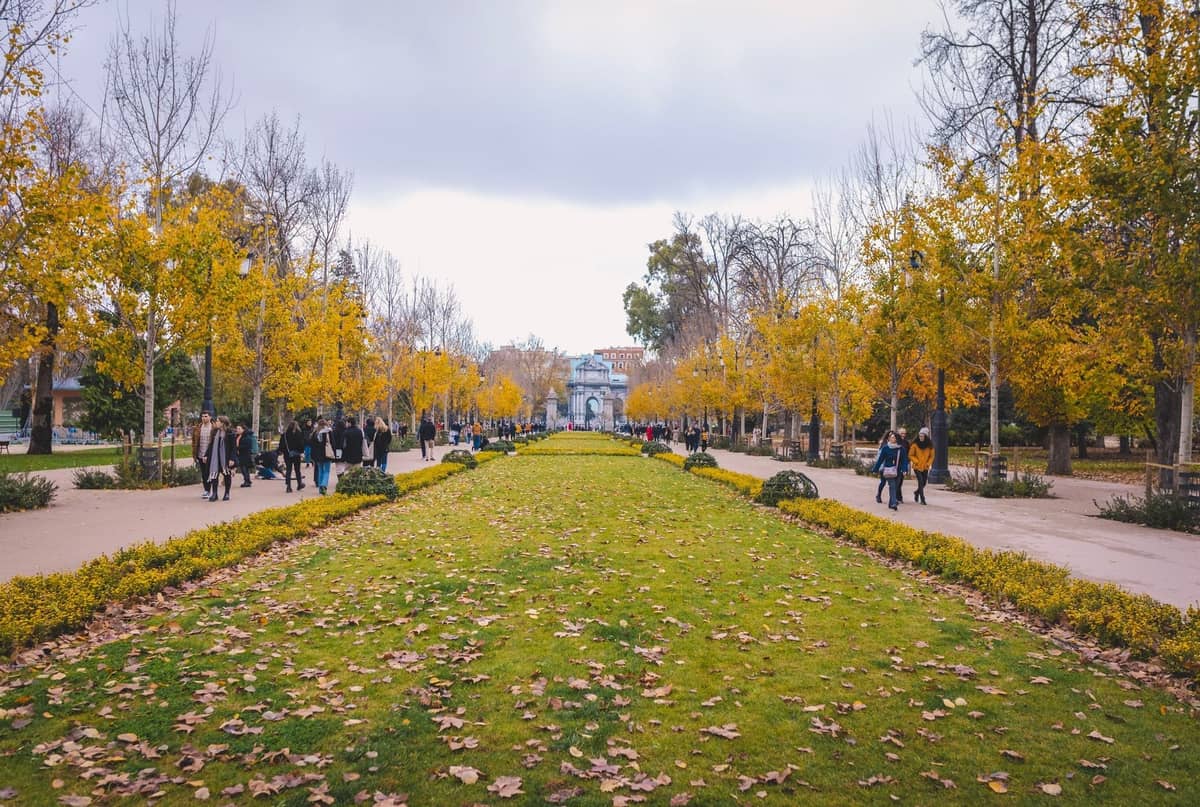
The Retiro district borders El Retiro Park directly and is a natural choice for families or anyone wanting to start mornings with a walk through nearly 300 acres of parkland before the crowds arrive. Hotels here are fewer than in central areas, and the neighborhood has a more residential, settled character. Access to the Prado and the other museums on the Paseo del Arte is very easy from here, which adds to the appeal for culture-focused travelers. Check our guide to Madrid with kids for more detail on family-friendly logistics.
Chamberí sits north of the historic centre and offers some of the most authentically residential street life in Madrid. The area around Calle de Ponzano has developed a strong reputation for bars and informal dining over the past decade. If you have more than three or four days in Madrid and want a base that feels less touristy without being remote, Chamberí is worth serious consideration.
- Sol and Gran Vía: highest convenience, highest prices, least local atmosphere
- Barrio de las Letras: best for museum-heavy itineraries and couples seeking boutique options
- La Latina: best balance of authenticity, central location, and walkability to landmarks
- Malasaña and Chueca: best for travelers prioritizing nightlife, bars, and creative street culture
- Salamanca: best for luxury stays, upscale dining, and families wanting calm streets
- Retiro: best for park access and a quieter base close to major cultural institutions
- Chamberí: best for long stays where you want to experience Madrid beyond the tourist circuit
Practical Tips for Booking Madrid Hotels
Madrid hotel prices follow a predictable seasonal pattern. The most competitive rates appear in January and February, and again in late July and August when the heat drives away some visitors. The most expensive and in-demand periods are late April through early June and mid-September through October. The San Isidro festival in May and major football fixtures at Santiago Bernabéu also cause short-term spikes in central areas.
Madrid hostels are a legitimate option even for non-backpackers. The city has several design-forward properties offering private rooms with en-suite bathrooms that undercut comparable hotel rates significantly. This is worth considering if you are traveling on a tighter budget but still want to stay centrally. For a broader look at managing costs, see our Madrid on a budget guide.
💡 Local tip
Most central Madrid hotels do not include breakfast in the base rate, and hotel breakfasts are often overpriced. Budget around €5-€12 for a proper coffee and pastry at a local café instead. Chocolatería San Ginés, open 24 hours near Sol, is an institution worth experiencing at least once.
Getting from Adolfo Suárez Madrid-Barajas Airport to your hotel is straightforward. Metro Line 8 connects Terminal 4 and Terminals 1-2-3 directly to Nuevos Ministerios, where you can transfer to reach any central neighborhood. The journey takes around 25-30 minutes to central Madrid. An airport supplement is added to the standard metro fare; verify current prices with Metro de Madrid before travel. The Exprés Aeropuerto bus and official taxis are also available. For full transport detail, see our guide to getting around Madrid.
FAQ
What is the best area to stay in Madrid for first-time visitors?
For a first visit, Barrio de las Letras or La Latina give you the best combination of central location, walkability to major landmarks, and genuine Madrid atmosphere. Sol and Gran Vía are slightly more convenient for the biggest tourist sights but feel more transactional and are noticeably more expensive for equivalent accommodation quality.
Is it safe to stay in La Latina or Lavapiés?
Both neighborhoods are safe for tourists by general European standards. Lavapiés has a diverse, working-class character and is generally fine during the day and evening in well-traveled areas. As in any large city, exercise common sense about displaying valuables and be aware of your surroundings late at night. La Latina is considered very comfortable for visitors.
Which neighborhood in Madrid is best for families?
The Retiro district is the top pick for families, with immediate access to El Retiro Park for morning outings and proximity to the Prado and Natural History Museum. Salamanca is also a strong option with calmer streets, good restaurant options, and easy metro access. Both areas have wider pavements and a less chaotic pace than the Sol corridor.
How far in advance should I book hotels in Madrid?
For travel in late April through June or September through October, booking 2-3 months ahead is advisable for good mid-range options. For peak weeks around major festivals, football finals, or public holidays, book even earlier. January, February, and August offer more last-minute flexibility and often the best rates.
Are Madrid hostels worth considering for solo travelers?
Yes, particularly if you are on a budget or interested in meeting other travelers. Madrid hostels range from basic dorms to polished properties with private en-suite rooms that rival budget hotels on price. The best ones in Malasaña, Chueca, and Barrio de las Letras put you in social neighborhoods with easy access to everything central. They are a entirely practical option, not just a backpacker fallback.