Madrid to Lisbon: How to Get There by Train, Bus & Flight
Traveling from Madrid to Lisbon involves more choices than most travelers expect. This guide breaks down every realistic option — flight, bus, and train — with straightforward advice on cost, time, and what to book first.
Plan and book this trip
Tools from our partner Travelpayouts help you compare flights and hotels. If you book through them, we may earn a commission at no extra cost to you.
Flights
Hotels map
TL;DR
- There is no direct train between Madrid and Lisbon. Rail travel requires multiple connections and takes around 10 hours or more.
- Bus is the most practical overland option: FlixBus runs from around $21, with journey times of roughly 6-8 hours from central Madrid.
- Flights are fastest at around 1h 20m in the air, but total door-to-door time including airports is closer to 4 hours.
- Book bus tickets early for the cheapest fares; flight prices on this route can start around €30 but swing to €190+ at short notice.
- If you have extra time, consider combining this trip with day trips from Madrid before heading west to Portugal.
The Quick Answer: Which Option Is Actually Best?

Madrid to Lisbon is roughly 605-610 km by road. The two capitals are well connected, but not in the way many travelers assume. The popular notion of a scenic Iberian train journey between them collides with reality: as of 2026, no direct international train service operates on this route. What you actually have are three viable options, each with a distinct trade-off between cost, comfort, and total travel time.
For most travelers, the choice comes down to budget versus convenience. Flying wins on raw speed, the bus wins on price and simplicity, and the train is the most complicated option by some margin — not because rail is bad, but because the connections are fragmented and the pricing can be surprisingly high.
ℹ️ Good to know
The distance between Madrid (Atocha station) and Lisbon (Santa Apolónia station) by road is approximately 605-610 km. The two cities are in different time zones only during certain periods — Portugal follows Western European Time (UTC+0/+1), while Spain is on Central European Time (UTC+1/+2). Lisbon is typically one hour behind Madrid.
Taking the Bus: The Most Practical Overland Route
The intercity bus is the clear winner for budget travelers and anyone who values a straightforward booking process. FlixBus operates direct services between Madrid and Lisbon with fares often starting under $20, and Rome2rio lists comparable direct buses at around 7h 45m with approximately five departures per day. FlixBus's own route page advertises around seven daily rides and a journey time of roughly 6h 10m on the fastest services.
Buses in Madrid typically depart from Estación Sur de Autobuses, located in the Méndez Álvaro area south of the city centre, which is well connected to the Madrid Metro network. In Lisbon, arrivals are generally at Sete Rios bus terminal, which connects to the Lisbon Metro. The route passes through the Extremadura region and crosses into Portugal near Badajoz-Elvas.
- Operator FlixBus is the dominant provider on this route; ALSA also serves Madrid-Lisbon connections. Check both platforms before booking.
- Price range Around $21-60 depending on how far in advance you book and the specific departure time. Summer and holiday weekends push prices up.
- Journey time 6h 10m to 7h 45m depending on the service. Some buses make intermediate stops.
- Departure point (Madrid) Estación Sur de Autobuses, Calle Méndez Álvaro 83, served by Metro Line 6.
- Arrival point (Lisbon) Sete Rios bus terminal, connected to Lisbon Metro (Jardim Zoológico station).
💡 Local tip
Book FlixBus tickets at least two weeks ahead if you're traveling in summer (June-August) or around long weekends. The cheapest fares sell out quickly, and last-minute tickets on this route can cost three times the base price.
Flying Madrid to Lisbon: Fast but Not Quite as Fast as It Looks

The flight itself is short: Adolfo Suárez Madrid-Barajas Airport (MAD) to Lisbon Humberto Delgado Airport (LIS) takes around 1 hour 20 minutes in the air. Iberia and TAP Air Portugal dominate this route, with budget carriers like Vueling also operating services. Omio notes around 22 flights per day, making it a frequent and reliable option.
The catch is the full door-to-door math. Madrid Barajas is about 12 km from the city centre, and you should allow at least 90 minutes before departure for check-in and security on an international route. Add the same buffer in Lisbon, plus transfer time on each end, and the total journey from central Madrid to central Lisbon by air is realistically 4-5 hours. That's still faster than the bus, but the gap narrows considerably once you factor in airports.
Fares range from around €30 for early bird deals to €190 or more at short notice. Rome2rio lists the broad range as €30-€190, which reflects the volatility of this route during peak travel periods. If you're booking more than three weeks out and traveling light with hand luggage only, a budget carrier fare can genuinely compete with the bus on price while saving 3-4 hours.
⚠️ What to skip
Budget airline fares to Lisbon often exclude checked baggage. If you're traveling with a full suitcase, factor in baggage fees before assuming the flight is cheaper than the bus. A €30 base fare can easily become €70-80 once you add a cabin bag or checked luggage.
The Madrid to Lisbon Train: What You Need to Know Before You Try
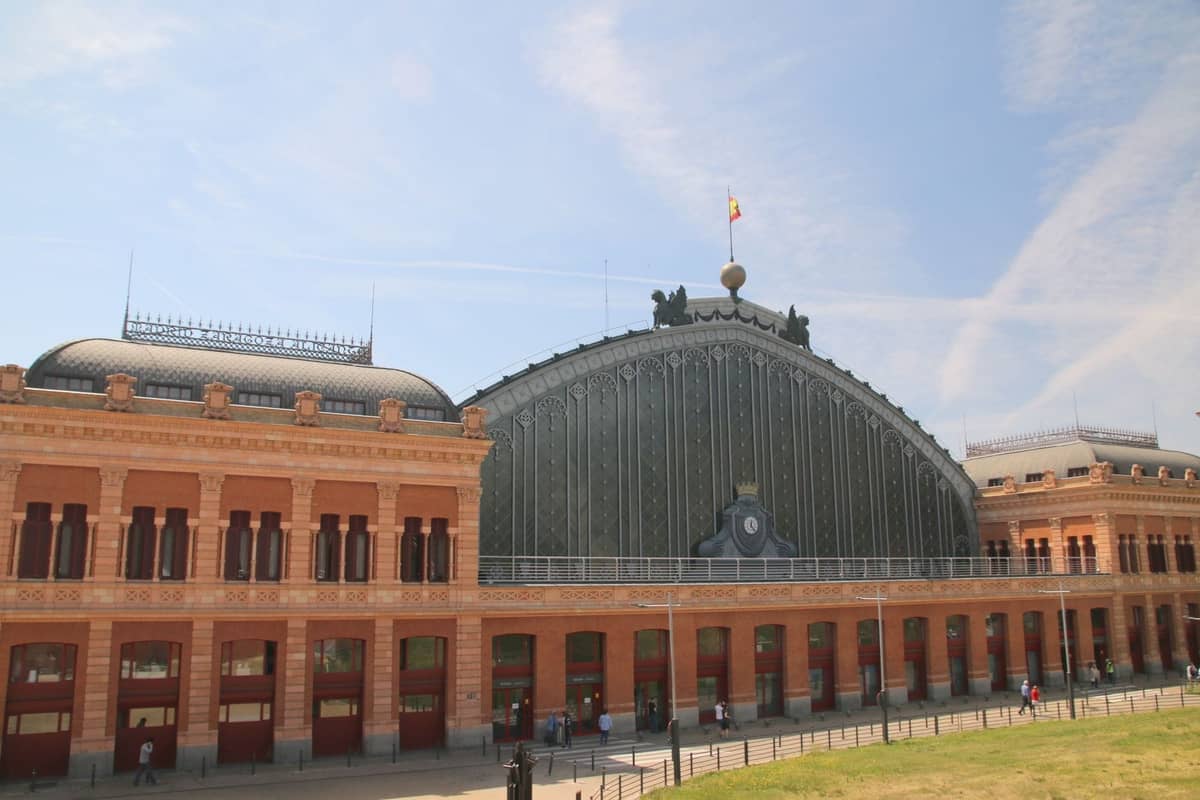
Here is where travelers frequently hit a wall. There is no direct Madrid to Lisbon train. Both Rome2rio and the authoritative rail travel site Seat61 confirm this clearly: the route requires multiple connections, switching between Spanish Renfe services and Portuguese CP (Comboios de Portugal) regional trains. Total journey time by rail is typically around 9h 30m to 10 hours or more, depending on connections.
The most commonly cited routing involves taking a Renfe service from Madrid to a border area (such as Badajoz or Entroncamento, depending on the itinerary), then connecting to CP regional services into Lisbon. The problem is that these legs often can't be booked as a single through ticket on either the Renfe or CP websites. You may need to book each segment separately, which adds complexity and eliminates any benefit of the train over the bus.
Pricing for rail itineraries is inconsistently reported across booking platforms. Omio lists average prices around $107 (approximately €88) for train combinations, while Rome2rio has shown itineraries ranging from €1,000 to €2,100 for certain convoluted routes — figures that almost certainly reflect multi-segment premium pricing errors or high-demand dynamic fares rather than standard costs. The short answer is that train pricing on this route is unreliable until you check Renfe and CP directly for your specific dates.
✨ Pro tip
A high-speed Madrid-Lisbon rail link has been under discussion and development for years, with the Extremadura high-speed line intended to eventually connect the two capitals. As of 2026, this service does not exist. Check Renfe's official website (renfe.com) for any updates before planning a train-based itinerary.
- No direct train exists between Madrid and Lisbon as of 2026
- Rail journey requires at least two separate tickets: one from Renfe (Spanish rail) and one from CP (Portuguese rail)
- Total rail travel time is approximately 9h 30m to 10 hours, making it slower than the bus
- Book each leg separately on renfe.com and cp.pt — combined booking platforms often show inflated or unreliable prices for this route
- The planned Extremadura high-speed line would eventually reduce this journey significantly, but no launch date has been confirmed
Comparing All Three Options Side by Side
Choosing the right method depends on what you're optimizing for. If you're on a tight budget and don't mind sitting on a coach for 6-8 hours, the bus is clearly the best choice. If time is money and you're packing light, a discounted flight makes sense. The train is only worth considering if you have a strong philosophical attachment to rail travel and are willing to do the multi-leg booking work. Most travelers heading to Portugal would do better exploring the Madrid to Seville route by train, where direct high-speed AVE services exist and the rail experience is exceptional.
- Bus (FlixBus / ALSA) From ~$21 | 6h 10m to 7h 45m | Direct, simple booking, departs Estación Sur. Best for budget travelers.
- Flight (Iberia / TAP / Vueling) From ~€30 | 1h 20m flight, ~4-5h door-to-door | MAD to LIS, ~22 daily departures. Best for time-conscious travelers packing light.
- Train (Renfe + CP) ~€88 average, highly variable | ~10-11h total | Multiple connections, separate tickets required. Not recommended unless rail is a priority.
Practical Tips Before You Book

Regardless of which transport mode you choose, there are a few practical points worth keeping in mind. First, remember that Lisbon is typically one hour behind Madrid in time zone, which affects arrival planning. Second, if you're spending time in Madrid before departing, consider your departure point: Estación Sur for buses is in the south of the city, while Barajas airport is to the northeast. Both are accessible via the Madrid Metro, but factor in 30-45 minutes of travel time from most central neighborhoods.
If you're still in the planning stage for Madrid itself before heading to Lisbon, a focused two or three-day itinerary works well. You can cover the core of Madrid in three days and still catch a morning bus or flight to Lisbon without feeling rushed. Many travelers underestimate how much ground a well-structured Madrid itinerary covers.
On the Lisbon side, arriving at Sete Rios (bus) or Humberto Delgado Airport puts you a Metro ride from the city centre. The Portuguese capital is compact and walkable once you're in — very different in scale from Madrid, which at 605 km² and around 3.3 million municipal residents is significantly larger. If you're comparing the two Iberian capitals as destinations, the Madrid vs Barcelona comparison might also help calibrate your expectations for Spanish cities.
FAQ
Is there a direct train from Madrid to Lisbon?
No. As of 2026, there is no direct train service between Madrid and Lisbon. The journey requires at least two separate legs using Renfe (Spanish rail) and CP (Portuguese rail), typically adding up to 10-11 hours of travel time. A high-speed rail link is planned but not yet operational.
How long does the bus from Madrid to Lisbon take?
FlixBus lists the fastest direct services at around 6h 10m, while other sources cite up to 7h 45m depending on the operator and any intermediate stops. Most buses depart from Estación Sur de Autobuses in Madrid and arrive at Sete Rios in Lisbon.
What is the cheapest way to get from Madrid to Lisbon?
The bus is almost always the cheapest option, with FlixBus fares starting around $21 when booked in advance. Budget flights can match or beat this price if you travel light with hand luggage only and book early, but baggage fees can quickly erode the savings.
How many flights per day run between Madrid and Lisbon?
Approximately 10–15 flights per day operate between Adolfo Suárez Madrid-Barajas Airport (MAD) and Lisbon Humberto Delgado Airport (LIS), served primarily by Iberia, TAP Air Portugal, and Vueling. Flight time is around 1 hour 20 minutes.
Should I book Madrid to Lisbon transport in advance?
Yes, especially for summer travel (June-August) and Spanish or Portuguese public holidays. Bus fares on FlixBus and flight prices both increase significantly with demand. Booking two to four weeks ahead typically secures the best prices. For train travel, check Renfe and CP separately well in advance, as each leg needs individual booking.