Solo Travel in Madrid: The Complete Guide to Tips, Safety & Best Experiences
Madrid is one of Europe's most rewarding cities for solo travelers. This guide covers everything from navigating the metro alone to dining at tapas bars without awkwardness, plus straightforward safety advice, neighborhood breakdowns, and practical logistics for first-timers and seasoned solo travelers alike.
Plan and book this trip
Tools from our partner Travelpayouts help you compare flights and hotels. If you book through them, we may earn a commission at no extra cost to you.
Flights
Hotels map
TL;DR
- Madrid is generally safe for solo travelers; the main risk is opportunistic pickpocketing in crowded metro stations and tourist areas, not violent crime.
- The Madrid Metro (Line 8 from the airport) makes getting around solo easy and affordable. See our full getting around Madrid guide for route tips.
- Solo dining is completely normal at tapas bars and mercados — standing at the bar counter is the local way to eat alone without any awkwardness.
- Spring (April-May) and early autumn (September-October) offer the best conditions for walking the city solo. Check the best time to visit Madrid for seasonal detail.
- Emergency number in Spain: 112. Tap water is safe to drink. Spain is in the Schengen Area — verify current visa requirements before travel.
Is Madrid Safe for Solo Travelers?
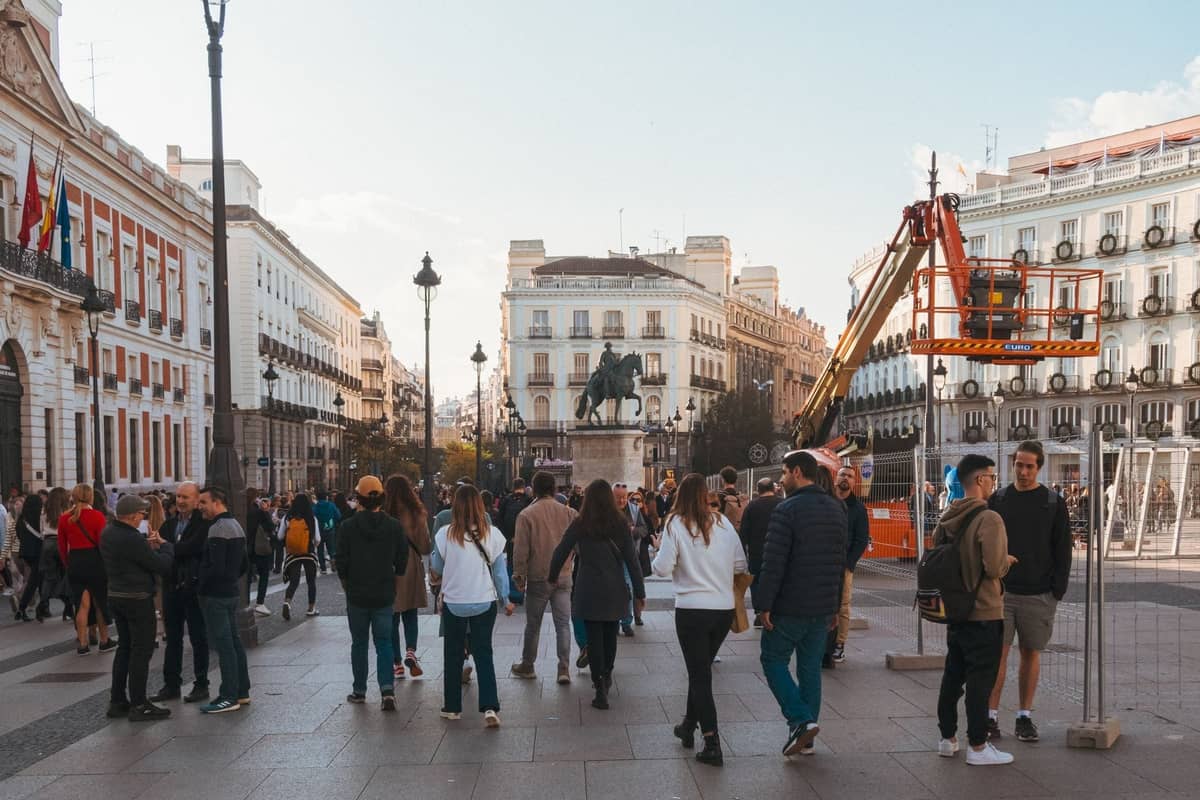
The short answer: yes, with sensible precautions. Madrid is not generally described as a dangerous city for solo travelers by official tourism or safety sources. The most consistently cited risk is opportunistic theft, particularly pickpocketing in high-traffic areas: the metro, El Rastro market on Sundays, Plaza Mayor, Puerta del Sol, and anywhere crowds form around tourist sights. This is a common urban risk across major European capitals, not something specific to Madrid.
The neighborhoods central to tourism, including Sol-Centro, La Latina, Malasaña, and Chueca, are well-lit and active late into the night. Madrid's nightlife culture means streets stay populated until the early hours, which actually works in solo travelers' favor. An empty street at 2am is rare in the center; a full one is the norm.
⚠️ What to skip
Keep bags zipped and worn across your body (not hanging behind you). Never leave your phone on a café table or a restaurant terrace. In metro stations, be aware at turnstiles and on crowded platforms during peak hours. These habits eliminate the vast majority of solo travel risk in Madrid.
Women traveling solo in Madrid report broadly positive experiences. The city has a strong culture of public life and visible social activity, which reduces the isolation that can make solo travel feel uncomfortable. If you're looking for additional context on navigating the city safely, the Madrid safety tips guide covers specific situations and neighborhoods in more detail.
- Emergency services Call 112 for police, fire, or medical emergencies. This number works across all of Spain.
- National Police For theft reports (needed for insurance claims), go to the nearest comisaría or use the online report system at policia.es.
- Hospitals Madrid has multiple public hospitals (hospitales públicos) accessible to EU citizens with a European Health Insurance Card (EHIC) and to travelers with travel insurance.
- Scams to know The 'friendship bracelet' approach near monuments and the 'shell game' on popular squares are the two most common tourist-targeted scams. Walk past without engaging.
Getting to and Around Madrid Alone
Adolfo Suárez Madrid-Barajas Airport (IATA: MAD) sits approximately 12 km northeast of the city center. For solo travelers, the metro is the most practical airport transfer. Line 8 connects Terminal T4 and the T1-T2-T3 hub to Nuevos Ministerios in around 12–15 minutes, where you can interchange onto Lines 6 and 10 for most central destinations. There is a supplement charged on top of the standard metro fare for airport trips, so have a card or contactless payment ready. Verify current pricing on the Metro de Madrid website before travel, as fares update periodically.
The Exprés Aeropuerto bus is a cheaper alternative that runs 24 hours between the terminals and Atocha station, useful if you're arriving late at night when the metro has reduced service. Official taxis from the airport operate on regulated flat-rate fares to the city center; confirm the rate with the driver before departing. Ride-hailing apps including Cabify and Uber operate in Madrid under Spanish VTC regulations, but confirm current availability and pricing before relying on them.
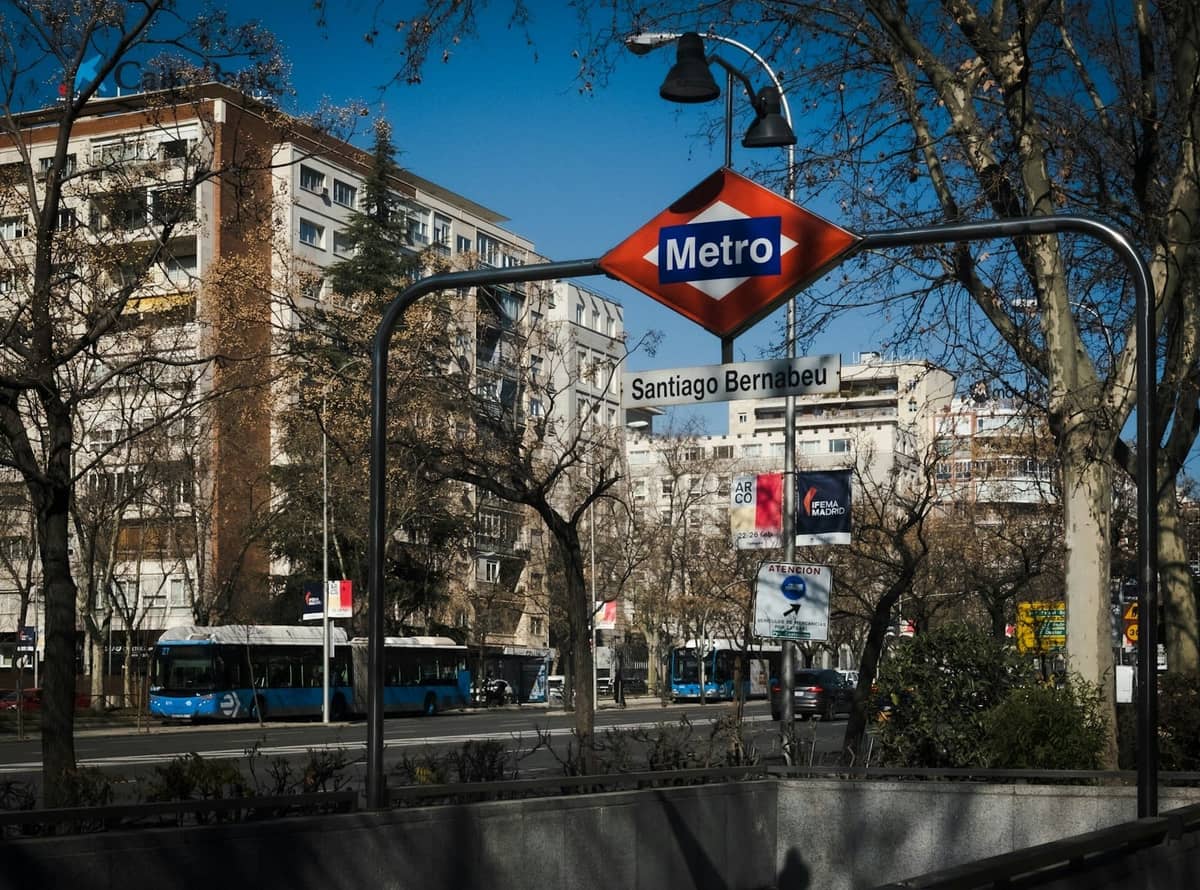
Within the city, the Madrid Metro is the solo traveler's best friend. With 13 lines covering the entire urban area, it runs frequently from around 6am to 1:30am every day. The Tarjeta Multi (a rechargeable card) works across metro, bus, and Cercanías trains. For most stays, a 10-trip card or a tourist travel pass (covering zones A-B depending on your accommodation location) offers the best value. EMT buses cover routes the metro doesn't reach and are particularly useful for the Madrid Río park area and outer neighborhoods.
💡 Local tip
Download the official Metro de Madrid app before arrival. It includes an offline map, real-time disruptions, and journey planner. Google Maps works reliably for Madrid transit directions too, but the official app gives you platform information and exit numbers that Google sometimes misses.
Best Neighborhoods for Solo Travelers
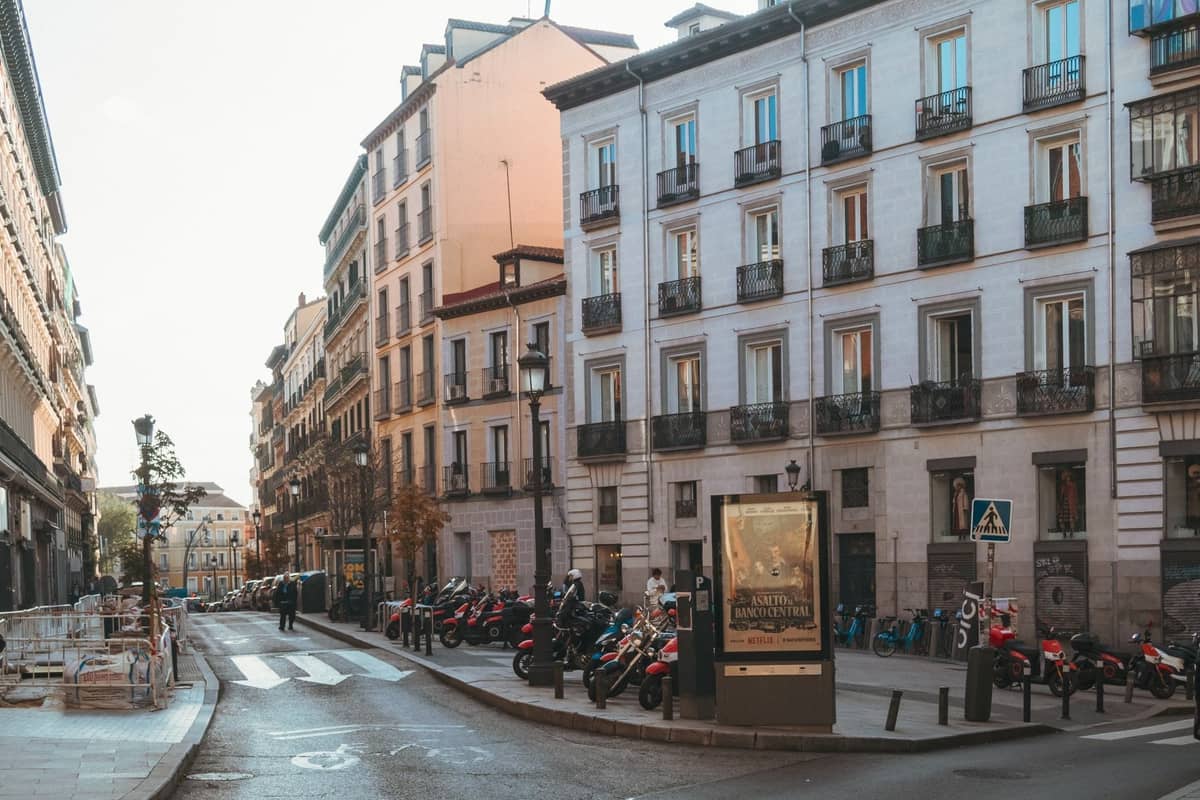
Where you stay shapes your solo experience significantly. The city's character shifts block by block, and each district has a distinct rhythm. Sol-Centro puts you within walking distance of the Prado, the Royal Palace, and Plaza Mayor, but it's the most touristic and the most pickpocket-prone. If you want to feel like you're in Madrid rather than a tourist version of it, consider the neighborhoods just adjacent.
- Malasaña The creative, slightly grungy neighborhood around Plaza Dos de Mayo. Independent cafés, record shops, and a strong local bar scene. Well-connected by metro (Lines 1, 2, 5). Excellent for solo travelers who want to people-watch without feeling like a tourist.
- Chueca Madrid's LGBTQ+ hub, with a lively, welcoming atmosphere and excellent restaurant-to-street ratio. Solo dining here is genuinely comfortable at any time of day. Metro Line 5.
- La Latina Best for Sunday mornings (El Rastro market) and evening tapas crawls along Cava Baja. Compact and walkable. More residential than touristy, even though it's close to the center.
- Lavapiés A diverse, artsy district with some of Madrid's most interesting food options at lower prices. Upfront about its mixed reputation: it's lively and culturally rich, but exercise the same urban awareness you would anywhere.
- Barrio de Salamanca Quieter, more upscale, and extremely safe. Better suited to those who want a calm base and easy access to Retiro park. Higher accommodation prices, but some of Madrid's best food streets are here.
If you're deciding between areas, Malasaña and Chueca are the top picks for solo travelers who want social atmosphere without the tourist intensity of Sol. Both are compact enough to explore on foot and have strong café cultures ideal for solo downtime. For a deeper look at where to sleep, the where to stay in Madrid guide breaks down accommodation options by neighborhood and budget.
Solo Dining: How Madrid Actually Works
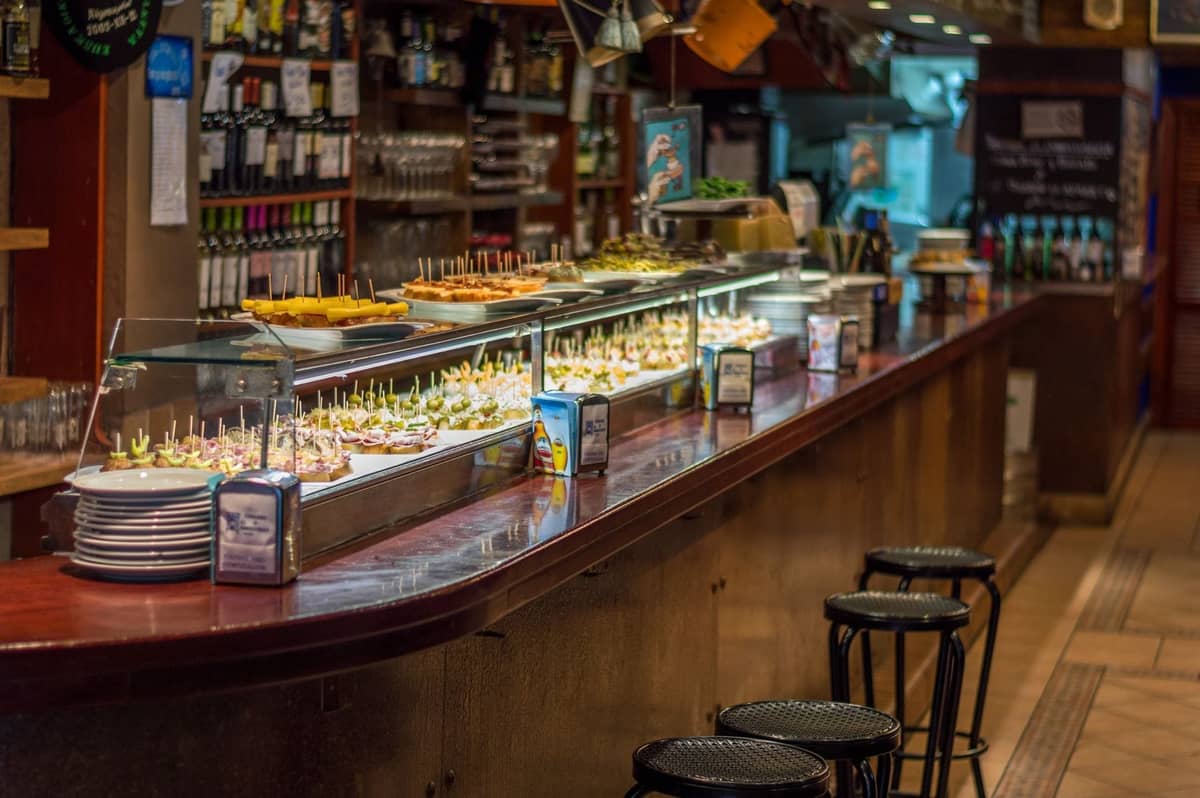
Solo dining in Madrid is normal, not an awkward exception. This is worth stating clearly because many solo travelers worry unnecessarily about eating alone in European cities. In Madrid, the tapas bar counter is specifically designed for individual eating and drinking. Standing at the bar and ordering by pointing is universal, efficient, and completely unselfconscious. Nobody will give you a second look.
Madrileños eat on a schedule that catches many visitors off guard. Lunch (la comida) is the main meal of the day, typically between 14:00 and 16:00. Dinner (la cena) rarely starts before 20:30 and peaks around 22:00. Many kitchens close between 16:30 and 20:00 for the merienda gap. If you're hungry at 18:00, your best option is a café, a churrería, or a mercado. The Madrid tapas guide explains how to navigate bars and ordering without a dining companion.
For solo dining without any awkwardness, the covered food markets are ideal. Mercado de San Miguel near Plaza Mayor and Mercado de San Antón in Chueca are both set up for individual grazing: you pick from different stalls, take a spot at the bar, and eat at your own pace. They are priced at a tourist premium, however. For better value solo lunches, look for restaurants offering the menú del día: a fixed-price lunch (typically around 10-15 euros for two courses, bread, and a drink) that represents exceptional value and is served at the bar if you prefer.
✨ Pro tip
Order a caña (small draft beer) or a glass of house wine when you sit at a tapas bar counter. In many traditional bars in La Latina and Lavapiés, a small free tapa comes automatically with each drink. It's not guaranteed everywhere, but it's a genuine local tradition that makes solo drinking at a bar feel like a meal.
Best Solo Travel Experiences in Madrid
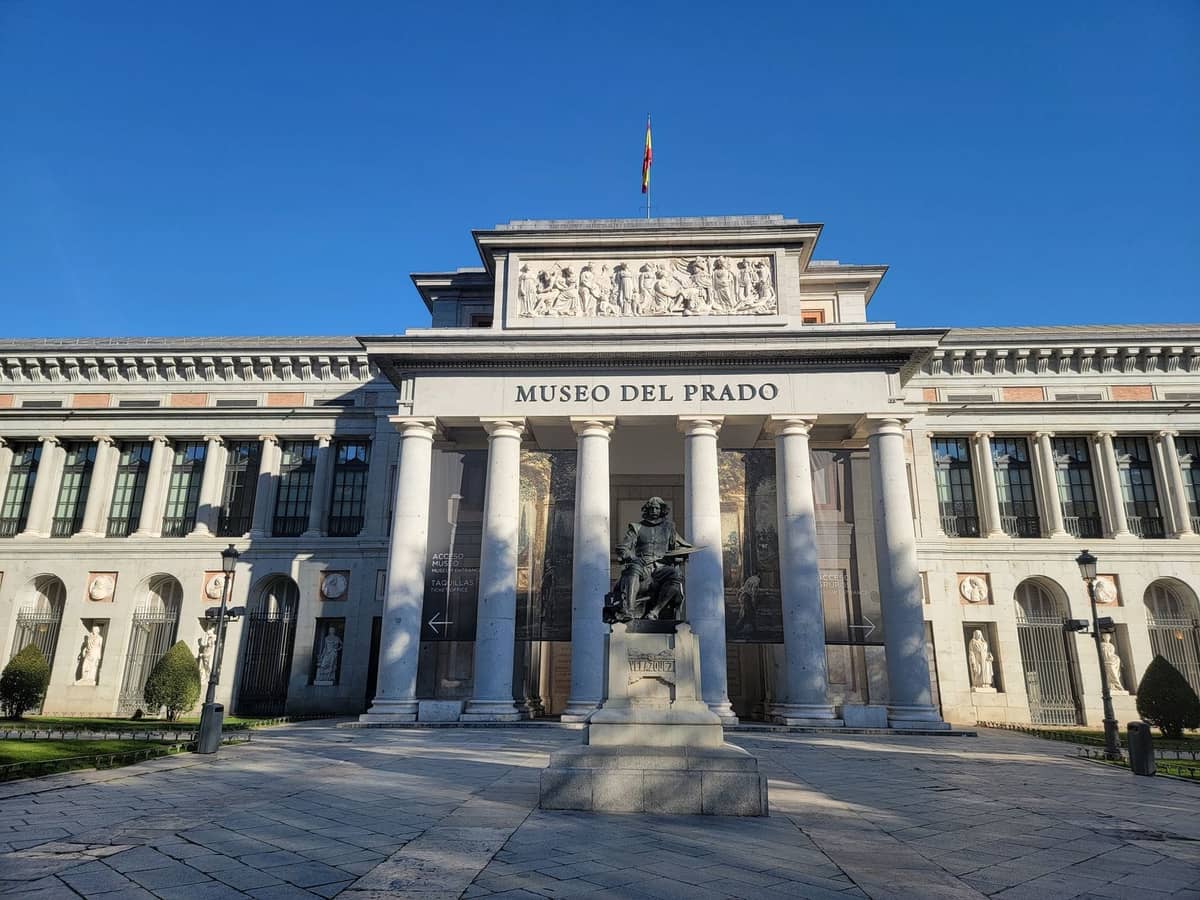
Some of Madrid's best experiences are actually better done alone. Museum visits, in particular, benefit from solo travel: you set the pace, spend as long as you want in front of a single painting, and leave whenever you're ready. The Museo del Prado is non-negotiable if you have any interest in European art. Book tickets in advance online to skip the entry line, which can stretch 30-45 minutes in peak season. Arrive at opening time (typically 10:00 on most days) for the best experience. The Velázquez and Goya rooms are extraordinary even if you're not an art specialist.
For solo time outdoors, Parque del Retiro is the obvious choice: 125 hectares of parkland, a boating lake, rose gardens, and a glass exhibition pavilion (the Palacio de Cristal), all free to enter. Sunday mornings bring performers, portrait artists, and locals enjoying their weekend. It's one of the best places in Madrid to sit alone with a book and feel completely comfortable doing so.
Beyond the Prado, the Museo Reina Sofía houses Picasso's Guernica and an extensive collection of 20th-century Spanish and international art. Entry is free on certain afternoons (verify current free-entry times on the museum website). The best museums in Madrid guide covers the full range of options, including smaller institutions that make for excellent solo half-days.
For something low-cost and thoroughly local, the Sunday morning scene at El Rastro flea market in La Latina is worth experiencing at least once. Go before 11:00 for the best browsing and a quieter crowd; by noon it becomes extremely packed. Keep your bag closed and in front of you here especially — it's one of the more pickpocket-active spots in the city.
Practical Logistics: What Solo Travelers Need to Know
Madrid operates on Central European Time (CET, UTC+1), shifting to CEST (UTC+2) during summer daylight saving. Spain is in the Schengen Area, which means EU and EEA nationals can enter freely, and citizens of countries including the United States, Canada, Japan, and Australia can enter visa-free for short stays under Schengen rules. Always verify your specific entry requirements with official Spanish consular sources before travel, as regulations can change.
The currency is the Euro (EUR). ATMs (cajeros automáticos) are widespread throughout central Madrid. Using your bank card directly at ATMs operated by major Spanish banks (BBVA, CaixaBank, Santander) typically incurs lower fees than currency exchange bureaus. Tap water in Madrid is safe to drink and is distributed through a well-maintained municipal system, so carry a reusable bottle. Spain uses 230V power with Type C and F plugs (two round pins); bring an adapter if your devices use a different standard.
- August is when many Madrileños leave the city on vacation. Some family-run restaurants and smaller shops reduce hours or close entirely for two to four weeks. Major attractions stay open, but the city feels emptier and hotter (regularly exceeding 35°C).
- Tipping is not mandatory in Madrid. Rounding up or leaving small change is appreciated in bars and cafés; 5-10% in sit-down restaurants is considered generous. Do not feel pressured to tip beyond what feels comfortable.
- Dress codes are relaxed by European standards. Casual clothing works everywhere except a few upscale restaurants and religious sites, where covered shoulders and knees are expected.
- Mobile connectivity: Spanish SIM cards are available at the airport and at phone shops throughout the city. EU mobile plans with roaming work without surcharges across Spain for EU residents.
- Language: Castilian Spanish is the official language. English is spoken in most hotels, major attractions, and tourist-area restaurants, but learning a few basic Spanish phrases (gracias, por favor, una cerveza por favor) goes a long way and is truly appreciated.
ℹ️ Good to know
Many solo travelers book their first night or two in a hostel common room to meet other travelers, then move to a private apartment or hotel once they have their bearings. Madrid has a well-developed hostel scene in Malasaña and Lavapiés with genuine communal spaces, not just dorm beds.
FAQ
Is Madrid safe for solo female travelers?
Madrid is broadly considered safe for women traveling alone, with central neighborhoods remaining active and well-populated until late at night. The primary risk is the same as for all solo travelers: opportunistic theft in crowded areas. Use standard urban awareness, particularly on public transport and at markets. The city's culture of public nightlife means you're rarely isolated in central areas, even late in the evening.
What is the best time of year for solo travel in Madrid?
April-May and September-October are the most comfortable for exploring on foot, with temperatures between roughly 15-25°C and lower humidity than summer. July and August are intense: temperatures regularly exceed 35°C and some local businesses close. Winter (December-February) offers good museum access and fewer crowds, but some outdoor experiences are less enjoyable in the cold.
How do I get from Madrid Barajas Airport to the city center alone?
Metro Line 8 is the standard option: it connects both terminal clusters (T4 and T1-T2-T3) to Nuevos Ministerios in around 12–15 minutes, where you can change for other lines. There's an airport supplement on top of the standard metro fare. The Exprés Aeropuerto bus runs 24 hours to Atocha station and is cheaper. Official taxis use regulated flat fares to the city center; confirm the rate before departure.
Is it weird to eat alone in Madrid restaurants?
No. Solo dining is completely normal in Madrid, particularly at tapas bars where eating at the counter is standard practice. Sit-down restaurants occasionally seat solo diners at smaller tables near the bar; this is standard, not a slight. The menú del día (fixed-price lunch) is often available at the bar and is both the most affordable and most authentically local way to eat a proper meal alone.
Do I need to book Madrid attractions in advance as a solo traveler?
For the Prado and Reina Sofía, advance online booking is strongly recommended in spring and summer to avoid queues of 30-45 minutes. The Royal Palace of Madrid can be very busy at peak times, so check and consider booking ahead via the Patrimonio Nacional website. Smaller museums like the Thyssen-Bornemisza rarely require advance booking outside of peak weekends. For free outdoor sites like Retiro park and Templo de Debod, no booking is needed.