Mercado de Antón Martín: Where Lavapiés Does Its Shopping
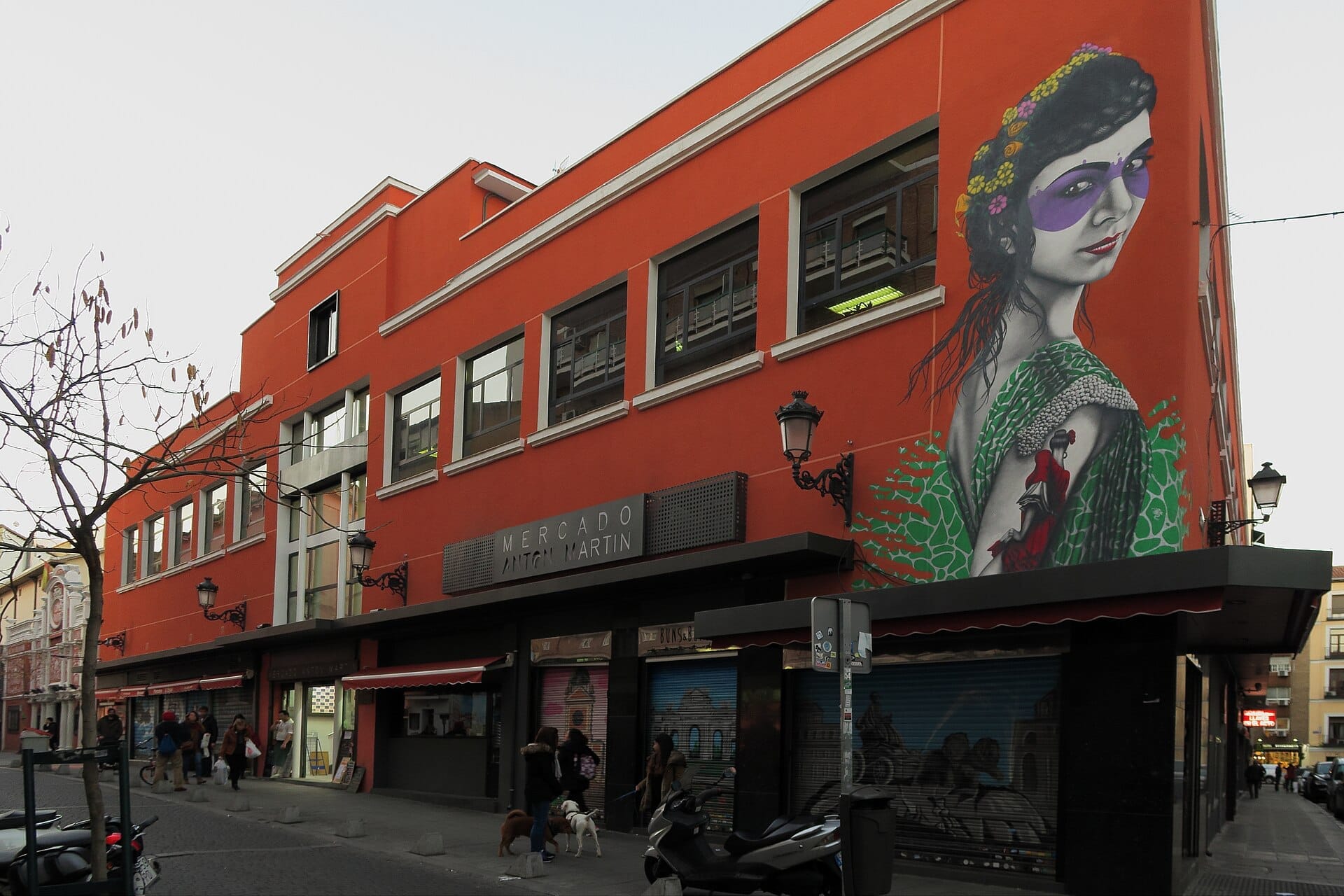
Mercado de Antón Martín is a working municipal market on Calle Santa Isabel in Embajadores, Madrid. Open since 1941, it mixes traditional food stalls with a ground-floor gastro area and — unusually — a celebrated flamenco dance school on the third floor. Entry is free.
Quick Facts
- Location
- Calle Santa Isabel, 5, 28012 Madrid (Embajadores / Centro)
- Getting There
- Metro Antón Martín (Line 1); buses 6, 26, 32
- Time Needed
- 30–60 minutes for a browse; longer if eating
- Cost
- Free entry; individual stalls priced separately
- Best for
- Local food shopping, casual lunches, Lavapiés neighbourhood walks
- Official website
- www.mercadoantonmartin.com
What Mercado de Antón Martín Actually Is
Mercado de Antón Martín is a municipal market, not a tourist food hall. That distinction matters. Where some of Madrid's more famous covered markets have tilted heavily toward visitors and craft beer, Antón Martín still functions as a neighbourhood provisioning stop. Locals come here to buy fish on a Tuesday morning, pick up fruit before heading home, or grab a quick lunch at the counter bars on the ground floor. The atmosphere is workaday in the best sense: efficient, unpretentious, and genuinely local.
The building at Calle Santa Isabel, 5 was inaugurated in 1941 and has operated continuously since. According to Madrid City Council records, the market contains more than 80 premises across its floors, with 65 food stalls on the ground and first floors. That scale makes it a real working market rather than a curated showcase. You will find fishmongers displaying whole sea bream on crushed ice next to charcuterie stands piled with jamón and cheese, greengrocers with seasonal produce, and butchers who will cut to order.
ℹ️ Good to know
Hours vary by zone. The traditional stalls are open Mon–Fri 09:00–21:00 and Sat 09:00–15:00. The food and restoration area extends to Mon–Fri 09:00–23:30, with Sat hours from 15:00–18:00. The market's own site lists Mon–Sat 09:00–23:30 overall, but individual business hours vary, so Saturday afternoons can be quieter than you expect.
The Feel of the Place at Different Times of Day
Weekday mornings between 10:00 and 13:00 are when the market is at its most active. The sounds are layered: vendors calling out prices, the dull thud of a cleaver on a wooden block, the hiss of a coffee machine at the bar near the entrance. The smell shifts as you move through the space, from the briny cold of the fish section to the warm, faintly smoky scent of cured pork products. The lighting is functional rather than atmospheric, which is a fair trade for fresh produce at fair prices.
The pre-lunch hour, roughly 13:00–14:30, draws the bar counter crowd. Workers from the neighbourhood, students from nearby universities, and older residents settle onto stools for a beer and a plate of something simple. This is one of the less-performed lunch experiences in central Madrid; the menus are cheap, the portions generous, and nobody is trying to upsell you.
Weekend mornings are noticeably calmer. Saturday fills up until around noon, then the traditional stalls begin closing by 15:00. If you are visiting specifically for the food counters on a Saturday, come before 13:00. Sunday the market is closed, so plan accordingly.
Tickets & tours
Hand-picked options from our booking partner. Prices are indicative; availability and final rates are confirmed when you complete your booking.
Monumental tour of Toledo with various ticket options
From 27 €Instant confirmationFree cancellationToledo half-day tour from Madrid with cathedral tickets
From 64 €Instant confirmationFree cancellationFull-day trip to Toledo with entrance to monuments
From 68 €Instant confirmationFree cancellationRoyal Monastery of El Escorial and the Valley of the Fallen trip from Madrid
From 64 €Instant confirmationFree cancellation
The Unexpected Third Floor: Amor de Dios Flamenco School
The most surprising feature of Mercado de Antón Martín has nothing to do with food. Since 2002, the third floor has been home to the Amor de Dios dance school, one of Spain's most respected flamenco academies. The school relocated here after spending decades at a legendary address near Gran Vía, and its presence above a municipal market says something telling about Madrid's cultural geography: serious art practice happens in unpretentious places.
If you arrive in the late afternoon or early evening on a weekday, you may hear the percussive stamp of footwork coming through the ceiling while you eat. The school does not offer regular public performances inside the market, but it represents a real connection to the city's flamenco culture. For visitors who want to go deeper into that world, the Madrid flamenco guide covers schools, tablaos, and where to see the real thing.
How Antón Martín Fits Into Lavapiés
The market sits at the edge of Lavapiés, one of Madrid's most culturally layered neighbourhoods. The streets immediately around the market reflect that mix: halal butchers, Bangladeshi grocery shops, Chinese supermarkets, and long-established Spanish bars occupy the same blocks. Antón Martín's stalls carry a comparable diversity, with vendors from various backgrounds running traditional Spanish food counters.
This is not a destination market in the way that some tourist-facing covered markets are promoted. If you are in Lavapiés and want to understand how the neighbourhood actually eats and shops, Antón Martín will tell you more than any food tour. It is also an unpretentious place to buy provisions: prices are what local people pay, not tourist-adjusted.
💡 Local tip
The market is fully accessible for people with reduced mobility, according to Madrid City Council. Ramps and lifts serve all floors.
Practical Walkthrough: Getting There and Getting Around
Metro Line 1 stops at Antón Martín station, which is a short walk from the market entrance on Calle Santa Isabel. Buses 6, 26, and 32 also stop nearby. The Santa Isabel metro station (also Line 1) is an alternative if you are coming from the Atocha direction. On foot from Sol, the walk takes around 12–15 minutes through the streets south of Plaza Mayor, passing through the Tirso de Molina square.
If you are building a longer route through this part of the city, the market pairs naturally with a walk up to Plaza de Santa Ana to the north or a deeper stroll into Lavapiés to the south. The neighbourhood is compact and very walkable; nothing in this corner of central Madrid is more than 20 minutes on foot. For a broader sense of how to structure a day here, the things to do in Madrid guide includes Lavapiés itinerary suggestions.
Photography and Visual Notes
The market's interior lighting is fluorescent and unflattering for wide shots, which is worth knowing before you raise a camera. Stall displays, particularly the fish and charcuterie counters, photograph well in close-up because of the visual texture and colour contrast. Vendors are generally fine with a quick shot of their produce, though it is worth asking before photographing people directly. Early morning on weekdays gives the cleanest, most visually active scenes.
The building's exterior on Calle Santa Isabel is a straightforward mid-century municipal structure without remarkable architectural features. It does not photograph as dramatically as, say, the Mercado de San Miguel or the iron-frame market halls of the 19th century. The value here is the interior life of the place, not its facade.
Who This Market Is Not For
Visitors expecting the curated, Instagram-ready experience of Madrid's more visitor-focused food halls will find Antón Martín underwhelming. If that format is what you are after, the Mercado de San Miguel near Plaza Mayor is designed for exactly that. Antón Martín does not do artisan gin tastings or gourmet pintxos arranged on slate boards. It does do very good fresh anchovies, decent coffee at the bar, and the particular energy of a market that has been feeding the same streets for over eighty years.
It is also not a destination for anyone who needs a structured, guided experience. There are no tours, no signage explaining what things are in English, and no staff whose job is to help tourists orient themselves. Spanish language comfort is helpful, though not strictly necessary for basic purchases.
Insider Tips
- The bar counters near the entrance are your best bet for a cheap, filling lunch between 13:00 and 15:00 on weekdays. Expect simple plates: croquetas, fried fish, tortilla. No reservations, cash often preferred.
- Come on a Wednesday or Thursday morning if you want the widest selection of fresh fish. By Saturday lunchtime, many fishmongers have already sold out their best stock.
- If you hear rhythmic stamping from above while you eat, that is the Amor de Dios flamenco school in session on the third floor. It is worth taking the stairs up to see the corridor and school entrance, even if classes are not open to the public.
- The greengrocer stalls toward the back of the market tend to have the most seasonal and locally sourced produce. Prices are typically lower than supermarkets in the area.
- Saturday afternoons are quiet to the point of emptiness for traditional stalls. If you are visiting Lavapiés on a Saturday, plan your market stop for the morning.
Who Is Mercado de Antón Martín For?
- Travellers who want to see how Madrid's multicultural neighbourhoods actually shop and eat
- Self-catering visitors looking for fresh, affordable produce in central Madrid
- Anyone building a longer walk through Lavapiés who wants a mid-morning coffee stop
- Food-curious visitors who find tourist-facing markets too contrived
- Flamenco enthusiasts interested in the Amor de Dios school's presence
Nearby Attractions
Other things to see while in Lavapiés:
- La Casa Encendida
Housed in a century-old neo-Mudéjar building in Lavapiés, La Casa Encendida offers a genuinely free and inclusive cultural programme spanning contemporary art exhibitions, cinema, workshops, and a rooftop terrace bar. It is one of the few spaces in Madrid where cutting-edge culture, social activism, and community life coexist under the same roof.
- Matadero Madrid
Matadero Madrid is a sprawling contemporary arts centre built inside a neo-Mudéjar slaughterhouse complex dating from 1908. Free to enter for most exhibitions, it hosts digital art, theatre, cinema, and outdoor events on the southern edge of Madrid along the Manzanares River.
- Museo del Ferrocarril de Madrid
Housed in the magnificent 1880 Delicias station, the Museo del Ferrocarril de Madrid is one of Spain's most atmospheric industrial heritage sites. Vintage locomotives, sleeper cars, and a working model railway fill a soaring iron-and-glass nave that few tourists ever discover. Here is everything you need to plan a visit.