Matadero Madrid: Inside the Former Slaughterhouse That Became a Creative Powerhouse
Matadero Madrid is a sprawling contemporary arts centre built inside a neo-Mudéjar slaughterhouse complex dating from 1908. Free to enter for most exhibitions, it hosts digital art, theatre, cinema, and outdoor events on the southern edge of Madrid along the Manzanares River.
Quick Facts
- Location
- Paseo de la Chopera 14, 28045 Madrid (Arganzuela district)
- Getting There
- Metro: Legazpi (Lines 3 & 6), short walk to main entrance
- Time Needed
- 2–4 hours for a full visit; 45 minutes if just browsing one nave
- Cost
- Free for open spaces and most exhibitions; ticketed for cinema, theatre, and select events
- Best for
- Contemporary art fans, architecture enthusiasts, families, local culture seekers
- Official website
- www.mataderomadrid.org/en
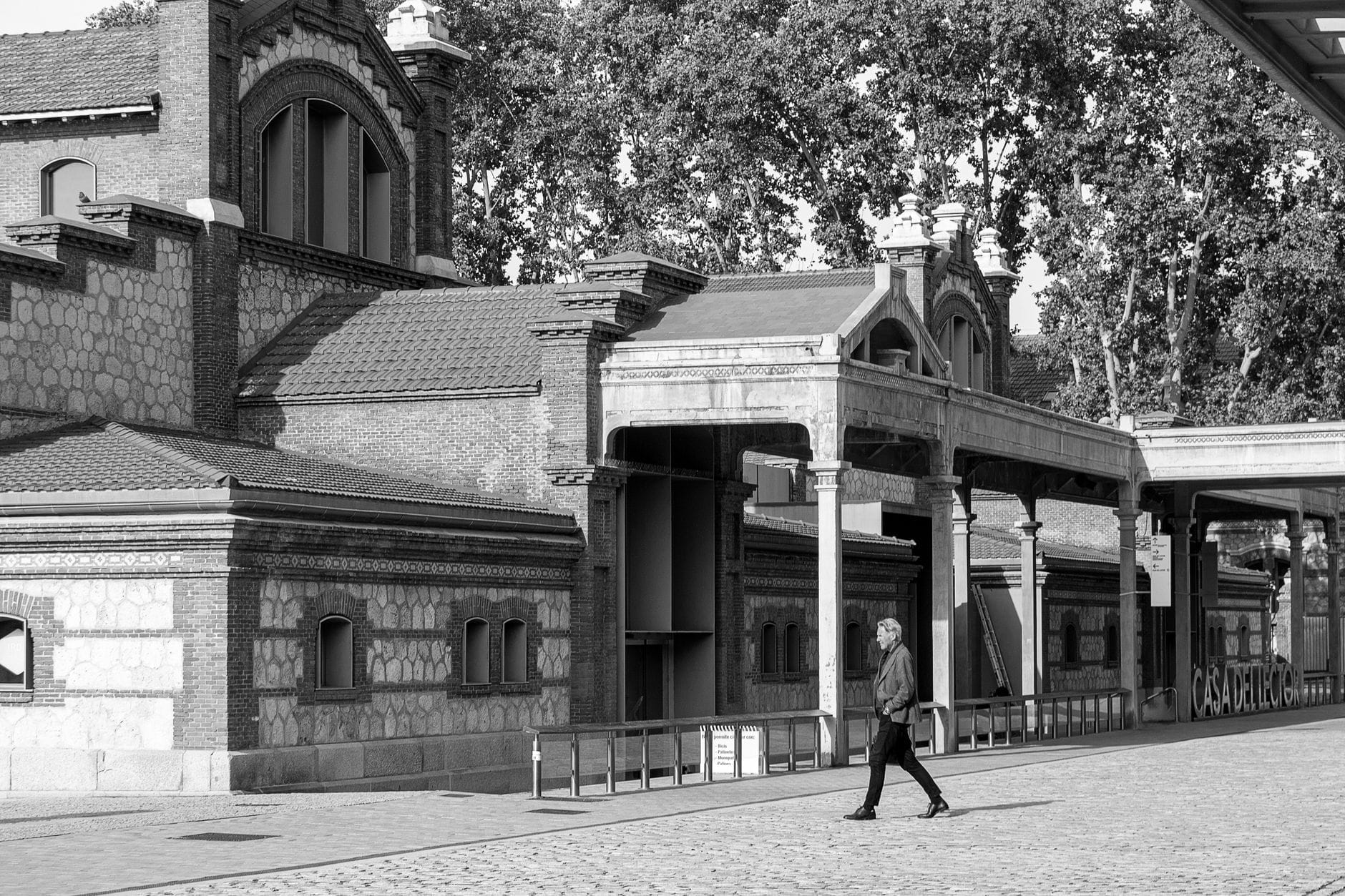
What Is Matadero Madrid?
Matadero Madrid, officially the Centro de Creación Contemporánea del Ayuntamiento de Madrid, is one of the city's most ambitious cultural reinventions. The site was originally the El Matadero y Mercado Municipal de Ganados, Madrid's municipal slaughterhouse and cattle market, built in stages between 1908 and 1928. Architect Luis Bellido designed the complex in neo-Mudéjar style, using brick arcading, tiled rooflines, and geometric patterning to create a building that looked imposing even by the standards of industrial Madrid. In 2006, the city council transformed the disused complex into a platform for contemporary creation, preserving the architecture while carving out exhibition halls, performance spaces, a cinema, and open plazas from its bones.
What makes Matadero different from Madrid's better-known art institutions is its programming philosophy: it operates less as a collection and more as a production site, where artists, residents, and audiences share the same physical space. The result is an atmosphere that feels less curated and more alive than a traditional museum. You might walk through a half-installed digital art show in one nave and stumble onto a children's theater rehearsal next door.
💡 Local tip
The main entrance is on Paseo de la Chopera 14. Open spaces are accessible daily from 09:00 to 22:00, with late entry (until midnight) via the Plaza de Legazpi entrance. The Info Point closes at 21:30.
The Architecture: Brick, Clay, and Industrial Scale
Before you engage with a single exhibition, the building itself makes a case for the visit. Bellido's neo-Mudéjar design draws from Moorish architectural tradition reinterpreted through early 20th-century industrial construction. The brick facades are detailed with blind arches and geometric tiled friezes, while the interior naves recall the vast, column-lined structures of a working industrial facility rather than a polished arts venue.
Walking the main passageways between naves, you pass from weathered brick courtyards into high-ceilinged interiors where the original iron-framed rooflight systems still filter daylight onto concrete floors. The contrast between the architectural permanence of the shell and the temporary, often provocative installations inside creates a productive tension that many of Madrid's newer cultural venues lack.
The complex sits within the Arganzuela district, adjacent to the banks of the Manzanares River and the greenbelt of Madrid Río. On a warm afternoon, the outdoor plazas fill with visitors moving between the buildings, children running across the paved squares, and people lingering on benches along the Chopera promenade. The campus has a permeability that most arts institutions in Madrid do not offer.
Tickets & tours
Hand-picked options from our booking partner. Prices are indicative; availability and final rates are confirmed when you complete your booking.
Royal Monastery of El Escorial and the Valley of the Fallen trip from Madrid
From 64 €Instant confirmationFree cancellationFlexible time Real Madrid: Bernabeu Stadium & Museum Entry
From 42 €Instant confirmationMuseum of Senses Madrid entrance ticket
From 19 €Instant confirmationAvila and Segovia full-day tour from Madrid
From 50 €Instant confirmationFree cancellation
Inside the Naves: What You Can Actually See
Matadero Madrid is organized around a series of naves, each repurposed for different cultural functions. Nave 0 is the primary exhibition space for Matadero's flagship visual art and digital art programming, including Madrid Artes Digitales (MAD), a recurring program focused on digital creation that occasionally requires ticketing for specific shows. Cineteca functions as the on-site cinema, screening independent and arthouse films, documentary cycles, and retrospectives.
The Nave 16 area hosts Intermediae, a space dedicated to collaborative, socially engaged projects where the boundary between audience and participant is deliberately blurred. Central de Diseño focuses on architecture, graphic design, and related disciplines, with rotating exhibitions and public programs. There is also a theater space used for performance, dance, and experimental stage work.
Programming changes frequently, so checking the official schedule before arrival is worth the two minutes it takes. Visiting on a day when multiple programs overlap produces a layered experience that rewards wandering. Visiting when only one nave is active feels more like a gallery visit, quieter and more focused but less representative of what Matadero can be.
ℹ️ Good to know
Most exhibitions and open spaces are free, but cinema screenings, theater performances, and select digital art events require tickets. Purchase in advance via the official site or at the box office on site.
How the Experience Changes Through the Day
Morning visits, particularly on weekdays, are quiet to the point of feeling private. The outdoor plazas have few people, the brick surfaces hold the cool of the previous night, and the information staff at the Chopera entrance are attentive with time to spare. This is the best window for photography: soft directional light on the brick facades without the contrast problems of midday sun.
By early afternoon, particularly on weekends, the outdoor areas begin to fill. Families arrive from nearby Madrid Río, skaters move through the paved sections, and the bar areas open properly. The internal temperature of the naves stays noticeably cooler than outside during Madrid's high summer, making Matadero a rational refuge during the July and August heat. Afternoon screenings at Cineteca are often well-attended; arriving early is advisable for popular documentary cycles.
Evening visits offer a different register entirely. The brick takes on a warmer tone as the light drops, outdoor events and concerts occupy the plazas in warmer months, and the late-night access policy until midnight via Plaza de Legazpi means the site does not lock out those finishing dinner nearby. On summer evenings especially, the outdoor areas feel vibrantly social rather than merely transitional.
Getting There and Getting Around the Site
The most direct transit approach is the Metro to Legazpi station, served by Lines 3 (yellow) and 6 (grey). From the exit, Matadero's complex is a short, flat walk following signs toward the Paseo de la Chopera. The walk passes through a stretch of Arganzuela that is unremarkable but uncomplicated, and first-time visitors will see the characteristic brick towers of the complex from a distance.
If you are arriving from central Madrid on foot or by bicycle, the route along Madrid Río is straightforward and connects the site naturally to the riverbank park. The Matadero entrance from this direction is via the Paseo de la Chopera walkway, which runs parallel to the river and functions as an informal pedestrian boulevard between the complex and the water.
Inside the complex, orientation is intuitive once you understand that the main circulation routes are the broad passageways between the naves. The Info Point near the Chopera entrance distributes printed maps and current program listings. The complex covers a large footprint, so wear comfortable shoes; cobblestone and paved brick surfaces are common throughout the outdoor areas.
Who Will Love This, and Who Won't
Matadero Madrid rewards visitors who are comfortable with programming-dependent experiences. If you arrive on a day when only one or two naves are active and the programming happens not to match your interests, the site can feel underpopulated relative to its scale. Unlike the Prado or Reina Sofía, there is no permanent collection to fall back on. The value of any given visit depends substantially on what is on.
Visitors looking primarily for painting, sculpture, or classical art will find Matadero too oriented toward digital, performative, and experimental work to satisfy that interest. Those visitors would be better served by the Museo Reina Sofía or the Museo Thyssen-Bornemisza for contemporary and modern art with a permanent structure.
Travelers who do enjoy experimental digital art, architecture reuse, independent cinema, and the kind of cultural space that does not feel designed primarily for tourists will find Matadero consistently worth the detour. The absence of an admission charge for most of the site removes the risk of disappointment, and the architectural experience alone justifies the Legazpi metro ride for anyone with even passing interest in early 20th-century industrial design.
⚠️ What to skip
Pets are not allowed in indoor activities, with the exception of guide dogs and assistance dogs. The site is large and mostly flat, but visitors with specific accessibility requirements should contact educacion@mataderomadrid.org before their visit to confirm arrangements.
Photography and Practical Notes
Matadero is one of the more photogenic sites in southern Madrid, and the brick architecture photographs well in almost any light. Morning and late afternoon produce the best results for architectural work outdoors. Inside the naves, light levels vary significantly and most spaces do not permit flash photography during active exhibitions; a camera capable of performing at higher ISO values will produce better results.
The surrounding area is part of the broader Arganzuela district. Combining a Matadero visit with a walk through Madrid Río and south along the Manzanares makes for a coherent half-day itinerary. For those building a fuller south Madrid day, Parque del Retiro is accessible by metro from Legazpi in two stops (changing at Moncloa or using Line 6), and the neighbourhood of Lavapiés with its independent culture scene is a short walk or one metro stop north.
Insider Tips
- Check the Matadero program calendar online before going. Visit timing around a MAD (Madrid Artes Digitales) cycle or a Cineteca documentary retrospective significantly improves the experience.
- The outdoor plazas become informal event spaces on summer evenings. Showing up without a specific exhibition in mind on a Friday or Saturday night in June or July often leads to stumbling onto something genuinely interesting.
- The café and bar areas inside the complex are used primarily by Madrileños rather than tourists, which means prices are local rather than tourist-adjacent. Worth stopping rather than heading out to find something nearby.
- Free guided tours of the complex are available but require checking current schedules and availability on the official site. The architectural tour context adds considerable depth to what would otherwise be a self-guided wander.
- If you are visiting in summer and the heat is serious, the interior naves maintain noticeably cooler temperatures than the street. Arriving at 14:00 and spending the mid-afternoon inside before emerging for the evening program is a practical strategy during July and August.
Who Is Matadero Madrid For?
- Contemporary art and digital media enthusiasts who want to see work in progress rather than finished collections
- Architecture fans interested in neo-Mudéjar industrial design and adaptive reuse projects
- Independent cinema viewers: Cineteca runs strong documentary and arthouse programming
- Families looking for a free, open outdoor space with cultural programming nearby
- Travelers building a south Madrid itinerary combining Madrid Río and the Arganzuela riverfront
Nearby Attractions
Other things to see while in Lavapiés:
- La Casa Encendida
Housed in a century-old neo-Mudéjar building in Lavapiés, La Casa Encendida offers a genuinely free and inclusive cultural programme spanning contemporary art exhibitions, cinema, workshops, and a rooftop terrace bar. It is one of the few spaces in Madrid where cutting-edge culture, social activism, and community life coexist under the same roof.
- Mercado de Antón Martín
Mercado de Antón Martín is a working municipal market on Calle Santa Isabel in Embajadores, Madrid. Open since 1941, it mixes traditional food stalls with a ground-floor gastro area and — unusually — a celebrated flamenco dance school on the third floor. Entry is free.
- Museo del Ferrocarril de Madrid
Housed in the magnificent 1880 Delicias station, the Museo del Ferrocarril de Madrid is one of Spain's most atmospheric industrial heritage sites. Vintage locomotives, sleeper cars, and a working model railway fill a soaring iron-and-glass nave that few tourists ever discover. Here is everything you need to plan a visit.