Museo del Ferrocarril de Madrid: Inside Madrid's Forgotten Railway Palace
Housed in the magnificent 1880 Delicias station, the Museo del Ferrocarril de Madrid is one of Spain's most atmospheric industrial heritage sites. Vintage locomotives, sleeper cars, and a working model railway fill a soaring iron-and-glass nave that few tourists ever discover. Here is everything you need to plan a visit.
Quick Facts
- Location
- Paseo de las Delicias, 61, 28045 Madrid (Arganzuela district)
- Getting There
- Metro Line 3 – Delicias; Cercanías lines C1, C7, C10 – Estación de Delicias
- Time Needed
- 1.5 to 2.5 hours
- Cost
- General €7, Reduced €4 (including children aged 4–12, students and seniors), Free for children under 4 and visitors with disabilities
- Best for
- Families, history enthusiasts, architecture lovers, rainy-day visits
- Official website
- museodelferrocarril.org
What Is the Museo del Ferrocarril de Madrid?
The Museo del Ferrocarril de Madrid, officially inaugurated and opened to the public on 19 December 1984, is Spain's principal railway museum and one of Madrid's most underappreciated cultural spaces. It preserves the industrial and social history of Spanish rail travel across nearly two centuries, using the collection of full-size locomotives, carriages, dining cars, and equipment to tell a story that goes well beyond engineering.
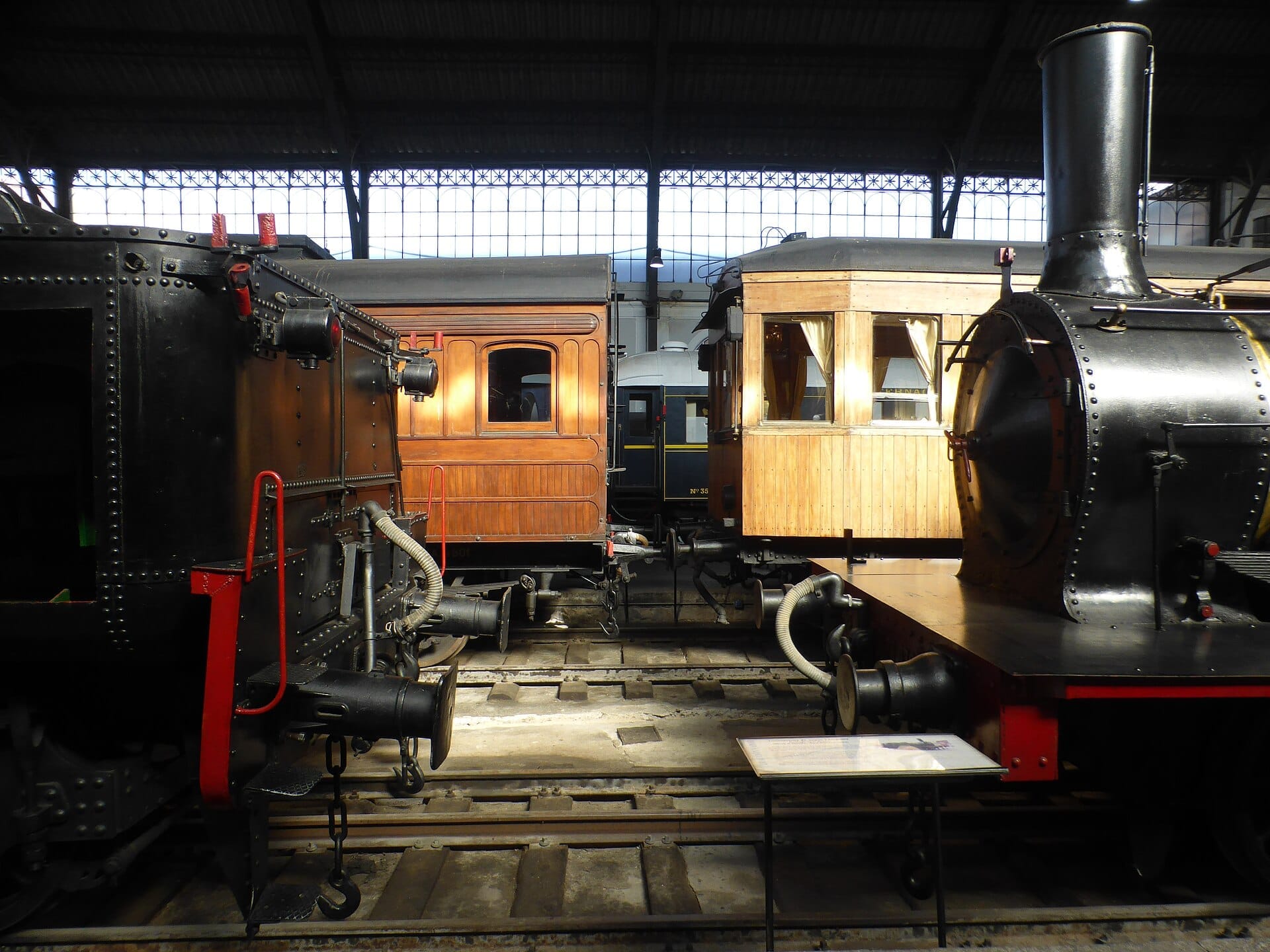
The building itself is as important as anything inside it. Delicias station opened in 1880 as the Madrid terminus of the MZA (Madrid–Zaragoza–Alicante) railway company. Its central nave, a cathedral-like structure of cast iron columns and a glazed barrel roof, was considered a feat of industrial architecture at the time. When passenger services were finally relocated and the station fell silent in the mid-20th century, the structure was preserved rather than demolished, a decision that now allows visitors to stand on the original platform stones surrounded by locomotives that once crossed the Iberian Peninsula.
💡 Local tip
Arrive at the museum entrance from Paseo de las Delicias and take a moment to view the station facade before going in. The exterior ironwork and brick detailing reward a slow look that most visitors skip entirely.
The Station Building: Architecture Worth the Trip Alone
The central nave of the old Delicias station is about 152 metres long and covered by a single iron-ribbed vault. Natural light filters in through the glass sections of the roof throughout the day, and the quality of that light changes considerably depending on the season and time. On a clear morning in October, the nave glows with a warm, diffused brightness that catches the polished metalwork of the locomotives. On an overcast winter afternoon, the atmosphere turns steelier and more austere, which, arguably, suits the industrial subject matter even better.
The original platform canopies and loading structures along the sides of the nave have been preserved, giving the interior a layered quality. You are not looking at reconstructed railway history in a neutral white cube; you are standing in an operational station that has been frozen in time. The smell of old metal, timber sleepers, and machine oil is real. These are not replicas.
The Delicias building is part of a wider legacy of 19th-century industrial architecture in Madrid. If you are interested in how the city developed through its infrastructure, combine this visit with a walk through Madrid Río, the redesigned riverfront park that passes just west of the museum and reflects the same Manzanares corridor that railways once followed out of the capital.
Tickets & tours
Hand-picked options from our booking partner. Prices are indicative; availability and final rates are confirmed when you complete your booking.
Paseo del Arte pass for Museo Nacional Thyssen-Bornemisza, Reina Sofia Museum and Prado Museum
From 37 €Instant confirmationImperial Madrid walking tour
From 16 €Instant confirmationFree cancellationTapas and history tour through old Madrid
From 75 €Instant confirmationFree cancellationRibera del Duero wine tour and tasting from Madrid
From 170 €Instant confirmation
The Collection: Locomotives, Carriages, and Everyday Rail Life
The permanent collection holds dozens of full-size vehicles spanning the steam age through to the diesel era. Among the most photographed pieces are the large steam locomotives positioned along the central tracks, their scale truly surprising even to visitors who consider themselves indifferent to trains. The oldest examples date to the 19th century and show engineering conventions that look almost sculptural compared to modern rail equipment.
Beyond the machines, the museum is thoughtful about the human dimension of rail travel. Several carriages have been restored to period interiors, including sleeping compartments and dining cars that illustrate what long-distance travel meant for different social classes in Spain. The contrast between a first-class carriage of the early 20th century and the wooden bench seating of a third-class car communicates something about social history that a panel of text never quite manages.
A working model railway layout occupies a dedicated section and tends to draw children magnetically. It is detailed enough to hold adult interest as well, with miniature representations of Spanish stations, landscapes, and rolling stock running continuously. Budget extra time here if you are visiting with anyone under twelve.
- Full-size steam and diesel locomotives from the 19th and 20th centuries
- Restored period carriages with original interiors including sleeping and dining cars
- Extensive collection of railway signalling, clocks, tools, and uniforms
- Large working model railway layout
- Rotating temporary exhibitions on transport and industrial heritage themes
- Archive and documentation centre (access conditions vary)
Opening Hours, Tickets, and Getting There
From October through May, the museum is open Monday to Friday from 09:30 to 15:00, Saturday and public holidays from 10:00 to 19:00, and Sunday from 10:00 to 15:00. From June through September, it operates daily from 10:00 to 15:00. The museum is closed on 25 December, 1 January, and 6 January. These hours are subject to change, so confirm on the official website before visiting.
Admission is €7 for adults and €4 for a reduced ticket covering children from 4 to 12, students, seniors, and certain other categories. Children under four accompanied by an adult enter free, as do visitors with disabilities and one accompanying person. The ticket prices represent good value given the scale of the collection and the quality of the building.
ℹ️ Good to know
Getting here is straightforward: Metro Line 3 stops at Delicias, directly outside the museum. Alternatively, Cercanías Renfe lines C1, C7, and C10 all call at Estación de Delicias, useful if you are connecting from Atocha station. The museum address is Paseo de las Delicias, 61.
The Arganzuela district location puts the museum about 15 to 20 minutes on foot from Lavapiés, the neighbourhood immediately to the north. If you are spending a day in that area, the museum fits naturally as an afternoon addition. The walk south from the Lavapiés metro stop takes you through streets that shift gradually from the multicultural density of the neighbourhood toward the quieter industrial-heritage zone around the old station.
Lavapiés itself rewards exploration before or after your museum visit. The neighbourhood has one of Madrid's most distinctive characters, with a mix of traditional Madrid life and a truly international food scene. For context on the area, see our guide to Lavapiés.
Best Times to Visit and What to Expect
Weekday mornings between opening and noon are the quietest periods. Weekend afternoons, particularly on Saturday when the extended 10:00 to 19:00 opening applies, see more visitors including families and school groups. The museum is large enough that even a busy Saturday rarely feels crowded in the main nave, but the model railway section can get congested.
The roofed interior makes this an excellent choice during Madrid's summer heat or on rainy days in spring and autumn. Temperature inside the nave stays noticeably cooler than the street in July and August, which is a practical advantage when the city regularly exceeds 35°C. In winter, the building is not heavily heated, so a layer is useful.
⚠️ What to skip
The summer opening hours (June to September) are shorter, closing at 15:00 daily with no extended Saturday hours. If you are visiting in summer, plan to arrive no later than 13:00 to give yourself adequate time.
Photography is generally permitted throughout the permanent collection without flash. The scale of the locomotives and the quality of natural light in the nave make for impressive images without any specialist equipment. Wide-angle shots from the far end of the central nave, looking back toward the entrance facade through the row of locomotives, capture the full spatial drama of the building.
How It Fits Into a Broader Madrid Itinerary
The Railway Museum sits at the southern edge of what might be called Madrid's cultural corridor. To the north along Paseo del Prado, you have the major art museums. If you are planning a full day or two around this part of the city, consider pairing the museum with the Museo Reina Sofía, which is about 25 minutes on foot, or with the Real Jardín Botánico for a different pace entirely.
For travelers working through a structured Madrid visit, this museum makes a solid addition to a longer itinerary. Our guide to the best museums in Madrid covers how to prioritize your time across the city's extensive museum landscape, including which collections are essential and which are better suited to specific interests.
The museum is not a destination that will appeal to every traveler. If your interest in railways or industrial heritage is close to zero, the collection will not convert you, despite the quality of the building. For those who find themselves neutral on the subject, the architecture alone makes the visit worthwhile, but it may not occupy a full two hours. Visitors seeking exclusively contemporary art, nightlife, or high-end shopping will find little here that matches those priorities.
Insider Tips
- The Saturday extended hours (10:00 to 19:00) during the October–May period are the best window for a relaxed visit: you get natural light in the nave during midday, the building is quieter than on school-day mornings, and you have enough time to explore without rushing.
- Walk the full length of the central nave before stopping to examine individual exhibits. Getting the overall spatial impression first, the iron columns retreating into the distance, the glass roof overhead, makes the collection feel more coherent when you circle back.
- The side galleries and smaller rooms off the main nave hold technical and social history displays that most visitors skip. The signalling equipment collection and the room dedicated to railway workers' uniforms and daily life are particularly good and rarely crowded.
- If you are visiting with children, tell them about the model railway at the end rather than the beginning. Otherwise, it is nearly impossible to get them to engage with the full-size locomotives first.
- The Cercanías connection at Delicias station is genuinely convenient if you are coming from or continuing to Atocha. Using suburban rail rather than metro adds a small layer of thematic coherence to a railway museum visit.
Who Is Museo del Ferrocarril de Madrid For?
- Families with children aged 5 to 14 who have any interest in trains or machines
- Architecture and industrial heritage enthusiasts drawn to 19th-century iron construction
- Travelers looking for a quality museum experience outside Madrid's most tourist-heavy corridors
- Visitors seeking shelter from summer heat or autumn rain without sacrificing cultural substance
- Anyone building a full-day itinerary around the Lavapiés and Arganzuela areas
Nearby Attractions
Other things to see while in Lavapiés:
- La Casa Encendida
Housed in a century-old neo-Mudéjar building in Lavapiés, La Casa Encendida offers a genuinely free and inclusive cultural programme spanning contemporary art exhibitions, cinema, workshops, and a rooftop terrace bar. It is one of the few spaces in Madrid where cutting-edge culture, social activism, and community life coexist under the same roof.
- Matadero Madrid
Matadero Madrid is a sprawling contemporary arts centre built inside a neo-Mudéjar slaughterhouse complex dating from 1908. Free to enter for most exhibitions, it hosts digital art, theatre, cinema, and outdoor events on the southern edge of Madrid along the Manzanares River.
- Mercado de Antón Martín
Mercado de Antón Martín is a working municipal market on Calle Santa Isabel in Embajadores, Madrid. Open since 1941, it mixes traditional food stalls with a ground-floor gastro area and — unusually — a celebrated flamenco dance school on the third floor. Entry is free.