Centro Cultural Conde Duque: Madrid's Baroque Cultural Complex
Occupying a former 18th-century royal barracks in the heart of Malasaña, the Centro Cultural Conde Duque is one of Madrid's most architecturally striking public cultural spaces. With around 58,000 m² dedicated to exhibitions, theatre, music, and community events, most of it free to enter, it rewards visitors who go beyond the obvious tourist circuit.
Quick Facts
- Location
- Calle del Conde Duque 9–11, 28015 Madrid (Malasaña)
- Getting There
- Ventura Rodríguez (Line 3), San Bernardo (Lines 2 & 4), or Noviciado (Line 2); several EMT bus routes stop nearby
- Time Needed
- 1–3 hours depending on exhibitions and events
- Cost
- Many activities free; ticketed events vary — check condeduquemadrid.es for current prices
- Best for
- Architecture lovers, contemporary art, free culture, summer outdoor events
- Official website
- www.condeduquemadrid.es
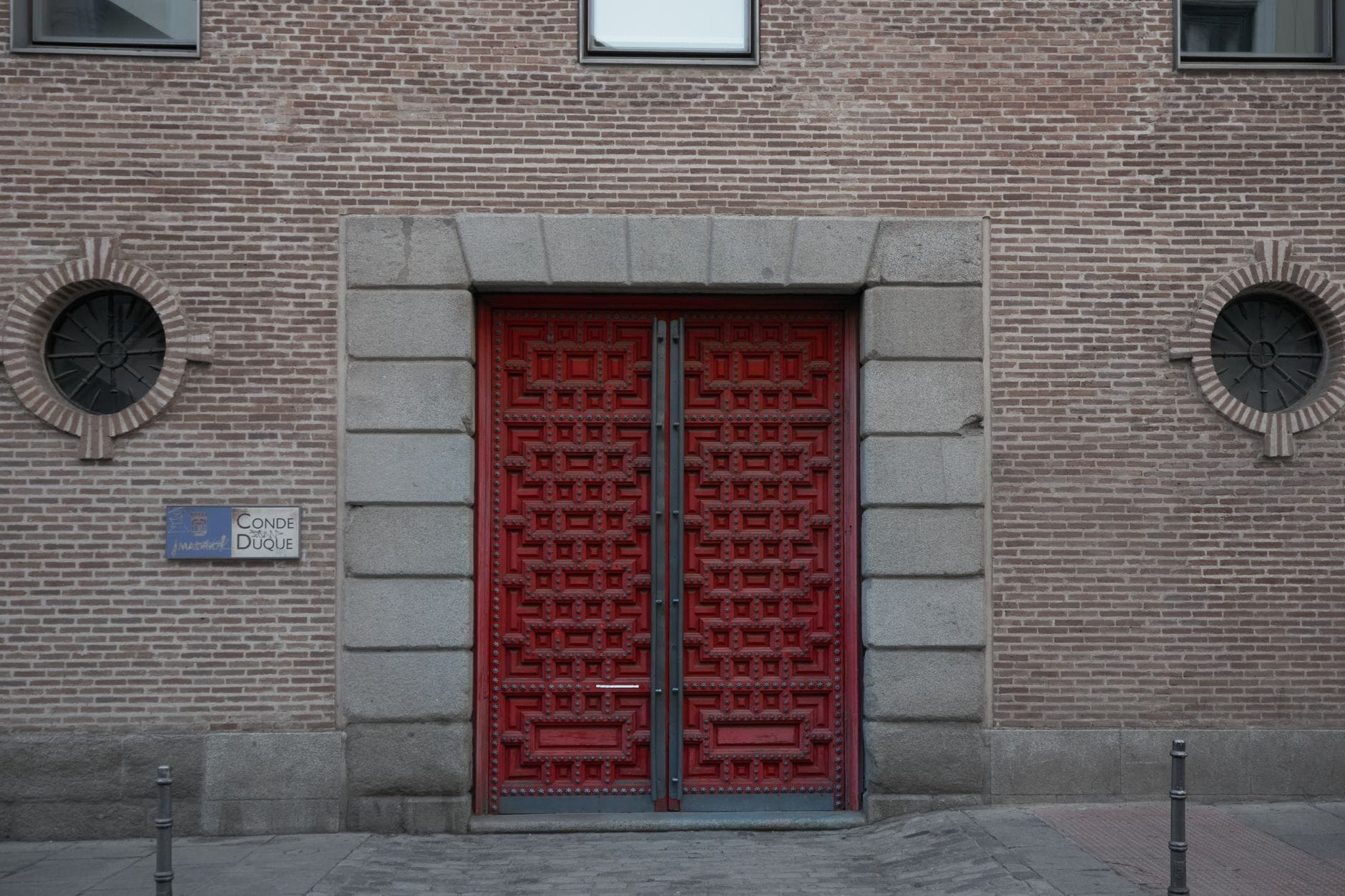
What Is Conde Duque and Why Does It Matter?
The Centro Cultural Conde Duque occupies the largest surviving baroque military complex in Spain. Built in the early 18th century to house the Reales Guardias de Corps, the royal mounted bodyguard of Philip V, the barracks were designed by Pedro de Ribera, one of the defining architects of the Spanish Churrigueresque style. The facade facing Calle del Conde Duque is a masterwork of ornate stonework, with Ribera's signature sculptural portal rising above a street that otherwise feels like any ordinary residential block in Malasaña. The contrast is half the point.
The complex served the Spanish military until 1969. After sitting largely derelict for over a decade, it was declared a Bien de Interés Cultural in 1976 and opened as a cultural centre in 1983. A comprehensive restoration carried out between 2006 and 2011 modernized the internal infrastructure while preserving the three vast interior courtyards and the monumental exterior. Today it covers around 58,000 m² and houses an auditorium, a theatre, multiple exhibition galleries, a municipal library, and Madrid's newspaper archive.
💡 Local tip
The building's main portal on Calle del Conde Duque is one of the finest examples of Churrigueresque baroque in Madrid. Spend a few minutes studying the carved stone reliefs before entering — most visitors walk straight past without looking up.
The Architecture: Three Courtyards and a Baroque Portal
Pedro de Ribera's original design organized the barracks around three large rectangular courtyards, a spatial logic that still shapes how visitors experience the building today. Once you pass through the main gate, the scale becomes clear: the inner courtyards are wide, sunlit, and framed by two-story arcaded galleries. The stone is warm ochre in morning light and takes on a deeper amber quality in the late afternoon, when the western sun catches the upper levels and the ground-floor arcades fall into cool shadow.
The 2006–2011 rehabilitation introduced contemporary interventions with care: glass-and-steel canopies protect some courtyard sections without competing with the historic masonry, and the circulation has been modernized with lifts and accessible routes. The blend is less jarring than it sounds in practice. What you notice is the space itself, not the renovation. The courtyards function as informal gathering zones where locals cut through on their lunch break, students sit with their phones, and children run across the flagstones while their parents browse a temporary exhibition.
If you are working through a broader Madrid architecture guide, Conde Duque fits naturally alongside the Churrigueresque details on nearby Gran Vía and the civic baroque of the old city. It represents a different register: military rather than ecclesiastical, civic rather than devotional.
Tickets & tours
Hand-picked options from our booking partner. Prices are indicative; availability and final rates are confirmed when you complete your booking.
Madrid cultural pass with Royal Palace and museum entries
From 84 €Instant confirmationElectric tuk-tuk tour of Madrid's historic center
From 53 €Instant confirmationFree cancellationRoyal Monastery of El Escorial and the Valley of the Fallen trip from Madrid
From 64 €Instant confirmationFree cancellationFlexible time Real Madrid: Bernabeu Stadium & Museum Entry
From 42 €Instant confirmation
What's Inside: Exhibitions, Events, and Day-to-Day Activity
The programming at Conde Duque is impressively wide-ranging. The exhibition halls host contemporary art, photography, and design shows that rotate frequently. A significant portion of the annual programme is free of charge, which means the audience skews local rather than tourist, a real advantage if you want to see how Madrid residents actually engage with culture rather than which attractions they queue for.
Beyond exhibitions, the centre runs a regular schedule of theatre, dance, and music performances in its auditorium and theatre spaces. The Madrid newspaper archive (Hemeroteca Municipal) is housed here and open to researchers. The municipal library branch on site adds another layer of daily civic activity that gives the building a lived-in quality very different from a dedicated museum.
Summer transforms the space most dramatically. The outdoor courtyard becomes a venue for open-air concerts and cultural events during the warmer months, particularly in July and August when the VeranoMadrid festival programme is active. On those evenings the courtyards fill with a truly mixed crowd — locals of all ages, some tourists, plenty of people who seem to have wandered in without a specific plan. The atmosphere is relaxed and social in a way that indoor venues rarely manage, and many events are free or low-cost.
ℹ️ Good to know
Exhibition halls are closed on Mondays. General centre hours are Monday–Saturday 09:00–21:00 and Sunday/public holidays 10:30–14:00. Exhibition hall hours (Tue–Sat) are 10:00–14:00 and 17:30–21:00, with a modified summer schedule (approx. 15 June–21 September) closing earlier in both slots. Always check condeduquemadrid.es before visiting, as programming changes seasonally.
How the Experience Changes by Time of Day
Mornings between 10:00 and 12:00 are the quietest window for visiting the exhibitions. The light in the courtyards is diffuse and even, good for appreciating the architecture without harsh shadows, and the galleries are lightly attended. The local library users are already at work, but the tourist flow has not yet picked up. This is the time to take your time.
Midday brings a shift. The surrounding Malasaña neighbourhood runs late by northern European standards, and the centre reflects this: foot traffic increases noticeably after 12:30 as people arrive for lunch-hour visits. The small cafe on site and the benches in the main courtyard fill up. If you are coming purely for the architecture and want space to photograph without people in every frame, mid-morning on a Tuesday or Wednesday is your best option.
Evening visits, particularly on weekdays from 17:30 onward, have a different character again. The galleries reopen after the afternoon break and attract a post-work crowd. On nights when there is a performance in the theatre or auditorium, the entrance area becomes animated, with people arriving early and gathering under the arcades. In summer, evening events in the courtyard can run until late and represent some of the more atmospheric cultural experiences available in central Madrid at no or low cost.
Malasaña Context: What's Around Conde Duque
The cultural centre sits at the northwestern edge of Malasaña, one of Madrid's most characterful inner-city neighborhoods. The streets immediately surrounding Conde Duque are quieter than the neighbourhood's commercial core around Plaza del Dos de Mayo, lined with small bars, independent bookshops, and the kind of low-key restaurants that cater primarily to residents rather than visitors.
A short walk south brings you to Plaza del Dos de Mayo, the social hub of Malasaña, named for the 1808 uprising against Napoleonic forces. Walking east takes you toward Chueca and eventually the Gran Vía. The combination of Conde Duque with a neighbourhood walk and a meal in Malasaña makes for a natural half-day itinerary that requires no queuing and minimal planning.
💡 Local tip
After visiting Conde Duque, walk south along Calle del Conde Duque itself toward Plaza de las Comendadoras. The square is small, little-visited by tourists, and has a handful of good terraza bars. It gives you the texture of the neighborhood without the crowds of the more famous spots.
Practical Notes for Visitors
Getting here requires no special planning. The Ventura Rodríguez metro station on Line 3 is about a 5-minute walk, and San Bernardo station on Lines 2 and 4 is similarly close. Multiple EMT bus routes serve the area. The location is central enough that visitors staying in Malasaña, Chamberí, or near Gran Vía can walk comfortably.
There is no dress code and no security theatre at the entrance. You can walk into the main courtyard without buying a ticket or showing identification. This informality is part of the appeal, but it also means the experience is largely self-directed. There are no audio guides, no mandatory routes, and staff in the galleries are generally present but not intrusive. If you prefer structured museum visits with interpretation panels at every turn, this is not that kind of place.
Photography in the courtyards and public areas is generally permitted. Exhibition-specific rules vary by show — look for signage at the entrance to each gallery. Weather matters only for outdoor evening events in summer; the interior spaces are unaffected by rain. If you are planning around the summer outdoor programme, check the official website for schedules, as events can be cancelled or rescheduled. For a broader picture of how to spend your time in this part of the city, the things to do in Madrid guide covers the full range of options across all neighborhoods.
⚠️ What to skip
The centre is closed on 24 December, 25 December, 31 December, and 1 January. Exhibition halls are closed every Monday. The summer schedule (approximately 15 June–21 September) shortens opening hours in both morning and afternoon sessions. Verify current hours at condeduquemadrid.es before making a specific journey.
Who Should Skip Conde Duque
Visitors with only one or two days in Madrid and a checklist mentality focused on the Prado, Reina Sofía, and Royal Palace should probably leave Conde Duque for a return trip. The centre rewards curiosity and a relaxed pace rather than efficient landmark collection. It has no single unmissable object or canonical work — the experience is cumulative and architectural rather than highlight-driven.
Travelers primarily interested in classical or Golden Age art will find more focused collections at the Museo del Prado or the Real Academia de Bellas Artes de San Fernando. Conde Duque's programming leans toward contemporary work, and the permanent collection of the building is the building itself.
Insider Tips
- The main portal on Calle del Conde Duque is best photographed in morning light (before 11:00) when the sun is low enough to catch the carved reliefs in the stonework without flattening them out.
- Check the VeranoMadrid programme in advance if you are visiting July–August. Some of the most atmospheric and well-attended events are outdoor concerts in the central courtyard, and popular performances can fill up even though many are free or low-cost.
- The Hemeroteca Municipal (newspaper archive) inside the building holds one of the largest collections of Spanish periodicals in the country. It is not a tourist attraction per se, but researchers and journalists find it genuinely useful. Ask at the main reception if you need access.
- The smaller side courtyard, less visible from the main entrance, tends to be quieter and is a good place to sit and take in the scale of the building without the foot traffic of the main patio.
- Combine your visit with the Mercado de los Mostenses, a short walk away on Plaza de los Mostenses, for a look at one of Madrid's less touristy working food markets — a useful contrast to the polished atmosphere of the cultural centre.
Who Is Centro Cultural Conde Duque For?
- Architecture enthusiasts who want baroque at human scale, free to explore
- Contemporary art and design followers looking for exhibition programming beyond the major museums
- Travelers in Madrid for more than three days who want to experience local cultural life rather than tourist circuits
- Summer visitors seeking free or low-cost outdoor evening events with a genuine local crowd
- Anyone spending time in Malasaña who wants a reason to linger in the neighborhood for an afternoon
Nearby Attractions
Other things to see while in Malasaña:
- Mercado de San Ildefonso
Mercado de San Ildefonso on Calle Fuencarral is Madrid's original vertical street food market, spreading across three floors with around 16 to 20 gastronomy stalls, three bars, and two semi-covered terraces. Entry is free. The food costs money, but the atmosphere is part of the deal.
- Museo de Historia de Madrid
Housed in a stunning 18th-century Baroque building in Malasaña, the Museo de Historia de Madrid is one of the capital's most underrated cultural institutions. Free to enter and holding over 60,000 objects, it tells the story of Madrid from its medieval origins to the 20th century through maps, paintings, scale models, photographs, and decorative arts.
- Museo del Romanticismo
The Museo del Romanticismo is Madrid's best-preserved window into 19th-century bourgeois life, housed in a 1776 palace in the Malasaña neighborhood. With original furniture, personal objects, and period paintings arranged as a lived-in home, it rewards slow, curious visitors far more than most of the city's larger institutions.
- Plaza de Dos de Mayo
Plaza del Dos de Mayo is a free, open public square in Madrid's Malasaña neighborhood that marks the site of the 1808 uprising against Napoleon. Anchored by a monumental arch and statues of Captains Daoíz and Velarde, it shifts from a quiet morning garden to a lively afternoon meeting point as the day unfolds.