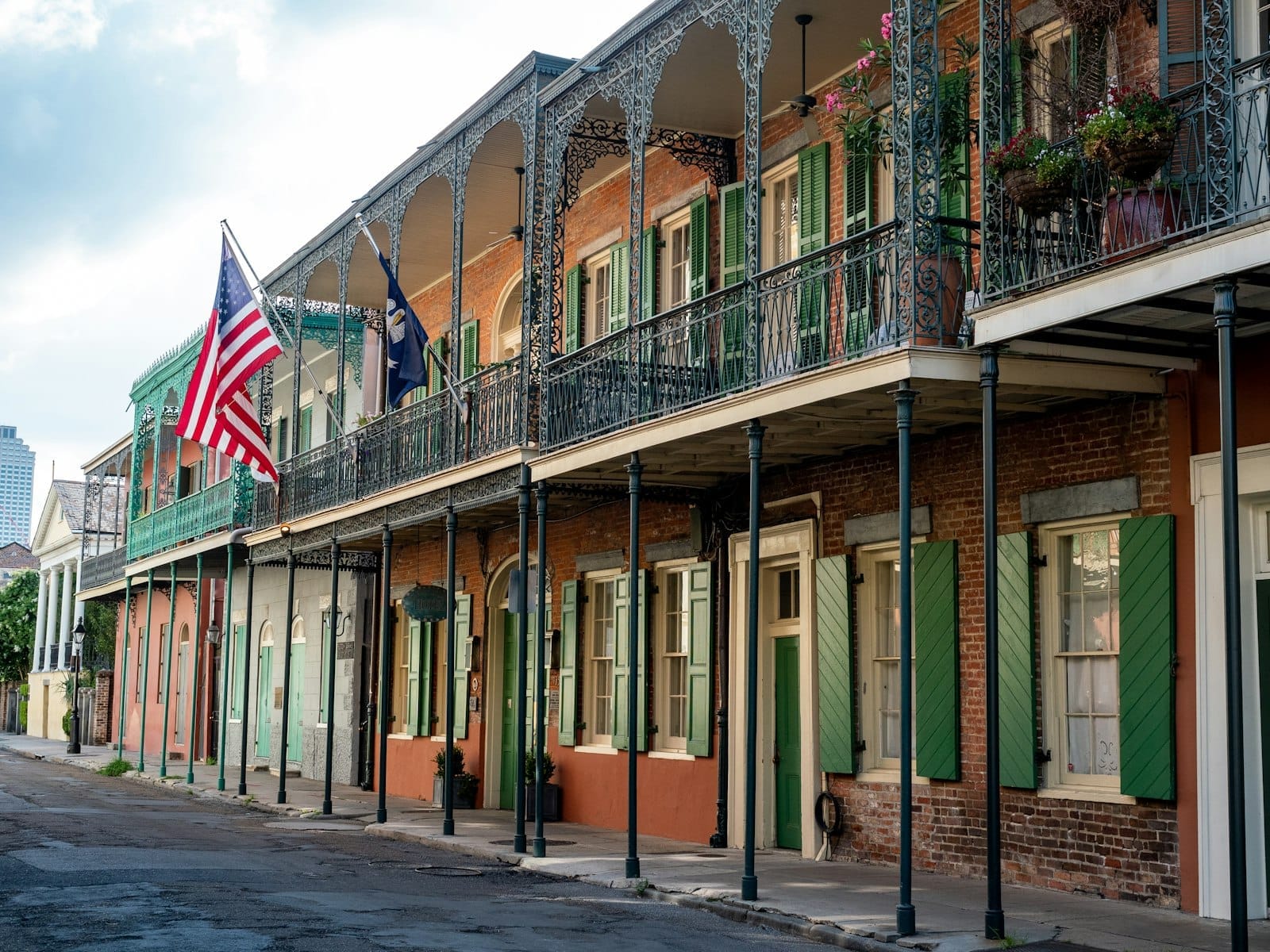
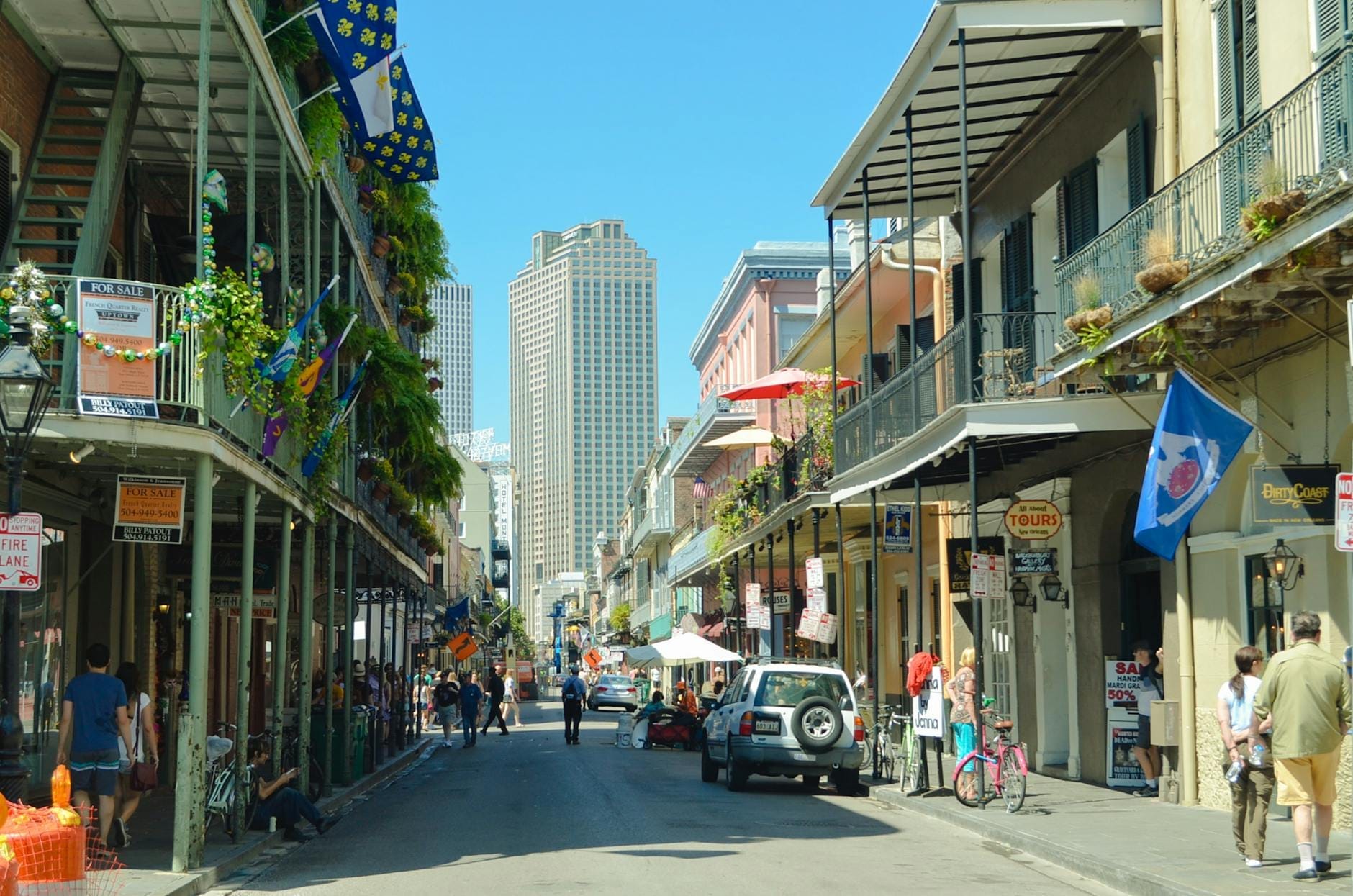
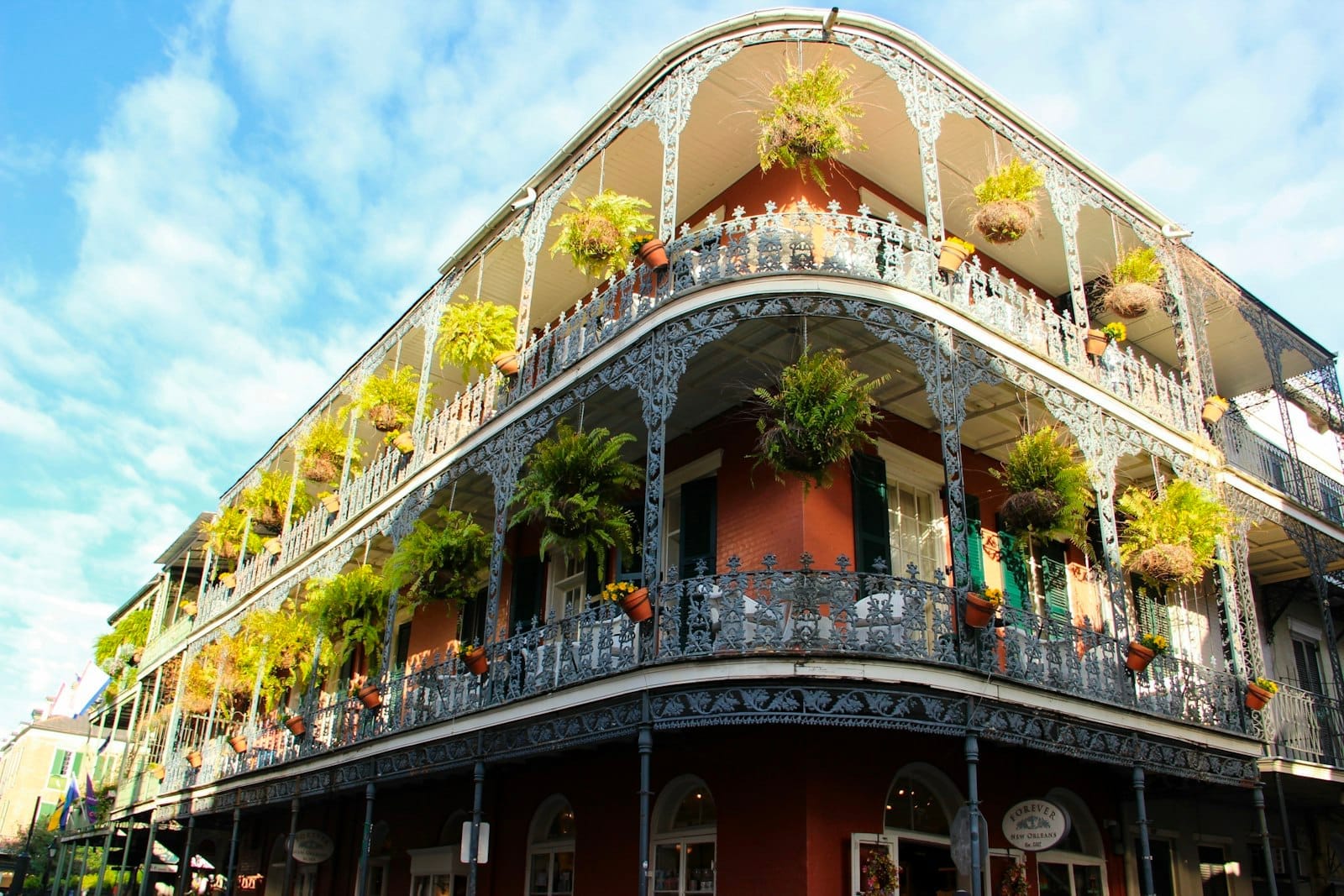
The French Quarter is the oldest neighborhood in New Orleans, covering 78 to 85 blocks between Canal Street and Esplanade Avenue along the Mississippi River. It holds the city's most iconic architecture, its most famous nightlife strip, and some of its most significant cultural institutions. No other neighborhood in New Orleans concentrates so much history, noise, beauty, and contradiction into such a compact space.
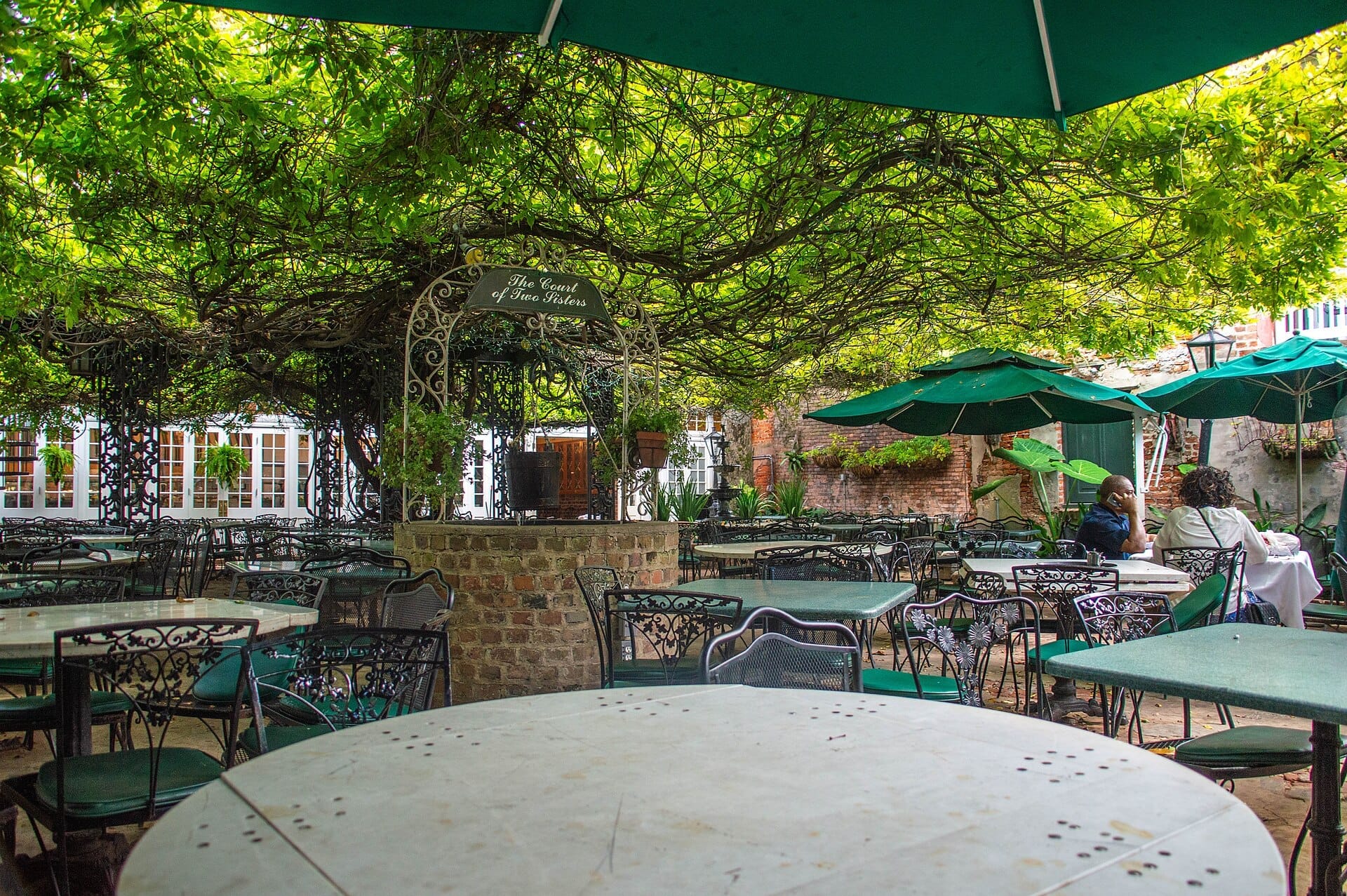
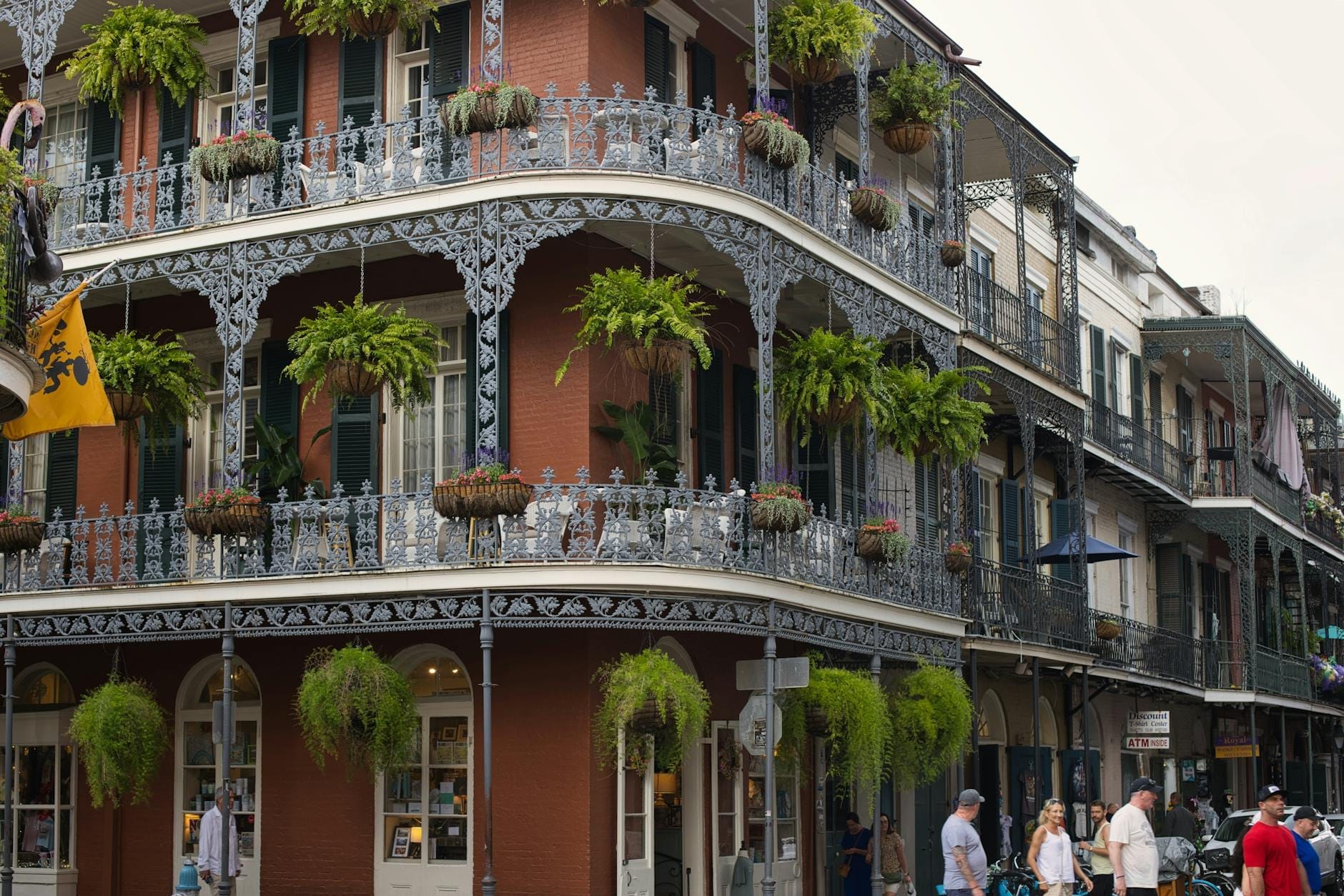
The French Quarter is where New Orleans began in 1718, and it remains the city's most recognized face: wrought-iron balconies dripping with ferns, the smell of chicory coffee and pralines drifting through the morning air, and the sound of a brass band that seems to come from everywhere at once. It is genuinely historic, genuinely beautiful, and genuinely overwhelming at certain hours, which is exactly why understanding how it works before you arrive makes all the difference.
Orientation
The French Quarter sits at the crescent bend of the Mississippi River in downtown New Orleans, and its shape follows the curve of the water. That curve is why locals use 'riverside' and 'lakeside' instead of south and north. The neighborhood covers roughly 0.66 square miles, bounded by Canal Street to the southwest, Esplanade Avenue to the northeast, the Mississippi River to the southeast, and North Rampart Street to the northwest.
The interior grid is logical and walkable. The main tourist corridor runs from Canal Street up to about St. Philip Street, with Bourbon Street and Royal Street running parallel through the heart of the Quarter. Jackson Square anchors the riverside end of the neighborhood, where Decatur Street runs along the waterfront. The upper portion of the Quarter, above St. Ann Street, tends to be quieter and more residential.
The French Quarter connects directly to several other key neighborhoods. The Central Business District begins immediately across Canal Street to the southwest. The Tremé lies just across North Rampart Street to the northwest, the oldest African American neighborhood in the country and home to Louis Armstrong Park. Cross Esplanade Avenue to the northeast and you enter the Marigny and Bywater, where Frenchmen Street's live music scene picks up where the Quarter leaves off.
Character & Atmosphere
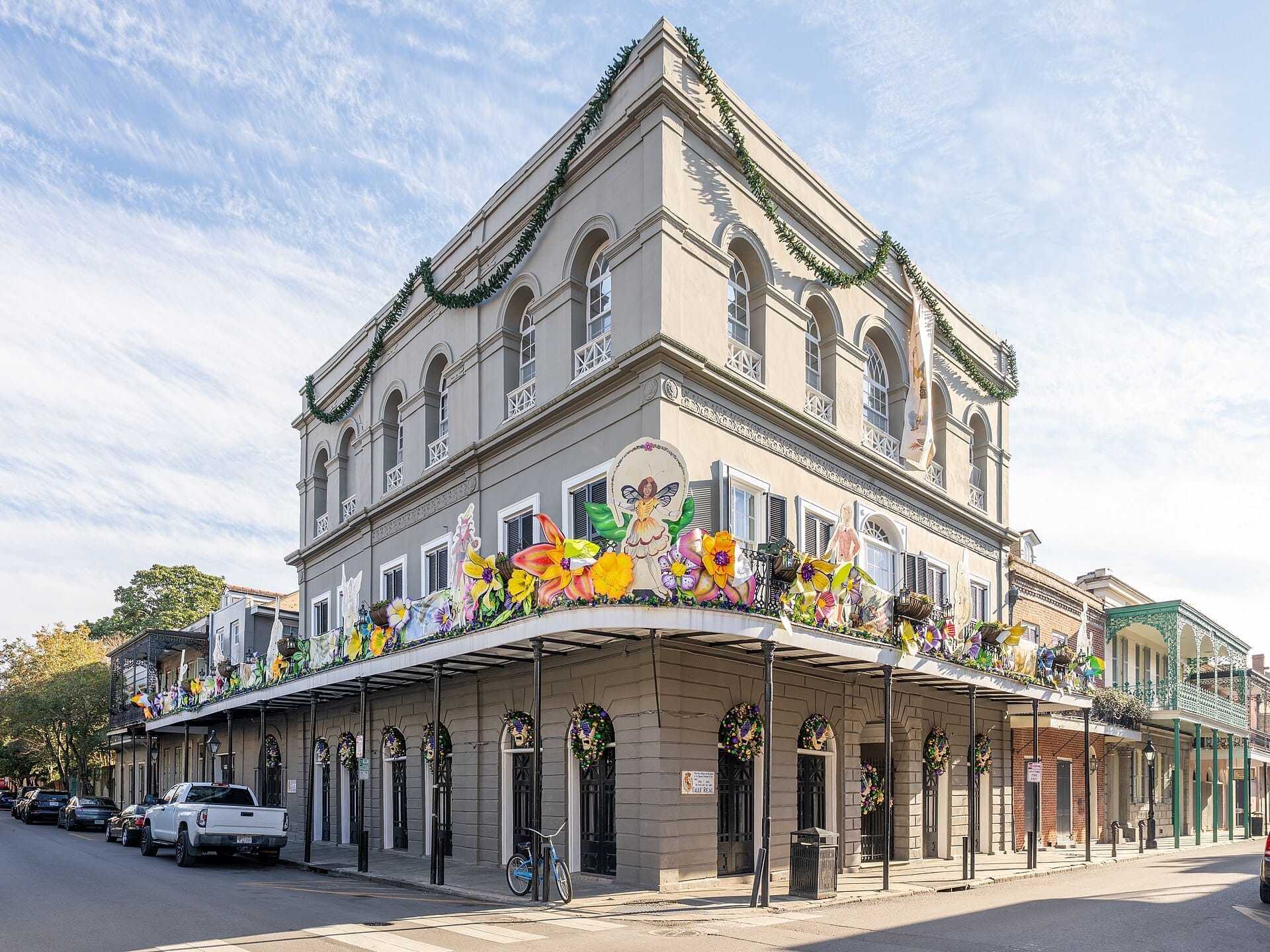
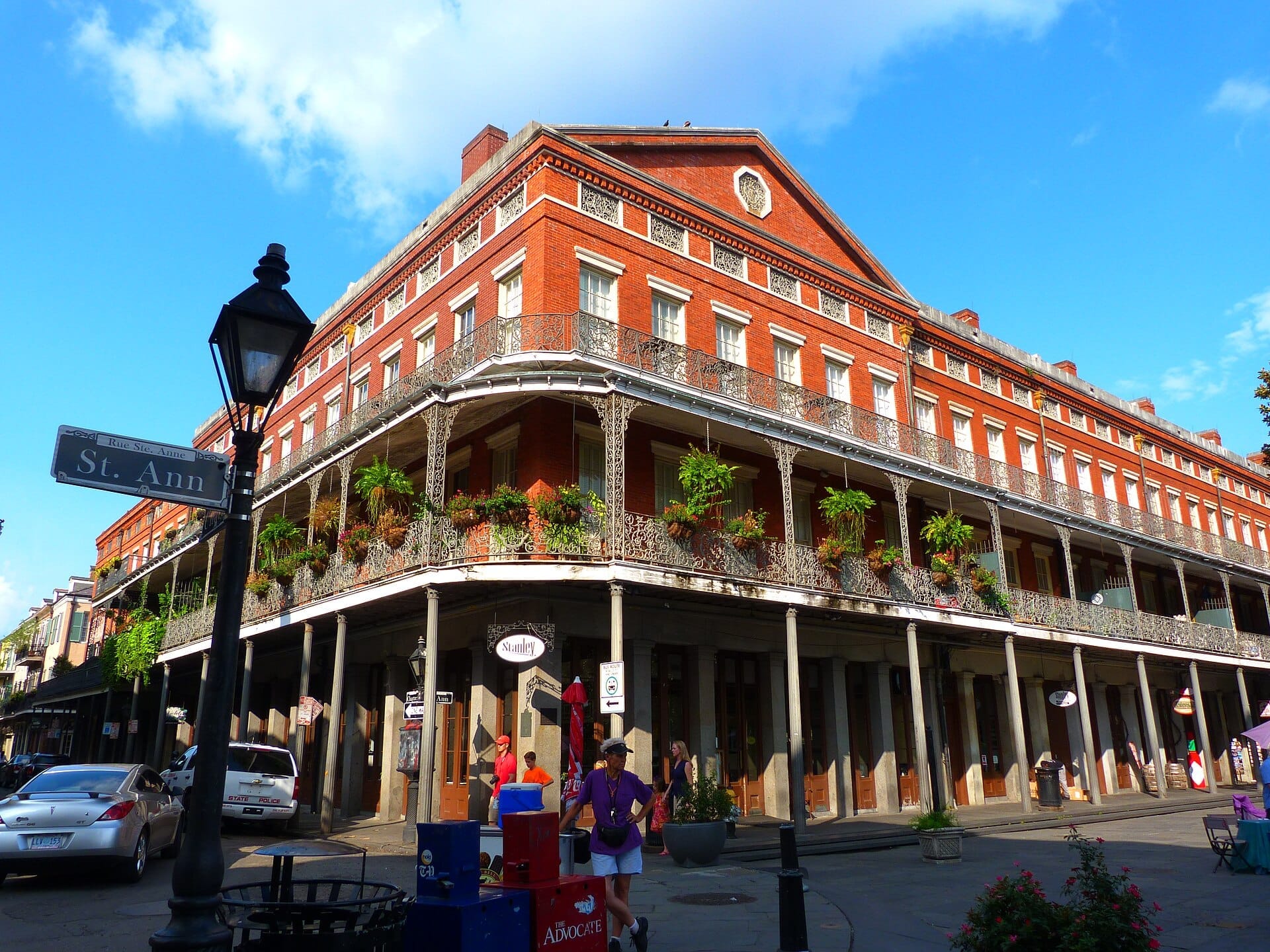
The French Quarter, known locally as the Vieux Carré (Old Square), is layered in a way that takes time to read. Despite the name, almost nothing you see was built by the French. The 1788 and 1794 fires destroyed most of the original colonial settlement, and the surviving architecture, the stucco-covered brick buildings with interior courtyards and the cast-iron lace balconies, dates largely from the Spanish colonial period and early American era. The Vieux Carré Commission, established in 1936, has regulated development ever since, which is why the neighborhood still reads as coherent rather than piecemeal.
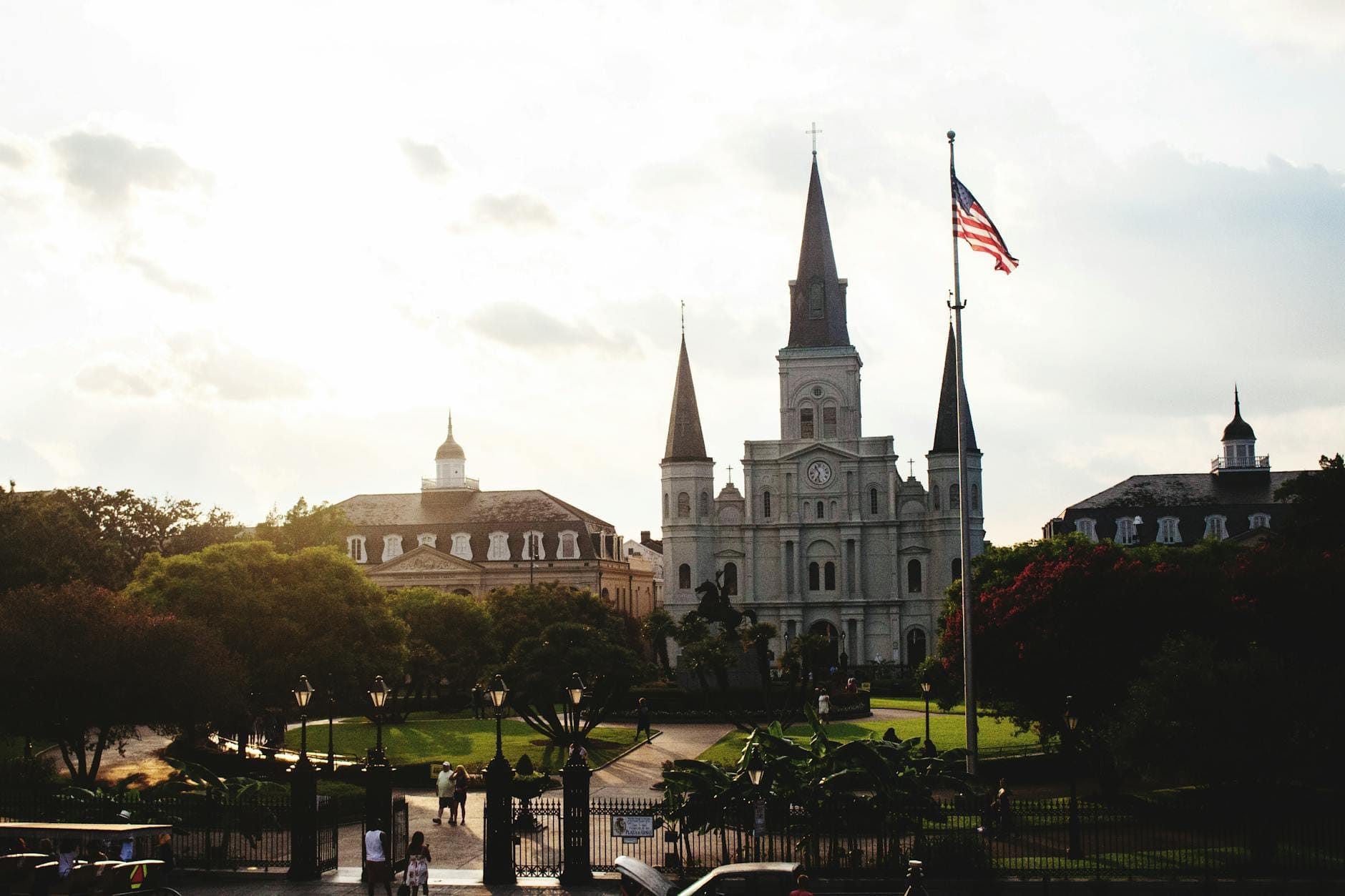
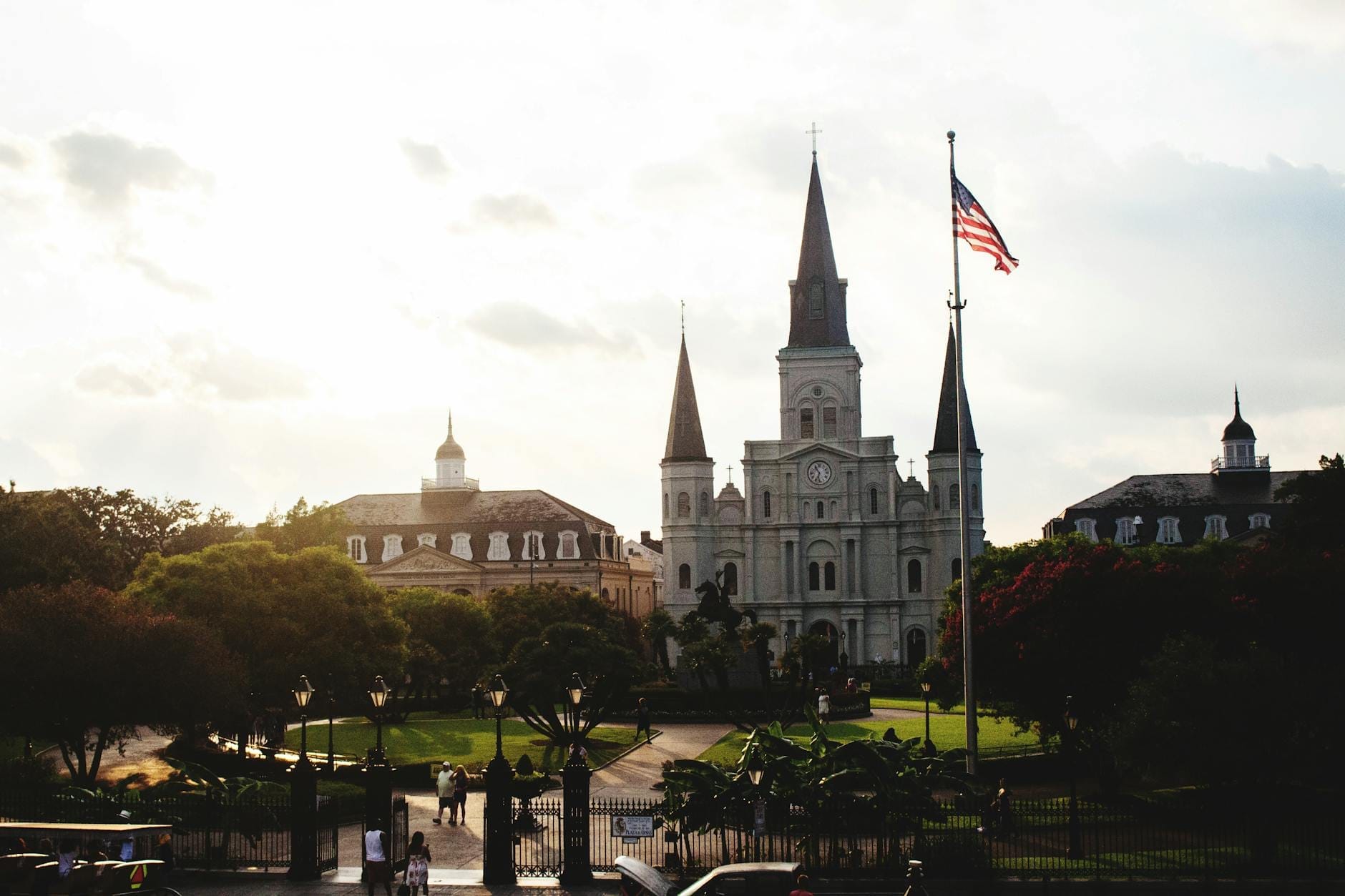
Mornings in the Quarter are genuinely pleasant. Before 9 a.m., you can walk Decatur Street while deliveries are being made to restaurants and the light is still low and golden across the river. The smell of coffee and warm dough is strongest early, when the lines at the famous café on the square are still short. Street musicians set up by mid-morning, and Jackson Square fills with portrait artists and tarot readers. The pace is slow and the light on the cathedral's white facade is striking.
By afternoon, the foot traffic thickens considerably. Royal Street, which runs parallel to Bourbon one block toward the river, has a different rhythm from its louder neighbor: galleries, antique shops, and the occasional brass quartet playing on the sidewalk. This is the Quarter that serious visitors prefer. Bourbon Street, by contrast, is loud, crowded, and pungent with spilled drinks from mid-afternoon onward. It delivers exactly what it promises, which is either the point or the problem, depending on your expectations.
After dark, the French Quarter fractures into several different experiences at once. The lower end of Bourbon Street, below St. Ann, draws bachelor parties and tourists looking for open-container cocktails and cover-band bars. Above St. Ann, sometimes called the 'Lavender Line,' the blocks toward Esplanade Avenue have a different character, historically associated with the city's LGBTQ community and noticeably calmer. The side streets, especially around Ursulines Avenue and Governor Nicholls Street, are quiet after 10 p.m. and genuinely atmospheric.
💡 Local tip
If you want to experience the Quarter without the Bourbon Street crowds, come on a Tuesday or Wednesday morning between October and April. The neighborhood belongs almost entirely to locals, joggers, and people walking dogs.
What to See & Do
The spiritual center of the French Quarter is Jackson Square, the park facing the Mississippi River that has been a public gathering place since the colonial era. The square is framed by the St. Louis Cathedral on one side and the Pontalba Buildings on two others. These 1840s apartment buildings are among the oldest in the United States and still have residents on the upper floors while shops occupy the ground level.
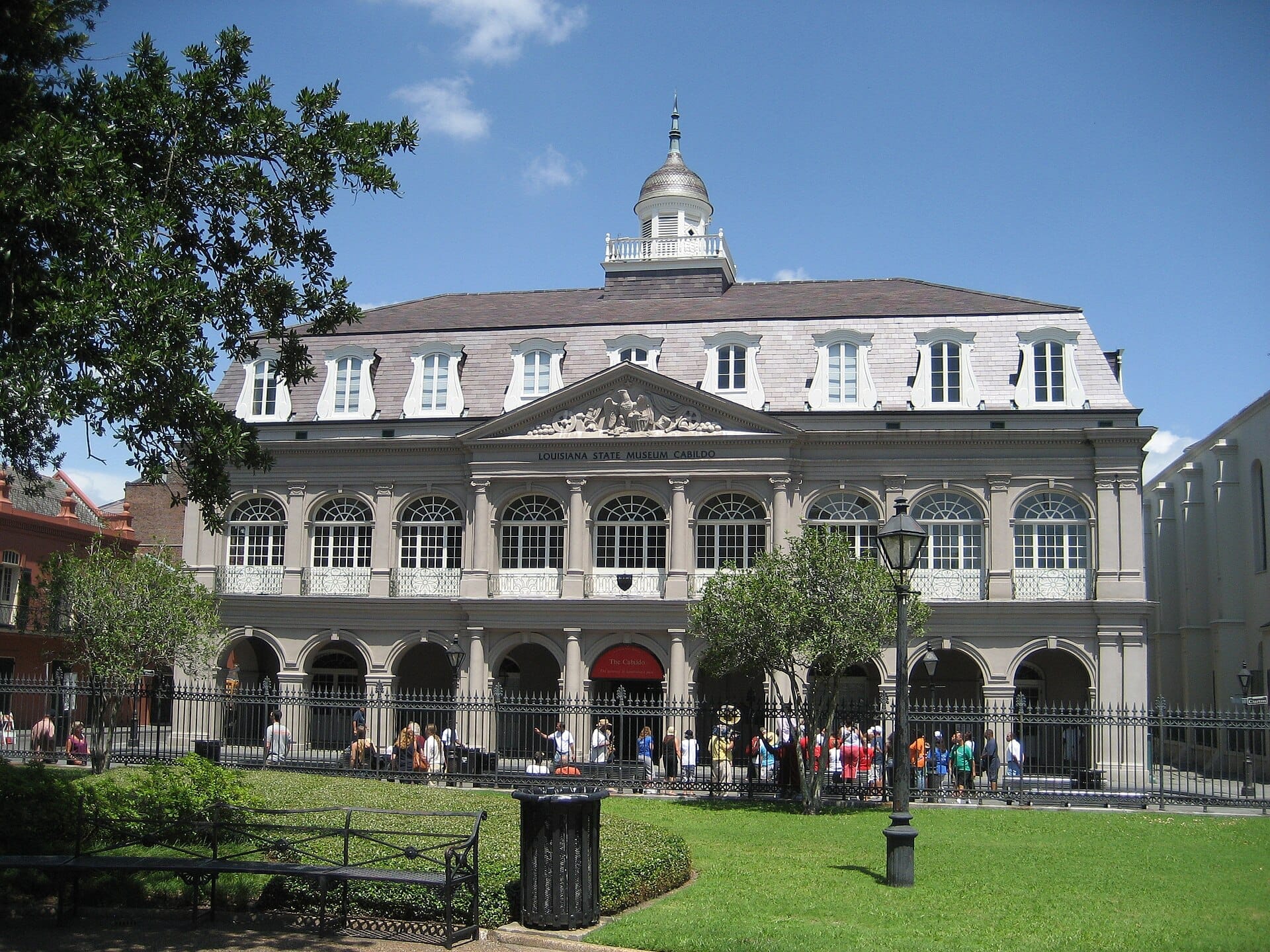
Adjacent to the cathedral, the Cabildo is one of the most historically significant buildings in Louisiana. It was the site of the Louisiana Purchase transfer in 1803 and now houses a branch of the Louisiana State Museum with exhibits tracing the city's colonial history, including artifacts from the antebellum period and a genuine Napoleon death mask. The Presbytère next door covers Mardi Gras history and hurricane Katrina through detailed, well-curated displays.
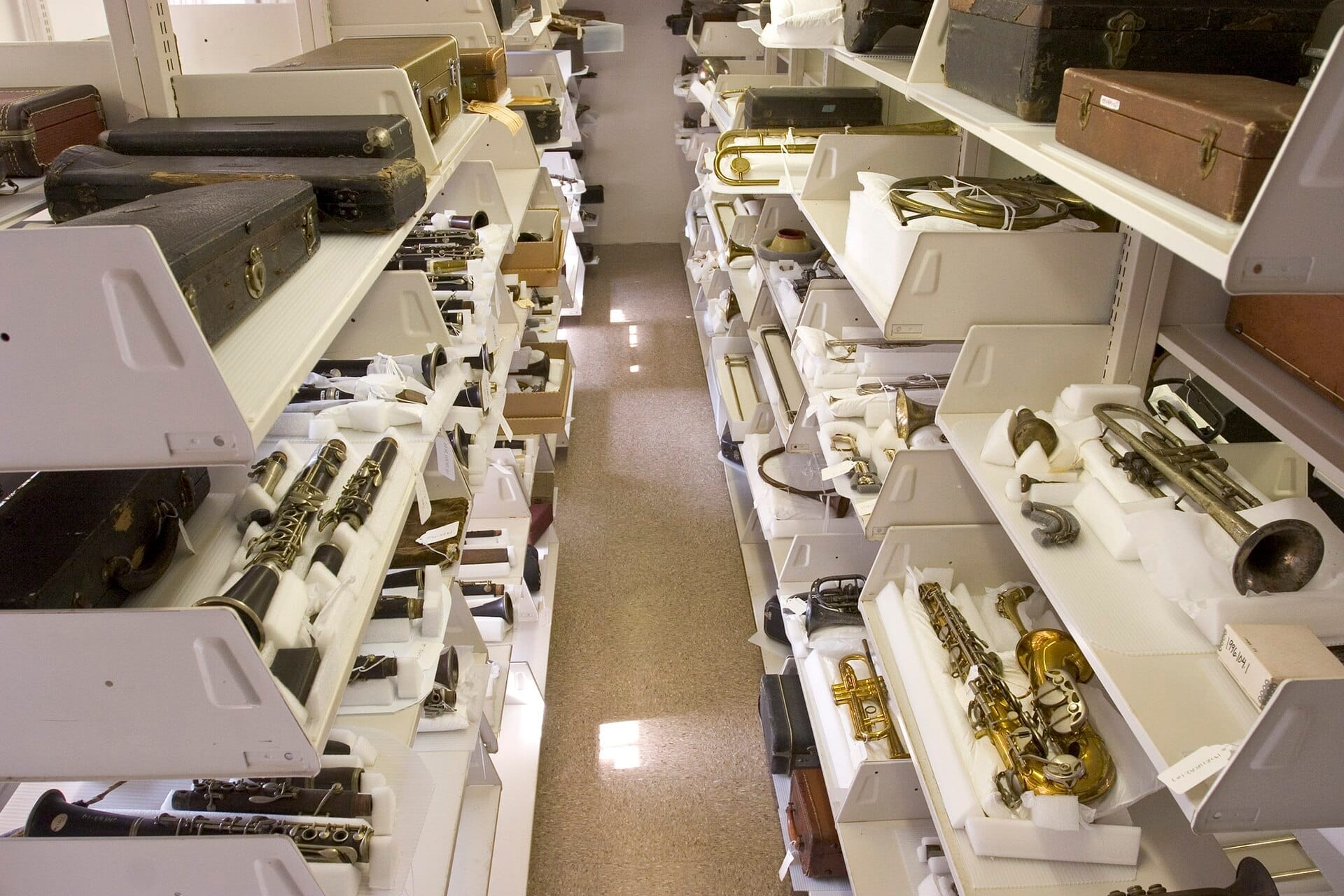
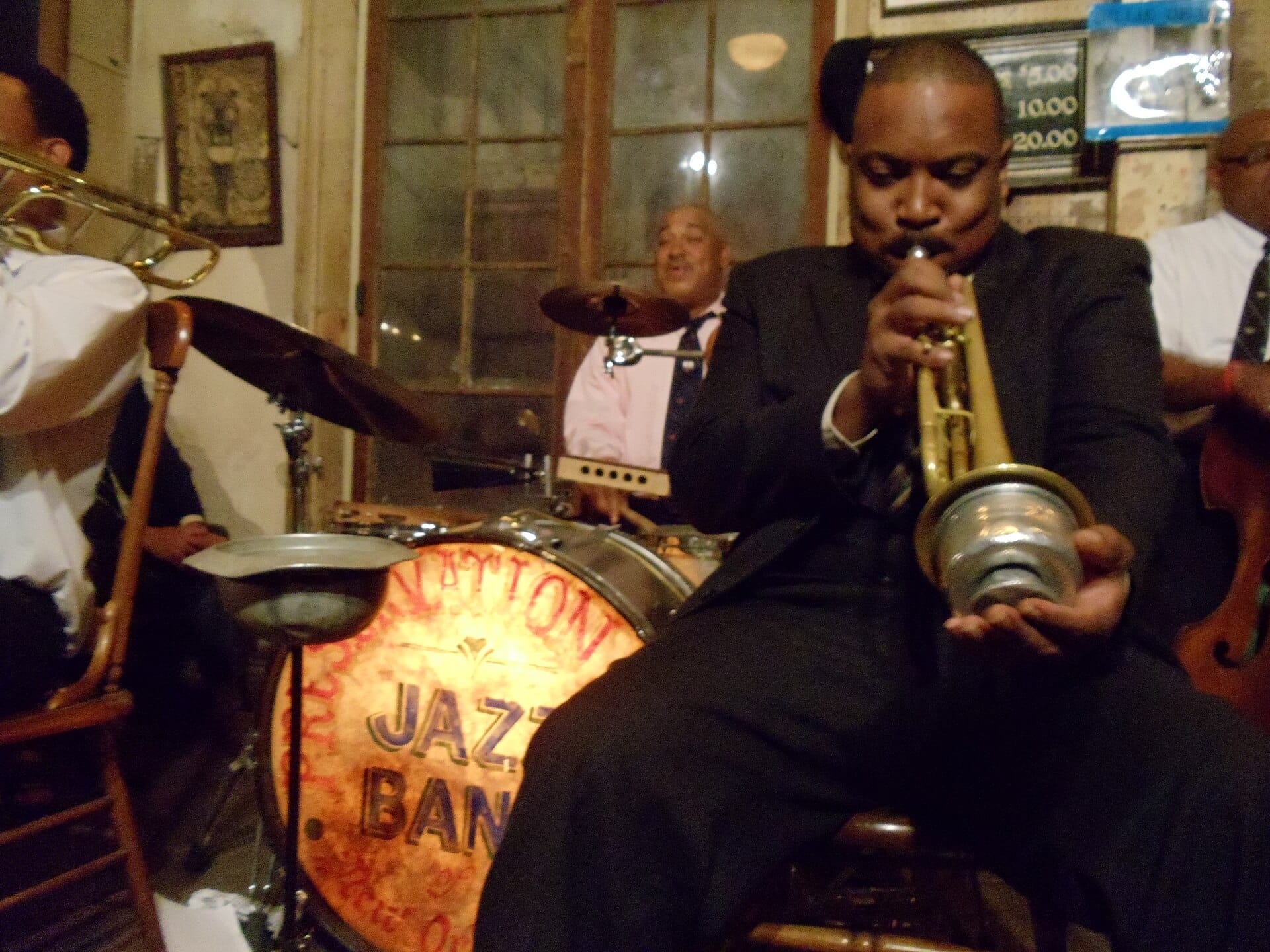
Music is not optional here. Preservation Hall on St. Peter Street has operated since 1961 and continues to present traditional New Orleans jazz nightly in an intentionally spare, unvarnished setting. Tickets sell fast and the space is small, so booking ahead is essential. For a broader look at the city's music culture, the New Orleans Jazz Museum at the Old U.S. Mint on Esplanade Avenue traces jazz from its origins to the present through instruments, recordings, and rotating exhibitions.
Royal Street: galleries, antique dealers, and street performers along a 10-block stretch between Canal and Esplanade
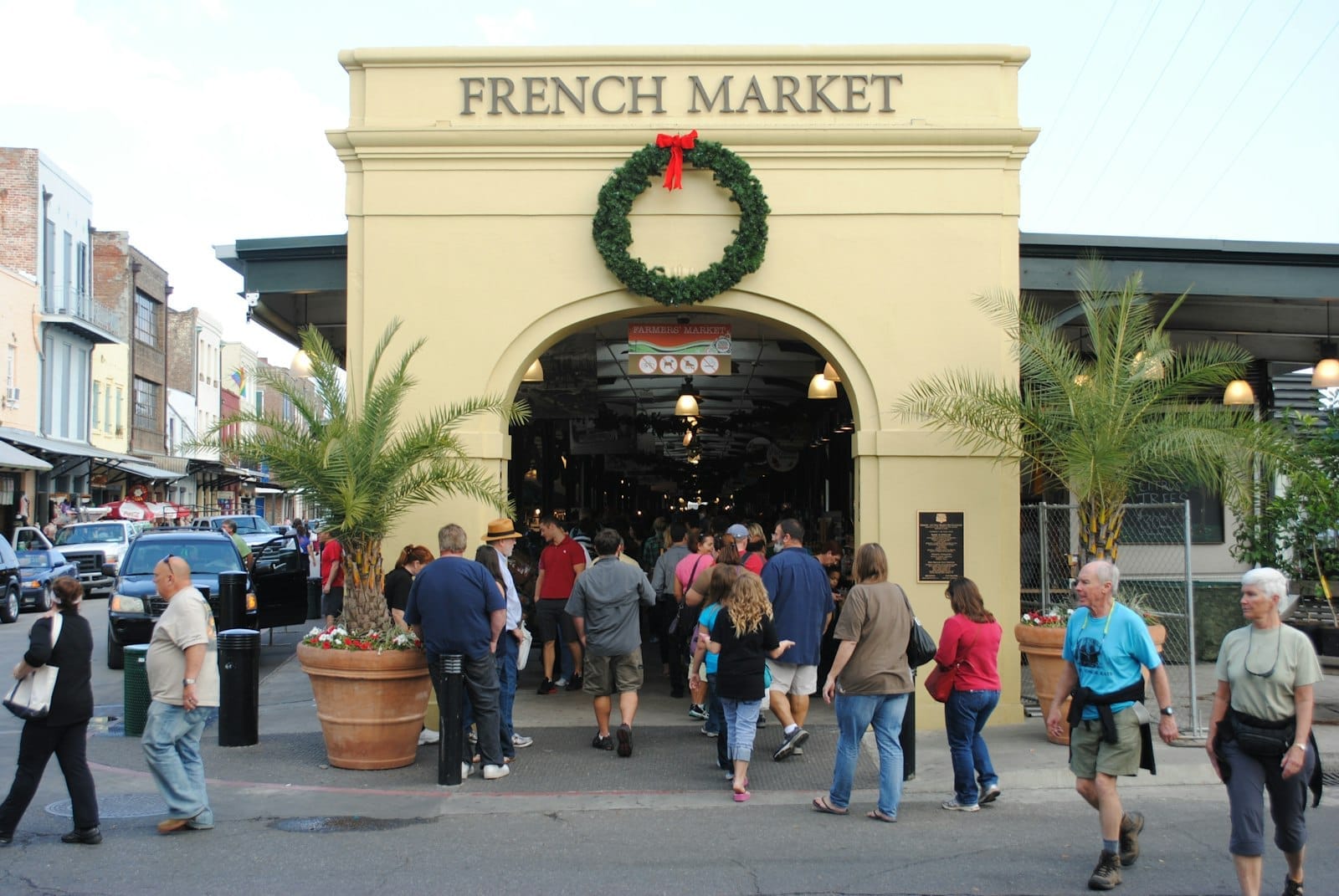
The French Market: a covered market running along Decatur Street with food stalls, craft vendors, and produce
New Orleans Pharmacy Museum on Chartres Street: the 1823 apothecary of America's first licensed pharmacist
Historic New Orleans Collection on Royal Street: research center and exhibition galleries covering city history
Hermann-Grima House: a Federal-style townhouse from 1831 with intact Creole kitchen and period furnishings
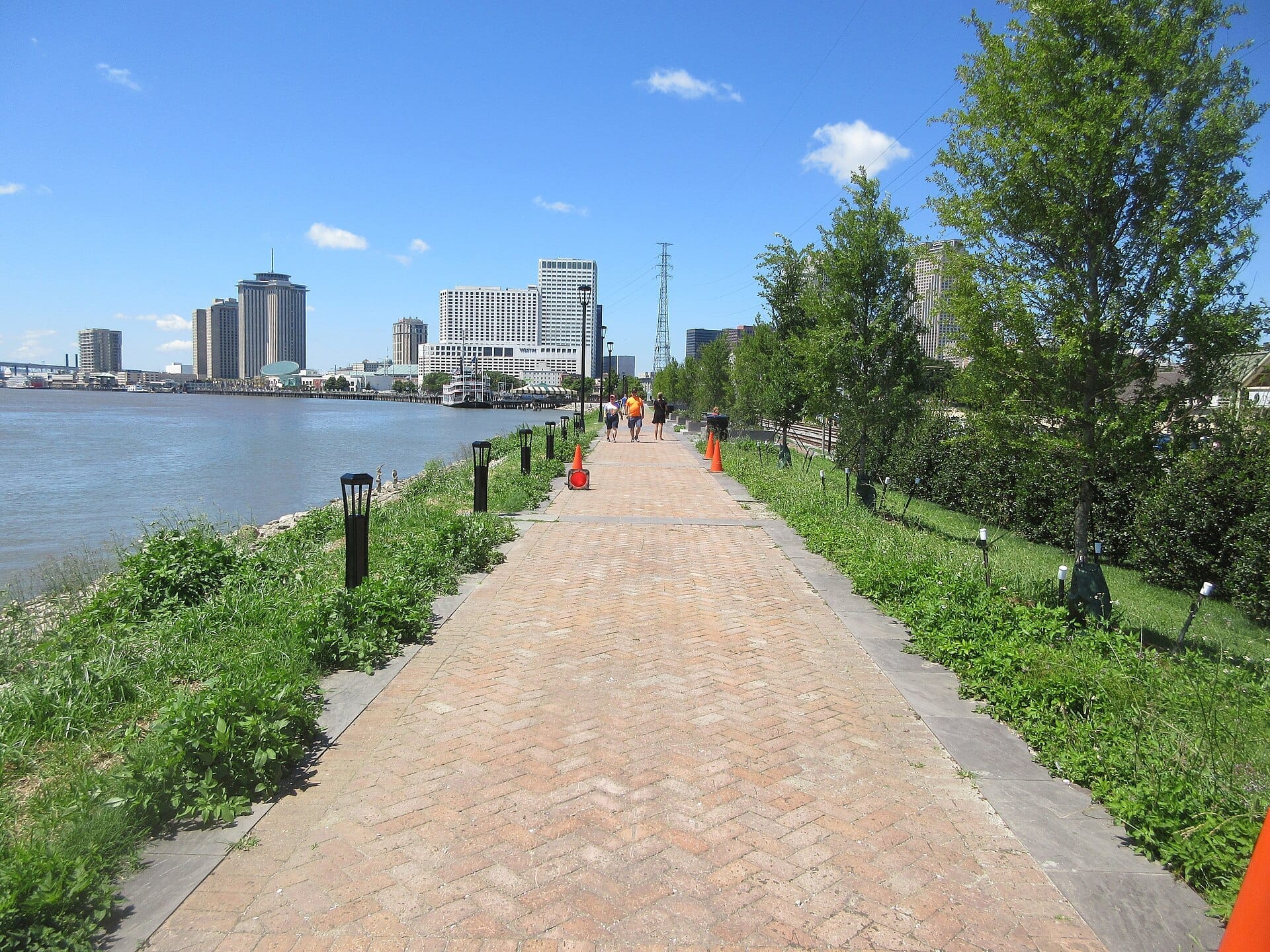
The Moon Walk along the Mississippi riverfront: a raised promenade with open river views, accessible from Decatur Street
Congo Square inside Louis Armstrong Park (just outside the Quarter on North Rampart): the historic gathering place for enslaved people and the seedbed of New Orleans musical culture
The Quarter is also the natural starting point for several types of tours. Ghost and voodoo tours typically begin near Jackson Square and cover the Quarter's darker history, including the LaLaurie Mansion on Royal Street, site of one of the city's most notorious antebellum crimes. For context on how to move through the neighborhood, walking tours are the most efficient way to learn the blocks quickly.
Eating & Drinking
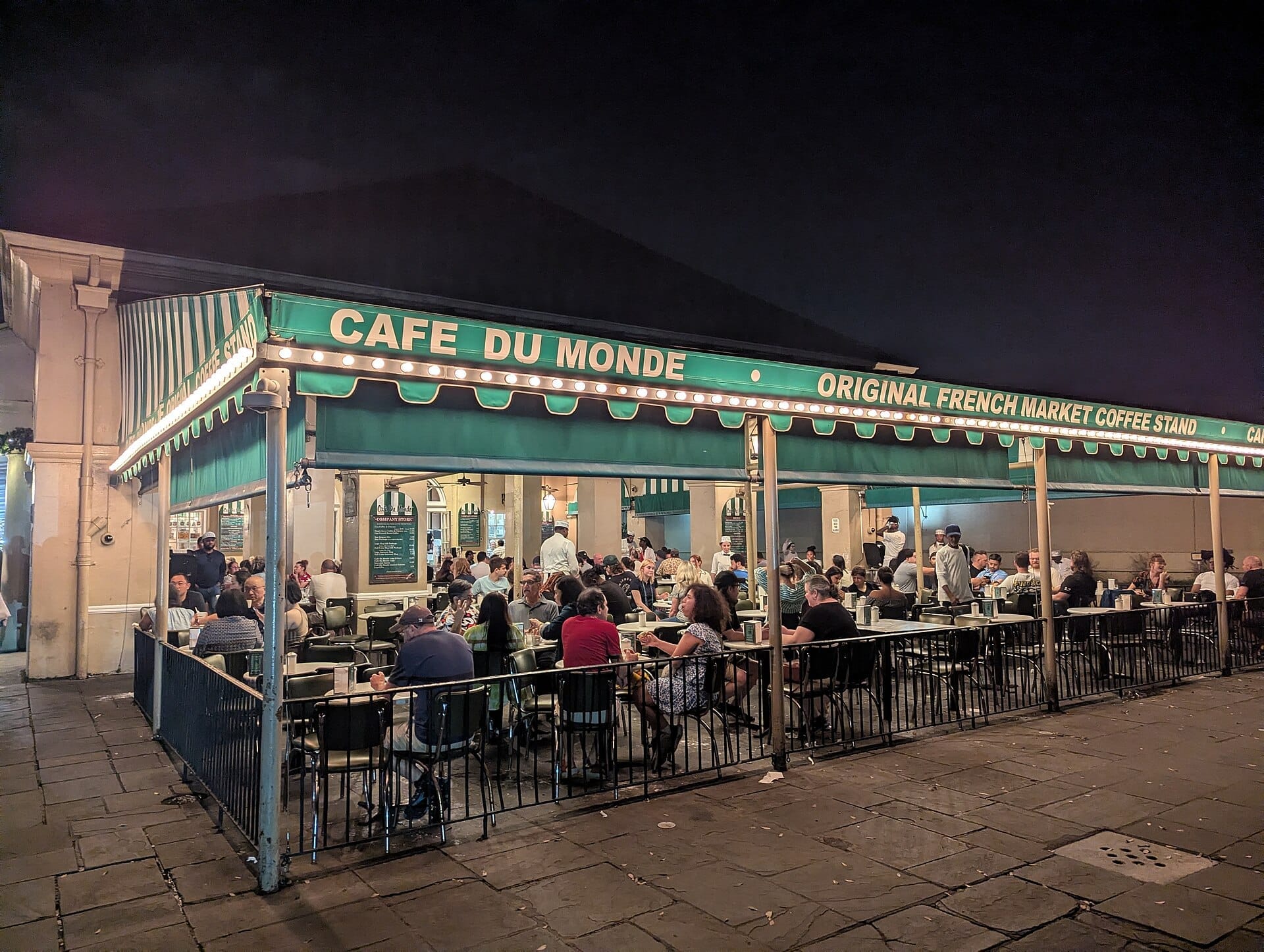
The French Quarter has some of New Orleans' most famous restaurants and some of its most forgettable tourist traps, often on the same block. The general rule: anything with a laminated picture menu facing the street can be skipped. The Café du Monde is the obvious exception to that rule. It is touristy, it is on every itinerary, and the beignets are exactly as good as advertised. Go once, go early, expect powdered sugar on your shirt. The café is open 24 hours and takes cash only.
For serious Creole cooking, the Quarter delivers. The neighborhood has several restaurants that have operated for generations and still put genuine care into their menus. The classic dishes to look for are turtle soup, shrimp remoulade, oysters Rockefeller (invented here), crawfish étouffée, and bread pudding with whiskey sauce. Prices at the established Creole restaurants range from mid-range to expensive; expect to spend $35 to $70 per person for a full dinner with wine at a well-regarded spot.
The French Market along Decatur Street offers a more casual and affordable option during the day, with food stalls covering local staples alongside craft vendors. The riverside end of Decatur has several bars with balcony seating over the street, which gives a good view without requiring much investment. For a broader guide to what to order across the city, the New Orleans food guide covers the essential dishes and where to find them.
Drinking culture in the Quarter operates on its own logic. New Orleans allows plastic go-cup drinks in public streets within the entertainment districts — but this is a city-level norm, not a statewide rule, and doesn't apply everywhere. The famous cocktails are the Sazerac (rye whiskey, Peychaud's bitters, absinthe rinse), the Vieux Carré (a riff on the Manhattan invented at the Hotel Monteleone's Carousel Bar), and the Hurricane (a rum punch that started at Pat O'Brien's on St. Peter Street). The Carousel Bar itself, which slowly rotates as you sit at it, is worth stopping into for the experience regardless of what you order.
⚠️ What to skip
Daiquiri shops selling giant frozen drinks in styrofoam cups are everywhere on Bourbon Street. They are cheap and strong and the alcohol content is not labeled. Drink one slowly before ordering a second.
Getting There & Around
From Louis Armstrong New Orleans International Airport (MSY), roughly 15 miles away, you have several options: the RTA Airport Express bus service runs to the CBD and Canal Street for $2 one-way (verify current fares before travel); taxis run approximately $40 flat rate to the French Quarter; rideshare services typically cost $30 to $50 depending on time of day and demand. Once you reach Canal Street, you are at the edge of the Quarter. For everything covered in the city's transit guide, the French Quarter is the most walkable part of New Orleans by a significant margin.
Within the Quarter, walking is the only practical option. The streets are narrow, parking is genuinely difficult and expensive, and the blocks are short. From Jackson Square to Canal Street is a 12-minute walk along Decatur or Royal Street. The St. Charles streetcar departs from Canal Street at the edge of the Quarter and runs uptown through the CBD and into the Garden District. The Canal Street streetcar also runs along the neighborhood's southwestern edge. Check RTA's current map for riverfront transit options — service along this corridor has changed in recent years.
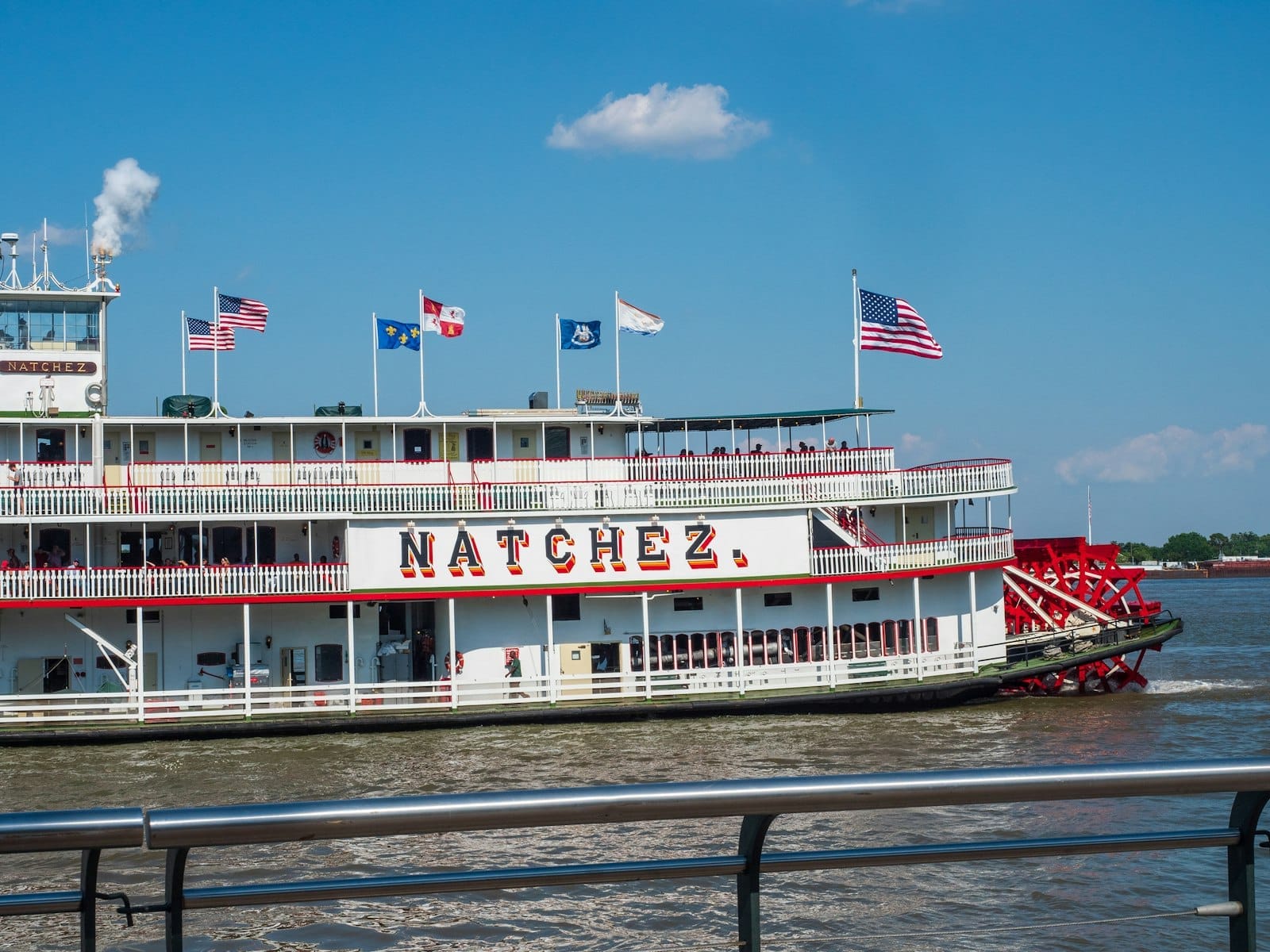
The Algiers Ferry, departing near the foot of Canal Street, crosses the Mississippi River to the Algiers Point neighborhood on the West Bank. The ferry ride itself offers some of the best free views of the New Orleans skyline and is worth taking even without plans on the other side (verify current schedules and fares). Bike rentals are available at several points in and around the Quarter, though the narrow streets and foot traffic during peak hours make cycling more useful for heading into the Marigny or Tremé than navigating the Quarter itself.
ℹ️ Good to know
The French Quarter is one of very few areas in New Orleans where a car is genuinely more of a burden than an asset. Rideshare and walking will serve you better than renting a vehicle if this is your primary base.
Where to Stay
Staying in the French Quarter puts you within walking distance of nearly every major attraction in the city's historic core, but it comes with trade-offs that matter depending on your travel style. For a full breakdown of where the Quarter sits relative to other neighborhoods, the New Orleans accommodation guide compares options across the city. The Quarter has a range of hotels from boutique properties in converted 19th-century buildings to larger full-service hotels near Canal Street.
The blocks between Royal Street and the riverfront, from Jackson Square toward Esplanade Avenue, offer the most atmospheric lodging options. Small hotels and guesthouses in this part of the Quarter tend to be quieter than properties on or near Bourbon Street, where noise can be significant well past midnight on weekends. If you are a light sleeper, ask specifically about courtyard-facing rooms when booking, as interior rooms buffer street noise considerably.
The Quarter suits travelers who want to be central and are comfortable with the idea that they are staying in one of the most tourist-concentrated neighborhoods in the American South. If you want a quieter base with better local character, the Marigny or the lower Garden District offer easier access to daily neighborhood life while keeping the Quarter within a 15 to 25 minute walk or short rideshare. For couples looking at the Quarter specifically, the more intimate guesthouses along the upper portion of the neighborhood above St. Ann Street tend to strike a better balance between atmosphere and comfort.
Honest Considerations Before You Go
The French Quarter is not a quiet or particularly local neighborhood, at least not in its most trafficked corridors. It is the single most visited part of New Orleans, and on Mardi Gras weekends, Jazz Fest, or major sporting events, the density of people on Bourbon Street between St. Peter and St. Philip becomes genuinely uncomfortable. If those dates align with your visit, be aware of that reality and plan your Quarter time accordingly, either earlier in the day or on the side streets.
As with any dense urban entertainment district, standard awareness applies at night, particularly on and around Bourbon Street. Stick to well-lit blocks, keep your belongings secure, and be aware that very late hours on weekends draw larger, louder crowds. The quieter upper Quarter streets are generally calm at night, but it is worth reading the current New Orleans safety guidance before your trip.
Festival timing affects the Quarter significantly. Mardi Gras brings enormous crowds in February or March (dates shift annually), while Jazz Fest in late April and early May adds hotel price surges and early sellouts. If you are visiting specifically for the culture rather than the festivals, late October through mid-November or late January offer good conditions with moderate prices and manageable crowds.
TL;DR
The French Quarter is New Orleans' oldest and most recognizable neighborhood, covering roughly 0.66 square miles, bounded by Canal Street, Esplanade Avenue, the Mississippi River, and North Rampart Street.
Best for: first-time visitors to New Orleans, history and architecture enthusiasts, nightlife seekers, and anyone wanting walkable access to the city's core cultural sites.
Honest caveat: Bourbon Street is loud, crowded, and relentlessly commercial from mid-afternoon onward. The Quarter rewards visitors who explore beyond it, particularly along Royal Street, the upper blocks toward Esplanade, and the riverfront.
Key anchors: Jackson Square, St. Louis Cathedral, the Cabildo, Preservation Hall, Royal Street galleries, Café du Monde, the French Market, and the Jazz Museum at the Old U.S. Mint.
Transit: entirely walkable within the neighborhood; Canal Street streetcar for the CBD and uptown; Algiers Ferry for river views; rideshare is the most practical option for reaching neighborhoods farther afield.
Three days is enough to fall hard for New Orleans. This itinerary moves through the French Quarter, Garden District, Tremé, and Marigny in a logical order, covering the landmarks, food, music, and history that make this city unlike anywhere else in America.
New Orleans has one of the richest museum landscapes in the American South. Whether you're tracing the history of jazz, confronting the legacy of slavery, or exploring 5,000 years of fine art, these are the museums worth your time.
New Orleans rewards visitors differently depending on when you show up. This guide breaks down every season by weather, crowd levels, festival calendars, and food — so you can pick the visit that actually matches what you're after.
New Orleans rewards those who stay, but the surrounding Louisiana landscape rewards those who venture out. Within two hours of the city, you can drift through ancient cypress swamps, stand inside a plantation that centers the enslaved rather than the enslavers, and cycle along a river bluff. These are the best day trips from New Orleans.
New Orleans rewards curious walkers, music lovers, and history buffs with an extraordinary amount that costs nothing. From the French Quarter's architecture to world-class outdoor sculpture, here's how to experience the city on a zero-dollar budget.
New Orleans has no subway, but it does have the oldest continuously operating streetcar in the world, a surprisingly affordable bus network, and a city core compact enough to walk. This guide breaks down every transport option with real fares, route details, and honest assessments of what actually works for visitors.
New Orleans is one of the most visually dramatic cities in America. These 20 locations deliver the best shots, from the iconic ironwork of the French Quarter to the ancient oaks of City Park and the sweeping Mississippi River views from Crescent Park.
New Orleans beignets are one of the city's great culinary institutions — pillowy, square-cut fried dough buried in powdered sugar, best eaten hot and fast. This guide covers where to go, when to show up, and which spots are worth skipping the tourist line.
New Orleans does romance on its own terms: candlelit Creole restaurants, live jazz spilling into cobblestone streets, and century-old cocktail bars with stories on every wall. This guide covers the best things to do in New Orleans for couples, from free afternoon strolls through the Garden District to splurge-worthy riverboat dinners and everything in between.
New Orleans has earned its reputation as America's most haunted city through centuries of layered history, tragedy, and folklore. This guide covers the best ghost tours, cemetery visits, and voodoo cultural experiences — including what operators don't tell you before you book.
New Orleans takes Halloween more seriously than almost any other American city. With centuries-old cemeteries, a voodoo tradition that predates the city itself, and a culture that genuinely embraces the macabre year-round, October here hits differently. This guide covers the best haunted tours, major events, neighborhood-by-neighborhood tips, and honest advice on what's worth your time.
New Orleans carries more history per square mile than almost any American city. This guide cuts through the myth to explain what actually shaped NOLA — and where to encounter that history in person, from the Vieux Carré to the Whitney Plantation.
October transforms New Orleans into one of its most enjoyable versions: temperatures drop to the mid-70s, hurricane season winds down, and a calendar packed with music festivals, food events, and Halloween revelry takes over. This guide covers exactly what to do, when to go, what to skip, and how to make the most of autumn in the Crescent City.
New Orleans Jazz Fest is one of the largest music and culture festivals in the world, drawing hundreds of thousands to Fair Grounds Race Course each spring. This guide covers the lineup structure, ticket prices, stage breakdown, food, logistics, and how to make the most of your time at the festival.
New Orleans is the birthplace of jazz and one of the world's great live-music cities. This guide covers where to hear the best music, when to go, how to navigate the scene like a local, and what separates the real experience from the tourist circuit.
Mardi Gras is not a single night. Carnival season runs from Twelfth Night (January 6) through Fat Tuesday, lasting several weeks (the exact length varies by year depending on when Easter falls). With over 70 krewes, millions of throws, and traditions rooted in centuries of Creole culture, this guide covers the full timeline, major parades, viewing logistics, and the practical details that separate a great experience from a chaotic one.
The Mississippi River is the soul of New Orleans, and experiencing it from the water is unlike anything else the city offers. Whether you want a 75-minute sightseeing cruise, a jazz dinner aboard a paddlewheeler, or a multi-day voyage upriver, this guide covers every option worth booking.
New Orleans at night is unlike anywhere else in the United States. Live music spills out of open doors seven nights a week, many bars stay open very late or around the clock — New Orleans has no statewide mandatory closing time, so nightlife runs on its own schedule — and the line between a concert venue and a neighborhood bar barely exists. This guide covers the best spots across every neighborhood, from tourist-friendly classics to where locals actually drink.
New Orleans has a reputation for indulgence, but the city offers more than 50 free or low-cost experiences year-round. From free sculpture gardens and streetcar rides to $7 breakfasts and no-cover live music, this guide shows exactly how to do NOLA without draining your wallet.
The River Road plantations sit 45-55 miles west of New Orleans and tell the full, complicated story of Louisiana's sugar economy. Here is how to choose the right tour, what each site focuses on, and how to make the most of your visit.
New Orleans draws millions of visitors every year, and the vast majority leave without incident. But the city does have real safety considerations that deserve honest discussion. This guide covers neighborhood-by-neighborhood risk, common tourist hazards, and the practical steps that make the biggest difference.
Second line parades are one of New Orleans' most authentic cultural traditions, rooted in West African dance and the city's history of Social Aid and Pleasure Clubs. This guide covers the history, how to find the Sunday parades, what to expect, and how to participate respectfully.
The Louisiana wetlands surrounding New Orleans are unlike anywhere else in North America. This guide covers every swamp tour type, from thrilling airboats to peaceful kayak paddles, plus the city attractions that bring the swamp experience closer to home.
New Orleans rewards walkers like few cities in America. Its compact historic neighborhoods pack centuries of architecture, music, and complex history into streets you can cover on foot. This guide covers the best stops, routes, and attractions to seek out on any walking tour of the city.
New Orleans rewards curious families with alligators, jazz, beignets, and centuries of history. This guide covers the best family activities in New Orleans, organized by age, budget, and neighborhood, so you can plan a trip your kids will actually remember.
New Orleans rewards visitors who go beyond Bourbon Street. This guide covers the top things to do in New Orleans across music, history, food, neighborhoods, and outdoor experiences, with practical details on prices, timing, and what to skip.
New Orleans food is one of the most distinctive culinary traditions in the United States, shaped by centuries of French, Spanish, African, and Native American influence. This guide breaks down the essential dishes, explains the real difference between Creole and Cajun cooking, and points you to the restaurants worth your time.
New Orleans food is unlike anywhere else in America. This guide breaks down the best restaurants by neighborhood and style, from century-old Creole institutions to the modern kitchens adding a contemporary edge to the city's already legendary food scene.
Choosing where to stay in New Orleans is the single most important decision you'll make before your trip. The right neighborhood shapes your entire experience, from what you hear at night to how far you walk to dinner. This guide breaks down every major area with honest assessments, so you can match your hotel to your travel style.