New Orleans Mardi Gras: The Complete Visitor Guide
Mardi Gras is not a single night. Carnival season runs from Twelfth Night (January 6) through Fat Tuesday, lasting several weeks (the exact length varies by year depending on when Easter falls). With over 70 krewes, millions of throws, and traditions rooted in centuries of Creole culture, this guide covers the full timeline, major parades, viewing logistics, and the practical details that separate a great experience from a chaotic one.
Plan and book this trip
Tools from our partner Travelpayouts help you compare flights and hotels. If you book through them, we may earn a commission at no extra cost to you.
Flights
Hotels map
TL;DR
- Carnival season runs from January 6 (Twelfth Night) through Fat Tuesday, with the biggest parades concentrated in the final 10 days.
- The four parades worth anchoring your trip around are Endymion (Saturday), Bacchus (Sunday), Orpheus (Lundi Gras), and the Zulu and Rex processions on Mardi Gras Day itself.
- Book hotels 6-12 months in advance. Rates triple or more during the final week, and availability disappears fast.
- The best parade viewing is along St. Charles Avenue, not Bourbon Street. Families bring ladders; serious spectators arrive 2-3 hours early for prime spots.
- Mardi Gras is free to attend. Sidewalk viewing on public parade routes is free; some grandstand seats, official balls, and private events are ticketed.
Understanding the Mardi Gras Season
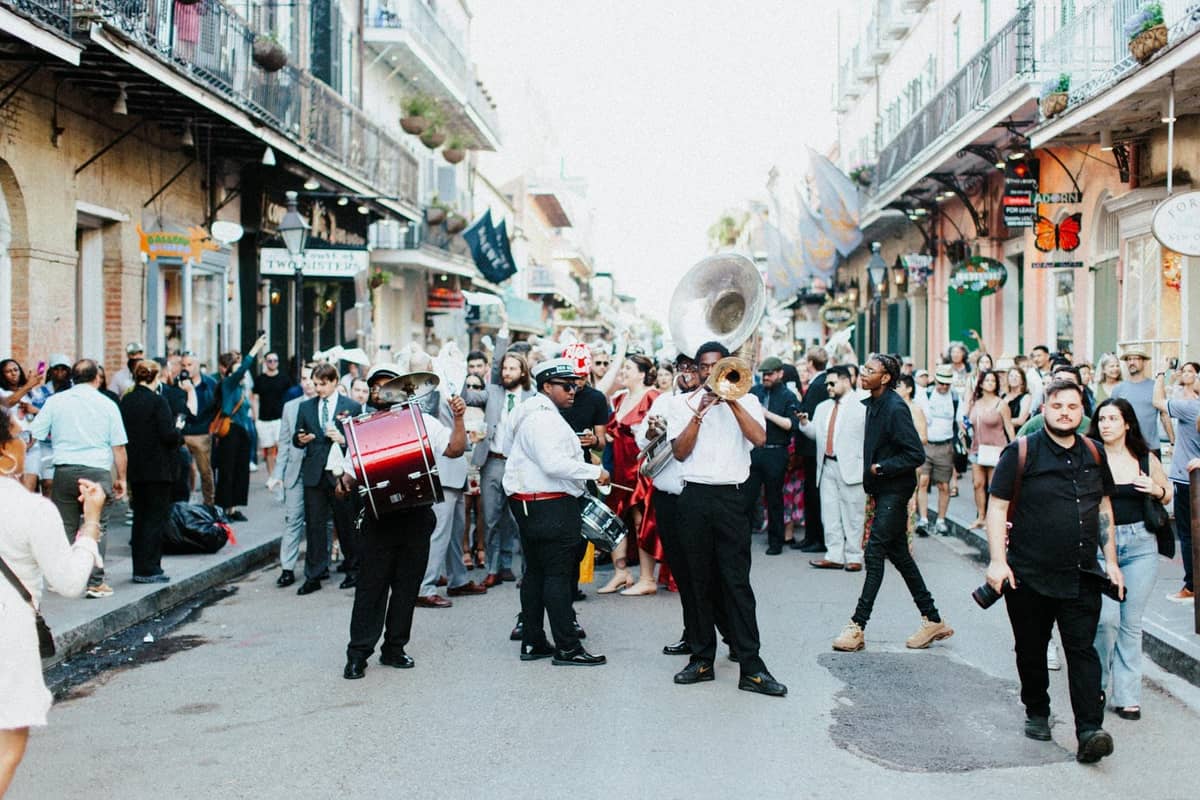
Most visitors think of Mardi Gras as a single raucous Tuesday, but the New Orleans Carnival season is a structured, weeks-long event calendar tied to the Catholic liturgical calendar. Carnival officially begins on Twelfth Night, January 6, and ends at the stroke of midnight on Fat Tuesday, when Lent begins. The date of Mardi Gras shifts every year because it falls 47 days before Easter Sunday. In recent years it has ranged from early February to early March. For 2027, Fat Tuesday falls on February 9.
The season accelerates in waves. January typically sees smaller, neighborhood-level parades and krewe balls, which are formal invitation-only events hosted by the organizations that run the parades. The pace picks up significantly two weekends before Fat Tuesday, and the final four days, from the Saturday before Mardi Gras through Tuesday itself, are when the city reaches peak intensity. If your time is limited, arriving Thursday or Friday before Fat Tuesday gives you the full finale experience without needing to stay the entire season.
ℹ️ Good to know
Mardi Gras is a Louisiana state holiday. City and state offices, many schools, and numerous businesses close on Fat Tuesday. Plan accordingly if you need services like banks, pharmacies, or government offices during that week.
The Major Krewes and Parade Schedule
New Orleans has over 70 krewes, the private organizations that fund, build, and operate the parade floats. Each krewe has its own identity, traditions, and signature throws. Understanding which krewes parade when is the key to planning your week.
- Krewe of Endymion (Saturday before Mardi Gras) The largest parade in the city, with some of the most elaborate floats anywhere in the world. Endymion and Bacchus combined field 67 floats, 60 marching bands, and over 250 parade units, with 4,200 members throwing more than 1.5 million cups, 2.5 million doubloons, and millions of beads. Routes run along Canal Street into Mid-City.
- Krewe of Bacchus (Sunday before Mardi Gras) Famous for celebrity monarchs and a route that winds through Uptown. Bacchus has previously crowned Dan Aykroyd, Will Ferrell, and other well-known figures as its king. One of the most crowd-friendly parades of the season.
- Krewe of Orpheus (Lundi Gras, Monday) Co-founded by New Orleans native Harry Connick Jr., Orpheus parades on Lundi Gras, the Monday before Fat Tuesday. It is one of the newer super-krewes but draws massive crowds along the Uptown St. Charles route toward downtown.
- Krewe of Zulu (Mardi Gras Day, morning) One of the oldest majority-Black krewes in New Orleans, Zulu is famous for its hand-painted coconuts, considered the most coveted throw in all of Carnival. The krewe's satirical origins, beginning in the early 1900s, make it one of the most culturally significant in the city.
- Krewe of Rex (Mardi Gras Day, following Zulu) Rex is the symbolic King of Carnival. On Fat Tuesday morning, the Mayor traditionally hands the keys of the city to Rex. The krewe's colors, purple, gold, and green, are the official colors of Mardi Gras. Rex parades down St. Charles Avenue and Canal Street.
Beyond the super-krewes, parades like Krewe of Muses (Thursday before Mardi Gras, known for decorated high-heel shoe throws) and Krewe of Iris (women's krewe, also on Saturday) offer strong alternatives with slightly smaller crowds. For a full schedule with routes and start times, check the official New Orleans event calendar closer to your visit, as times shift year to year. Verify all parade schedules directly with neworleans.com before travel.
Where to Watch: Parade Routes and Viewing Strategy
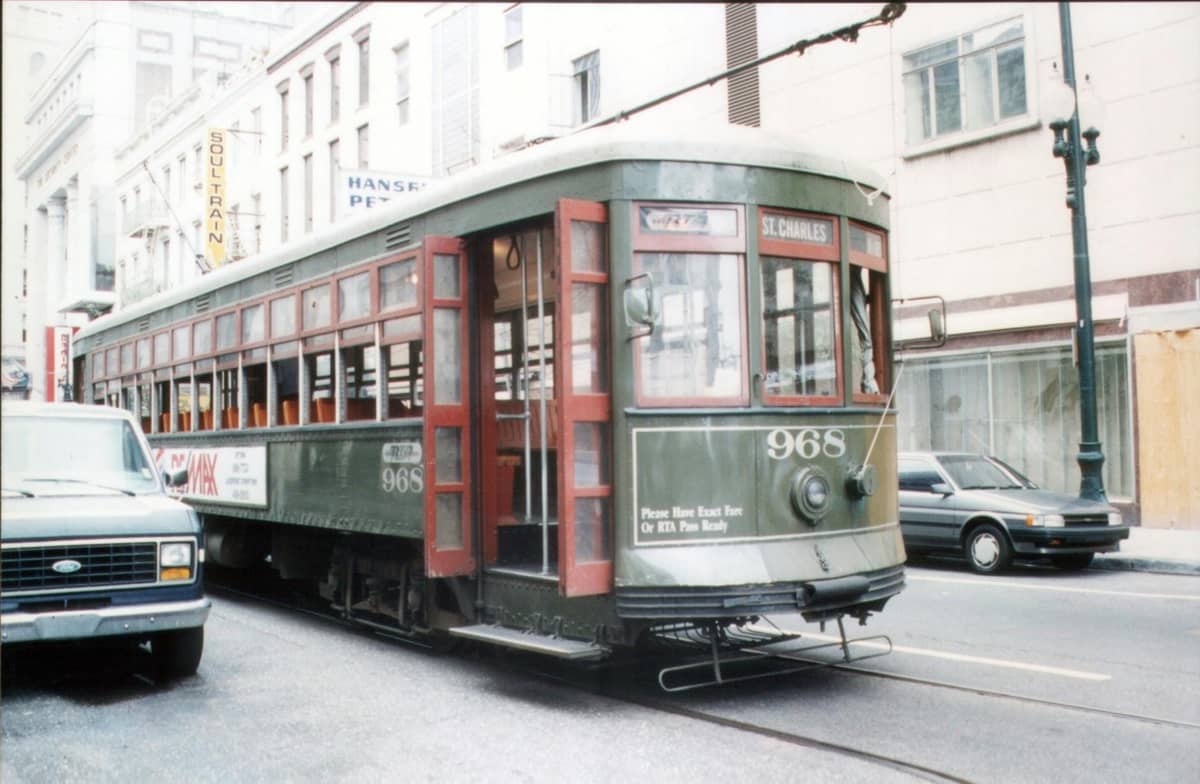
The debate between watching on Bourbon Street versus St. Charles Avenue is settled quickly once you understand the routes: most major parades do not go down Bourbon Street at all. The French Quarter sees foot traffic but not float traffic. The real parade action runs along St. Charles Avenue in Uptown and then turns down Canal Street toward the river. If you are staying in the French Quarter, plan to take the streetcar or walk uptown to catch the main parades.
St. Charles Avenue is the gold standard for parade viewing. The wide neutral ground (what locals call the median) gives spectators room to spread out, set up ladders, and stake territory without feeling crushed. Arrive 2-3 hours early for a good spot on the Uptown stretch between Napoleon Avenue and Louisiana Avenue. This section typically sees the most float action before the parade turns downtown.
💡 Local tip
Custom-built ladder seats with enclosed child platforms are a fixture along St. Charles Avenue. City ordinance permits these ladders but requires they be kept off the street. If you bring one, secure it early and never place it in the neutral ground or roadway. Pre-built ladder rentals are available from some local vendors if you do not want to transport one.
Canal Street is a solid backup and easier to access from downtown hotels. The crowds are dense but the street is extremely wide. Avoid the far end near the river for big parades because floats often slow or stop there before disbanding. The Marigny and Bywater neighborhoods host smaller, walking parades called 'krewedelusion' style events that attract a creative, local crowd and are worth considering if you prefer atmosphere over throw volume.
Throws, Traditions, and What You Need to Know
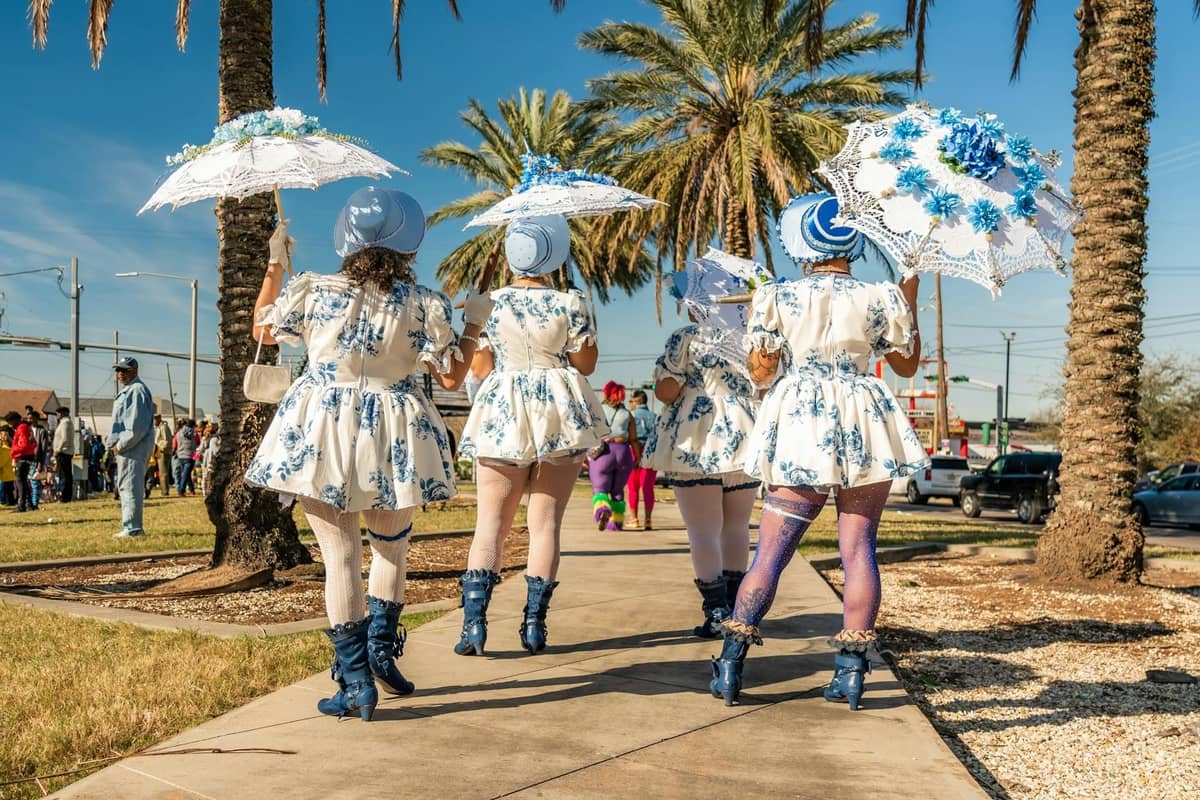
Throws are the items riders toss from floats to the crowds below. Beads are the baseline, but the truly sought-after throws are krewe-specific. Zulu coconuts are hand-painted and decorated, and catching one is considered a badge of honor. Krewe of Muses throws decorated shoes. Krewe of Iris throws sunglasses and purses. The Krewe of Endymion tosses over 1.5 million cups annually. Float riders are required by Louisiana law to wear masks or face paint while on floats, one of the more unusual regulations in American festival culture.
King cake is the edible emblem of Carnival season. Hundreds of thousands of king cakes are sold annually in New Orleans, and every bakery has its own version. The traditional ring-shaped cake is topped with purple, gold, and green sugar, and contains a small plastic baby. Whoever finds the baby in their slice is said to have good luck (and is also expected to buy the next king cake). Pick one up at a local bakery rather than a grocery chain for better quality. While you are in the food headspace, check out what to eat in New Orleans for the full Creole and Cajun food breakdown beyond the season.
On Mardi Gras Day, the Mayor symbolically hands the keys of the city to Rex, the King of Carnival, a tradition that dates back over a century. At midnight, New Orleans police, sometimes joined by the Mayor, move through Bourbon Street crowds to officially end Carnival and begin Lent. It is a surreal moment: one of the world's largest street parties simply stops, and the city starts sweeping up.
⚠️ What to skip
City ordinance prohibits corporate sponsorships on parade floats. All float expenses are paid by krewe members themselves, which is why krewe dues run into the thousands of dollars annually. Do not expect to see commercial branding on floats the way you might at other American festivals. This is by design and protected by law.
Planning Your Trip: Hotels, Logistics, and Budget
Accommodation during Mardi Gras is the single biggest logistical challenge. Hotels along St. Charles Avenue and in the Central Business District book out first, often 6-12 months in advance. The final week sees nightly rates reach $400-$800 or more at mid-range properties. If you are booking late, look at the Garden District and Uptown neighborhoods, which are well-positioned for parade viewing and often have slightly more availability than the French Quarter. Check where to stay in New Orleans for neighborhood-by-neighborhood breakdowns.
Getting around during parade days requires flexibility. When a parade is rolling, major streets close completely for hours. The St. Charles streetcar does not run during parade times on its route. Rideshare surge pricing during Mardi Gras can be extreme, often 3-5 times the normal rate during peak parade hours. The most reliable strategy is to walk or use RTA buses on unaffected streets. Plan your base camp near where you want to watch, and do not count on moving easily between neighborhoods once a parade starts.
- Book accommodation 6-12 months out; the final week is sold out by summer the prior year at most properties.
- Louis Armstrong International Airport (MSY) is about 15 miles from downtown. Taxi flat rate runs around $36-45 (verify current fares); rideshare is $30-50 but surges heavily during Mardi Gras peak days.
- Pack a reusable bag for throws, layers for cool evenings (February temps average 43-64°F), comfortable shoes for standing on pavement for hours, and a portable phone charger.
- Mardi Gras is free to attend. No tickets, no wristbands, no entry fees for street parades — sidewalk viewing on public routes is always free. Budget mainly for food, drinks, and accommodation.
- Tipping norms: 15-20% at restaurants, $1-5 per drink at bars. Street food vendors do not typically expect tips.
Beyond the Parades: Balls, Mardi Gras World, and Local Celebrations
Krewe balls are the private, formal side of Carnival. Each major krewe hosts at least one black-tie event during the season, typically held at the Caesars Superdome, the Hyatt Regency, or other large venues. These events are by invitation only for most krewes, though some offer limited public tickets. If attending a ball is on your list, research specific krewes well in advance, as processes for obtaining invitations vary significantly.
For a year-round Mardi Gras experience, Mardi Gras World at Blaine Kern Studios is where the giant floats are actually built. The facility operates self-guided and guided tours throughout the year, giving visitors a look at the massive papier-mache figures and float construction process up close. It is genuinely impressive in scale, and the tours provide strong context for understanding why each float costs tens of thousands of dollars to produce. Admission runs around $20-25 for adults (verify current pricing).
The Treme neighborhood, one of the oldest African American neighborhoods in the country, hosts its own Mardi Gras traditions that run parallel to the main parade circuit. Second line parades, where brass bands lead dancing crowds through streets, are a living part of this culture. Check the New Orleans second line guide for dates and routes during Carnival season. The Congo Square area in Louis Armstrong Park is also worth visiting for its deep connection to the African roots of New Orleans music and Carnival tradition.
✨ Pro tip
The French Quarter on Mardi Gras Day is simultaneously the most photographed and most overhyped location in the city. Bourbon Street crowds reach extreme density by midday and are largely tourist-facing. If you want to experience how locals celebrate, head to the Marigny for the Society of Saint Anne walking parade in the morning, or watch the Zulu and Rex routes in Uptown before the French Quarter fills up.
FAQ
What is the date of Mardi Gras in 2027?
Mardi Gras 2027 falls on Tuesday, February 9. The date changes every year because it is calculated as 47 days before Easter Sunday. Carnival season begins January 6 (Twelfth Night) and ends at midnight on Fat Tuesday.
Is Mardi Gras in New Orleans free to attend?
Yes. Street parades are completely free to watch. Sidewalk viewing on public parade routes is free — there are no entry fees or paid zones for the public routes. Some grandstand seats, official balls, and private events are ticketed. Your main costs will be accommodation (which surges significantly during the season), food, drinks, and transportation.
Where is the best place to watch Mardi Gras parades?
St. Charles Avenue in Uptown is the best overall location, particularly between Napoleon Avenue and Louisiana Avenue. The wide neutral ground gives space, the parade route is long before it turns downtown, and the atmosphere is festive without being as chaotic as the French Quarter. Arrive 2-3 hours early for a good spot.
What should I wear and bring to Mardi Gras parades?
Comfortable, closed-toe shoes are essential since you will stand on concrete for hours. February in New Orleans averages 43-64°F, so layer up. Bring a reusable bag for collecting throws, a portable phone charger, cash for street food, and earplugs if you are sensitive to noise. Costumes are welcomed and encouraged but not required.
How far in advance should I book a hotel for Mardi Gras?
Book at least 6 months in advance, and ideally 9-12 months if you want a central location at a reasonable rate. The final week of Carnival sees hotel rates multiply by 3-5 times normal pricing. Properties along the St. Charles parade route and in the French Quarter sell out fastest. If you are booking within 3 months of Mardi Gras, expect limited options and high prices.