Caesars Superdome: New Orleans' Iconic Stadium and Event Venue
The Caesars Superdome is one of the most recognizable structures on the New Orleans skyline, a 73,208-seat domed arena that has hosted Super Bowls, Sugar Bowls, Essence Festival, and legendary concerts. Whether you're catching a Saints game or attending a major event, here's what you actually need to know before you go.
Quick Facts
- Location
- 1500 Sugar Bowl Drive, Central Business District, New Orleans, LA 70112
- Getting There
- Walk from Canal Street streetcar stops; short ride from French Quarter via RTA bus or rideshare
- Time Needed
- 3–4 hours for a game or concert; exterior viewing takes under 15 minutes
- Cost
- Ticket prices vary by event; no general public entry on non-event days — check caesarssuperdome.com for schedules
- Best for
- NFL fans, concert-goers, sports architecture enthusiasts, large-event travelers
- Official website
- www.caesarssuperdome.com
What Is the Caesars Superdome?
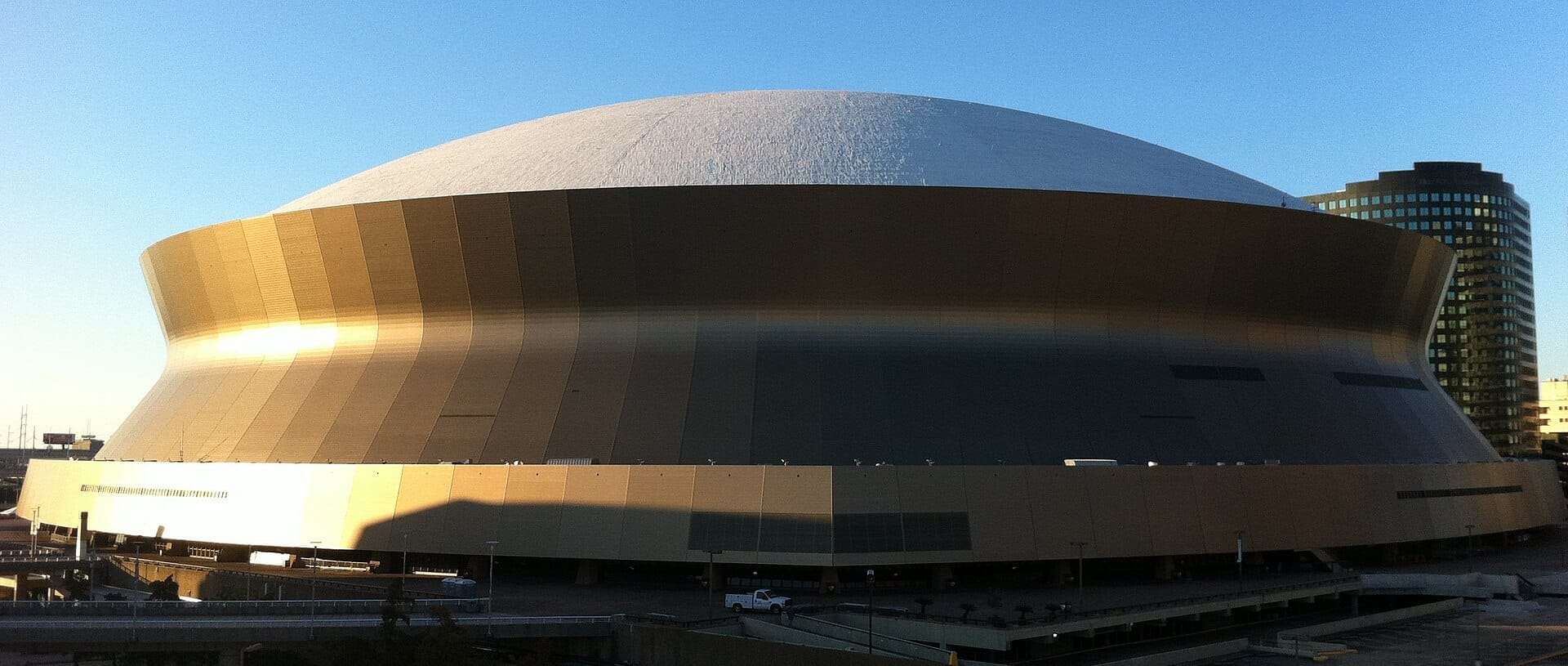
The Caesars Superdome is a multi-purpose domed stadium in New Orleans' Central Business District, and it is, by most structural measures, enormous. The dome covers 13 acres (5.3 hectares) of floor space, rises 273 feet (83 meters) above ground, and spans 680 feet (207 meters) in diameter, making it one of the largest fixed domed structures in the world. It seats more than 73,000 for football, with capacity varying depending on the event configuration.
Opened in 1975 as the Louisiana Superdome, the venue has gone through two naming rights agreements since: it became the Mercedes-Benz Superdome in 2011, then was rebranded as the Caesars Superdome in July 2021 under a 20-year partnership with Caesars Entertainment. Despite the rotating names, New Orleanians largely still call it "the Dome." That shorthand says something about how thoroughly the building has embedded itself in local identity.
ℹ️ Good to know
The Superdome is event-dependent. There are no general public tours or walk-in visits on non-event days. Always check the official schedule at caesarssuperdome.com before planning your visit.
The Architecture: Scale You Can't Fake
Approaching the Superdome on foot from the French Quarter, you catch glimpses of the dome's silver-gray steel cap rising above the CBD's mid-rise buildings. Up close, the scale recalibrates. The exterior is a study in 1970s engineering ambition: a continuous steel frame wrapped in a weathered concrete skirt, punctuated by long ramps and concourse-level windows that ring the structure. It is not a sleek building by contemporary stadium standards, but it carries genuine architectural authority.
Inside, the experience depends heavily on where you're seated. The lower bowl places you close enough to the field to hear the hits; the upper deck, accessed via ramps and escalators, offers a full panorama of the dome's interior volume, which is genuinely staggering at NFL scale. The ceiling is a lamella space-frame structure, and during afternoon events, filtered light through the translucent panels gives the interior an unusual, almost submarine quality.
For travelers interested in the broader architectural and cultural landscape of the CBD, the Superdome anchors the north end of a walkable cluster that includes the National WWII Museum, several blocks to the south, and connects easily to the edge of the French Quarter via a 15-minute walk along Poydras Street or Canal Street.
Tickets & tours
Hand-picked options from our booking partner. Prices are indicative; availability and final rates are confirmed when you complete your booking.
New Orleans Saints football game ticket at Caesars Superdome
From 58 €Instant confirmationSpooky kid-friendly family ghost tour
From 32 €Instant confirmationFree cancellationWalking the Devil's Empire tour with HELLVISION™ in New Orleans
From 32 €Instant confirmationFree cancellationThe New Orleans haunted cemetery city bus tour
From 43 €Instant confirmationFree cancellation
History and Cultural Weight
The Superdome has hosted eight Super Bowls (the most of any stadium), including Super Bowl LIX in February 2025. It is also the permanent home of the New Orleans Saints, the NFL franchise whose 2009 Super Bowl XLIV victory became a focal point of the city's post-Katrina narrative. The Sugar Bowl, one of college football's oldest bowl games, is also played here annually in January.
Beyond football, the venue hosts the Essence Festival of Culture, held annually over the Fourth of July weekend, which draws hundreds of thousands of attendees and focuses on Black culture, music, and entrepreneurship. Major concert tours from artists across genres regularly schedule New Orleans dates here specifically because of the Dome's capacity and the city's reputation as an event destination.
The building also carries a darker historical marker. During Hurricane Katrina in August 2005, approximately 30,000 people sought refuge inside the Superdome when the city flooded. Conditions deteriorated badly over several days before evacuations began. The venue was significantly damaged and required a major reconstruction before reopening for the 2006 NFL season. The Saints' return that season, a 23-3 win over the Atlanta Falcons on Monday Night Football, was one of the most watched regular-season games in league history.
ℹ️ Good to know
The 2005 Katrina shelter story is part of the Superdome's history and is widely discussed in the city. Several New Orleans history and walking tours address this period directly if you want more context.
Visiting on Game Day: What to Expect
Saints game days transform the blocks around the Superdome into a street-level festival. Tailgating spills out of parking structures and onto the surrounding streets for hours before kickoff. Poydras Street fills with gold and black, and the smell of charcoal, beer, and fried food is inescapable. The crowd is genuinely loud and genuinely invested, and that energy carries inside the dome.
Gates typically open 90 minutes to 2 hours before kickoff, but confirm this on the official site for the specific game. Arriving early is worth it, partly to avoid the concourse crush and partly because the pre-game atmosphere inside the Dome has its own character: the sound system is aggressive, the lower bowl fills in fast, and you get a better look at the field dimensions from field-adjacent areas before the crowds pack in.
Food and beverage options inside are standard NFL concession fare, with some local nods. Prices are stadium-level, so eat before you arrive if budget is a concern. Bags are subject to the NFL's clear bag policy; soft-sided bags must be clear and no larger than 12x6x12 inches, or you can bring a one-gallon clear zip-lock bag. Non-compliance means checking the bag or leaving it, so plan accordingly.
⚠️ What to skip
Clear bag policy is strictly enforced at all NFL events. Small clutch bags under 4.5x6.5 inches are exempt. Check the current policy at caesarssuperdome.com before arriving, as rules can be updated.
Non-Game Events: Concerts and Festivals
Concert configuration shrinks the floor into a stage-and-pit setup, with the upper and lower bowls open depending on the show's scale. Sightlines are generally good from most areas, though the upper deck can feel distant for artists who rely on facial expression and intimacy over spectacle. For production-heavy tours with large screens and stage rigs, the Dome is an excellent venue; the acoustics are better than many comparable domes.
The Essence Festival setup is different again: multiple stages, indoor and outdoor activations, and a daytime conference component alongside evening concerts. If you are in New Orleans over Fourth of July weekend, factor in the Superdome's footprint on CBD traffic and parking.
New Orleans in late summer and early fall can be brutally hot and humid, with temperatures regularly hitting 90°F (33°C) and afternoon thunderstorms possible. The Superdome is fully climate-controlled indoors, which is a genuine advantage for summer events. Pair a Dome visit with a broader look at the city's summer calendar using the best time to visit New Orleans guide to make the most of your trip.
Getting There and Practical Logistics
The Caesars Superdome sits at the corner of Poydras Street and Sugar Bowl Drive in the Central Business District. From the French Quarter, it is a walkable 15-20 minutes along Poydras Street. The Canal Street streetcar line deposits riders near the CBD edge, and from there the dome is visible and easy to navigate toward on foot. Uber and Lyft drop-offs are coordinated into nearby zones on event days; the apps will route you based on event traffic patterns.
Parking is available in multiple structures near the venue, but rates spike on event days and availability is first-come. Walking or using rideshare is genuinely easier for most visitors staying in the French Quarter or CBD hotels. If you drive, pre-book a parking spot through a third-party service in advance.
The St. Charles streetcar does not stop directly at the Superdome, but the Canal Street line brings you within a manageable walk. For a broader look at getting around the city without a car, the getting around New Orleans guide covers transit options in detail.
Who Should Skip It
If you are not attending a specific event, there is nothing to see inside the Superdome. It does not operate as a tourist attraction on non-event days, and there are no public tours available (verify this on the official site, as this may change). The exterior is worth a look if you are already in the CBD, but it would not justify a dedicated trip.
Travelers who dislike large crowds, loud noise, or extended time in enclosed spaces will find game day or major concerts uncomfortable regardless of the venue's quality. The Dome is not the right format for everyone, and New Orleans offers a long list of alternatives for people who prefer smaller or more intimate experiences.
Insider Tips
- If you want Saints tickets without paying secondary market prices, check the official Saints ticket exchange for resold face-value seats closer to game day. Locals often release tickets late in the week.
- The Poydras Street approach from the French Quarter side gives you the best exterior view of the dome's full profile and is the natural walking route from most French Quarter hotels.
- On concert nights, rideshare queues after the show can stretch 30-45 minutes. Walking several blocks away from the venue before requesting a pickup significantly cuts wait times.
- The upper deck on the Poydras Street end of the stadium offers some of the best value seating for Saints games — views are elevated and unobstructed, and the price difference from lower bowl tickets is often substantial.
- Dress in layers for evening events, especially in winter. The Superdome's air conditioning is powerful and the indoor temperature can drop quickly once the sun sets outside.
Who Is Caesars Superdome For?
- NFL fans visiting New Orleans during the Saints' home schedule
- Concert-goers attending major touring acts or festival events
- Architecture and engineering enthusiasts interested in large-span structures
- Travelers timing a visit around the Sugar Bowl or Super Bowl
- Essence Festival attendees looking for context on the venue before arriving
Nearby Attractions
Other things to see while in Central Business District & Warehouse Arts District:
- Aquarium of the Americas
Sitting at the edge of the French Quarter along the Mississippi River, Audubon Aquarium draws visitors with its white alligators, African penguin colony, and immersive exhibits spanning the aquatic ecosystems of the Americas. Reopened in 2023 after a $41 million renovation that merged it with the former Insectarium, the facility is sharper and more focused than ever.
- Creole Queen
The Paddlewheeler Creole Queen is a 190-foot, three-deck sternwheeler that takes passengers out onto the Mississippi River for jazz dinner cruises and historical tours. Departing from the Poydras Street dock in the Central Business District, it offers one of the few ways to experience New Orleans from the water rather than from its streets.
- Mardi Gras World
Mardi Gras World is a working float-building warehouse on the Mississippi River where you can walk among giant parade sculptures in progress. It operates year-round and offers a behind-the-scenes look at the craftsmanship behind New Orleans' most famous celebration.
- The National WWII Museum
Designated by Congress as the official WWII museum of the United States, The National WWII Museum in New Orleans is one of the most comprehensive war history institutions in the world. Spread across a six-acre campus with six pavilions, immersive exhibits, and a period dinner theater, it demands serious time and rewards serious attention.