The National WWII Museum: What to Know Before You Go
Designated by Congress as the official WWII museum of the United States, The National WWII Museum in New Orleans is one of the most comprehensive war history institutions in the world. Spread across a six-acre campus with six pavilions, immersive exhibits, and a period dinner theater, it demands serious time and rewards serious attention.
Quick Facts
- Location
- 945 Magazine Street (Andrew Higgins Drive entrance), Central Business District, New Orleans, LA 70130
- Getting There
- Walkable from Canal Street; RTA buses serve Magazine Street; street parking and a museum garage at 1024 Magazine Street
- Time Needed
- 3–6 hours minimum; a full day for thorough coverage
- Cost
- Paid admission; verify current prices at nationalww2museum.org or call 504-528-1944
- Best for
- History enthusiasts, families with older children, veterans and their families, educators
- Official website
- www.nationalww2museum.org
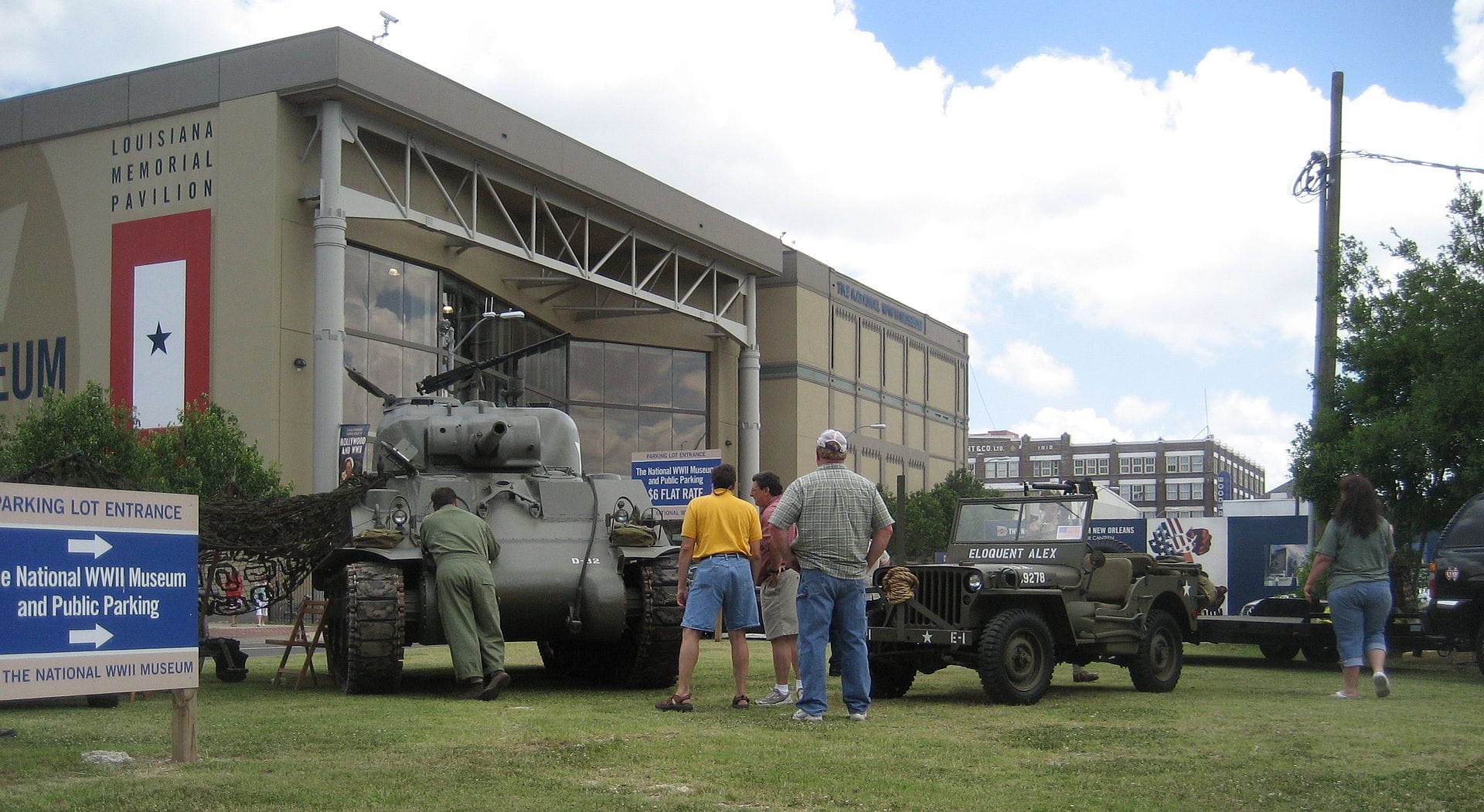
What The National WWII Museum Actually Is
The National WWII Museum is not a single building with display cases. It is a six-acre campus in New Orleans' Central Business District built across six interconnected pavilions, each dedicated to a different theater or dimension of the Second World War. The museum was founded in 2000 as The National D-Day Museum, focusing specifically on the Normandy invasion and the role of New Orleans manufacturer Andrew Higgins, whose Higgins boats were central to Allied amphibious operations. Congress designated it the official WWII museum of the United States in 2003, and it was renamed The National WWII Museum to reflect its expanded scope.
Today, the campus covers the Pacific and European theaters, the home front, personal stories of individual soldiers and civilians, large-scale artifacts including aircraft and naval equipment, and an on-site restoration facility where visitors can watch ongoing work on historical vehicles. The scale of the place is genuinely staggering, and first-time visitors almost universally underestimate how much time they need.
💡 Local tip
Plan for at least half a day, and ideally a full one. Most visitors who budget two hours leave feeling they rushed through the most important parts. If your time is limited, prioritize the pavilion dedicated to the theater of war you find most compelling, then use remaining time selectively.
The Campus Layout: Six Pavilions, One Cohesive Story
Navigating the museum for the first time can be disorienting without a clear mental map. The pavilions are connected by climate-controlled corridors, which matters during New Orleans summers when outdoor movement becomes genuinely uncomfortable by midday. Upon arrival, pick up the campus map at the welcome center and decide whether you want a chronological walk through the war's timeline or whether you'd rather anchor to a specific pavilion based on personal interest.
The exhibits use a combination of first-person oral histories, large artifact installations, interactive media, and archival photography. The approach is designed to make the war legible at both the strategic and deeply personal level, tracing the arc from Pearl Harbor through V-J Day while keeping individual human stories at the center. This combination is what separates it from many military museums that lean heavily on hardware at the expense of context.
Beyond the main exhibit halls, the campus includes restaurants, a retail store, and a period dinner theater called the Stage Door Canteen, which offers scripted musical entertainment in the style of WWII-era USO shows. It's a separate ticketed experience and worth considering if you want an evening to complement a daytime museum visit.
Tickets & tours
Hand-picked options from our booking partner. Prices are indicative; availability and final rates are confirmed when you complete your booking.
Go City | New Orleans All-Inclusive Pass
From 72 €Instant confirmationFree cancellationSpooky kid-friendly family ghost tour
From 32 €Instant confirmationFree cancellationWalking the Devil's Empire tour with HELLVISION™ in New Orleans
From 32 €Instant confirmationFree cancellationThe New Orleans haunted cemetery city bus tour
From 43 €Instant confirmationFree cancellation
Why New Orleans? The Higgins Connection
The museum's location in New Orleans is not accidental or arbitrary. Andrew Jackson Higgins, a New Orleans boat manufacturer, designed and produced the LCVP (Landing Craft, Vehicle, Personnel), which became the primary vessel used for Allied amphibious landings throughout the war, including D-Day at Normandy. Dwight Eisenhower later credited Higgins as the man who won the war for the Allies, specifically because without his boats the D-Day invasion would have been logistically impossible at the required scale.
New Orleans was Higgins' manufacturing center, and at peak production his factories employed more than 20,000 workers across the city. Understanding this backstory changes how you experience the museum's founding narrative and why its original D-Day focus made geographic sense. The museum's founders, led by historian Stephen Ambrose, chose New Orleans not for tourism reasons but because the city was genuinely central to one of the war's most decisive logistical achievements.
The Central Business District surrounding the museum has its own layered history worth understanding before or after your visit. For broader context on how New Orleans developed its downtown core, the Central Business District neighborhood guide covers the area's commercial and architectural evolution.
What the Visit Actually Feels Like
Early morning, around 9:00 AM when the museum opens, is the most productive time to arrive. School groups typically filter in between 9:30 and 10:30 AM, so the first thirty to forty-five minutes offer quieter corridors and more time with exhibits that tend to crowd up later, particularly the immersive media installations. By early afternoon, weekend crowds can create bottlenecks at the most popular displays.
The atmosphere inside is notably different from typical history museums. The sound design in several exhibit halls uses archival recordings, period radio broadcasts, and ambient audio to create a sense of temporal immersion. In some spaces, this works powerfully: you can hear FDR's address to Congress following Pearl Harbor playing softly beneath the visual installations. The effect is cumulative rather than immediate, and visitors who move slowly and read the personal accounts alongside the strategic material tend to find the experience far more affecting than those who treat it as a quick walkthrough.
The large artifact halls, where you encounter full-scale aircraft suspended overhead and naval equipment at eye level, have an unmistakable physical weight. Standing beneath a period fighter plane while reading the combat record of the pilot who flew it creates a kind of understanding that no photograph or textbook can replicate. These spaces tend to be where visitors pause longest.
ℹ️ Good to know
The museum is open 9:00 AM to 5:00 PM, seven days a week. It closes on Mardi Gras day, Thanksgiving, Christmas Eve, and Christmas Day. Verify holiday hours before visiting during festival periods.
Practical Information: Getting There, Tickets, and Accessibility
The museum's official address is 945 Magazine Street, but the main entrance faces Andrew Higgins Drive, between Camp Street and Magazine Street. First-time visitors sometimes walk past the entrance looking for signage on Magazine Street itself. Fee-based parking is available in the museum's own garage at 1024 Magazine Street, which is the most straightforward option if you're driving. The surrounding streets offer metered parking but availability varies significantly by day and time.
RTA buses serve the Magazine Street corridor and connect to the broader transit network. If you're staying in the French Quarter or nearby, the walk to the museum is manageable (roughly 15 to 20 minutes) and passes through sections of the CBD that give you a sense of how the neighborhood has developed around the museum campus. Ride-hailing services are available throughout the city via Uber and Lyft.
Admission is paid; specific ticket prices should be confirmed directly with the museum at nationalww2museum.org or by calling 504-528-1944, as pricing and package options change. If you're budgeting your New Orleans trip overall, the New Orleans budget travel guide has practical advice on how to balance paid attractions with the city's many free options.
Accessibility throughout the campus is comprehensive. The pavilions are connected via corridors that accommodate wheelchairs and mobility aids, elevators serve all exhibit levels, and the museum provides accessibility-specific resources at its welcome center. If you have specific access needs, contacting the museum in advance at 504-528-1944 is worthwhile.
Photography, Weather, and What to Wear
Photography for personal use is generally permitted throughout the standard exhibit areas, though specific installations may have restrictions noted on-site. The large artifact halls with dramatic overhead lighting provide strong compositional opportunities, particularly in the morning when natural light through skylights supplements the interior design. Flash photography is typically discouraged in exhibit areas with original documents and photographs.
Dress practically. The campus is climate-controlled indoors, but if you arrive by foot or spend time in the outdoor connecting areas during summer months (June through August), temperatures regularly exceed 90°F with high humidity. Comfortable walking shoes matter because the campus is large and the floors are hard. Most visitors cover several miles of floor space across a full-day visit.
⚠️ What to skip
Summer heat in New Orleans is serious. If you're visiting between June and August, plan your outdoor movement early in the morning and stay hydrated. Once inside the museum, you'll be comfortable, but the walk from your accommodation or parking could be demanding in midday heat.
Honest Assessment: Who This Museum Suits and Who It Doesn't
The National WWII Museum is genuinely one of the most significant history institutions in the United States, and it earns that designation. The depth of material, the quality of the oral history program, and the scale of the artifact collection are difficult to find elsewhere in a single location. For anyone with a serious interest in twentieth-century history, military history, or American history more broadly, it is worth significant time.
Families with children under 10 should think carefully. The material is not sanitized, and the emotional weight of certain exhibits, including the human cost of combat and civilian suffering, is handled honestly rather than softened for younger audiences. Older children and teenagers who have some prior exposure to WWII history will likely find the museum engaging and memorable. Very young children or visitors with no interest in historical context will find a full day here exhausting without much payoff.
Visitors looking primarily for outdoor experiences, nightlife, or the cultural character of New Orleans' older neighborhoods should recalibrate expectations. This is a serious museum requiring focused attention, not a quick stop between other activities. For a broader sense of how to allocate your time across the city, the complete New Orleans things-to-do guide helps with overall trip planning.
Insider Tips
- Arrive at 9:00 AM when doors open. You'll have the first 30–45 minutes before school groups arrive and the most popular exhibit spaces fill up. This early window is significantly more conducive to taking in the oral history installations without ambient crowd noise.
- The museum's oral history recordings are a standout feature. Many visitors skim past the listening stations in favor of moving to the next hall. Slow down and use them. Some of the individual accounts are extraordinary and anchor the larger historical narrative in ways the signage alone cannot.
- If you're visiting with a veteran or military family member, the museum's staff are exceptionally well-equipped to tailor your experience. It's worth mentioning this at the welcome desk, as staff can point you toward exhibits or programming particularly relevant to specific service branches or theaters.
- The Stage Door Canteen dinner theater is a separate ticketed experience from museum admission. If you're interested, book ahead rather than assuming walk-in availability, especially on weekends and during peak tourist season (March through May, October through November).
- The museum campus includes a restaurant. For a full-day visit, eating on-site is the most efficient option. Leaving the campus for lunch adds considerable time when you factor in the walk, wait, and return.
Who Is The National WWII Museum For?
- History enthusiasts and readers of WWII literature or biography
- Veterans and their families, including those tracing personal or family service history
- Educators and students with prior exposure to WWII context
- Visitors on multi-day trips who can dedicate a full day to a single attraction
- Travelers interested in American industrial and military history beyond the battlefield
Nearby Attractions
Other things to see while in Central Business District & Warehouse Arts District:
- Aquarium of the Americas
Sitting at the edge of the French Quarter along the Mississippi River, Audubon Aquarium draws visitors with its white alligators, African penguin colony, and immersive exhibits spanning the aquatic ecosystems of the Americas. Reopened in 2023 after a $41 million renovation that merged it with the former Insectarium, the facility is sharper and more focused than ever.
- Caesars Superdome
The Caesars Superdome is one of the most recognizable structures on the New Orleans skyline, a 73,208-seat domed arena that has hosted Super Bowls, Sugar Bowls, Essence Festival, and legendary concerts. Whether you're catching a Saints game or attending a major event, here's what you actually need to know before you go.
- Creole Queen
The Paddlewheeler Creole Queen is a 190-foot, three-deck sternwheeler that takes passengers out onto the Mississippi River for jazz dinner cruises and historical tours. Departing from the Poydras Street dock in the Central Business District, it offers one of the few ways to experience New Orleans from the water rather than from its streets.
- Mardi Gras World
Mardi Gras World is a working float-building warehouse on the Mississippi River where you can walk among giant parade sculptures in progress. It operates year-round and offers a behind-the-scenes look at the craftsmanship behind New Orleans' most famous celebration.