Best Things to Do in New Orleans: The Definitive Guide
New Orleans rewards visitors who go beyond Bourbon Street. This guide covers the top things to do in New Orleans across music, history, food, neighborhoods, and outdoor experiences, with practical details on prices, timing, and what to skip.
Plan and book this trip
Tools from our partner Travelpayouts help you compare flights and hotels. If you book through them, we may earn a commission at no extra cost to you.
Flights
Hotels map
TL;DR
- The French Quarter is essential, but the best New Orleans experiences often happen in the Marigny and Bywater neighborhoods, at Frenchmen Street, and in Tremé.
- Visit between March and May or October and November to avoid extreme humidity and hurricane season while catching the city at its liveliest.
- Free things to do in New Orleans include City Park, Congo Square, the Moon Walk, and the French Market, making NOLA surprisingly accessible on a tight budget.
- For couples, families with kids, or first-timers, check our dedicated guides: New Orleans for couples and New Orleans with kids.
- Bourbon Street delivers exactly what it promises: loud, commercial, and fun for one night. Treat it as a checkbox, not a base camp.
Explore the French Quarter: History, Architecture, and the Real Pulse of NOLA
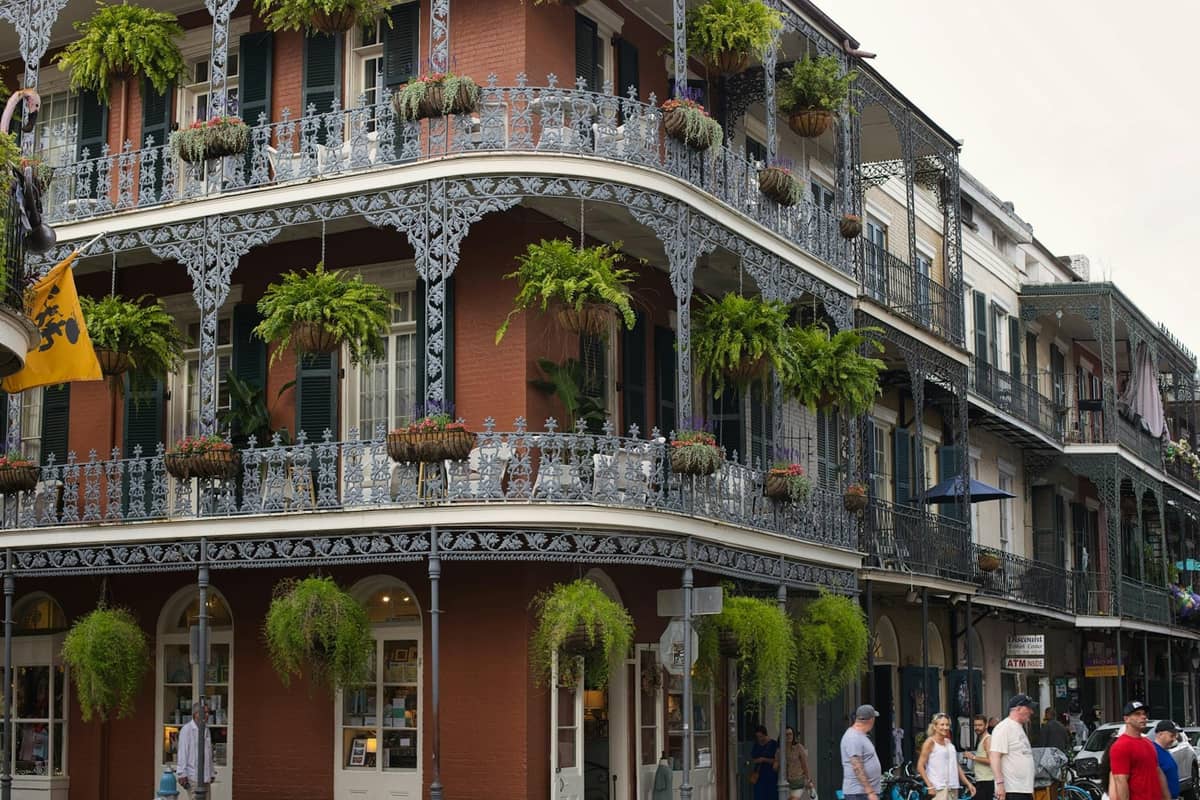
The French Quarter (officially the Vieux Carré) is the oldest neighborhood in the city, founded in 1718, and it is the logical starting point for any visit. The architecture here is largely Spanish Creole, not French, a fact that surprises most visitors. The French Quarter was rebuilt after two major fires in the 1780s, and what you see today reflects that Spanish colonial period more than the original French settlement.
Jackson Square is the geographic and social heart of the Quarter. On any given morning, artists, fortune tellers, and street musicians occupy the iron fence surrounding the park. The St. Louis Cathedral looms behind it, the oldest continuously active Roman Catholic cathedral in the United States. Nearby, the Pontalba Buildings flanking the square date to 1850 and are among the oldest apartment buildings in the country.
Walk two blocks to Royal Street for antique shops, art galleries, and the kind of wrought-iron balconies that define New Orleans streetscapes. It is quieter than Bourbon Street, dramatically more photogenic, and where you will find locals who actually live in the Quarter running errands. The French Market stretches six blocks from Decatur Street toward Esplanade Avenue and traces its origins to 1791, making it one of the oldest public markets in the United States. Go in the morning when the produce vendors are active; the souvenir section gets crowded by midday.
⚠️ What to skip
Bourbon Street at night is genuinely entertaining once, but the bars charge $12-18 for drinks that are half ice and the 'live jazz' on many blocks is karaoke or a DJ. For authentic live music without the tourist markup, head to Frenchmen Street in the Marigny, about a 10-minute walk from the Quarter.
Live Music: Where New Orleans Actually Sounds Like New Orleans
New Orleans is the birthplace of jazz, and the best way to understand that claim is to visit Congo Square inside Louis Armstrong Park. From roughly the 1740s onward, enslaved people were permitted to gather here on Sunday afternoons to play music, sing, and dance, preserving African rhythmic traditions that became the foundation of jazz, blues, and rock and roll. The square is free to enter and worth visiting before 10am when it is quiet.
Preservation Hall on St. Peter Street is the most famous jazz venue in the city. Sets run about 45 minutes, tickets are around $20-35 depending on the show tier, and the space holds roughly 100 people standing in a candlelit room with no air conditioning. It is deliberately stripped back. Get there 30 minutes before doors or book reserved seating online. This is not background music: the musicians command full attention.
Frenchmen Street runs for a few short blocks in the Marigny and packs in a dozen live music venues with no cover at several of them. The Spotted Cat and d.b.a. typically charge nothing at the door. Music starts around 10pm and runs past 2am. On weekends, the street itself becomes an outdoor concert as musicians set up on the sidewalks. This is where New Orleans musicians actually go to hear each other play.
✨ Pro tip
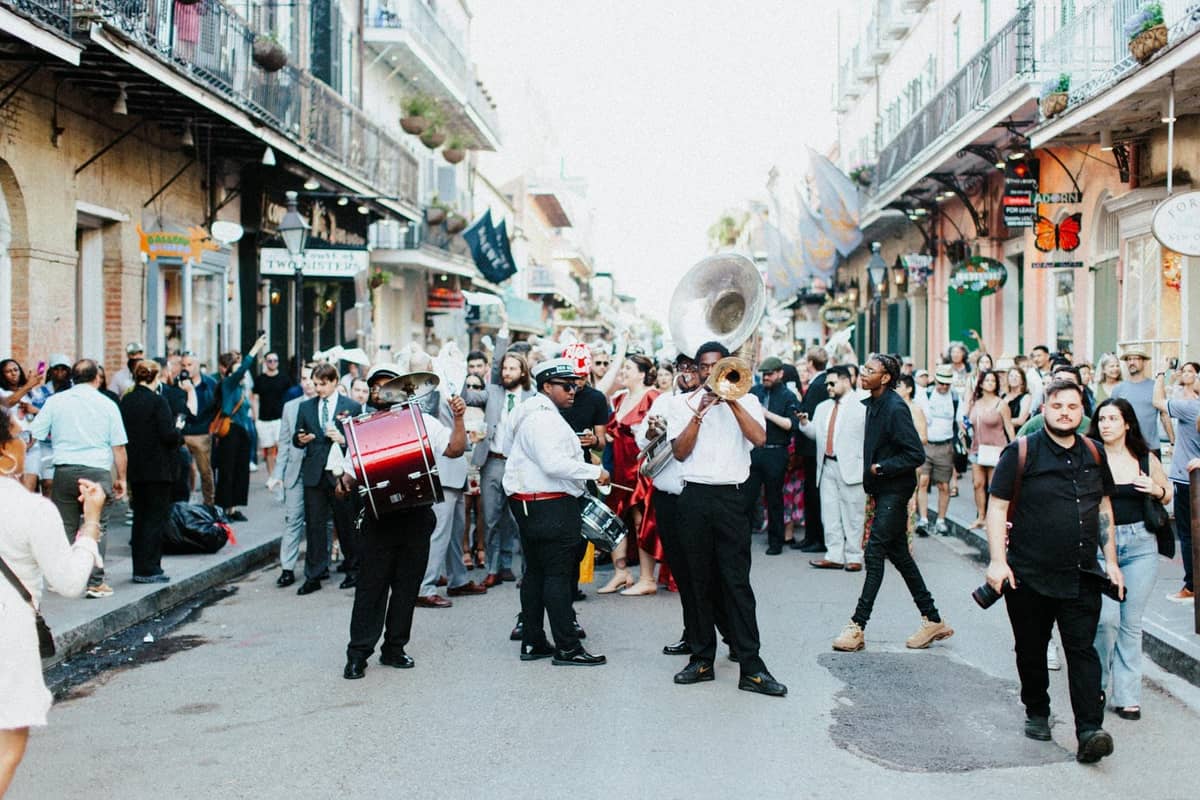
Check the schedule for a Second Line parade before you visit. These brass-band-led neighborhood processions happen most Sundays from fall through spring, organized by the city's Social Aid and Pleasure Clubs. They are free, open to anyone who joins the crowd, and offer a cultural experience that no ticketed event can replicate. Our guide to New Orleans Second Line parades has full scheduling details.
History and Culture: Cemeteries, Voodoo, and World War II
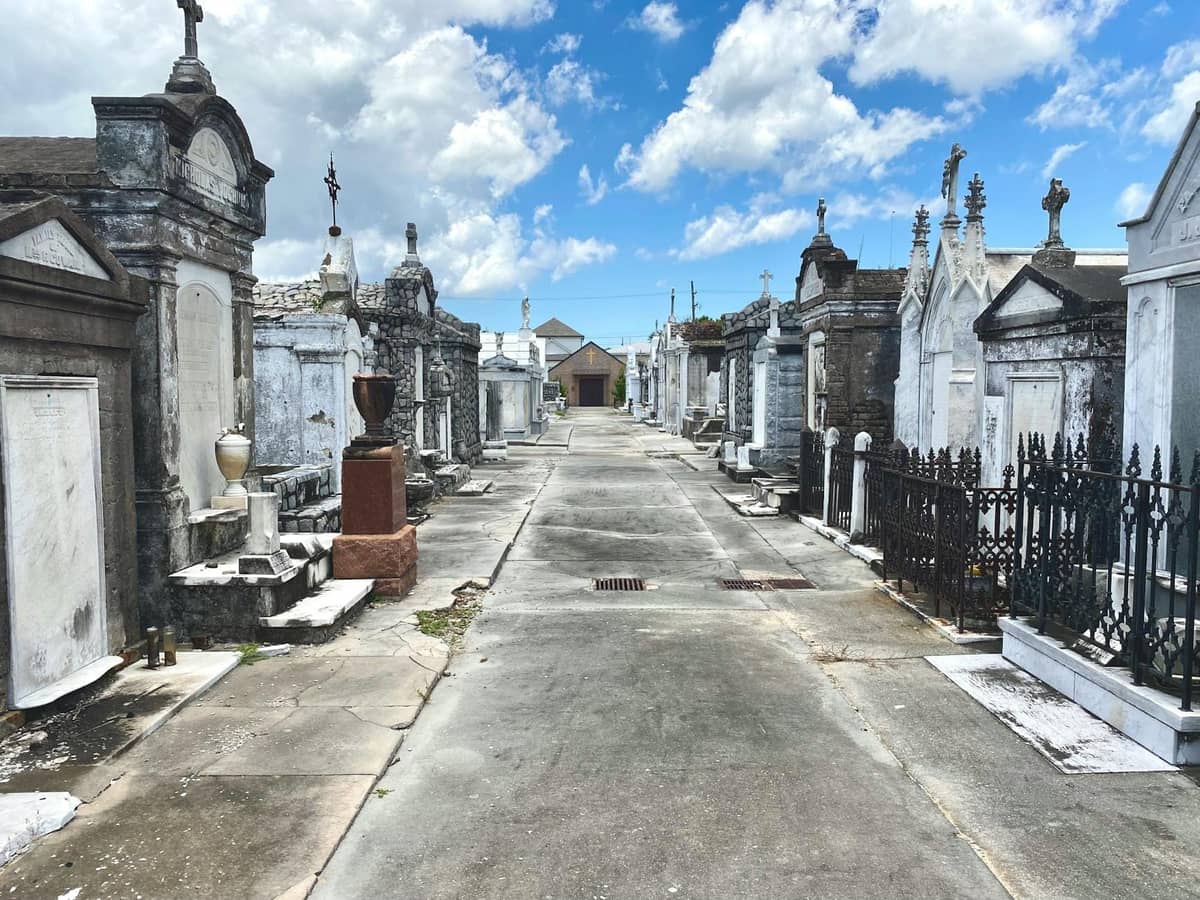
New Orleans has more layers of history per square block than almost any American city. St. Louis Cemetery No. 1, established in 1789, is one of New Orleans' oldest above-ground cemeteries and among the most famous examples of the city's distinctive tomb architecture, which gave rise to the nickname 'Cities of the Dead.' Because the city sits mostly at or below sea level, above-ground burial vaults became standard practice. Tradition links Marie Laveau, the 19th-century Voodoo Queen, to the Laveau-Glapion family tomb in St. Louis Cemetery No. 1, though her exact resting place is a matter of historical debate. The Archdiocese now requires visitors to enter with a licensed tour guide to reduce vandalism, so factor in a guided tour cost of around $25-30 per person.
The National WWII Museum is frequently ranked among the top museums in the United States, and the ranking is deserved. It covers the full scope of the war, with particular depth on the Pacific theater and the D-Day operations, befitting a city where Higgins boats (the landing craft that made D-Day possible) were designed and built. Admission runs around $28-32 for adults; plan at least three to four hours. This is the best single-day indoor experience in New Orleans regardless of weather.
For a more unusual cultural stop, the New Orleans Voodoo Museum in the French Quarter is small and deliberately atmospheric. Its stated mission includes dispelling misconceptions about Voodoo practices and presenting the tradition's African and Haitian roots with seriousness. It is not a haunted house gimmick. Admission is modest (around $7-10), and the staff are genuinely knowledgeable. Pair it with the city's broader history of Haitian and West African cultural influence.
- National WWII Museum Best single indoor attraction in the city. Budget half a day minimum. Admission around $28-32 for adults.
- St. Louis Cemetery No. 1 Book a licensed guided tour (~$25-30). Independent entry is restricted. Morning visits are less crowded.
- Mardi Gras World Adults $22, children under 12 $14. Tours run 9:30am-4:30pm and last about 30 minutes. Over 80% of Mardi Gras floats are built here.
- The Cabildo The building where the Louisiana Purchase transfer took place in 1803. Now a state museum covering Louisiana history from colonial times to Reconstruction.
- Whitney Plantation About 45 miles west of the city, this is the only plantation museum in Louisiana focused entirely on the experience of enslaved people rather than the planter class. Plan a half-day trip.
Food and Drink: What to Eat, Where to Eat, and What to Avoid
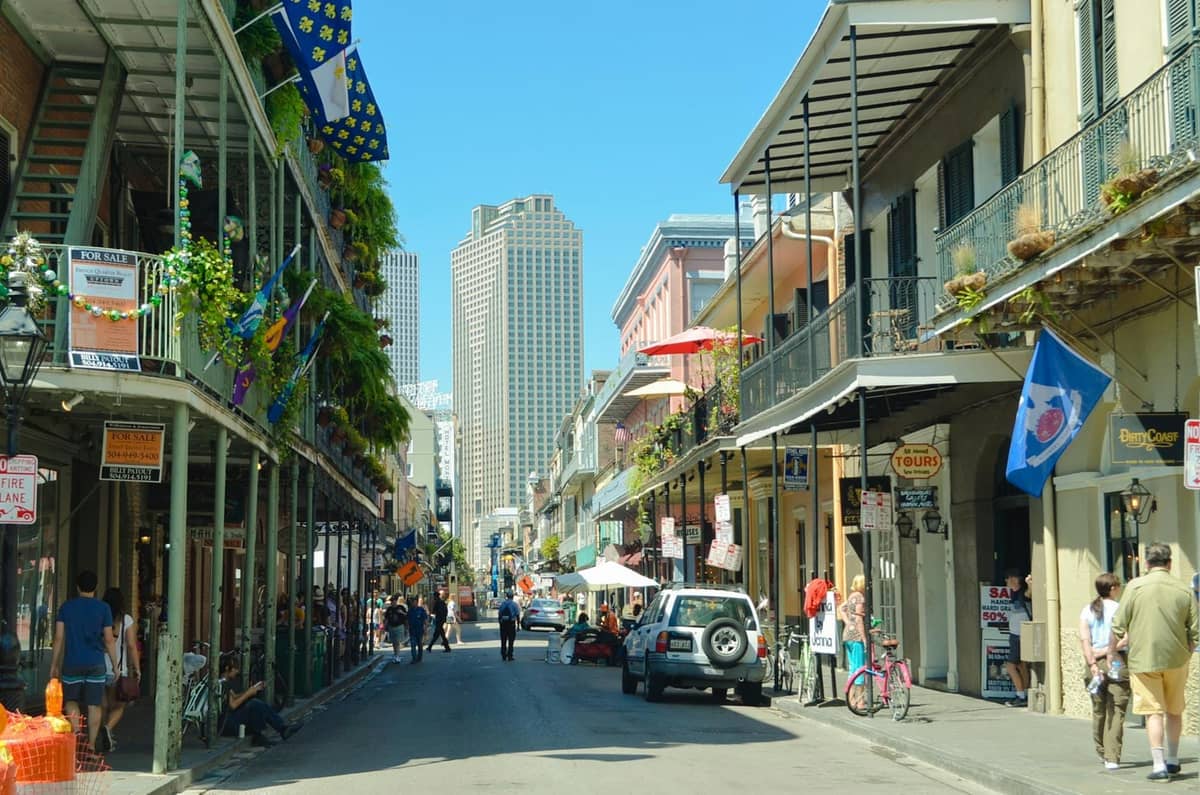
New Orleans has one of the most distinctive culinary traditions in North America, built on French, Spanish, African, and Haitian influences. Beignets at Café du Monde are the obligatory first meal, and the queue at the original Decatur Street location is worth it at least once. Three beignets cost around $4-5, and they arrive covered in powdered sugar that will get on your clothes regardless of how careful you are. Go before 9am on weekdays to avoid the longest lines. Our New Orleans beignets guide covers every serious contender beyond the Café du Monde original.
Beyond beignets, the essential New Orleans eating list includes a dressed po'boy (roast beef or fried shrimp), red beans and rice on Mondays (a city-wide tradition), a cup of turtle soup, and at least one proper bowl of gumbo. For a comprehensive breakdown of what to order and where, see what to eat in New Orleans and where to eat in New Orleans. Restaurant reservations are essential for dinner at the top Creole spots, especially on weekends.
💡 Local tip
New Orleans has an open container law that allows alcohol on public streets in plastic cups. This is not a license to drink everywhere, but it does mean you can walk from one bar to another with your drink legally. Glass bottles are not permitted on public streets.
Outdoor Activities: The River, City Park, and Getting Off the Tourist Trail
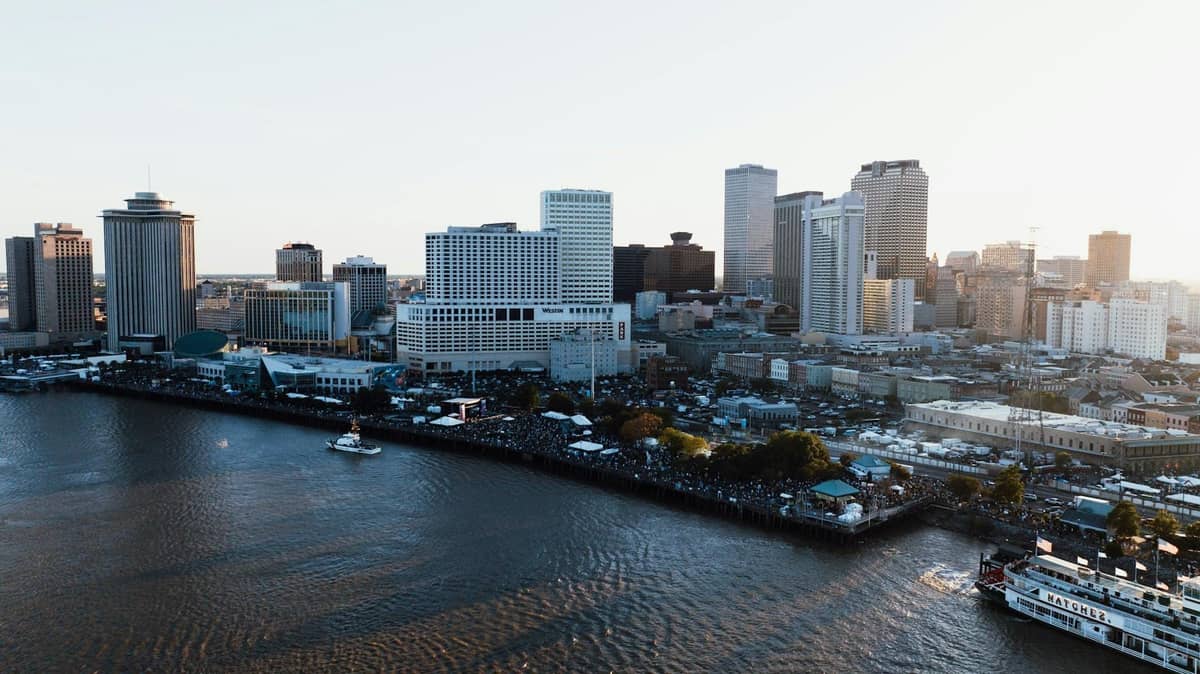
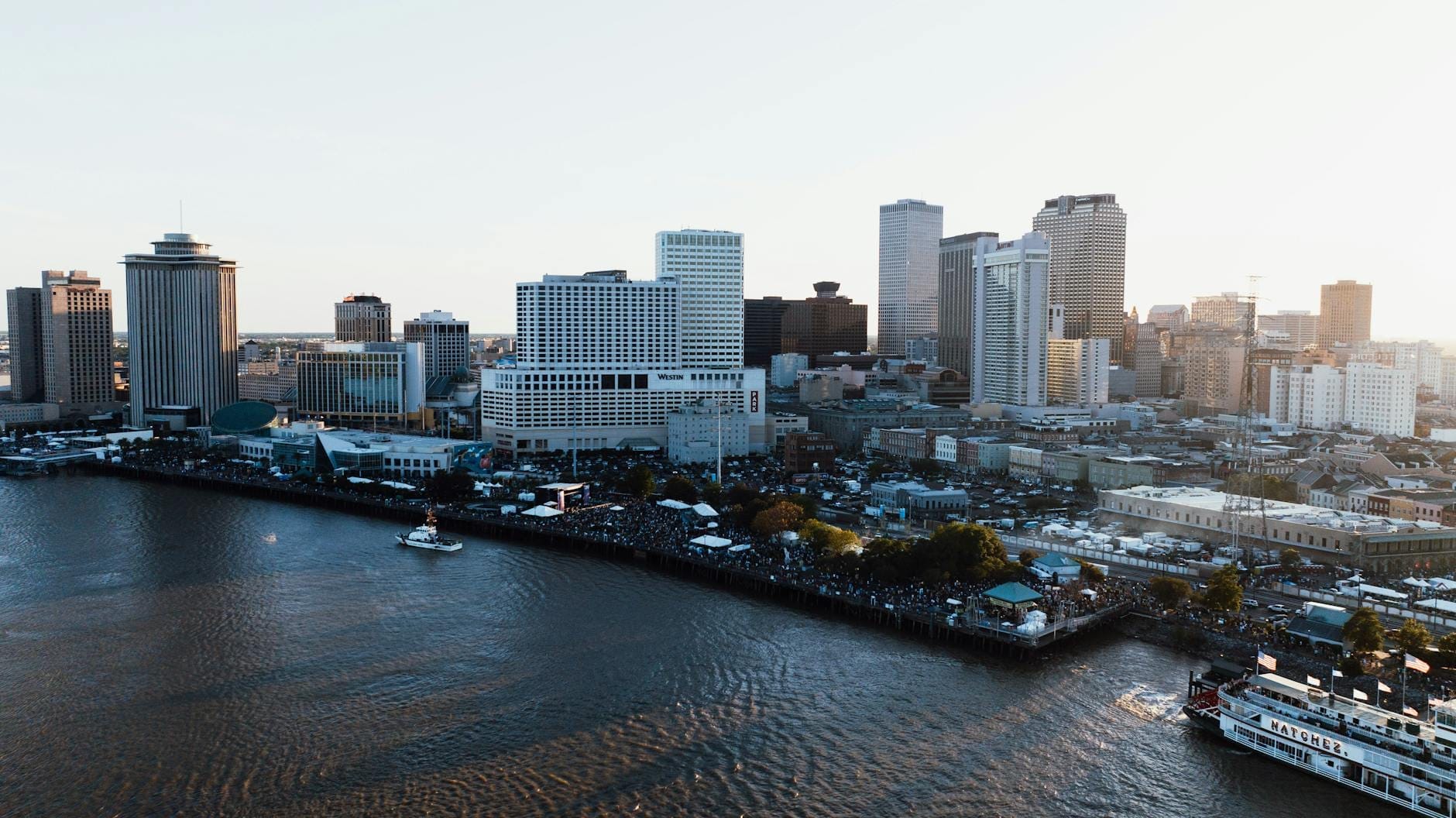
New Orleans sits at the base of a natural levee on the Mississippi River, and the relationship between the city and the river is central to everything here. The Moon Walk along the riverfront gives a free, expansive view of the Mississippi and the steady procession of container ships and tugboats that make this one of the busiest ports in the world. Sunsets from here can be spectacular. Nearby, Crescent Park in the Marigny offers a longer stretch of riverside trail with less foot traffic than the French Quarter waterfront.
City Park covers 1,300 acres in Mid-City and is one of the largest urban parks in the country. It contains ancient live oak trees (some over 600 years old), lagoons for paddleboating, the New Orleans Museum of Art, the Sydney and Walda Besthoff Sculpture Garden (free to enter), and the New Orleans Botanical Garden. Entry to the park itself is free. The sculpture garden alone is worth a dedicated hour.
For a half-day excursion, the Steamboat Natchez runs two-hour narrated cruises on the Mississippi with live jazz onboard. Tickets run around $38-45 for adults for the daytime cruise. The evening dinner jazz cruise costs more but includes a meal. Alternatively, the swamp tours departing from areas just outside the city offer a completely different landscape: cypress trees, alligators, and bayou ecosystem roughly 45-60 minutes from downtown.
- City Park: Free to enter; NOMA admission around $15 for adults; sculpture garden free
- Steamboat Natchez: ~$38-45 daytime cruise; evening dinner cruise around $80-95
- Swamp tours: typically $25-45 per person depending on operator and tour length
- Crescent Park: Free; accessible from the Marigny via a dramatic spiral footbridge
- St. Charles Streetcar: $1.25 per ride; runs from Canal Street through the Garden District to Carrollton
Planning Your Visit: Neighborhoods, Timing, and Practical Logistics
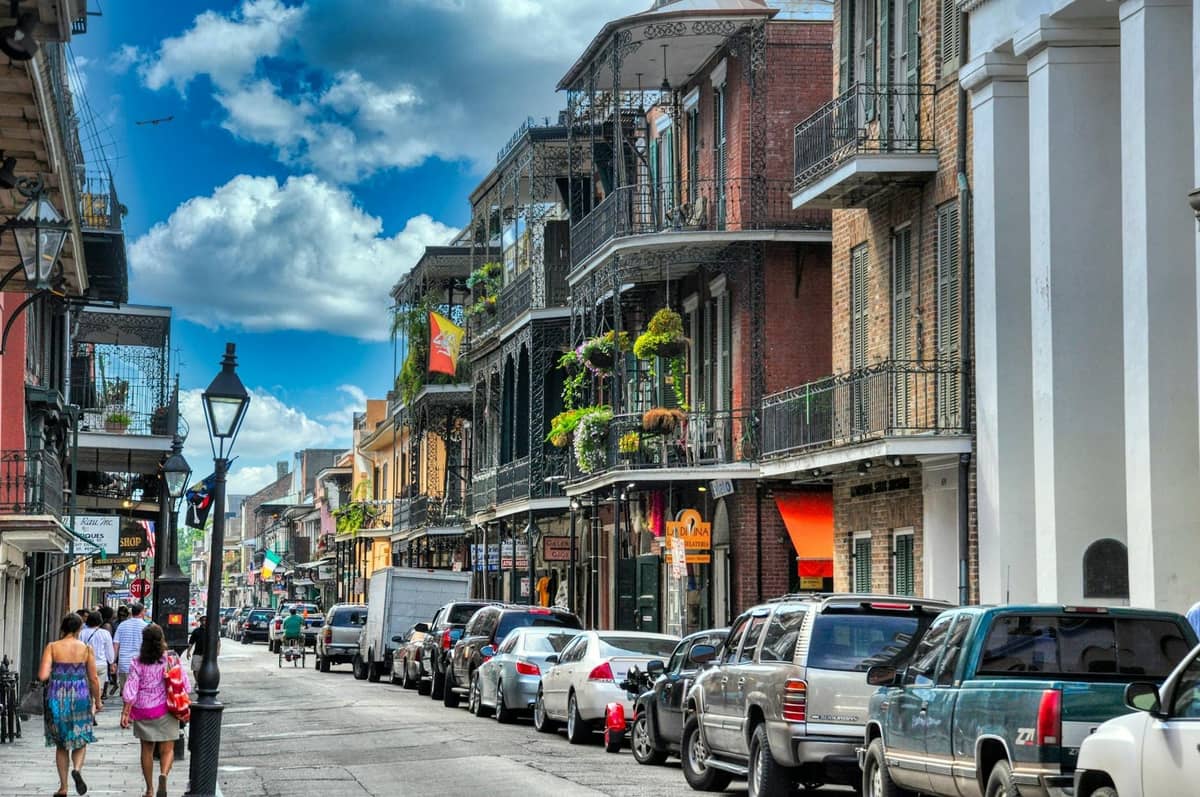
Where you stay shapes your entire experience. The French Quarter puts you in the center of everything but means noise until 4am on weekends. The Garden District offers quieter streets, antebellum mansions, and easy St. Charles streetcar access to downtown for about $1.25 per ride. The Central Business District has the most hotel inventory and is a short walk to both the WWII Museum and the French Quarter. Our full guide to where to stay in New Orleans breaks down each neighborhood by traveler type and budget.
Timing matters more in New Orleans than almost anywhere in the US. Mardi Gras (date varies, typically February or early March) brings extraordinary energy but also crowds, inflated hotel rates, and logistical complications. If you are planning around it, start with our New Orleans Mardi Gras guide. Jazz Fest in late April and early May is the other major festival, drawing serious music fans from around the world. October is a sweet spot: temperatures drop to the mid-60s to low 80s (°F), Halloween is celebrated with unusual intensity here, and crowds are manageable. See our dedicated guide to New Orleans in October for the full picture.
Getting around is easiest on foot in the French Quarter and along the riverfront. The Regional Transit Authority (RTA) streetcars cover the main tourist corridor efficiently. Rideshare (Uber and Lyft) works well city-wide. From Louis Armstrong International Airport (MSY), roughly 15 miles from the French Quarter, a taxi runs around $36-45 flat rate; rideshare is typically $30-50 depending on demand. RTA bus service connects the airport to downtown — check current route numbers and fares at norta.com, as routes and pricing change. Verify current fares before your trip.
FAQ
What are the best free things to do in New Orleans?
City Park, the Besthoff Sculpture Garden, Congo Square, Crescent Park, the Moon Walk along the Mississippi, and wandering the French Quarter architecture are all free. Frenchmen Street has live music venues with no cover charge most nights. Jackson Square with its street performers and artists costs nothing to enjoy.
What are the best things to do in New Orleans for couples?
An evening Steamboat Natchez jazz cruise, dinner at a classic Creole restaurant in the French Quarter, a walking tour of the Garden District's antebellum mansions, and a late night on Frenchmen Street rank consistently high for couples. A swamp tour at sunset adds a more adventurous option.
What are the top things to do in New Orleans with kids?
The Audubon Zoo (which includes a lazy river and waterslides), the Aquarium of the Americas (with a shark touch tank), City Park's playgrounds and paddle boats, and Mardi Gras World (adults $35, kids 5-12 $20) are all strong choices for families. The National WWII Museum is suitable for older children.
What is the best time of year to visit New Orleans?
March through May and October through November offer the most comfortable weather (60-82°F) with lower humidity than summer. Mardi Gras (February or March) and Jazz Fest (late April to early May) are the peak events but come with higher prices and crowds. October has excellent weather and a lively atmosphere without the extremes of Mardi Gras season.
Is Bourbon Street worth visiting?
Once, yes. Bourbon Street delivers a specific kind of loud, commercial fun that is worth experiencing for the cultural reference point alone. But if live jazz and authentic New Orleans culture are what you are after, Frenchmen Street in the Marigny is a far better use of your evenings. Locals rarely go to Bourbon Street voluntarily.