City Park, New Orleans: Ancient Oaks, Open Space, and Surprising Depth
At 1,300 acres, New Orleans City Park is larger than Central Park and contains one of the largest collections of mature live oaks in the United States, some between 600 and 800 years old. Free to enter, it functions as Mid-City's green backbone and rewards visitors who go beyond the main lawn.
Quick Facts
- Location
- 1 Palm Drive, New Orleans, LA 70124 (Mid-City)
- Getting There
- RTA Bus routes serve the area; car or rideshare most practical from the French Quarter (~10 min)
- Time Needed
- 2–5 hours depending on which attractions you visit
- Cost
- Free park entry; individual attractions (NOMA, Botanical Garden) charge separately
- Best for
- Families, nature lovers, runners, art seekers, anyone needing space to breathe
- Official website
- neworleanscitypark.org
What City Park Actually Is
City Park is a 1,300-acre public park in the Mid-City neighborhood of New Orleans, administered by the City Park Conservancy, a nonprofit organization. It ranks as the 87th largest urban park in the United States and the 20th most visited, drawing approximately 16 million visits annually. Those numbers sound abstract until you're standing under a live oak with a trunk wider than your arm span, listening to a family play pickup soccer fifty yards away while a great egret picks its way along the edge of a lagoon.
The park sits along Bayou St. John, roughly one mile wide by three miles long, and occupies land that was once the Allard Plantation. It was established in 1854 using 100 acres bequeathed by philanthropist John McDonogh, and was formally named City Park in 1891, the same year the City Park Improvement Association took over its management. Today it contains tennis courts, a golf course, a botanical garden, a world-class sculpture garden, the New Orleans Museum of Art, multiple lagoons, a historic carousel, and an amusement area for children. Calling it just a park undersells it considerably.
ℹ️ Good to know
Park entry is free at all times. Specific attractions within the park, including the New Orleans Museum of Art and the Botanical Garden, charge their own admission. Verify current prices directly with each venue before your visit.
The Live Oaks: The Reason to Come First
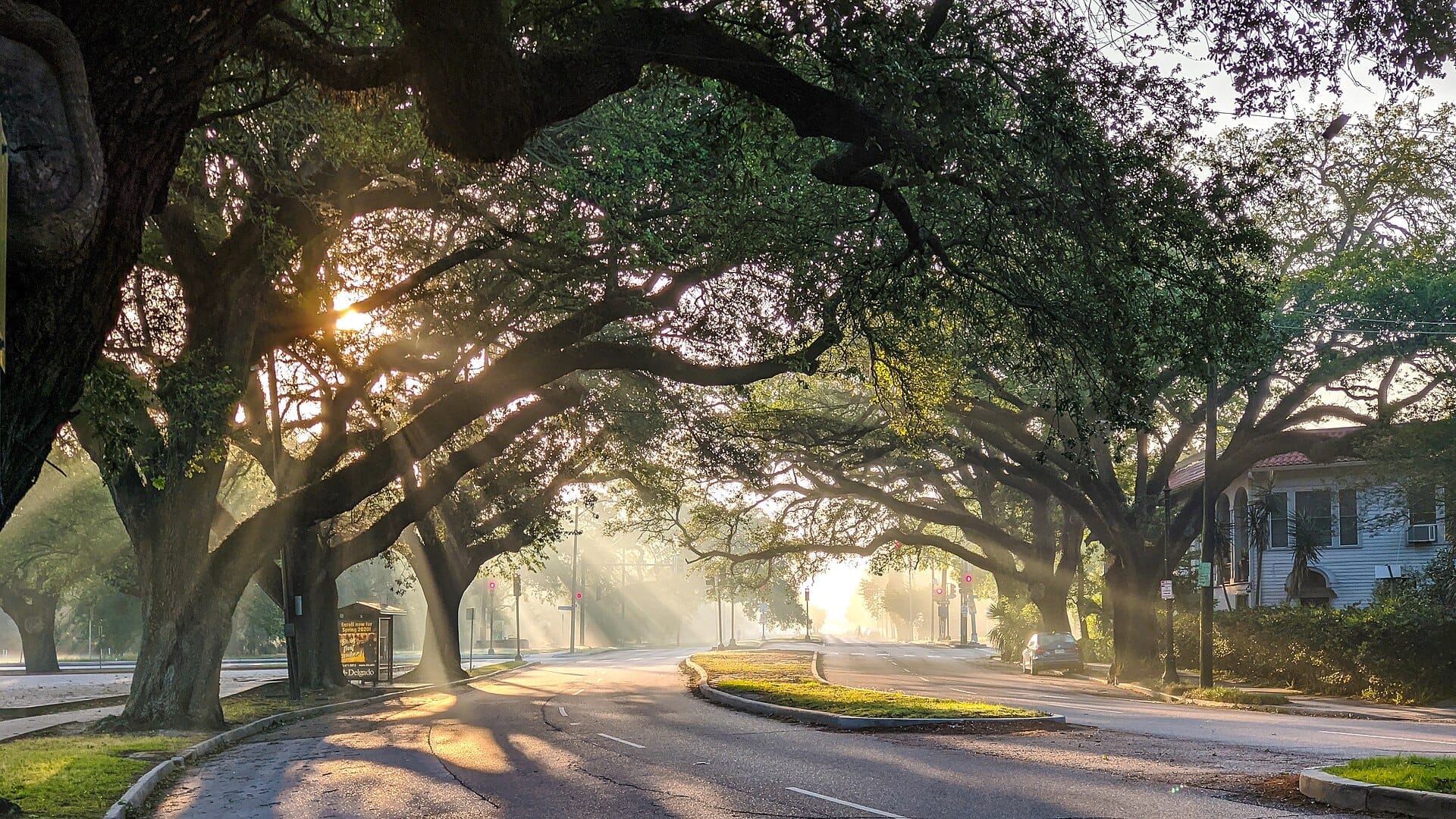
City Park contains one of the largest collections of mature live oaks in the United States (Quercus virginiana). Many of the oldest trees in the Dueling Oaks area near the museum are estimated at 600 to 800 years old, meaning they were already established before European contact with the Americas. These are not ornamental plantings. They are enormous, sprawling organisms with canopies that can span 150 feet, their lower limbs dipping close enough to the ground that children routinely climb them.
The area around the Dueling Oaks got its name from the 19th-century practice of settling disputes at dawn beneath the trees, a tradition that continued for decades after the park's founding. Standing here on a foggy morning, when the Spanish moss hangs low and the light filters through the canopy in narrow shafts, the atmosphere carries genuine historical weight. It's one of the few places in New Orleans where the city's layered past feels tangible without any interpretive signage required.
Photography here works best in the first two hours after sunrise, when soft directional light cuts through the moss and the park population is thin. Midday flattens the scene considerably. Bring a wide-angle lens if you have one; the tree canopies are simply too large to capture otherwise.
Tickets & tours
Hand-picked options from our booking partner. Prices are indicative; availability and final rates are confirmed when you complete your booking.
Spooky kid-friendly family ghost tour
From 32 €Instant confirmationFree cancellationWalking the Devil's Empire tour with HELLVISION™ in New Orleans
From 32 €Instant confirmationFree cancellationThe New Orleans haunted cemetery city bus tour
From 43 €Instant confirmationFree cancellationWhitney Plantation Tour
From 72 €Instant confirmationFree cancellation
How the Park Changes by Time of Day
Early mornings, roughly 6am to 9am, belong to locals. Runners circle the lagoons, dog walkers navigate the paths near the entrance off Marconi Drive, and the bird activity along the water is at its most visible. Great blue herons and snowy egrets are common year-round. In winter months, the park also draws migratory waterfowl to the lagoons.
By mid-morning on weekends, families with strollers arrive, the Storyland and Carousel area opens, and the volume picks up steadily. If you're visiting the New Orleans Museum of Art or the Sydney and Walda Besthoff Sculpture Garden, arriving at opening time (typically 10am for the museum; verify current hours) means a noticeably quieter experience. The sculpture garden remains free and open on its own schedule, and wandering it before the museum crowds filter through is a genuinely peaceful hour.
Afternoons during summer (June through August) bring real heat. Temperatures commonly reach the low 90s°F (33°C) with high humidity. The shade under the live oaks provides meaningful relief, but walking long stretches of open path in the afternoon sun is draining. Spring (March to May) and fall (October to November) are the comfortable windows, with temperatures between 60 and 82°F and lower humidity. October in particular turns the park into a staging ground for Halloween events.
⚠️ What to skip
Summer afternoons can be brutal here. Bring water, wear sunscreen, and plan to be near the lagoons or under tree cover between 12pm and 3pm. Afternoon thunderstorms are also common June through September.
Art and Architecture Inside the Park
The New Orleans Museum of Art (NOMA) anchors the northeast corner of the park and has occupied its current Beaux-Arts building since 1911. The permanent collection covers over 40,000 objects spanning 5,000 years. It is one of the oldest fine art museums in the South and worth at least two hours on its own. Admission applies; check the museum's website for current pricing and free admission days.
Directly behind the museum, the Sydney and Walda Besthoff Sculpture Garden is free to enter and contains over 90 works set across five acres of landscaped grounds with footbridges, lagoons, and, naturally, live oaks. The collection includes pieces by Henry Moore, Louise Bourgeois, and Yoko Ono, among many others. It is one of the most undervisited significant art spaces in the American South, and unlike most sculpture parks, the integration of water, moss, and tree canopy creates something that feels almost theatrical. This alone justifies the trip to the park for many visitors.
The garden is accessible by a separate entrance and does not require museum admission. It opens earlier than the museum building itself on most days. Confirm specific hours via the NOMA website before visiting, as they have varied seasonally.
Family Attractions and Practical Walkthrough
The New Orleans Botanical Garden occupies the southern portion of the park and is particularly strong in tropical and subtropical plantings given the local climate. The Art Deco structures in the garden, built by the Works Progress Administration in the 1930s, are worth noting for their architectural detail even if horticulture isn't your focus. Admission is charged separately; verify current pricing before visiting.
Storyland is a children's play area with storybook-themed structures that has operated in the park since 1955. The adjacent Carousel Gardens Amusement Park contains a 1906 wooden carousel that is listed on the National Register of Historic Places. Both attractions charge separate fees and have seasonal operating schedules, so check ahead if traveling specifically for these.
The park's lagoon system supports paddle boat rentals, and there are multiple spots for fishing. A disc golf course, tennis and soccer facilities, and a public golf course round out the recreational options. For most visitors on a single day, trying to hit everything is a mistake. Choose one anchor attraction, then let the oaks and lagoon paths fill the rest of your time.
💡 Local tip
Bikes are allowed throughout the park and are genuinely the best way to cover the full three-mile length without fatigue. Several bike rental options exist near the park entrance; check locally for current providers.
Getting There, Accessibility, and Who Should Skip It
City Park is located in Mid-City, roughly equidistant between the French Quarter and Lake Pontchartrain. Driving is the most convenient approach, with parking available at multiple lots throughout the park. Rideshare from the French Quarter takes around 10 minutes and costs approximately $10 to $15 (verify current rates). RTA bus routes serve the surrounding area, but the park's internal distances mean you'll still walk or rent a bike once inside.
Accessibility varies across the park. The main paths and plaza areas around the museum and sculpture garden are paved and manageable for strollers and wheelchairs. More remote areas of the park, particularly the natural areas near the bayou, involve uneven ground and unpaved surfaces. The park administration has committed to inclusive programming, but visitors with significant mobility limitations should focus their visit on the paved core near the museum entrance.
This park is not ideal for travelers with only a day in the city who want to move through concentrated sights quickly. It rewards slow, unscheduled time. If your New Orleans visit is entirely focused on food, music, and the French Quarter experience, City Park can feel like a detour. But for anyone who needs a counterpoint to the density of the Quarter, or who wants to understand how New Orleans locals actually use their city, the park is the answer.
Insider Tips
- The sculpture garden behind NOMA has its own entrance; admission policies have varied — check current NOMA/garden fees before visiting. You can spend a full hour there without setting foot in the building.
- The Dueling Oaks area near the museum entrance is significantly less crowded than the central lawn areas. If you want the live oak experience without the weekend foot traffic, head there first.
- During the October-November period, the park hosts major seasonal events including Celebration in the Oaks and Halloween-themed programming. Crowds spike considerably on those weekends; check the park's events calendar if you want to avoid or specifically target these dates.
- Parking nearest the NOMA entrance fills up fastest on weekends. The lots off Marconi Drive on the western edge of the park are almost always easier to access and add only a short walk.
- The lagoons in the park are active fishing spots and also attract consistent birdlife. If you walk the perimeter path early in the morning, bring binoculars; it's one of the better urban birdwatching spots in the city.
Who Is City Park For?
- Families with children, especially for the historic carousel and Storyland area
- Art and sculpture enthusiasts visiting NOMA and the Besthoff Sculpture Garden
- Runners, cyclists, and anyone looking for a genuine outdoor workout route in the city
- Travelers who want to see New Orleans outside the tourist corridors and observe daily local life
- Nature photographers, particularly for the live oak canopies in morning light
Nearby Attractions
Other things to see while in Mid-City:
- New Orleans Botanical Garden
Set across 10 to 12 acres inside City Park, the New Orleans Botanical Garden is one of the few surviving WPA-era public gardens in the American South. With Art Deco sculpture, a glass conservatory, and over 2,000 plant varieties, it rewards slow exploration far more than a quick pass-through.
- New Orleans Museum of Art (NOMA)
The New Orleans Museum of Art is the city's oldest fine arts institution, established in 1910 and opened to the public December 16, 1911, and home to more than 40,000 accessioned works spanning 5,000 years. Set inside City Park, it pairs a serious permanent collection with one of the South's finest outdoor sculpture gardens — and admission to the garden is always free.
- Sydney and Walda Besthoff Sculpture Garden
Spread across 11 acres of City Park, the Sydney and Walda Besthoff Sculpture Garden places more than 90 sculptures among ancient live oaks, still lagoons, and magnolia groves. It is free to enter, genuinely uncrowded on weekday mornings, and one of the most rewarding outdoor art experiences in the American South.