Sydney and Walda Besthoff Sculpture Garden: World-Class Art, No Admission Fee
Spread across 11 acres of City Park, the Sydney and Walda Besthoff Sculpture Garden places more than 90 sculptures among ancient live oaks, still lagoons, and magnolia groves. It is free to enter, genuinely uncrowded on weekday mornings, and one of the most rewarding outdoor art experiences in the American South.
Quick Facts
- Location
- City Park, adjacent to NOMA, 1 Collins Diboll Circle, New Orleans, LA
- Getting There
- City Park streetcar line; car parking available in City Park
- Time Needed
- 1.5 to 2.5 hours for a thorough visit
- Cost
- Free admission; optional free audio guide via mobile phone
- Best for
- Art lovers, photographers, families, and anyone seeking calm away from the French Quarter
- Official website
- noma.org/besthoff-sculpture-garden
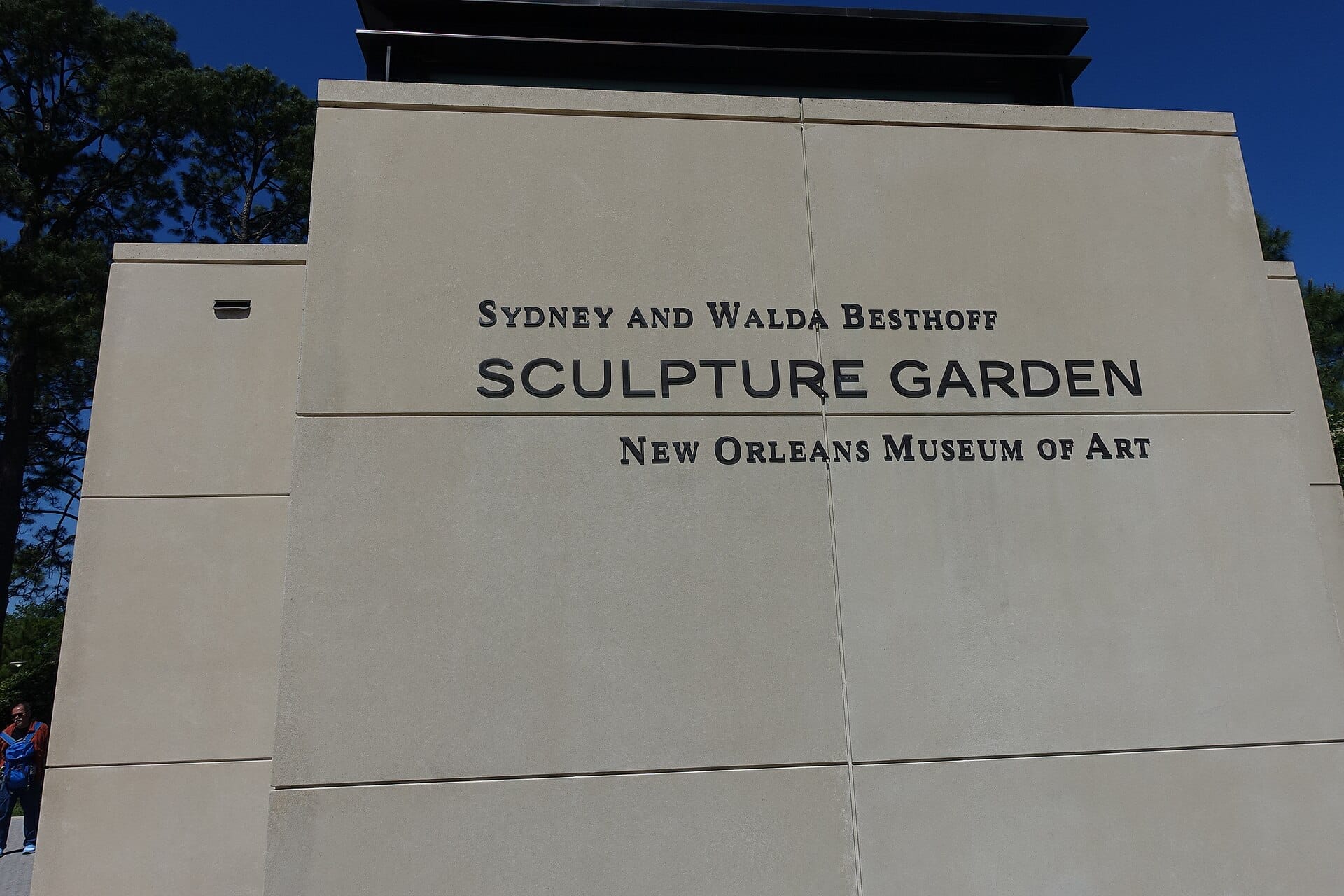
What the Besthoff Sculpture Garden Actually Is
The Sydney and Walda Besthoff Sculpture Garden is an 11-acre outdoor sculpture park set within the grounds of City Park, directly adjacent to the New Orleans Museum of Art. It holds more than 90 works, most of them donated by the Besthoff Foundation, arranged across a landscape of mature pines, century-old live oaks, magnolias, and two interconnected lagoons. The collection spans the late 20th and early 21st centuries, with an emphasis on figurative and abstract works by internationally recognized artists.
The garden opened on November 23, 2003, with roughly 50 to 60 sculptures on a 5-acre footprint. A major expansion completed in May 2019 doubled its size to 11 acres and added 26 to 27 new works, along with a canal-link bridge, an amphitheater, a pavilion, and a dedicated outdoor learning space. What began as a generous civic gift has matured into one of the most significant free cultural attractions in Louisiana.
💡 Local tip
Admission to the sculpture garden is free and does not require a ticket to NOMA. You can walk directly in from City Park without entering the museum building.
How the Garden Looks and Feels at Different Times of Day
Morning visits, roughly between 8 and 10 a.m., offer the garden at its quietest and most atmospheric. Low-angle light filters through the Spanish moss and live oak canopy, casting long shadows across the lawns and throwing the contours of bronze and stone sculptures into sharp relief. The lagoons are still at that hour, and the reflections of the surrounding trees and sculptures on the water surface add a second, inverted composition to almost every sightline.
Midday light flattens the landscape somewhat, but this is when families with children tend to arrive, and the garden takes on a different kind of energy. Children often respond instinctively to the figurative works, circling them, touching the bases, and posing for photos. By early afternoon the heat between May and September can be significant. New Orleans summers run 77 to 92 degrees Fahrenheit with high humidity, and the garden offers only partial shade along its paths. Bring water and consider timing your visit for the cooler months of October through April.
Late afternoon, from around 4 p.m. onward, is arguably the best light for photography. The garden thins out, the shadows lengthen again, and the warm tones of the afternoon sun work particularly well against the patinated bronzes. The canal-link bridge added in the 2019 expansion is worth crossing at this hour for the view back toward the main lawn and NOMA's neoclassical facade in the distance.
⚠️ What to skip
Summer heat and humidity in New Orleans are serious. If visiting June through August, plan your sculpture garden time for before 10 a.m. or after 4 p.m. There is limited shade on the open lawn sections.
Tickets & tours
Hand-picked options from our booking partner. Prices are indicative; availability and final rates are confirmed when you complete your booking.
Houmas House estate and gardens and Great River Road museum tour combo
From 33 €Instant confirmationFree cancellationNew Orleans Garden District small group guided walking tour
From 31 €Instant confirmationFree cancellationHoumas House estate and gardens guided mansion tour
From 0 €Instant confirmationGarden District secrets and scandals small group tour
From 318 €Instant confirmationFree cancellation
The Collection: What You Will Actually See
The works range from monumental outdoor bronzes to more intimate marble and resin pieces tucked into shaded alcoves along the lagoon edges. The collection favors sculpture that engages with the body and with landscape, and the curation reflects the Besthoff Foundation's consistent taste for work that communicates clearly without requiring an art history background to appreciate.
Several large figurative bronzes are positioned at the water's edge, their reflections doubling the compositions in ways that feel deliberate and considered. Other pieces occupy clearings in the oak groves, where the interplay between organic form and the surrounding tree canopy rewards slow attention. The 2019 expansion introduced works in more contemporary idioms, creating a loose but legible chronological progression as you move from the original 5-acre section into the newer grounds.
A free mobile audio guide is available and provides context for individual works. It is worth using selectively rather than continuously, since unmediated time with the sculptures and the landscape is part of what makes this place worth the trip.
How It Fits Into City Park and the Surrounding Area
City Park is itself one of the largest urban parks in the United States, covering roughly 1,300 acres. The sculpture garden occupies a relatively small but carefully designed portion of the park's southern end, adjacent to NOMA. A visit to the garden pairs naturally with the New Orleans Museum of Art and the New Orleans Botanical Garden, both within easy walking distance. The combination of all three makes for a full half-day in Mid-City that touches landscape, decorative arts, and contemporary sculpture without requiring a car between stops.
The park itself is worth arriving at a few minutes early to appreciate. The allees of live oaks that frame the approach roads have been growing for well over a century, and their scale puts the sculptures inside the garden into a different relationship with nature than you would find in a conventional indoor museum. The ground is soft and slightly uneven in places, particularly after rain. Comfortable shoes are a practical necessity.
Getting There and Practical Logistics
The sculpture garden is accessible via the City Park streetcar line. By car, City Park is straightforward to reach from most parts of New Orleans, and parking is available within the park. Rideshare via Uber or Lyft is a reliable option for visitors staying in the French Quarter or Garden District, where the journey typically takes 10 to 20 minutes depending on traffic.
The pathways throughout the garden are designed for comfortable walking and include the bridge added in the 2019 expansion. Specific ADA accessibility details, including information about surface conditions after rain and the suitability of particular pathways for wheelchairs, should be confirmed directly with NOMA before your visit.
Opening hours follow NOMA's schedule and may vary seasonally or around holidays. Verify current hours on the official NOMA website before visiting. The garden is free regardless of whether you intend to enter the museum.
ℹ️ Good to know
A free audio guide for the sculpture garden is available via mobile phone. No app download is required. Look for the QR codes posted at the garden entrance or check noma.org/besthoff-sculpture-garden for access details.
Photography, Honesty, and Who Might Not Enjoy It
The Besthoff Sculpture Garden is genuinely photogenic, and it appears regularly on lists of the most photographed spots in New Orleans. The lagoon reflections, the moss-draped oaks, and the scale contrast between sculptures and landscape give photographers a lot to work with. Wide-angle lenses handle the full spatial compositions well; a short telephoto is useful for isolating individual works against blurred backgrounds.
That said, it is worth being direct about the garden's limitations. Visitors who prefer their art in controlled interior environments, with wall labels, climate control, and the full institutional apparatus of a museum, may find the outdoor setting frustrating rather than freeing. On overcast days in the rainy season, the garden loses much of its visual drama, and some paths can become muddy after heavy rain. If your time in New Orleans is limited to a day or two and you are primarily interested in Creole history or the food and music culture of the city, other attractions may be better uses of your afternoon.
If you are combining this with a broader New Orleans itinerary, it fits well within a three-day New Orleans itinerary as a mid-morning stop before lunch in Mid-City or a walk through the park.
Insider Tips
- The northern edge of the garden along the lagoon, furthest from NOMA's main entrance, sees the fewest visitors even on busy weekend afternoons. Budget time to reach that section rather than turning back at the first large clearing.
- If you visit NOMA on the same day, some ticketing arrangements may allow re-entry between the interior galleries and the garden. Confirm this at the NOMA admissions desk when you arrive.
- The 2019 expansion area, connected via the canal-link bridge, contains the newest works in the collection and is often overlooked by visitors who assume the original 5-acre section is the whole garden. Cross the bridge.
- Weekday mornings between late October and early March offer the ideal combination: mild temperatures, low humidity, good light, and almost no crowds. This is when the garden most closely resembles the experience it was designed to provide.
- City Park has a cafe and other food options nearby. The sculpture garden itself has no food concessions, so eat before or plan to walk to the park's amenities after.
Who Is Sydney and Walda Besthoff Sculpture Garden For?
- Art lovers who want to see a serious collection without paying admission or standing in queue
- Photographers seeking natural light, reflections, and dramatic scale contrasts
- Families with children who need space to move while parents engage with the collection
- Travelers on a budget looking for substantive cultural experiences at no cost
- Anyone visiting NOMA who wants to extend their experience into the landscape
Nearby Attractions
Other things to see while in Mid-City:
- City Park
At 1,300 acres, New Orleans City Park is larger than Central Park and contains one of the largest collections of mature live oaks in the United States, some between 600 and 800 years old. Free to enter, it functions as Mid-City's green backbone and rewards visitors who go beyond the main lawn.
- New Orleans Botanical Garden
Set across 10 to 12 acres inside City Park, the New Orleans Botanical Garden is one of the few surviving WPA-era public gardens in the American South. With Art Deco sculpture, a glass conservatory, and over 2,000 plant varieties, it rewards slow exploration far more than a quick pass-through.
- New Orleans Museum of Art (NOMA)
The New Orleans Museum of Art is the city's oldest fine arts institution, established in 1910 and opened to the public December 16, 1911, and home to more than 40,000 accessioned works spanning 5,000 years. Set inside City Park, it pairs a serious permanent collection with one of the South's finest outdoor sculpture gardens — and admission to the garden is always free.