St. Charles Streetcar: The Ride That Shows You New Orleans
The St. Charles Streetcar is more than transit. Operates with frequent daytime service and limited overnight runs; check RTA's current schedule before planning a late-night trip. It runs along one of America's most storied avenues, carrying riders past antebellum mansions, ancient oaks, and the quiet rhythms of Uptown New Orleans for $1.25 a trip. Few experiences in the city deliver this much, this cheaply.
Quick Facts
- Location
- St. Charles Avenue, from Canal Street (CBD) through Uptown to Carrollton Avenue
- Getting There
- Board at Canal St & Carondelet (CBD end) or anywhere along St. Charles Ave
- Time Needed
- 40 minutes full route one way; 2-3 hours if you hop off to explore
- Cost
- $1.25 per ride (exact change); $3 one-day Jazzy Pass for unlimited rides via RTA Le Pass app
- Best for
- Architecture lovers, budget travelers, first-time visitors, couples
- Official website
- www.norta.com
What the St. Charles Streetcar Actually Is
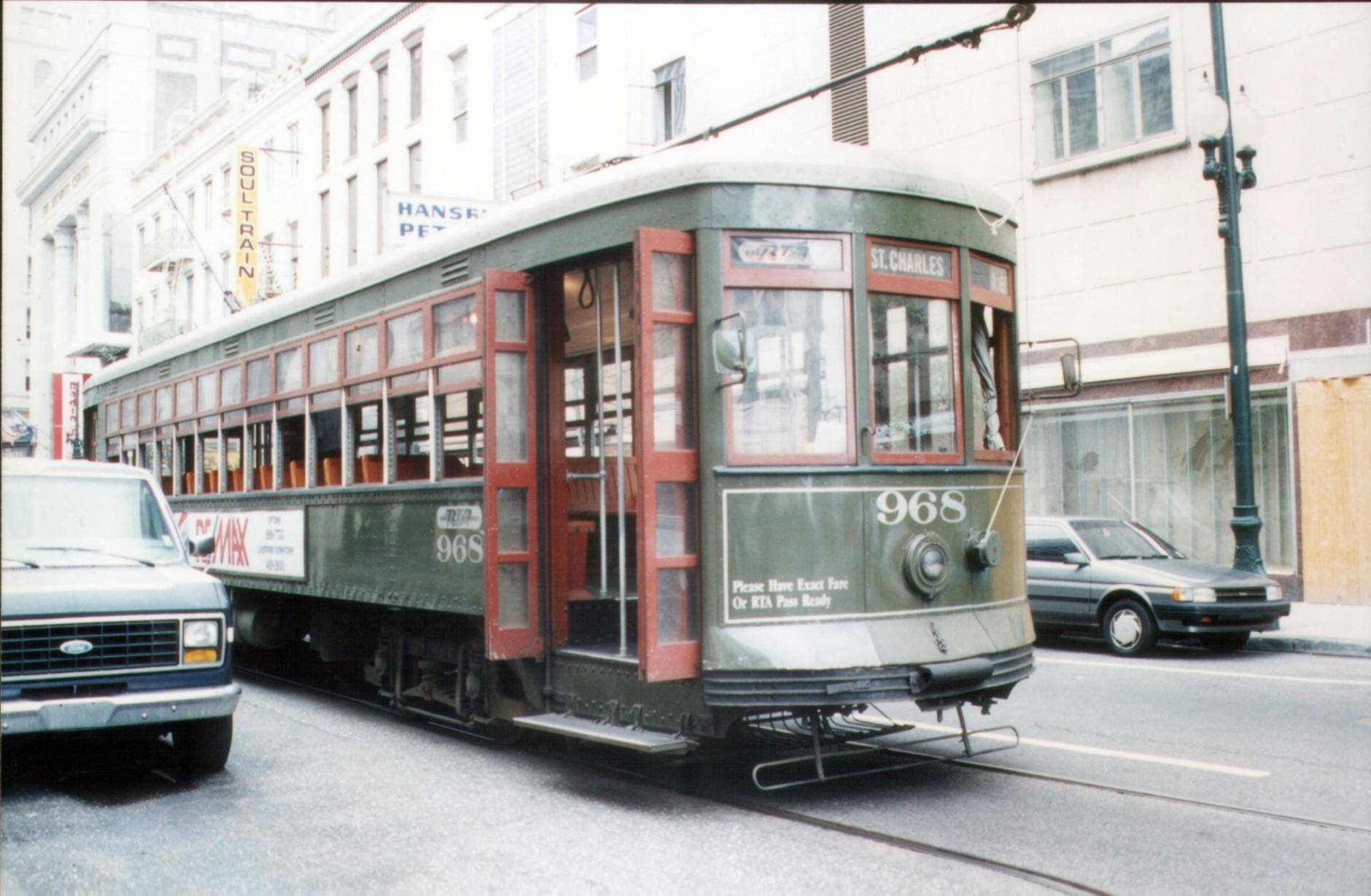
The St. Charles Streetcar, officially designated Line 12, is a working public transit line that also happens to be a National Historic Landmark. The current fleet of heritage streetcars was built by the Perley A. Thomas Company in 1923–24 and remains in daily service. The St. Charles line itself has operated continuously since the 19th century, making the route one of the oldest in the United States. This is not a tourist trolley recreating history. It is history, still doing its job.
The line covers 13.2 miles from Carondelet at Canal Street in the Central Business District, along St. Charles Avenue through the Garden District and Uptown, looping around Riverbend to Carrollton Avenue at Claiborne. Each car holds up to 52 passengers. Operates with frequent daytime service and limited overnight runs; check RTA's current schedule before planning a late-night trip. Service is operated by the New Orleans Regional Transit Authority (RTA).
💡 Local tip
Download the RTA Le Pass app before you board. It lets you pay cashless, track cars in real time, and purchase multi-day passes. If you plan more than a couple of rides in a day, the $3 unlimited day pass pays for itself immediately.
The Ride Itself: What You See and Feel
Boarding near Canal Street, the car lurches into motion with a particular mechanical groan that feels deliberate, like something that has earned the right to move slowly. The wooden seats, slatted and reversible so riders can always face forward, carry the worn smoothness of a century of daily use. Ceiling fans spin overhead. Windows drop down rather than slide, and on cooler mornings, half the car rides with elbows out.
The first few blocks pass through the lower end of the Garden District, where the city transitions quickly from commercial density to residential grandeur. Within ten minutes, St. Charles Avenue opens into a wide, oak-canopied corridor. The neutral ground, New Orleans' term for the grassy median strip, is wide enough here for joggers and dog walkers. The trees arch high enough to filter afternoon light into flickering green shadow across the tracks.
By the time the car reaches the heart of the Garden District, around Washington and Prytania, the streetscape is almost disorienting in its scale. Greek Revival and Italianate mansions set back behind wrought iron fences, deep porches, magnolias in bloom or bare depending on the season. Some are immaculately maintained. Others show the soft decay of age in a humid climate, which is its own kind of beauty.
The further Uptown the car travels, the more the passenger mix shifts from tourists to locals: Tulane and Loyola students, families, people carrying groceries. This is not incidental. It is part of what makes the ride worthwhile. For a proper architectural overview of the neighborhood you're passing through, the Garden District warrants at least an hour on foot after you step off.
Tickets & tours
Hand-picked options from our booking partner. Prices are indicative; availability and final rates are confirmed when you complete your booking.
Spooky kid-friendly family ghost tour
From 32 €Instant confirmationFree cancellationWalking the Devil's Empire tour with HELLVISION™ in New Orleans
From 32 €Instant confirmationFree cancellationThe New Orleans haunted cemetery city bus tour
From 43 €Instant confirmationFree cancellationWhitney Plantation Tour
From 72 €Instant confirmationFree cancellation
How the Experience Changes by Time of Day
Early morning, before 8 am, the car is sparse and quiet. The light on St. Charles Avenue is soft and low, and the avenue feels less like a tourist corridor and more like a neighborhood waking up. Frequency drops to every 36 minutes in the night owl period (midnight to 6 a.m.) and every 18 minutes early morning (before 7 a.m.), so check the RTA Le Pass app before heading out.
Midday, 12 to 6 pm, is peak frequency at roughly every 9 minutes, and the cars fill quickly. Summer heat between June and August pushes temperatures above 90°F (33°C) with high humidity, and the open windows and ceiling fans provide limited relief. If you are riding in summer, the middle of the day is the least comfortable time to do it. Morning or evening rides are significantly more pleasant.
Evening, especially around dusk, is the best time for aesthetics. The oaks catch the last light, the heat softens, and the avenue takes on a slower pace. Riding after dinner, when the car is half-empty and the mansions are lit from within, is a different experience entirely from the daytime tourist rush.
⚠️ What to skip
During Mardi Gras and major festival weekends, St. Charles Avenue becomes a parade route. The streetcar may be rerouted or suspended for hours. Check the RTA website or Le Pass app for service alerts before planning around it during festival season.
Historical and Cultural Context
The St. Charles line has a reasonable claim to being the oldest continuously operating street railway in the world, with its origins dating to the New Orleans and Carrollton Railroad in 1835. That continuity, through electrification in 1893, through the decline and disappearance of streetcar culture across most American cities in the mid-20th century, and through hurricane damage and restoration, is part of what earned the line its National Historic Landmark designation.
St. Charles Avenue itself is inseparable from the city's social history. The mansions along its length were built largely in the 19th century by the American merchant class that settled Uptown after the Louisiana Purchase, distinct from the Creole population of the French Quarter. Walking one or two blocks off the avenue reveals quieter streets with shotgun houses, double galleries, and corner stores. If the broader history of how New Orleans was shaped interests you, the New Orleans history guide provides useful context for what you're riding past.
Tennessee Williams, who lived in New Orleans and set A Streetcar Named Desire here, drew on the psychological texture of a city where the past and present run on the same tracks. The line he named is fictional, but the city he described is not.
Practical Walkthrough: Getting On, Getting Around
The Canal Street end is the most logical starting point for visitors coming from the French Quarter or CBD. The stop at Carondelet and Canal puts you on the car within walking distance of most downtown hotels. From there, the full ride to the Carrollton end takes approximately 40 minutes without stops.
For most visitors, the better approach is to ride to a stop in the Garden District, spend time on foot, then reboard. The stop near Washington Avenue places you close to Lafayette Cemetery No. 1. The stop near Napoleon Avenue sets you up for Magazine Street, one block toward the river, with its mix of restaurants, antique shops, and boutiques.
If you are traveling with children, the streetcar is straightforward and manageable. Children under 2 ride free; those in kindergarten through 12th grade pay $0.50. For a broader sense of what works well for families in the city, the New Orleans with kids guide covers logistics and age-appropriate attractions.
Accessibility: All RTA streetcar lines are ADA-accessible. Riders with hearing impairments can contact RTA at TTY 504-827-7832.
ℹ️ Good to know
Exact change is required if paying cash on board. The fare is $1.25 per ride. Seniors and riders with qualifying disabilities pay $0.40. There is no change machine on the car, so prepare coins and bills before boarding or use the Le Pass app.
Photography and What to Watch For
The most photographed stretch of the line runs between Jackson Avenue and Napoleon Avenue, where the oak canopy closes completely overhead and the neutral ground is at its widest. Morning light hits the west-facing mansions best in the late afternoon, but early light on a clear day catches the dew on the iron fences and the moss on the oaks in a way that is harder to replicate later.
Shoot from the front of the car for forward-looking track shots, which work especially well when another car is approaching on the opposite track. The green livery of the cars against the oak canopy photographs well from streetside if you are already off the car.
For visitors building an itinerary around photography, the most photographable spots in New Orleans guide includes several locations you can reach directly from St. Charles Avenue stops.
Who Should Skip This (Or Adjust Expectations)
If you are primarily interested in the French Quarter, the nightlife corridor, or the Mississippi riverfront, the St. Charles line takes you in the opposite direction from most of that. It is an Uptown experience. Riders expecting a narrated tour will find nothing of the kind: this is a transit vehicle with no announcements beyond stop names.
The ride is slow. It stops frequently. In peak daytime hours, it can be crowded. Travelers who are mobility-limited should note that while the cars are ADA-accessible, boarding still requires navigating a step at street level in some configurations. Verify current accessibility setup with RTA before relying on it.
This is also not an air-conditioned experience. In July or August, riding the full route without a breeze can be genuinely uncomfortable. The recommendation stands: ride in the morning or evening during summer months.
Insider Tips
- Sit on the right side of the car when boarding at Canal Street (heading Uptown) for the best views of the mansion-lined side of the avenue. The left side faces the neutral ground, which is scenic but less architecturally dramatic.
- The Carrollton end of the line, around Riverbend, drops you near a cluster of local restaurants and Camellia Grill, a classic short-order diner at 626 S. Carrollton Ave. It makes a natural endpoint for the ride if you want to eat before heading back.
- If you want the car mostly to yourself, board eastbound (toward Canal) on a weekday between 9 and 11 am, after the morning commute clears. The car empties out noticeably by the time it reaches the CBD end.
- The RTA Le Pass app shows real-time car locations. On days when service is running behind, this saves you from standing at a stop for 25 minutes without knowing if a car is two blocks away or twenty.
- Lafayette Cemetery No. 1, just off the Washington Avenue stop, opens at 7 am on weekdays. Visiting early before the tour groups arrive gives you the cemetery almost entirely to yourself, something that is genuinely rare.
Who Is St. Charles Streetcar For?
- First-time visitors wanting a low-cost overview of Uptown architecture without renting a car
- Architecture and history enthusiasts interested in 19th-century American residential design
- Budget travelers: at $1.25 per ride, it is the best-value sightseeing in New Orleans
- Couples looking for a slow, scenic evening ride through oak-canopied avenues
- Travelers combining a streetcar ride with a walking tour of the Garden District or Magazine Street