Frenchmen Street: New Orleans' Real Live Music Strip
Frenchmen Street in the Faubourg Marigny is where New Orleans plays music for itself. A three-block stretch of jazz clubs, brass bands, and an open-air art market draws locals and savvy visitors every night of the week. Free to walk, affordable to explore, and genuinely alive after dark.
Quick Facts
- Location
- Faubourg Marigny, New Orleans, LA (between Esplanade Ave and Royal St)
- Getting There
- 0.5-mile walk from Bourbon St; St. Claude Avenue streetcar line nearby; Uber/Lyft recommended late night
- Time Needed
- 2-4 hours minimum; many visitors stay until 1-2 a.m.
- Cost
- Free street access; venue covers typically $10-20 (verify with individual clubs)
- Best for
- Live jazz and brass band music, nightlife, local culture, people-watching
- Official website
- www.neworleans.com/plan/streets/frenchmen-street
What Frenchmen Street Actually Is
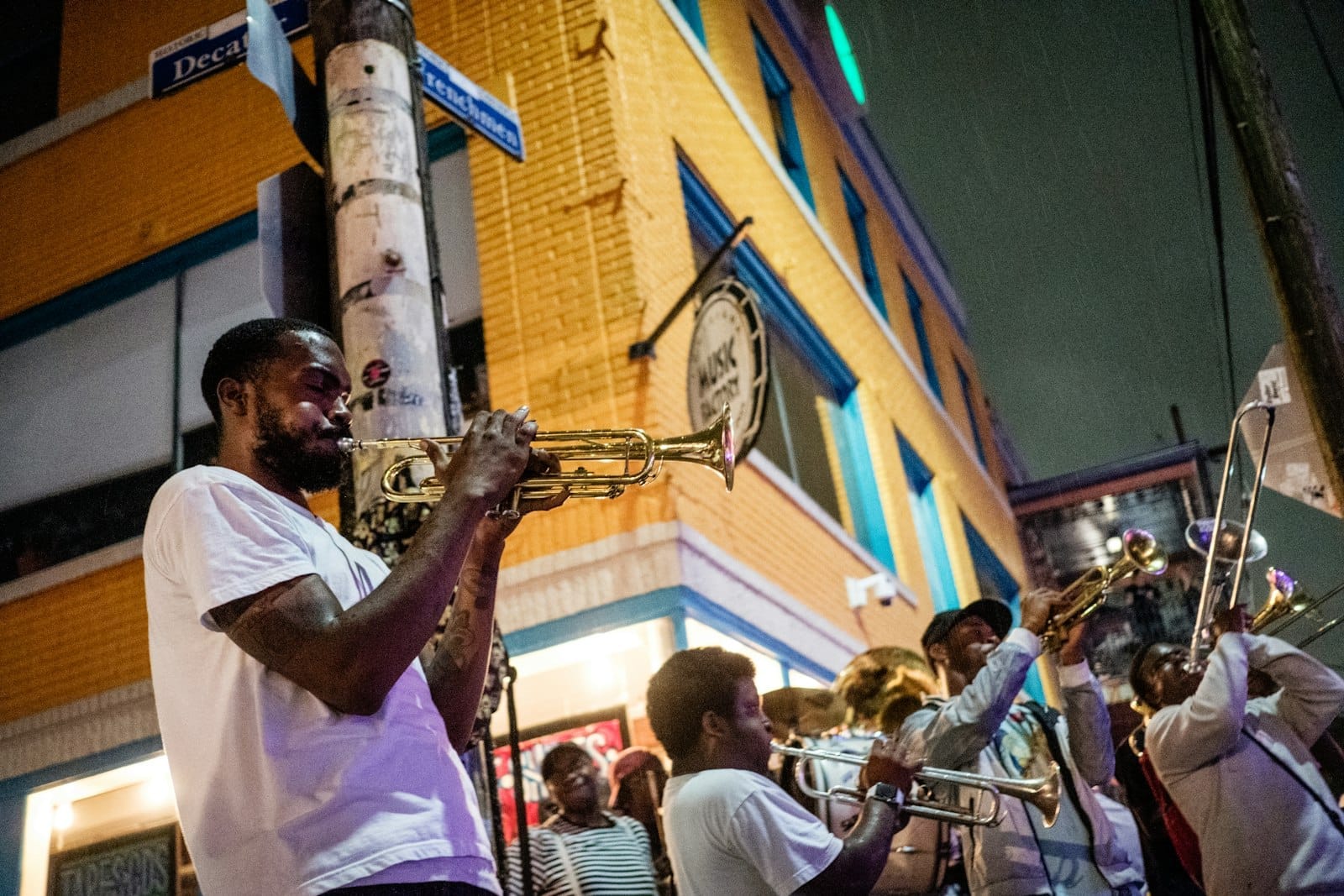
Frenchmen Street is a three-block entertainment corridor in the Faubourg Marigny neighborhood, just across Esplanade Avenue from the French Quarter. It runs from Esplanade toward Gentilly, but the active music strip sits between Esplanade and Royal Street, concentrated enough to hop between five or six venues in a single evening without walking more than a few hundred feet. This is not a purpose-built tourist zone. The bars here are small, the stages are close to the crowd, and the musicians are often some of the best players in the city working a regular residency.The street name itself carries history. It commemorates six Frenchmen executed by Spanish colonial authorities in 1769 following an uprising against Spanish rule after the Seven Years' War handed Louisiana from France to Spain. The surrounding Faubourg Marigny neighborhood was developed in the early 19th century by Bernard de Marigny, a Creole aristocrat who subdivided his family's plantation land. The live music identity came much later, developing through the 1980s as venues opened in a neighborhood that prized affordability and creative independence over tourist revenue.Contrast this with Bourbon Street, one mile away, where the music is largely background to the drinking. On Frenchmen, the music is the point. Locals outnumber tourists on most weeknights, and the crowd shifts noticeably later in the evening when the serious listeners arrive.
💡 Local tip
Arrive before 9 p.m. on weekends to get a seat inside a venue. By 10 p.m., clubs like Snug Harbor and The Spotted Cat fill to capacity and late arrivals often find standing room only near the door.
How the Street Changes Through the Night
Early evening, around 6-7 p.m., Frenchmen Street is calm enough to notice the architecture: low Creole cottages with wide porches, faded paint in ochre and sage, iron railings softened by decades of humidity. Washington Square Park sits just off the strip and offers benches if you want to sit before the night picks up. The Frenchmen Art Bazaar opens at 7 p.m. in a covered outdoor space, with local artists selling prints, jewelry, and handmade goods until midnight Sunday through Wednesday, and until 1 a.m. Thursday through Saturday. This is genuinely the best moment to browse, before the sidewalks crowd.
By 9 p.m. the energy shifts. Music spills out of every open door, the street itself becomes a gathering point, and you start to hear multiple bands simultaneously if you stand at the right intersection. Brass bands sometimes set up on the sidewalk with no cover charge at all, passing a bucket, playing funk and second-line rhythms that draw spontaneous dancing from passersby. The smell shifts too: hot grease from late-night food spots, spilled beer on warm pavement, cigarette smoke drifting from the street crowd.
After midnight the crowd thins slightly on weeknights but stays thick on Fridays and Saturdays. The later sets tend to feature more experimental jazz and post-bop compared to the crowd-pleasing traditional sets earlier in the evening. If you came for music rather than atmosphere, this is when the playing often gets more interesting.
Tickets & tours
Hand-picked options from our booking partner. Prices are indicative; availability and final rates are confirmed when you complete your booking.
Frenchmen street live music pub crawl tour in New Orleans
From 46 €Instant confirmationFree cancellationSpooky kid-friendly family ghost tour
From 32 €Instant confirmationFree cancellationWalking the Devil's Empire tour with HELLVISION™ in New Orleans
From 32 €Instant confirmationFree cancellationThe New Orleans haunted cemetery city bus tour
From 43 €Instant confirmationFree cancellation
The Venues: What to Expect Inside
Each club on Frenchmen has its own character. The Spotted Cat is probably the most famous, a narrow room with mismatched furniture and no bar stools, just people standing close together while a trio or quartet plays swing and New Orleans jazz at conversational volume. Snug Harbor skews toward serious jazz, with ticketed shows and a sit-down format that feels closer to a jazz club in the traditional sense. The Maison is a larger multi-room space where you might find soul, funk, or Latin jazz depending on the night. Apple Barrel is the smallest and most informal, often featuring solo acoustic performers or small combos in a room that holds maybe thirty people comfortably.
Cover charges typically run $10-20 at venues with scheduled ticketed acts; verify with each club before arriving since prices change seasonally and by performer. Many spots operate on a two-drink minimum rather than a cover. Drinks run $7-12 for cocktails and $4-7 for beer, consistent with New Orleans bar pricing rather than tourist-zone inflation.
ℹ️ Good to know
New Orleans has some of the most permissive open-container laws in the United States. You can carry a plastic cup of alcohol on Frenchmen Street legally, making it easy to step outside between sets without losing your drink. Glass containers are not permitted on the street.
Getting There and Getting Around
The walk from the French Quarter takes roughly 10-15 minutes. Head down Decatur Street past the French Market and cross Esplanade Avenue; Frenchmen Street begins immediately on the other side. At night the walk is well-traveled but the blocks immediately around Esplanade can feel quieter than the French Quarter. Most visitors traveling in groups find this walk straightforward; solo visitors, particularly late at night, may prefer to rideshare back rather than walk.
The St. Claude Avenue streetcar line runs nearby and connects the Marigny to the Central Business District, but service frequency can be inconsistent late at night. Uber and Lyft are reliable in this area and the most practical option after midnight. Parking exists on surrounding residential streets but the neighborhood is dense and spaces disappear quickly after 8 p.m.
Frenchmen Street sits at the edge of the Marigny and Bywater neighborhoods. If you arrive early, the surrounding blocks reward exploration: colorful shotgun houses, small coffee shops, and independent restaurants that reflect a different pace than the French Quarter. The Marigny and Bywater area has its own dining and bar scene that operates independently of the Frenchmen strip.
Historical and Cultural Context
The Faubourg Marigny was one of the first suburbs developed outside the original French Quarter grid, platted by Bernard de Marigny in the 1810s after he subdivided his family estate. The neighborhood historically attracted free people of color, Creole families, and working-class communities, giving it a cultural mix distinct from the more formally colonial French Quarter. That layered identity contributed to New Orleans' uniquely hybrid musical culture: jazz synthesized African rhythms, European harmonics, blues tonality, and Caribbean influences in neighborhoods exactly like this one. For deeper historical context, the New Orleans Jazz Museum in the French Quarter traces this evolution with instruments, recordings, and archives dating to the early 20th century.
Frenchmen Street as a music destination emerged specifically in the 1980s, a period when the neighborhood was affordable enough to support independent venues without the capital demands of the Quarter. That origin matters because it shaped the culture: these are bars that exist to host music, not souvenir shops with a stage in the corner. The Preservation Hall in the Quarter plays a similar role for traditional jazz in a more formal setting, but Frenchmen remains looser and less curated, which is precisely its appeal.
Practical Notes: Weather, Crowds, and What to Bring
New Orleans summers (June through August) are genuinely punishing outdoors, with temperatures regularly reaching 90-92°F and high humidity that makes it feel hotter. Frenchmen Street is largely an outdoor experience, moving between venues, standing on sidewalks, browsing the art market. Summer nights are more bearable after 9 p.m. but still uncomfortable for anyone heat-sensitive. The shoulder seasons, March through May and October through November, offer temperatures in the 60-82°F range that make the outdoor experience genuinely pleasant.
Rain can arrive quickly and heavily during the June to October period. A small umbrella is worth carrying. The sidewalks on Frenchmen are historic pavement, uneven in places, which matters if you are in heels or have mobility concerns. Wheelchair access varies by venue; some, like Apple Barrel, have steps at the entrance. Washington Square Park nearby offers flat, accessible outdoor space. If Frenchmen falls within a larger New Orleans trip, cross-reference with the New Orleans jazz music guide for venue-specific details and rotating schedules.
⚠️ What to skip
The sidewalks on Frenchmen Street are narrow and become genuinely packed on Friday and Saturday nights after 10 p.m. If you have claustrophobia, mobility limitations, or are traveling with young children, the weekend peak hours are likely to feel overwhelming. Weeknights offer the same music with significantly more breathing room.
Photography on Frenchmen Street
The lighting inside venues is low and warm, favorable for atmosphere but challenging for sharp photographs without a lens that performs well in low light. The street itself at night, with neon signs, string lights above the art market, and crowds illuminated by venue windows, offers good documentary photography conditions. Ask permission before photographing musicians up close inside clubs; most are fine with it during casual visits but it is a courtesy worth observing.
For the most visually interesting shots, the hour just before the street fully crowds (roughly 8-9 p.m.) offers a combination of ambient light, open sidewalks, and musicians warming up. The art market canopy and string lights provide natural framing. Frenchmen Street also appears on most lists of the most instagrammable spots in New Orleans, though the best images here require low-light capability rather than bright daylight composition.
Insider Tips
- Check the music schedule at each venue before arriving rather than assuming who is playing. Schedules rotate weekly and the quality varies by night. The venues post their lineups on social media and their own websites, sometimes only a day or two in advance.
- The brass bands that play on the sidewalk with a tip bucket are not a lesser option. Some of the most electrifying music on Frenchmen happens in the open air, and you can join or leave the crowd without a cover charge or a two-drink minimum.
- Weeknights, particularly Tuesday through Thursday, draw a higher proportion of locals and working musicians who are off their regular gig. The conversations at the bar tend to be more interesting, and the rooms are less crowded.
- The Frenchmen Art Bazaar is worth arriving early for specifically. By 10 p.m. the aisles between vendor tables become difficult to navigate. The artists are often willing to talk about their work in the early hours when foot traffic is light.
- If you want food before or between sets, the surrounding Marigny blocks have better options than the strip itself. The restaurants immediately on Frenchmen are limited; walking one or two blocks off the main drag gives you more choices at lower prices.
Who Is Frenchmen Street For?
- Jazz and brass band enthusiasts who want to hear the music in its natural context rather than a tourist-packaged setting
- Nightlife seekers who prefer conversation-level volume and intimate rooms over high-decibel DJ bars
- Art and craft buyers looking for locally made work in an outdoor market format
- Travelers who want to see New Orleans as residents experience it rather than as a branded attraction
- Couples looking for an atmospheric, walkable evening with flexible pacing and no mandatory itinerary
Nearby Attractions
Other things to see while in Marigny & Bywater:
- Crescent Park
Crescent Park stretches 1.4 miles along the Mississippi River in the Bywater neighborhood, offering free access to sweeping river views, award-winning landscape design, and a rare sense of open space just outside the French Quarter's orbit. It is one of the most thoughtfully designed public spaces in the city.
- St. Roch Market
Housed in a landmark building dating to 1875, St. Roch Market is a neighborhood food hall on St. Claude Avenue where local vendors serve everything from raw oysters to sushi alongside craft cocktails. Free to enter, genuinely local in character, and a solid reason to spend an afternoon in the Marigny-Bywater corridor.