Faubourg Marigny and Bywater sit just downriver from the French Quarter, offering New Orleans' most concentrated live music scene, a flourishing street art corridor along St. Claude Avenue, and rows of painted Creole cottages that have attracted artists, chefs, and musicians for decades. These two connected neighborhoods reward travelers who want to understand the city beyond Bourbon Street.
Faubourg Marigny and Bywater are where New Orleans locals actually spend their evenings: catching live brass bands on Frenchmen Street, browsing folk art studios, and watching the Mississippi roll by from Crescent Park. The architecture is intimate, the food is serious, and the energy here belongs to the city's creative class rather than its tourist economy.
Orientation
Marigny and Bywater occupy a curved stretch of land between the French Quarter and the Industrial Canal, following the crescent bend of the Mississippi River. Faubourg Marigny, the older and more compact of the two, begins where Esplanade Avenue ends at the edge of the French Quarter and stretches downriver to Homer Plessy Way (formerly Press Street). Bywater picks up from there, extending east to the Industrial Canal with Florida Avenue forming its northern boundary and the Mississippi levee its southern edge.
The two neighborhoods share a cultural identity and a street grid but have distinct characters. Marigny is denser and more commercial along its main corridors, anchored by Frenchmen Street and Royal Street. Bywater is quieter, more residential, and slightly more spread out, with Chartres Street and St. Claude Avenue serving as its main arteries. Together they form what locals often call the Marigny-Bywater corridor, and most visitors move fluidly between the two without noticing where one ends and the other begins.
Spatially, both neighborhoods sit downriver (east) from the French Quarter and upriver from the Lower Ninth Ward. The Tremé lies just across Rampart Street to the northwest, and the two areas share deep musical roots. The French Quarter's tourist corridor is walkable from the French Quarter in about ten minutes via Esplanade Avenue, then a short connecting walk to Frenchmen Street once you're in the Marigny.
Character & Atmosphere
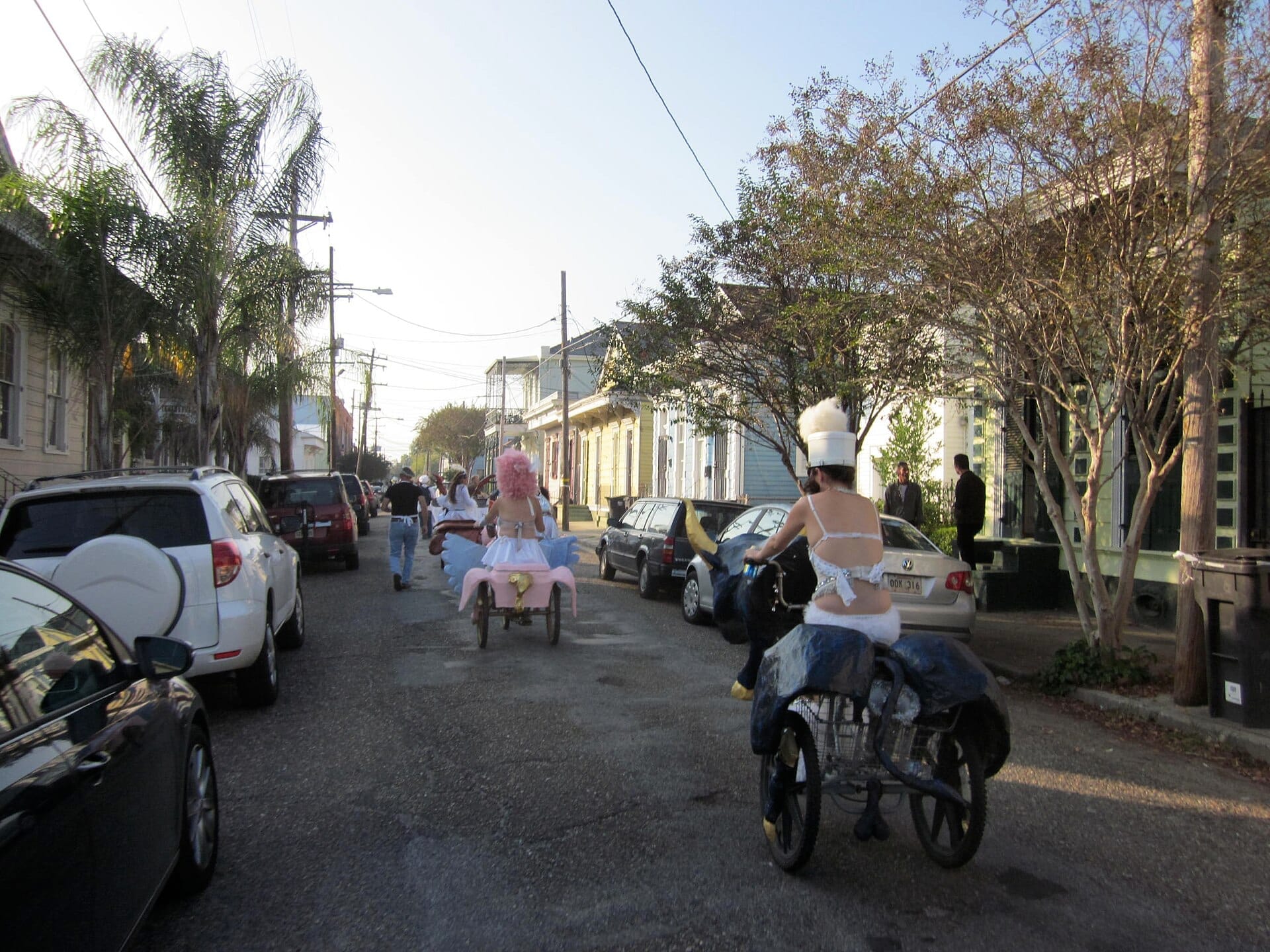
Walking through the Marigny on a weekday morning is a gentle experience. The streets are mostly quiet, filtered light hitting rows of double shotgun houses in candy-store colors: dusty rose, mint green, pale yellow with turquoise shutters. Dogs sprawl on front stoops. Someone is painting their porch railing. The architecture is predominantly Creole cottage and shotgun-house vernacular, built tight to the sidewalk with no front yards, which gives the streets an intimate, human scale that the French Quarter's commercial density doesn't always allow.
By late afternoon, the energy shifts. Coffee shops and small restaurants open their doors along Royal Street in the Marigny. Frenchmen Street starts its slow warm-up, with musicians hauling equipment in and bar staff setting up outdoor tables. The light in this part of New Orleans turns golden and low around 4pm, raking across the painted facades at an angle that makes everything look slightly cinematic. Locals say this stretch feels like the city as it was before mass tourism reshaped it, though that claim is slightly nostalgic now that Frenchmen Street itself is well-known.
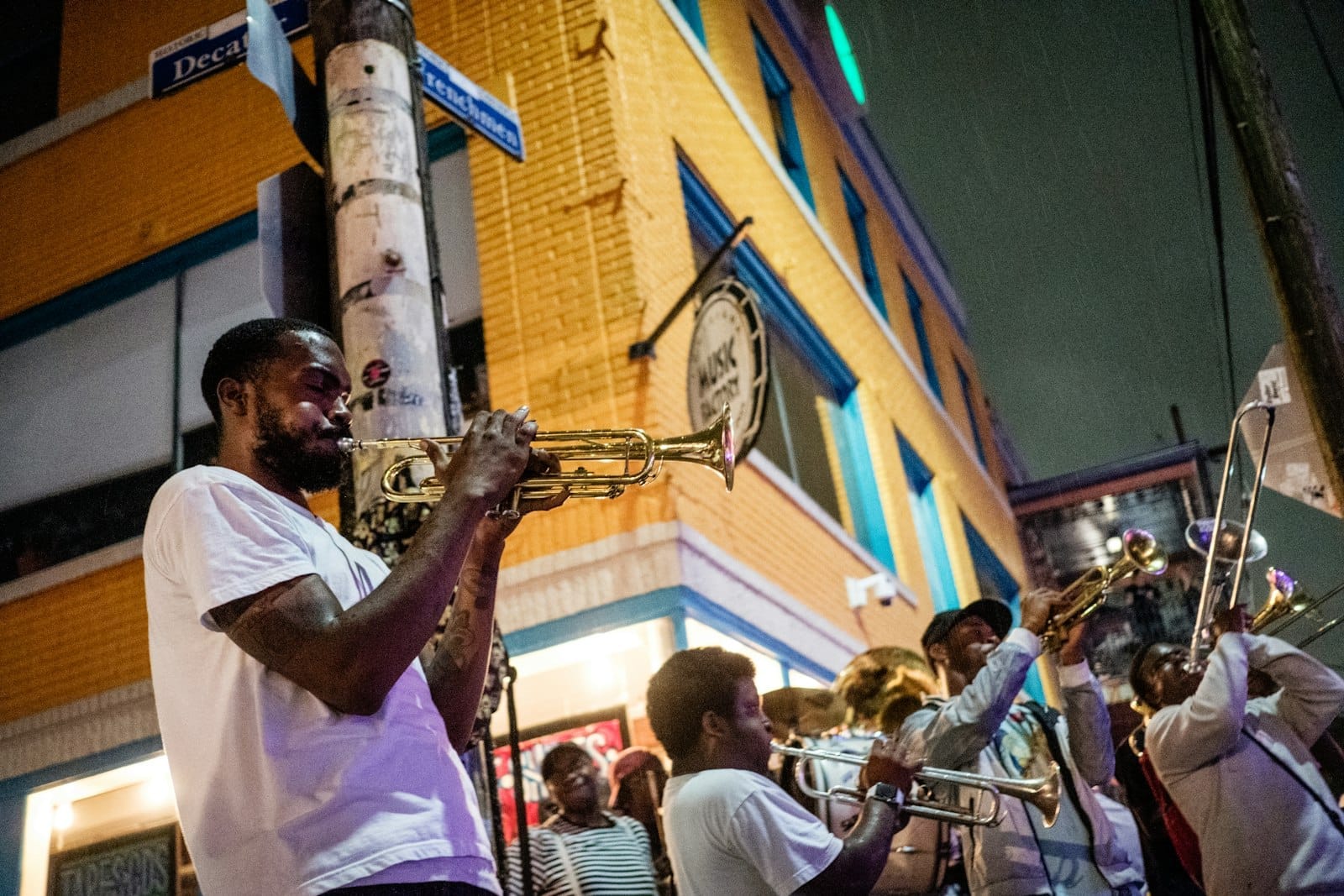
After dark, the Frenchmen Street strip is genuinely electric. Three or four live music venues operate within a single block, with doors open and bands audible from the sidewalk. The crowd is a mix: locals who've been coming here for years, tourists who did their research, students from nearby Tulane and Loyola, and musicians who finished their own sets elsewhere and came to listen. It feels nothing like Bourbon Street. There are no neon souvenir shops and no one is handing out yard drink coupons. What you get instead is actual music, played by serious musicians, at close range.
Bywater has a different tempo. Walking along Chartres Street toward Crescent Park, the blocks get quieter and more residential. You'll pass community gardens, murals spanning entire building sides, and the occasional converted warehouse studio. This is where a lot of New Orleans' working artists actually live and work, and the neighborhood carries that slightly unglamorous creative energy: things are a bit rough around the edges, parking lots become art spaces on weekends, and the bars are the kind where people nurse drinks for hours and talk.
ℹ️ Good to know
The St. Claude Arts District runs along St. Claude Avenue through both Marigny and Bywater, with galleries, studios, and performance spaces that host a monthly art walk on the second Saturday of each month. It's one of the better free cultural events in the city.
What to See & Do
The single most important street in the Marigny is Frenchmen Street, a two-block strip that has been the center of New Orleans' authentic live music scene for decades. The Spotted Cat, d.b.a., and the Maison are the main venues, each with a different personality, but on any given night you can simply walk the block and choose by sound. Brass bands, jazz quartets, funk outfits, and Afro-Caribbean groups all cycle through. There is no cover at some venues; others charge a small fee at the door. Arrive before 10pm if you want a seat.
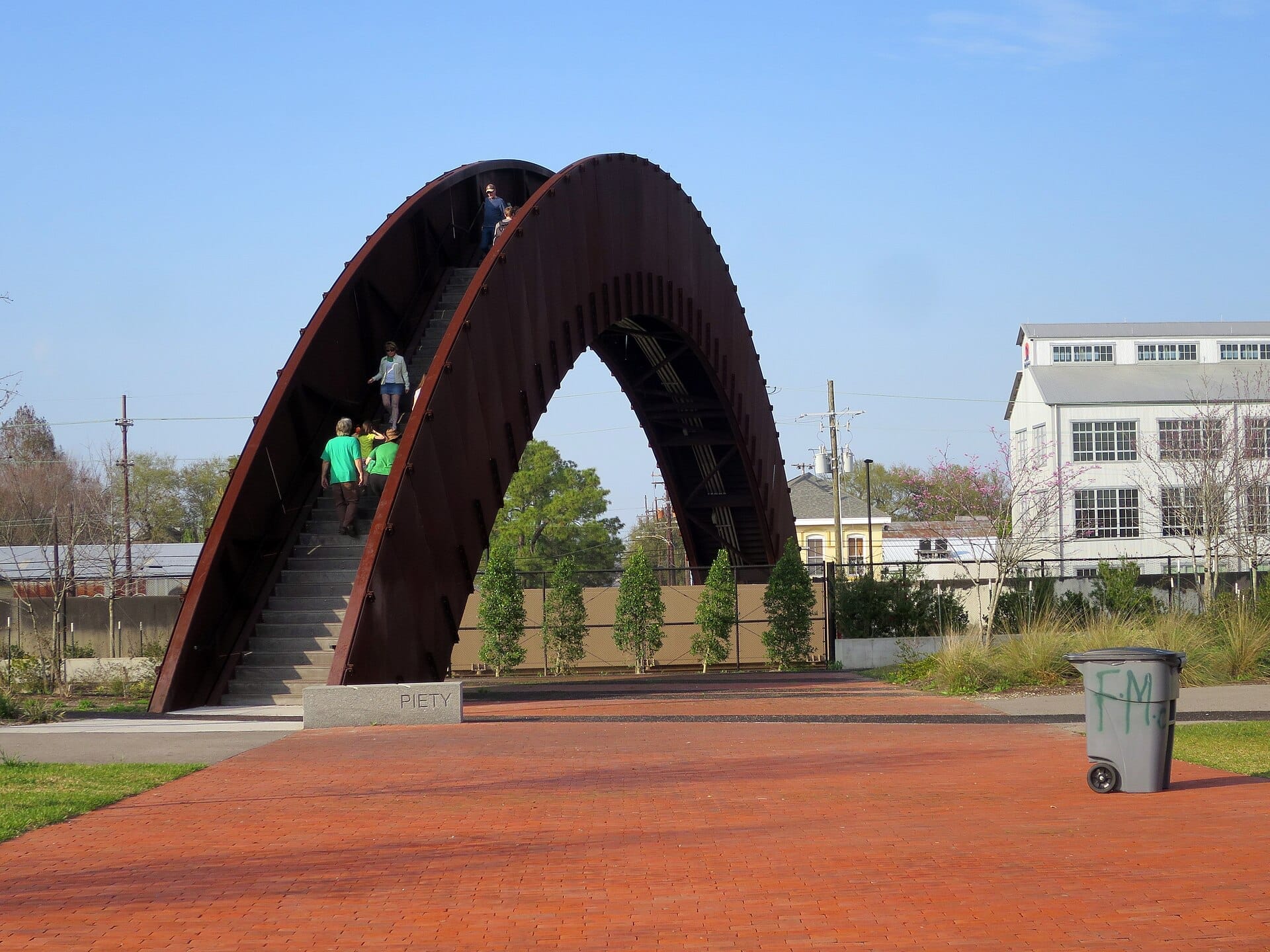
In Bywater, the main outdoor destination is Crescent Park, a 1.4-mile riverfront trail that runs along the Mississippi levee at 2300 N Peters Street. Access is via the Rusty Rainbow bridge, a raised pedestrian span that gives you an elevated view over the river before you descend to the trail. The park is popular with joggers in the morning and couples in the evening, with wide-open sightlines across the water that feel genuinely grand. It's one of the best free views of the Mississippi in the entire city.
Studio BE, located on the Bywater side of St. Claude Avenue near the Homer Plessy site, is a large-scale activist art installation by artist Brandan 'BMike' Odums. The space occupies a former warehouse and features floor-to-ceiling murals addressing race, history, and identity in New Orleans. It's not always open for casual drop-ins, so check current hours before visiting, but it's one of the more significant cultural spaces in this part of the city.
Dr. Bob's Folk Art studio at 3027 Chartres Street in Bywater is an institution. Dr. Bob is known for his hand-painted signs, assemblage sculptures, and the recurring phrase 'Be Nice or Leave,' which has become something of an unofficial neighborhood motto. The studio is unassuming from the outside, but stepping in gives you a direct look at the kind of eccentric, deeply local creative output that defined this neighborhood long before anyone was calling it the next great arts district.
Frenchmen Street live music: nightly from around 9pm, walk the block to find your sound
Crescent Park: best visited at sunrise or in the hour before sunset for the river light
St. Claude Arts District: gallery walk on the second Saturday of each month
Studio BE: large-scale murals and activist art, check hours in advance
Dr. Bob's Folk Art Studio (3027 Chartres St): Bywater's most iconic local artist
Bywater Historic District: recognized on the National Register of Historic Places for its Creole cottage architecture
💡 Local tip
If you're visiting during Jazz Fest or Mardi Gras season, the Marigny fills with second line parades and street brass bands that spill out from the French Quarter. The neighborhood's street grid makes it easy to follow the sound and find a parade in progress. Check the city's second line schedule in advance.
Eating & Drinking
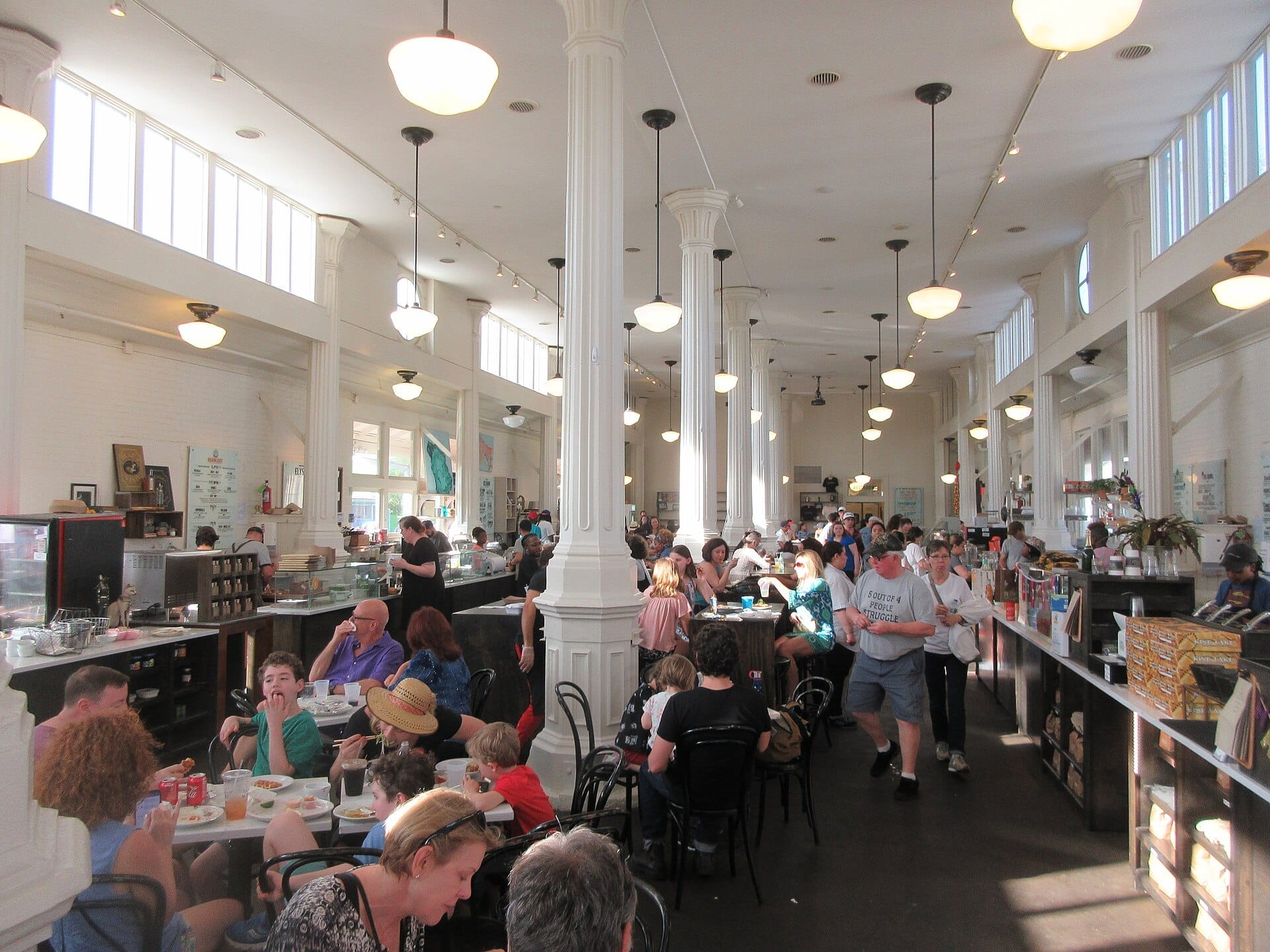
The food scene in Marigny and Bywater punches well above its weight. These are neighborhoods where serious chefs opened restaurants because they wanted to cook the food they cared about, not because the location was high-traffic. The result is a collection of spots that locals genuinely use, from brunch counters to late-night BBQ.
The Joint at 701 Mazant Street in Bywater is one of New Orleans' most respected BBQ restaurants. The smoked brisket, pulled pork, and house-made sides draw a loyal crowd that arrives early because the food sells out. It's counter service, casual, and completely without pretension. Lines form before opening on weekends, and for good reason.
Along Royal Street in the Marigny you'll find a range of neighborhood restaurants and cafes that serve the local population day to day, with price points significantly lower than comparable spots in the French Quarter. The stretch between Frenchmen Street and Franklin Avenue has several reliable options for coffee, lunch, and casual dinner. Frenchmen Street itself has food vendors and small bites available at the open-air Frenchmen Art Market, which operates on weekends.
For drinks, the bars along Frenchmen Street are the obvious anchor, but the neighborhood has quieter options too. Bacchanal Wine at 600 Poland Avenue in Bywater is a wine shop and outdoor music venue with a courtyard that fills on warm evenings. It's a good spot if the Frenchmen Street energy feels like too much. For a broader look at what New Orleans drinking culture looks like across the city, the New Orleans nightlife guide covers the full range from dive bars to cocktail lounges.
The Joint (701 Mazant St, Bywater): BBQ counter service, arrive early
Bacchanal Wine (600 Poland Ave, Bywater): wine shop with courtyard music
Frenchmen Art Market (Frenchmen St): open-air vendors on weekends
Royal Street corridor (Marigny): neighborhood cafes and casual dining, lower prices than the Quarter
⚠️ What to skip
Many smaller restaurants and bars in Marigny and Bywater keep irregular hours and may close without notice. If you're making a specific trip for a meal, call ahead or check current hours on Google Maps before going. This is especially true outside of weekend peak times.
Getting There & Around
The most practical way to reach Marigny from the French Quarter is on foot. Walking down Esplanade Avenue from the Quarter's downriver edge brings you into the Marigny in about ten minutes. From there, the neighborhood is compact enough to cover on foot. Reaching Bywater requires either continuing on foot (another 15-20 minutes from Frenchmen Street) or catching the Rampart-St. Claude Streetcar. The St. Charles Streetcar does not serve this area directly, but the Rampart-St. Claude line runs along the neighborhood's northern edge, connecting to Canal Street and the CBD.
The RTA's Rampart-St. Claude Streetcar stops along St. Claude Avenue, which forms the inland spine of both neighborhoods. Fare is $1.25 cash (exact change required) or use a Jazzy Pass for unlimited rides. The line connects upriver to the French Quarter area and the CBD. RTA bus route #5 (Marigny-Bywater) also serves the corridor and covers more ground into Bywater's residential streets. Verify current routes and schedules at the RTA website before your visit, as service patterns occasionally change.
Ride-hailing via Uber and Lyft is available throughout the area and is the most reliable option after midnight when streetcar frequency drops. Cycling is popular in both neighborhoods: the streets are flat, traffic is light on residential blocks, and several bike rental operators in the French Quarter rent by the day. For a broader look at navigating New Orleans by transit, streetcar, and bike, the getting around New Orleans guide has practical detail on all options.
Where to Stay
Marigny and Bywater are not traditional hotel neighborhoods. Most accommodation options here are short-term rentals: restored shotgun houses, Creole cottages, and converted doubles listed on major rental platforms. This is actually one of the better ways to experience the area, since staying in a neighborhood house gives you the morning walk to the coffee shop, the front porch at dusk, and the general texture of local life that a hotel can't replicate. For a full overview of where to stay across the city, the New Orleans accommodation guide covers neighborhoods from the French Quarter to the Garden District.
The Marigny side is better for travelers who want walkable access to Frenchmen Street and the French Quarter. Bywater suits those who want a quieter base with more residential character and don't mind a short streetcar or rideshare ride to the main tourist areas. Neither neighborhood is particularly suited to families with very young children looking for resort amenities, but they work well for independent travelers, couples, and anyone who prioritizes atmosphere over hotel services.
One genuine hotel option in the area is the Elysian Bar at the Hotel Peter & Paul, a converted 19th-century church complex on Burgundy Street in the Marigny. It's boutique in scale and heavy on atmosphere, and it's the kind of place that fits the neighborhood's character rather than working against it. For travelers considering the broader question of neighborhood choice, comparing Marigny-Bywater against the Garden District and the French Quarter is worthwhile before booking.
Practical Notes
Marigny and Bywater are generally considered safe for daytime exploration and evening visits to Frenchmen Street. That said, like most urban neighborhoods in New Orleans, standard city awareness applies after dark: stick to lit streets, keep valuables out of sight, and be aware of your surroundings on quieter residential blocks late at night. The New Orleans safety tips guide covers the practical basics for visitors across all neighborhoods.
The best time to visit this part of New Orleans is spring (March to May) or fall (October to November), when temperatures sit in the 60-78°F range and the humidity is manageable. Summer heat and humidity between June and August can make long walks uncomfortable, and the area floods during heavy rain events because much of New Orleans sits at or below sea level. That said, Bywater historically fared better than low-lying neighborhoods during major flood events due to its position near the natural levee of the river.
If your visit falls in February or March, the Marigny is one of the better neighborhoods for experiencing Mardi Gras without the most overwhelming crowds. Smaller parades roll through the area, and the street energy is festive but more accessible than the packed corridors of the French Quarter. The New Orleans Mardi Gras guide has the parade schedule breakdown and practical logistics.
TL;DR
Best for: Independent travelers, music lovers, food-focused visitors, and anyone who wants to experience New Orleans as a living city rather than a theme park
Frenchmen Street is the city's best live music corridor, a genuine alternative to the Bourbon Street experience with actual local culture
Crescent Park offers some of the best free river views in New Orleans with a relaxed, neighborhood atmosphere
Accommodation runs mostly to short-term rentals and one boutique hotel; it suits independent travelers over families seeking resort amenities
Walkable from the French Quarter on the Marigny side; Bywater requires a streetcar or rideshare for less mobile visitors
Not for everyone: limited traditional hotels, some streets are quiet after dark, and the neighborhood's character rewards exploration rather than passive tourism
Three days is enough to fall hard for New Orleans. This itinerary moves through the French Quarter, Garden District, Tremé, and Marigny in a logical order, covering the landmarks, food, music, and history that make this city unlike anywhere else in America.
New Orleans has one of the richest museum landscapes in the American South. Whether you're tracing the history of jazz, confronting the legacy of slavery, or exploring 5,000 years of fine art, these are the museums worth your time.
New Orleans rewards visitors differently depending on when you show up. This guide breaks down every season by weather, crowd levels, festival calendars, and food — so you can pick the visit that actually matches what you're after.
New Orleans rewards those who stay, but the surrounding Louisiana landscape rewards those who venture out. Within two hours of the city, you can drift through ancient cypress swamps, stand inside a plantation that centers the enslaved rather than the enslavers, and cycle along a river bluff. These are the best day trips from New Orleans.
New Orleans rewards curious walkers, music lovers, and history buffs with an extraordinary amount that costs nothing. From the French Quarter's architecture to world-class outdoor sculpture, here's how to experience the city on a zero-dollar budget.
New Orleans has no subway, but it does have the oldest continuously operating streetcar in the world, a surprisingly affordable bus network, and a city core compact enough to walk. This guide breaks down every transport option with real fares, route details, and honest assessments of what actually works for visitors.
New Orleans is one of the most visually dramatic cities in America. These 20 locations deliver the best shots, from the iconic ironwork of the French Quarter to the ancient oaks of City Park and the sweeping Mississippi River views from Crescent Park.
New Orleans beignets are one of the city's great culinary institutions — pillowy, square-cut fried dough buried in powdered sugar, best eaten hot and fast. This guide covers where to go, when to show up, and which spots are worth skipping the tourist line.
New Orleans does romance on its own terms: candlelit Creole restaurants, live jazz spilling into cobblestone streets, and century-old cocktail bars with stories on every wall. This guide covers the best things to do in New Orleans for couples, from free afternoon strolls through the Garden District to splurge-worthy riverboat dinners and everything in between.
New Orleans has earned its reputation as America's most haunted city through centuries of layered history, tragedy, and folklore. This guide covers the best ghost tours, cemetery visits, and voodoo cultural experiences — including what operators don't tell you before you book.
New Orleans takes Halloween more seriously than almost any other American city. With centuries-old cemeteries, a voodoo tradition that predates the city itself, and a culture that genuinely embraces the macabre year-round, October here hits differently. This guide covers the best haunted tours, major events, neighborhood-by-neighborhood tips, and honest advice on what's worth your time.
New Orleans carries more history per square mile than almost any American city. This guide cuts through the myth to explain what actually shaped NOLA — and where to encounter that history in person, from the Vieux Carré to the Whitney Plantation.
October transforms New Orleans into one of its most enjoyable versions: temperatures drop to the mid-70s, hurricane season winds down, and a calendar packed with music festivals, food events, and Halloween revelry takes over. This guide covers exactly what to do, when to go, what to skip, and how to make the most of autumn in the Crescent City.
New Orleans Jazz Fest is one of the largest music and culture festivals in the world, drawing hundreds of thousands to Fair Grounds Race Course each spring. This guide covers the lineup structure, ticket prices, stage breakdown, food, logistics, and how to make the most of your time at the festival.
New Orleans is the birthplace of jazz and one of the world's great live-music cities. This guide covers where to hear the best music, when to go, how to navigate the scene like a local, and what separates the real experience from the tourist circuit.
Mardi Gras is not a single night. Carnival season runs from Twelfth Night (January 6) through Fat Tuesday, lasting several weeks (the exact length varies by year depending on when Easter falls). With over 70 krewes, millions of throws, and traditions rooted in centuries of Creole culture, this guide covers the full timeline, major parades, viewing logistics, and the practical details that separate a great experience from a chaotic one.
The Mississippi River is the soul of New Orleans, and experiencing it from the water is unlike anything else the city offers. Whether you want a 75-minute sightseeing cruise, a jazz dinner aboard a paddlewheeler, or a multi-day voyage upriver, this guide covers every option worth booking.
New Orleans at night is unlike anywhere else in the United States. Live music spills out of open doors seven nights a week, many bars stay open very late or around the clock — New Orleans has no statewide mandatory closing time, so nightlife runs on its own schedule — and the line between a concert venue and a neighborhood bar barely exists. This guide covers the best spots across every neighborhood, from tourist-friendly classics to where locals actually drink.
New Orleans has a reputation for indulgence, but the city offers more than 50 free or low-cost experiences year-round. From free sculpture gardens and streetcar rides to $7 breakfasts and no-cover live music, this guide shows exactly how to do NOLA without draining your wallet.
The River Road plantations sit 45-55 miles west of New Orleans and tell the full, complicated story of Louisiana's sugar economy. Here is how to choose the right tour, what each site focuses on, and how to make the most of your visit.
New Orleans draws millions of visitors every year, and the vast majority leave without incident. But the city does have real safety considerations that deserve honest discussion. This guide covers neighborhood-by-neighborhood risk, common tourist hazards, and the practical steps that make the biggest difference.
Second line parades are one of New Orleans' most authentic cultural traditions, rooted in West African dance and the city's history of Social Aid and Pleasure Clubs. This guide covers the history, how to find the Sunday parades, what to expect, and how to participate respectfully.
The Louisiana wetlands surrounding New Orleans are unlike anywhere else in North America. This guide covers every swamp tour type, from thrilling airboats to peaceful kayak paddles, plus the city attractions that bring the swamp experience closer to home.
New Orleans rewards walkers like few cities in America. Its compact historic neighborhoods pack centuries of architecture, music, and complex history into streets you can cover on foot. This guide covers the best stops, routes, and attractions to seek out on any walking tour of the city.
New Orleans rewards curious families with alligators, jazz, beignets, and centuries of history. This guide covers the best family activities in New Orleans, organized by age, budget, and neighborhood, so you can plan a trip your kids will actually remember.
New Orleans rewards visitors who go beyond Bourbon Street. This guide covers the top things to do in New Orleans across music, history, food, neighborhoods, and outdoor experiences, with practical details on prices, timing, and what to skip.
New Orleans food is one of the most distinctive culinary traditions in the United States, shaped by centuries of French, Spanish, African, and Native American influence. This guide breaks down the essential dishes, explains the real difference between Creole and Cajun cooking, and points you to the restaurants worth your time.
New Orleans food is unlike anywhere else in America. This guide breaks down the best restaurants by neighborhood and style, from century-old Creole institutions to the modern kitchens adding a contemporary edge to the city's already legendary food scene.
Choosing where to stay in New Orleans is the single most important decision you'll make before your trip. The right neighborhood shapes your entire experience, from what you hear at night to how far you walk to dinner. This guide breaks down every major area with honest assessments, so you can match your hotel to your travel style.