St. Roch Market: New Orleans' Historic Food Hall on the Marigny–Bywater Corridor
Housed in a landmark building dating to 1875, St. Roch Market is a neighborhood food hall on St. Claude Avenue where local vendors serve everything from raw oysters to sushi alongside craft cocktails. Free to enter, genuinely local in character, and a solid reason to spend an afternoon in the Marigny-Bywater corridor.
Quick Facts
- Location
- 2381 St. Claude Ave, New Orleans, LA 70117 (Marigny/Bywater)
- Getting There
- RTA Bus lines along St. Claude Ave; walkable from the French Quarter via Frenchmen St (approx. 15 min on foot). Uber/Lyft widely available. Free parking lot off St. Roch Ave.
- Time Needed
- 45 minutes to 2 hours depending on appetite
- Cost
- Free entry; individual vendor items vary — budget $10–25 per person for a full meal
- Best for
- Curious eaters, neighborhood explorers, solo travelers, groups with varied tastes
- Official website
- www.strochmarket.com
What St. Roch Market Actually Is
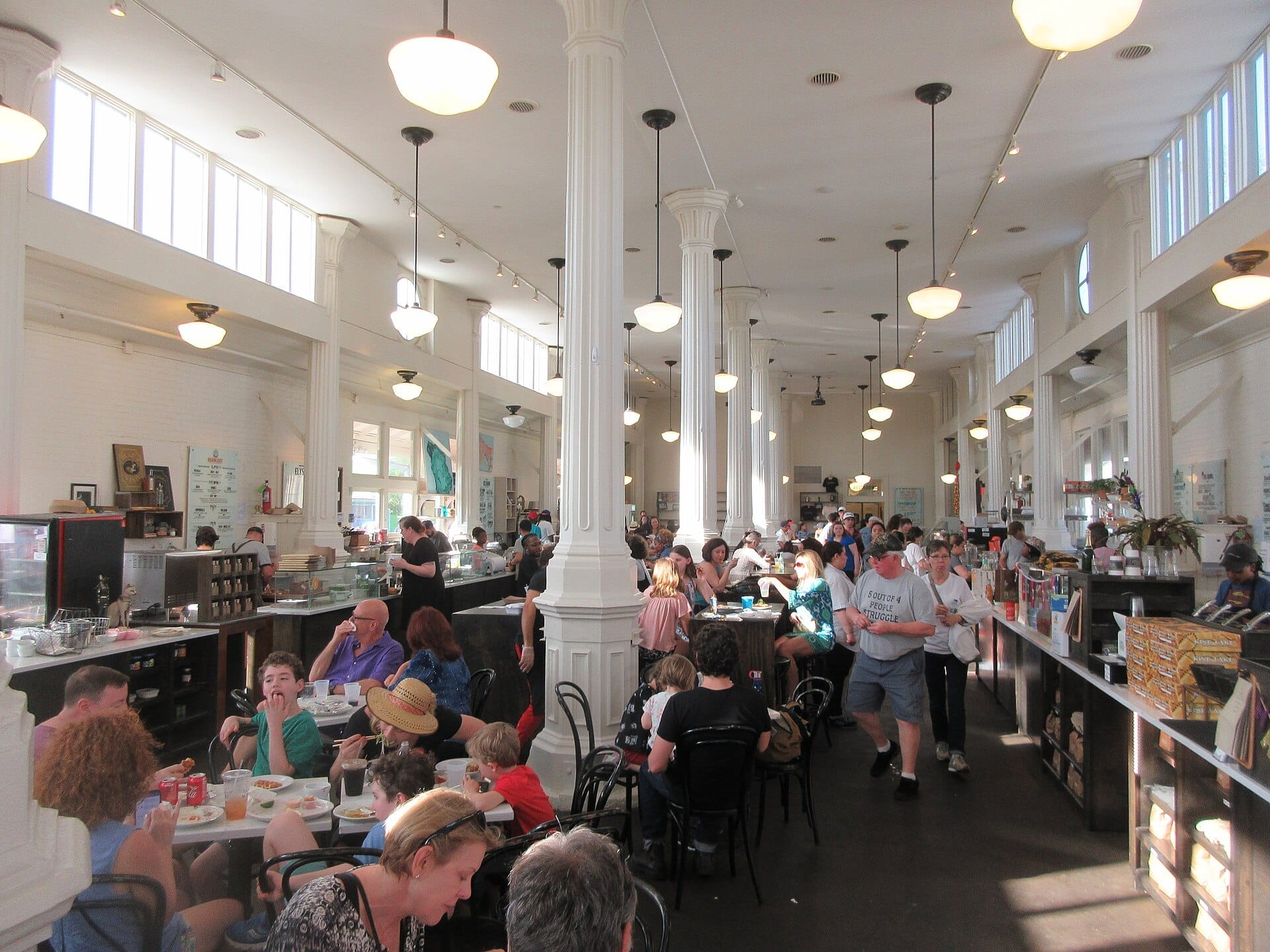
St. Roch Market is a food hall, not a traditional farmers market or a tourist trap dressed up as one. Housed in a single-story, open-plan building at 2381 St. Claude Avenue, it brings together a rotating collection of independent local vendors under one roof. Entry is free. You walk in, read the boards at each counter, order directly from the vendor, and find a seat in the communal dining area. There are no table reservations and no printed menus handed to you at the door. It runs on a counter-service model that keeps the pace relaxed but efficient.
The vendor mix skews toward New Orleans flavors with some global influence — raw oysters and Creole-inflected dishes sit alongside Japanese-inspired options and Italian preparations. A full bar operates during food service hours, serving craft cocktails alongside beer and wine. On weekday mornings, the building feels quieter, with coffee available from 7am before the food vendors open at 11am. Weekend brunch runs from 10am to 3pm, which is when the space draws its most varied crowd.
💡 Local tip
Hours to know: Sun–Thu 7am–10pm; Fri–Sat 7am–midnight. Coffee service opens at 7am; food and bar from 11am (brunch from 10am on weekends). Verify current hours at strochmarket.com before visiting, as vendor lineups and hours can shift.
A Building With Nearly 150 Years of History
The structure itself is worth a few moments of attention. St. Roch Market was originally built in 1875 as Washington Market, one of several neighborhood public markets that once anchored daily life across New Orleans. The name change came in the aftermath of the 1870s yellow fever epidemics, which devastated the surrounding community and gave the St. Roch neighborhood its particular sense of memorial gravity — the nearby St. Roch Chapel, still standing a few blocks away, was built by a German priest who credited the saint with protecting his congregation during the 1867 epidemic.
The building received a significant renovation during the Works Progress Administration era in 1937–1938, and like much of New Orleans, it suffered serious damage in the aftermath of Hurricane Katrina in 2005. A decade-long gap followed before a 2012–2015 restoration brought it back to life, reopening in 2015 as a modern food hall. The renovation preserved the building's bones while giving it contemporary utility. You can see this layering when you stand inside: the architecture reads as old New Orleans, but the interior functions like a thoughtfully updated communal space.
Tickets & tours
Hand-picked options from our booking partner. Prices are indicative; availability and final rates are confirmed when you complete your booking.
Spooky kid-friendly family ghost tour
From 32 €Instant confirmationFree cancellationWalking the Devil's Empire tour with HELLVISION™ in New Orleans
From 32 €Instant confirmationFree cancellationThe New Orleans haunted cemetery city bus tour
From 43 €Instant confirmationFree cancellationWhitney Plantation Tour
From 72 €Instant confirmationFree cancellation
How the Experience Changes By Time of Day
Arriving early on a weekday morning, before 9am, gives you the building almost to yourself. The smell of coffee cuts through the slightly cool air of the hall, and the vendors setting up for lunch service are the main presence. It is a genuinely calm way to start a day in Bywater, especially if you are walking over from the French Quarter or Frenchmen Street the morning after a late night.
The lunch rush, particularly on weekends between noon and 2pm, is when the market feels most alive. Tables fill up, the bar starts moving, and the noise level rises to a comfortable social hum rather than anything overwhelming. This is also when the oyster counter draws a line, so if raw oysters are your priority, arriving closer to 11am when food service opens gives you faster access and fresher stock.
Friday and Saturday evenings, running until 10pm, attract a local crowd that tilts younger and leans into the cocktail side of things. The lighting shifts the feel of the space considerably — it becomes more bar-adjacent than market-adjacent, and the energy picks up noticeably after 7pm. This is a good option if you want a low-key evening in the neighborhood before or instead of heading to the more intense bar scene along Frenchmen Street.
ℹ️ Good to know
Busiest periods are Saturday and Sunday 12–2pm and Friday/Saturday evenings. If you want quick counter access and easy seating, weekday lunch before noon is your window.
The Neighborhood Context: Why Location Matters
St. Roch Market sits on St. Claude Avenue, the main artery of the Marigny and Bywater neighborhoods. This part of the city has a different texture than the French Quarter — the streets are quieter, the architecture is primarily Creole cottages and shotgun houses painted in shades of turquoise, coral, and yellow, and the street art is scattered across utility boxes and building ends rather than being curated for tourism. Spending time in the Marigny-Bywater corridor gives you a better sense of how contemporary New Orleanians actually live, and St. Roch Market functions as a genuine neighborhood anchor — not primarily a tourist stop.
The market is walkable from the lower end of Frenchmen Street, New Orleans' main live music strip. The walk takes roughly 10–15 minutes and passes through residential Marigny, which is pleasant in the morning or early afternoon and perfectly fine in the evening. If you are combining the market with a night on Frenchmen Street, the sequencing works well: eat and drink at St. Roch, then walk back toward the music venues.
What to Eat and Drink: Navigating the Vendor Floor
The vendor lineup at St. Roch Market changes over time, so specific stall names may shift. What tends to remain consistent is the range: Gulf seafood, particularly oysters, anchors the savory options. You will typically find Japanese-influenced preparations, Italian food, and at least one vendor focused on local Creole flavors. The common thread is that these are independent operators, not chain outposts or ghost-kitchen concepts, which keeps the quality accountability direct.
The bar is a full-service operation during food hours, not an afterthought. Craft cocktails lean toward spirit-forward and seasonal preparations. If you are visiting in summer, cold drinks and the air-conditioned interior make this a genuinely comfortable stop during the hotter parts of the day, when walking the neighborhood can feel punishing. New Orleans summers regularly push into the low 90s Fahrenheit with significant humidity, and having a cool interior with food and drink available is not a trivial consideration.
💡 Local tip
Budget roughly $12–18 for a main dish from a single vendor. Oysters are typically priced per piece or by the dozen — ask before ordering if pricing is not posted. The bar accepts card payments; most vendors do as well, but carrying some cash is never a bad idea in New Orleans.
Practical Details and Honest Assessment
Getting here is straightforward. RTA bus lines run along St. Claude Avenue and connect back toward the French Quarter. Rideshare is the most convenient option for visitors arriving from hotels downtown, and the fare from the Central Business District or French Quarter is typically a few dollars. There is also a free private parking lot off St. Roch Avenue for those driving, which is relatively unusual for this part of the city.
St. Roch Market is a food hall, and food halls are not for everyone. If you are looking for a traditional sit-down New Orleans dining experience with tableside service and a full Creole menu, this is not the right stop. For that, look at the broader restaurant landscape in the French Quarter or the classic Creole establishments across the city. St. Roch suits people who are comfortable making their own choices across multiple vendors and are curious about the neighborhoods east of the Quarter. It also works well for groups with different appetites or dietary preferences, since the multi-vendor format allows everyone to order independently. For deeper context on New Orleans' food culture, the what to eat in New Orleans guide provides useful orientation before you arrive.
Accessibility is not formally detailed on the market's website. The space is open-plan at street level, and counter-service means no need to navigate table service, but visitors with specific accessibility requirements should contact the market directly before visiting. Photography is welcome throughout the space, and the building's interior, particularly the structural details preserved from the WPA-era renovation, provides good material for architecture-minded visitors. For a broader overview of how St. Roch fits into a multi-day visit, the 3-day New Orleans itinerary includes neighborhood-level planning advice.
Insider Tips
- Arrive at 11am sharp when food service opens on a Saturday if you want oysters without waiting. The line at the oyster counter builds quickly by 12:30pm and doesn't shorten until mid-afternoon.
- The free parking lot off St. Roch Avenue is a legitimate perk in a city where parking can be both scarce and expensive. If you are driving and combining this visit with a walk around Bywater, park here and explore on foot.
- Weekend brunch starts at 10am, an hour before regular food service. This is the quietest version of a weekend visit — coffee, food, and a mostly local crowd before the midday rush.
- If you are visiting in summer (June through August), treat the air-conditioned interior as a genuine respite. Plan your Bywater exploration around a mid-afternoon stop here during the hottest hours, roughly 1–4pm.
- The bar operates on the same hours as food service, not coffee-shop hours. If you want a cocktail before 11am, you will need to wait — use the morning coffee window to scope out the vendor boards and decide what you want before the rush.
Who Is St. Roch Market For?
- Travelers who want to eat well in a neighborhood that feels genuinely local rather than tourist-facing
- Groups or couples with different food preferences who need a multi-vendor setting where everyone can choose independently
- Architecture and history enthusiasts interested in seeing a 19th-century New Orleans market building in active use
- Visitors planning a Frenchmen Street evening who want a relaxed, affordable dinner beforehand
- Solo travelers looking for a comfortable, unhurried space to eat, read, and watch neighborhood life
Nearby Attractions
Other things to see while in Marigny & Bywater:
- Crescent Park
Crescent Park stretches 1.4 miles along the Mississippi River in the Bywater neighborhood, offering free access to sweeping river views, award-winning landscape design, and a rare sense of open space just outside the French Quarter's orbit. It is one of the most thoughtfully designed public spaces in the city.
- Frenchmen Street
Frenchmen Street in the Faubourg Marigny is where New Orleans plays music for itself. A three-block stretch of jazz clubs, brass bands, and an open-air art market draws locals and savvy visitors every night of the week. Free to walk, affordable to explore, and genuinely alive after dark.