New Orleans Jazz Museum: Jazz History Inside a Landmark Building
The New Orleans Jazz Museum occupies the 1838 Old U.S. Mint at the edge of the French Quarter, holding more than 25,000 artifacts that trace jazz from its New Orleans roots to its global reach. From Louis Armstrong's first cornet to near-daily live performances on the third floor, this is one of the most substantive music museums in the United States.
Quick Facts
- Location
- 400 Esplanade Avenue, French Quarter, New Orleans, LA 70116
- Getting There
- Walkable from the French Quarter core; RTA buses serve Esplanade Ave. Rideshare drop-off directly outside.
- Time Needed
- 1.5 to 2.5 hours for exhibits; longer if you catch a live performance
- Cost
- Adults $11, Seniors/Military/Students $9, Children 6 and under free. Group rates and AAA discounts available.
- Best for
- Music history lovers, architecture enthusiasts, anyone curious about jazz origins
- Official website
- nolajazzmuseum.org
What Is the New Orleans Jazz Museum?
The New Orleans Jazz Museum is one of those rare places where the building itself is as important as what is inside it. Housed in the Old U.S. Mint at 400 Esplanade Avenue, the museum sits at the precise point where the French Quarter ends and the Frenchmen Street live music corridor begins. That geographic position is not accidental. Jazz did not emerge in a vacuum, and this location keeps that context visible: step outside and you are within a few blocks of the clubs, second-line routes, and neighborhoods that actually produced the music on display.
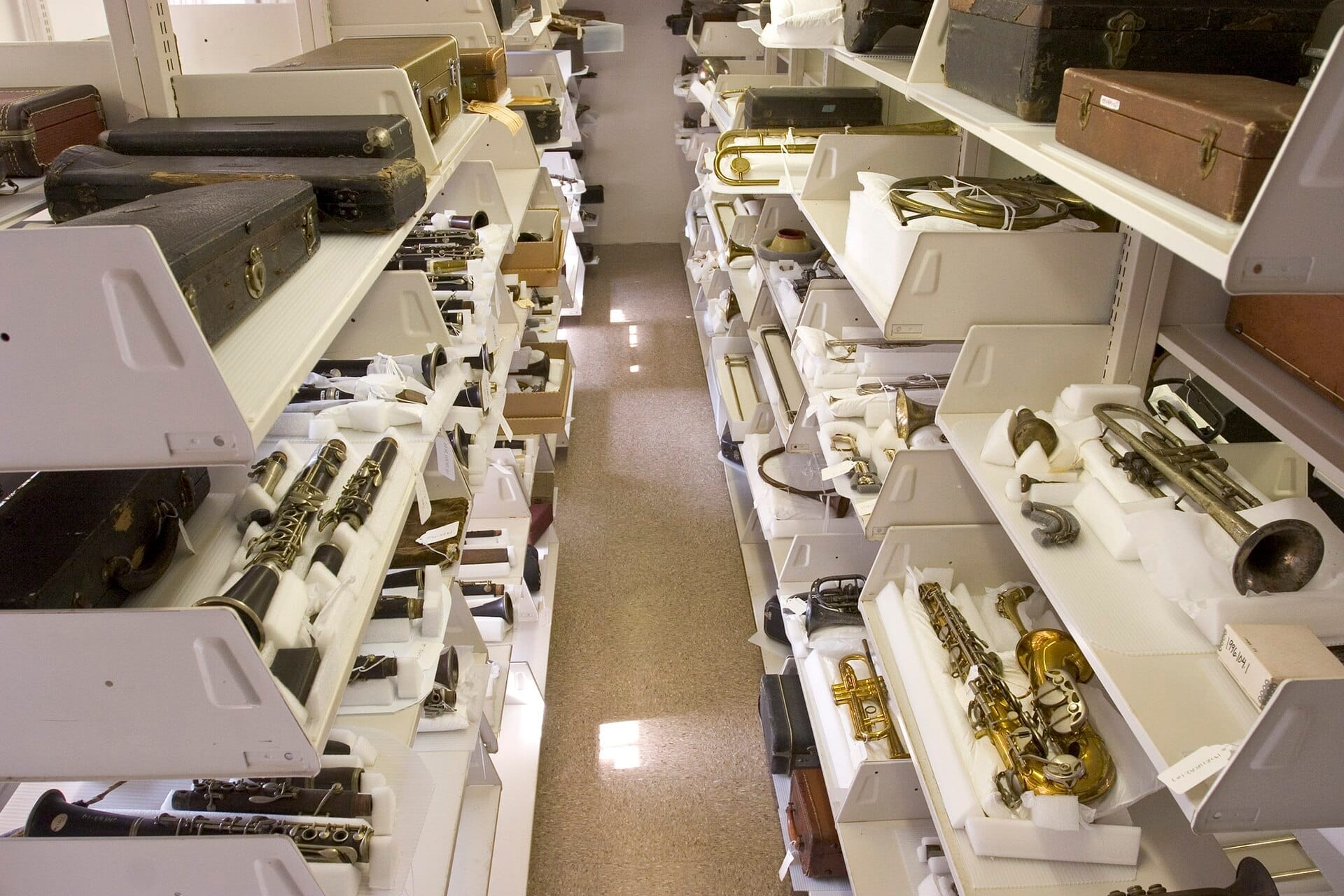
The museum is operated by the Louisiana State Museum system and holds a collection of over 25,000 items, including instruments, photographs, sheet music, recordings, and personal effects belonging to the architects of jazz. The scale makes it the most comprehensive institution of its kind in the city, and the combination of permanent galleries, rotating exhibitions, and live performances gives it an energy that most music museums struggle to sustain.
ℹ️ Good to know
Hours: Daily 9:00 a.m. to 4:00 p.m. (last ticket sold at 3:30 p.m.). Closed on select state holidays including Memorial Day. Verify current hours at nolajazzmuseum.org before visiting.
The Building: 1838 and Still Earning Its Keep
The Old U.S. Mint was constructed in 1838 and is the only building in American history to have minted both U.S. and Confederate currency. That history alone gives the structure a layered significance that goes well beyond jazz. The Greek Revival exterior, with its imposing columns and worn brick, reads as serious civic architecture from the street. Inside, the building has been adapted thoughtfully rather than gutted, and the weight of the original materials, including thick plaster walls and high ceilings, creates a natural acoustic warmth that suits the collection.
The building — the Old U.S. Mint — was added to the National Register of Historic Places and became a Louisiana State Museum site in 1961; the New Orleans Jazz Museum in its current dedicated form opened later. It is one of the most important jazz-focused institutions in the country. What was once a place that literally produced American currency now produces something less tangible but arguably more durable: the documentation of an art form that changed the world.
Visitors who appreciate historic architecture will find the building worth examining on its own terms. If you are combining this with other French Quarter sites, St. Louis Cathedral and the Cabildo represent comparable examples of how New Orleans has repurposed its historic civic buildings into cultural institutions.
Tickets & tours
Hand-picked options from our booking partner. Prices are indicative; availability and final rates are confirmed when you complete your booking.
New Orleans guided jazz tour
From 0 €Instant confirmationNew Orleans jazz brunch
From 41 €Instant confirmationFree cancellationSteamboat Natchez Sunday Jazz Brunch Cruise in New Orleans
From 68 €Instant confirmationFree cancellationWalking the Devil's Empire tour with HELLVISION™ in New Orleans
From 32 €Instant confirmationFree cancellation
The Collection: What You Actually See
The permanent galleries cover jazz chronologically and thematically, moving from the late 19th-century musical fusion that created the genre through to its spread across Chicago, New York, and beyond. The collection is dense but navigable. Docents and interpretive panels are clear, and the museum does not assume prior knowledge, which makes it accessible to casual visitors without feeling condescending to serious students of music history.
Among the highlights: Louis Armstrong's first cornet and Sidney Bechet's soprano saxophone are on display. These are not reproductions. Seeing the actual instrument Armstrong played as a young man in New Orleans is a moment that lands differently than reading about it. The scale of the cornet, the dents and wear, connects the global legend back to a specific teenager in a specific city. That grounding in physical reality is what separates a strong museum from a documentary.
Beyond the marquee items, the archive of photographs, recordings, and ephemera rewards slow looking. Street photography from early 20th-century New Orleans, handwritten sheet music, and promotional materials from long-closed clubs all build a picture of jazz as something that emerged from real social conditions rather than appearing fully formed. The museum takes that context seriously.
💡 Local tip
Arrive by 9:30 a.m. on weekdays to have the lower galleries largely to yourself. Weekend mornings fill up faster, especially when a French Quarter event is running nearby.
Live Performances and The Venue on the Third Floor
The third floor houses a dedicated performance space known as The Venue, a $4-million room designed with advanced acoustics and sound recording equipment. Live jazz performances are scheduled nearly every day of operation. This is not background music piped through speakers. The room is built to showcase musicians properly, and the programming cycles through a range of styles within the jazz tradition, from traditional New Orleans jazz to contemporary improvisational work.
Check the schedule before you arrive. If a performance is running during your visit window, plan your exhibit walk-through so you finish downstairs before the music starts, then spend time in The Venue. The combination of holding an Armstrong artifact in your mind while watching a live trumpeter in the same building creates a continuity that no exhibit panel can manufacture.
The live music tradition extends well beyond the museum walls. After your visit, Frenchmen Street is a three-minute walk from the museum entrance and offers some of the best live jazz clubs in the city, typically starting after 9:00 p.m. The contrast between the museum's archival approach and the clubs' raw immediacy is instructive.
Visiting by Time of Day and Season
Morning visits, particularly on weekdays, offer the clearest experience. The galleries are quieter, the lighting in the exhibit rooms is consistent throughout the day, and the staff have time to engage with questions. The building itself stays relatively cool because of its thick walls, which matters considerably in New Orleans summers when outdoor heat can run above 90 degrees Fahrenheit from June through August.
The museum closes at 4:00 p.m. (last entry 3:30 p.m.), which is earlier than many visitors expect. This is a genuine limitation worth noting: if you are spending a full day in the French Quarter and planning to end at the museum, confirm you can arrive by 2:30 p.m. at the latest to see the collection at a reasonable pace.
If you are planning your broader New Orleans itinerary, the museum fits well into a culturally focused day that also includes the Louis Armstrong Park and a stop at Congo Square, which sits adjacent to the park and is directly tied to the African musical traditions that gave birth to jazz.
⚠️ What to skip
The museum closes at 4:00 p.m. daily with the last ticket sold at 3:30 p.m. This is significantly earlier than most attractions in the French Quarter. Do not leave this for late afternoon without confirming your arrival time.
Practical Details and Honest Expectations
Adult admission is $11. Seniors, military personnel, and students with valid ID pay $9. Children aged six and under enter free. Groups of 15 or more receive $2 off per person with advance reservation. AAA members receive a 10 percent discount, and purchasing tickets to multiple Louisiana State Museums at the same time brings $2 off each additional admission.
The museum is located at the corner of Esplanade Avenue and the Mississippi River end of the French Quarter, which makes it slightly removed from the Bourbon Street concentration of most visitors. That distance is, depending on your perspective, either an inconvenience or a relief. The 10 to 15-minute walk from Jackson Square is straightforward and passes through pleasant residential blocks.
Accessibility information is available directly from the museum by calling 504-568-6993. The building is historic and adaptations have been made, but travelers with specific mobility requirements should confirm details in advance rather than assuming full accessibility throughout all floors.
Who should consider skipping it: visitors whose primary interest is nightlife rather than history, or those with very young children who may struggle with the pace of exhibit-style content. The museum is also a poor choice for anyone pressed for time who has not yet seen the broader French Quarter, since the outdoor spaces and architecture of the Quarter itself are free and immediately accessible.
For travelers building a full cultural itinerary, see our New Orleans jazz music guide for context on where to experience live jazz beyond the museum setting, and how the city's music scene fits into its broader cultural history.
Insider Tips
- Check the live performance schedule on the museum website before booking your visit. The third-floor Venue performances are included with admission and are worth timing your arrival around.
- The museum gift shop carries a well-curated selection of vinyl, CDs, and books on jazz history that are harder to find at general French Quarter shops. Budget a few minutes there if you are a serious music buyer.
- If you purchase admission to another Louisiana State Museum on the same day (such as the Cabildo), you receive $2 off each additional ticket. The museums are walkable from each other, making a combined visit genuinely practical.
- The building's thick 1838 walls keep the interior noticeably cooler than outside, which makes this an excellent midday stop during summer months when outdoor walking becomes uncomfortable.
- The corner of Esplanade Avenue and the river is one of the less-photographed edges of the French Quarter. Arrive 15 minutes early, walk along the Esplanade toward the river, and you get a sense of the neighborhood's residential character that most visitors never see.
Who Is New Orleans Jazz Museum For?
- Music history enthusiasts who want more than a surface-level introduction to jazz origins
- Architecture and history travelers interested in the building's dual role as U.S. and Confederate Mint
- Serious travelers who want the context for a later night on Frenchmen Street or at Preservation Hall
- Families with children old enough to engage with exhibits and live music (roughly 8 and up)
- Visitors on a budget looking for a substantive cultural experience at a low price point
Nearby Attractions
Other things to see while in French Quarter:
- Bourbon Street
Rue Bourbon is one of America's most recognizable streets, stretching 13 blocks through the French Quarter from Canal Street to Esplanade Avenue. The nightlife reputation is well-earned, but the street has genuine historical depth and a quieter, more complex daytime character that most visitors never see.
- The Cabildo
Standing on the edge of Jackson Square since 1799, The Cabildo is the building where the Louisiana Purchase transfer was formally completed in 1803, reshaping a continent. Today it houses the Louisiana State Museum's flagship collection on state history, from colonial rule to Reconstruction, making it the most historically consequential building in New Orleans.
- Café du Monde
Open since 1862, Café du Monde on Decatur Street is the oldest coffee stand in New Orleans and one of the most recognizable spots in the French Quarter. The menu is deliberately simple: beignets dusted in powdered sugar and café au lait made with chicory. What makes or breaks the visit is knowing when to go and what to expect.
- Court of Two Sisters
The Court of Two Sisters on Royal Street is one of New Orleans' most enduring dining institutions, serving a daily jazz brunch buffet in a courtyard that has been gathering people since the 18th century. The combination of live jazz, Creole cuisine, and centuries-old architecture makes it unlike anything else in the city.