Louis Armstrong Park: The Soul of New Orleans Music History
Louis Armstrong Park is a 32-acre public park in the Tremé neighborhood, just steps from the French Quarter, that anchors the origins of jazz, blues, and African American musical tradition. Home to Congo Square, a striking 12-foot sculpture of Louis Armstrong, and the Mahalia Jackson Theater, it is one of the most historically layered outdoor spaces in the American South.
Quick Facts
- Location
- 701 N. Rampart Street, Tremé, New Orleans, LA 70116
- Getting There
- Walk from the French Quarter via N. Rampart Street; RTA buses serve nearby Canal Street
- Time Needed
- 1 to 2 hours for a thorough visit; 30 minutes for a focused walk
- Cost
- Free to enter (verify current hours with the city before visiting)
- Best for
- History lovers, jazz fans, photographers, and quiet morning walkers
What Louis Armstrong Park Actually Is
Louis Armstrong Park is not a typical city park. It is a 32-acre monument to the musical culture that grew out of one of America's most African-influenced neighborhoods. Opened on April 15, 1980, and designed by New Orleans architect Robin Riley, the park sits just across N. Rampart Street from the French Quarter, making it one of the most accessible yet most overlooked significant sites in the city. It was listed on the National Register of Historic Places in 1994.
The park was named in 1971 following the death of Louis Armstrong, the trumpeter born less than a mile away who is widely considered the central figure in the development of jazz. Inside its iron gates, you will find Congo Square, the Mahalia Jackson Theater for the Performing Arts, the New Orleans Municipal Auditorium, and a series of sculptures honoring figures who shaped American music. It is a place that rewards walking slowly.
ℹ️ Good to know
The park entry gates are on N. Rampart Street. Opening hours and any event-related closures should be verified through the City of New Orleans Parks and Parkways department before your visit, as hours can vary seasonally.
Congo Square: The Birthplace of American Music
The most historically significant site within the park is Congo Square, an open plaza that served as a gathering place for enslaved and free Black residents of New Orleans from the early 18th century through the Civil War era. On Sundays, the French colonial and later Spanish administrations permitted enslaved people to gather here to trade, socialize, and perform music. The rhythms, dances, and cultural exchanges that took place in this square directly influenced the development of jazz, blues, and gospel.
Congo Square is not a reconstruction or a replica. It is the actual ground where those gatherings happened. Standing in the open space on a quiet morning, when the park is largely empty and the sounds of the city are muffled by the surrounding live oaks, that weight is palpable. For context on how this history shaped the city's musical identity, the Congo Square page covers the site in full detail, and the New Orleans jazz music guide traces how that foundation evolved into a global art form.
The square is also where the first New Orleans Jazz and Heritage Festival was held in 1970, drawing a modest crowd that grew into one of the largest music festivals in the country. The festival has long since moved to the Fair Grounds Race Course, but the symbolic connection to Congo Square remains central to its identity.
Tickets & tours
Hand-picked options from our booking partner. Prices are indicative; availability and final rates are confirmed when you complete your booking.
New Orleans St. Louis Cemetery tickets and guided tour
From 21 €Instant confirmationFree cancellationSpooky kid-friendly family ghost tour
From 32 €Instant confirmationFree cancellationWalking the Devil's Empire tour with HELLVISION™ in New Orleans
From 32 €Instant confirmationFree cancellationThe New Orleans haunted cemetery city bus tour
From 43 €Instant confirmationFree cancellation
The Sculptures: A Walking Gallery of Jazz Legends
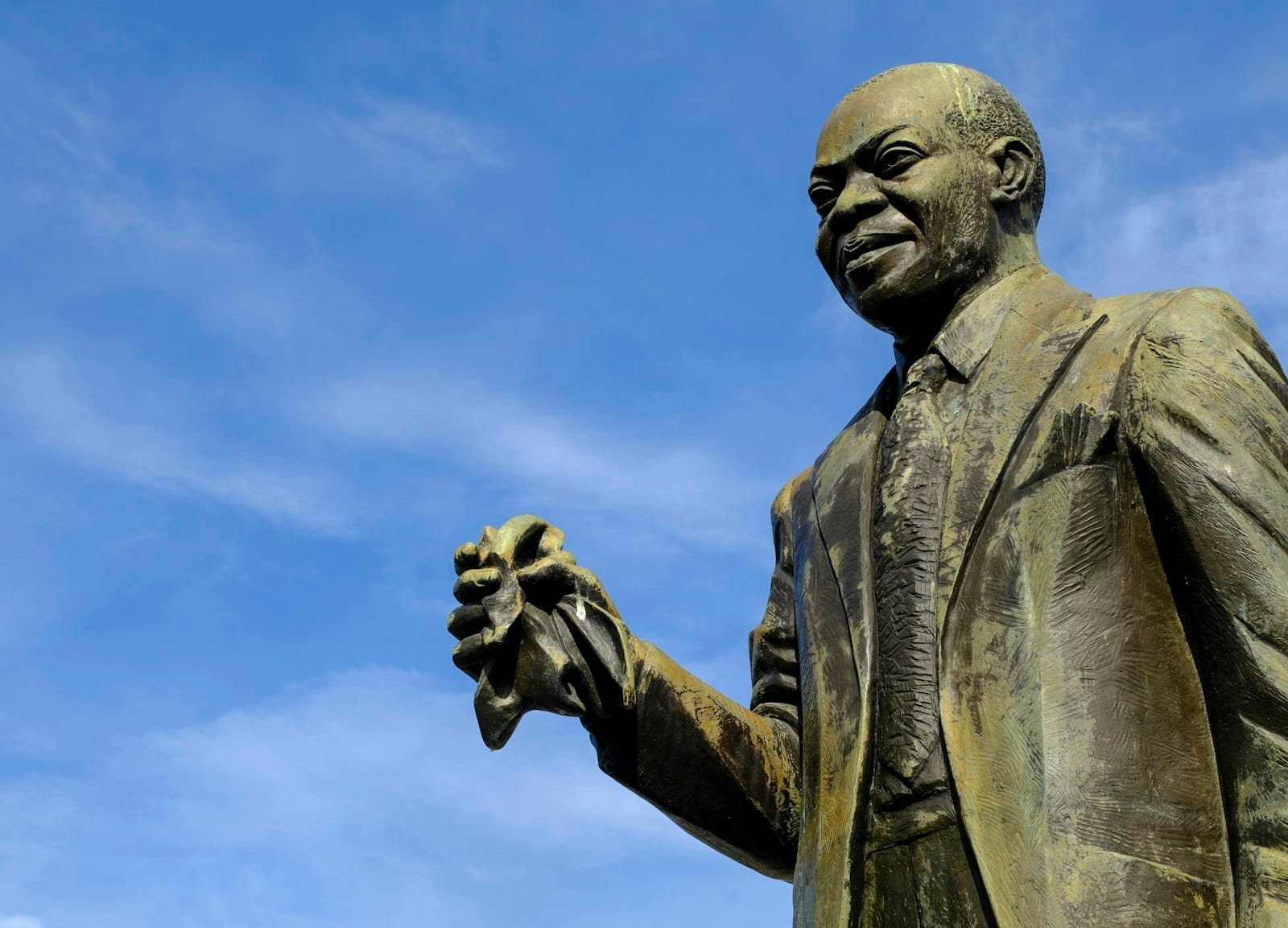
The park's sculpture program is exceptional for a public green space. The centerpiece is a 12-foot bronze statue of Louis Armstrong by sculptor Elizabeth Catlett, positioned near the main entrance. Catlett, one of the most important African American sculptors of the 20th century, rendered Armstrong mid-performance, trumpet at his side, in a posture that is both commanding and relaxed. The scale forces you to look up, and in the early morning light the bronze takes on a warm, amber tone.
Beyond Armstrong, the park contains a bust of Sidney Bechet, the New Orleans-born soprano saxophonist and clarinetist who became a legend in Europe; a depiction of Buddy Bolden, the cornetist widely regarded as the originator of jazz; a figure honoring Mardi Gras Indian Chief Tootie Montana, whose beadwork traditions represent a distinct thread of Black cultural expression in New Orleans; a brass band sculpture; and a glass-tiled figurative work honoring the historic French Opera House. Six of these sculptures were installed after the park's 2011 reopening, following a six-year closure caused by damage from Hurricane Katrina.
Plan at least 30 minutes to move through the sculptures deliberately. Each one has interpretive signage that provides brief biographical context, though the park's history is deep enough that reading before you arrive will make the visit significantly more meaningful.
The Physical Park: Lagoons, Bridges, and Quiet Corners
Beyond the cultural monuments, the park itself is a genuine respite from the density of the French Quarter directly across Rampart Street. The design by Robin Riley incorporates lagoons with small ornate bridges, grassy knolls shaded by mature trees, and tree-lined promenades wide enough to feel like outdoor corridors. Duck ponds attract waterfowl year-round. On weekday mornings, the park is quiet enough that you can hear birds and the occasional distant brass band warming up somewhere in the Tremé.
The Mahalia Jackson Theater for the Performing Arts anchors the northern section of the park. Named for the gospel singer from New Orleans who became one of the most influential vocalists of the 20th century, the theater hosts touring productions, opera, and local performances throughout the year. Check the theater's schedule separately if a performance coincides with your trip. The Tremé neighborhood that surrounds the park is worth exploring on foot after your visit, as it contains some of the oldest architecture in the city and a density of musical history unmatched by any comparable block radius in America.
💡 Local tip
If you want the park largely to yourself, arrive before 9am on a weekday. By midday on weekends, particularly during festival season, the paths fill with visitors and the lagoon area can feel crowded.
How the Experience Changes by Time of Day and Season
Morning visits, particularly between 7am and 10am, offer the park at its most atmospheric. The light is soft, the heat has not yet accumulated, and the sculptures cast long shadows across the brick paths. The sounds of the city are minimal, and the park's layout encourages slow, reflective walking. This is the best time for photography: the Elizabeth Catlett statue of Armstrong faces roughly east, so morning light falls on the front of the sculpture.
Midday in summer (June through August) is genuinely uncomfortable in New Orleans. Temperatures regularly exceed 90°F (33°C) with high humidity, and the park's tree cover provides only partial shade. If you are visiting in summer, stick to morning or late afternoon. Spring (March through May) and fall (October through November) are ideal: temperatures range from 60 to 82°F, the trees are full, and the park sees higher but manageable foot traffic tied to festivals like Jazz Fest and French Quarter Fest.
During Mardi Gras season, the park and surrounding Tremé streets become part of the larger festive circuit. The second-line parade tradition, rooted in this neighborhood, brings brass bands and dancing crowds through the area on many weekends. The New Orleans second-line guide explains how to find and follow these parades, which often pass near the park's Rampart Street entrance.
Getting There and Practical Logistics
The park's main entrance is on N. Rampart Street at the intersection with St. Philip Street. From the French Quarter, it is a straightforward walk: cross Rampart Street from virtually any point between Canal Street and Esplanade Avenue and you are at the park boundary. The walk from Jackson Square takes approximately 10 to 15 minutes on foot.
RTA buses operate on Canal Street, which runs along the northern edge of the French Quarter. Uber and Lyft are both active in New Orleans and drop-off at the Rampart Street gate is practical. If you are combining the park with other Tremé or French Quarter sites, note that Frenchmen Street in the adjacent Marigny neighborhood is a 15-minute walk, and Jackson Square is easily combined in the same half-day itinerary.
Accessibility within the park is generally good: paved paths connect the main sculpture installations and the theater, though some of the grassy areas and bridge approaches have uneven surfaces. Wear comfortable, closed-toe shoes, particularly if you are visiting after rain, as drainage near the lagoons can leave the grass soft and slick.
⚠️ What to skip
The park has had periods of limited access tied to event scheduling and maintenance. Always verify current opening status with the City of New Orleans Parks and Parkways department or the official New Orleans tourism site before making it the centerpiece of your day.
Who Should Consider Skipping This Attraction
Visitors who are primarily motivated by nightlife, food, or shopping will likely find the park underwhelming without background knowledge of its history. The park does not have food vendors, shops, or interactive exhibits. It is a quiet, contemplative space, and if that is not what you are looking for on a given afternoon, the time is better spent elsewhere.
Families with very young children may find the lagoon and bridge areas require close supervision, and there is no dedicated playground. The sculptures are largely adult-oriented in their historical references, though the size and drama of the Armstrong statue tends to impress younger visitors. Travelers with mobility limitations should confirm current path conditions before visiting, as post-rain conditions near the lagoons can be problematic.
Insider Tips
- The Elizabeth Catlett statue of Louis Armstrong faces roughly east, making early morning the ideal time for front-lit photography. By afternoon, the statue is in shadow.
- The New Orleans Jazz National Historical Park has a visitor center presence associated with the park complex. Rangers and staff can provide interpretive context that significantly deepens the experience, particularly around Congo Square's history. Check nps.gov for current program schedules.
- Second-line parades frequently begin or pass through the Tremé on Sunday afternoons. If you time your visit to the park for a Sunday, check the Treme Brass Band or local event listings for parade routes, which sometimes route directly past the Rampart Street entrance.
- The Mahalia Jackson Theater programs change seasonally. If a performance coincides with your trip, the theater is worth visiting in its own right for acoustics and architecture. Tickets are separate from park entry.
- Bring water. There are no food or drink vendors inside the park, and the nearest cafes are on the French Quarter side of Rampart Street. In warm months, dehydration sets in faster than most visitors expect in New Orleans humidity.
Who Is Louis Armstrong Park For?
- Jazz and music history enthusiasts who want to stand in the physical place where the genre has its deepest roots
- Photographers looking for dramatic sculpture subjects in a park setting, especially in morning light
- Travelers who want to understand the African American cultural history of New Orleans beyond the French Quarter
- Those combining a half-day itinerary of Tremé, the French Quarter, and Frenchmen Street
- Visitors seeking a quiet, reflective hour away from the commercial density of Bourbon Street
Nearby Attractions
Other things to see while in Tremé:
- Congo Square
Tucked inside Louis Armstrong Park in New Orleans' Tremé neighborhood, Congo Square is a 2.35-acre historic site where enslaved Africans and free people of color once gathered to drum, dance, and preserve West African traditions. That defiant act of cultural continuity profoundly shaped the traditions that gave rise to jazz. Today the square is free to visit, quietly powerful, and deeply underappreciated by first-time visitors.
- St. Louis Cemetery No. 1
Saint Louis Cemetery No. 1 is New Orleans' oldest surviving cemetery, dating to 1789, and one of the most historically significant burial grounds in North America. Guided tours are required for entry, weaving through tight rows of above-ground whitewashed tombs that tell the story of the city's Creole, Catholic, and African American heritage.