Audubon Aquarium New Orleans: What to Expect Before You Go
Sitting at the edge of the French Quarter along the Mississippi River, Audubon Aquarium draws visitors with its white alligators, African penguin colony, and immersive exhibits spanning the aquatic ecosystems of the Americas. Reopened in 2023 after a $41 million renovation that merged it with the former Insectarium, the facility is sharper and more focused than ever.
Quick Facts
- Location
- 1 Canal Street, New Orleans, LA 70130 (Woldenberg Park, edge of the French Quarter)
- Getting There
- Walk from Canal Street or French Quarter; Canal Street ferry landing nearby; RTA streetcar and buses along Canal Street
- Time Needed
- 2 to 3 hours for a thorough visit
- Cost
- Paid admission (verify current prices on official site); Orleans Parish residents admitted free on the first Thursday of each month with valid photo ID
- Best for
- Families with children, wildlife enthusiasts, rainy-day visitors, and anyone curious about Gulf Coast and Amazonian ecosystems
- Official website
- audubonnatureinstitute.org/aquarium
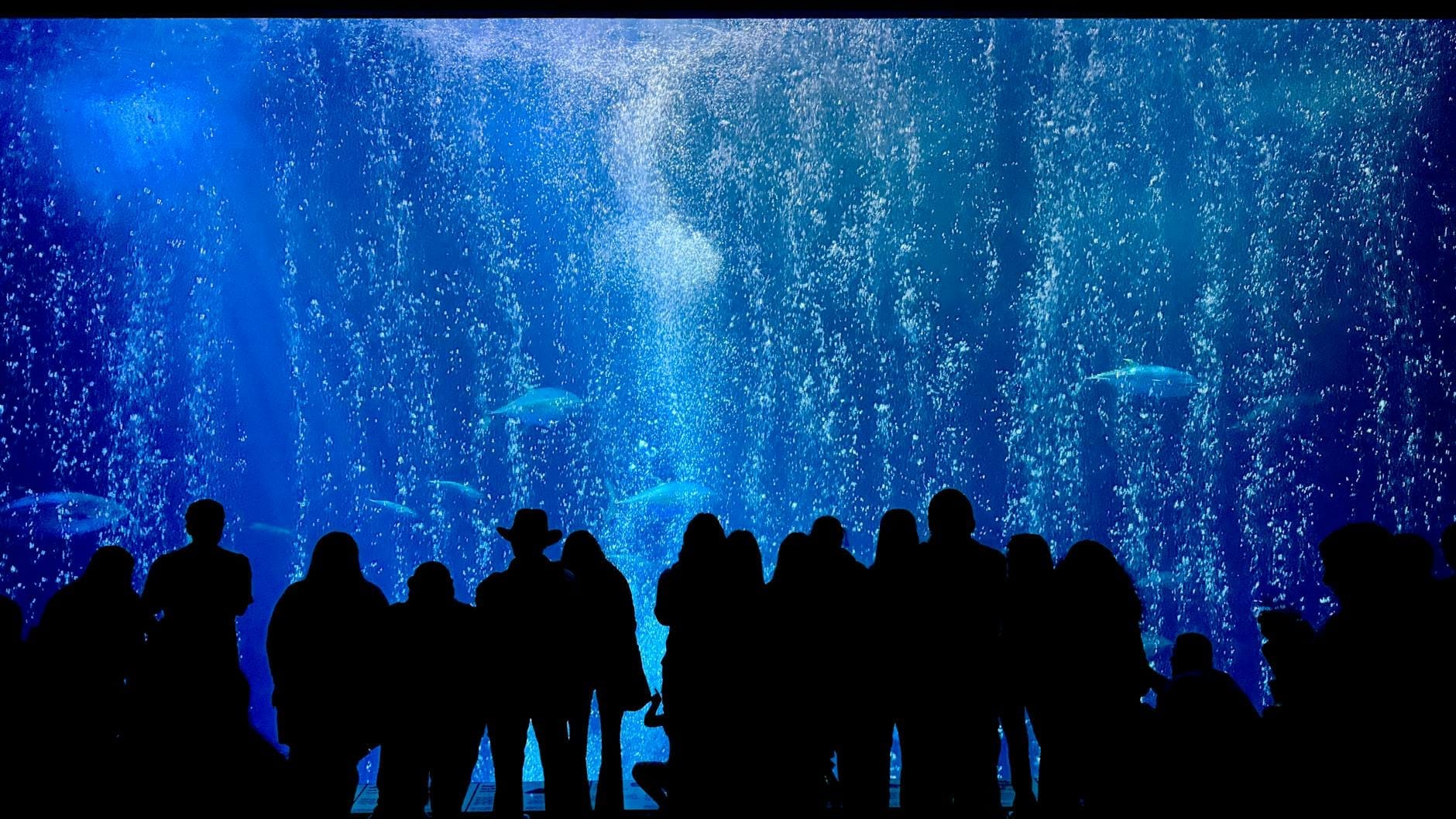
What the Audubon Aquarium Actually Is
The Audubon Aquarium, officially known as Audubon Aquarium since its 2023 rebrand (formerly Audubon Aquarium of the Americas), opened its doors on September 1, 1990, and quickly became one of the most visited attractions on the Gulf Coast. It sits at 1 Canal Street, right where the French Quarter meets the Mississippi River, occupying the upper reaches of Woldenberg Park. The address alone tells you something about its ambition: this isn't a suburban detour, it's a riverfront anchor.
The aquarium is accredited by the Association of Zoos and Aquariums (AZA) and operated by the Audubon Nature Institute, the same nonprofit that runs Audubon Zoo in Uptown. It reopened on June 8, 2023, after an extensive $41 million renovation that also merged the facility with the former Audubon Insectarium, which had previously been housed at 423 Canal Street (the Custom House). The result is a tighter, more modern experience with insect and arthropod exhibits woven alongside the traditional aquatic galleries.
ℹ️ Good to know
Orleans Parish residents get free admission on the first Thursday of each month with a valid photo ID. The free admission rotates between Audubon Aquarium and Audubon Zoo, so check the schedule before planning around it.
The Exhibits: What You'll Actually See
The collection spans aquatic life across the Americas, with the Gulf of Mexico, the Mississippi River delta, and Amazonian river systems all represented. Depending on which source you consult, the facility houses between roughly 3,600 and 10,000 animals across more than 250 species. The discrepancy likely reflects how you count the insect and invertebrate collections, which skew the numbers significantly when included.
The resident white alligators are consistently the most talked-about exhibit. These animals are leucistic rather than true albinos, meaning they have reduced pigmentation but not the pink eyes associated with albinism. They are extraordinarily rare in the wild, and the aquarium has long been one of the only places in the world where visitors can observe them up close. Expect a crowd gathered around their enclosure at almost any hour the facility is open.
The African penguin colony is the other centerpiece. Unlike the white alligators, which are static in a way that rewards patience, the penguins are active and interactive-feeling. The colony moves around, vocalizes, and draws delighted reactions from both children and adults. African penguins are an endangered species, which gives the exhibit a conservation dimension beyond its entertainment value.
Beyond those two headliners, the aquarium covers sharks, rays, seahorses, jellyfish, and a range of freshwater species native to Louisiana and the broader Mississippi watershed. The post-renovation addition of insect and arthropod galleries expands the sensory range considerably: the smell shifts, the scale of the animals shrinks, and the experience requires a different kind of attention.
Tickets & tours
Hand-picked options from our booking partner. Prices are indicative; availability and final rates are confirmed when you complete your booking.
Spooky kid-friendly family ghost tour
From 32 €Instant confirmationFree cancellationWalking the Devil's Empire tour with HELLVISION™ in New Orleans
From 32 €Instant confirmationFree cancellationThe New Orleans haunted cemetery city bus tour
From 43 €Instant confirmationFree cancellationWhitney Plantation Tour
From 72 €Instant confirmationFree cancellation
How the Experience Changes by Time of Day
The aquarium opens Tuesday through Sunday at 10 AM and closes at 5 PM. Mondays are closed. Arriving right at opening is the most effective strategy for avoiding the thickest crowds. School groups and organized tours tend to arrive mid-morning and peak between 11 AM and 2 PM. If you're traveling without children and prefer a quieter, more contemplative pace through the exhibits, aim for opening time or the last 90 minutes before close.
Afternoons on weekdays tend to be calmer than weekend mornings, with the exception of school holiday periods and summer. During summer months (June through August), New Orleans temperatures regularly exceed 90°F with high humidity, and the aquarium becomes a genuinely appealing refuge simply because it's air-conditioned. Expect higher foot traffic during those months regardless of time of day.
💡 Local tip
If you're visiting in summer, the aquarium makes an excellent mid-day shelter during the hottest hours (noon to 3 PM). Pair it with an early morning walk along the riverfront and a late afternoon visit to a cooler indoor attraction nearby.
Getting There and the Surrounding Area
The aquarium's location at the foot of Canal Street is one of its biggest practical advantages. It's walkable from most French Quarter hotels in under 15 minutes, and visitors staying in the Central Business District can reach it on foot in under 10. The Canal Street RTA streetcar line runs directly to the waterfront, and the Canal Street ferry landing is steps away if you're coming from Algiers on the West Bank.
The aquarium sits at the north end of Woldenberg Park, a narrow strip of green space running along the Mississippi. Before or after your visit, a walk south through the park leads to the Moon Walk and eventually toward Jackson Square. This is one of the better riverside walks in the city, particularly in the early morning when the light off the river is flat and golden and the cargo ships pass close enough to feel large.
The Steamboat Natchez departs from a dock very close to the aquarium, which makes a combined half-day easy to organize. The Audubon Nature Institute also offers combination tickets pairing the aquarium with Audubon Zoo, which is worth considering if you're traveling with children and have a full day to fill.
Historical and Cultural Context
The aquarium was part of a broader late-1980s effort to revitalize New Orleans' riverfront following the 1984 World's Fair, which had transformed the warehouse district into a public-facing space. The Louisiana World Exposition left behind a reconfigured waterfront, and the aquarium was built on the legacy momentum of that project. Understanding this context helps explain why the riverfront feels intentionally designed as a tourism corridor rather than an organic neighborhood, which it is. For more on how the city's history shaped its current geography, the New Orleans history guide covers the broader arc well.
The post-2023 renovation brought the aquarium up to a standard that reflects contemporary aquarium design: improved habitats, better interpretive signage, and a more coherent flow through the building. The integration of the Insectarium collection adds genuine depth, particularly for visitors interested in the ecological systems of Louisiana's wetlands, where insects and invertebrates play roles as important as the fish.
Photography, Accessibility, and Practical Notes
Photography is permitted throughout the facility. The main challenge is glare from tank glass, which is most pronounced in brightly lit sections. A polarizing filter helps if you're shooting with an interchangeable-lens camera. For smartphone photographers, pressing the lens gently against the glass, perpendicular to the surface, eliminates most glare and produces much cleaner results. Low-light sections like the jellyfish galleries require patience and a steady hand; flash is not only unhelpful against glass but can disturb the animals.
The building is a single, interconnected structure across multiple levels, with elevators available. Strollers and wheelchairs are accommodated throughout. The facility has a gift shop and an on-site café. Neither is remarkable, but the café provides a functional break point for families managing children's energy levels across a multi-hour visit.
⚠️ What to skip
The aquarium is closed on Mondays. This catches many visitors off guard, particularly those following a French Quarter itinerary that leads naturally to the riverfront. Check the day before you plan to visit.
Who Should Think Twice
Solo travelers with limited time who have already visited a major urban aquarium elsewhere (the Monterey Bay Aquarium, the Georgia Aquarium, the Shedd) will find the Audubon Aquarium solid but not revelatory. It's not the best aquarium in the country, and its relatively modest scale compared to those institutions is noticeable. For visitors specifically focused on New Orleans' cultural and historical character, the time might be better spent at the National WWII Museum or exploring Frenchmen Street at night. The aquarium earns its place in a New Orleans itinerary most clearly when children are involved, when the weather makes outdoor exploration uncomfortable, or when you want a mid-trip change of pace.
Insider Tips
- Arrive at 10 AM on a weekday to have the white alligator exhibit nearly to yourself. By 11:30 AM, tour groups fill the space and the atmosphere shifts considerably.
- Combination tickets pairing the aquarium with Audubon Zoo offer better value than two separate admissions. If you have a full day and the energy, the Zoo is worth adding, especially for families.
- Orleans Parish residents should verify the first-Thursday free admission schedule on the Audubon Nature Institute website before visiting, as the rotation between the aquarium and the zoo means it doesn't apply every month at each venue.
- The insect and arthropod section, added during the 2023 renovation, is genuinely underrated. Many visitors rush past it toward the penguins and alligators, but the exhibit on Louisiana's wetland invertebrates adds ecological context that the fish-only sections can't provide.
- If you're combining the aquarium with a riverfront afternoon, walk south through Woldenberg Park after your visit rather than retracing your steps up Canal Street. The riverside path connects naturally to the French Quarter waterfront and is far more pleasant than the street grid during peak hours.
Who Is Aquarium of the Americas For?
- Families with children of all ages, particularly those interested in marine and wetland wildlife
- Visitors planning a full French Quarter riverfront day combining the aquarium with a riverboat cruise or a Moon Walk stroll
- Travelers visiting during summer heat or rainy weather who need a quality indoor attraction
- Those interested in Louisiana-specific ecology, especially Gulf Coast and Mississippi River delta ecosystems
- Anyone who wants to see leucistic white alligators, which are extremely rare in captivity outside of Louisiana
Nearby Attractions
Other things to see while in Central Business District & Warehouse Arts District:
- Caesars Superdome
The Caesars Superdome is one of the most recognizable structures on the New Orleans skyline, a 73,208-seat domed arena that has hosted Super Bowls, Sugar Bowls, Essence Festival, and legendary concerts. Whether you're catching a Saints game or attending a major event, here's what you actually need to know before you go.
- Creole Queen
The Paddlewheeler Creole Queen is a 190-foot, three-deck sternwheeler that takes passengers out onto the Mississippi River for jazz dinner cruises and historical tours. Departing from the Poydras Street dock in the Central Business District, it offers one of the few ways to experience New Orleans from the water rather than from its streets.
- Mardi Gras World
Mardi Gras World is a working float-building warehouse on the Mississippi River where you can walk among giant parade sculptures in progress. It operates year-round and offers a behind-the-scenes look at the craftsmanship behind New Orleans' most famous celebration.
- The National WWII Museum
Designated by Congress as the official WWII museum of the United States, The National WWII Museum in New Orleans is one of the most comprehensive war history institutions in the world. Spread across a six-acre campus with six pavilions, immersive exhibits, and a period dinner theater, it demands serious time and rewards serious attention.