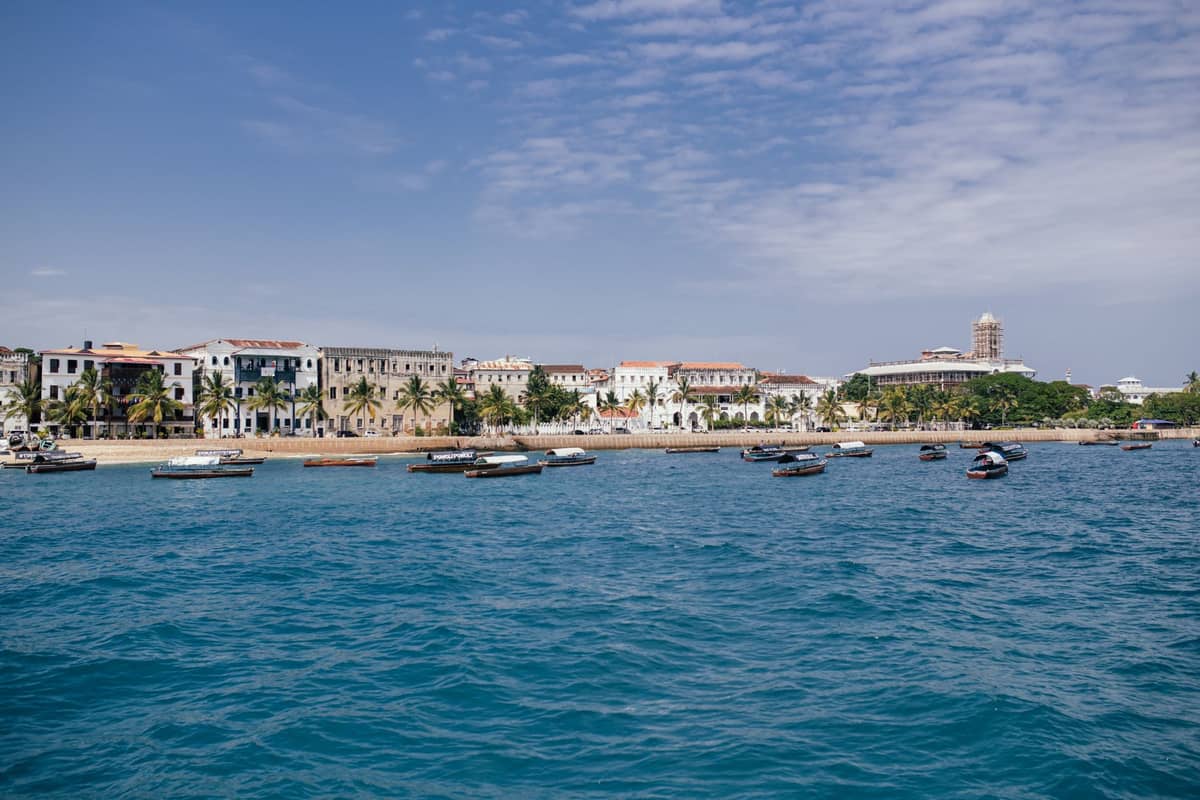
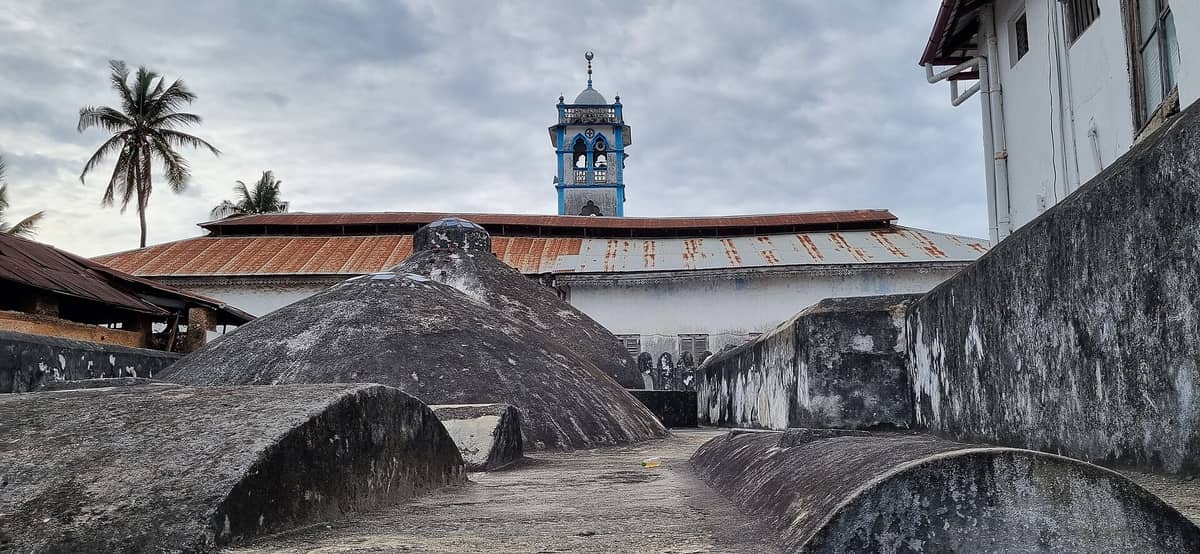
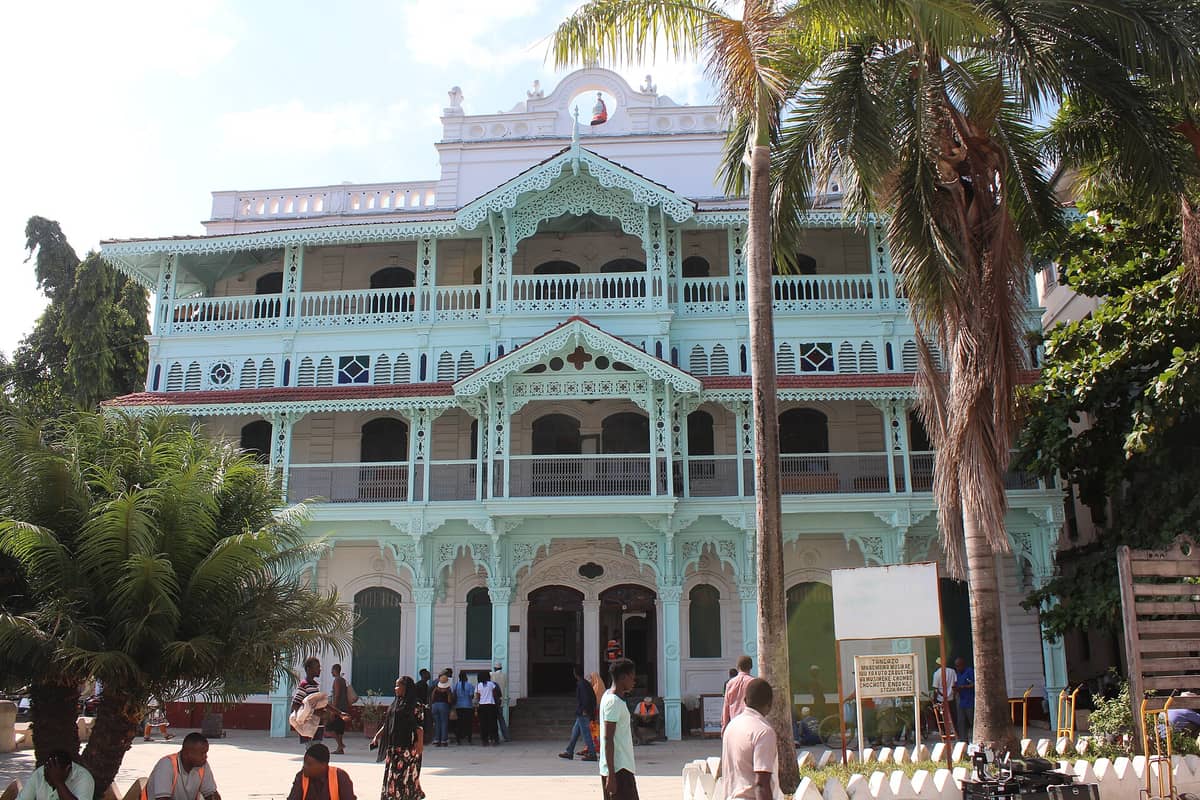
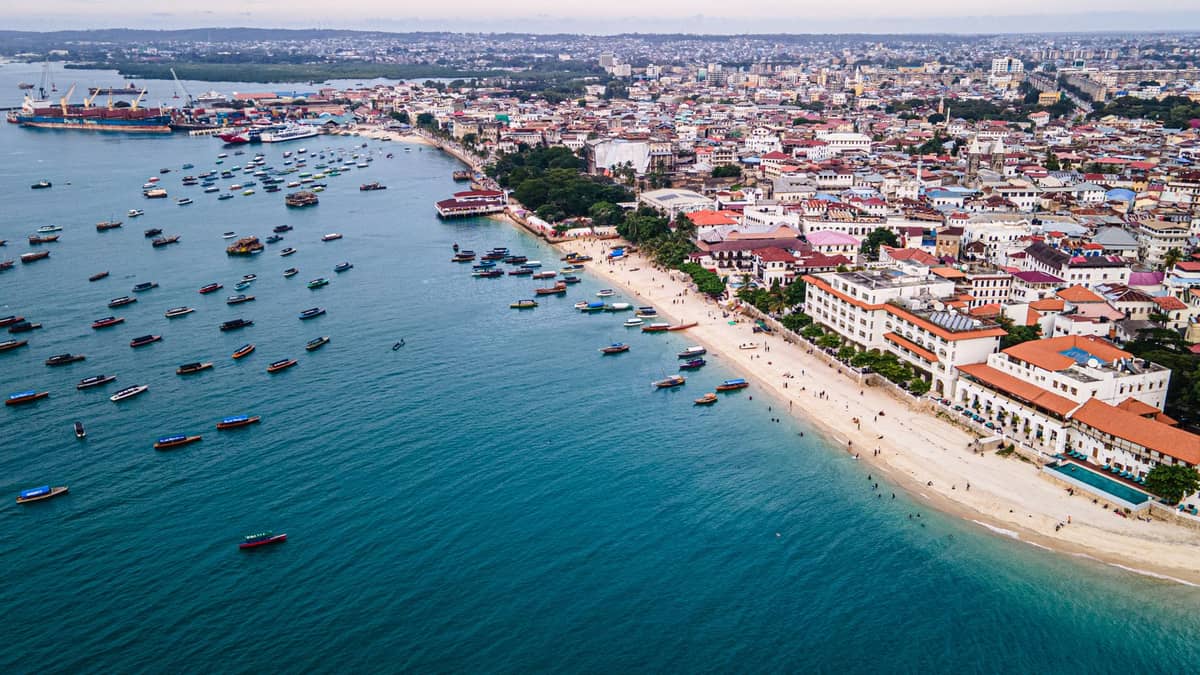
Stone Town is the historic heart of Zanzibar City, a UNESCO World Heritage Site where Arab, Persian, Indian, and Swahili cultures converged over centuries of maritime trade. Its coral-stone buildings, intricately carved wooden doors, and labyrinthine lanes hold palaces, mosques, colonial-era churches, and waterfront bazaars within a remarkably compact area. For travelers, it is the cultural and logistical center of the entire island.
Stone Town is where Zanzibar's history is written in coral and carved wood. A UNESCO World Heritage Site since 2000, it is a rare surviving example of a Swahili trading city shaped equally by African, Arab, Indian, and European influences — and the single most important neighborhood on the island for anyone who wants to understand what Zanzibar actually is.
Orientation
Stone Town occupies the western tip of Unguja, Zanzibar's main island, and forms the historic core of Zanzibar City. Its western and southern edges are defined by the Indian Ocean coastline; the seafront Mizingani Road runs along the northern waterfront, while the area around Forodhani Gardens marks the central point where the old town meets the water. To the east, the neighborhood transitions into Ng'ambo, the 'other side' in Swahili, which is the newer, more residential part of the city and serves as a buffer zone recognized within the UNESCO World Heritage boundaries. Darajani Market and Creek Road form a rough eastern boundary that most visitors use as a navigational reference.
The UNESCO-defined conservation area encompasses the dense historic street network, the open areas along its eastern fringe, and the port zone to the north. In practical terms, almost everything travelers want to see sits within a rectangle roughly one kilometer wide and two kilometers long. You can walk from the waterfront to Darajani Market in under fifteen minutes, which makes this one of the most walkable historic districts in East Africa — though the lanes make that walk feel considerably more complex than the distances suggest.
Abeid Amani Karume International Airport (ZNZ) is approximately 6 kilometers south of Stone Town's center, typically a 15 to 20 minute taxi ride depending on traffic. Stone Town is also the main ferry terminal for boats arriving from Dar es Salaam, making it the entry point for most visitors to the island. For a broader picture of how the city connects to the rest of Unguja, the guide to getting around Zanzibar covers all major transport routes in detail.
Character & Atmosphere
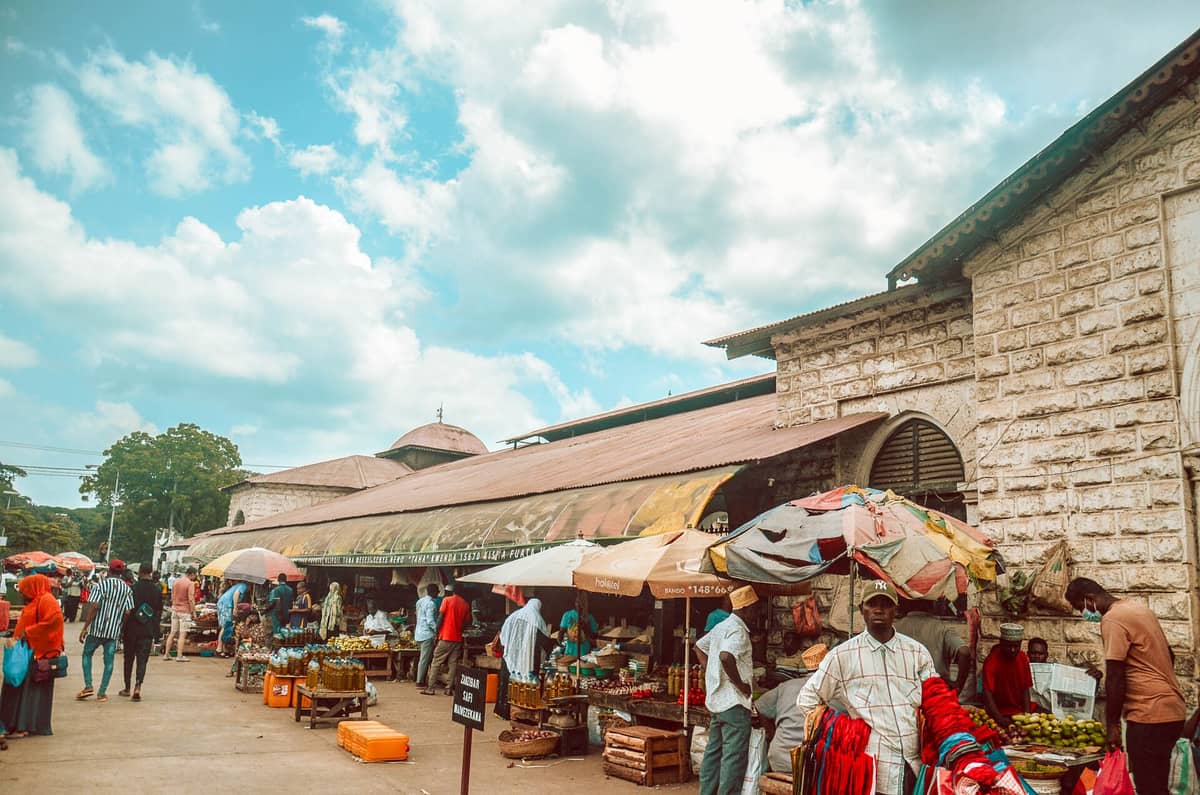
Stone Town operates on a rhythm that is distinct from any beach resort on the island. Mornings begin before dawn with the call to prayer echoing off coral-stone walls, followed by the sound of wooden cart wheels on uneven lanes as vendors push produce toward Darajani Market. By seven in the morning, the market is at its most chaotic and colorful: fish laid out on stone slabs, pyramids of cloves and cardamom, school children in white uniforms threading through the crowd. The air carries salt from the harbor and the earthy sweetness of spices sold from open sacks.
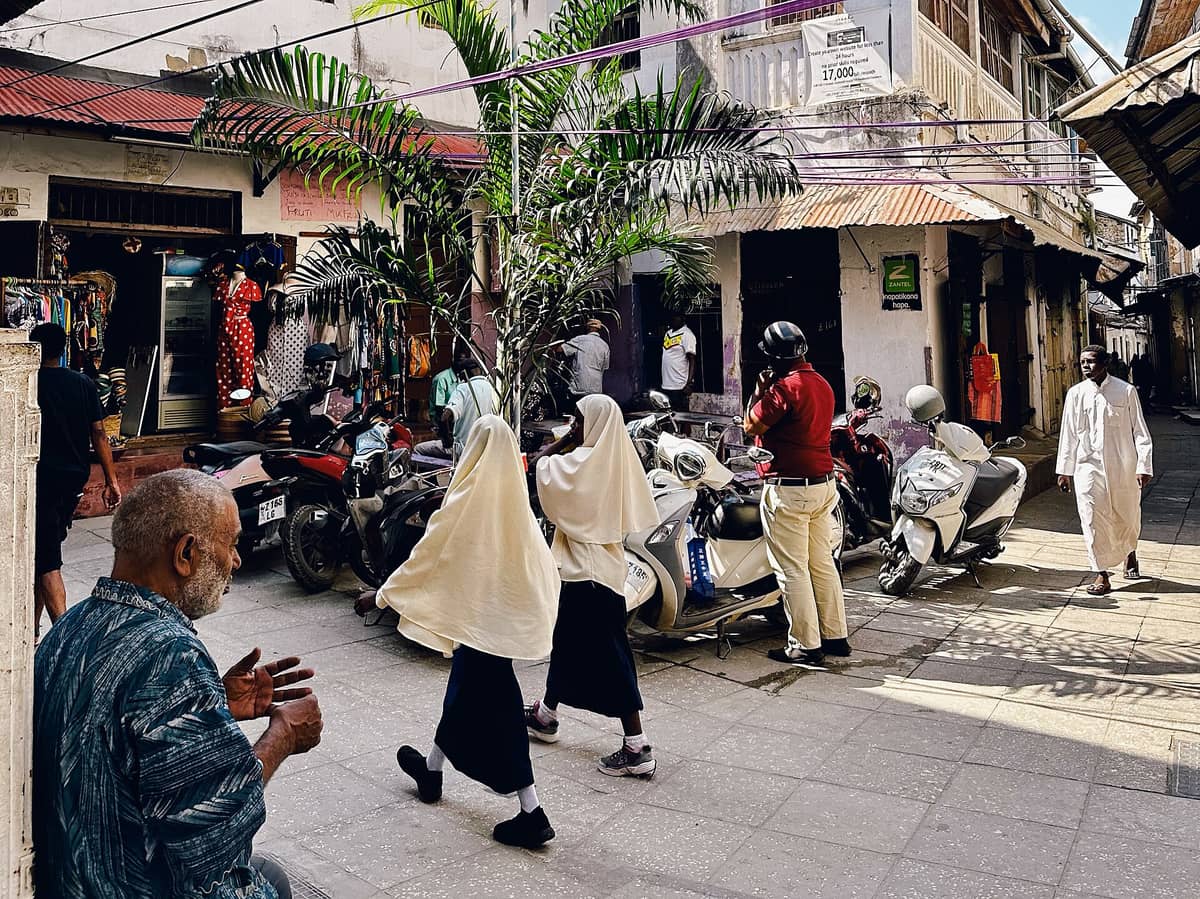
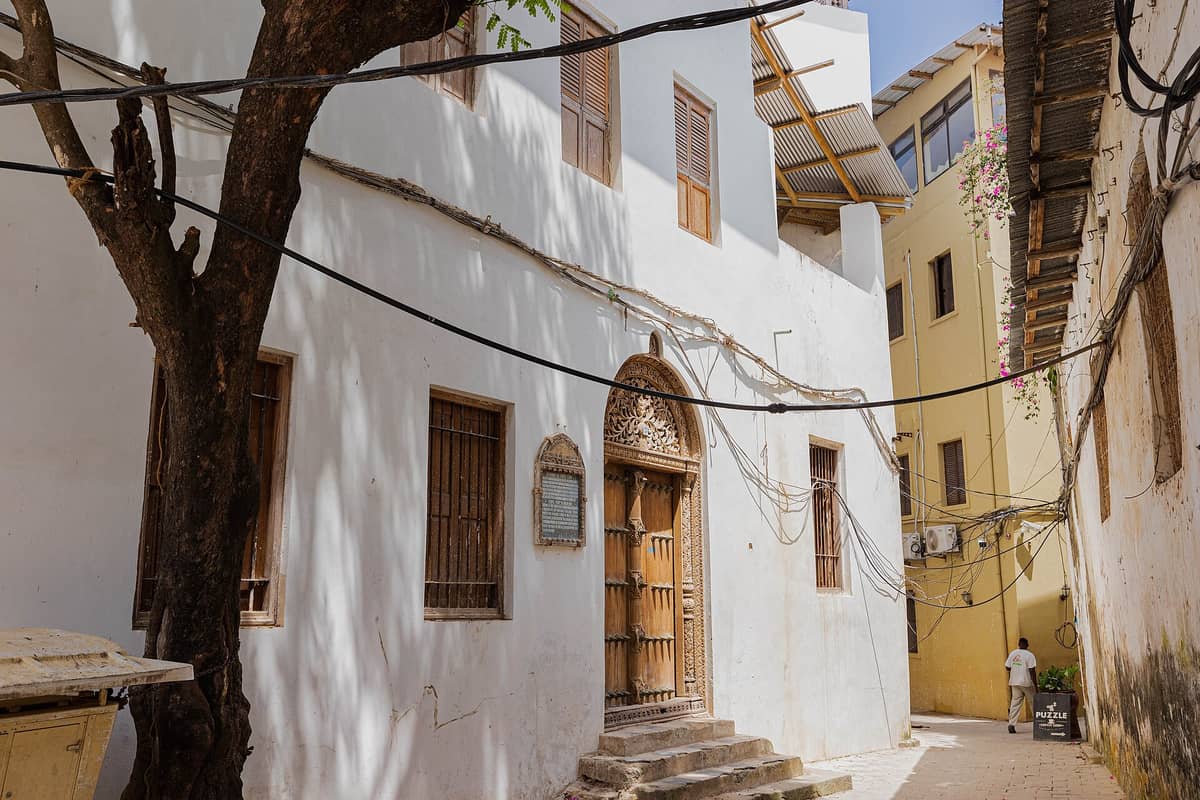
The lanes that run through the interior of Stone Town are deliberately narrow, a product of centuries-old urban planning designed for shade and foot traffic rather than vehicles. Walking north from Darajani toward the waterfront, the streets tighten until two people can barely pass side by side. The buildings rise two or three stories on either side, their balconies nearly touching overhead. The light at midday falls in sharp diagonal slices, and the temperature in the shade can feel ten degrees cooler than the open waterfront. This is the part of Stone Town that rewards slow walking: every doorway has a carved lintel, every courtyard hides a story.
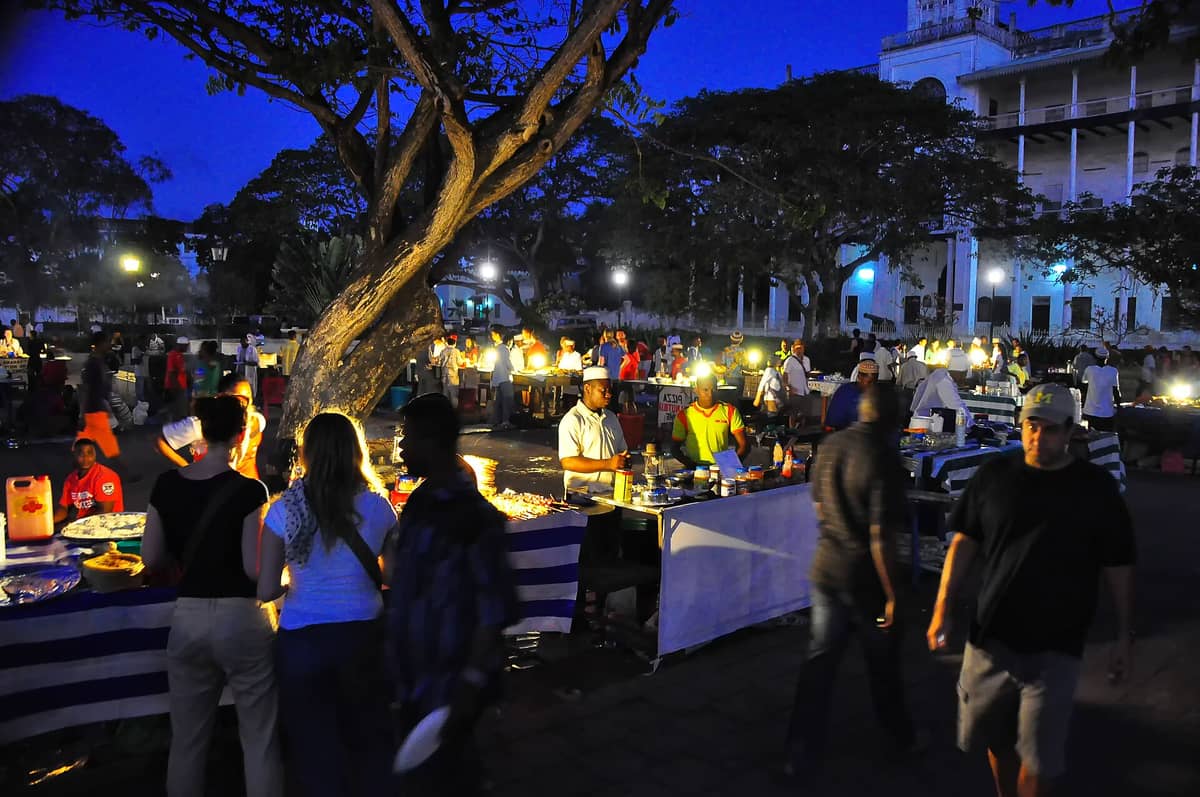
Late afternoon brings a shift in energy. The market empties, the lanes quieten, and families gather on the steps of mosques and corner shops. As the sun drops toward the ocean, Forodhani Gardens fills with locals and travelers alike. Vendors set up grills along the seafront wall, and the smell of charcoal, grilled seafood, and fresh sugarcane juice takes over. After dark, Stone Town's interior lanes become much quieter, lit only by occasional streetlights. The main waterfront remains active, but the alleyways feel genuinely atmospheric rather than festive — not dangerous for attentive walkers, but worth treating with the same awareness you would apply to any unfamiliar city at night.
💡 Local tip
The best time to walk Stone Town's interior is early morning, between 6:30 and 9:00 AM, before the heat builds and before tour groups fill the main lanes near the House of Wonders and Old Fort. You will have the carved doorways, the market, and the quiet residential streets largely to yourself.
What to See & Do
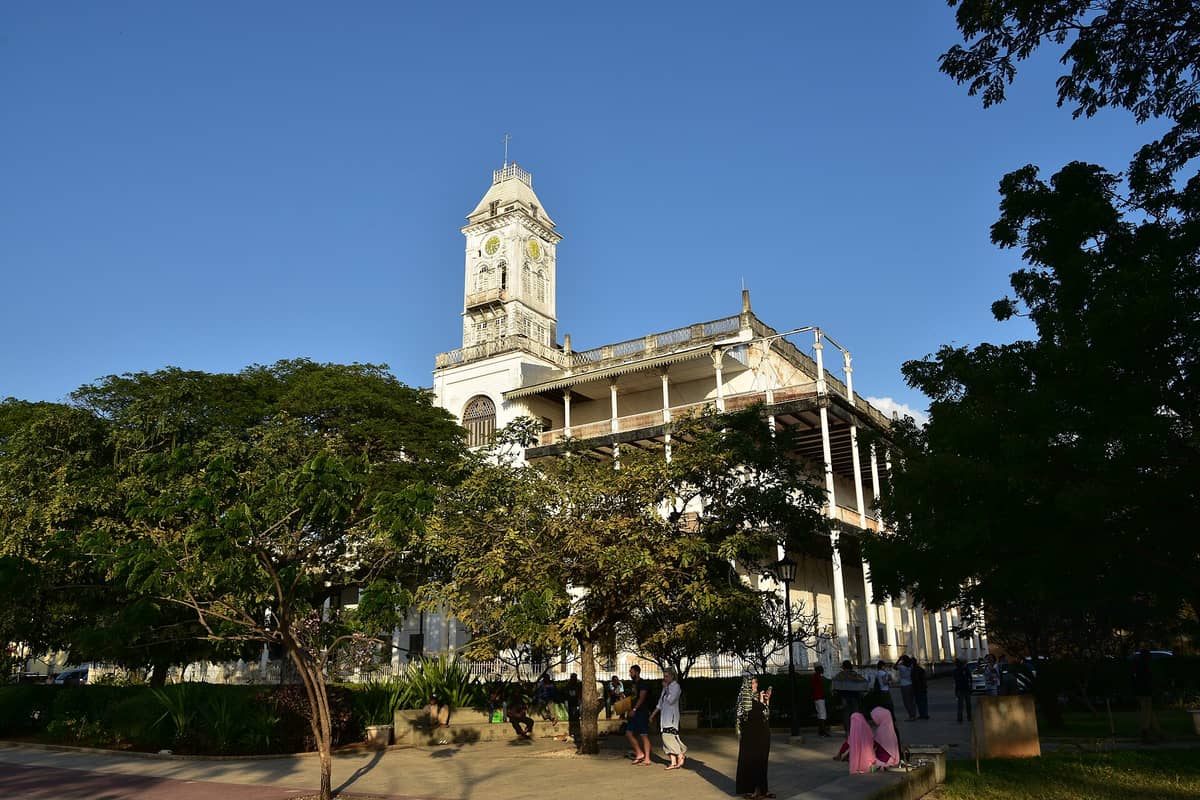
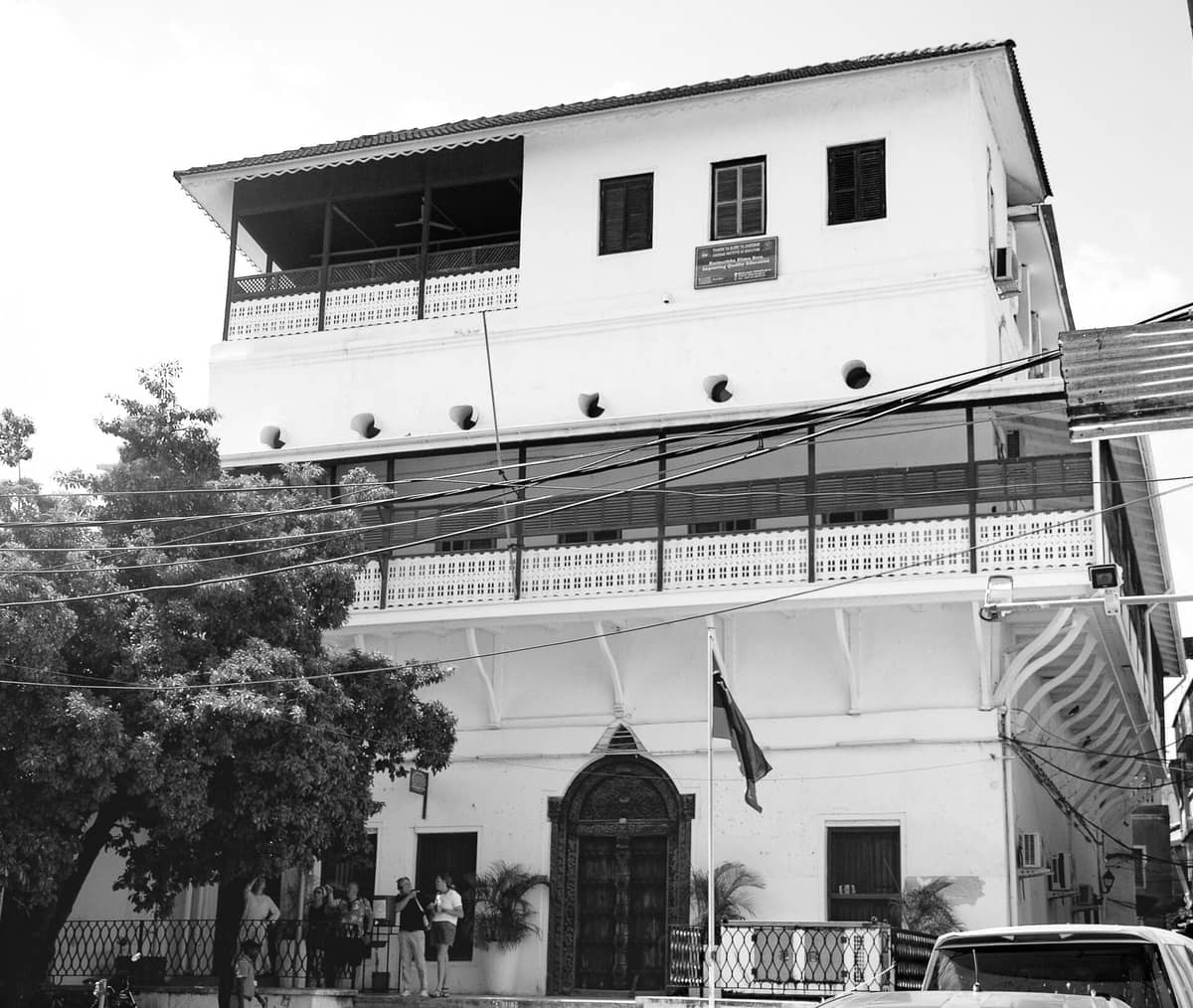
The concentration of historically significant buildings in Stone Town is extraordinary for an area this size. The Old Fort, built by Omani Arabs in the late seventeenth century after they expelled the Portuguese, is the oldest surviving structure in Zanzibar City. It sits on the waterfront adjacent to Forodhani Gardens and now functions as a cultural center with a small amphitheater used for live performances. Next to it stands the House of Wonders, the largest building in Stone Town, a former sultan's palace distinguished by its tiered iron balconies and the fact that it was the first building in Zanzibar to have electricity and an elevator.
A short walk along the waterfront brings you to the Old Dispensary, an ornate Indian-influenced building restored in the 1990s, its facade layered with carved stone balconies and ironwork that makes it one of the most photographed buildings in the city. Inland from the waterfront, the Hamamni Persian Baths represent a more intimate piece of the city's history: public baths commissioned by Sultan Barghash in the nineteenth century, now partially restored and open to visitors for a small entry fee.
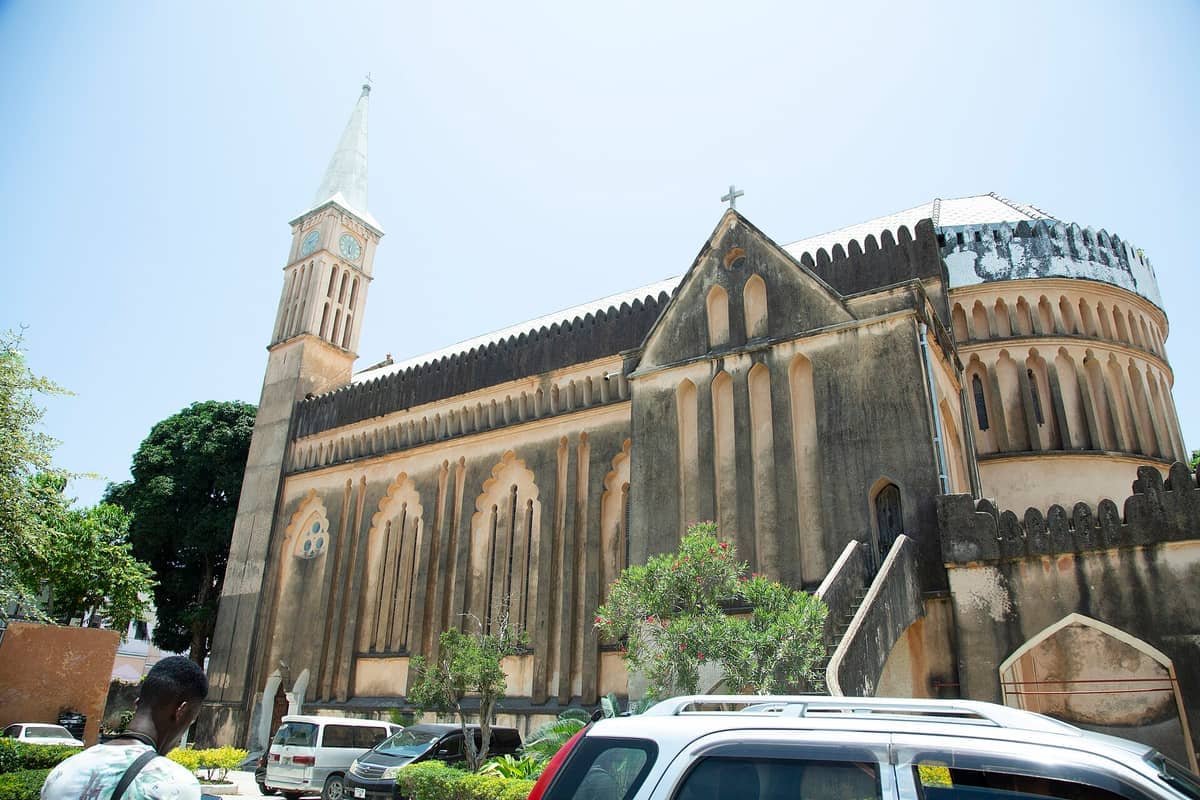
Stone Town's most painful history is also its most important. The island was one of the largest slave-trading centers in the Indian Ocean world, and the Slave Trade Museum and the adjacent Anglican Christ Church Cathedral — built deliberately over the site of the former slave market — confront that history directly. The underground holding chambers beneath the cathedral grounds are among the most affecting historical sites in East Africa. The Zanzibar slave history guide provides essential context before you visit.
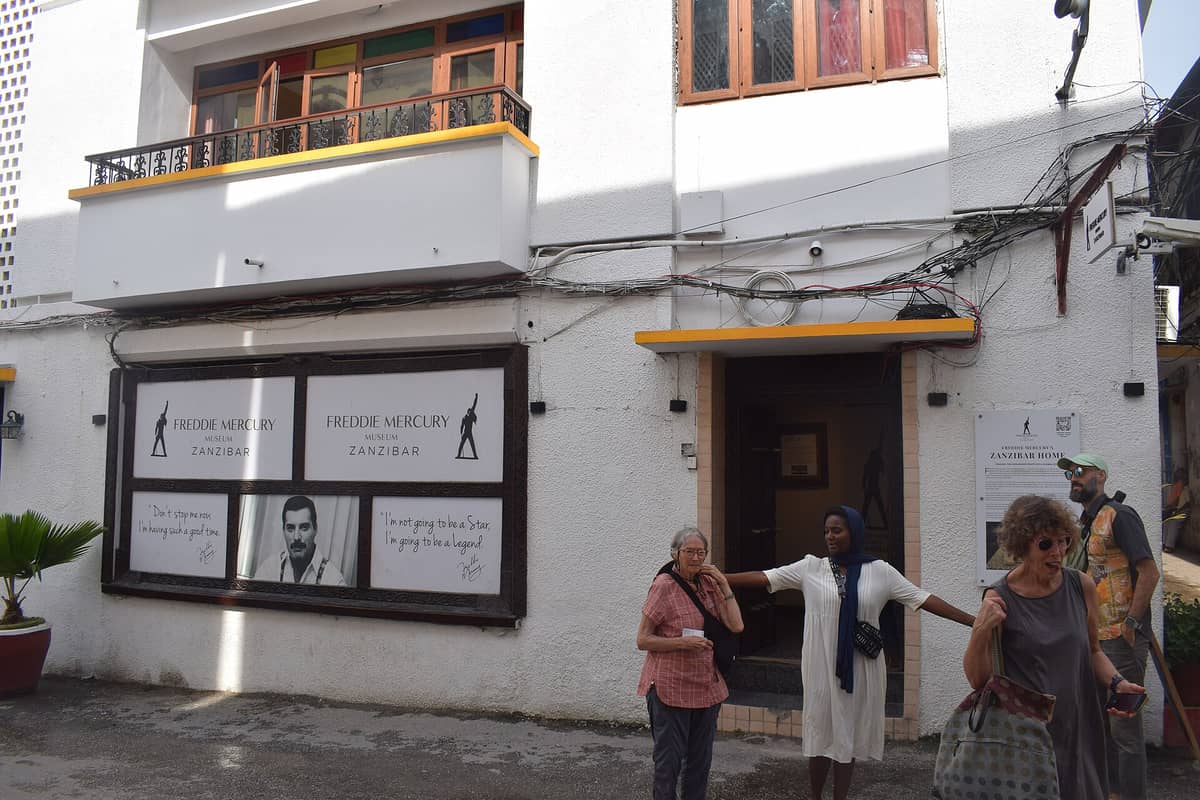
Freddie Mercury was born in Stone Town in 1946, and the neighborhood now has a small museum dedicated to him near the waterfront. The Freddie Mercury Museum is modest in scale but draws a steady stream of visitors who combine it with the broader Freddie Mercury Zanzibar trail. The building where he was born is nearby on Kenyatta Road.
Old Fort (Ngome Kongwe): the oldest building in Zanzibar City, free to enter, with a regular evening cultural show
House of Wonders (Beit el-Ajaib): the most architecturally distinctive landmark on the waterfront
Old Dispensary: ornate Indian-Zanzibari architecture on the northern waterfront
Hamamni Persian Baths: nineteenth-century public baths, small entry fee
Slave Trade Museum and Christ Church Cathedral: essential history, emotionally demanding
Freddie Mercury Museum: small but well-curated, strong on music history
Jaws Corner: a tea stall intersection in the interior lanes where locals gather throughout the day, one of the most authentic corners of the old city
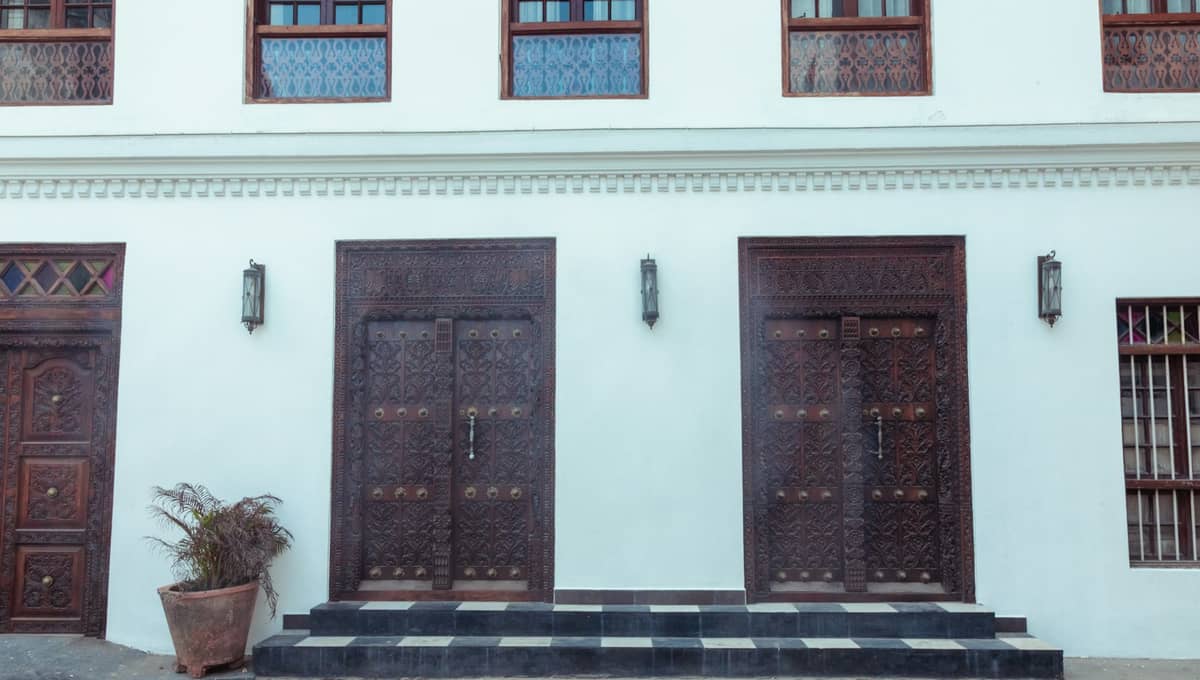
Zanzibar Doors: the carved wooden doors throughout the neighborhood are architectural landmarks in themselves, with the oldest and most elaborate concentrated near the Old Fort and along Gizenga Street
The annual Sauti za Busara music festival, held in Stone Town each February, draws artists from across Africa and the Indian Ocean world for three days of performances centered on venues in Stone Town. If your timing allows, it transforms the neighborhood into one of the most atmospheric live music settings in the region. A dedicated Sauti za Busara festival page has current details.
ℹ️ Good to know
Stone Town's architecture is best understood through a dedicated walking tour. The UNESCO conservation area contains over 1,700 historic buildings, and a knowledgeable local guide will help you distinguish Omani from Indian from Portuguese influences in buildings that can look superficially similar. The stone town walking guide covers the key routes and landmarks.
Eating & Drinking
The food scene in Stone Town is the most diverse on the island, reflecting the same cultural layering as the architecture. The essential starting point is Forodhani Gardens at sunset, where the night market runs along the seafront wall. Vendors grill Zanzibar mix (a spiced chickpea and cassava snack), whole lobsters, king prawns, octopus, and sugarcane juice is pressed fresh to order. Prices are low by any standard — a full plate of grilled seafood typically costs a few thousand Tanzanian shillings — and the setting, with the old fort lit behind you and dhows anchored in the harbor, is genuinely spectacular. Go hungry and go early before the best seafood sells out.
Darajani Market is the place for breakfast the way locals eat it: mandazi (Swahili doughnuts) with chai ya tangawizi, the ginger-spiced tea served in small glasses that is the fuel of Stone Town mornings. Stalls around the market's perimeter sell samosas, vitumbua (rice pancakes), and mkate wa ufuta (sesame bread) from early morning. The market itself is a working food and goods market, not a tourist attraction, and vendors are not performing for visitors — a reminder that Stone Town is a living city, not a museum.
Restaurants range from rooftop cafes aimed squarely at travelers (many concentrated along the waterfront and near Kenyatta Road) to small Swahili canteens inland where a plate of pilau rice, biryani, or coconut fish curry costs almost nothing. Indian-Zanzibari cuisine, a legacy of the significant Indian trading community that shaped the city, appears throughout: biriyani, samosas, and halwa (a sweet made from rosewater, ghee, and cornflour that is the traditional gift of Stone Town) are all worth seeking out. Alcohol is available at hotels and certain restaurants, but many local establishments do not serve it, a reflection of the majority Muslim character of the neighborhood.
For travelers planning a deeper exploration of the island's food culture, the Zanzibar food guide covers everything from Stone Town street food to spice farm cooking experiences. Spice tours that depart from Stone Town typically include a meal cooked from produce grown on the tour, which is worth adding even if you have limited time in the city. The spice tour guide explains how to find reputable operators.
Getting There & Around
From Abeid Amani Karume International Airport (ZNZ), Stone Town is the easiest destination on the island to reach. Taxis are available outside the terminal; the standard quoted fare to Stone Town has been reported at approximately US$10 to US$15, though fares are not metered and you should agree the price before getting in. The journey takes 15 to 20 minutes in normal traffic. Hotel transfers are a reliable alternative if you want a fixed cost, particularly for late-night arrivals. A dala-dala (shared minibus) route also connects the airport area to Stone Town for a fraction of the taxi cost, but involves a walk of several hundred meters to the correct stop and is not practical with large luggage. Confirm current routes and fares locally, as these details change.
Ferries from Dar es Salaam dock at the Stone Town ferry terminal on the northern waterfront, directly adjacent to the historic center. The crossing takes approximately two hours on fast ferries. Several operators run multiple daily departures. Arriving by ferry is by far the most atmospheric way to enter Stone Town, with the old fort and waterfront skyline coming into view as you approach the harbor.
Within Stone Town itself, walking is the only practical way to navigate the historic core. Vehicles cannot access most of the interior lanes at all, and even in the wider streets, the density of pedestrians and the unpredictable layout make driving counterproductive. The main arteries — Mizingani Road along the waterfront, New Mkunazini Road running east-west through the interior, and Creek Road along the eastern edge — do carry vehicle traffic and can be used for orientation. From the waterfront to the Darajani Market is about 600 meters; from the Old Fort to the Slave Trade Museum is roughly 400 meters. Comfortable walking shoes are essential, as the lanes are paved with irregular coral stone.
For trips to other parts of the island, dala-dalas depart from the stand near Darajani Market toward destinations across Unguja. Private taxis and shared minibus transfers to the beach resorts (Nungwi, Kendwa, Paje, Matemwe) can be arranged through hotels or local operators. Nungwi in the north takes roughly an hour by road; Paje on the southeast coast takes about 45 minutes.
⚠️ What to skip
Ride-hailing apps including Uber, Grab, and Careem do not operate in Zanzibar. Local app-based services have been unreliable. For any journey beyond walking distance, arrange transport through your hotel or negotiate directly with a taxi driver. Always agree on the fare before the journey begins.
Where to Stay
Stone Town offers the widest range of accommodation on the island within a small geographic area, from budget guesthouses in the interior lanes to boutique hotels in restored historic mansions on the waterfront. Staying here puts you within walking distance of the main ferry terminal, the dala-dala station for island-wide travel, and the majority of the island's cultural landmarks. It is the most practical base for anyone spending their first night in Zanzibar before heading to a beach resort, and a worthwhile destination in its own right for travelers with at least two to three days in the city. The where to stay in Zanzibar guide compares Stone Town with the beach resort options across the island.
The waterfront strip along Mizingani Road and the lanes immediately behind it contain the most atmospheric accommodation: converted merchant houses and former Arab mansions with internal courtyards, carved furniture, and rooftop terraces overlooking the harbor. These boutique properties vary considerably in quality; the best have maintained original architectural features while adding reliable air conditioning and hot water. The interior lanes offer cheaper options closer to how the neighborhood actually functions, but noise from the call to prayer (from multiple mosques at dawn), market activity, and narrow lane acoustics means that light sleepers should choose carefully.
Stone Town is not ideal for travelers who want a beach immediately outside their door. If your priority is direct beach access, the resort areas at Kendwa or Matemwe will suit you better, with Stone Town manageable as a day trip. For a full breakdown of accommodation styles and price ranges across Zanzibar, the Zanzibar budget guide is a useful reference.
Honest Assessment: What to Know Before You Go
Stone Town is the most intellectually rewarding part of Zanzibar, but it is also the most demanding. The heat, the density, the persistent attention from tour hawkers near the main tourist sites, and the occasional disorientation of the lanes can be exhausting. This is a city neighborhood in full operation, not a sanitized heritage precinct, and the gap between the coral-stone fantasy and the reality of crumbling buildings, potholed lanes, and aggressive vendor pitches near the main sites can catch some travelers off guard.
Petty theft does occur in crowded areas, particularly around Forodhani Gardens at night and near the ferry terminal during arrivals and departures. Keep phones and cameras less visible in the interior lanes after dark, and use the same street-level awareness you would apply in any unfamiliar city. Stone Town is not unsafe, but it rewards attentiveness. Solo female travelers will attract persistent attention from touts and occasional unwanted conversation near the main tourist areas; moving purposefully and politely declining without engaging tends to be the most effective response.
The neighborhood is also deeply conservative in its daily life, reflecting the majority Muslim population. Modest clothing (shoulders and knees covered) is appropriate when moving through the residential interior lanes and when visiting mosques or the cathedral. The beach towns operate on looser norms, but Stone Town's streets are not the place for swimwear or very short shorts. Travelers looking for Zanzibar's nightlife scene will find it limited here compared to Nungwi; the Zanzibar nightlife guide explains what is available and where.
TL;DR
Stone Town is Zanzibar's UNESCO-listed historic core: the cultural, historical, and logistical center of the entire island, within a walkable area of coral-stone lanes, carved doorways, and layered trading history.
Best for: history-focused travelers, first-time visitors to Zanzibar, anyone arriving by ferry or needing a practical base before moving to the beach resorts.
Key sites are concentrated and walkable: the Old Fort, House of Wonders, Slave Trade Museum, Hamamni Persian Baths, and Forodhani Gardens are in or near the historic core.
Honest drawbacks: persistent touts near tourist sites, heat in the narrow interior lanes, limited beach access, and a conservative local culture that requires modest dress in public areas.
Not ideal for: travelers who want beachfront accommodation, those who prioritize nightlife, or visitors who find densely urban environments tiring — consider a day trip from a beach resort instead.
Zanzibar's beaches are not all equal. Tides, winds, crowds, and access vary dramatically between the north, east, and west coasts. This guide breaks down every major beach so you can pick the right one for how you travel.
Zanzibar's tropical monsoon climate shapes everything from beach conditions to hotel prices. This guide breaks down every month of the year so you can choose the right time for your trip — whether you're chasing perfect skies, dolphin season, or lower prices.
Zanzibar's main island is just the beginning. These day trips take you to pristine coral reserves, ancient ruins, wildlife sanctuaries, and remote beaches that reveal a completely different side of the archipelago. Here are the best excursions worth leaving your resort for.
Freddie Mercury was born in Zanzibar in 1946, and Stone Town still carries the traces of his early life. This guide covers the museum, the birthplace controversy, the Shangani heritage trail, and exactly what to expect when you visit.
From the airport taxi to a dala-dala rattling toward Nungwi, transport in Zanzibar requires some planning. This guide covers every option available on Unguja, with practical advice on costs, routes, and what to avoid.
Zanzibar attracts hundreds of thousands of visitors each year, and most have uneventful trips. But the island has real risks that travel blogs often downplay. This guide covers crime patterns, health hazards, common scams, transport dangers, and practical precautions so you can travel with clear eyes.
Zanzibar delivers a rare combination: a UNESCO-listed historic city, diverse coastlines, and Indian Ocean marine life, all within a few hours of mainland Tanzania. But it is not the right destination for everyone. Here is what you actually need to know before booking.
Seven days is enough time to experience Zanzibar properly — the historic labyrinth of Stone Town, the white-sand beaches of the north and east coasts, a spice tour through the island's interior, and the Indian Ocean reefs just offshore. This itinerary is built around realistic travel times, not a fantasy schedule.
Stone Town is one of East Africa's most historically layered urban environments, a UNESCO World Heritage Site where Swahili, Arab, Indian, and colonial influences converge in a single square kilometre. This self-guided walking tour covers the essential landmarks, practical logistics, and practical observations you need to explore it well.
Zanzibar packs an extraordinary range of experiences into a relatively small island. This guide covers the best things to do in Zanzibar across history, beaches, wildlife, food, and water sports — with clear advice on what's worth your time and what to skip.
Choosing where to stay in Zanzibar is the single most important decision of your trip. The island spans over 1,500 square kilometres, and the right base depends entirely on what you want: history, nightlife, reef diving, kite surfing, or pure seclusion. This guide breaks down every major area with a clear assessment of who each one suits.
Zanzibar's all-inclusive resort scene spans barefoot-luxury bungalows on the north coast to family-friendly complexes along the east. This guide breaks down what's genuinely included, which areas suit which traveler, and the pricing realities you won't find on most booking sites.
Zanzibar has a reputation as a luxury destination, but it is entirely possible to travel the island on a tight budget. This guide covers cheap transport, affordable places to stay, where to eat well for under $5, and which attractions are genuinely worth paying for.
Zanzibar's coral reefs rank among the Indian Ocean's most accessible and biodiverse. This guide covers the top snorkelling sites, what you'll actually see underwater, current pricing, the best seasons to go, and what responsible tourism looks like in practice.
Most travelers treat Zanzibar and Dar es Salaam as an either/or choice. They don't have to be. This guide breaks down exactly how to connect the two destinations, what to spend your time on in each, and how to structure the trip so neither feels rushed.
Zanzibar offers some of the Indian Ocean's most accessible reef diving, from the shallow coral gardens of Mnemba Atoll to the deeper, current-swept walls of Leven Bank. This guide covers the best dive sites, what to pay, when to go, and how to avoid the pricing traps that catch first-time visitors.
Zanzibar's cuisine is one of the most distinctive in East Africa, shaped by centuries of Arab, Indian, and Swahili influence. This guide covers the dishes worth seeking out, where to eat them, what to pay, and a few traps to avoid.
Zanzibar rewards the curious traveller. Beyond the famous beaches and spice tours, the island holds coral-cave slave history, crumbling sultan palaces, a centuries-old mosque, and a sandbank that appears from the sea at low tide. This guide covers the experiences most visitors never find.
Zanzibar delivers the kind of honeymoon backdrop that is hard to fabricate: white coral-sand beaches, warm turquoise water, historic Stone Town, and a spice-scented coastline. This guide covers where to stay, what to do, when to go, and what to watch out for so you can plan with confidence.
Three days in Zanzibar is enough to cover the island's highlights if you plan smart. This itinerary focuses on Stone Town, a spice tour, one great beach, and an island excursion, without wasting hours on unnecessary cross-island transfers.
December brings warm seas, festive energy, and the tail end of the short rains to Zanzibar. Here is what to honestly expect from the weather, where to spend Christmas and New Year, and how to avoid the peak-season pitfalls that catch first-timers off guard.
July sits in the heart of Zanzibar's dry season, making it one of the most popular months to visit. Here's what the weather actually looks like, what cultural events are happening, which beaches perform best, and what to plan ahead for.
Paje is one of the Indian Ocean's most reliable kitesurfing destinations, with two distinct wind seasons, a sheltered reef lagoon, and schools catering to every level. This guide covers the wind windows, tide realities, lesson costs, and practical logistics so you can plan a session that actually works.
Zanzibar delivers a rare combination: Indian Ocean beaches, rich Swahili culture, and some of East Africa's most impressive resort properties. This guide breaks down where to stay, what to expect at each price point, which coasts suit which traveler, and how to avoid the overpriced traps that catch first-timers.
From the fish stalls of Darajani to the grill smoke of Forodhani Gardens at night, Zanzibar's markets are among the most rewarding experiences on the island. This guide covers every major market, what to buy, what to skip, and how to navigate it all without overpaying.
Zanzibar after dark is more varied than most travelers expect. This guide breaks down where to go, what to expect, and how to make the most of evenings across Stone Town, Nungwi, Kendwa, and the southeast coast.
Zanzibar was the largest slave-trading port in East Africa. This guide covers the key sites, museums, and historical context that make Stone Town one of the most significant places to understand this chapter of world history — including what to expect, what gets glossed over, and how to visit responsibly.
Zanzibar rewards independent travelers with spice-scented alleys, turquoise reefs, and some of East Africa's most sociable guesthouses. This guide covers everything you need to plan a confident solo trip: the safest areas, realistic costs, cultural etiquette, and how to move around the island without a group.
A Zanzibar spice tour is one of the most rewarding half-days you can spend on the island, but the experience varies enormously depending on which farm you visit, which operator you book with, and what time of year you go. This guide covers all of it: the best farms near Stone Town, clear price breakdowns, seasonal considerations, and what separates a genuinely good tour from a rushed photo-op.
Stone Town's UNESCO-listed streetscape is one of the most architecturally layered urban environments in the Indian Ocean world. This guide breaks down the building styles, carved door traditions, construction materials, and cultural influences that shaped the historic quarter, with practical advice on what to look for and how to explore it.
Zanzibar's culture is one of the most layered in East Africa, shaped by centuries of Arab, Persian, Indian, and African exchange along the Swahili coast. This guide covers what to wear, how to behave, when to visit, and what most tourists overlook about life here.
Combining a Tanzania safari with a Zanzibar beach stay is one of the most rewarding travel itineraries in Africa. This guide covers the logistics, best timing, route options, costs, and common mistakes to avoid when planning your Tanzania and Zanzibar combo trip.
Zanzibar works surprisingly well as a family destination, but it takes some planning. This guide covers the best beaches, wildlife encounters, cultural experiences, and practical logistics for traveling with children on Unguja, the main island.