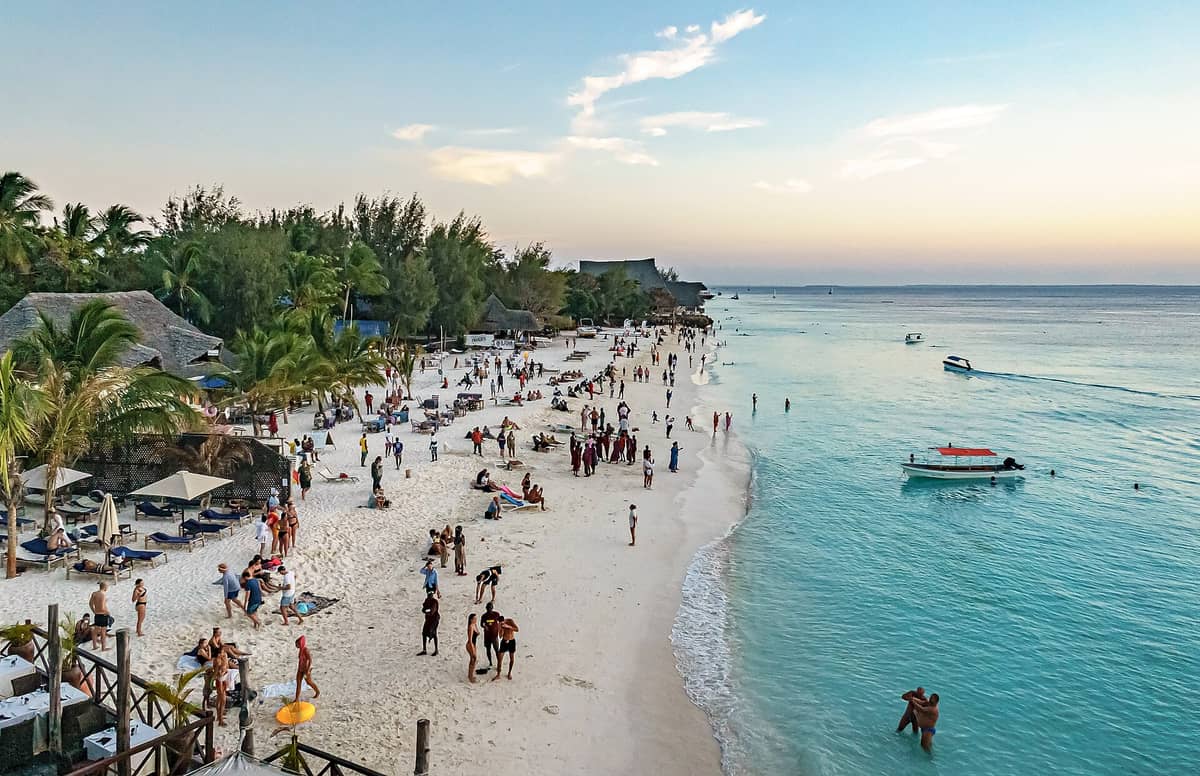
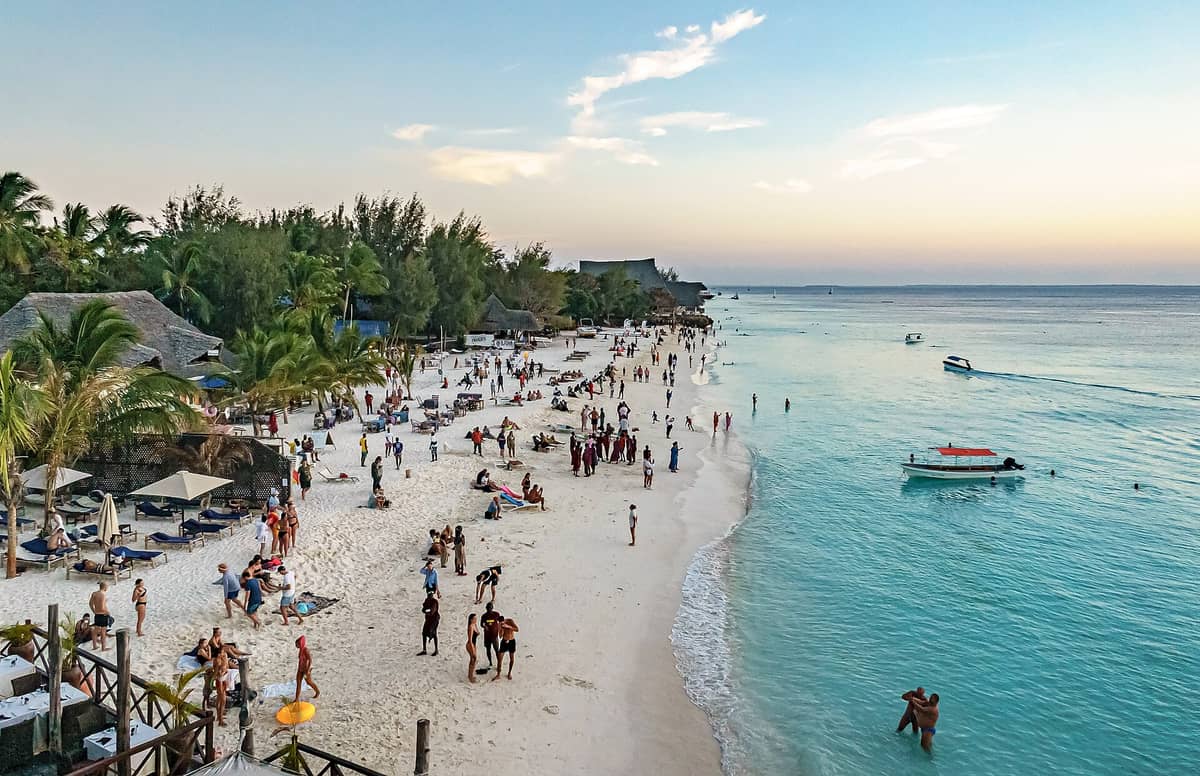
Nungwi is a fishing village turned resort destination at the northernmost point of Unguja, Zanzibar's main island. Its beaches face both east and west, meaning the water stays swimmable at low tide and sunsets are spectacular from the western shore. Beneath the tourist infrastructure, traditional Swahili village life continues alongside the hotels and dive shops.
Nungwi occupies the very tip of Unguja, where the Indian Ocean curves around both sides of a narrow headland and traditional dhow builders still work the same shoreline where resorts now line up for sunset views. It is the most developed beach destination on the island and, depending on what you want, that is either its main appeal or its main problem.
Orientation
Nungwi sits at the northernmost tip of Unguja, roughly 60 kilometres from Zanzibar City and about 90 minutes to two hours' drive from the airport along the main road that bisects the island. The headland itself is narrow, and the village spreads across it from the western beach, which faces the open channel toward the African mainland, to a calmer eastern shore that leads toward Matemwe and Kiwengwa. Kendwa sits just southwest of the village, on the western beach.
The Ras Nungwi Lighthouse marks the precise tip of the headland and acts as the best landmark for getting your bearings. Most hotels and guesthouses are strung along the western beach road and the tracks behind it. The village core, where locals shop and move through daily life, sits slightly inland from the tourist strip. Kendwa is walkable along the beach at low tide, about 2.5 kilometres to the southwest, and that short stretch of sand is one of the better walks in northern Zanzibar.
Nungwi is meaningfully separate from every other part of Zanzibar. There is no urban sprawl connecting it to the rest of the island. Once you leave Stone Town heading north, the road passes through spice farms and small villages before the landscape opens onto the coast. If you are planning to combine beach time with Stone Town sightseeing or trips to the east coast, read the getting-around section carefully, because the distances and road quality require planning. A full guide to getting around Zanzibar will help you map out the logistics before you arrive.
Character & Atmosphere
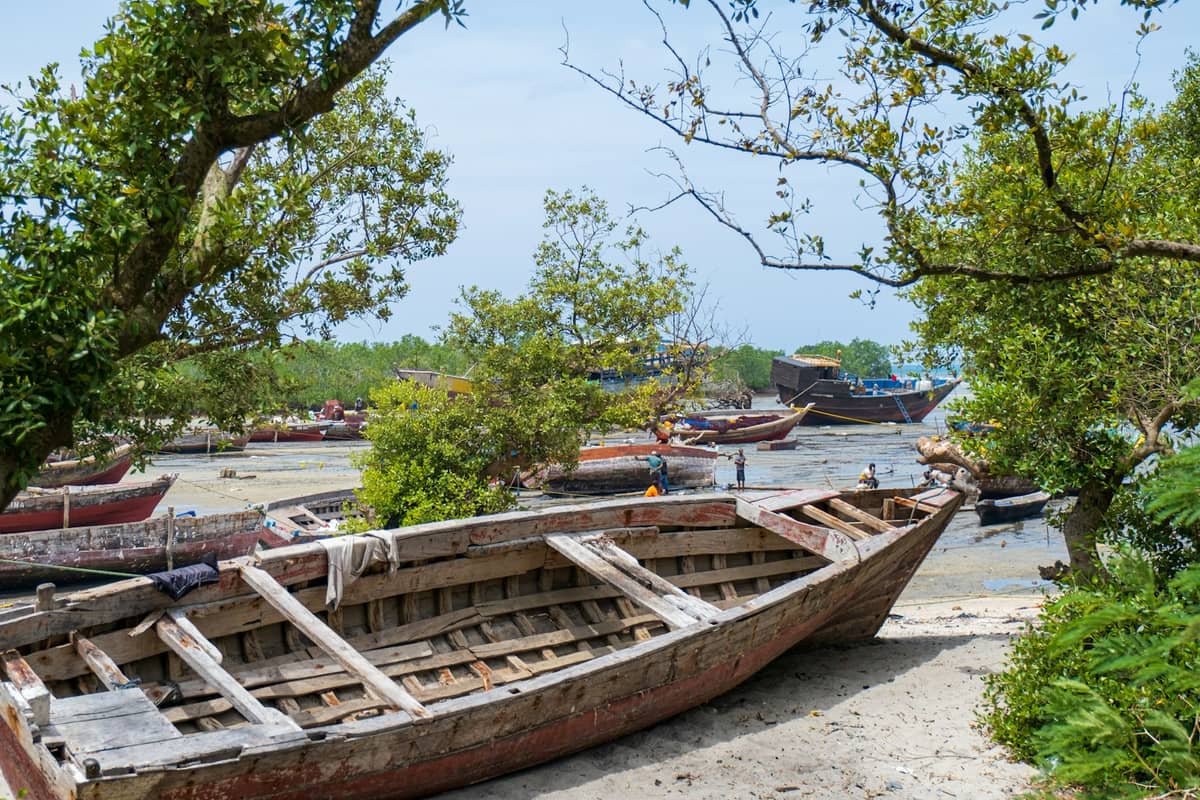
Early mornings in Nungwi belong to the fishermen. Before seven o'clock, wooden ngalawa outriggers and larger dhows are being pushed out from the beach, and the smell of salt and engine oil drifts through the air. Women carry baskets along the paths that thread through the village. The muezzin call from the local mosque carries further than any hotel sound system. This is still a working Swahili fishing community, and that layer of village life is easy to miss if you stay within the resort compound, but it is there if you wake up early enough to find it.
By mid-morning the beach fills quickly. The western shore, which is the main tourist beach, gets direct sun for most of the day, and the water at Nungwi has an advantage that draws people from across the island: because of the currents around the headland, the tide swing here is much smaller than on the east coast. Beaches like Paje and Jambiani turn into long stretches of exposed sand flats at low tide, but Nungwi stays swimmable throughout the day. That single fact shapes everything about how this beach feels compared to the rest of the island.
The afternoon light on the western shore turns the water a deep turquoise and then, as the sun drops toward the horizon, shifts into the kind of orange and pink that fills every travel photographer's memory card. Sundowner culture is fully established here. Bars and beach clubs along the western strip fill from around four in the afternoon. The atmosphere at that point is relaxed rather than frenetic, with a mix of long-stay travelers, resort guests on all-inclusives, and day-trippers from Stone Town who have arrived by private transfer.
After dark, Nungwi is livelier than any other beach village on Unguja. There is music, open-air bars, fire shows on the beach in some spots, and a perceptible tourist economy that runs into the late hours. This is not the place to come for quiet evenings listening to waves. That said, stepping even one or two streets back from the main beach road into the village puts you in a completely different environment: quieter, darker, and more genuinely local.
⚠️ What to skip
Canada's government travel advisory specifically flags Nungwi for increased caution, citing risks that rise after dark. Solo travelers, and particularly solo women, should be thoughtful about walking back from bars or beach areas late at night. Stick to well-lit routes or arrange transport with your accommodation.
What to See & Do
The beach is the obvious starting point. Nungwi Beach on the western side is the main event: fine white sand, relatively calm water, and that tide advantage that makes it the go-to recommendation for anyone prioritizing swimming over the wilder surf conditions elsewhere on the island. The eastern side of the headland is calmer still, faces toward the sunrise, and tends to be less crowded.
The Mnarani Turtle Sanctuary sits in a natural tidal lagoon beside the Ras Nungwi Lighthouse and is one of the more legitimate wildlife encounters available in Zanzibar. Green and hawksbill turtles are cared for here before release; the operation runs as a conservation project rather than purely as a tourist attraction, though entrance fees apply and help fund the work. It is worth an hour of your time and is easily combined with a walk out to the lighthouse point.
Dhow building is one of Nungwi's defining activities, and it still happens in working yards along the shore. The Nungwi dhow-building yards are not a museum exhibit, they are active workplaces where builders use techniques passed down over generations, shaping wooden vessels by hand without detailed blueprints. Watching the work is free, though tipping the builders is appropriate if you linger and photograph.
Snorkeling and diving are both strong here. The reefs off the northern tip of the island see strong currents that bring good fish life, and several dive operators in the village run trips to sites around the headland and further afield. Day trips by boat to Mnemba Atoll, one of the premier dive sites in East Africa, depart regularly from Nungwi.
Snorkeling trips to reefs around the northern headland
Scuba diving to sites including Mnemba Atoll and local reef walls
Sunset dhow cruises departing from the western beach
Deep-sea fishing charters arranged through local operators
Beach volleyball, kayaking, and paddleboarding at resort facilities
Village walks through the inland streets of the fishing community
💡 Local tip
If you want to see the dhow builders at their most active, go in the morning. Work starts early and slows down significantly by midday when the heat intensifies. Early risers also get the beach largely to themselves before the resort crowd emerges.
Eating & Drinking
Food options in Nungwi cover a wider range than you might expect from a beach village, though the quality is uneven and prices at the resort-facing restaurants are higher than anywhere else on the island outside of Stone Town's top-end spots. Street food vendors set up in the village in the evenings, selling grilled seafood, chapati, and mishkaki skewers at prices that reflect local rather than tourist economics. This is where you eat if you are keeping to a budget.
The beach restaurants and bars on the western shore serve a predictable mix of grilled fish, calamari, pizza, pasta, and international plates aimed at the European package-holiday market. The seafood is genuinely fresh, caught that morning from boats you can see in the harbor, and at the better places it is cooked simply and well. Grilled crayfish and octopus are the things to order. Most places will cook whatever the catch of the day is over charcoal, and that is consistently the best item on any menu.
For a broader understanding of what Zanzibar's food culture looks like beyond tourist menus, the Zanzibar food guide covers local dishes and where to find them across the island. Nungwi's inland village has small local restaurants serving rice and fish stews, pilau, and biryani at Tanzanian prices, and finding those spots is worth the short walk off the beach road.
Bars are spread along the western beach strip. They range from low-key open-air setups with plastic chairs and cold Kilimanjaro beer to more polished beach clubs with cocktail menus and ambient music. The sundowner hour, from roughly four until seven in the evening, is when these places are at their most pleasant. Later in the evening some bars transition into something louder, with DJs and dancing on the sand.
Getting There & Around
Nungwi is approximately 60 kilometres north of Stone Town and 90 minutes to two hours by road depending on traffic, road conditions, and the route taken. The main road north is paved for most of its length, though conditions vary and potholes can slow things down. From Abeid Amani Karume International Airport the journey is similar in length, as the airport sits just south of Stone Town.
Private taxis and shared minibuses (dala-dalas) are the two main options. A private taxi from Stone Town to Nungwi costs roughly US$25 to US$40 depending on negotiation and the operator; always agree the fare before you get in. Dala-dalas are significantly cheaper but the Canadian government travel advisory specifically recommends against using buses, including dala-dalas, citing overcrowding, fatal crash records, and reports of assault. If you do use a dala-dala, know that routes and stops are informal and that you should confirm the current fare locally before boarding.
Within Nungwi, walking is the primary way to get around. The beach road and the village lanes are short enough that most of the accommodation, restaurants, and the turtle sanctuary are reachable on foot from any starting point. At low tide, the beach walk south toward Kendwa is easier than the inland path and takes around 30 to 40 minutes. Check the tide before you set out, as the return walk may not be possible if the tide has come in.
Day trips to Stone Town and onward connections to east-coast beaches are logistically straightforward but time-consuming. If you are based in Nungwi and want to explore the rest of the island, read through the full guide to getting around Zanzibar before committing to a schedule. The island is smaller than it looks on a map, but road quality and the absence of ride-hailing apps means journey times can surprise you.
ℹ️ Good to know
Uber, Grab, and Careem do not operate in Zanzibar. Your accommodation can arrange taxis and transfers, and for inter-village trips this is usually the most reliable option. Agree all fares in advance.
Where to Stay
Nungwi has more accommodation options than any other beach destination on Unguja. The range goes from basic guesthouses in the village with fan rooms and shared bathrooms to large resort complexes with pools and all-inclusive packages. If you are trying to decide between Nungwi and the rest of the island's beach areas, the where to stay in Zanzibar guide compares all the main areas clearly.
The western beach road is where most of the mid-range to high-end accommodation sits, with direct beach access and sunset views. These properties command higher prices and book up well in advance during peak season, roughly July through October and December through January. The area behind the beach road, toward the village center, has smaller guesthouses that are significantly cheaper and give a more realistic sense of local life, at the cost of a short walk to the water.
Nungwi is not ideal for travelers seeking a quiet retreat. If seclusion and minimal tourist activity are priorities, the east coast villages or more remote northern spots may be a better fit. But for travelers who want a beach with reliable swimming, a reasonable dining scene, organized diving, and enough social activity to meet other travelers, Nungwi delivers more consistently than anywhere else on the island.
Couples on a honeymoon might find Nungwi's energy works well for them, though the most intimate resort experiences tend to be on the east coast or at boutique properties on the headland's quieter eastern shore. The Zanzibar honeymoon guide covers the full range of romantic options across the island. Budget travelers should know that genuine budget accommodation exists in Nungwi, but it is harder to find than at Paje or Jambiani, where backpacker infrastructure is more developed.
Practical Considerations
Nungwi is a Muslim fishing community. While the beach strip operates by resort norms, modest dress is appropriate when moving through the village. Swimwear and revealing clothing belong on the beach, not in the streets or near the mosque. This is common courtesy rather than a strict rule, but travelers who ignore it create friction with residents who have watched tourism reshape their community rapidly.
High season runs roughly from July through October and from mid-December through January, corresponding with the dry season and the northern hemisphere school holidays. The long rains fall roughly from March through May and some smaller properties close during this period. For a detailed breakdown of what the island is like month by month, the best time to visit Zanzibar guide is the most useful reference.
The Tanzanian shilling is the official currency, though US dollars are widely accepted in tourist-facing businesses in Nungwi. Card payment is available at some larger hotels but unreliable elsewhere. Bring cash in both currencies if you plan to eat or drink outside of your accommodation.
TL;DR
Nungwi is Zanzibar's most developed beach village, with the best tide conditions for swimming on the island and a full range of accommodation from budget guesthouses to large resorts.
The turtle sanctuary, working dhow-building yards, and active fishing community give it more character than a purely resort-built destination, but the tourist strip is real and unavoidable.
After-dark safety requires awareness: the Canadian government advises increased caution in Nungwi specifically, and solo travelers should plan their evenings accordingly.
Best suited to travelers who want reliable swimming, organized diving, social beach energy, and easy access to sunset views, not for those seeking quiet or escape from tourist infrastructure.
Allow at least two full days to make the journey from Stone Town worthwhile; three or more nights is more realistic if you want to do diving, day trips, and explore the local village properly.
Zanzibar's beaches are not all equal. Tides, winds, crowds, and access vary dramatically between the north, east, and west coasts. This guide breaks down every major beach so you can pick the right one for how you travel.
Zanzibar's tropical monsoon climate shapes everything from beach conditions to hotel prices. This guide breaks down every month of the year so you can choose the right time for your trip — whether you're chasing perfect skies, dolphin season, or lower prices.
Zanzibar's main island is just the beginning. These day trips take you to pristine coral reserves, ancient ruins, wildlife sanctuaries, and remote beaches that reveal a completely different side of the archipelago. Here are the best excursions worth leaving your resort for.
Freddie Mercury was born in Zanzibar in 1946, and Stone Town still carries the traces of his early life. This guide covers the museum, the birthplace controversy, the Shangani heritage trail, and exactly what to expect when you visit.
From the airport taxi to a dala-dala rattling toward Nungwi, transport in Zanzibar requires some planning. This guide covers every option available on Unguja, with practical advice on costs, routes, and what to avoid.
Zanzibar attracts hundreds of thousands of visitors each year, and most have uneventful trips. But the island has real risks that travel blogs often downplay. This guide covers crime patterns, health hazards, common scams, transport dangers, and practical precautions so you can travel with clear eyes.
Zanzibar delivers a rare combination: a UNESCO-listed historic city, diverse coastlines, and Indian Ocean marine life, all within a few hours of mainland Tanzania. But it is not the right destination for everyone. Here is what you actually need to know before booking.
Seven days is enough time to experience Zanzibar properly — the historic labyrinth of Stone Town, the white-sand beaches of the north and east coasts, a spice tour through the island's interior, and the Indian Ocean reefs just offshore. This itinerary is built around realistic travel times, not a fantasy schedule.
Stone Town is one of East Africa's most historically layered urban environments, a UNESCO World Heritage Site where Swahili, Arab, Indian, and colonial influences converge in a single square kilometre. This self-guided walking tour covers the essential landmarks, practical logistics, and practical observations you need to explore it well.
Zanzibar packs an extraordinary range of experiences into a relatively small island. This guide covers the best things to do in Zanzibar across history, beaches, wildlife, food, and water sports — with clear advice on what's worth your time and what to skip.
Choosing where to stay in Zanzibar is the single most important decision of your trip. The island spans over 1,500 square kilometres, and the right base depends entirely on what you want: history, nightlife, reef diving, kite surfing, or pure seclusion. This guide breaks down every major area with a clear assessment of who each one suits.
Zanzibar's all-inclusive resort scene spans barefoot-luxury bungalows on the north coast to family-friendly complexes along the east. This guide breaks down what's genuinely included, which areas suit which traveler, and the pricing realities you won't find on most booking sites.
Zanzibar has a reputation as a luxury destination, but it is entirely possible to travel the island on a tight budget. This guide covers cheap transport, affordable places to stay, where to eat well for under $5, and which attractions are genuinely worth paying for.
Zanzibar's coral reefs rank among the Indian Ocean's most accessible and biodiverse. This guide covers the top snorkelling sites, what you'll actually see underwater, current pricing, the best seasons to go, and what responsible tourism looks like in practice.
Most travelers treat Zanzibar and Dar es Salaam as an either/or choice. They don't have to be. This guide breaks down exactly how to connect the two destinations, what to spend your time on in each, and how to structure the trip so neither feels rushed.
Zanzibar offers some of the Indian Ocean's most accessible reef diving, from the shallow coral gardens of Mnemba Atoll to the deeper, current-swept walls of Leven Bank. This guide covers the best dive sites, what to pay, when to go, and how to avoid the pricing traps that catch first-time visitors.
Zanzibar's cuisine is one of the most distinctive in East Africa, shaped by centuries of Arab, Indian, and Swahili influence. This guide covers the dishes worth seeking out, where to eat them, what to pay, and a few traps to avoid.
Zanzibar rewards the curious traveller. Beyond the famous beaches and spice tours, the island holds coral-cave slave history, crumbling sultan palaces, a centuries-old mosque, and a sandbank that appears from the sea at low tide. This guide covers the experiences most visitors never find.
Zanzibar delivers the kind of honeymoon backdrop that is hard to fabricate: white coral-sand beaches, warm turquoise water, historic Stone Town, and a spice-scented coastline. This guide covers where to stay, what to do, when to go, and what to watch out for so you can plan with confidence.
Three days in Zanzibar is enough to cover the island's highlights if you plan smart. This itinerary focuses on Stone Town, a spice tour, one great beach, and an island excursion, without wasting hours on unnecessary cross-island transfers.
December brings warm seas, festive energy, and the tail end of the short rains to Zanzibar. Here is what to honestly expect from the weather, where to spend Christmas and New Year, and how to avoid the peak-season pitfalls that catch first-timers off guard.
July sits in the heart of Zanzibar's dry season, making it one of the most popular months to visit. Here's what the weather actually looks like, what cultural events are happening, which beaches perform best, and what to plan ahead for.
Paje is one of the Indian Ocean's most reliable kitesurfing destinations, with two distinct wind seasons, a sheltered reef lagoon, and schools catering to every level. This guide covers the wind windows, tide realities, lesson costs, and practical logistics so you can plan a session that actually works.
Zanzibar delivers a rare combination: Indian Ocean beaches, rich Swahili culture, and some of East Africa's most impressive resort properties. This guide breaks down where to stay, what to expect at each price point, which coasts suit which traveler, and how to avoid the overpriced traps that catch first-timers.
From the fish stalls of Darajani to the grill smoke of Forodhani Gardens at night, Zanzibar's markets are among the most rewarding experiences on the island. This guide covers every major market, what to buy, what to skip, and how to navigate it all without overpaying.
Zanzibar after dark is more varied than most travelers expect. This guide breaks down where to go, what to expect, and how to make the most of evenings across Stone Town, Nungwi, Kendwa, and the southeast coast.
Zanzibar was the largest slave-trading port in East Africa. This guide covers the key sites, museums, and historical context that make Stone Town one of the most significant places to understand this chapter of world history — including what to expect, what gets glossed over, and how to visit responsibly.
Zanzibar rewards independent travelers with spice-scented alleys, turquoise reefs, and some of East Africa's most sociable guesthouses. This guide covers everything you need to plan a confident solo trip: the safest areas, realistic costs, cultural etiquette, and how to move around the island without a group.
A Zanzibar spice tour is one of the most rewarding half-days you can spend on the island, but the experience varies enormously depending on which farm you visit, which operator you book with, and what time of year you go. This guide covers all of it: the best farms near Stone Town, clear price breakdowns, seasonal considerations, and what separates a genuinely good tour from a rushed photo-op.
Stone Town's UNESCO-listed streetscape is one of the most architecturally layered urban environments in the Indian Ocean world. This guide breaks down the building styles, carved door traditions, construction materials, and cultural influences that shaped the historic quarter, with practical advice on what to look for and how to explore it.
Zanzibar's culture is one of the most layered in East Africa, shaped by centuries of Arab, Persian, Indian, and African exchange along the Swahili coast. This guide covers what to wear, how to behave, when to visit, and what most tourists overlook about life here.
Combining a Tanzania safari with a Zanzibar beach stay is one of the most rewarding travel itineraries in Africa. This guide covers the logistics, best timing, route options, costs, and common mistakes to avoid when planning your Tanzania and Zanzibar combo trip.
Zanzibar works surprisingly well as a family destination, but it takes some planning. This guide covers the best beaches, wildlife encounters, cultural experiences, and practical logistics for traveling with children on Unguja, the main island.